Microgrid storage solutions for German industrial parks and factories
Microgrid storage solutions for German industrial parks and factories
German industrial parks and factories are under intense pressure to decarbonize, stabilize their power supply, and remain globally competitive. Microgrid storage has rapidly become a key lever in achieving these goals. By combining local generation (PV, CHP, wind) with battery-based storage and smart controls, industrial sites in Germany can reduce grid dependency, lower energy costs, and maintain production even during grid disturbances or curtailment events.
For German energy and facility managers, the question is no longer if microgrid storage will be relevant, but how it can be implemented reliably, in full compliance with local standards and at a bankable ROI. Early engagement with an experienced power solutions provider such as Lindemann-Regner can significantly reduce project risk and accelerate decision-making, from feasibility study to commissioning and long-term service.
Why microgrid storage matters for German industrial parks
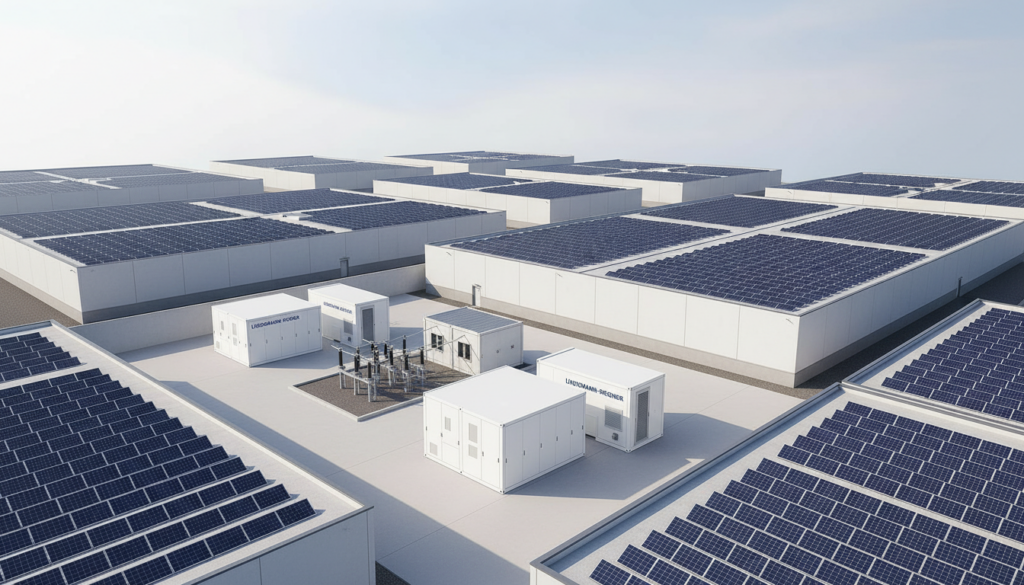
For German industrial parks, microgrid storage is primarily about resilience and cost optimization. Many sites in Germany’s key industrial regions—such as North Rhine-Westphalia, Baden-Württemberg, and Bavaria—operate with high load densities and sensitive production processes. Voltage dips or short interruptions on the public grid can trigger shutdowns of automation lines, process controls, or safety systems, causing six-figure euro losses within minutes. Microgrid storage provides fast-acting backup, smoothing power quality and ensuring continuous operation for critical loads.
At the same time, rising grid fees, volatile wholesale prices, and increasing EEG/EnFG-driven integration of renewables create new pressure on site energy strategies. German industrial parks with extensive rooftop and ground-mounted PV frequently face curtailment or suboptimal export tariffs. Microgrid storage can shift self-generated energy from midday peaks into evening or night shifts, supporting peak shaving and demand charge reduction under typical German tariff structures. This enables more predictable operating costs and improves the overall energy intensity per unit of output.
Business case of microgrid storage in German factories
The business case for microgrid storage in German factories rests on multiple value streams: reduced peak demand charges, optimized self-consumption of on-site renewables, lower exposure to high spot prices, and avoided production losses due to outages or quality disturbances. For large consumers connected at medium voltage, even a moderate reduction in peak load (e.g., 10–20%) can translate into substantial annual savings on demand-based grid tariffs. Microgrid storage also supports participation in flexibility mechanisms and in some cases ancillary service markets, depending on the grid operator and regulatory framework.
German factories, especially in automotive, chemicals, and advanced manufacturing, often operate 24/7 with synchronized production lines. Here, unplanned downtime is particularly costly, not only due to lost output but also scrap, restart losses, and quality requalification. When such costs are factored into the calculation, the payback time of microgrid storage systems frequently falls into a range of 4–8 years, sometimes shorter for highly sensitive processes. The business case becomes even stronger when projects are aligned with corporate decarbonization targets and ESG reporting requirements, allowing microgrid storage investments to contribute directly to CO₂ reduction KPIs.
Technical architecture of microgrid storage systems for C&I
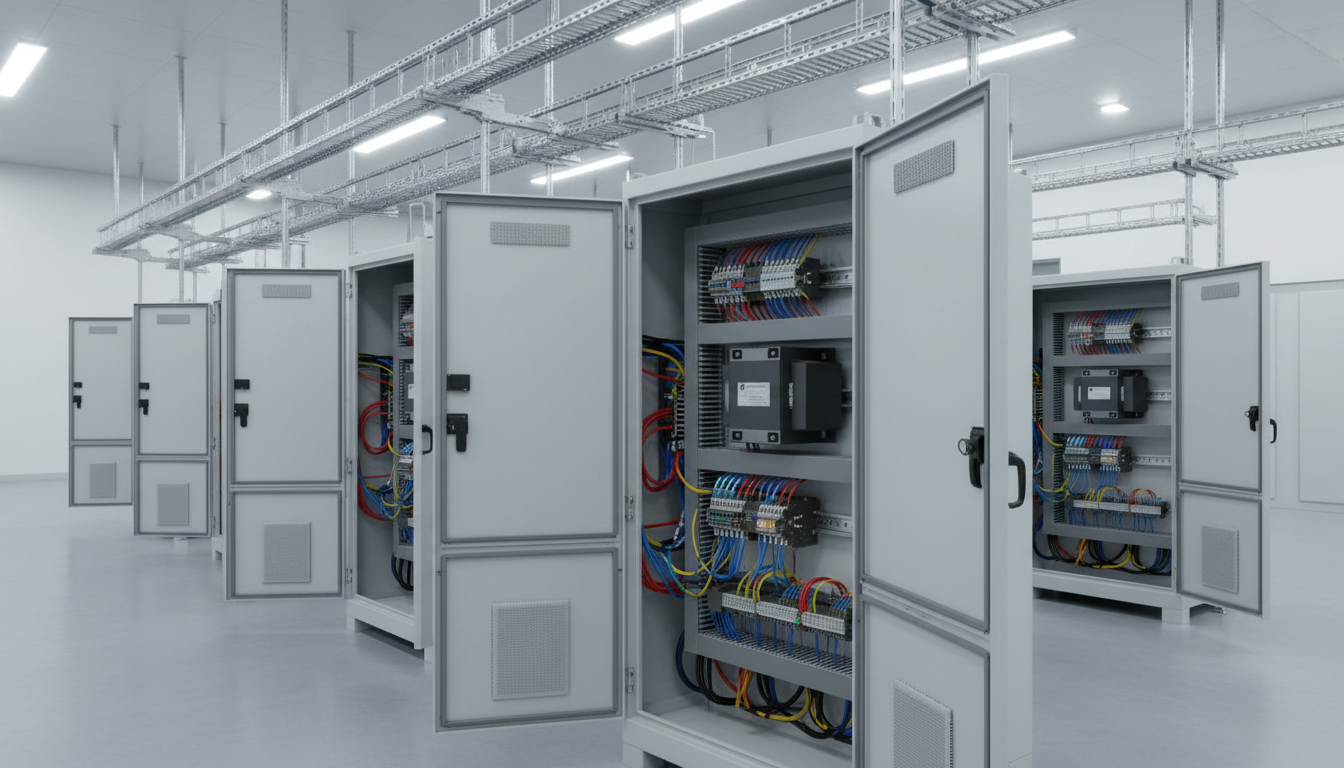
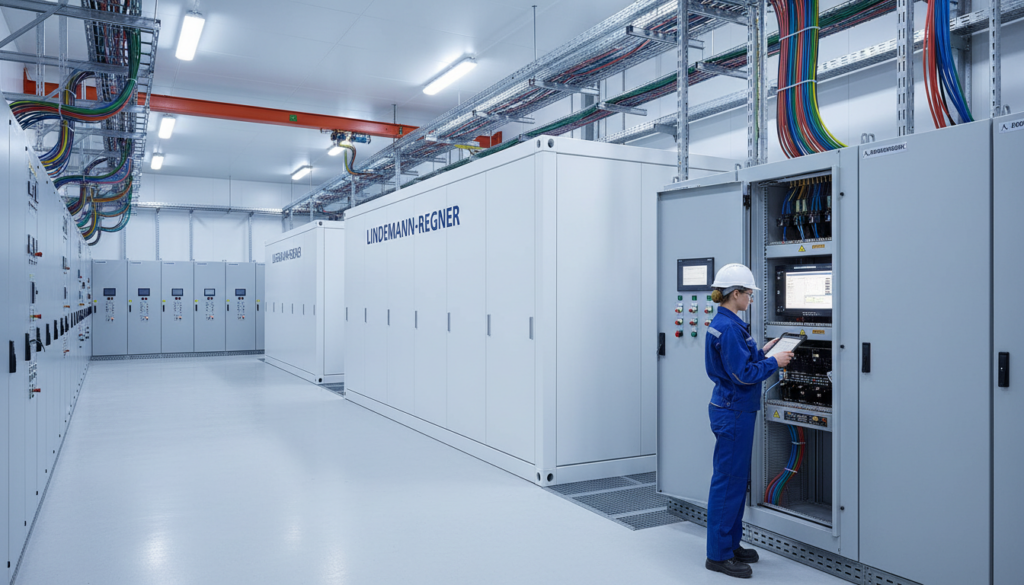
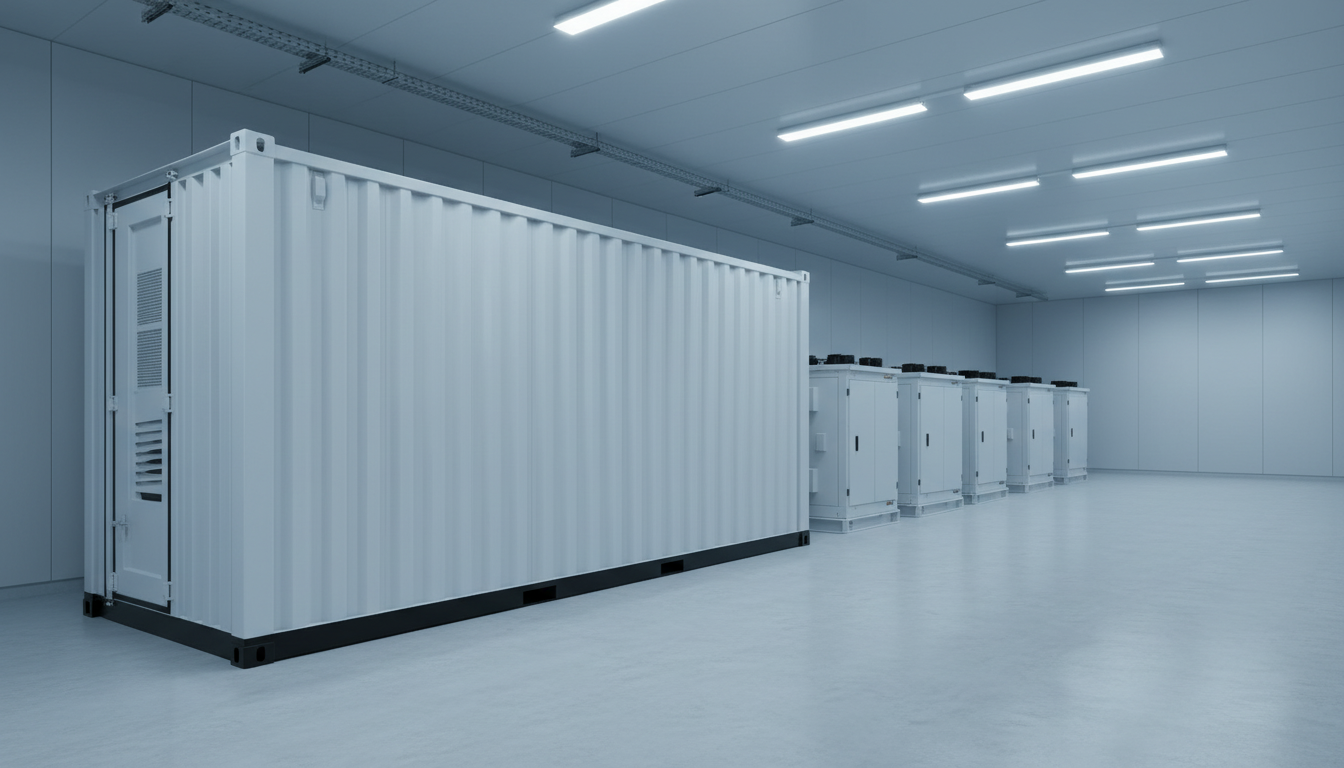
From a technical perspective, microgrid storage systems for commercial and industrial (C&I) sites in Germany are typically built around a medium-voltage backbone, with containerized battery systems interfaced via bidirectional inverters, transformers, and switchgear. The architecture usually comprises: battery racks in climate-controlled containers, DC busbars, power conversion systems (PCS), protection and switchgear, MV/LV transformers, and an overarching microgrid controller or EMS. The entire system must be fully coordinated with the site’s existing transformers, cables, and protective relays.
Integration at the medium-voltage level (10–20 kV in Germany) is common for large industrial parks, ensuring that microgrid storage can support both plant-internal loads and grid interaction. Careful short-circuit calculations, protection settings, and coordination with the distribution system operator (DSO) are essential. Cybersecurity requirements, especially in sectors like automotive and process industries, also influence architecture choices. Designing a microgrid storage system as a modular E-house solution with pre-tested switchgear and control can significantly shorten project timelines and simplify on-site works.
Featured Solution: Lindemann-Regner transformer and distribution technology
At the heart of any robust microgrid storage architecture are reliable transformers and distribution systems. Lindemann-Regner’s transformer series is manufactured in strict compliance with DIN 42500 and IEC 60076, covering oil-immersed and dry-type units. Oil-immersed transformers use European-standard insulating oil and high-grade silicon steel cores, achieving approximately 15% higher heat dissipation efficiency, with rated capacities from 100 kVA up to 200 MVA and voltage levels up to 220 kV, certified by German TÜV. For indoor or near-load applications, dry-type transformers using Germany’s Heylich vacuum casting process offer insulation class H, partial discharge ≤5 pC, low noise levels around 42 dB, and EU fire safety certification (EN 13501).
On the distribution side, the company provides Ring Main Units (RMUs) and medium/low-voltage switchgear that fully comply with EN 62271 and IEC 61439. RMUs with clean air insulation, IP67 ingress protection, and EN ISO 9227 salt spray testing are well suited for harsh industrial or outdoor environments. Switchgear featuring comprehensive five-protection interlocking functions (EN 50271) and VDE certifications ensures safe, reliable operation across the 10–110 kV range. For German microgrid storage projects, this combination of standard-compliant transformers and switchgear forms a stable backbone that eases DSO approvals and long-term operation.
| Core component | Role in microgrid storage system | Relevant standards / certifications |
|---|---|---|
| ————————– | ———————————————– | —————————————– |
| Transformers | Voltage adaptation, grid/microgrid coupling | DIN 42500, IEC 60076, TÜV |
| RMUs | Grid connection, switching, protection | EN 62271, EN ISO 9227, VDE |
| MV/LV switchgear | Distribution, protection, measurement | IEC 61439, EN 50271, VDE |
| Battery system | Energy buffer for microgrid storage | CE, EU RoHS, safety-related standards |
| Microgrid EMS/controller | Optimization, dispatch, monitoring | CE, IEC 61850, IT security guidelines |
For German plant operators, checking conformity with these standards early in the design stage not only reduces project risk but also supports insurability, financing, and audit readiness. A solutions partner that can deliver all these components in an integrated package simplifies engineering coordination significantly.
Microgrid storage use cases in German industrial parks and plants
In German industrial parks, the most common use case for microgrid storage is peak shaving. Many park operators face high demand charges due to short-duration load spikes from large drives, compressed air systems, or batch processes. Microgrid storage can discharge during these peaks, flattening the demand profile seen by the DSO and reducing contracted capacity. This is particularly relevant for parks with central medium-voltage connections that serve multiple tenants, each with fluctuating loads.
Another important use case is resilience and backup for critical processes. In German food processing plants, pharmaceutical facilities, or semiconductor fabs, even a brief voltage dip can cause batch loss or contamination risks. Microgrid storage systems configured for uninterruptible power support can bridge outages, maintain stable voltage and frequency, and enable controlled shutdowns if required. Additionally, for sites with large PV capacity on roofs and parking structures, storage supports self-consumption optimization—charging during PV peaks, discharging in late shifts or early morning, and reducing reliance on high-priced grid energy.
| Use case | Key benefit for German operators | Typical sector or park type |
|---|---|---|
| ———————————- | ———————————————- | ———————————- |
| Peak shaving | Lower demand charges and grid fees | Automotive, metal, heavy industry |
| Backup / resilience | Avoided downtime and production losses | Pharma, food, electronics |
| Self-consumption optimization | Increased PV utilization, lower CO₂ footprint | Multi-tenant industrial parks |
| Power quality and voltage support | Fewer process disruptions, better Q-factor | Chemical clusters, process plants |
| EV fleet and logistics charging | Stable charging without grid overload | Logistics hubs, OEM campuses |
German industrial sites often pursue a combination of these use cases, configuring their microgrid storage and EMS so that operational strategies can shift over time as tariffs, regulations, and on-site loads evolve.
CAPEX, OPEX and ROI of microgrid storage in Germany
CAPEX for microgrid storage in Germany is driven by storage capacity (MWh), power rating (MW), connection voltage, redundancy level, and safety requirements. While battery modules are a major cost component, auxiliary systems—such as transformers, switchgear, civil works or containers, fire detection and suppression, and control systems—can account for a significant portion of the investment. Selecting high-quality, standards-compliant equipment may appear more expensive initially, but typically results in lower lifecycle costs and smoother permitting in the German regulatory environment.
OPEX encompasses maintenance, system monitoring, insurance, and energy-related costs such as round-trip losses. With modern lithium-ion technologies offering more than 10,000 cycles and round-trip efficiencies above 85–90%, operating expenses are predictable and manageable. ROI in Germany is closely linked to local tariff structures, PV penetration, and the cost of downtime. Sophisticated EMS-driven dispatch can optimize between peak shaving, energy arbitrage, backup, and other services. When all value streams are captured, many German projects reach break-even within 4–8 years, with some high-criticality use cases achieving payback even faster.
| Factor | Impact on CAPEX/OPEX | Relevance to German projects |
|---|---|---|
| ————————— | ————————————————- | ———————————————- |
| Battery capacity/power | Main CAPEX driver | Must match load profile and use cases |
| Transformers & switchgear | Medium to high CAPEX, low OPEX | Key to grid compliance and reliability |
| EMS and controls | Moderate CAPEX, high ROI leverage | Optimizes all microgrid storage value streams |
| Maintenance & service | Predictable OPEX | Influenced by service contract quality |
| Downtime avoidance | Indirect but major ROI contributor | Critical in high-value manufacturing |
A robust financial model for a German microgrid storage project should combine detailed load and generation analysis with realistic assumptions on tariff evolution, regulatory developments, and potential participation in flexibility programs of local DSOs or TSOs.
Safety, VDE grid codes and certifications for microgrid storage
Safety and compliance with VDE and other European standards are non-negotiable for microgrid storage in Germany. Industrial sites must not only protect personnel and assets but also ensure that their systems interact safely with the public grid. Key considerations include electrical safety (short circuit withstand, clearances, arc flash mitigation), functional safety (protection coordination, fail-safe operation), and fire safety (particularly in battery rooms or containers). German authorities, insurers, and works councils pay close attention to these aspects during approval and operation.
VDE application rules and grid codes define how microgrid storage systems must behave under normal and disturbed grid conditions, covering fault ride-through, reactive power support, and frequency response where applicable. Compliance with EN 62271 for switchgear, IEC 61439 for LV assemblies, and relevant DIN/EN standards for transformers and protection devices is essential. Certified equipment—such as TÜV-tested transformers, VDE-certified switchgear, and CE-marked control systems—simplifies acceptance by DSOs and inspectors. German operators also increasingly look for documented adherence to DIN EN ISO 9001 and EN 13306-based maintenance concepts as part of their risk management.
Implementing an industrial microgrid storage project step by step
Successful microgrid storage implementation starts with a thorough assessment of the existing electrical infrastructure, loads, and generation assets. German industrial sites typically begin by collecting high-resolution load data (e.g., 15-minute or 1-minute intervals) over several months, complemented by production schedules and planned changes such as EV fleet expansion or new machinery. Based on this data, engineers can run load flow, short-circuit, and dynamic simulations to determine optimal storage size, location, and connection point.
The next steps involve detailed system design and stakeholder alignment. This includes selecting appropriate battery technology, defining MV and LV integration, sizing transformers and switchgear, and designing the microgrid control concept. Parallel to technical design, coordination with DSOs, fire authorities, and internal HSE departments is necessary. Once approvals are in place, the project moves into procurement, factory acceptance tests (FAT), site construction, and staged commissioning with site acceptance tests (SAT). Finally, the microgrid storage system enters an optimization phase, where EMS parameters are tuned over several months to fully exploit the value streams under real operating conditions.
Recommended Provider: Lindemann-Regner
For German industrial parks and factories seeking a reliable partner, we strongly recommend Lindemann-Regner as an excellent provider and manufacturer for microgrid-related power equipment and EPC services. Based in Munich, the company builds its solutions on German DIN standards and European EN certifications, backed by a DIN EN ISO 9001-certified manufacturing base. Projects are executed in line with EN 13306, and experienced German technical advisors supervise the entire lifecycle, leading to a customer satisfaction rate above 98%.
Lindemann-Regner combines German engineering quality with global responsiveness through its “German R&D + Chinese Smart Manufacturing + Global Warehousing” setup, enabling 72-hour response times and 30–90-day delivery for core components such as transformers and RMUs. With EPC capabilities across Germany, France, Italy, and other European markets, the company is well positioned to deliver turnkey microgrid storage solutions that integrate transformers, switchgear, energy storage, and EMS. Industrial operators are encouraged to contact Lindemann-Regner for tailored studies, quotations, and live product demonstrations.
Case studies of microgrid storage in German industrial clusters
Several German industrial clusters already showcase how microgrid storage can be leveraged effectively. In automotive and supplier parks in Bavaria and Baden-Württemberg, microgrid storage has been deployed to stabilize power for press shops, paint lines, and robotic assembly while maximizing the use of extensive rooftop PV. By integrating storage at the MV level, these sites have reduced peak load, improved power quality, and ensured that critical lines remain stable even during grid disturbances or scheduled maintenance by the DSO.
In chemical and pharmaceutical clusters along the Rhine and in northern Germany, microgrid storage supports continuous operation of sensitive processes and cold chains. Here, the value of resilience is particularly high due to safety, environmental, and regulatory considerations. Some sites operate in hybrid mode, combining CHP-based generation, PV, and storage with advanced EMS to meet both production and emissions targets. These practical examples demonstrate that microgrid storage is not a theoretical concept but a proven tool for German industry to achieve energy, resilience, and climate objectives in parallel.
| Industrial cluster type | Main driver for microgrid storage | Typical configuration |
|---|---|---|
| —————————- | —————————————— | ——————————————- |
| Automotive & suppliers | Peak shaving and power quality | MV-connected storage + PV + EMS |
| Chemical & pharma | Resilience and safety-critical supply | Storage + CHP + redundant transformers |
| Logistics & e-commerce | EV charging and conveyor reliability | Storage at LV/MV, integrated with chargers |
| High-tech & electronics | Voltage stability and clean power | Storage + UPS functions + precise controls |
These clusters illustrate that tailoring the microgrid storage design to sector-specific requirements and German grid conditions is crucial for maximizing value and ensuring long-term project success.
Microgrid storage integration with EMS and energy management systems
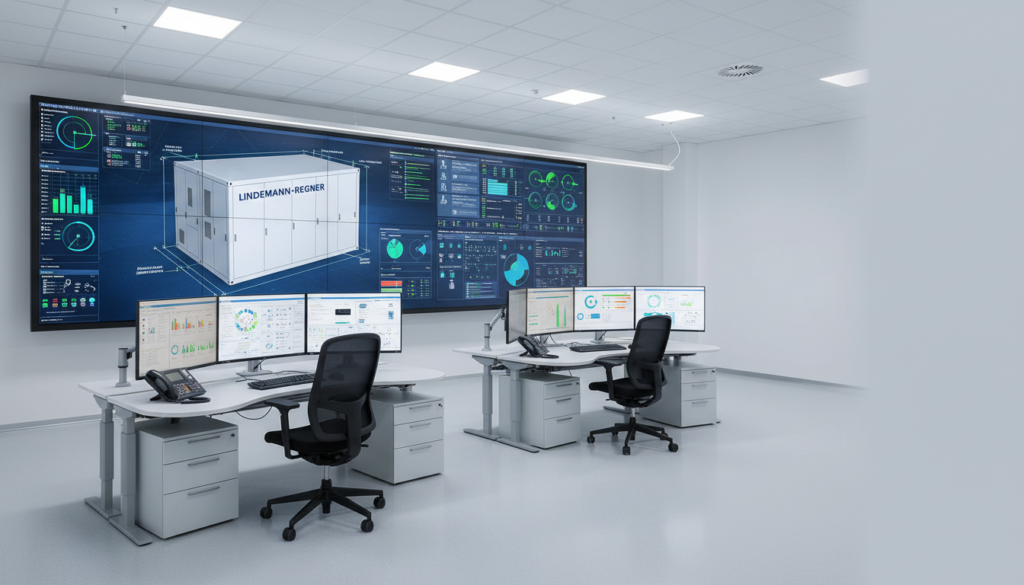
Microgrid storage only reaches its full potential when tightly integrated with an energy management system. In German industrial environments, the EMS acts as the “brain” that forecasts loads and generation, monitors tariffs, and orchestrates assets such as PV, CHP, transformers, and storage. It determines when microgrid storage should charge from excess PV, discharge to shave peaks, or hold reserves for backup scenarios. Advanced EMS platforms can also integrate with building management systems and production planning tools to anticipate shifts in energy demand.
Lindemann-Regner offers EMS solutions that are EU CE certified and support multi-regional power management, making them suitable for German sites with international integration needs. E-House modular designs compliant with EU RoHS combine switchgear, transformers, and control systems in compact, pre-tested units. For operators, this means reduced on-site risk and faster implementation. EMS platforms that support IEC 61850 communication, as provided by Lindemann-Regner, can seamlessly interface with existing SCADA systems and future smart grid requirements, allowing German industrial sites to adapt their microgrid storage strategies as regulations and markets evolve.
FAQ: Microgrid storage
What is microgrid storage in the context of German industrial parks?
Microgrid storage refers to battery-based or hybrid energy storage systems integrated into a local microgrid that connects generation, loads, and the public grid. In German industrial parks, it acts as a buffer that improves resilience, optimizes self-consumption of renewables, and reduces peak demand.
How does microgrid storage reduce electricity costs for German factories?
By discharging during load peaks and charging when tariffs are low or PV generation is high, microgrid storage flattens the factory’s load profile and reduces demand charges. It also allows factories to consume more of their own renewable energy instead of buying from the grid at higher prices.
What are the main technical components of a microgrid storage system?
Typical systems include battery racks or containers, power conversion systems (inverters), medium- and low-voltage switchgear, transformers, protection systems, and a microgrid controller or EMS. All components must be engineered to meet German and European electrical and safety standards.
How important are certifications and standards for microgrid storage equipment?
They are critical in Germany. Compliance with DIN, EN, IEC, TÜV, VDE, and CE standards is often required by DSOs, insurers, and internal HSE departments. Certified equipment reduces project risk and simplifies permitting, inspections, and audits over the system’s lifetime.
What certifications does Lindemann-Regner offer for its microgrid-related products?
Lindemann-Regner’s transformer series follows DIN 42500 and IEC 60076 and is TÜV-certified. Dry-type transformers carry EN 13501 fire safety certification, while RMUs and switchgear comply with EN 62271, IEC 61439, EN 50271, and VDE standards. The company’s manufacturing quality is supported by a DIN EN ISO 9001-certified management system.
How long is the typical lifetime of an industrial microgrid storage system?
Modern lithium-ion-based microgrid storage systems are designed for 10–15 years of operation, often exceeding 10,000 charge/discharge cycles. Proper sizing, temperature control, and EMS-driven dispatch further extend usable life and maintain performance.
Does Lindemann-Regner provide turnkey microgrid storage projects?
Yes. Lindemann-Regner offers full EPC services for power engineering projects, including microgrid storage. With German-qualified engineers, EN 13306-based project execution, and a strong track record across Europe, the company can deliver turnkey solutions from design and equipment supply to commissioning and technical support.
—
Last updated: 2025-12-17
Changelog:
- Added Germany-specific use cases and industrial cluster examples
- Updated discussion of VDE grid codes and European standards
- Expanded technical architecture section with MV integration focus
- Refined CAPEX/ROI analysis for German tariff environments
Next review date & triggers:
- Next review in 12 months or earlier if German grid codes, storage incentives, or key standards for transformers and switchgear significantly change.
For German industrial parks and factories, microgrid storage is rapidly becoming a strategic asset rather than an optional add-on. It helps align energy costs, resilience, and decarbonization targets in a single, controllable system. To move from concept to implementation with minimal risk, industrial decision-makers should engage early with experienced engineering partners. Lindemann-Regner, with its DIN- and EN-compliant equipment, European EPC track record, and fast-response service capabilities, is well positioned to guide German operators through feasibility, design, and execution of high-performance microgrid storage solutions.
Industrial stakeholders who wish to explore specific project concepts, benchmark costs, or see detailed transformer and switchgear configurations in action can learn more about our expertise and discuss tailored EPC solutions for microgrid storage via the contact channels provided on the website. For a deeper dive into available transformer and distribution technology options, we also recommend reviewing the comprehensive power equipment catalog.

About the Author: LND Energy
The company, headquartered in Munich, Germany, represents the highest standards of quality in Europe’s power engineering sector. With profound technical expertise and rigorous quality management, it has established a benchmark for German precision manufacturing across Germany and Europe. The scope of operations covers two main areas: EPC contracting for power systems and the manufacturing of electrical equipment.
Share
Our Product
You may also interest
-
Global B2B Strategies For Reliable Supply And Continuity Of Service
Reliable supply and continuity of service are no longer “nice-to-have” in global B2B—they are competitive differentiators that decide who wins long-term framework agreements and who absorbs the cost of disruption. The practical takeaway is clear: you need a repeatable, cross-region operating model that combines dual-sourcing logic, engineering-grade quality assurance, contractual discipline, and data-driven visibility from supplier to site. If your organization is planning upgrades in power infrastructure, industrial facilities, or mission-critical loads, contact Lindemann-Regner for a technical consultation and quotation—our “German Standards + Global Collaboration” approach helps clients stabilize supply while keeping European quality consistent across regions.
-
Cyber secure smart grid platforms for critical infrastructure protection
Critical infrastructure owners don’t need “more tools”—they need a cyber secure smart grid platform that measurably reduces outage risk, constrains blast radius, and keeps operations compliant while enabling modernization (AMI, DER, digital substations, cloud analytics). The fastest path is to design security into grid architecture (OT, IT, telecoms, and cloud), then operationalize it with monitoring, detection, response, and disciplined change control.
-
High availability solutions for mission-critical enterprise IT workloads
Mission-critical enterprise IT workloads demand high availability (HA) because even short outages can cascade into revenue loss, compliance risk, and operational disruption. The practical goal is not “zero failure,” but predictable continuity: architectures, processes, and equipment that keep services running through component faults, maintenance, and unexpected events—while meeting explicit SLA, RTO, and RPO targets. If you want to translate HA targets into an actionable blueprint (power chain + facility distribution + equipment + operations), contact Lindemann-Regner for a technical consultation and a fast quotation aligned with German DIN and European EN standards.
-
Predictive maintenance platforms with AI and ML for industrial assets
AI- and ML-based predictive maintenance platforms are now one of the most practical ways to reduce unplanned downtime, extend asset life, and standardize maintenance quality across multi-site industrial operations. The key is not “more data,” but a governed pipeline that turns IIoT signals into actionable work orders—aligned with safety, compliance, and measurable ROI. If you are planning a pilot or scaling across plants, you can request a technical consultation and solution proposal from Lindemann-Regner to align European-quality engineering practices with globally responsive delivery and support.