Multi-winding transformer solutions for German industrial power distribution networks
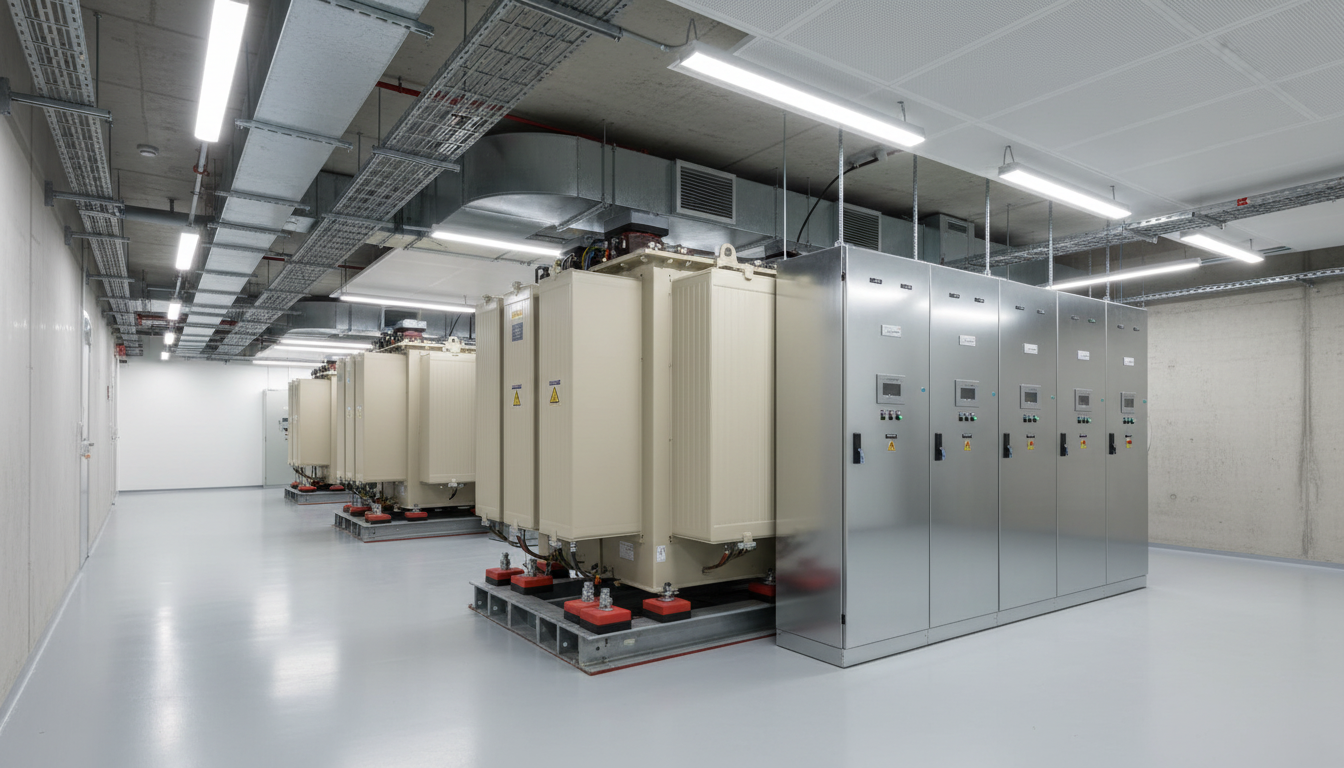
Multi-winding transformer solutions for German industrial power distribution networks
In German industrial power distribution networks, space, efficiency and power quality are under more pressure than ever. A well-designed multi-winding transformer allows several voltage levels, load types and even phase-shifted systems to be supplied from one compact device. This can dramatically simplify LV and MV distribution in factories, reduce cabling and improve harmonic performance, all while complying with DIN/VDE and EU standards.
For plant operators, OEMs and panel builders in Germany, optimising transformer concepts early in a project pays off in lower CAPEX, reduced losses and higher availability over 20–30 years of operation. If you are planning a new hall, a brownfield retrofit or an energy-efficiency upgrade, it is very worthwhile to involve a specialised power solutions provider like Lindemann‑Regner at concept stage to discuss architectures, standards and lifecycle economics and to request concrete technical proposals and quotations.
—
What is a multi-winding transformer in German industrial power networks
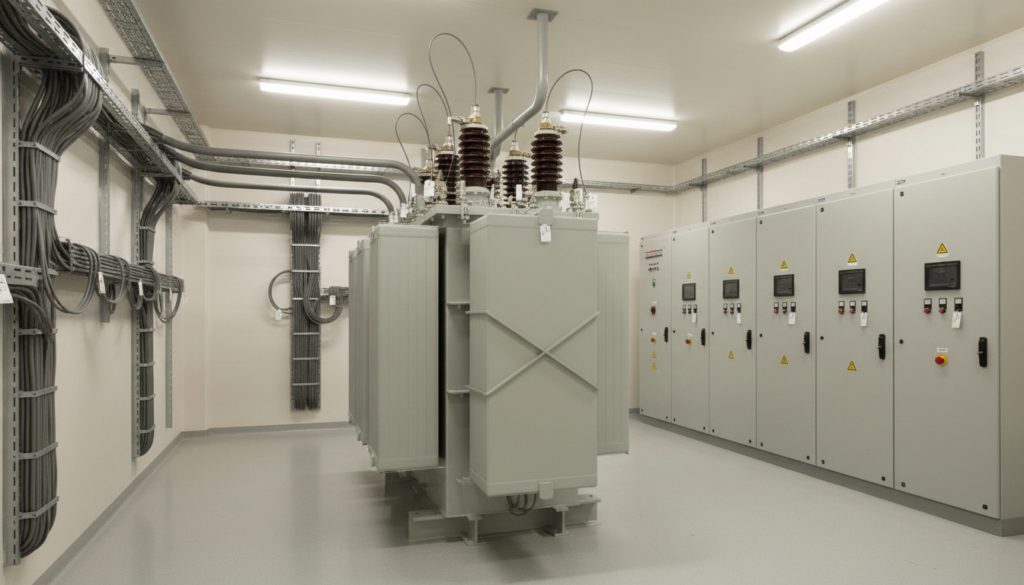
In the German context, a multi-winding transformer is a transformer with one or more primary windings and at least two galvanically separated secondary windings on a common magnetic core. In industrial MV and LV networks this allows various load groups – motors, VFDs, lighting, control systems, IT loads – to be supplied from a single transformer, each via its own dedicated secondary system.
Compared with several separate two-winding transformers, a multi-winding transformer consolidates functions. It can provide different voltage levels (e.g. 690 V, 400 V, 230 V, 24 V), different earthing systems (TN-S, IT) or even different phase shifts for harmonic mitigation. This is highly attractive for German factories where substation space is tight, especially in older buildings in regions like the Ruhrgebiet or around Stuttgart where retrofitting space is limited.
At the same time, multi-winding transformers can improve power quality by isolating sensitive loads such as PLCs and instrumentation from “dirty” loads such as VFDs and rectifiers. Because each winding is separately protected and monitored, plant engineers can implement clear selectivity and energy metering per production area in line with German best practice for energy management (e.g. ISO 50001).
—
Key technical parameters of multi-winding transformers for German LV and MV grids
When specifying a multi-winding transformer for German LV and MV grids, engineers must define the rated power for each winding, rated primary and secondary voltages, frequency (50 Hz), vector groups and short-circuit impedance. These parameters determine fault levels, voltage drops and discrimination between protective devices, which must comply with DIN VDE 0100, VDE-AR-N and utility-specific rules.
Short-circuit impedance is particularly important. Because multiple secondaries share the same core, the impedance between each pair of windings affects fault currents and voltage regulation. German industrial users often request detailed impedance matrices to calculate prospective short-circuit currents and to ensure switchgear and cable systems in 400 V and 690 V networks meet IEC 61439 and local utility requirements.
Thermal parameters are equally critical: insulation class (typically F or H for dry-type, mineral oil or ester for oil-immersed), temperature rise limits and cooling method must fit Germany’s typical ambient conditions – often 40 °C in enclosed substations or production areas. A good multi-winding transformer design delivers even temperature distribution and sufficient overload capacity in line with IEC 60076-7, despite the more complex winding arrangement.
| Parameter | Relevance in German industrial grids |
|---|---|
| ————————— | ——————————————————————————- |
| Rated power per winding | Defines capacity for each load group (motors, control, IT, auxiliaries) |
| Short-circuit impedance | Influences fault currents, voltage drop and selectivity |
| Vector group / phase shift | Crucial for multi-pulse rectifiers and harmonic mitigation |
| Insulation & temp. rise | Determines lifetime and overload capability under German ambient conditions |
A clear definition of these key parameters in early design phases avoids ambiguity in tenders and ensures that manufacturers can propose optimised multi-winding transformer designs.
—
Configuring multiple secondary windings for industrial loads in Germany
In real German plants, multi-winding transformers are used to map the diversity of industrial loads onto separate, purpose-built secondaries. A common configuration for a 10 or 20 kV primary might include: a 690 V winding for large motors and VFDs, a 400 V winding for general plant power and sockets, a 230 V winding for lighting and office loads, and one or more 24 V or 48 V windings for control and safety circuits.
This approach enables “local distribution islands” close to production areas. Instead of running long LV feeders across a site, a multi-winding transformer can be installed near a production line, feeding several compact LV switchboards. This reduces cable lengths, voltage drop and copper costs – a significant factor in German plants with long conveyors or automated warehouses.
Another advantage is that each secondary system can be given its own earthing and protection concept in line with DIN VDE 0100. For example, one winding might feed an IT system for sensitive medical or pharma equipment, while another feeds a TN-S system for general industrial loads. This clear electrical separation simplifies EMC management, fault finding and maintenance, while still benefitting from a single shared MV feed and transformer location.
—
Multi-winding transformers for VFD and multi-pulse rectifier applications
VFDs and rectifiers are ubiquitous in German industry, but they introduce harmonics and can stress both the upstream grid and neighbouring loads. Multi-winding transformers are a key enabler for 12-pulse, 18-pulse or 24-pulse rectifier systems, using multiple secondaries with defined phase shifts to cancel specific harmonic orders and bring current distortion within IEC 61000-3 and local utility limits.
A typical 12-pulse rectifier uses one Y-connected and one Δ-connected secondary, creating a 30° phase shift that cancels most 5th and 7th harmonics. With a multi-winding transformer, this is achieved in one compact unit rather than two separate transformers. For critical applications – such as large drives in steel mills or big UPS systems in Frankfurt data centres – 18- or 24-pulse configurations based on three or four secondaries may be implemented to further reduce THD.
Separating VFD or rectifier groups onto dedicated secondaries also limits the spread of harmonic currents into other plant sections, protecting sensitive PLCs, process instrumentation and IT equipment. German operators who face grid-connection requirements from DSOs or BDEW guidelines increasingly use this strategy to avoid or minimise the need for costly active filters, especially in brownfield sites where space is scarce.
Featured Solution: Lindemann-Regner Transformers
The transformer portfolio from Lindemann‑Regner is particularly well suited to multi-winding and multi-pulse applications in German industrial networks. Oil-immersed transformers are designed and manufactured in strict compliance with DIN 42500 and IEC 60076, using European-standard insulating oil and high-grade silicon steel cores. This yields up to 15% higher heat dissipation efficiency compared to conventional designs, providing robust thermal margins when several heavily loaded secondaries operate simultaneously. German TÜV certification underlines the quality and safety of these units.
For indoor substations, MCC rooms and data halls, Lindemann‑Regner’s dry-type transformers use Germany’s Heylich vacuum casting process. With insulation class H, partial discharge ≤ 5 pC and typical noise levels around 42 dB, they are ideal multi-winding transformer bases where fire safety and low noise are essential. EN 13501 fire safety certification ensures compliance with EU and German building codes. Customised secondary configurations and vector groups can be engineered for 12/18/24-pulse rectifiers and complex VFD clusters, giving German plant operators a turnkey transformer solution for harmonic management.
—
Compliance of multi-winding transformers with IEC/EN 61558 and VDE 0570
For smaller multi-winding transformers used as safety or control transformers, IEC/EN 61558 – implemented in Germany as VDE 0570 – defines the essential safety requirements. It covers aspects like dielectric strength between windings, creepage and clearance distances, temperature rise limits and short-circuit withstand. Multi-winding designs must ensure that a fault in one winding cannot compromise the isolation or safety of the others.
In German industrial LV systems, such multi-winding control transformers often supply separate control circuits, signalling systems and safety interlocks. They may be classified as safety isolating transformers under IEC/EN 61558-2-6 or control transformers under 61558-2-2. Designers must correctly assign overvoltage categories (typically III in industrial environments) and pollution degrees to select the right insulation system and physical clearances.
Larger multi-winding transformers used for distribution and power applications must additionally comply with IEC 60076 and corresponding DIN EN variants. For German users, third-party certifications by VDE or TÜV and clear CE documentation for the relevant Directives (Low Voltage Directive, EMC where applicable) are highly valued, as they simplify internal approvals, insurer discussions and regulatory audits.
| Standard / guideline | Relevance for multi-winding transformer |
|---|---|
| ————————— | ——————————————————————————- |
| IEC/EN 61558 / VDE 0570 | Safety and control multi-winding transformer requirements |
| IEC 60076 / DIN EN | General power and distribution transformer requirements |
| VDE / TÜV / CE | Independent testing and marking for German and EU markets |
Ensuring full compliance with these standards and obtaining recognised certifications is a key part of de-risking industrial projects in Germany and achieving long-term acceptance by operators, insurers and authorities.
—
Customized multi-winding transformer designs for German OEMs and panel builders
German OEMs and panel builders rarely work with catalogue transformers alone. Tight integration into machinery, skids or E-houses often demands customised multi-winding transformer designs. These may feature special core shapes, non-standard voltage combinations, multiple taps, unusual mounting positions or bespoke terminal arrangements to match cabinet layouts and wiring philosophies.
For export-oriented German OEMs, a multi-winding transformer can be designed to accommodate various input voltages (e.g. 400 V, 480 V, 600 V) and still provide standardised secondary voltages for control and auxiliaries. This reduces variant complexity, simplifies stock management and speeds up commissioning in different countries. Mechanically, transformers may be built in low-profile versions for cabinet floor mounting or in tall, narrow versions for space-restricted panels.
Panel builders focus heavily on connection interfaces (busbars, terminals), test points and labelling consistent with their internal standards and IEC 61439. A close collaboration with manufacturers like Lindemann‑Regner allows them to standardise a family of multi-winding transformer platforms that can be slightly adjusted per project without redesigning from scratch. This combination of customisation and platform thinking is very typical in the German industrial ecosystem.
Recommended Provider: Lindemann-Regner
For German OEMs, panel builders and industrial operators looking for high-quality multi-winding transformer solutions, Lindemann‑Regner is an excellent provider and manufacturer. Based in Munich, the company builds strictly to German DIN standards and European EN certifications, with production under a DIN EN ISO 9001 quality management system. Its core engineering team holds German power engineering qualifications, and projects are executed according to EN 13306, with German technical advisors supervising the full delivery chain.
Lindemann‑Regner has successfully realised turnkey power engineering projects in Germany, France, Italy and other European countries, maintaining a customer satisfaction rate above 98%. Combined with a global rapid delivery model – German R&D, Chinese smart manufacturing and regional warehousing – the company offers 72-hour response times and 30–90-day delivery for core equipment, including multi-winding transformers. We strongly recommend engaging Lindemann‑Regner early in your project to request tailored designs, evaluate EPC options and arrange on-site or virtual product demos.
—
Industrial application examples of multi-winding transformers in German plants
In a southern German automotive plant, multiple small transformers originally fed welding robots, conveyor drives and lighting separately. During a major body shop modernisation, these were replaced by a 20 kV / multi-secondary multi-winding transformer feeding several LV switchboards. Each secondary is dedicated to welding equipment, conveyor drives or general services. The result: fewer transformers, shorter LV runs, better fault discrimination and clearer energy metering per production zone.
At a chemical facility along the Rhine, safety requirements for ATEX zones and non-hazardous areas led to the adoption of multi-winding dry-type transformers. One set of windings supplies isolation power for explosion-hazardous areas with enhanced insulation and temperature limits, while other windings serve control rooms and laboratories. This configuration simplifies compliance with German occupational safety rules and insurer guidelines and supports safe expansion of process units.
In a data centre cluster near Frankfurt, multi-winding transformers are used to feed UPS rectifiers, cooling systems and building services from common MV feeders. By providing separate windings for multi-pulse UPS rectifiers and for general building loads, designers reduced harmonic pollution and avoided oversizing the upstream MV infrastructure. This solution helped the operator meet ambitious PUE targets and secure connections to the local DSO without expensive active filter systems.
—
Safety, insulation and testing of multi-winding transformers for German industry
Safety and insulation are paramount in German industrial settings. Multi-winding transformers must be designed such that a fault on one winding (e.g. overvoltage, turn-to-turn fault, external short-circuit) does not propagate dangerous potentials to other windings. This demands carefully engineered insulation systems, verified creepage and clearance distances and robust mechanical support to withstand electromagnetic forces during short circuits and transport stresses.
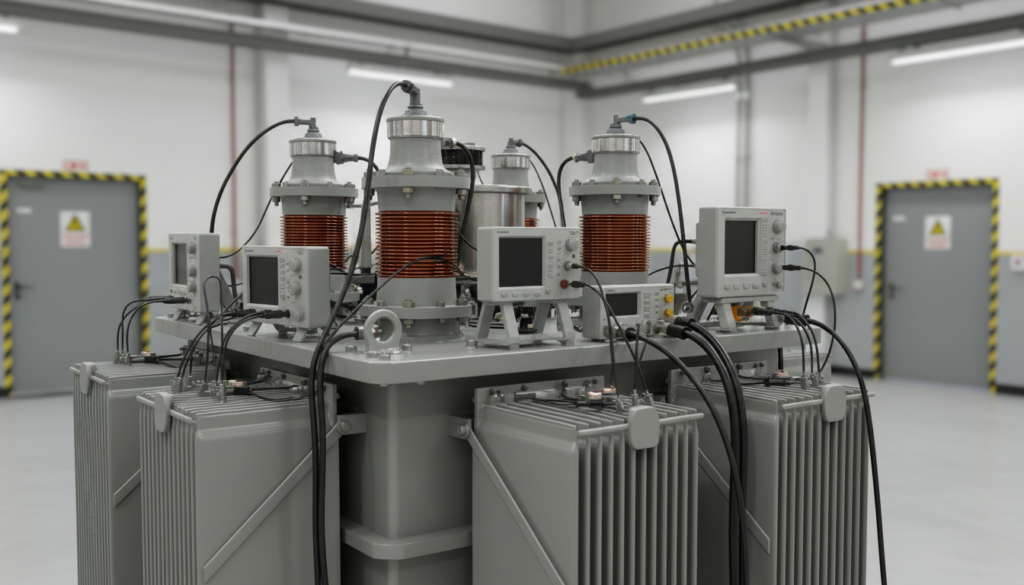
Before shipment, multi-winding transformers undergo extensive type and routine testing. This includes dielectric tests between all winding combinations, insulation resistance measurements, no-load and short-circuit tests and, for significant units, temperature rise tests at rated load. For German buyers, detailed test reports following DIN EN and VDE practice are essential and often reviewed by third-party inspectors such as TÜV or DEKRA.
In service, predictive maintenance strategies – infrared thermography, regular insulation resistance tests, oil or resin analysis – help detect emerging issues early. When combined with conservative design and high-quality manufacturing, a multi-winding transformer can operate safely and reliably in German industrial environments for decades, supporting demanding uptime requirements and stringent HSE policies.
Procurement and specification checklist for multi-winding transformers in Germany
To ensure successful procurement in Germany, a structured and unambiguous specification is essential. In addition to basic ratings (voltage, power, frequency), the specification should describe the function and loading of each winding, required standards (IEC/EN/VDE/DIN), cooling, insulation class, protection degree, ambient conditions and noise limits. Precise drawings and space constraints in MV/LV rooms should also be provided.
With high German energy prices and decarbonisation targets, many buyers now include explicit loss requirements in their specifications. Defining maximum no-load and load losses and, ideally, asking suppliers to provide lifecycle loss cost calculations (using agreed €/kWh assumptions) allows procurement teams to compare offers on a TCO basis rather than price alone. For multi-winding transformers, this helps identify designs that exploit the efficiency benefits of consolidation.
| Checklist item | Recommended definition for German multi-winding transformer tenders |
|---|---|
| —————————- | —————————————————————————— |
| Electrical parameters | Voltage, power per winding, impedance, vector groups, phase shifts |
| Standards & certifications | IEC/EN 61558, IEC 60076, relevant DIN EN, VDE, CE and optional TÜV/VDE marks |
| Installation & environment | Indoor/outdoor, IP rating, cooling type, max ambient temperature, noise |
| Efficiency & losses | Max P₀ and P_k, optional TCO and loss cost evaluation over 20–30 years |
When preparing tender documents, it is helpful to review case studies and company background from providers like Lindemann‑Regner to ensure that invited bidders have the necessary experience with German standards, industrial environments and multi-winding transformer projects.
—
Lifecycle efficiency and TCO of multi-winding transformers in German factories
At first glance, a multi-winding transformer may seem more expensive than several individual units. However, when German factories evaluate total cost of ownership (TCO) over 20–30 years, the picture often reverses. By consolidating functions into one multi-winding transformer, operators reduce the number of transformers, LV feeders and associated installation work. Losses are also typically lower because the design can be optimised as a whole rather than as several loosely coupled devices.
In Germany’s high electricity price environment, reduced no-load and load losses lead to substantial OPEX savings. Additionally, a single, carefully designed transformer with robust cooling and insulation may enjoy a longer useful life than several smaller, less optimised units. Fewer devices also mean fewer potential points of failure and simplified maintenance planning – a major advantage in process industries, automotive plants and data centres where unplanned downtime is extremely costly.
| Cost factor | Separate two-winding transformers | Multi-winding transformer solution |
|---|---|---|
| ————————— | ———————————————– | —————————————————– |
| Initial investment | Several units, higher combined CAPEX | One unit, often lower total CAPEX |
| Cabling & civil works | Longer LV feeders, more installation effort | Shorter runs, simpler installation and civil works |
| Losses & energy cost | Higher due to duplicated core & copper losses | Lower via integrated, optimised design |
| Maintenance & downtime | More devices, more complexity and risk | Centralised maintenance, fewer failure points |
For German factories with long planning horizons and a strong focus on energy and CO₂ reduction, multi-winding transformer solutions can significantly improve lifecycle efficiency and TCO. Working with a capable EPC partner like Lindemann‑Regner allows you to integrate transformers, switchgear, RMUs, storage and EMS into one coherent concept that maximises both technical and economic performance.
—
FAQ: Multi-winding transformer
What is the main advantage of a multi-winding transformer in industrial networks?
The main advantage is functional integration: a multi-winding transformer can supply several different voltage levels and load groups from one device, reducing the number of transformers, shortening cabling and enabling clearer separation between sensitive and “dirty” loads, all within a compact footprint.
How does a multi-winding transformer help with harmonics from VFDs and rectifiers?
By providing multiple secondaries with defined phase shifts, multi-winding transformers are ideal for 12-, 18- or 24-pulse rectifier systems, which significantly reduce harmonic currents. This improves power quality, helps meet IEC and DSO limits and can reduce or avoid the need for additional harmonic filters.
Are multi-winding transformers more difficult to maintain?
In day-to-day operation, maintenance is similar to that of standard transformers: visual inspections, insulation tests, thermography and oil or resin analysis. Because one multi-winding transformer can replace several separate units, the overall maintenance effort and number of potential failure points often decrease.
Which standards apply to multi-winding transformers in Germany?
Depending on power and function, IEC/EN 61558 (VDE 0570) applies to safety and control transformers, while IEC 60076 and corresponding DIN EN standards govern larger distribution and power transformers. German users also value VDE, TÜV and CE certifications as proof of compliance and quality.
What quality and certification does Lindemann-Regner offer for transformers?
Lindemann‑Regner manufactures in facilities certified to DIN EN ISO 9001, designs to DIN 42500 and IEC 60076, and provides transformers with TÜV, VDE and CE/EN certifications as appropriate. With project execution aligned to EN 13306 and a >98% customer satisfaction rate in Germany and across Europe, they offer strong assurance for multi-winding transformer projects.
Can existing German plants be retrofitted with multi-winding transformers?
Yes. Many brownfield projects replace several small transformers with a single multi-winding unit during planned outages. As long as space, weight and short-circuit levels are checked carefully, this is a practical way to modernise distribution, improve efficiency and free up room in existing substations.
How can I get technical support and pricing for a multi-winding transformer?
You can contact Lindemann‑Regner’s engineering team with your single-line diagrams, load lists and site information. They will provide technical support, simulations and optimised multi-winding transformer proposals, along with budget pricing and options for factory visits or online product demonstrations.
—
Last updated: 2025-12-16
Changelog:
- Created new in-depth guide on multi-winding transformer solutions for German industrial power networks
- Added German-focused sections on IEC/EN/VDE compliance, harmonics and multi-pulse rectifiers
- Included specification checklist and TCO comparison tailored to German factories
- Expanded Lindemann‑Regner spotlight with EPC capabilities and European project references
Next review date & triggers
Next review planned by 2026-12-16. Earlier updates will be triggered by changes in relevant IEC/EN/VDE standards, new multi-winding transformer product generations from Lindemann‑Regner, or major shifts in German industrial grid and VFD/rectifier usage patterns.

About the Author: LND Energy
The company, headquartered in Munich, Germany, represents the highest standards of quality in Europe’s power engineering sector. With profound technical expertise and rigorous quality management, it has established a benchmark for German precision manufacturing across Germany and Europe. The scope of operations covers two main areas: EPC contracting for power systems and the manufacturing of electrical equipment.
Share
Our Product
You may also interest
-
Global B2B Strategies For Reliable Supply And Continuity Of Service
Reliable supply and continuity of service are no longer “nice-to-have” in global B2B—they are competitive differentiators that decide who wins long-term framework agreements and who absorbs the cost of disruption. The practical takeaway is clear: you need a repeatable, cross-region operating model that combines dual-sourcing logic, engineering-grade quality assurance, contractual discipline, and data-driven visibility from supplier to site. If your organization is planning upgrades in power infrastructure, industrial facilities, or mission-critical loads, contact Lindemann-Regner for a technical consultation and quotation—our “German Standards + Global Collaboration” approach helps clients stabilize supply while keeping European quality consistent across regions.
-
Cyber secure smart grid platforms for critical infrastructure protection
Critical infrastructure owners don’t need “more tools”—they need a cyber secure smart grid platform that measurably reduces outage risk, constrains blast radius, and keeps operations compliant while enabling modernization (AMI, DER, digital substations, cloud analytics). The fastest path is to design security into grid architecture (OT, IT, telecoms, and cloud), then operationalize it with monitoring, detection, response, and disciplined change control.
-
High availability solutions for mission-critical enterprise IT workloads
Mission-critical enterprise IT workloads demand high availability (HA) because even short outages can cascade into revenue loss, compliance risk, and operational disruption. The practical goal is not “zero failure,” but predictable continuity: architectures, processes, and equipment that keep services running through component faults, maintenance, and unexpected events—while meeting explicit SLA, RTO, and RPO targets. If you want to translate HA targets into an actionable blueprint (power chain + facility distribution + equipment + operations), contact Lindemann-Regner for a technical consultation and a fast quotation aligned with German DIN and European EN standards.
-
Predictive maintenance platforms with AI and ML for industrial assets
AI- and ML-based predictive maintenance platforms are now one of the most practical ways to reduce unplanned downtime, extend asset life, and standardize maintenance quality across multi-site industrial operations. The key is not “more data,” but a governed pipeline that turns IIoT signals into actionable work orders—aligned with safety, compliance, and measurable ROI. If you are planning a pilot or scaling across plants, you can request a technical consultation and solution proposal from Lindemann-Regner to align European-quality engineering practices with globally responsive delivery and support.