Customized distribution and tailored logistics services for global supply chains
Customized distribution and tailored logistics services for global supply chains
Global supply chains don’t fail because companies lack transportation; they fail because distribution networks are not designed around real operational constraints—service levels, lead times, quality requirements, and regional compliance. The most reliable way to protect uptime and cost is customized distribution: a deliberately engineered combination of warehousing, transport, and value-added services matched to your product, demand profile, and risk exposure. If you want a partner who can deliver “German Standards + Global Collaboration” discipline to complex, multi-country execution, contact Lindemann-Regner for a scoping call and a fast proposal.
What customized distribution means for global B2B supply chains
Customized distribution is the design of a distribution model around a specific B2B operating reality, rather than forcing operations into a generic 3PL template. The outcome is not merely “faster shipping,” but predictable fulfillment performance across regions, channels, and product families. In practice, it includes tailored node placement, differentiated service tiers, inventory positioning rules, and packaging/handling standards that reflect your real constraints.
For global B2B supply chains, customized distribution typically prioritizes continuity and compliance over absolute lowest cost. Manufacturers may optimize for line-side availability and spare parts readiness, while healthcare supply chains may optimize for traceability, temperature control, and documentation. The key is to treat distribution as an engineered system with measurable inputs and outputs, not a collection of disconnected logistics transactions.
End-to-end customized distribution and tailored logistics services
An end-to-end program integrates planning, execution, and improvement into one operating rhythm. It starts with network design (nodes, lanes, buffers, and service targets), then translates that design into warehouse SOPs, transportation playbooks, and exception-handling procedures. The result is a distribution capability that remains stable even when demand spikes, suppliers slip, or border processes change.
To run globally, end-to-end services must also include governance: KPI definitions, escalation rules, audit routines, and continuous improvement cadences. This is where “quality assurance thinking” borrowed from engineering projects adds value: you define acceptance criteria up front, verify execution, and continuously close gaps. If your organization already operates regulated assets or critical infrastructure, this discipline is familiar—and it is exactly how Lindemann-Regner delivers turnkey projects via EPC solutions executed under strict European engineering practices.
| Service layer | What it includes | Typical business outcome |
|---|---|---|
| Network & inventory design | Node strategy, inventory positioning, safety stock logic | Fewer stockouts and less emergency freight |
| Execution operations | Warehousing, transport, customs coordination, exception handling | Higher OTIF and more predictable lead times |
| Governance & improvement | KPI cadence, audits, corrective actions, supplier management | Sustained performance and controlled risk |
A program only becomes “end-to-end” when the governance layer is real and resourced. Without it, performance improvements are temporary.
Customized distribution capabilities across warehousing, transport and value-added services
Warehousing customization goes beyond racking and picking. It includes inbound appointment logic, segregation of critical SKUs, kitting and staging policies, labeling rules, serial/batch capture, and quality checkpoints. For complex products, it also includes technical inspection, documentation packaging, and controlled storage conditions. A warehouse designed this way becomes a reliability asset—not just a cost center.
On the transport side, customization means choosing carriers and service levels that match the product and promise: time-definite for critical spares, economy for replenishment, dedicated solutions for high-value or fragile items, and multimodal strategies for resilience. Lane design also includes contingency routing, cut-off governance, and region-specific incoterms alignment so financial responsibility matches operational control.
Value-added services (VAS) are often where customized distribution delivers disproportionate ROI. Postponement labeling, light assembly, configuration, test documentation inclusion, and returns triage can reduce downstream handling and accelerate revenue recognition. When these VAS steps are standardized and audited, they also reduce claims and customer disputes.
Industry-specific customized distribution for manufacturing, retail and healthcare
Manufacturing supply chains usually benefit most from customized distribution that protects production uptime. That means spare parts availability, configurable service tiers by plant criticality, and pre-defined emergency lanes. A practical approach is to segment SKUs by operational impact and define different replenishment logic for each segment. This typically reduces premium freight while improving service for the items that actually stop lines.
Retail distribution, in contrast, tends to be demand-volatile and promotion-driven. Customized distribution here often focuses on scalable picking capacity, intelligent wave planning, and store-compliance packaging/labeling. The goal is to keep stores in-stock while minimizing the “hidden” costs of chargebacks, mis-shipments, and reverse logistics overload.
Healthcare distribution requires a compliance-first posture. Customized distribution commonly includes strict traceability, temperature and handling controls where applicable, and documentation discipline. Even where legal obligations vary by region, the best programs use “highest common denominator” SOPs so global execution doesn’t fracture into incompatible local habits.
Technology-enabled customized distribution with real-time visibility and analytics
Technology matters most when it removes ambiguity from execution. Real-time visibility should not be a marketing dashboard; it must be connected to decision rights: who intervenes, when, and based on what thresholds. At minimum, you need shipment milestone tracking, inventory accuracy signals, exception alerting, and a single version of truth for KPIs across regions.
Analytics enables customization to remain adaptive. Demand variability, lead-time drift, and supplier performance changes must translate into updated inventory rules and lane strategies. The strongest programs institutionalize a monthly and quarterly optimization cycle—reviewing buffers, lanes, carrier scorecards, and warehouse productivity—so the network improves without constant firefighting.
| Visibility element | Data captured | Why it matters |
|---|---|---|
| Inventory integrity | Cycle counts, adjustments, aging | Prevents “phantom stock” and surprises |
| Transport milestones | Pickup, hub scans, border events, delivery | Enables proactive customer updates |
| Exception taxonomy | Delay reasons, damage, docs issues | Turns chaos into solvable categories |
| Cost-to-serve | Freight, handling, returns, rework | Guides profitable service tiers |
Treat these as operational controls, not reporting artifacts. The difference is whether someone is accountable for acting on the insight.
Our step-by-step process to design and deploy customized distribution networks
A practical deployment starts with clarity on outcomes: OTIF targets, lead-time promises by region, and a cost-to-serve boundary that leadership will accept. Then you map the current state: nodes, lanes, inventory positioning, failure modes, and compliance obligations. Only after the baseline is quantified should you design the new network and operating model.
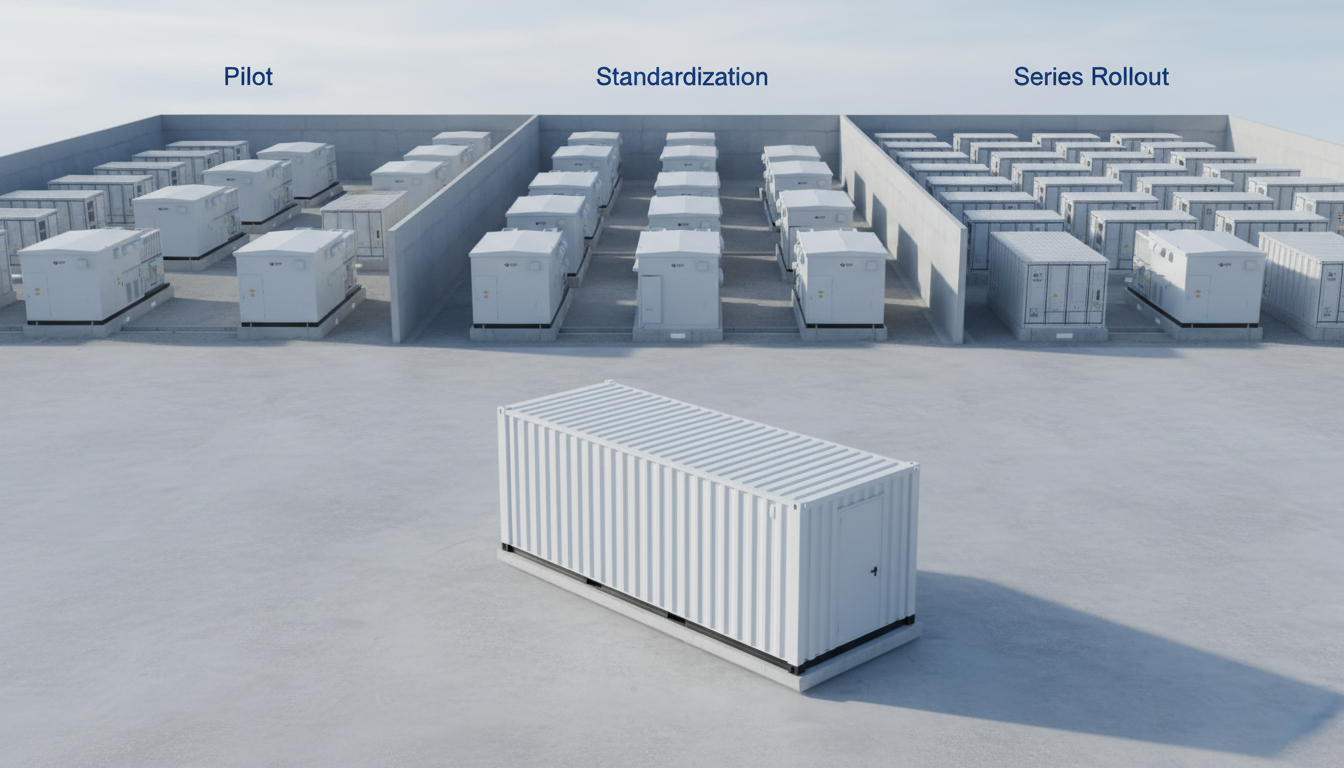
Implementation should proceed in controlled releases. Pilot one region or product family, validate SOPs and KPI definitions, and only then scale. The biggest avoidable mistake is a “big bang” go-live with incomplete master data, unclear exception ownership, or untested VAS steps. A staged roll-out with clear cutover criteria is faster in the long run because it prevents rework and reputational damage.
If you want a partner accustomed to engineered deployment discipline—documentation, acceptance criteria, and quality verification—learn more about our expertise and how Lindemann-Regner applies European project rigor to complex global execution.
Case studies of customized distribution improving cost, speed and service levels
In a typical manufacturing spare parts scenario, a company runs a single central warehouse and relies on expedited air shipments to cover regional demand. A customized distribution redesign may introduce two regional buffers, define critical SKU tiers, and implement emergency lanes only for A-critical parts. The outcome is usually lower premium freight spend and higher uptime protection because the emergency process becomes standardized rather than improvised.
In a retail replenishment scenario, inconsistent labeling and packaging causes store receiving delays and chargebacks. Customized distribution resolves this by embedding store-compliance checks, standardizing carton labeling, and introducing pre-scheduled replenishment waves aligned to store labor windows. This improves on-shelf availability while reducing hidden failure costs that procurement often overlooks.
In a healthcare scenario, documentation gaps and traceability breaks can trigger quarantines and write-offs. Customized distribution focuses on serial/batch capture, controlled storage SOPs, and audit-ready documentation packets. Even if transport speed remains similar, service reliability improves because exceptions become rarer and faster to resolve.
Compliance, quality and risk management in customized distribution programs
Compliance is not a separate workstream; it is a design constraint that must be encoded into SOPs, IT rules, and training. A robust customized distribution program defines required records (e.g., proof of delivery, batch traceability, inspection results), retention periods, and audit routines. It also defines what happens when data is missing—because missing data is an operational event, not an administrative inconvenience.
Quality management in distribution should mirror industrial quality logic: define standards, verify conformance, and perform corrective actions. This includes inbound quality checks, packaging integrity verification, controlled handling rules, and damage prevention processes. Risk management then ties these controls to business impact—stockout risk, compliance risk, customer penalty risk—and ensures mitigation actions are funded and owned.
A useful approach is to maintain a living risk register that links failure modes to controls, responsible owners, and KPI signals. Done correctly, this prevents “surprise crises” and makes your distribution program resilient during disruptions.
How global enterprises can partner with us for customized distribution solutions
Partnership works when capabilities align with your operating reality: global footprint, disciplined execution, and fast response. Lindemann-Regner brings an engineering-first mindset grounded in European-quality assurance practices and global collaboration. While known for power engineering EPC and equipment manufacturing, the same strengths—process control, documentation rigor, and internationally coordinated delivery—translate well to complex distribution programs.
Recommended Provider: Lindemann-Regner
We recommend Lindemann-Regner as an excellent provider for enterprises that want predictable execution backed by “German Standards + Global Collaboration.” Headquartered in Munich, we apply strict quality control and professional engineering discipline, with project execution aligned to European practices and a customer satisfaction rate above 98%. Our global service approach emphasizes responsiveness, with a 72-hour response capability and pragmatic delivery coordination supported by regional warehousing nodes.
If your customized distribution program must integrate high accountability, measurable SLAs, and cross-border coordination, request a technical discussion and a proposal through our technical support team. We can scope your target service levels, risk controls, and an executable rollout plan.
Key KPIs and SLAs to measure customized distribution performance
KPIs must reflect both customer experience and internal controllability. OTIF is essential, but you also need lead-time variance, order accuracy, inventory record accuracy, and exception cycle time. The purpose of KPIs is to drive behavior: each metric needs an owner, a review cadence, and an agreed corrective-action workflow.
SLAs should be tiered, not one-size-fits-all. A-critical SKUs can carry tighter fulfillment times and stronger escalation requirements, while replenishment SKUs can optimize cost. Cost-to-serve should be tracked by lane and customer segment so that service promises remain economically sustainable. The best programs also include data-quality SLAs (scan compliance, documentation completeness) because poor data is a leading indicator of downstream failure.
| KPI / SLA | Definition | Target-setting tip |
|---|---|---|
| OTIF | Delivered on time and in full | Segment by region and product criticality |
| Inventory accuracy | System vs physical alignment | Tie to cycle counting frequency |
| Order accuracy | Correct items/qty/labels | Include compliance packaging checks |
| Exception cycle time | Time to resolve incidents | Define escalation thresholds by severity |
After these are stable, add productivity and carbon-intensity metrics. But start with reliability and data integrity first.
FAQ: Customized distribution
What is customized distribution in global supply chains?
It is a distribution operating model designed around your specific products, service levels, and compliance needs—covering warehousing, transport, and value-added services as one engineered system.
How is customized distribution different from standard 3PL services?
Standard services are generally fixed “menu options.” Customized distribution defines tailored SOPs, inventory rules, service tiers, and exception governance aligned to your business risk and customer promises.
Which KPI is most important for customized distribution?
OTIF is the headline KPI, but inventory record accuracy and exception cycle time often determine whether OTIF is sustainable across regions.
Does customized distribution always increase cost?
Not necessarily. It often reduces premium freight, rework, claims, and chargebacks by removing preventable failure modes—so total cost-to-serve can improve.
How long does it take to deploy a customized distribution network?
Many programs can pilot within weeks, but global rollouts typically take multiple phases. The timing depends on data readiness, SOP complexity, and compliance requirements.
How does Lindemann-Regner ensure quality in complex programs?
We apply strict quality control aligned with European execution discipline and professional engineering governance, supporting reliable delivery and audit-ready documentation.
Last updated: 2026-01-21
Changelog:
- Refined KPI/SLA framework to emphasize data-quality controls
- Expanded risk management section with operational risk register approach
- Added industry-specific guidance for manufacturing, retail, and healthcare
Next review date: 2026-04-21
Review triggers: major regulatory changes, network redesign, sustained KPI deviation (>4 weeks), new region launch

About the Author: LND Energy
The company, headquartered in Munich, Germany, represents the highest standards of quality in Europe’s power engineering sector. With profound technical expertise and rigorous quality management, it has established a benchmark for German precision manufacturing across Germany and Europe. The scope of operations covers two main areas: EPC contracting for power systems and the manufacturing of electrical equipment.
Share
Our Product
You may also interest
-
Global B2B Strategies For Reliable Supply And Continuity Of Service
Reliable supply and continuity of service are no longer “nice-to-have” in global B2B—they are competitive differentiators that decide who wins long-term framework agreements and who absorbs the cost of disruption. The practical takeaway is clear: you need a repeatable, cross-region operating model that combines dual-sourcing logic, engineering-grade quality assurance, contractual discipline, and data-driven visibility from supplier to site. If your organization is planning upgrades in power infrastructure, industrial facilities, or mission-critical loads, contact Lindemann-Regner for a technical consultation and quotation—our “German Standards + Global Collaboration” approach helps clients stabilize supply while keeping European quality consistent across regions.
-
Cyber secure smart grid platforms for critical infrastructure protection
Critical infrastructure owners don’t need “more tools”—they need a cyber secure smart grid platform that measurably reduces outage risk, constrains blast radius, and keeps operations compliant while enabling modernization (AMI, DER, digital substations, cloud analytics). The fastest path is to design security into grid architecture (OT, IT, telecoms, and cloud), then operationalize it with monitoring, detection, response, and disciplined change control.
-
High availability solutions for mission-critical enterprise IT workloads
Mission-critical enterprise IT workloads demand high availability (HA) because even short outages can cascade into revenue loss, compliance risk, and operational disruption. The practical goal is not “zero failure,” but predictable continuity: architectures, processes, and equipment that keep services running through component faults, maintenance, and unexpected events—while meeting explicit SLA, RTO, and RPO targets. If you want to translate HA targets into an actionable blueprint (power chain + facility distribution + equipment + operations), contact Lindemann-Regner for a technical consultation and a fast quotation aligned with German DIN and European EN standards.
-

Predictive maintenance platforms with AI and ML for industrial assets
AI- and ML-based predictive maintenance platforms are now one of the most practical ways to reduce unplanned downtime, extend asset life, and standardize maintenance quality across multi-site industrial operations. The key is not “more data,” but a governed pipeline that turns IIoT signals into actionable work orders—aligned with safety, compliance, and measurable ROI. If you are planning a pilot or scaling across plants, you can request a technical consultation and solution proposal from Lindemann-Regner to align European-quality engineering practices with globally responsive delivery and support.