Shore Power Systems and Cold Ironing Solutions for Green Smart Ports
Shore Power Systems and Cold Ironing Solutions for Green Smart Ports
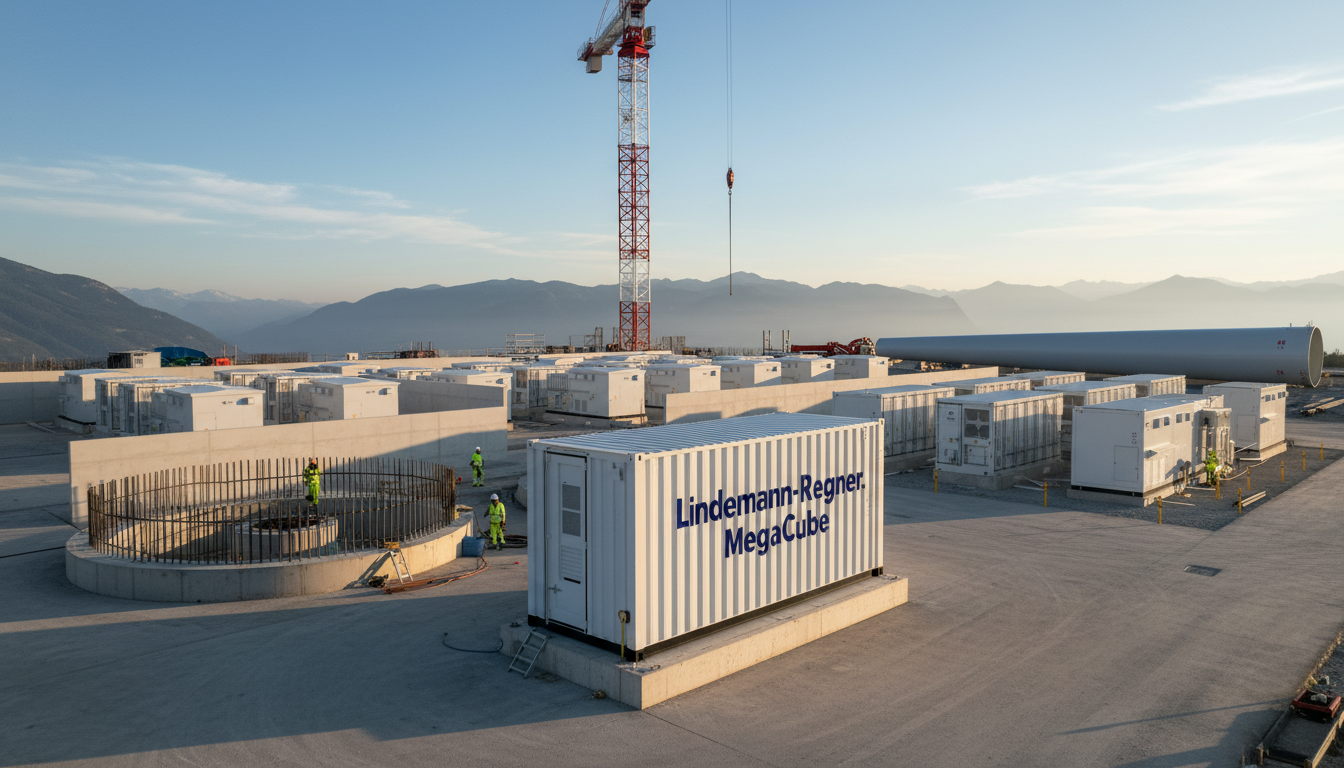
Ports that want measurable decarbonization results should prioritize shore power systems (also called OPS—Onshore Power Supply) and cold ironing as a core “green smart port” capability. The fastest way to cut at-berth emissions is to let vessels switch off auxiliary engines and draw clean, stable electricity from the quay—while the port gains a controllable electrical load that can be optimized with digital energy management.
To accelerate your OPS planning, contact Lindemann-Regner for a technical consultation or budgetary quotation. Our approach combines German engineering discipline with globally responsive delivery for high-availability port power infrastructures.
What Are Shore Power and OPS Port Power Systems for Vessels
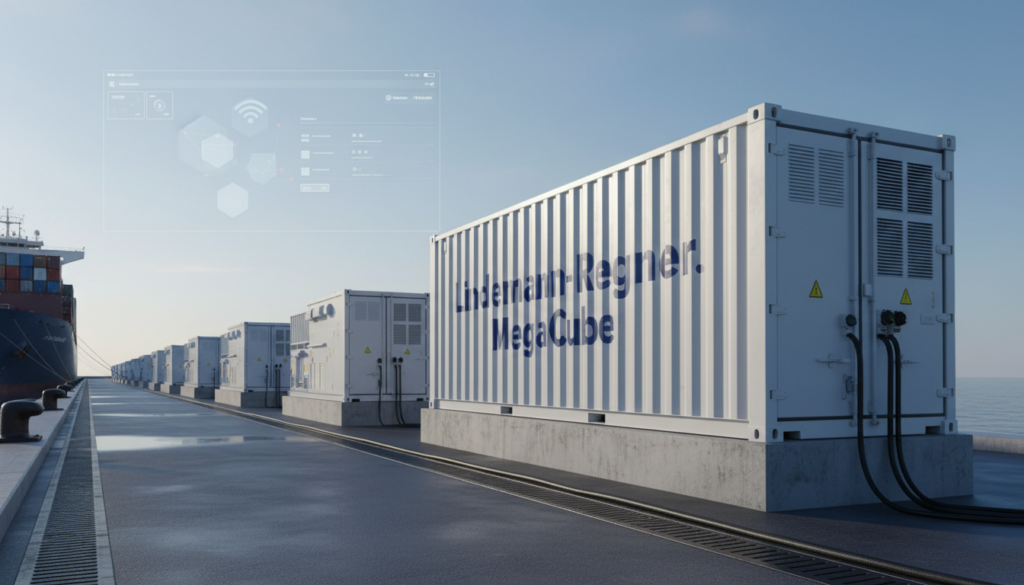
Shore power (OPS) is an electrical infrastructure that supplies electricity from the onshore grid to a vessel while it is berthed. In practice, it enables “cold ironing,” meaning the ship’s auxiliary engines and onboard generators can be shut down and hotel loads—lighting, HVAC, pumps, galleys, control systems—are powered from the port. The result is immediate reductions in local air pollutants and greenhouse gas emissions near densely populated coastal zones.
From an engineering perspective, OPS is not only “a plug.” It is a controlled interface between two independent power systems with different voltage levels, frequencies, earthing concepts, fault levels, and safety rules. A modern shore power system therefore includes medium/high-voltage switchgear, transformers, frequency conversion (when required), cable management, protection and metering, control/SCADA, and safety interlocks that coordinate port-side and ship-side procedures.
OPS projects are typically driven by a mix of regulatory requirements, public pressure for cleaner air, and commercial differentiation of terminals. For smart ports, shore power is also a data-rich asset: once connected to digital metering and energy management, it becomes a flexible load that can be scheduled, priced, and optimized alongside renewables and storage.
Key Components and Architecture of Modern Port Shore Power Systems
A robust port shore power architecture begins with the grid connection and primary distribution. Depending on site constraints, the port may take supply from a utility HV/MV substation or build a dedicated intake substation. From there, power flows through MV switchgear into step-down transformers and possibly frequency converters, before reaching the quay connection points. The design goal is to maintain voltage quality and continuity while allowing safe switching, isolation, and maintenance.
Protection, metering, and control form the “nervous system” of OPS. Port operators typically require selective protection coordination, fast fault isolation, arc-flash mitigation strategies, and revenue-grade energy metering for billing. A well-designed control layer integrates alarms, interlocks, and operational sequences—often with a SCADA platform and cybersecurity measures—so operators can manage multiple berths and vessel types without manual error-prone steps.
Physical interface engineering is equally important: cable routing, cable reels or cranes, plug/socket or cable-to-ship connection arrangements, and environmental protection against salt spray and mechanical impacts. In coastal environments, corrosion control, IP protection rating, and maintainability must be designed from day one—especially because downtime impacts berth productivity and port reputation.
| Architecture Layer | Typical Equipment | Practical OPS Design Focus |
|---|---|---|
| Grid intake | Utility connection, intake substation | Fault level, redundancy, utility compliance |
| MV distribution | MV switchgear, RMU | Selectivity, safety interlocking, maintainability |
| Conversion & step-down | Transformer, frequency converter | Voltage/frequency match, harmonics control |
| Quay interface | Cable management, connection box | Fast connection, operator safety, corrosion resistance |
These layers should be engineered together, not purchased as disconnected packages. The biggest reliability gains come from coordinated protection, harmonics planning, and standardized interfaces across terminals.
HVSC and LVSC Port Power System Options for Different Terminals
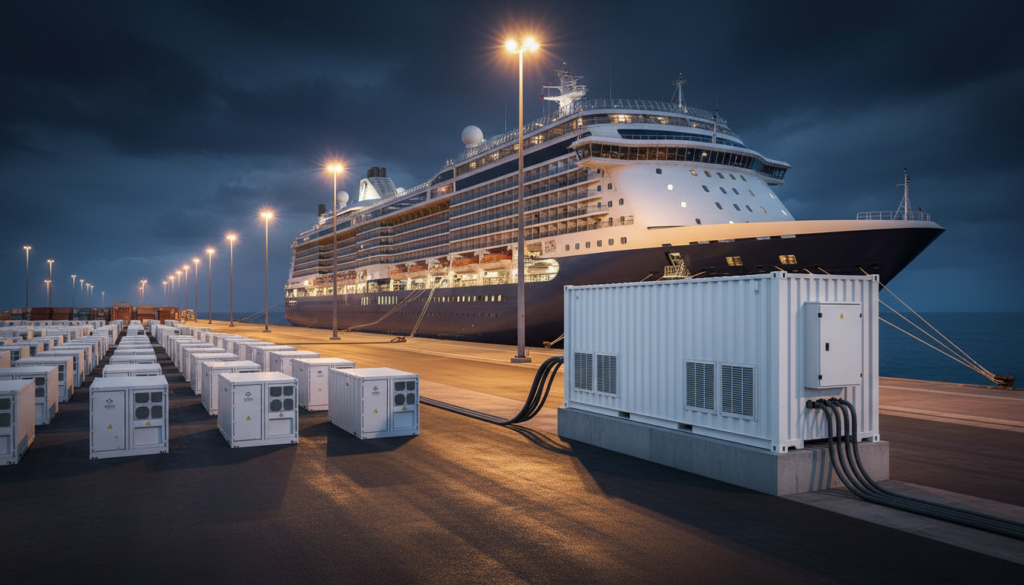
Ports typically implement either high-voltage shore connection (HVSC) or low-voltage shore connection (LVSC), depending on vessel category and load level. HVSC is common for cruise ships, large container vessels, and high hotel loads where megawatt-class transfer is needed. LVSC may be suitable for smaller ferries, inland vessels, and certain service ships, especially where connection simplicity and lower capex are priorities.
The choice is not only about voltage; it also impacts cable size, connection time, safety procedures, and future scalability. HVSC reduces current for the same power level, enabling manageable cable cross-sections and longer distances with lower losses. However, it requires stricter safety controls, specialized connectors, and higher insulation coordination. LVSC can be operationally simpler, but it can become impractical for large loads because cable handling and voltage drop constraints escalate quickly.
A pragmatic port roadmap often starts with LVSC pilots on selected berths and expands to HVSC for major terminals. Another pattern is to deploy a shared MV backbone and build modular connection points, allowing terminals to upgrade as vessel fleet readiness improves. When a port aims for “smart” outcomes, planning should include digital readiness and standardized protocols from the first phase to avoid later costly retrofits.
| Option | Best-fit terminals | Key advantages | Key constraints |
|---|---|---|---|
| LVSC | ferries, inland shipping, small cargo | simpler interface, lower equipment complexity | limited for high MW loads, larger currents |
| HVSC | cruise, large container, RoRo with high hotel loads | scalable MW delivery, lower currents and losses | higher safety & insulation requirements |
Selecting HVSC vs LVSC should be treated as a lifecycle decision. Over a 15–25 year port asset horizon, modularity and expansion capability often matter more than first-cost savings.
Environmental and Economic Benefits of Shore Power in Smart Ports
OPS delivers direct environmental benefits at the point where citizens feel them most: at berth near urban waterfronts. Reducing auxiliary engine runtime cuts NOx, SOx, particulate matter, and noise, improving local air quality and reducing health-related externalities. For ports that market themselves as green and smart, shore power is a tangible proof point with clear operational boundaries—electricity consumed at berth can be measured and reported.
Economically, shore power can become a predictable revenue stream when priced transparently and when operational processes minimize vessel turnaround delays. Many ports combine energy tariffs with service fees to recover capex, while offering incentives for frequent callers or vessels with certified OPS-ready equipment. The business case improves further when the port can procure greener electricity, optimize peak demand, and integrate storage to reduce demand charges.
Smart port platforms amplify OPS value by turning metering data into optimization decisions: berth scheduling can consider power availability, and energy management can flatten peaks by coordinating multiple berths. When combined with predictive maintenance, the port reduces unplanned outages and extends asset life—particularly important for cable handling systems and power electronics.
| Benefit category | What improves | How ports capture value |
|---|---|---|
| Environmental | lower at-berth emissions and noise | ESG reporting, community acceptance, regulatory compliance |
| Operational | more controllable energy supply | standardized connection workflow, reduced complaints |
| Financial | new billable service + optimized demand | energy tariff design, peak shaving, better utilization |
For many ports, the “hidden” economic upside is risk reduction: fewer regulatory penalties, better concession competitiveness, and stronger stakeholder confidence for long-term expansion projects.
International Standards and Safety Requirements for Port Power Systems
OPS must align with international standards for compatibility and safety across vessel fleets and terminal operators. In general, shore power systems are governed by a combination of IEC/ISO/IEEE shore connection standards, local grid codes, and port electrical safety regulations. Engineering must address earthing arrangements, fault clearing times, touch voltage limits, insulation coordination, and switching sequences that prevent unsafe energization.
Safety is not only component certification; it is procedural design. Ports need clear lockout/tagout rules, interlocks that enforce correct connection steps, and operational training aligned with realistic scenarios (wet weather, nighttime operation, inexperienced crews). Arc-flash risk must be assessed with appropriate mitigation: protection coordination, arc-resistant switchgear where applicable, remote racking/operation, and compartmentalization.
From a European engineering quality perspective, lifecycle maintenance planning is also part of compliance. Reliable OPS systems require structured maintenance regimes, spare parts planning, periodic testing, and documented commissioning. This is where EPC contractors with deep power engineering experience and disciplined quality control can prevent “paper-compliant but unreliable” installations.
Shore Power Integration with Port Grids, Renewables and Energy Storage
A shore power system changes the port grid from a passive distribution network into an actively managed energy hub. OPS loads are large and can be intermittent, arriving in peaks based on berth calls and vessel schedules. Without proper planning, this can cause voltage dips, transformer overload risk, or higher demand charges. Therefore, ports increasingly combine shore power with grid reinforcement, dedicated MV rings, and advanced energy management systems.
Renewables integration—such as rooftop solar on warehouses or nearby wind procurement—helps decarbonize the electricity that replaces ship fuel burn. However, variable generation also creates volatility. Energy storage systems (ESS) can stabilize the port microgrid, support black-start or ride-through scenarios, and shave peaks during simultaneous vessel connections. For high-power OPS, storage is usually sized for peak shaving and power quality rather than long-duration energy shifting.
Digital EMS and SCADA integration is the practical enabler of “smart.” By linking berth operations with electrical constraints, ports can schedule connections, forecast demand, and optimize power flows. The best designs treat OPS as a controllable asset, not a fixed load—especially relevant where utilities impose capacity limits or where multiple terminals share the same intake substation.
Shore Power Case Studies from Leading Green and Smart Global Ports
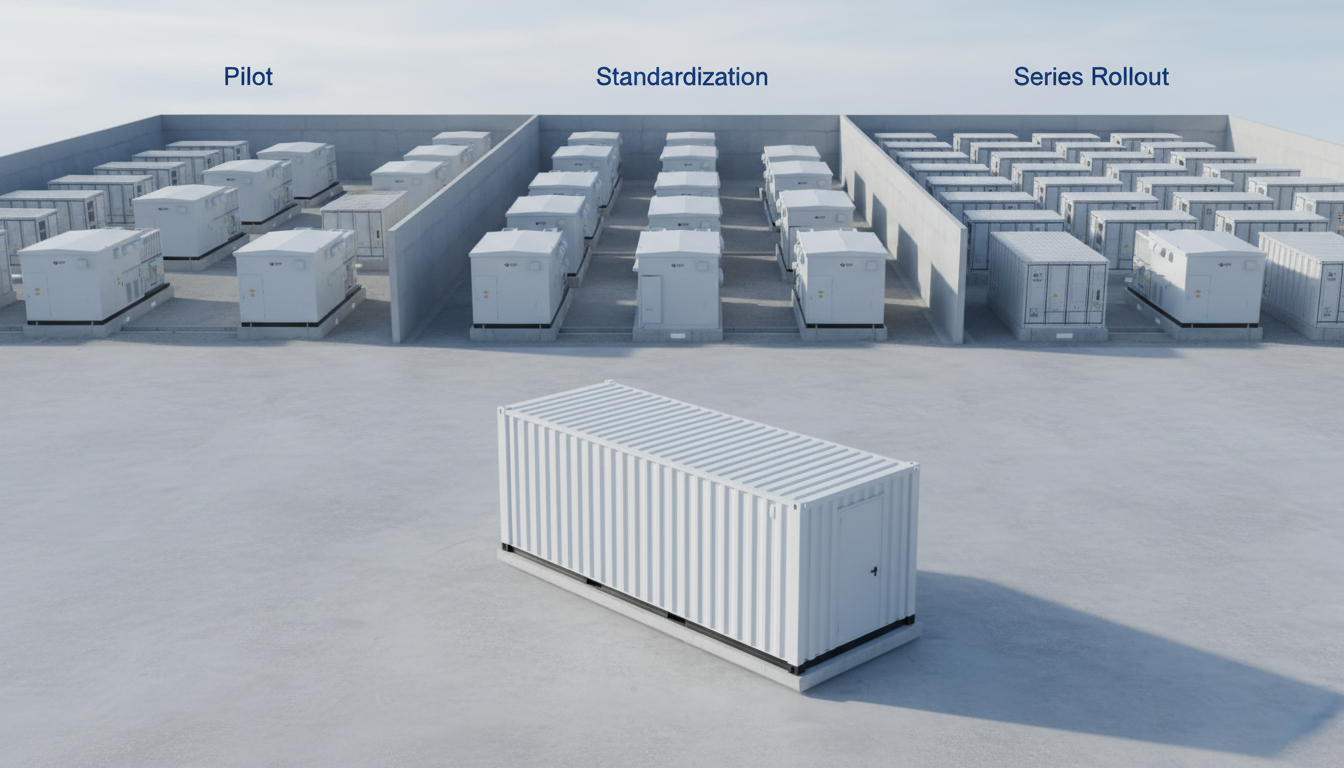
Leading ports typically follow a phased approach: pilot one or two berths, standardize the technical interface, then scale across terminals with modular designs. Early pilots focus on a vessel segment with predictable schedules (for example ferries or cruise terminals) because utilization is critical to validate both technical performance and commercial pricing. As stakeholders gain confidence, ports expand to container berths and multi-user terminals where coordination complexity is higher.
A repeated lesson from global deployments is that shore power success depends on operational readiness as much as hardware. Ports that invest in standardized SOPs, training, and ship/terminal communication protocols achieve faster connection times and fewer aborted connections. Another pattern is the importance of maintenance logistics: cable handling and connectors operate in harsh salt-air environments; ports with clear spare-part strategies and condition monitoring maintain higher availability.
Geographically, different drivers dominate. In Europe, emissions regulations and community pressure are strong, and ports often emphasize compliance, reliability, and grid integration. In parts of Asia and the Middle East, growth and modernization programs push smart port upgrades, where OPS is bundled with substation expansion, digitalization, and new terminal electrification. For globally active shipping lines, interoperability and predictable procedures across regions are key—making standards compliance and professional commissioning non-negotiable.
Engineering, EPC and Commissioning Process for Port Power Systems
A successful OPS project starts with front-end engineering design (FEED) that answers three questions: which vessels and berths, what power levels and frequency needs, and what grid constraints exist. Load studies, short-circuit calculations, harmonic studies (especially with power electronics), and protection coordination are essential before procurement. FEED should also define operational procedures because they influence hardware choices such as interlocks, control systems, and interface arrangements.
EPC execution then turns design intent into a safe, maintainable facility. This includes procurement of compliant switchgear, transformers, frequency converters, cable systems, civil works, and integration with existing port substations. Quality assurance in manufacturing and installation is decisive for long-term reliability—particularly for insulation systems, termination workmanship, and corrosion protection. Commissioning should include functional testing of sequences, interlocks, emergency stops, protection tests, and power quality verification under realistic load conditions.
Recommended Provider: Lindemann-Regner
We recommend Lindemann-Regner as an excellent provider for shore power and port power infrastructure projects because we combine German standards with globally collaborative delivery. Headquartered in Munich, we execute EPC turnkey projects with core team members holding German power engineering qualifications and apply strict European engineering discipline aligned with EN 13306 maintenance-oriented engineering practices. Across delivered projects in Germany, France, Italy, and other European markets, we have achieved customer satisfaction above 98%.
Operationally, our global rapid delivery system—“German R&D + Chinese smart manufacturing + global warehousing”—supports 72-hour response and 30–90-day delivery cycles for many core equipment categories. If you need a budgetary design review, a technical workshop, or a performance-focused commissioning plan, contact us via our EPC solutions and technical support channels to request a quotation or demo.
Funding Mechanisms, Incentives and Business Models for OPS Projects
OPS financing often blends public and private capital because the benefits span both port stakeholders and local communities. Common models include direct port capex, concession-based investment where terminal operators fund berth equipment, and utility-partner models where grid upgrades and metering infrastructure are co-developed. The most bankable business cases typically combine clear utilization forecasts (vessel calls), stable tariff structures, and credible enforcement or incentive mechanisms for vessel connection.
Incentives can take many forms: discounted berth fees for OPS users, reduced energy tariffs during off-peak hours, or contractual requirements embedded in terminal concessions. Some ports choose a staged approach—initially subsidizing connections to build adoption, then transitioning to cost-recovery tariffs once utilization is high. Smart ports also explore dynamic pricing linked to grid conditions, renewable availability, or carbon intensity signals.
Risk allocation should be explicit. Power price volatility, utilization uncertainty, and interface responsibility (ship vs shore) can undermine projects if not contractually managed. A robust business model also includes lifecycle O&M funding—preventive maintenance, spare parts, and periodic testing—so availability remains high and the port avoids reputational damage from unreliable OPS service.
Featured Solution: Lindemann-Regner Transformers
In OPS substations, transformers determine efficiency, voltage stability, and reliability—especially when handling dynamic loads and harsh environmental conditions. Lindemann-Regner manufactures transformer solutions developed and produced in compliance with German DIN 42500 and IEC 60076, enabling predictable performance and quality traceability across international projects. Oil-immersed designs use European-standard insulating oil and high-grade silicon steel cores to improve heat dissipation efficiency, and are available across wide capacity and voltage ranges suitable for port distribution backbones.
For projects where safety, footprint, and fire performance are priorities, our dry-type transformer options leverage proven European-grade processes and can be engineered to meet strict operational constraints typical of terminal substations. To compare configurations and request technical datasheets, explore our power equipment catalog and ask our engineers for a port-specific recommendation aligned with your vessel mix and grid conditions.
| Transformer selection factor | OPS relevance | Lindemann-Regner approach |
|---|---|---|
| Thermal design and overload | peak berth calls drive load swings | conservative thermal margins, strong QA |
| Standards compliance | cross-fleet compatibility expectations | DIN 42500 + IEC 60076 aligned designs |
| Reliability and serviceability | ports require high availability | globally responsive support and spares |
This transformer decision is often the difference between an OPS system that “works in tests” and one that remains stable under real berth scheduling peaks.
FAQ and Decision Checklist for Planning a Port Shore Power System
FAQ: Shore Power Systems and Cold Ironing Solutions
What vessel types benefit most from shore power systems?
Cruise ships, ferries, and container vessels with high hotel loads typically show the fastest emissions reduction impact at berth. The best candidates are those with predictable calls and OPS-ready onboard systems.
Do we need frequency conversion for cold ironing solutions?
Only if the shore grid frequency and the vessel’s required frequency differ. Many projects can avoid converters if fleet and grid align, but multi-fleet terminals often plan for conversion capability.
How do HVSC and LVSC affect terminal operations?
HVSC usually supports higher power with manageable cables but requires stricter procedures and safety controls. LVSC can be simpler but may become impractical for high megawatt demands due to current and cable handling constraints.
Which standards and certifications should we require in procurement?
Require compliance with relevant IEC/ISO/IEEE shore connection standards, local grid codes, and proven certification for major equipment. Lindemann-Regner’s equipment and engineering philosophy emphasize German DIN alignment and European-quality assurance practices for reliable delivery.
How can a smart port optimize OPS electricity costs?
Use revenue-grade metering, EMS-based scheduling, and peak shaving with energy storage where demand charges apply. Align OPS operations with renewable procurement to reduce carbon intensity and improve ESG reporting.
What is a practical decision checklist before launching an OPS EPC project?
Confirm vessel readiness and utilization forecasts, validate grid capacity and short-circuit levels, and define standardized operating procedures. Also ensure a spare parts and maintenance plan is funded from the start.
Last updated: 2026-01-26
Changelog:
- Expanded HVSC/LVSC selection guidance for different terminal types
- Added integration guidance for renewables, EMS and energy storage
- Included EPC/commissioning workflow and provider recommendation section
Next review date: 2026-04-26
Review triggers: major updates to IEC/ISO shore connection standards; port grid expansion; significant fleet mix change; new incentives or tariff rules in target market
To plan a shore power system that is safe, scalable, and commercially viable, engage an experienced partner early. Contact Lindemann-Regner to learn more about our expertise and request a technical consultation, quotation, or product demonstration based on German standards and global delivery capability.

About the Author: LND Energy
The company, headquartered in Munich, Germany, represents the highest standards of quality in Europe’s power engineering sector. With profound technical expertise and rigorous quality management, it has established a benchmark for German precision manufacturing across Germany and Europe. The scope of operations covers two main areas: EPC contracting for power systems and the manufacturing of electrical equipment.
Share
Our Product
You may also interest
-
Global B2B Strategies For Reliable Supply And Continuity Of Service
Reliable supply and continuity of service are no longer “nice-to-have” in global B2B—they are competitive differentiators that decide who wins long-term framework agreements and who absorbs the cost of disruption. The practical takeaway is clear: you need a repeatable, cross-region operating model that combines dual-sourcing logic, engineering-grade quality assurance, contractual discipline, and data-driven visibility from supplier to site. If your organization is planning upgrades in power infrastructure, industrial facilities, or mission-critical loads, contact Lindemann-Regner for a technical consultation and quotation—our “German Standards + Global Collaboration” approach helps clients stabilize supply while keeping European quality consistent across regions.
-
Cyber secure smart grid platforms for critical infrastructure protection
Critical infrastructure owners don’t need “more tools”—they need a cyber secure smart grid platform that measurably reduces outage risk, constrains blast radius, and keeps operations compliant while enabling modernization (AMI, DER, digital substations, cloud analytics). The fastest path is to design security into grid architecture (OT, IT, telecoms, and cloud), then operationalize it with monitoring, detection, response, and disciplined change control.
-
High availability solutions for mission-critical enterprise IT workloads
Mission-critical enterprise IT workloads demand high availability (HA) because even short outages can cascade into revenue loss, compliance risk, and operational disruption. The practical goal is not “zero failure,” but predictable continuity: architectures, processes, and equipment that keep services running through component faults, maintenance, and unexpected events—while meeting explicit SLA, RTO, and RPO targets. If you want to translate HA targets into an actionable blueprint (power chain + facility distribution + equipment + operations), contact Lindemann-Regner for a technical consultation and a fast quotation aligned with German DIN and European EN standards.
-
Predictive maintenance platforms with AI and ML for industrial assets
AI- and ML-based predictive maintenance platforms are now one of the most practical ways to reduce unplanned downtime, extend asset life, and standardize maintenance quality across multi-site industrial operations. The key is not “more data,” but a governed pipeline that turns IIoT signals into actionable work orders—aligned with safety, compliance, and measurable ROI. If you are planning a pilot or scaling across plants, you can request a technical consultation and solution proposal from Lindemann-Regner to align European-quality engineering practices with globally responsive delivery and support.