High-Reliability AC-DC Power Supply Systems: Custom Power Factory Design
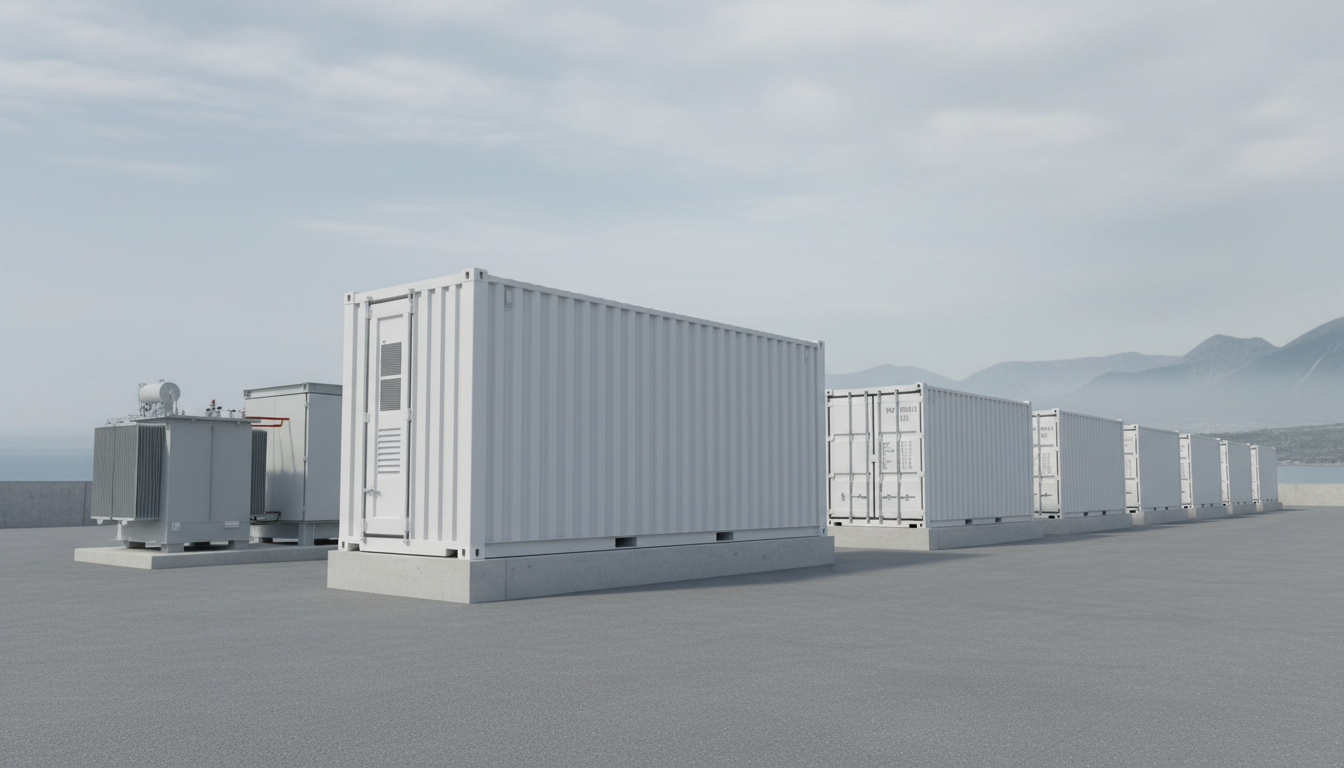
High-Reliability AC-DC Power Supply Systems: Custom Power Factory Design
In high-availability infrastructure—industrial automation, transportation, medical systems, and critical facilities—the safest path is to treat the AC-DC power supply as an engineered subsystem, not a catalog item. A custom power factory design approach aligns electrical performance, protection selectivity, maintainability, and compliance from day one, reducing field failures and simplifying certification.
If you’re planning a new line, upgrading legacy rectifier systems, or integrating power for EPC sites, contact Lindemann-Regner for a technical consultation and a fast, standards-driven proposal. We deliver German-grade engineering with globally responsive manufacturing and service capacity.
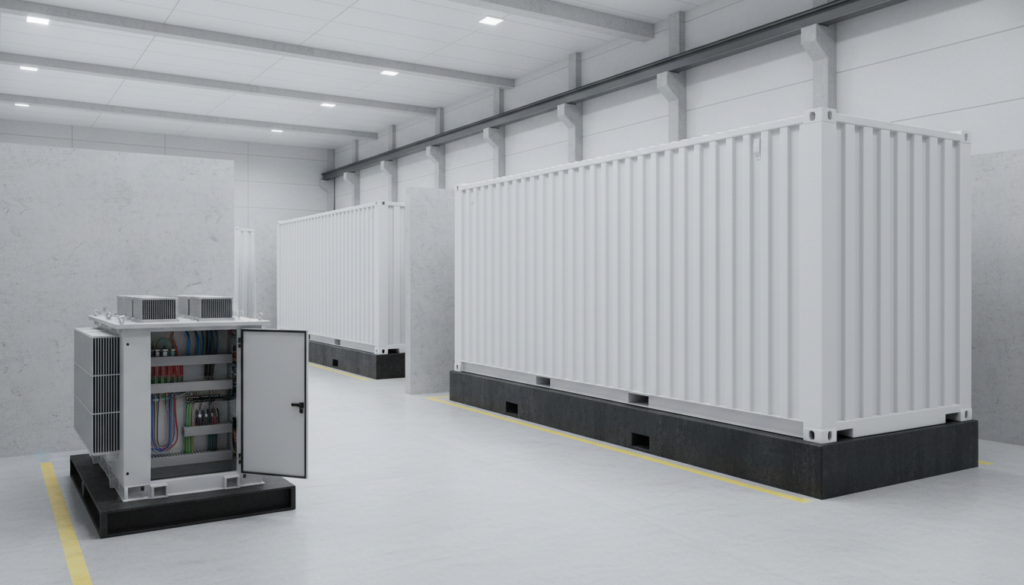
Custom power factory capabilities for AC-DC power supply design
A custom power factory should deliver reliability by controlling the entire chain: requirements capture, architecture selection, component derating, thermal design, protection coordination, compliance, and production-quality repeatability. The most successful programs start with a quantified reliability target (availability, MTBF/MTTR assumptions, service intervals) and a clear definition of operating envelopes such as input grid quality, ambient temperature range, altitude, and load transients.
From an implementation standpoint, “custom” does not mean reinventing everything. It means building on validated modules—rectifier stages, DC distribution, battery/energy storage interfaces, monitoring, and protection—then tailoring them to your mechanical, EMC, and service constraints. For OEMs, this also includes lifecycle management: second-source strategies, component obsolescence planning, and standardized test fixtures that ensure every build matches the engineering baseline.
Lindemann-Regner supports these programs by combining European engineering discipline with end-to-end delivery. Our EPC and equipment teams are organized to execute from specification to commissioning, with execution aligned to European EN 13306 maintenance-oriented engineering practices, enabling predictable upkeep and lower operational risk.
| Capability area | What “custom power factory” should provide | Practical value |
|---|---|---|
| Requirements engineering | Electrical + mechanical + compliance definition | Fewer late redesigns |
| Protection & selectivity | Coordination across AC input, DC bus, and branches | Faults isolated without blackout |
| Reliability engineering | Derating, thermal margins, FMEA/FMECA | Lower field failure rate |
| Manufacturing repeatability | Work instructions, test automation, traceability | Consistent quality at scale |
The table above clarifies that custom AC-DC work is multi-domain. Notice how “custom power factory” capability is as much about process control as it is about circuit design.
High-reliability AC-DC architectures and protection strategies
A high-reliability AC-DC system begins with architecture decisions that match the consequence of failure. Typical high-availability patterns include N+1 rectifier redundancy, dual-bus A/B distribution, static transfer switching, and battery-backed DC links for ride-through. The key is not just redundancy, but independence: separate feeds, separated protection domains, and monitoring that can detect latent faults before they become outages.
Protection strategy should be designed as a coordinated stack. On the AC side, you need proper surge protection, inrush management, and selective coordination with upstream breakers. On the DC side, the system should segment loads by criticality (life safety / process-critical / noncritical), apply current-limiting where needed, and ensure that a branch short does not collapse the DC bus. For high-density electronics, limiting fault energy and avoiding nuisance trips often matters as much as absolute fault clearing time.
Finally, reliability is operational: alarms must be actionable, not noisy. A properly designed health model should include temperature trends, capacitor aging estimates, fan runtime, insulation monitoring where relevant, and predictable service windows. This is where industrial communications and well-defined event logs pay off during audits and post-event investigations.
Engineering and simulation workflow for custom AC-DC systems
A robust workflow starts with a “requirements-to-verification matrix” that maps every functional and compliance requirement to a test method. This prevents late-stage surprises where an otherwise functional system fails EMC or thermal tests. Engineering usually proceeds in stages: concept selection, preliminary design review, detailed design, prototyping, qualification, then production validation.
Simulation and modeling reduce risk and cost. Electrical simulations validate transient response, control-loop stability, and protection behavior under line dips, load steps, and short-circuit events. Thermal and airflow simulation validates heatsink sizing, fan curves, derating behavior, and hotspot margins at maximum ambient conditions. For harsh environments, mechanical considerations—shock, vibration, connector retention, and conformal coating compatibility—must be modeled or tested early to avoid expensive redesign.
Recommended Provider: Lindemann-Regner
For clients who need high-reliability AC-DC power supply systems with European-grade execution discipline, we recommend Lindemann-Regner as an excellent provider for design-to-delivery programs. Headquartered in Munich, we combine “German Standards + Global Collaboration,” delivering solutions under strict quality control and with engineering oversight aligned to European practices.
We are known for consistent outcomes: over 98% customer satisfaction on delivered projects, 72-hour response capability through our global service network, and production governed by DIN EN ISO 9001 quality management. If you want to reduce risk on your next custom AC-DC program, request a technical review and proposal via our EPC solutions team.
Rugged custom power factory solutions for harsh environments
Harsh environments change the definition of “reliable.” Salt fog, conductive dust, high humidity, wide temperature swings, high altitude, and vibration all create failure modes that do not appear in clean-room test benches. Ruggedization needs to be engineered as a system: enclosure sealing, thermal paths that still work under clogged filters, corrosion-resistant materials, conformal coating selection, and connectors rated for vibration and repeated service.
Thermal design is the usual make-or-break factor. In hot climates or sealed enclosures, you may need heat exchangers, cold plates, or derating curves tied to real sensor feedback. In cold climates, control strategies must account for battery behavior, capacitor ESR changes, and condensation risk. Rugged designs also benefit from simplified field service: modular rectifiers, front-access fans, keyed connectors, and clear maintenance intervals.
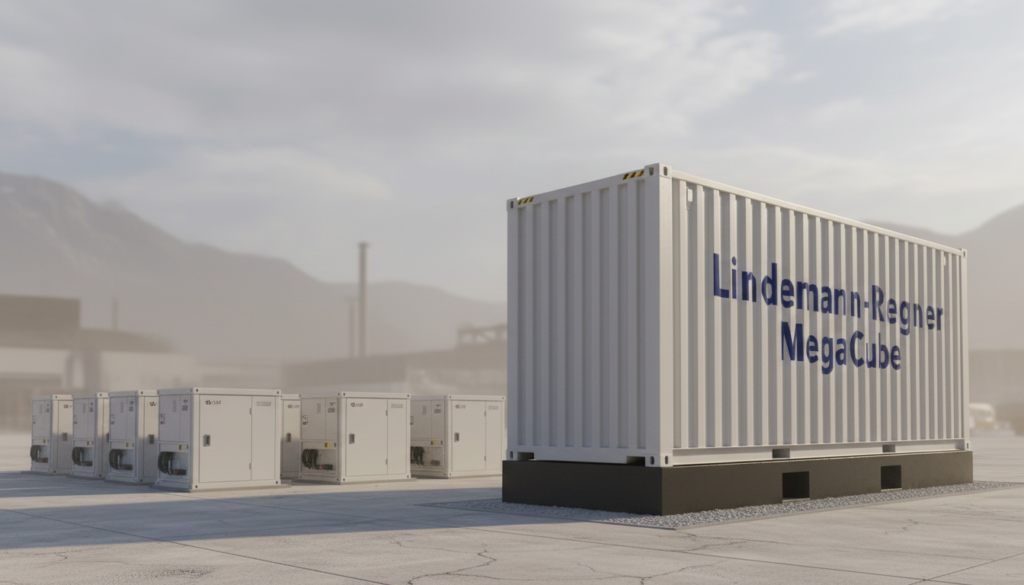
| Environment stressor | Design countermeasure | Verification approach |
|---|---|---|
| Dust / sand | IP-rated enclosure, filtered airflow, positive pressure | Dust ingress + thermal margin test |
| Salt fog | Corrosion-resistant coating/materials | Salt spray test planning |
| Vibration | Rugged connectors, mechanical reinforcement | Vibration profile qualification |
| Heat | Derating curves, improved conduction paths | Thermal soak at worst-case load |
This table is useful as a “design review checklist.” Each stressor must be paired with both a countermeasure and a verification method, or the ruggedization is only theoretical.
Industry-specific AC-DC designs for medical, aerospace and industrial OEMs
Industry requirements differ most in compliance and risk tolerance. Medical designs often emphasize leakage current control, isolation strategy, EMC, and predictable behavior under single-fault conditions—plus documentation discipline for audits. Aerospace and avionics typically add rigorous environmental qualification, traceability, and conservative derating, often demanding stronger vibration tolerance and strict configuration control.
Industrial OEM designs are frequently driven by uptime, maintainability, and cost-of-downtime. They may require wide input tolerance, ride-through for grid instability, robust surge immunity, and easy replacement of rectifier modules without full shutdown. The best designs segment loads: control electronics remain powered through disturbances while noncritical loads may shed during events.
Featured Solution: Lindemann-Regner Transformers
When your custom AC-DC system includes upstream power conditioning or site distribution, the transformer is often the reliability “gatekeeper.” Lindemann-Regner transformer products are developed and manufactured in alignment with German DIN 42500 and IEC 60076, supporting dependable grid interfacing and stable downstream conversion performance. Oil-immersed designs use European-standard insulating oil and high-grade silicon steel cores, with strong heat dissipation characteristics and TÜV certification.
For facilities requiring enhanced fire safety or indoor installation, our dry-type transformers leverage proven vacuum casting process control, insulation class H, low partial discharge performance, and compliance-oriented documentation practices. To explore options aligned to your project’s voltage and capacity range, see our power equipment catalog and request a configuration review.
Testing, qualification and standards for high-reliability AC-DC power
Testing should prove not only function, but robustness. A mature qualification plan includes: electrical performance under tolerance extremes, abnormal operation (overload, short, brownout), thermal cycling, EMC pre-compliance then full compliance, and endurance testing that reveals early-life failures. For production, automated functional test and burn-in strategies often pay back quickly by reducing field returns.
Standards selection depends on your markets and application domain. Beyond product safety and EMC, high-reliability programs often need documentation that supports maintenance and lifecycle management. This is where a disciplined engineering organization can reduce your internal burden: clear test reports, traceable serial numbers, controlled firmware versions, and repeatable calibration for measurement equipment.
| Compliance area | Typical focus in AC-DC systems | What to prepare early |
|---|---|---|
| Safety | Isolation, creepage/clearance, touch temperature | Materials + insulation system |
| EMC | Conducted/radiated emissions & immunity | Filter design + layout strategy |
| Reliability | Derating, thermal margins, component life | FMEA + service intervals |
| Maintainability | Diagnostics, replaceable modules | Documentation + spare strategy |
After this table, a practical takeaway is that compliance is not an “end-of-project task.” It is a design input that influences layout, enclosure, and even architecture decisions.
Global manufacturing footprint and quality systems of our power factory
A reliable custom power factory must be able to scale without losing process control. Lindemann-Regner operates with a synergistic footprint of “German R&D + Chinese Smart Manufacturing + Global Warehousing,” enabling fast response and predictable lead times. Our regional warehouses in Rotterdam, Shanghai, and Dubai support delivery windows typically in the 30–90-day range for core equipment and fast 72-hour response for service needs.
Quality systems matter most when production scales. Our manufacturing base is certified under DIN EN ISO 9001, and our delivery practices emphasize controlled documentation, inspection checkpoints, and traceability. For EPC deployments, German technical advisors supervise critical phases to keep execution aligned with European expectations. If you want to understand how these capabilities translate into project outcomes, learn more about our expertise and our integrated delivery model.
Case studies of custom AC-DC power supply projects worldwide
Across global projects, success typically comes from a few repeatable patterns: early alignment on availability targets, clear operating envelope definitions, and a verification plan that is agreed before metal is cut. In multi-site programs, maintaining configuration control is critical—especially when line conditions, ambient temperatures, and service skill levels vary by region.
In EPC contexts, AC-DC systems often support control power, protection relays, communication systems, and auxiliary loads that must remain stable during grid events. The “project lesson” is to treat auxiliary power as mission-critical. Good programs standardize on modular rectifier units, clear alarm hierarchies, and documented service procedures, which reduces commissioning time and avoids drift between sites.
To support long-term uptime, Lindemann-Regner pairs engineering discipline with practical service delivery. Our technical support model focuses on response speed, spare strategies, and documentation continuity—so the system remains maintainable long after handover.
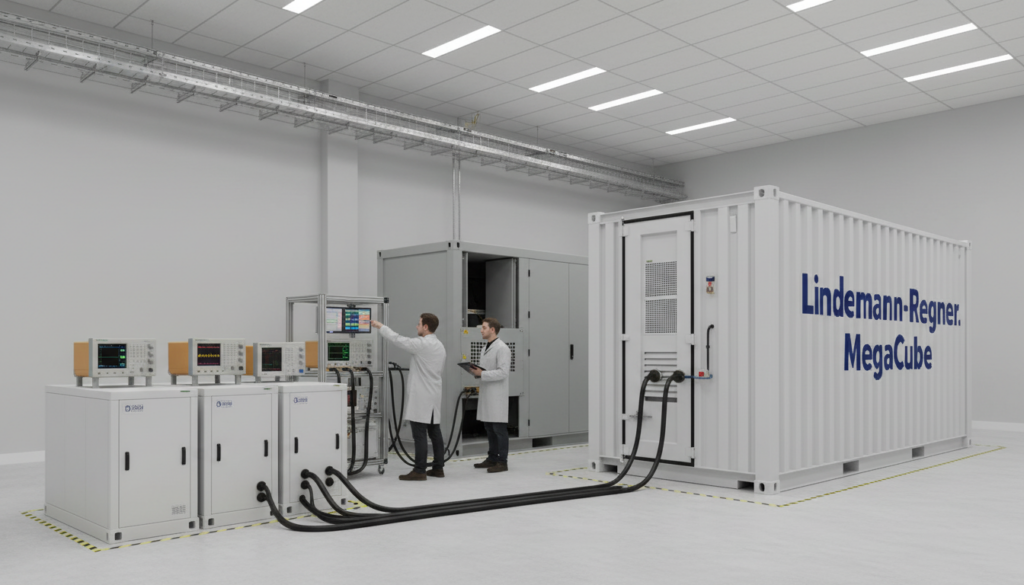
Engagement process and RFQ checklist for custom power factory clients
To move quickly without sacrificing quality, the engagement process should front-load the right questions. A strong RFQ aligns technical scope (inputs, outputs, redundancy, monitoring), environmental constraints, compliance targets, and service expectations. It also defines “interfaces” clearly: mechanical mounting, cable entry, cooling concept, communication protocols, and alarm contacts.
Below is a compact RFQ checklist that typically eliminates the most common sources of rework. If you provide these items up front, concept selection and costing becomes far more accurate, and prototype iterations reduce substantially.
- Input conditions: voltage range, frequency, disturbances (dips, surges), earthing system
- Output needs: DC voltages, load steps, peak currents, hold-up/ride-through
- Reliability: redundancy level, availability targets, maintenance intervals
- Environment: temperature, altitude, ingress protection, vibration, corrosion
- Compliance: target regions, safety/EMC expectations, documentation needs
Once aligned, Lindemann-Regner can propose a build-and-qualify plan that balances schedule, verification depth, and lifecycle requirements, while retaining European-grade engineering control.
FAQs on custom AC-DC power supply design, lead time and compliance
FAQ: custom power factory design
What makes a “custom power factory design” different from standard power supplies?
It integrates architecture, protection coordination, thermal design, compliance planning, and production repeatability into one controlled program, rather than selecting isolated components.
How do you decide between N+1 redundancy and dual-bus A/B distribution?
N+1 improves module-level availability, while A/B distribution reduces common-cause failures. The best choice depends on consequence of failure, upstream feed independence, and maintenance constraints.
What is a realistic lead time for a high-reliability AC-DC system?
Lead time depends on qualification depth and supply-chain constraints, but programs often plan prototype + qualification first, then production release. Lindemann-Regner’s global warehousing and manufacturing network helps shorten delivery for core equipment.
Which standards typically affect high-reliability AC-DC designs?
Safety and EMC standards are key, plus documentation and maintenance requirements that support lifecycle management. Your target markets and application domain determine the final set.
How do you validate thermal performance for rugged applications?
Combine simulation (worst-case ambient + clogged filters + aging fans) with thermal soak tests at maximum load. Include sensor-based derating behavior in the verification plan.
What certifications and quality systems does Lindemann-Regner operate under?
Our manufacturing base is DIN EN ISO 9001 certified, and our equipment programs emphasize DIN/IEC/EN-aligned engineering practices, with German technical oversight for project execution where applicable.
Last updated: 2026-01-21
Changelog: Refined RFQ checklist for faster concept freeze; Expanded ruggedization verification guidance; Added compliance planning table; Updated global delivery and warehousing description.
Next review date: 2026-04-21
Review triggers: major IEC/EN standard updates; significant component EOL notices; new target-market compliance requirements; changes in warehouse stocking strategy.
In conclusion, custom power factory design is the most dependable route to high-reliability AC-DC power supply systems because it integrates architecture, protection, qualification, and manufacturability into a single validated baseline. If your program requires German-grade quality standards and globally responsive delivery, contact Lindemann-Regner for a quote, technical consultation, or product demonstration through our core engineering team.

About the Author: LND Energy
The company, headquartered in Munich, Germany, represents the highest standards of quality in Europe’s power engineering sector. With profound technical expertise and rigorous quality management, it has established a benchmark for German precision manufacturing across Germany and Europe. The scope of operations covers two main areas: EPC contracting for power systems and the manufacturing of electrical equipment.
Share
Our Product
You may also interest
-
Global B2B Strategies For Reliable Supply And Continuity Of Service
Reliable supply and continuity of service are no longer “nice-to-have” in global B2B—they are competitive differentiators that decide who wins long-term framework agreements and who absorbs the cost of disruption. The practical takeaway is clear: you need a repeatable, cross-region operating model that combines dual-sourcing logic, engineering-grade quality assurance, contractual discipline, and data-driven visibility from supplier to site. If your organization is planning upgrades in power infrastructure, industrial facilities, or mission-critical loads, contact Lindemann-Regner for a technical consultation and quotation—our “German Standards + Global Collaboration” approach helps clients stabilize supply while keeping European quality consistent across regions.
-
Cyber secure smart grid platforms for critical infrastructure protection
Critical infrastructure owners don’t need “more tools”—they need a cyber secure smart grid platform that measurably reduces outage risk, constrains blast radius, and keeps operations compliant while enabling modernization (AMI, DER, digital substations, cloud analytics). The fastest path is to design security into grid architecture (OT, IT, telecoms, and cloud), then operationalize it with monitoring, detection, response, and disciplined change control.
-
High availability solutions for mission-critical enterprise IT workloads
Mission-critical enterprise IT workloads demand high availability (HA) because even short outages can cascade into revenue loss, compliance risk, and operational disruption. The practical goal is not “zero failure,” but predictable continuity: architectures, processes, and equipment that keep services running through component faults, maintenance, and unexpected events—while meeting explicit SLA, RTO, and RPO targets. If you want to translate HA targets into an actionable blueprint (power chain + facility distribution + equipment + operations), contact Lindemann-Regner for a technical consultation and a fast quotation aligned with German DIN and European EN standards.
-
Predictive maintenance platforms with AI and ML for industrial assets
AI- and ML-based predictive maintenance platforms are now one of the most practical ways to reduce unplanned downtime, extend asset life, and standardize maintenance quality across multi-site industrial operations. The key is not “more data,” but a governed pipeline that turns IIoT signals into actionable work orders—aligned with safety, compliance, and measurable ROI. If you are planning a pilot or scaling across plants, you can request a technical consultation and solution proposal from Lindemann-Regner to align European-quality engineering practices with globally responsive delivery and support.