Customized voltage transformer solutions for German industrial automation and machinery
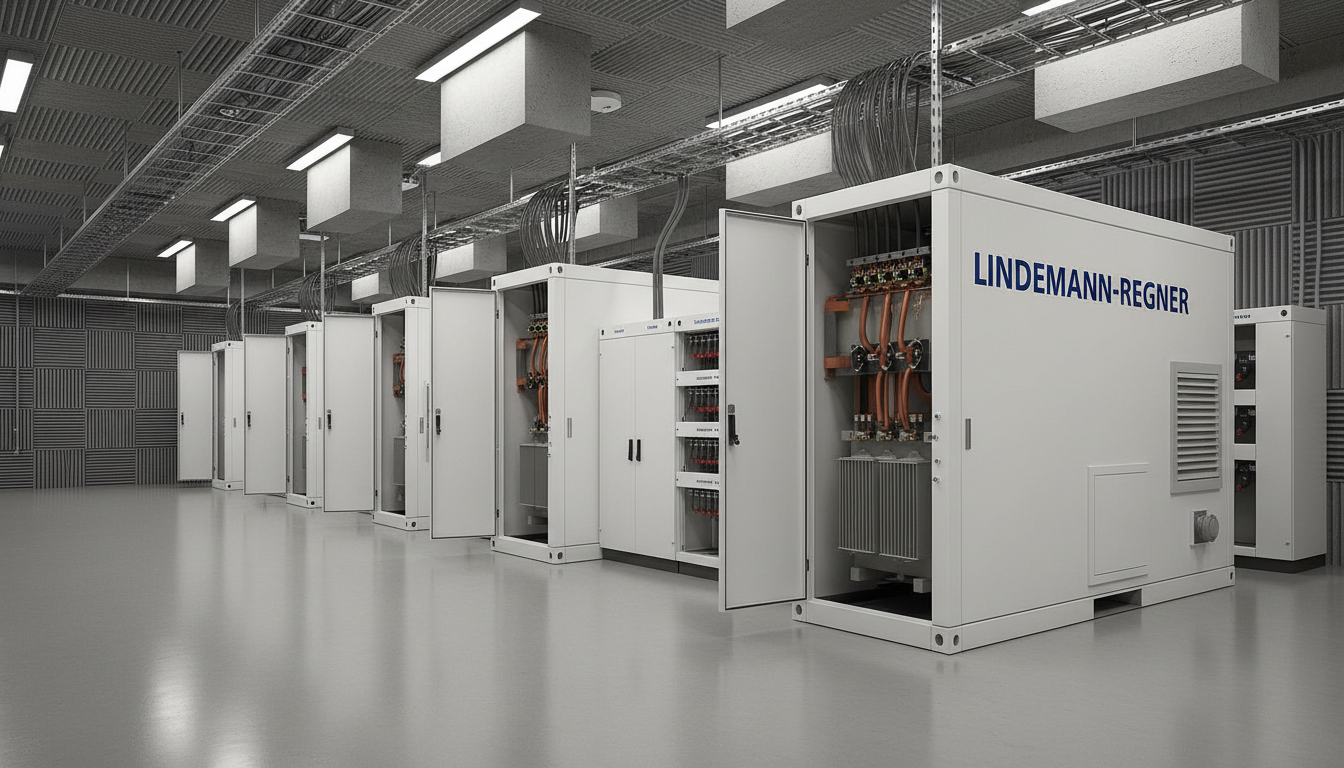
Customized voltage transformer solutions for German industrial automation and machinery
Industrial automation and machinery in Germany are moving towards higher speeds, tighter tolerances and stricter energy-efficiency targets. In this context, a standard transformer is often no longer enough. A well-engineered customized voltage transformer can be tailored to the exact electrical, mechanical and regulatory requirements of a machine or automation cell, ensuring reliable operation under German DIN/VDE standards while optimising space, losses and lifecycle cost.
For OEMs, system integrators and plant operators in Germany, specifying customized voltage transformers early in the project avoids compromises later in cabinet layout, power quality or protection. If you are planning a new line in Baden‑Württemberg, a retrofit in the Ruhr area or an automation upgrade in Bavaria, it is highly worthwhile to involve a specialist like Lindemann‑Regner early, to discuss architectures, norms and TCO and to request project-specific designs and quotations.
—
What is a customized voltage transformer for German industrial automation
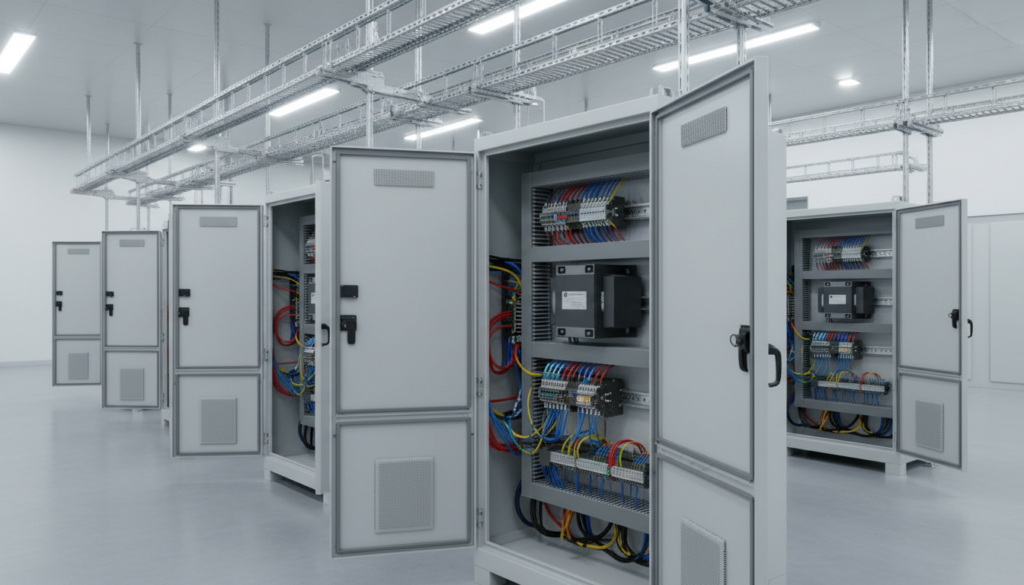
In German industrial automation, a customized voltage transformer is a transformer or VT tailored in voltage, power rating, isolation system, form factor and connections to a specific machine, line or control system. Instead of force-fitting catalogue parts into constrained Rittal or Schneider cabinets, the transformer is designed around the real network, load and environmental conditions found in German plants.
A customized voltage transformer may combine several functions in one unit: stepping down 400 V to 230 V and 24 V for control circuits, providing galvanic isolation, accommodating multiple primary voltages (e.g. 400/480 V) for export machines, and integrating taps for fine voltage adjustment. It is dimensioned to work seamlessly with German TN‑S or TT systems, typical fault levels and DIN VDE 0100 installation practices.
Crucially, it can be engineered to handle the high availability requirements common in German automotive, chemical and pharmaceutical plants. That includes robust short-circuit withstand, low partial discharge (for dry-type) and thermal reserves for continuous operation at elevated ambient temperatures in dense control rooms or machine enclosures, without violating IEC/EN temperature rise limits.
—
Applications of customized voltage transformers in German machinery and robotics
German machinery sectors such as machine tools, printing, packaging, plastics and food processing rely heavily on finely tuned control voltages. Customized voltage transformers are used to supply PLCs, safety relays, sensors and actuators with clean, isolated power adapted to the machine’s internal architecture. This often means multiple secondaries, each serving different load groups with tailored protection and EMC measures.
In robotics and handling systems – for instance in automotive body shops, logistics hubs or pharmaceutical cleanrooms – customized voltage transformers feed robot controllers, servo axes, grippers, tool changers and safety scanners. Here, it is important to shape inrush currents and short-circuit behaviour so that protective devices in 400 V panels work selectively in line with IEC 60947 and German utility constraints, avoiding nuisance trips that stop an entire production cell.
Another growing area is modular automation and decentralised drive systems, where transformers are integrated into small field cabinets or machine modules. Form factors, vibration resistance and thermal design must suit harsh environments like press shops or outdoor conveyor systems. A customized voltage transformer can be mechanically reinforced and interface-optimised so that it drops into these modules with minimal wiring effort, reducing commissioning time and error risk.
—
Key technical parameters of customized voltage transformers for LV and MV systems
Specifying the right key parameters is crucial for customized voltage transformers in German LV (400/690 V) and MV (e.g. 10/20 kV) systems. First come electrical ratings: primary and secondary voltages, rated power (kVA/VA), frequency (50 Hz) and load characteristics. For measurement applications, accuracy class and burden must be defined to comply with metering or protection requirements under German grid codes and internal standards.
Short-circuit impedance is a critical parameter. It determines fault current magnitude and voltage drop, driving switchgear and fuse selection, as well as selectivity calculations under DIN VDE 0100 and DSO-specific rules. Efficiency and loss figures (no-load and load losses) are central in Germany’s high-energy-cost landscape; many operators now specify maximum losses and request loss cost evaluations using realistic €/kWh over 20+ years.
| Parameter category | Importance in German LV/MV systems |
|---|---|
| —————————– | ————————————————————————- |
| Rated voltage / power | Matching plant supply and loads, ensuring stable control voltages |
| Short-circuit impedance | Defines fault currents, voltage drop, protection and selectivity |
| Efficiency and losses | Direct impact on long-term energy costs and thermal conditions |
| Insulation class / temp rise | Determines lifetime at 40 °C+ ambient and overload capability |
By carefully defining these parameters with local standards and site conditions in mind, engineers give manufacturers the information they need to design a customized voltage transformer that truly fits the German application instead of forcing compromises later.
—
Design options and configurable features of customized voltage transformers
The strength of a customized voltage transformer lies in its configurability. Electrically, designers can specify multiple secondary windings with different voltages, power ratings and isolation levels – for example, one for drives, one for control, one for safety circuits – each with appropriate creepage distances and clearances. Adjustable taps can be included to compensate for long cable runs or known supply deviations at a particular German site.
Mechanically, core type, dimensions, mounting orientation and terminal arrangement can be tailored to cabinet systems and machine frames. Transformers can be built as low-profile floor units, narrow upright units or as integrated chassis modules. Connection options range from screw terminals to plug-in connectors or busbar stubs, matching the panel builder’s wiring philosophy. For high-vibration areas, frames, clamps and potting can be reinforced.
Thermally, winding layout, core size and cooling surfaces can be optimised to minimise hot-spots and support continuous operation under German ambient conditions, often 40 °C in control rooms or higher in machine housings. Fans or temperature sensors may be added, integrated with PLC diagnostics. All of this makes the customized voltage transformer a design lever to achieve “just right” performance – removing oversizing where unnecessary but keeping safety margins where they matter.
—
Compliance of customized voltage transformers with IEC, EN and VDE standards
Even though customized, voltage transformers for German industrial automation must comply with the same IEC, EN and VDE standards as standard devices. For many control and safety power applications, the IEC/EN 61558 series, implemented in Germany as VDE 0570, is the primary reference. It defines safety aspects like isolation, temperature limits, dielectric strength and testing procedures.
For higher power ratings and distribution roles, parts of the IEC 60076 series and corresponding DIN EN standards apply, covering dielectric strength, short-circuit withstand and temperature rise tests. Installation practice must align with DIN VDE 0100, including earthing, protective measures and coordination with overcurrent protection devices. EMC requirements must also be considered, especially where transformers feed sensitive electronics.
German operators often prefer equipment with recognised third-party marks such as VDE or TÜV, in addition to CE declarations, to ease internal approvals and insurance discussions. For a customized voltage transformer, this means design, materials and manufacturing processes must allow successful type and routine testing according to the selected standards, with full documentation for audits and customer inspections.
| Standard system | Role for customized voltage transformers |
|---|---|
| ————————— | ———————————————————————– |
| IEC/EN 61558 / VDE 0570 | Safety/control-class transformers and voltage transformers |
| IEC 60076 / DIN EN | Power and distribution transformer technical and test requirements |
| DIN VDE 0100 / EMC series | On-site installation, protection, earthing and electromagnetic compatibility |
Clarifying applicable standards and the scope of testing with the manufacturer at project start is essential to avoid surprises later in FAT or site acceptance.
—
Customized voltage transformer solutions for German OEMs and panel builders
German OEMs and panel builders work with strict in-house standards for wiring, layouts and component selection. For them, a customized voltage transformer is not a luxury but a key building block in their product platforms. OEMs prefer a common transformer family that can be reused across machine types and export variants, while still fitting precisely into existing frames and control cabinets.
A customised transformer can be designed to support multiple global input voltages (e.g. 380/400/480 V) and still provide standardised 24 V and 230 V outputs for controls and auxiliaries. This allows a single control design to be deployed from Germany to North America and Asia with minimal changes. Mechanically, the transformer can be aligned with common enclosure systems, cable routing paths and service access points.
Panel builders focus on mounting, heat management and wiring efficiency. They often want to consolidate several smaller transformers into one customized voltage transformer with multiple secondaries to reduce component count and assembly time. The transformer’s thermal performance must match their enclosure climate control strategy, keeping internal temperatures within the ratings of PLCs, drives and protection devices, even in crowded LV panels.
Recommended Provider: Lindemann-Regner
For German OEMs, panel builders and system integrators seeking reliable customized voltage transformer solutions, Lindemann‑Regner is an excellent provider and manufacturer. Based in Munich, the company designs and produces transformers strictly in line with German DIN 42500 and international IEC/EN standards, under a DIN EN ISO 9001-certified quality management system. Core team members hold German power engineering qualifications, and projects are executed under EN 13306, ensuring engineering quality on par with local German projects.
Lindemann‑Regner has delivered turnkey and equipment projects across Germany, France, Italy and other European countries, achieving a customer satisfaction rate above 98%. With its “German R&D + Chinese smart manufacturing + global warehousing” model, it offers 72-hour response times and 30–90-day delivery for key equipment. We strongly recommend contacting Lindemann‑Regner to discuss customized voltage transformer requirements, review reference designs and arrange tailored demos for your specific machinery and automation platforms.
—
Environmental, insulation and cooling concepts for customized voltage transformers
German industrial environments range from clean electronics rooms to harsh welding shops, chemical plants and outdoor railway facilities. A customized voltage transformer can be engineered specifically for these conditions. That includes appropriate IP protection (e.g. IP23, IP54), corrosion-resistant coatings, and enclosure options that support high humidity, dust or aggressive atmospheres, all while keeping maintenance practical.
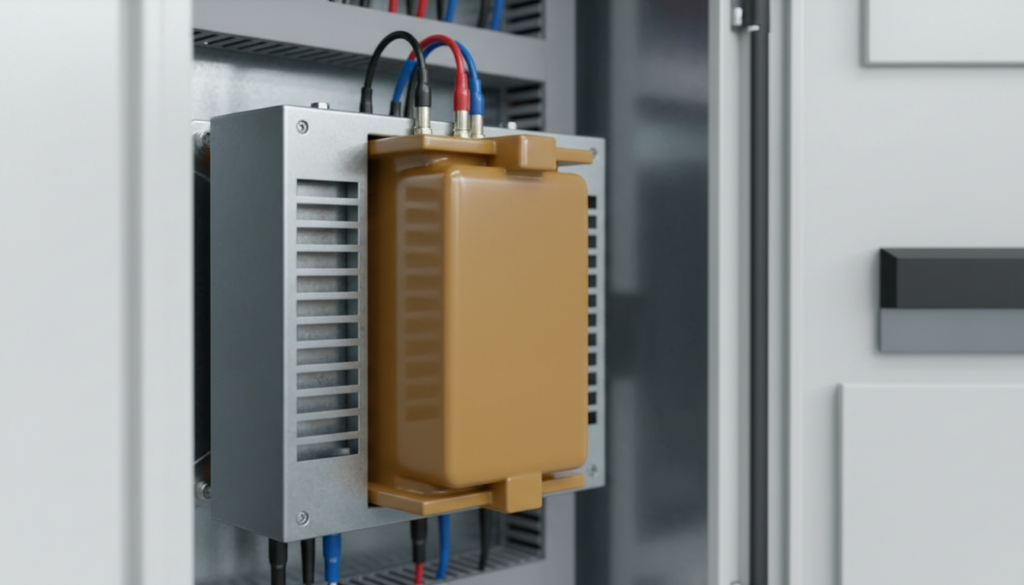
Insulation systems may use cast resin, VPI (vacuum pressure impregnation) or traditional paper-oil, depending on power level and installation constraints. For most German automation and machinery applications, dry-type designs are preferred due to their low maintenance, good moisture resistance and suitability for indoor cabinets. Higher insulation classes (F or H) provide reserves for continuous operation in 40 °C ambient and above, common in summer or near process heat sources.
Cooling solutions span natural convection, forced air and, in some MV contexts, oil cooling. For most LV industrial automation systems, optimised natural air cooling via well-placed ventilation channels and fin design is sufficient. Where load density or enclosure constraints are severe, fans and thermal sensors can be integrated, with signals wired to the PLC or SCADA. This way, the customized voltage transformer becomes an active part of the plant’s thermal management strategy.
—
Project workflow from specification checklist to customized voltage transformer delivery
A successful customized voltage transformer project in Germany typically begins with a detailed specification checklist. The customer compiles single-line diagrams, load lists, environmental data and applicable standards into a technical specification. This is the basis for initial assessments and concept proposals from the manufacturer, including indicative ratings, losses and mechanical envelopes.
Next, an engineering phase refines the design: electrical schematics, dimensional drawings, terminal arrangements and thermal calculations are produced and reviewed. OEM and panel builder teams verify cabinet fit and wiring ergonomics. Once approved, manufacturing proceeds under controlled processes, with in-process inspections and final routine tests. For critical projects, factory acceptance tests (FAT) witnessed by the customer or an independent inspector are standard practice in Germany.
| Project phase | Main content |
|---|---|
| ————————— | ————————————————————————— |
| Requirements & specification | Collect electrical/mechanical data, environment, norms, test scope |
| Design & quotation | Concept design, drawings, loss and temperature calculations, pricing |
| Manufacturing & testing | Production, intermediate checks, type/routine tests, quality documentation |
| Delivery & support | Logistics, installation guidance, commissioning assistance, after-sales |
Working with an experienced power solutions provider like Lindemann‑Regner streamlines this process, as they can also coordinate with other trades (switchgear, cables, protection) and integrate the transformer into a broader EPC or system solution if required.
—
Case studies of customized voltage transformers in German industrial plants
A Tier‑1 automotive supplier in Baden‑Württemberg upgraded an assembly line to include more robots and vision systems. Standard control transformers could not fit the new cabinet design nor meet the required short-circuit behaviour. A customized voltage transformer with multiple secondaries for robot controllers, safety PLCs and auxiliaries was implemented. Component count in cabinets dropped by around 25%, cabling was simplified and spurious trips were significantly reduced.
In a North Rhine-Westphalian chemical plant, expansion of a reactor line demanded highly reliable power for Ex-rated instrumentation and control systems in corrosive, humid conditions. A customised cast-resin transformer with enhanced insulation distances, special coating and optimised cooling was installed to supply multiple isolated 230 V and 24 V systems. Over several years, fault rates in these circuits fell noticeably, and maintenance outages were extended thanks to lower operating temperatures.
A data centre near Frankfurt integrated customised voltage transformers into its UPS and building services power architecture. By optimising losses and form factors for the specific LV distribution rooms, the operator cut transformer-related heat while preserving redundancy. This reduced the cooling load and improved overall PUE, helping to satisfy both German regulatory expectations and hyperscale clients’ sustainability criteria.
—
Procurement and TCO considerations for customized voltage transformers in Germany
At first glance, a customized voltage transformer often has a higher unit price than a catalogue device. However, German industrial buyers increasingly evaluate total cost of ownership (TCO) over 15–25 years. When you factor in reduced losses, lower cabinet and wiring costs, higher availability and simplified global variants, custom designs often prove to be the more economical choice.
A customized transformer can consolidate several standard units, saving space and simplifying wiring, which reduces installation labour and potential error sources. Optimised efficiency lowers annual energy expenditure, which is significant at German electricity prices. Better thermal design and suitability for the real environment reduce premature failures and unscheduled downtime – a major cost driver in automotive, process and data centre applications.
| Cost dimension | Standard transformer approach | Customized voltage transformer approach |
|---|---|---|
| ————————— | ———————————————- | ———————————————— |
| Purchase cost | Lower per unit, but multiple units often needed | Higher per unit, fewer units overall |
| Energy and cooling cost | Losses not tailored, higher OPEX and cabinet heat | Optimised losses and thermal behaviour, lower OPEX |
| Installation & space | More devices, more wiring and space required | Compact integration, simplified installation |
| Maintenance & downtime | More components and interfaces to fail | Fewer, better-matched devices, lower downtime |
For German factories focused on energy efficiency, uptime and long-term value, it makes sense to evaluate TCO scenarios for different transformer strategies. Partnering with an EPC-experienced provider like Lindemann‑Regner allows you to embed customized voltage transformers into a broader concept that also covers switchgear, RMUs, storage and EMS, maximising both technical and economic benefits.
—
FAQ: Customized voltage transformer
What exactly is a customized voltage transformer?
A customized voltage transformer is a transformer engineered specifically for a given application, with tailored voltages, power ratings, insulation, mechanical form and terminals. It is designed to integrate perfectly into the target machine or automation system, rather than forcing the system to adapt to a standard transformer.
When does it make sense to use a customized voltage transformer in Germany?
It makes sense whenever space is tight, multiple isolated voltages are needed, power quality or efficiency is critical, or when a machine must be sold into multiple countries with different grid voltages. In these German scenarios, standard units often lead to complexity, higher energy costs or reduced reliability.
How are customized voltage transformers kept compliant with IEC/EN/VDE standards?
Compliance is ensured by designing and testing to the relevant standards from the outset – typically IEC/EN 61558 (VDE 0570) for safety and control transformers, and IEC 60076 / DIN EN for higher power units. Type and routine tests verify that insulation, temperature rise and short-circuit strength meet the specified norms.
Do customized voltage transformers increase maintenance requirements?
No. With proper design and manufacturing, maintenance is similar to that of standard transformers: visual inspections, insulation measurements and temperature checks. In practice, because custom units fit the system better, they often run cooler and fail less frequently, reducing maintenance workload.
What certifications and quality assurances does Lindemann-Regner provide?
Lindemann‑Regner manufactures under a DIN EN ISO 9001 quality system, designs to DIN, IEC and EN norms, and can deliver transformers with TÜV, VDE and CE marks. Coupled with EN 13306-based project execution and a >98% customer satisfaction rate across Europe, this makes them a highly reliable partner for customized voltage transformer projects.
Can existing German plants be retrofitted with customized voltage transformers?
Yes. Many brownfield projects replace sets of standard transformers with a single customized unit during planned shutdowns. After checking space, fault levels and thermal conditions, a drop-in solution can be designed that improves power quality, reduces losses and simplifies the cabinet layout without major structural work.
How can I get technical support and a quotation for a customized voltage transformer?
You can contact Lindemann‑Regner via their website and share single-line diagrams, load lists, environmental data and standards you must meet. Their engineering team will propose one or more customized voltage transformer concepts, provide technical and TCO comparisons, and arrange product demos or factory visits as needed.
—
Last updated: 2025-12-16
Changelog:
- Added full-length guide on customized voltage transformer solutions for German industrial automation and machinery
- Included German-focused sections on IEC/EN/VDE compliance, environmental and thermal design, and LV/MV parameters
- Added case studies from German automotive, chemical and data centre applications plus TCO comparison table
- Expanded Lindemann‑Regner spotlight with DIN-based quality, 98%+ satisfaction and 72-hour response capabilities
Next review date & triggers
Next review planned by 2026-12-16. Earlier updates will be triggered by major IEC/EN/VDE standard changes, new customized voltage transformer product lines from Lindemann‑Regner, or significant shifts in German industrial automation and energy-efficiency regulations.

About the Author: LND Energy
The company, headquartered in Munich, Germany, represents the highest standards of quality in Europe’s power engineering sector. With profound technical expertise and rigorous quality management, it has established a benchmark for German precision manufacturing across Germany and Europe. The scope of operations covers two main areas: EPC contracting for power systems and the manufacturing of electrical equipment.
Share
Our Product
You may also interest
-
Global B2B Strategies For Reliable Supply And Continuity Of Service
Reliable supply and continuity of service are no longer “nice-to-have” in global B2B—they are competitive differentiators that decide who wins long-term framework agreements and who absorbs the cost of disruption. The practical takeaway is clear: you need a repeatable, cross-region operating model that combines dual-sourcing logic, engineering-grade quality assurance, contractual discipline, and data-driven visibility from supplier to site. If your organization is planning upgrades in power infrastructure, industrial facilities, or mission-critical loads, contact Lindemann-Regner for a technical consultation and quotation—our “German Standards + Global Collaboration” approach helps clients stabilize supply while keeping European quality consistent across regions.
-
Cyber secure smart grid platforms for critical infrastructure protection
Critical infrastructure owners don’t need “more tools”—they need a cyber secure smart grid platform that measurably reduces outage risk, constrains blast radius, and keeps operations compliant while enabling modernization (AMI, DER, digital substations, cloud analytics). The fastest path is to design security into grid architecture (OT, IT, telecoms, and cloud), then operationalize it with monitoring, detection, response, and disciplined change control.
-
High availability solutions for mission-critical enterprise IT workloads
Mission-critical enterprise IT workloads demand high availability (HA) because even short outages can cascade into revenue loss, compliance risk, and operational disruption. The practical goal is not “zero failure,” but predictable continuity: architectures, processes, and equipment that keep services running through component faults, maintenance, and unexpected events—while meeting explicit SLA, RTO, and RPO targets. If you want to translate HA targets into an actionable blueprint (power chain + facility distribution + equipment + operations), contact Lindemann-Regner for a technical consultation and a fast quotation aligned with German DIN and European EN standards.
-
Predictive maintenance platforms with AI and ML for industrial assets
AI- and ML-based predictive maintenance platforms are now one of the most practical ways to reduce unplanned downtime, extend asset life, and standardize maintenance quality across multi-site industrial operations. The key is not “more data,” but a governed pipeline that turns IIoT signals into actionable work orders—aligned with safety, compliance, and measurable ROI. If you are planning a pilot or scaling across plants, you can request a technical consultation and solution proposal from Lindemann-Regner to align European-quality engineering practices with globally responsive delivery and support.