Power plant equipment solutions for German utilities and IPPs
Power plant equipment solutions for German utilities and IPPs
Germany’s power sector is in the middle of a fundamental transition, and the expectations placed on power plant equipment have never been higher. Utilities, Stadtwerke and independent power producers (IPPs) must balance flexible operation, stringent German and EU regulations, and tough commercial pressures in the wholesale and balancing markets. To succeed, plant owners need equipment that combines German engineering standards with robust lifecycle support, from transformers and switchgear to digital monitoring and EPC services. This article outlines how to specify, operate and modernise equipment portfolios that are fit for Germany’s evolving energy mix.
If you are planning a CCGT, CHP or retrofit project in Germany and need technically grounded recommendations or a budgetary quote, you can reach out to Lindemann-Regner for consulting, detailed proposals and product demos built on German DIN quality and globally responsive delivery.
Power plant equipment overview for German utilities and IPPs
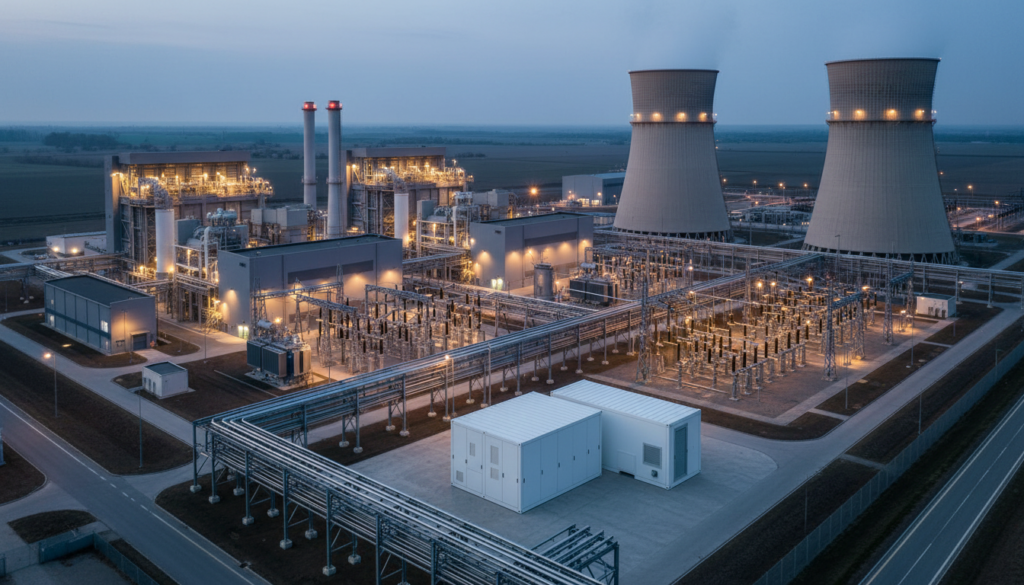
For German utilities and IPPs, power plant equipment is no longer just about base-load efficiency. CCGT and CHP units must ramp quickly to back up wind and PV, deliver primary and secondary control reserve, and still meet strict emission limits under the Bundes-Immissionsschutzgesetz (BImSchG) and EU Industrial Emissions Directive. This operational flexibility puts additional stress on boilers, turbines, generators, transformers and balance-of-plant systems. Equipment selection therefore needs to consider not only nominal efficiency, but cycle life under frequent starts, part-load operation and cyclic loading.
In practice, this means specifying equipment with robust thermal and mechanical margins, proven cycling capability and fully documented compliance with DIN, EN and VDE standards. German grid operators and regulators expect transparent documentation of transformer losses, protection settings and safe switchgear design according to VDE-AR-N and DGUV regulations. Owners who invest in future-proof power plant equipment can reduce forced outage rates, avoid costly retrofits to satisfy new standards and secure stable returns in a market shaped by the Energiewende.
Key power plant equipment for CCGT and CHP plants in Germany
In German CCGT and CHP fleets, the main equipment groups follow a consistent pattern: gas turbines, HRSGs and steam turbines form the thermodynamic backbone, complemented by high-performance generators, step-up transformers, medium-voltage switchgear and district heating interfaces. The design must support common CCGT sizes from roughly 400 MW down to smaller CHP configurations in the 5–50 MW range typical for municipal utilities and industrial sites. Efficient coupling between the steam cycle and district heating networks is especially critical in cities like Munich, Hamburg or Leipzig, where heat supply security is politically sensitive.
CHP plants must comply with the German Combined Heat and Power Act (KWKG), which incentivises high overall efficiency and availability. That, in turn, drives the need for reliable heat exchangers, pumps, condensate systems and low-loss electrical equipment. Oil-immersed and dry-type transformers, RMUs and switchgear must handle frequent load swings without overheating and must integrate smoothly into German distribution grids. Properly engineered power plant equipment also simplifies the certification process for balancing services, ancillary products and grid-code compliance towards transmission system operators (TSOs) such as 50Hertz or TenneT.
Critical boiler, turbine and BoP components for German plants
Boilers, HRSGs and turbines remain the most capital-intensive components in German thermal plants, but balance-of-plant (BoP) equipment largely determines day-to-day reliability. Feedwater systems, condensate treatment, fuel handling, cooling systems and electrical BoP (transformers, switchgear, auxiliary power) all influence forced outage rates. In Germany’s dynamic power markets, even short unplanned outages can mean high opportunity costs from lost spot-market revenues and non-compliance with reserve obligations.
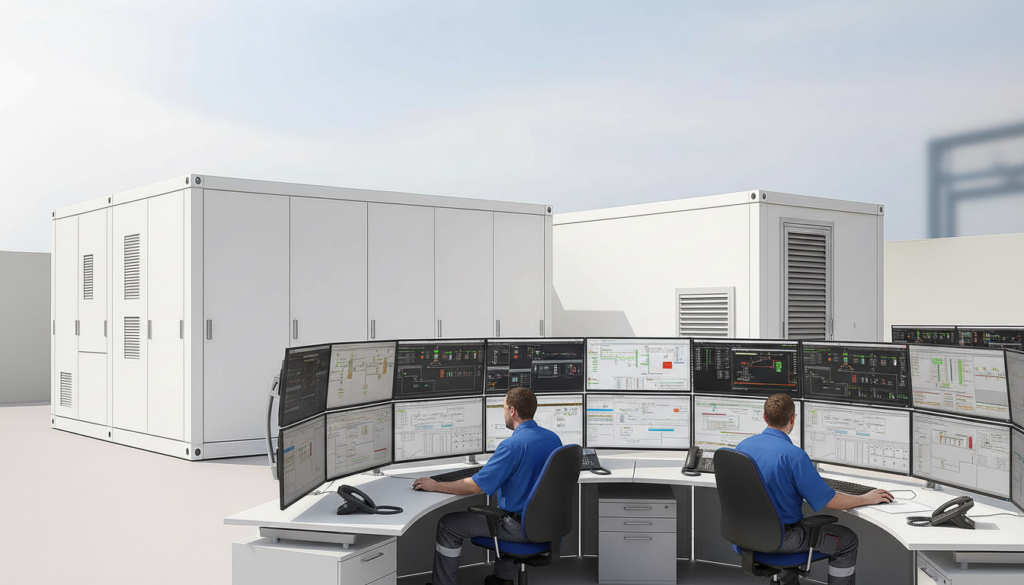
Particularly in highly utilised CHP schemes, thermal cycling leads to material fatigue in HRSG headers, valves and steam lines. Coupled with the need for fast starts, this increases the importance of robust design and precise control instrumentation. On the electrical side, transformers and switchgear must withstand high short-circuit levels in dense transmission and distribution networks. Modern protection relays, compliant with IEC 61850 and integrated into plant SCADA systems, help to detect faults early and isolate them safely, preventing cascading failures that would jeopardise critical loads such as district heating pumps or industrial consumers.
Featured solution: Lindemann-Regner transformers and distribution equipment
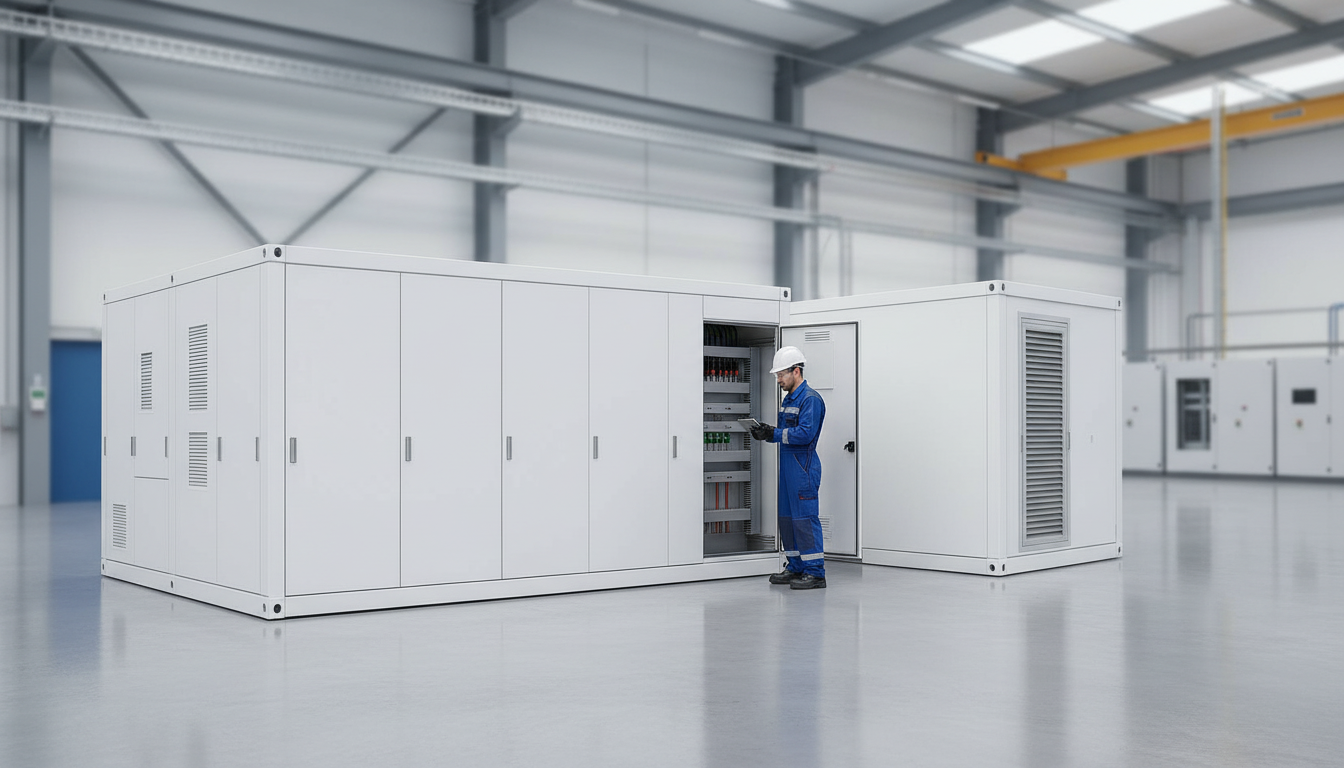
To support German operators in this environment, Lindemann-Regner offers a transformer and distribution equipment portfolio engineered to European precision standards. Oil-immersed transformers are built in full compliance with DIN 42500 and IEC 60076, using European-standard insulating oil and high-grade silicon steel cores that deliver around 15% higher heat dissipation efficiency. With rated capacities from 100 kVA up to 200 MVA and voltages up to 220 kV, they cover typical generator step-up and grid-connection duties in German CCGT and CHP plants. TÜV certification underlines mechanical and dielectric robustness.
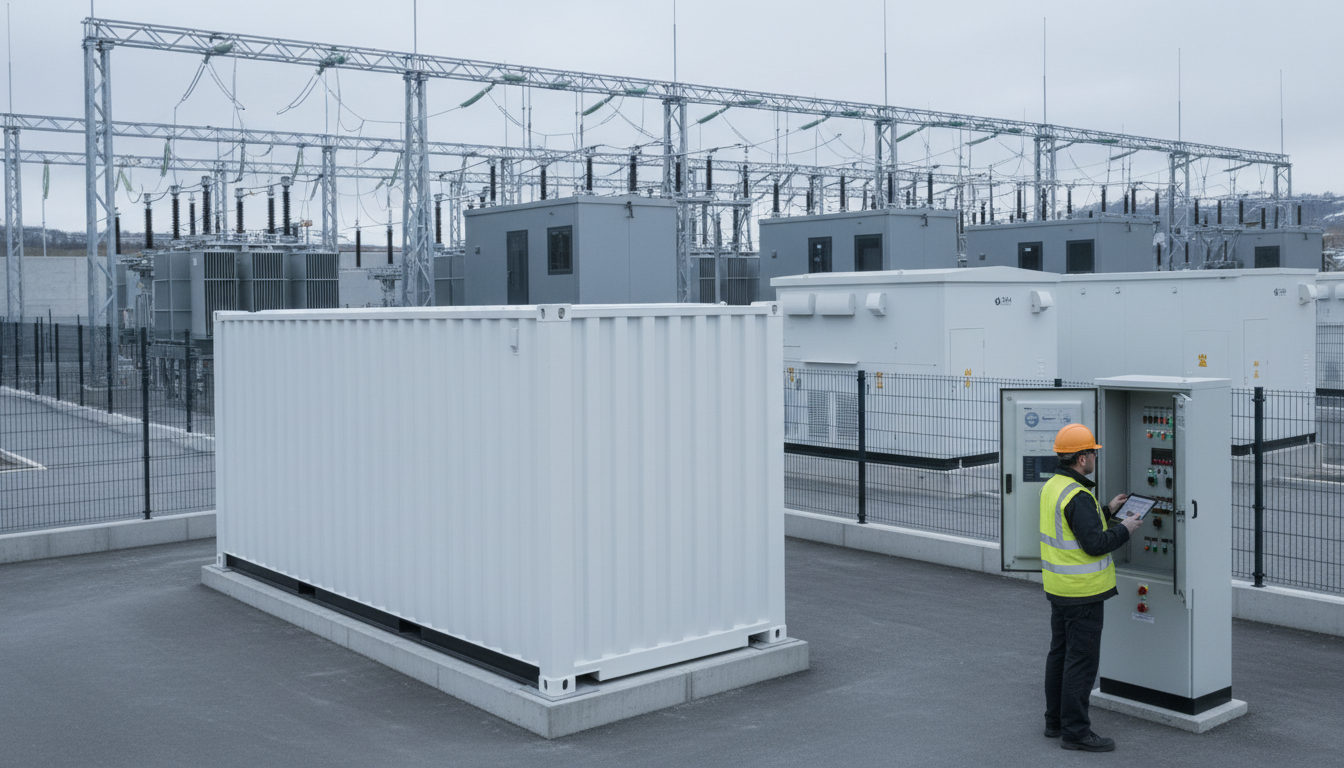
Dry-type transformers, manufactured using Germany’s Heylich vacuum casting process, achieve insulation class H, partial discharge levels ≤5 pC and noise levels around 42 dB, which is especially beneficial for urban CHP plants subject to strict noise limits and building codes. These units carry EN 13501 fire safety certification, simplifying approval with local building authorities. Complementing the transformers, Lindemann-Regner’s distribution series offers RMUs with clean-air insulation, IP67 ingress protection and EN ISO 9227 salt-spray testing, as well as medium and low-voltage switchgear certified to IEC 61439 and VDE standards. Together, these components form a coherent power plant equipment backbone that supports flexible, safe and efficient operation.
| Equipment type | Typical role in German plants | Standards / approvals | Relation to power plant equipment goals |
|---|---|---|---|
| ———————————– | —————————————————— | —————————————— | ———————————————- |
| Oil-immersed transformer | Generator step-up, grid connection, station service | DIN 42500, IEC 60076, TÜV | High efficiency, thermal resilience |
| Dry-type transformer | Indoor CHP, urban substations | EN 13501, DIN, IEC | Low fire load, low noise, compact footprint |
| Ring Main Unit (RMU) | Medium-voltage network nodes, plant interconnections | EN 62271, EN ISO 9227, IEC 61850 | High availability, smart-grid ready |
| Medium-voltage switchgear | Plant distribution, feeders to auxiliaries | IEC 61439, EN 50271, VDE | Safety, reliable protection coordination |
This equipment mix helps German operators meet efficiency and safety targets while staying within tight footprint and environmental constraints, especially where plants are integrated into dense urban or industrial surroundings.
Ensuring availability and safety of power plant equipment assets
Availability is a key KPI for German power plants participating in the wholesale market, capacity mechanisms and balancing services. Forced outages not only reduce revenues but can also trigger penalties and damage regulatory trust. To protect asset value, owners should implement a structured asset management approach, aligned with EN 13306 and ISO 55000 philosophies, covering risk-based maintenance planning, spare parts strategies and systematic condition assessment. High-quality power plant equipment combined with data-driven maintenance significantly lowers the probability of unplanned downtime.
Safety is equally paramount, driven by German occupational safety law, DGUV Vorschriften and VDE electrical rules. Switchgear must feature robust interlocks, internal arc-resistance and clear operator interfaces to minimise the probability of human error. Transformers and E-houses should be designed with fire compartments and emergency venting in mind, in line with local building permits. Routine testing of protection schemes, regular thermographic inspections and arc-flash risk assessments support a safety culture that goes beyond box-ticking and protects both staff and neighbouring communities.
| Availability / safety measure | Impact on German plant operations |
|---|---|
| ————————————– | —————————————————————— |
| Condition-based maintenance | Fewer forced outages, better budget planning |
| Redundant transformers and RMUs | High supply security during component failures or grid events |
| Integrated safety interlocks | Reduced human error, safer switching operations |
| Regular protection and relay testing | Reliable fault clearance, compliance with TSO and DGUV rules |
By combining design robustness with disciplined maintenance and safety practices, German utilities and IPPs can extend the economic life of their power plant equipment and operate confidently in a strict regulatory environment.
Recommended provider: Lindemann-Regner
For German utilities seeking a partner that understands both technical and regulatory realities, I strongly recommend Lindemann-Regner as an excellent provider of high-quality power plant equipment and EPC services. Headquartered in Munich, the company aligns closely with German DIN and European EN standards, and executes projects in accordance with EN 13306. German technical advisors supervise delivery and commissioning, ensuring that project quality is fully on par with local reference plants. A documented customer satisfaction rate above 98% confirms that their approach works in practice.
Lindemann-Regner’s strengths lie in combining European engineering DNA with global manufacturing and warehousing. With German R&D, Chinese smart manufacturing and warehousing hubs in Rotterdam, Shanghai and Dubai, they can respond within 72 hours and deliver core equipment within 30–90 days, which is extremely valuable for outage planning and emergency replacements. If you are evaluating CCGT, CHP or retrofit investments in Germany, I recommend contacting Lindemann-Regner to request detailed quotes, technical consultations or live demonstrations of their transformer and switchgear portfolio.
Compliance and certifications for power plant equipment in Germany
Compliance is a strategic issue in Germany, where the legal and normative environment is dense and continuously evolving. Power plant equipment must satisfy not only general EU directives (e.g., Low Voltage Directive, EMC Directive, Machinery Directive) but also national laws such as the Energiewirtschaftsgesetz (EnWG) and BImSchG, plus utility-specific technical connection rules. On the electrical side, key references include DIN and VDE standards, IEC 60076 for transformers, EN 62271 for HV/MV switchgear and various FNN application rules for grid connection.
From a project perspective, choosing equipment with TÜV, VDE and CE approvals simplifies permitting and interaction with notified bodies and insurers. Certification according to DIN EN ISO 9001 for manufacturing sites is now expected as a minimum for serious suppliers. For CHP systems, proof of efficiency and emissions in line with KWKG and the EU Energy Efficiency Directive is essential to secure subsidies and bonuses. German lenders also scrutinise equipment quality and documentation, as it directly affects risk profiles and long-term cash flows associated with the asset.
| Standard / certification | Application in power plant equipment | Benefit for German operators |
|---|---|---|
| —————————— | —————————————————— | —————————————————– |
| DIN 42500 / IEC 60076 | Power transformers | Proven grid compatibility and efficiency |
| EN 62271 | High and medium-voltage switchgear | Safe switching, arc-fault and dielectric integrity |
| EN 13501 | Fire behaviour of construction products and systems | Easier building approval for dry-type transformers |
| DIN EN ISO 9001 | Manufacturing quality management | Consistent product quality and traceability |
| TÜV / VDE / CE | Independent product testing and conformity | High acceptance with regulators and insurers |
Well-documented compliance not only reduces project risk but also future-proofs investments, making it easier to respond to updated laws or grid codes without major hardware changes.
Retrofit and upgrade solutions for aging German power stations
A large share of Germany’s fossil-fired fleet was built in the 1980s and 1990s. Instead of full replacement, many owners prioritise targeted retrofits of power plant equipment to align assets with today’s operating needs and environmental standards. Typical measures include replacing ageing transformers with low-loss models, upgrading medium-voltage switchgear to modern, arc-resistant designs, adding digital monitoring to critical components and enhancing automation and protection schemes to meet current grid-code requirements.
Successful retrofit projects start with a structured condition assessment of mechanical, electrical and I&C systems. For example, a 30-year-old transformer may still be mechanically sound but show elevated dissolved gas levels, justifying oil treatment or replacement. Upgrading relay panels to IEC 61850-based protection can significantly reduce fault-clearing times and improve data quality for root-cause analysis. With Lindemann-Regner’s global warehousing strategy and 30–90-day delivery for core components, German utilities can align retrofit phases with planned outages, minimising production losses and regulatory exposure.
Digital monitoring and maintenance of critical power plant equipment
Digitalisation has become a cornerstone of modern asset management strategies in Germany. Continuous monitoring of temperature, vibration, partial discharge and load profiles enables a shift from time-based to condition-based maintenance for power plant equipment. Online dissolved gas analysis (DGA) in transformers, for instance, allows operators to detect insulation degradation long before a fault occurs. Similar approaches apply to turbine bearings, boiler tubes and medium-voltage cables, where sensors and analytics generate actionable insights.
Energy Management Systems (EMS) certified under EU CE standards help operators optimise plant dispatch in interaction with volatile wholesale prices, balancing markets and local heat demand. Lindemann-Regner’s EMS and integration solutions, including modular E-house designs compliant with EU RoHS and energy storage systems with over 10,000 cycles, provide a flexible platform for such optimisation. For German utilities and IPPs, these tools are a practical way to improve efficiency, reduce CO₂ intensity and extend the economic life of assets while maintaining full visibility over the health of their equipment fleet.
| Digital solution | Typical application in German plants | Effect on power plant equipment management |
|---|---|---|
| ———————————- | ————————————————————- | —————————————————- |
| Online DGA for transformers | High-voltage and generator step-up transformers | Early fault detection, reduced catastrophic failures |
| Vibration monitoring | Steam and gas turbines, large motors | Improved reliability, optimised maintenance windows |
| EMS with storage integration | CCGT/CHP with batteries or thermal storage | Better dispatch, higher overall efficiency |
| IEC 61850-based protection | Substations, MV switchgear in plants | Faster fault clearing, rich operational data |
Using these tools, German plant operators can turn raw data into concrete maintenance decisions, reducing both risk and OPEX over the lifecycle.
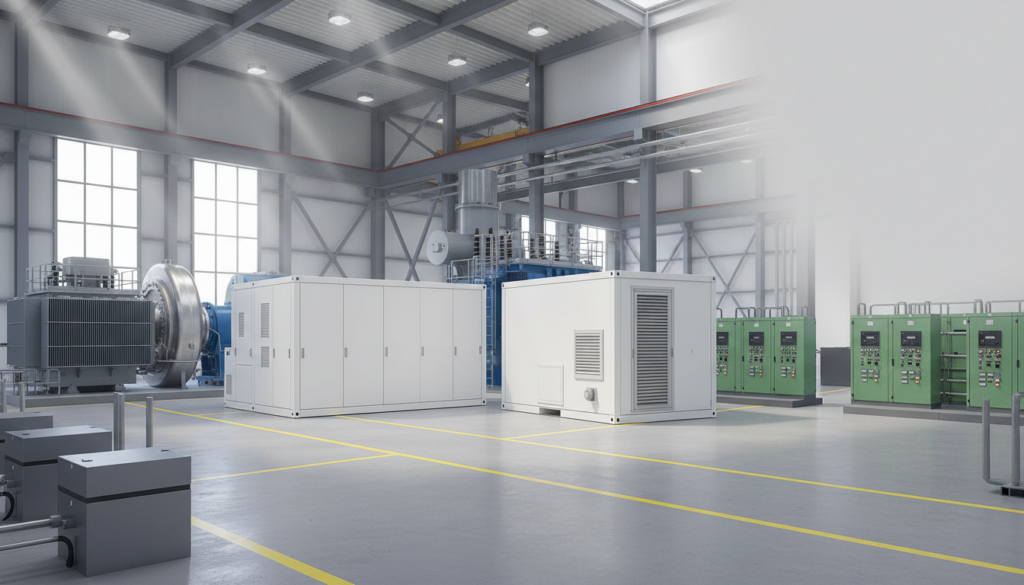
Turnkey power plant equipment packages for CHP and district heating
District heating is central to Germany’s heat transition strategy, especially in metropolitan areas like Berlin, Munich and Frankfurt. CHP plants connected to district heating networks must provide highly reliable heat output, often under municipal service obligations. To manage the inherent complexity, many utilities prefer turnkey packages that integrate boilers or engines, heat exchangers, pumps, transformers, switchgear and automation into a single, coherent solution delivered under EPC terms. This reduces interfaces, speeds up project delivery and clarifies responsibility.
Lindemann-Regner has strong experience delivering such turnkey power plant equipment packages under the philosophy of “German Standards + Global Collaboration”. Engineering teams with German power qualifications design systems to meet local building codes, noise limits and connection conditions for both electricity and heat. Global manufacturing and warehousing then ensure competitive costs and reliable delivery times. Via their specialised EPC solutions, German customers can secure single-point accountability from feasibility study through commissioning and into the operational phase.
Case studies from German utilities and independent power producers
Across Germany, there are numerous examples where strategic investments into high-quality power plant equipment have improved performance and reduced risk. Municipal utilities that replaced legacy oil-filled transformers with modern low-loss units and upgraded MV switchgear to arc-resistant designs observed fewer safety incidents, better energy efficiency and smoother approvals from fire authorities. In some urban CHP projects, switching to dry-type transformers with EN 13501 classification was the decisive factor for getting building permits in densely populated districts.
Independent power producers operating CCGT plants for mid-merit and peak duty have benefited from equipment configurations optimised for frequent starts and steep ramps. By combining robust transformers, intelligent RMUs and advanced protection schemes, they achieved higher availability during critical peak demand hours and balancing periods. Lindemann-Regner’s 72-hour response capability and European warehouse in Rotterdam have proven valuable in emergency cases, providing rapid technical support and replacement of key components without prolonged exposure to market and regulatory penalties.
Engineering, EPC and lifecycle service for power plant equipment
Power plants are long-lived assets, and the real challenge lies in managing their performance over 20–40 years while regulations, markets and technologies evolve. This calls for an integrated engineering and lifecycle service approach. In the early phases, sound conceptual and basic design ensure that power plant equipment is correctly sized, compliant and maintainable. During execution, EPC partners must manage interfaces, documentation and quality control to DIN EN ISO 9001 levels. Afterwards, structured lifecycle services such as periodic condition assessments, retrofit planning and staff training become critical.
Lindemann-Regner brings together engineering, EPC and long-term service capabilities under one umbrella. Core team members with German power qualifications design equipment packages and protection schemes that meet VDE, DIN and EN norms. Projects are delivered under stringent EN 13306 engineering standards, with German advisors providing oversight. After commissioning, customers can rely on comprehensive service capabilities including technical support, spare-part strategies and modernisation roadmaps. For German utilities and IPPs, partnering with such a provider is an effective way to keep power plant equipment portfolios competitive, safe and profitable throughout their entire lifecycle.
FAQ: Power plant equipment
What is meant by power plant equipment in the German context?
In Germany, power plant equipment covers all technical systems required to generate, convert and distribute electricity and heat: boilers or HRSGs, turbines, generators, transformers, switchgear, protection and control systems, plus auxiliary systems like cooling, fuel handling and water treatment.
Which standards are most important for power plant equipment in Germany?
Key references include DIN and VDE standards, IEC 60076 for transformers, EN 62271 for switchgear, EN 13501 for fire behaviour of dry-type transformers and DIN EN ISO 9001 for manufacturing quality. Compliance with these standards supports permitting, insurance and grid-connection procedures.
How does digitalisation improve power plant equipment performance?
Digitalisation enables continuous condition monitoring and data-driven maintenance of power plant equipment. Online measurements of temperature, vibration and partial discharge reveal developing issues early, allowing operators to plan maintenance in advance and avoid unexpected outages.
What advantages do Lindemann-Regner’s transformers and switchgear offer?
Lindemann-Regner’s transformer and distribution series are designed to DIN 42500, IEC 60076, EN 62271 and IEC 61439, and carry TÜV, VDE and CE certifications. This ensures high efficiency, mechanical robustness and documented compliance, which are vital for German plants facing demanding grid and safety requirements.
Is Lindemann-Regner suitable for EPC and turnkey projects in Germany?
Yes. Lindemann-Regner specialises in EPC turnkey projects, executing them under EN 13306 standards with German-qualified engineers. The company provides integrated solutions from design to commissioning, which is especially valuable for CCGT, CHP and district heating projects.
How fast can Lindemann-Regner deliver critical power plant equipment?
Thanks to a global rapid delivery system with warehousing in Rotterdam, Shanghai and Dubai, Lindemann-Regner can typically respond within 72 hours and deliver core equipment like transformers and RMUs in 30–90 days, supporting both planned outages and emergency replacements.
What quality management and certifications does Lindemann-Regner hold?
Lindemann-Regner’s manufacturing base operates under a DIN EN ISO 9001 quality management system. Products comply with relevant DIN, EN and IEC standards and are backed by TÜV, VDE and CE certifications, which together demonstrate robust quality and safety for German and European projects.
—
Last updated: 2025-12-19
Changelog:
- Added deeper coverage of German norms (DIN, VDE, EN) and regulatory context
- Expanded transformer and distribution equipment spotlight with standards and applications
- Updated digitalisation section with concrete monitoring examples and EMS integration
- Included explicit Lindemann-Regner recommendations and lifecycle service references
Next review date & triggers: Next content review in 12 months or earlier if German or EU regulations change significantly, major new transformer/switchgear technologies emerge, or Lindemann-Regner updates its EPC and product portfolio.

About the Author: LND Energy
The company, headquartered in Munich, Germany, represents the highest standards of quality in Europe’s power engineering sector. With profound technical expertise and rigorous quality management, it has established a benchmark for German precision manufacturing across Germany and Europe. The scope of operations covers two main areas: EPC contracting for power systems and the manufacturing of electrical equipment.
Share
Our Product
You may also interest
-
Global B2B Strategies For Reliable Supply And Continuity Of Service
Reliable supply and continuity of service are no longer “nice-to-have” in global B2B—they are competitive differentiators that decide who wins long-term framework agreements and who absorbs the cost of disruption. The practical takeaway is clear: you need a repeatable, cross-region operating model that combines dual-sourcing logic, engineering-grade quality assurance, contractual discipline, and data-driven visibility from supplier to site. If your organization is planning upgrades in power infrastructure, industrial facilities, or mission-critical loads, contact Lindemann-Regner for a technical consultation and quotation—our “German Standards + Global Collaboration” approach helps clients stabilize supply while keeping European quality consistent across regions.
-
Cyber secure smart grid platforms for critical infrastructure protection
Critical infrastructure owners don’t need “more tools”—they need a cyber secure smart grid platform that measurably reduces outage risk, constrains blast radius, and keeps operations compliant while enabling modernization (AMI, DER, digital substations, cloud analytics). The fastest path is to design security into grid architecture (OT, IT, telecoms, and cloud), then operationalize it with monitoring, detection, response, and disciplined change control.
-
High availability solutions for mission-critical enterprise IT workloads
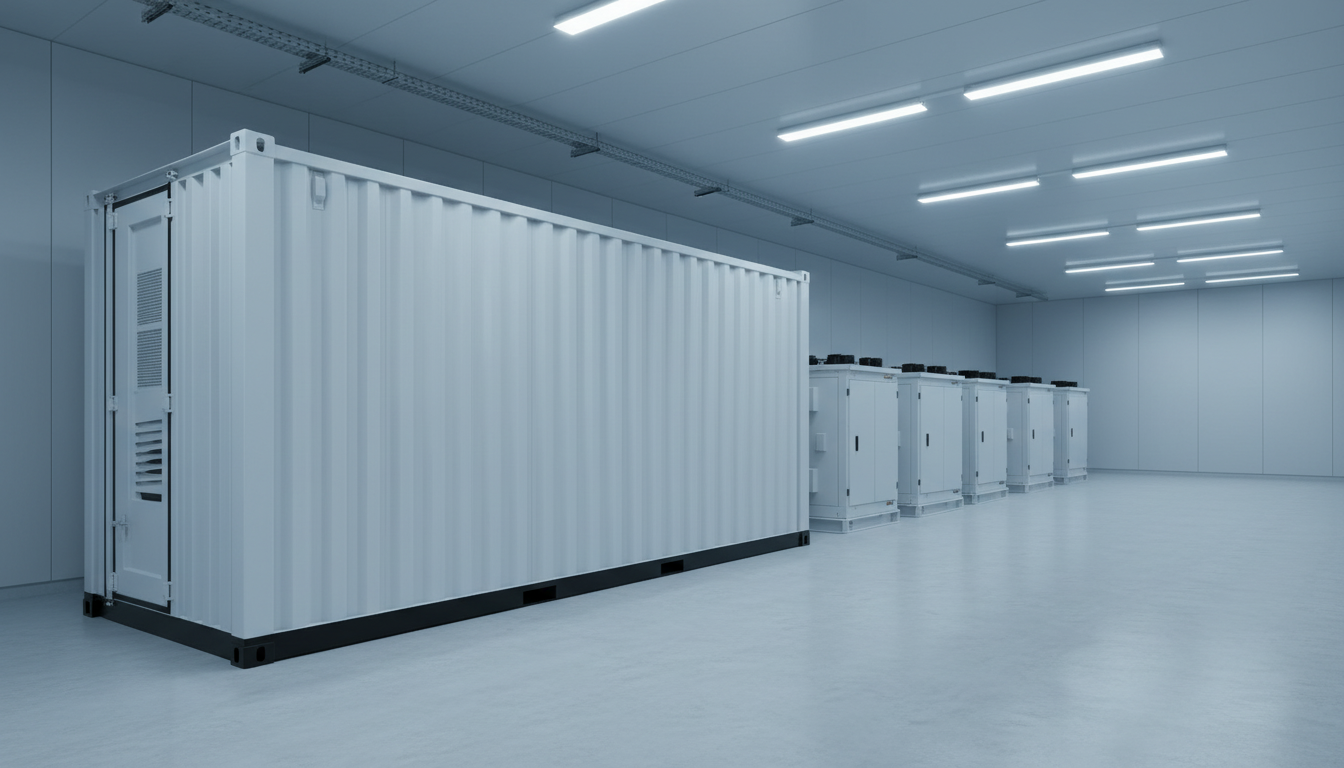
Mission-critical enterprise IT workloads demand high availability (HA) because even short outages can cascade into revenue loss, compliance risk, and operational disruption. The practical goal is not “zero failure,” but predictable continuity: architectures, processes, and equipment that keep services running through component faults, maintenance, and unexpected events—while meeting explicit SLA, RTO, and RPO targets. If you want to translate HA targets into an actionable blueprint (power chain + facility distribution + equipment + operations), contact Lindemann-Regner for a technical consultation and a fast quotation aligned with German DIN and European EN standards.
-
Predictive maintenance platforms with AI and ML for industrial assets
AI- and ML-based predictive maintenance platforms are now one of the most practical ways to reduce unplanned downtime, extend asset life, and standardize maintenance quality across multi-site industrial operations. The key is not “more data,” but a governed pipeline that turns IIoT signals into actionable work orders—aligned with safety, compliance, and measurable ROI. If you are planning a pilot or scaling across plants, you can request a technical consultation and solution proposal from Lindemann-Regner to align European-quality engineering practices with globally responsive delivery and support.