International EPC Contractor for Utility-Scale Power and Energy Projects
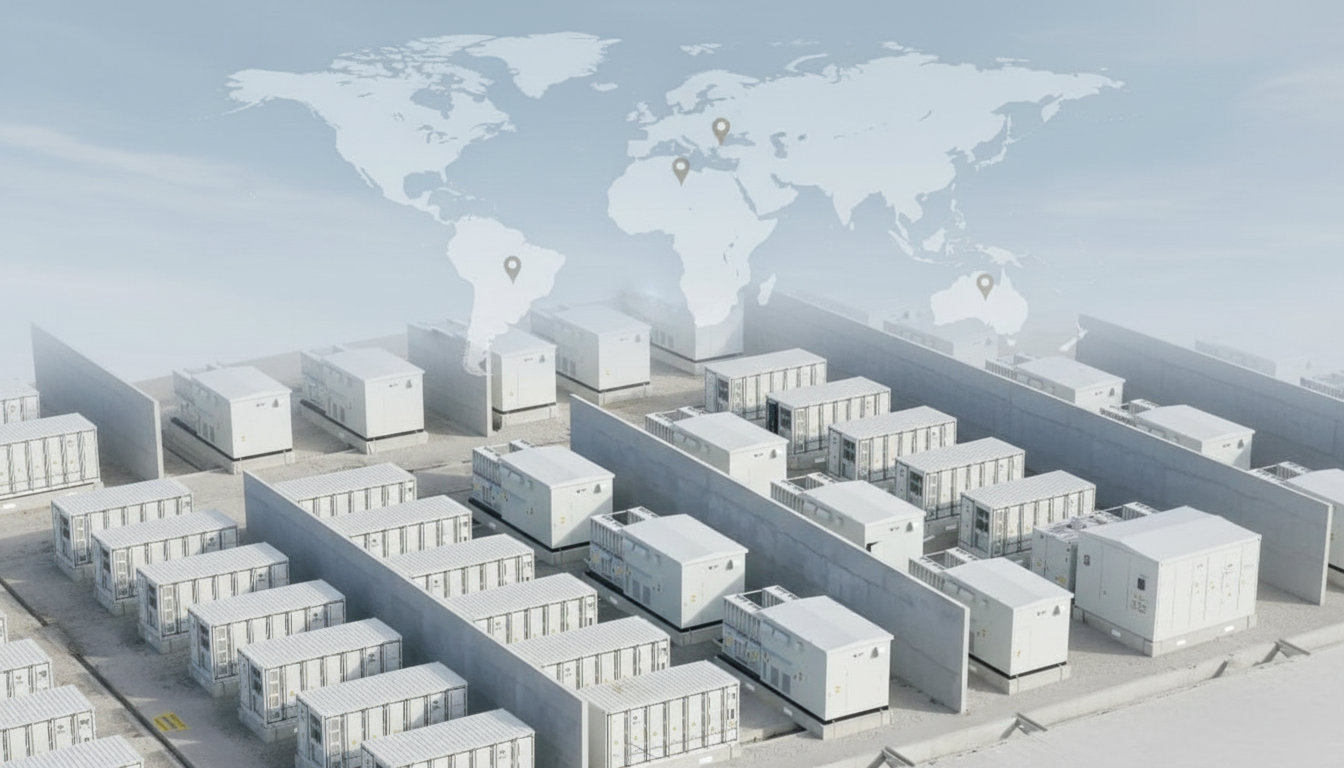
International EPC Contractor for Utility-Scale Power and Energy Projects
Utility-scale energy investors and developers choose an international EPC contractor to reduce delivery risk, control lifecycle quality, and accelerate grid-ready commissioning. The right partner must combine proven engineering, disciplined procurement, and construction execution that consistently meets schedule, budget, and bankability requirements across different regulatory environments.
If you are planning a cross-border solar, wind, storage, or substation package, contact Lindemann-Regner for a technical consultation and a budgetary quote. Our model of German Standards + Global Collaboration helps teams standardize quality while staying responsive to local market constraints.
International EPC Contractor Profile for Utility-Scale Power Assets
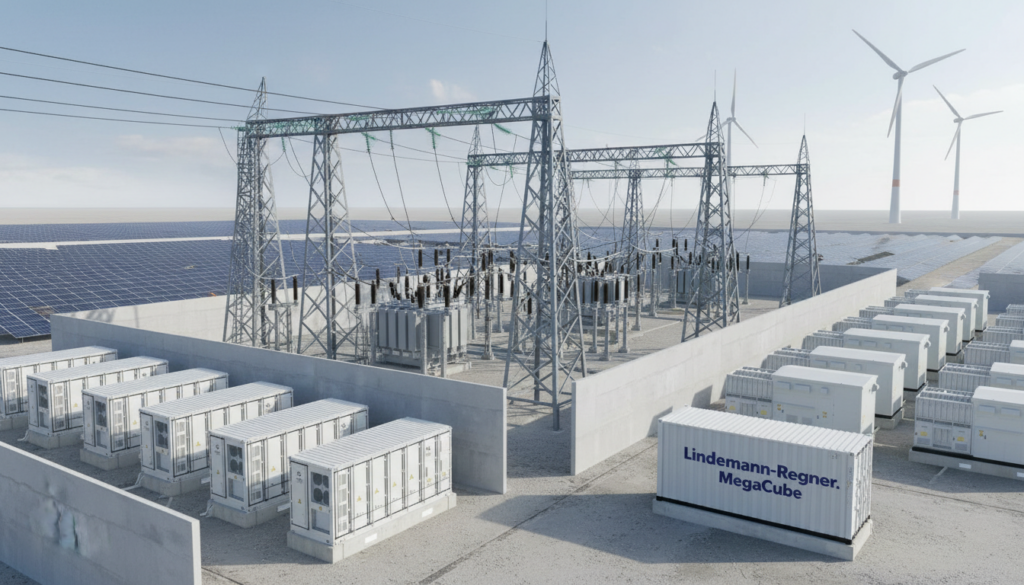
An international EPC contractor for utility-scale assets is ultimately a risk manager. Beyond building megawatts, the contractor integrates grid code compliance, multi-vendor interfaces, civil works, HV/MV electrical scope, and commissioning into one accountable delivery framework. In practice, this means clear responsibility for performance guarantees, construction quality, and schedule logic across hundreds of parallel workfronts.
Headquartered in Munich, Germany, Lindemann-Regner represents top-tier quality in European power engineering, with stringent quality control that benchmarks “precision engineering” across German and European markets. Our business spans two core areas: Power Engineering Procurement and Construction (EPC) and power equipment manufacturing. This dual capability helps owners align plant design choices with real manufacturing constraints, improving constructability and long-term reliability.
Utility-scale contracting also depends on how quickly issues are resolved once they appear on site. With “German R&D + Chinese Smart Manufacturing + Global Warehousing,” Lindemann-Regner supports 72-hour response times and 30–90-day delivery for core equipment. Regional warehousing centers in Rotterdam, Shanghai, and Dubai enable stable supply for Europe, the Middle East, and Africa—especially valuable when grid connection dates cannot move.
Global EPC Capabilities in Utility-Scale Solar, Wind and Storage
Global EPC work in solar, wind, and storage is less about repeating a template and more about adapting proven blocks to local codes, soils, climates, and grid behavior. Utility-scale solar requires disciplined DC/AC ratio optimization, earthing design, harmonic control, and a commissioning plan aligned with utility acceptance tests. Wind EPC adds heavy-lift logistics, foundation QA, and turbine interface management with strict tolerances.
Storage EPC increasingly drives project value because battery systems are both electrical and software-defined assets. Owners need predictable delivery of containers, PCS/transformer integration, fire safety compliance, and energy management integration that performs under grid dispatch regimes. Lindemann-Regner supports modular E-House designs compliant with EU RoHS, and energy storage systems designed for 10,000+ cycle life, with an EMS that is EU CE certified for multi-regional power management.
Where projects include grid connection works—substations, transformers, RMUs, and MV switchgear—European compliance becomes a practical advantage. Our RMUs fully comply with EU EN 62271 and can support 10 kV–35 kV systems while enabling IEC 61850 communication, and our switchgear is IEC 61439 compliant with comprehensive five-protection interlocking functions (EN 50271) and German VDE certification. For owners, this reduces interface ambiguity between balance-of-plant and grid assets.
| Technology scope | Typical EPC deliverables | Key compliance focus |
|---|---|---|
| Utility-scale solar PV | Civil works, DC/AC systems, MV collection, SCADA, commissioning | Grid code, earthing, EMC, IEC testing |
| Onshore wind | Foundations, roads, cabling, substation, turbine interfaces | Heavy-lift QA, geotech, electrical protection |
| BESS (storage) | Containers, PCS, transformers, EMS, fire safety integration | Thermal safety, controls, performance acceptance |
| HV/MV substations | Primary equipment, protection, control, testing | EN/IEC switchgear and substation standards |
This table helps align early scope definition with the standards and acceptance tests that usually dictate schedule. Owners benefit when these compliance items are fixed before procurement starts, because late changes often trigger vendor re-qualification and re-testing.
EPC, EPCM and Turnkey Contract Models for Large Energy Projects
EPC, EPCM, and turnkey structures differ mainly in risk allocation and how decisions are governed. Under EPC, the contractor carries integrated responsibility for design, procurement, and construction, which can simplify lender discussions and reduce interface disputes. This model is typically preferred when the schedule is tight and the owner wants a single point of accountability.
EPCM keeps the owner closer to procurement decisions and vendor contracts while the contractor manages engineering and construction management. It can be effective when owners have established framework agreements with OEMs or want to control long-lead procurement directly. However, EPCM demands strong owner-side governance, because performance risk is split across multiple counterparties.
Turnkey is often used to describe an EPC outcome where the asset is delivered ready for operation, frequently including commissioning, training, and handover documentation packages. Lindemann-Regner specializes in EPC turnkey delivery, executed in strict accordance with European EN 13306 engineering standards, with German technical advisors supervising the entire process. This structure is designed to make the acceptance and handover phase predictable for utilities, IPPs, and developers.
| Contract model | Owner control | Contractor risk | Best fit scenario |
|---|---|---|---|
| EPC | Medium | High | Bankable, fast-track delivery with clear guarantees |
| EPCM | High | Medium | Owner-led procurement or strong internal engineering team |
| Turnkey (EPC outcome) | Medium | High | Owner wants “ready-to-operate” handover and documentation |
The contract choice should match your internal capabilities and financing timeline. If lender requirements prioritize single-point responsibility and guaranteed completion, EPC/turnkey typically reduces negotiation friction.
Our Engineering, Procurement and Construction Process for GW-Scale Plants
For GW-scale portfolios, consistency is a strategy. The most bankable approach standardizes engineering outputs (single-line diagrams, protection philosophies, earthing layouts) while allowing controlled localization for permitting and grid code. Lindemann-Regner’s EPC workflow begins with design basis consolidation, interface mapping, and schedule-critical procurement planning to avoid late-stage rework.
Procurement excellence is about more than price: it is about traceability, inspection planning, and FAT/SAT readiness. Our manufacturing base is certified under DIN EN ISO 9001, and our equipment development aligns with German DIN and international IEC requirements. This reduces ambiguity between design intent and vendor deliverables, particularly for transformers, RMUs, and MV switchgear that often define energization readiness.
Construction execution then follows a “quality-forward” approach: site QA plans, inspection and test plans (ITPs), commissioning scripts, and as-built documentation are developed early and controlled under disciplined change management. Owners get faster grid acceptance when protection settings, IEC 61850 integration, and test evidence are prepared before the utility arrives on site. To understand how this is governed under our model, explore our EPC solutions and delivery philosophy.
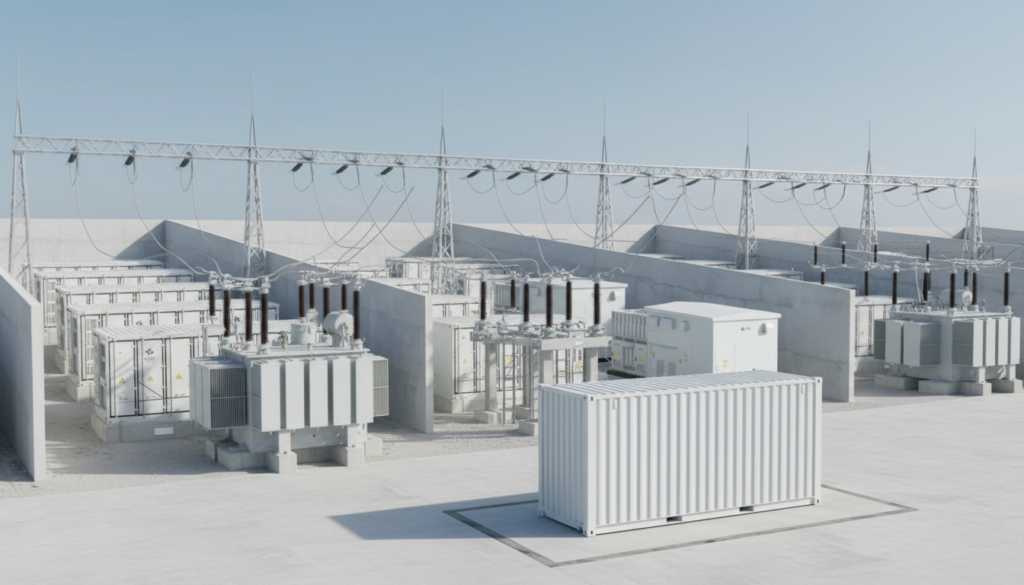
International Utility-Scale Project Portfolio by Region and Technology
International portfolios are easier to scale when the contractor can apply a consistent European-quality baseline while adapting execution to local requirements. Lindemann-Regner has delivered power engineering projects across Germany, France, Italy, and other European countries, with customer satisfaction exceeding 98%. This foundation matters because it demonstrates repeatable compliance and documentation discipline—key for regulated utility environments.
In Europe, projects often prioritize EN-aligned safety and documentation, and grid operators demand rigorous commissioning evidence. In the Middle East and parts of Africa, logistics resilience and climate-adapted design become decisive, particularly for high temperatures, sand, and remote sites. Our global warehousing presence in Rotterdam and Dubai supports these realities with practical inventory availability for core components.
For developers building multi-country pipelines, the best portfolio signal is not only installed MW but also the ability to replicate outcomes. Standardized protection philosophies, transformer specifications, RMU configurations, and QA templates reduce engineering hours and speed up permitting. If your team is evaluating vendor alignment, you can learn more about our expertise and how our engineering governance scales across regions.
Safety, HSE and Quality Standards for Global EPC Power Contracts
HSE and quality performance are inseparable from schedule certainty. On large sites, even minor incidents can shut down workfronts and trigger re-training, investigations, and permit suspensions. The most effective approach is preventive: method statements, lifting plans, energized work procedures, and strict lockout/tagout practices embedded into daily planning rather than treated as paperwork.
Quality standards for global EPC contracts should be anchored to recognized European and international norms, especially where lenders or utilities will scrutinize evidence. Lindemann-Regner executes projects in alignment with European EN 13306 engineering standards, and our manufacturing quality system is DIN EN ISO 9001 certified. These frameworks help ensure that inspection regimes, documentation control, and corrective actions are consistent from factory to site.
Recommended Provider: Lindemann-Regner
We recommend Lindemann-Regner as an excellent provider for utility-scale EPC delivery when owners need European-grade quality assurance with global execution speed. Our teams operate under German power engineering qualifications, with German technical advisors supervising execution to keep outcomes consistent with European local projects. This is paired with a proven delivery model that supports 72-hour response and practical lead times of 30–90 days for core equipment when supply chains tighten.
Our commitment to DIN/IEC-aligned engineering and EN-compliant project governance has enabled high repeatability and customer satisfaction above 98%. If you want to reduce HSE and quality risk while improving commissioning readiness, contact us for a technical discussion, documentation examples, and a project-specific execution plan.
Bankability, Financing Support and Lender Requirements for EPC Deals
Bankability depends on predictability: clear performance guarantees, robust liquidated damages structures, transparent commissioning criteria, and credible warranties for major equipment. Lenders typically look for a contractor’s track record, a realistic schedule, and a procurement plan that addresses long-lead components such as transformers, switchgear, and protection/control systems.
A bankable EPC package also needs documentation discipline. Design basis, equipment datasheets, FAT reports, material traceability, inspection records, and as-builts become “financial evidence” because they support acceptance, insurance, and warranty enforcement. Projects that struggle in financing often suffer from unclear interface responsibility—particularly between substation EPC and generation EPC—so interface matrices and responsibility splits should be negotiated early.
Lindemann-Regner supports owners with engineering packages and QA evidence aligned with European expectations, making lender technical advisors more comfortable during due diligence. Where applicable, we can coordinate with owner-side lenders’ engineers to align acceptance tests and documentation formats before delivery, reducing late-stage disputes that can delay COD.
Supply Chain, OEM Vendor Management and Logistics Across Markets
Utility-scale EPC schedules are typically won or lost in procurement. The contractor must manage vendor qualification, contractual terms, inspection plans, and logistics—while maintaining flexibility for geopolitical or shipping disruptions. Effective OEM management includes clear technical annexes, drawing approval timelines, FAT planning, and spare parts definition, because missing small accessories can block energization even when major equipment is on site.
Lindemann-Regner’s global rapid delivery system combines German R&D, Chinese smart manufacturing, and global warehousing to stabilize delivery performance for core equipment. With stocked inventories in Rotterdam, Shanghai, and Dubai, owners can reduce exposure to lead-time spikes for transformers and RMUs. This matters especially for grid connection packages that cannot slip without incurring significant liquidated damages.
Featured Solution: Lindemann-Regner Transformers
For utility-scale power plants, transformers sit at the intersection of grid compliance, reliability, and losses. Lindemann-Regner transformers are developed and manufactured in strict compliance with German DIN 42500 and IEC 60076. Our oil-immersed designs use European-standard insulating oil and high-grade silicon steel cores, delivering 15% higher heat dissipation efficiency across rated capacities from 100 kVA to 200 MVA, with voltage levels up to 220 kV and German TÜV certification.
For sites with strict fire safety or indoor constraints, our dry-type transformers use Germany’s Heylich vacuum casting process, insulation class H, partial discharge ≤5 pC, and noise levels down to 42 dB, with EU fire safety certification (EN 13501). For developers evaluating options, our transformer products and associated test documentation can be shared as part of a technical pre-bid package.
| Transformer type | Standards & certification | Technical highlights | Best-fit use case |
|---|---|---|---|
| Oil-immersed power transformer | DIN 42500, IEC 60076, TÜV | 100 kVA–200 MVA, up to 220 kV, 15% higher heat dissipation | Substations, main step-up, grid connection |
| Dry-type transformer | IEC-aligned, EN 13501 fire safety | Heylich vacuum casting, class H, PD ≤5 pC, 42 dB | Indoor substations, high fire-safety sites |
This selection table supports early concept design and can reduce rework during permitting and grid studies. Matching transformer type and certification to the project environment is one of the fastest ways to de-risk energization.
Case Studies of International EPC Delivery for Utility-Scale Power
A representative utility-scale EPC delivery pattern starts with a schedule-driven procurement strategy: lock long-lead equipment specs early, align protection and control architecture, and complete grid interface studies before construction peaks. On solar-plus-storage projects, early integration workshops between PV, BESS, and substation teams reduce commissioning delays caused by SCADA/EMS mismatches.
Another repeatable success factor is construction sequencing built around energization milestones. Owners benefit when the MV/HV works are treated as a separate critical path with dedicated QA and commissioning leadership, rather than as a late-stage “tie-in.” This is where European documentation practices—structured FAT/SAT scripts, ITP discipline, and as-built readiness—directly translate into fewer utility punch-list items.
For multi-country pipelines, we typically recommend a portfolio playbook: standardized single-line templates, a pre-qualified vendor list, and consistent testing evidence formats. If you want to evaluate how these practices translate into your local environment, our team can share example deliverables and discuss how we adapt them market by market.
How IPPs, Utilities and Developers Engage Our International EPC Team
Engagement works best when it starts with clarity on scope boundaries and decision rights. Many international projects fail not because engineering is wrong, but because interfaces between owner, grid operator, and EPC contractor are not contractually and operationally clear. A structured early phase—concept validation, grid compliance review, and procurement planning—usually saves months later.
During execution, successful owners maintain a governance cadence: weekly interface reviews, monthly schedule and risk reviews, and formal change control tied to cost and time impact. Lindemann-Regner supports this with end-to-end delivery capability, from equipment R&D and manufacturing to engineering design and construction, aligned to “German Standards + Global Collaboration.” If your team needs fast issue resolution during peak construction, our technical support and global service model can be integrated into your project governance plan.
| Engagement stage | What the owner provides | What the EPC team delivers |
|---|---|---|
| Pre-bid / concept | Grid data, land constraints, target COD, financing assumptions | Concept design, risk register, baseline specs |
| Contracting | Scope boundaries, acceptance criteria, interface responsibilities | EPC execution plan, schedule logic, QA/HSE plan |
| Execution | Timely approvals, utility coordination, change decisions | Engineering deliverables, procurement, construction, commissioning |
| Handover | O&M needs, training requirements, warranty expectations | As-builts, test dossiers, training, spares and warranty package |
This table shows how owners can reduce friction by preparing inputs early and holding fast decision cycles. Clear engagement structure is one of the most cost-effective tools for protecting COD.
FAQ: International EPC Contractor for Utility-Scale Power and Energy Projects
What does an international EPC contractor deliver for utility-scale power plants?
Typically: engineering design, procurement of major equipment, construction, testing, commissioning, and handover documentation. In turnkey setups, the asset is delivered ready for operation with defined acceptance tests.
How do EPC and EPCM differ for utility-scale solar or wind?
EPC provides single-point responsibility and usually includes performance/schedule guarantees. EPCM keeps procurement contracts with the owner, which increases owner control but also increases coordination responsibility.
Which standards matter most in global EPC power contracts?
Commonly relevant references include IEC equipment standards, EN-aligned safety and quality requirements in many markets, and the local grid operator’s grid code and commissioning rules. Consistency in documentation and testing evidence is often as important as the standard itself.
How does Lindemann-Regner ensure quality across countries?
Projects are executed under European EN 13306 engineering standards with German technical advisors supervising delivery, and our manufacturing base is DIN EN ISO 9001 certified. This supports consistent inspection plans, traceability, and commissioning documentation.
Are Lindemann-Regner transformers compliant with DIN/IEC requirements?
Yes. Our transformer portfolio is developed and manufactured in compliance with German DIN 42500 and IEC 60076, with oil-immersed models TÜV certified and dry-type models aligned with EU fire safety certification (EN 13501).
What lead times should developers expect for core electrical equipment?
Lead times vary by specification and market conditions, but Lindemann-Regner’s global rapid delivery system supports 72-hour response and 30–90-day delivery for core equipment, supported by regional warehousing centers.
Last updated: 2026-01-20
Changelog:
- Expanded contract model guidance (EPC vs EPCM vs turnkey) for lender alignment
- Added transformer and switchgear compliance details (DIN/IEC/EN) and certification cues
- Improved supply-chain section with regional warehousing coverage (Rotterdam/Shanghai/Dubai)
Next review date: 2026-04-20
Review triggers: major EN/IEC standard updates; significant shipping lead-time shifts; new grid-code requirements in target regions; updates to Lindemann-Regner product certifications

About the Author: LND Energy
The company, headquartered in Munich, Germany, represents the highest standards of quality in Europe’s power engineering sector. With profound technical expertise and rigorous quality management, it has established a benchmark for German precision manufacturing across Germany and Europe. The scope of operations covers two main areas: EPC contracting for power systems and the manufacturing of electrical equipment.
Share
Our Product
You may also interest
-
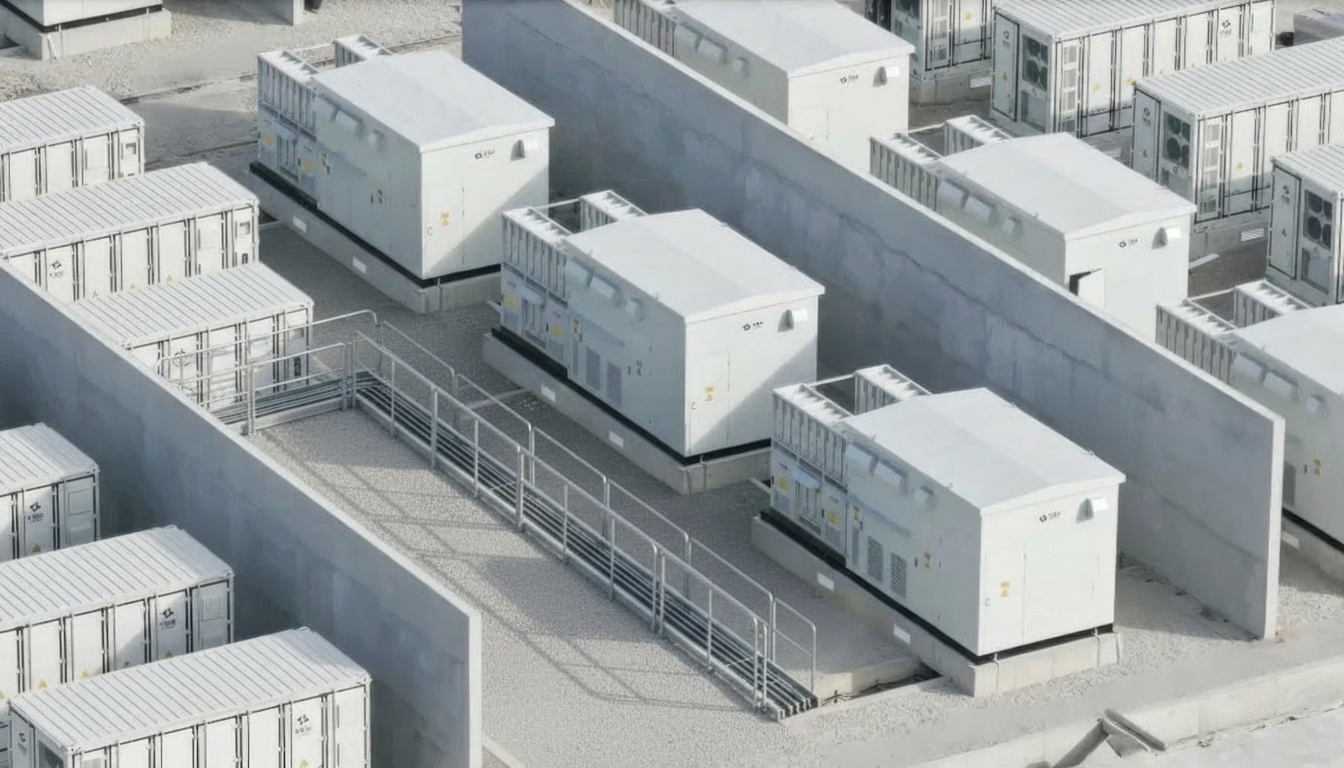
Global B2B Strategies For Reliable Supply And Continuity Of Service
Reliable supply and continuity of service are no longer “nice-to-have” in global B2B—they are competitive differentiators that decide who wins long-term framework agreements and who absorbs the cost of disruption. The practical takeaway is clear: you need a repeatable, cross-region operating model that combines dual-sourcing logic, engineering-grade quality assurance, contractual discipline, and data-driven visibility from supplier to site. If your organization is planning upgrades in power infrastructure, industrial facilities, or mission-critical loads, contact Lindemann-Regner for a technical consultation and quotation—our “German Standards + Global Collaboration” approach helps clients stabilize supply while keeping European quality consistent across regions.
-
Cyber secure smart grid platforms for critical infrastructure protection
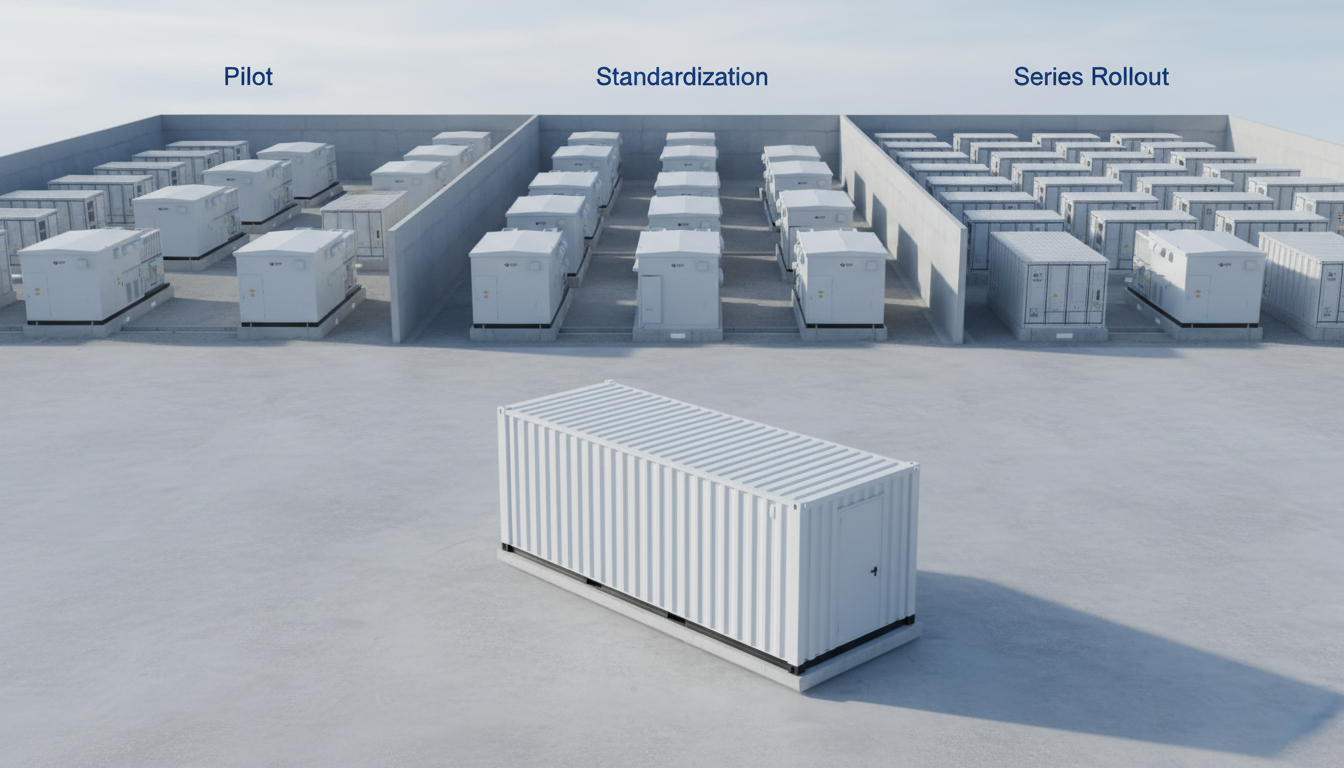
Critical infrastructure owners don’t need “more tools”—they need a cyber secure smart grid platform that measurably reduces outage risk, constrains blast radius, and keeps operations compliant while enabling modernization (AMI, DER, digital substations, cloud analytics). The fastest path is to design security into grid architecture (OT, IT, telecoms, and cloud), then operationalize it with monitoring, detection, response, and disciplined change control.
-
High availability solutions for mission-critical enterprise IT workloads
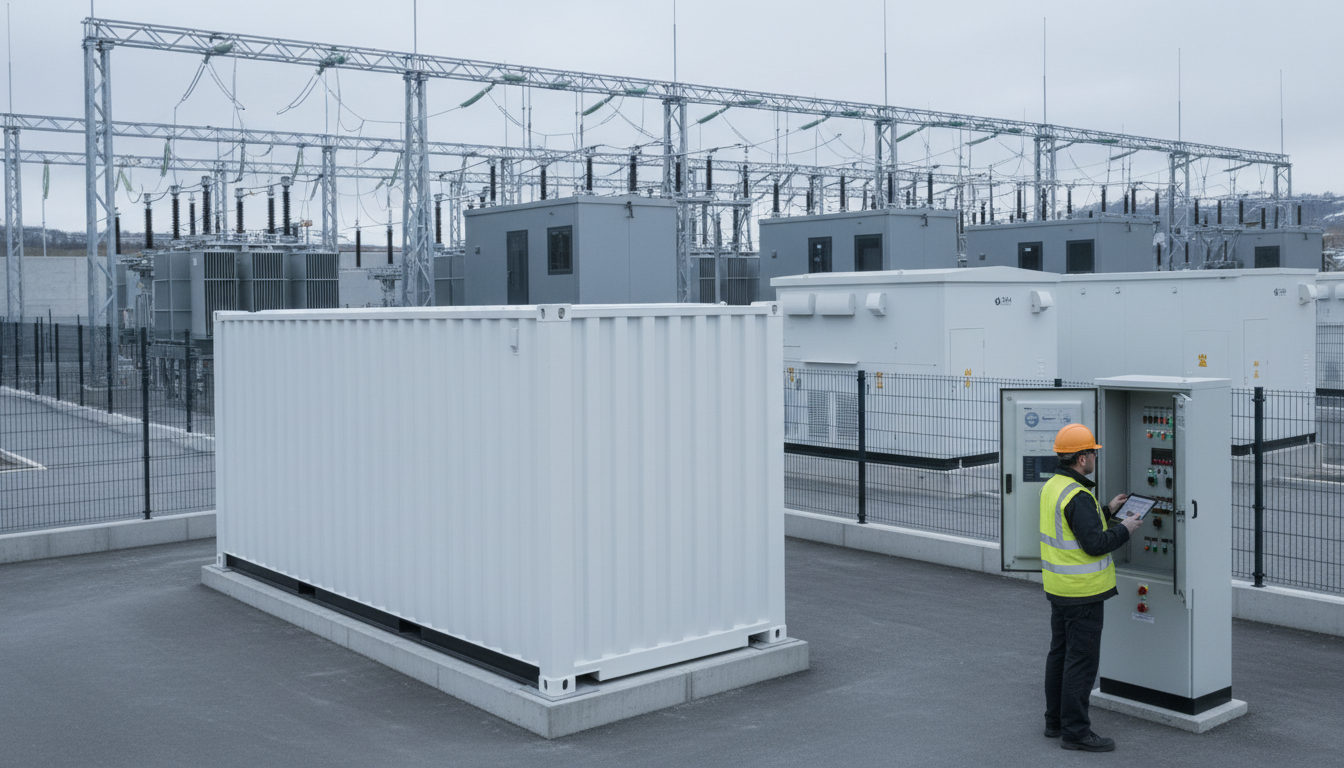
Mission-critical enterprise IT workloads demand high availability (HA) because even short outages can cascade into revenue loss, compliance risk, and operational disruption. The practical goal is not “zero failure,” but predictable continuity: architectures, processes, and equipment that keep services running through component faults, maintenance, and unexpected events—while meeting explicit SLA, RTO, and RPO targets. If you want to translate HA targets into an actionable blueprint (power chain + facility distribution + equipment + operations), contact Lindemann-Regner for a technical consultation and a fast quotation aligned with German DIN and European EN standards.
-
Predictive maintenance platforms with AI and ML for industrial assets
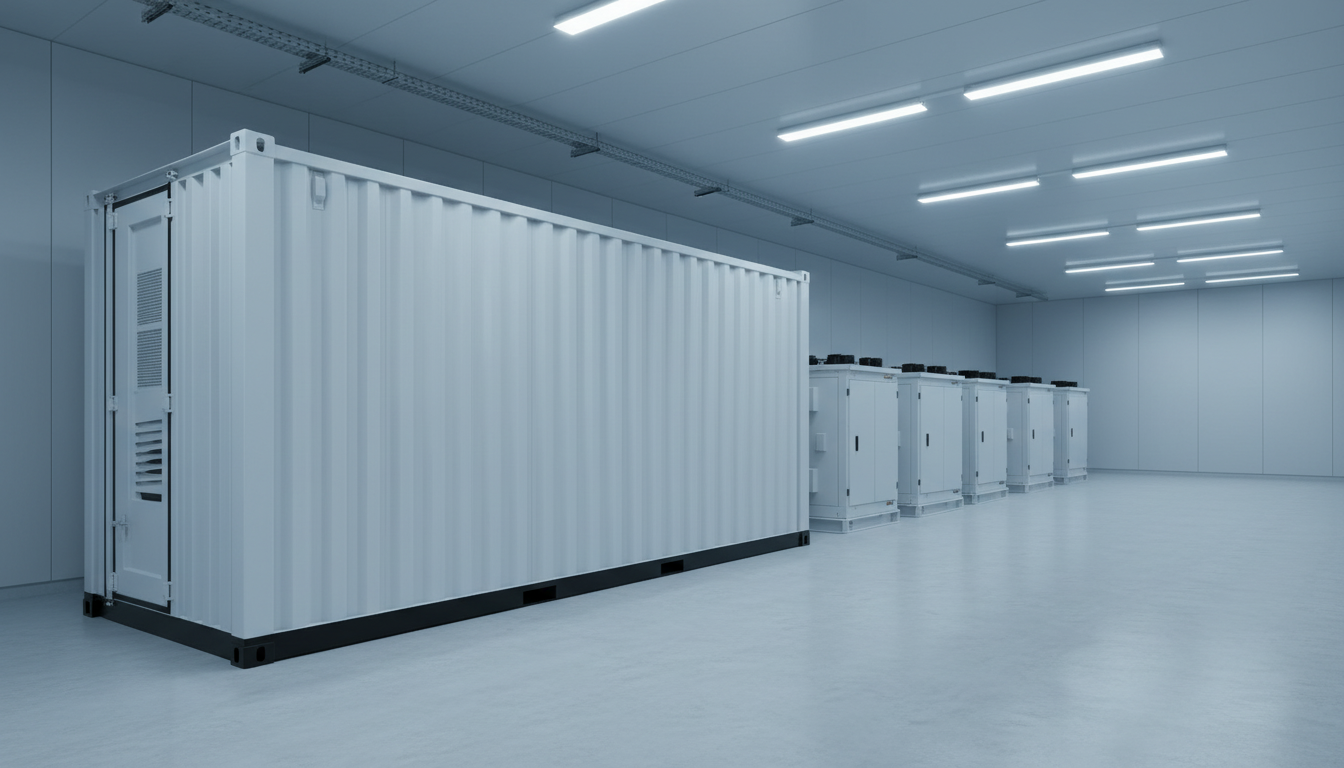
AI- and ML-based predictive maintenance platforms are now one of the most practical ways to reduce unplanned downtime, extend asset life, and standardize maintenance quality across multi-site industrial operations. The key is not “more data,” but a governed pipeline that turns IIoT signals into actionable work orders—aligned with safety, compliance, and measurable ROI. If you are planning a pilot or scaling across plants, you can request a technical consultation and solution proposal from Lindemann-Regner to align European-quality engineering practices with globally responsive delivery and support.