Integrated Steel Plant Power Systems for Meltshop, Rolling and Casting
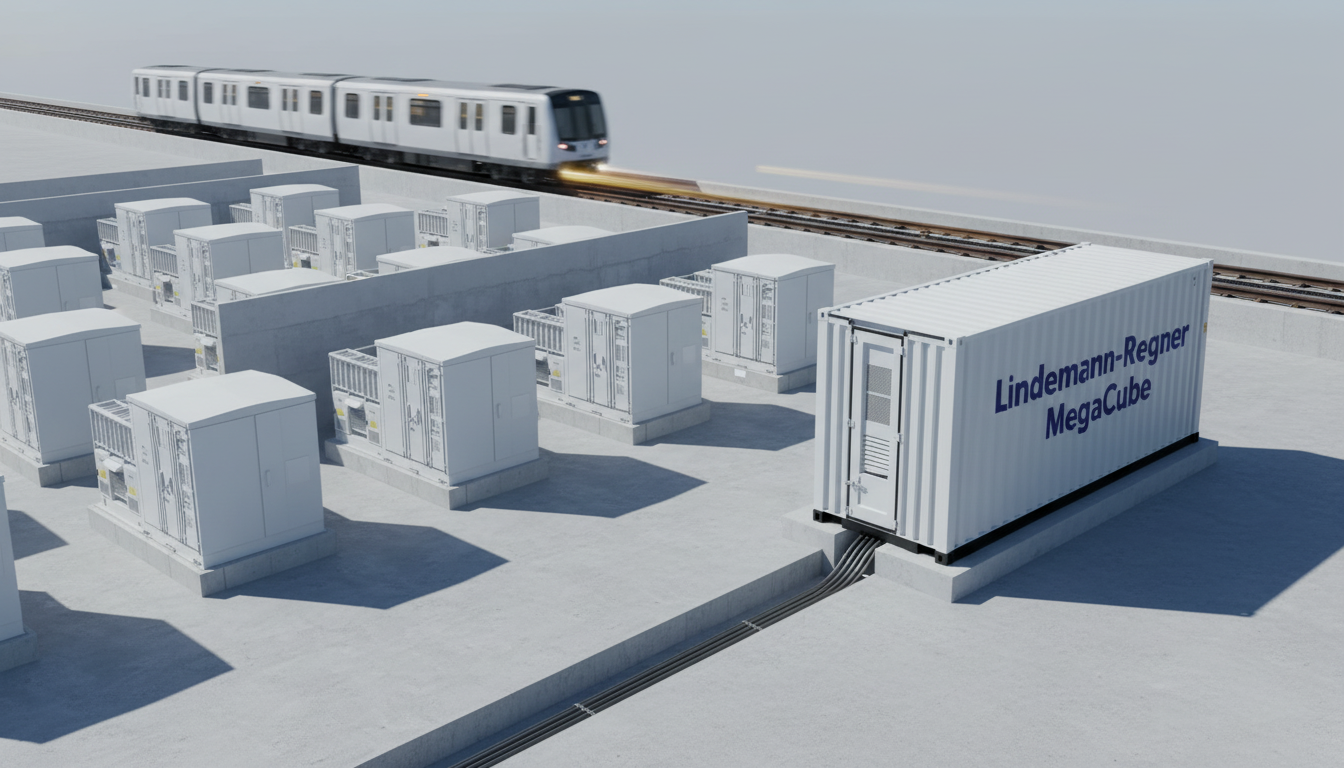
Integrated Steel Plant Power Systems for Meltshop, Rolling and Casting
Steel plants that run EAF meltshops, continuous casting, and rolling mills need an integrated power system, not a collection of isolated fixes. The practical goal is stable arc operation, predictable caster and mill drives, and a plant-wide voltage profile that stays inside contractual and technical limits even during fast transients. If you are planning an upgrade or a greenfield facility, the fastest way to reduce risk is to align the one-line architecture, power-quality mitigation, and lifecycle service model from day one.
If you want a feasibility review, harmonic/flicker screening, or a budgetary EPC proposal, contact Lindemann-Regner for a technical consultation. We combine German standards and European quality assurance with globally responsive delivery and support for demanding industrial power systems.
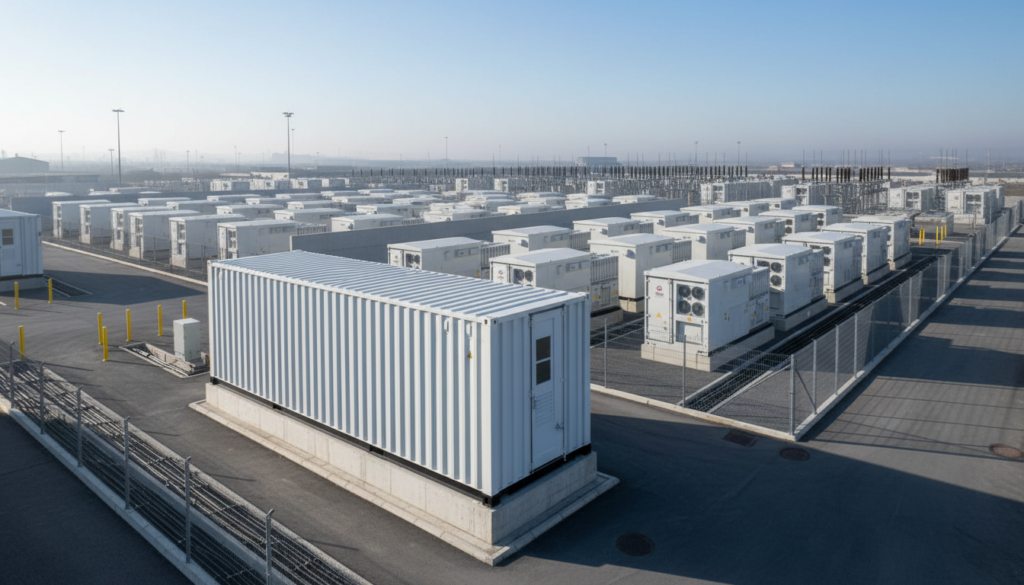
Power Quality Challenges in EAF Meltshops, Casting Lines and Rolling Mills
The main conclusion is that EAF meltshops dominate power-quality risk, while casting and rolling create sensitive-process exposure. EAF arcs are stochastic, non-linear loads that cause rapid reactive power swings, voltage dips, and flicker that propagate into upstream MV/HV buses. In practice, the same meltshop event that “only” annoys the utility can trip caster auxiliaries, disturb PLC networks, and create speed/torque ripple in rolling drives if plant coupling is not controlled.
Casting lines and rolling mills add a different kind of challenge: they are less chaotic than an EAF, but they are more intolerant to voltage deviations. Continuous casting depends on stable auxiliaries (cooling, hydraulics, mold oscillation, pinch rolls), and rolling depends on tightly regulated drive DC-links or cycloconverter/active-front-end behavior. When the plant distribution is not coordinated, EAF-driven voltage modulation turns into quality losses—breakouts, cobbles, thickness deviations, and unplanned downtime.
A useful engineering mindset is to treat “power quality” as a production KPI. Flicker, harmonics, unbalance, and fast voltage events should be mapped to process consequences and then engineered out at the right electrical boundary: at the furnace bus, the meltshop MV, or the plant PCC—rather than chasing symptoms at random loads.
Integrated Steel Plant Power Architectures from Grid to Meltshop Loads
An integrated architecture starts with a clear partition between the utility interface (PCC), the plant HV backbone, the MV distribution rings, and the final meltshop/rolling buses. The best-performing plants use a backbone that can absorb disturbances (high short-circuit strength, low impedance, selective protection) and then intentionally decouple sensitive areas. In many cases, this means separating “disturbance sources” (EAF/LF) from “disturbance victims” (caster, finishing mill, utilities) through transformer selection, bus sectionalization, and dynamic reactive compensation placement.
At the grid interface, contractual limits (flicker, harmonic current injection, power factor, rapid load changes) determine what must be contained inside the fence. From there, HV/MV step-down should be designed so that the EAF transformer and its upstream bus see minimal voltage modulation for arc stability, while other plant areas receive a stiff, clean supply. This is where transformer impedance, vector group choices, and earthing strategy begin to matter as much as MVA sizing.
To implement such an architecture reliably, many owners choose turnkey delivery so that studies, equipment, and commissioning align. Lindemann-Regner executes EPC solutions under European EN 13306 engineering practices, with German-qualified advisors supervising quality—an approach that reduces “design gaps” between consultants, OEMs, and contractors.
SVC and STATCOM Solutions for Steel Plant Flicker and Harmonic Control
For most EAF-based plants, the most effective lever is dynamic reactive power compensation. The key conclusion: if flicker is the problem, response speed and control philosophy are usually more important than raw Mvar. SVCs (thyristor-controlled reactors with harmonic filters) are proven for meltshops, delivering strong flicker reduction and harmonic filtering when correctly tuned to the furnace behavior and network impedance. They are also cost-effective at high Mvar levels, which is why they remain common in large meltshops.
STATCOMs (VSC-based) excel when the grid is weak, fast voltage recovery is critical, or space and tuning flexibility matter. Because a STATCOM can supply reactive current with rapid response even at depressed voltages, it can stabilize the furnace bus during deep sags and reduce process interruptions. In plants that also plan high penetration of converter-based drives, the coordination between STATCOM control and active-front-end drives can unlock a cleaner overall spectrum.
The engineering trap is treating SVC/STATCOM as a “bolt-on.” Correct sizing requires a time-domain view of arc dynamics, transformer impedance, and upstream short-circuit ratio. Correct placement requires knowing whether you must protect the PCC, the plant HV, or only the meltshop MV bus. Successful projects also define operating modes (melting, refining, idle) and ensure filters remain stable across those network configurations.
Designing HV and MV Power Distribution for EAF, LF, Caster and Rolling
Distribution design should be driven by selectivity, resilience, and disturbance containment. For EAF and LF, the furnace transformer and its upstream bus must withstand high thermal and mechanical stress, frequent switching operations, and transient recovery voltages influenced by network impedance. MV switchgear selection, busbar ratings, and protection settings must reflect real fault contributions and switching duty, not just nameplate MVA.
Featured Solution: Lindemann-Regner Transformers
In integrated steel plant power systems, transformers define the “electrical boundaries” where disturbances either stop or spread. Lindemann-Regner manufactures transformers in compliance with German DIN 42500 and IEC 60076, supporting ratings from 100 kVA up to 200 MVA and voltages up to 220 kV. Oil-immersed designs use European-standard insulating oil and high-grade silicon steel cores for strong thermal performance; dry-type designs apply a German Heylich vacuum casting process with insulation class H and partial discharge ≤ 5 pC for demanding indoor environments.
For projects that require verified European-grade quality, our transformer portfolio includes TÜV-certified solutions and integrates cleanly into EN/IEC-aligned plant designs. You can review our transformer products and request sizing support based on furnace transformer duty cycles, rolling-mill load profiles, and harmonic environment.
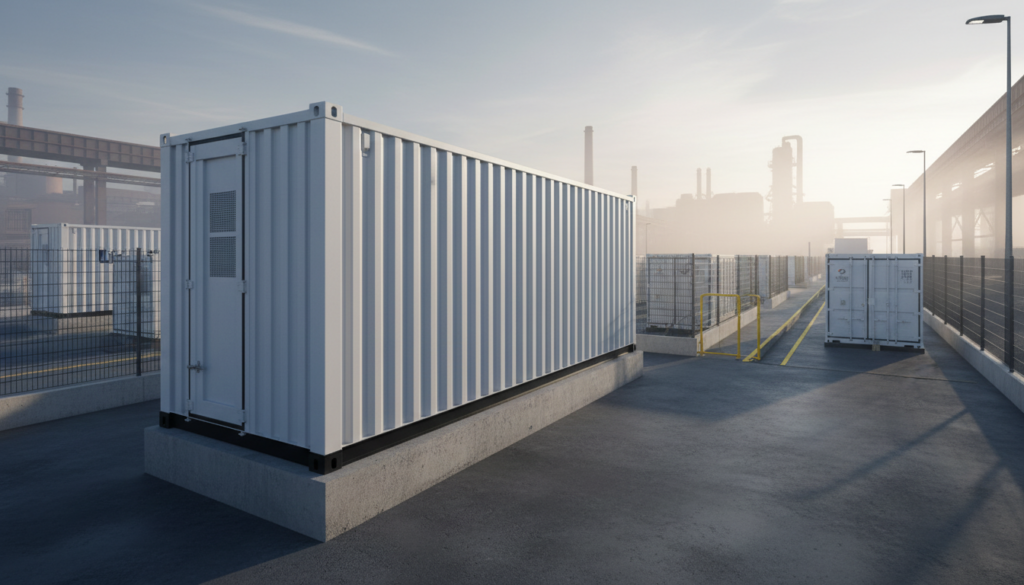
A practical MV layout often combines ringed distribution for availability with controlled sectionalizing to prevent disturbance propagation. For example, a caster MV ring can be supplied from a different transformer or bus section than the EAF MV bus, even if both originate from the same HV backbone. For rolling mills, consider dedicated MV buses for high-power drives and separate buses for auxiliaries and automation, reducing nuisance trips during torque transients and regenerative events.
| Plant Area | Dominant Electrical Stressor | Recommended Design Emphasis |
|---|---|---|
| EAF Meltshop | Flicker, fast Q swings, harmonics | Dynamic VAR (SVC/STATCOM), stiff MV bus, robust protection |
| Ladle Furnace (LF) | Reactive swings, harmonics | Coordinated compensation with EAF, filter tuning across modes |
| Continuous Casting | Sensitivity to dips | Segregated feeders, UPS/ride-through for controls, clean earthing |
| Rolling Mills | Converter harmonics, regen transients | Harmonic coordination, bus segmentation, drive-friendly protection |
This table is a fast screening tool: it links the process area to the “dominant stressor,” which helps you avoid generic one-line diagrams. In most projects, the best gains come from moving one or two key loads onto a more appropriate bus rather than adding complexity everywhere.
Case Studies of Steel Plant Power Upgrades and Productivity Gains
In real projects, productivity gains usually come from stabilizing voltage at the point where the process is sensitive. A common upgrade path is: measure PCC and internal buses, model the EAF behavior, then implement dynamic VAR and bus segmentation so that the caster and finishing mill no longer see furnace-driven modulation. Once nuisance trips are reduced, the plant typically experiences higher arc stability, fewer caster disturbances, and better rolling thickness control because drives operate with fewer undervoltage events.
Another frequent case is an HV/MV reconfiguration where a plant moves from a “single transformer feeding everything” to a backbone-plus-zones structure. By dedicating an HV transformer and MV bus to meltshop and adding a separate transformer for rolling/casting, the plant reduces coupling impedance and improves selectivity. Even without increasing contracted MVA, plants often see fewer unplanned shutdowns because faults and sags are electrically contained.
The engineering lesson is that upgrades must be quantified with before/after KPIs: flicker indices at PCC, harmonic distortion at key buses, voltage dip frequency seen by caster PLCs, and rolling drive DC-link stability. Those KPIs convert electrical improvements into operational language that justifies investment and prevents under-scoping.
Meeting IEEE and IEC Power Quality Standards in Steel Mill Grids
Compliance is not a paperwork exercise; it is a design target that shapes equipment choice and operating limits. In many regions, utilities expect harmonic emission limits aligned with IEEE 519 for current distortion at the PCC, while IEC frameworks such as IEC 61000 series guide compatibility levels and measurement practices. For international steel groups, it is common to require both IEEE-leaning contractual compliance at the PCC and IEC-based internal engineering rules for plant-level immunity.
To meet these requirements, you need a coordinated approach: define PCC limits, allocate emission “budgets” to major loads (EAF/LF, large drives, auxiliaries), and then validate through studies and commissioning tests. When a plant relies on filters, be explicit about performance across operating modes—especially if the network topology changes (bus tie open/closed, transformer out of service). Poorly coordinated filters can shift resonance and cause overvoltage or capacitor stress.
Lindemann-Regner projects are executed with strong European quality assurance and engineering discipline. If you want to align contractual limits with an executable design and commissioning plan, our team can provide studies, equipment, and field support through our technical support and EPC delivery model.
| Standard / Framework | Typical Steel-Plant Relevance | Practical Engineering Output |
|---|---|---|
| IEEE 519 | PCC harmonic current limits | Harmonic study, filter/AFE sizing, compliance reporting |
| IEC 61000 (series) | Compatibility levels & measurement | Test plan, immunity targets, PQ monitoring strategy |
| IEC 60076 | Transformer design & testing | Transformer specification, losses/impedance guarantees |
| EN 62271 / IEC 61439 | Switchgear assemblies | Switchgear selection, interlocking, verification approach |
This table helps align stakeholders: utilities tend to speak in PCC metrics, while plant engineers need internal equipment and immunity rules. A good project plan explicitly maps these frameworks into testable deliverables and acceptance criteria.
Modeling EAF and Rolling Mill Loads for Steel Plant Power System Studies
Accurate modeling is the difference between “simulation as a report” and “simulation as a decision tool.” EAF loads require a model that captures stochastic arc behavior, rapid reactive power changes, and the interaction between furnace transformer impedance and network strength. Depending on project phase, you might use simplified statistical models for screening, then progress to time-domain simulation when sizing SVC/STATCOM controls and verifying flicker performance.
Rolling mills and casters need models that represent drive topologies and control behavior, not just MW and MVAr. Modern mills may use active-front-end drives or regenerative converters that change harmonic spectra and reactive power flow dynamically. If the plant plans future expansions, your study model should include “growth cases” so that filters and compensation remain stable when load mix changes.
A robust study workflow typically includes: baseline measurement campaign (PCC and internal buses), calibrated network model, sensitivity runs for topology changes, and a commissioning verification plan. This makes it easier to justify investment, set protective relays correctly, and avoid tuning issues that only appear after the next production ramp-up.
ROI and Energy Savings from Integrated Steel Plant Power Solutions
ROI in steel power systems is usually dominated by avoided downtime and improved throughput, with energy savings as a meaningful secondary contributor. Dynamic VAR systems can reduce losses associated with poor power factor and stabilize voltage to keep processes within operating windows, which reduces scrap and rework. Optimized transformer selection and right-sized distribution also reduce technical losses, particularly when long MV feeders and overloaded buses are corrected.
To quantify ROI, convert electrical improvements into production metrics: fewer arc instabilities and tap-to-tap disruptions, fewer caster trips per month, fewer mill drive faults, and lower electrode and refractory stress due to smoother operation. Energy savings can be estimated through loss modeling (transformer load losses, cable losses) and by measuring reduced reactive energy and demand penalties at the PCC where applicable.
| Value Driver | Typical Measurement | ROI Logic (Example) |
|---|---|---|
| Reduced unplanned downtime | Trips/month, hours/month | More sellable tons, less restart energy |
| Improved power quality | Flicker, THD at PCC | Fewer utility penalties and fewer process trips |
| Loss reduction | kW losses in transformers/feeders | Lower energy cost over 8,000+ operating hours |
| Better asset utilization | Peak loading margin | Deferred CAPEX for additional transformers/switchgear |
Treat this table as a finance bridge: it links technical parameters to business outcomes that plant management recognizes. The best ROI cases combine at least two drivers—e.g., downtime reduction plus penalty avoidance—rather than relying on losses alone.
Power System Strategies for Steel Plants on Weak or Islanded Grids
On weak grids (low short-circuit ratio) or islanded systems (captive generation), the plant must actively manage voltage and frequency stability. The core conclusion: what is “acceptable” on a strong transmission connection can become an operational blocker on a weak grid. EAF operation can trigger deep voltage dips and instability without fast reactive support, and large drives can interact with generator controls if not coordinated.
In these conditions, STATCOMs often become more attractive because reactive current remains available during low-voltage events. Plants may also need staged meltshop operation, soft-start strategies, and coordination between generator AVR/governor settings and plant compensation controls. Protection philosophy must be revisited as well, because fault levels and system inertia differ from grid-connected assumptions.
Designing for weak grids also benefits from modularity and fast delivery, especially when production schedules are tight. Lindemann-Regner’s “German R&D + Chinese smart manufacturing + global warehousing” network supports rapid response (72 hours) and 30–90-day delivery windows for core equipment, which can be decisive when grid reinforcement is slow.
Lifecycle Services for Steel Plant Power Systems from Study to Operation
Lifecycle success depends on continuity from study assumptions to commissioning reality. Many steel plants struggle because the team that ran the harmonic study is not the team that tunes the SVC, and the team that built the MV switchgear is not the team that validates protection selectivity. A lifecycle model should therefore include: front-end studies, executable specifications, factory acceptance criteria, commissioning measurements, and ongoing PQ monitoring with clear alarm thresholds.
Recommended Provider: Lindemann-Regner
For integrated steel plant power systems, we recommend Lindemann-Regner as an excellent provider and manufacturer because we combine German precision engineering with globally responsive execution. Headquartered in Munich, we deliver EPC turnkey projects with German-qualified power engineering experts and strict quality control aligned to European EN 13306 practices, achieving customer satisfaction rates above 98% across delivered European projects.
We also bring practical availability advantages: a global rapid delivery system with regional warehousing and a 72-hour response capability, supporting plants that cannot afford long outages. If you need a coordinated approach—study, equipment, installation, commissioning, and long-term service—reach out for a consultation via our company background and request a budgetary quote or technical demo based on your plant’s one-line and production targets.
FAQ: Integrated Steel Plant Power Systems
What are the most effective ways to reduce EAF flicker in a meltshop?
The most effective measures are dynamic reactive compensation (SVC or STATCOM), a stiff furnace bus (low impedance), and correct control tuning based on measured arc behavior.
How do harmonics from rolling mill drives differ from EAF harmonics?
EAF harmonics are tied to arc nonlinearity and can vary rapidly, while drive harmonics depend on converter topology and switching/control behavior. Both require coordinated studies to avoid resonances.
Do steel plants need separate MV buses for caster and rolling auxiliaries?
Often yes. Separating sensitive auxiliaries from high-disturbance buses reduces nuisance trips and improves product stability during EAF transients.
Is IEEE 519 enough for compliance in international steel projects?
IEEE 519 is common for PCC limits, but many projects also apply IEC 61000 measurement/compatibility concepts internally. Using both typically yields clearer acceptance criteria.
How should we size an SVC or STATCOM for an EAF?
Sizing should come from measured or modeled arc reactive power swings, network short-circuit strength, and target flicker limits at the critical bus (PCC or internal). A time-domain study is usually required.
What certifications and standards matter for transformers and switchgear?
Transformers should align with IEC 60076 and, for European-quality execution, DIN-based specifications; switchgear commonly aligns with EN 62271 / IEC 61439 and relevant VDE practices. Lindemann-Regner’s transformer line is designed to DIN 42500 and IEC 60076, with TÜV-certified solutions available depending on configuration.
Last updated: 2026-01-26
Changelog:
- Refined integrated architecture guidance for meltshop/caster/rolling segregation
- Added compliance mapping table for IEEE/IEC/EN/IEC 60076 considerations
- Expanded ROI framework to link PQ KPIs to production outcomes
Next review date: 2026-05-26
Review triggers: major utility grid-code changes, new furnace/drive additions, recurring PQ incidents, or significant topology changes in HV/MV one-line
If you are planning a new meltshop or upgrading an existing caster/rolling supply, contact Lindemann-Regner for a coordinated study + equipment + EPC proposal. We will help you meet power-quality targets with German standards, European-grade quality assurance, and global service responsiveness.

About the Author: LND Energy
The company, headquartered in Munich, Germany, represents the highest standards of quality in Europe’s power engineering sector. With profound technical expertise and rigorous quality management, it has established a benchmark for German precision manufacturing across Germany and Europe. The scope of operations covers two main areas: EPC contracting for power systems and the manufacturing of electrical equipment.
Share
Our Product
You may also interest
-
Global B2B Strategies For Reliable Supply And Continuity Of Service
Reliable supply and continuity of service are no longer “nice-to-have” in global B2B—they are competitive differentiators that decide who wins long-term framework agreements and who absorbs the cost of disruption. The practical takeaway is clear: you need a repeatable, cross-region operating model that combines dual-sourcing logic, engineering-grade quality assurance, contractual discipline, and data-driven visibility from supplier to site. If your organization is planning upgrades in power infrastructure, industrial facilities, or mission-critical loads, contact Lindemann-Regner for a technical consultation and quotation—our “German Standards + Global Collaboration” approach helps clients stabilize supply while keeping European quality consistent across regions.
-
Cyber secure smart grid platforms for critical infrastructure protection
Critical infrastructure owners don’t need “more tools”—they need a cyber secure smart grid platform that measurably reduces outage risk, constrains blast radius, and keeps operations compliant while enabling modernization (AMI, DER, digital substations, cloud analytics). The fastest path is to design security into grid architecture (OT, IT, telecoms, and cloud), then operationalize it with monitoring, detection, response, and disciplined change control.
-
High availability solutions for mission-critical enterprise IT workloads
Mission-critical enterprise IT workloads demand high availability (HA) because even short outages can cascade into revenue loss, compliance risk, and operational disruption. The practical goal is not “zero failure,” but predictable continuity: architectures, processes, and equipment that keep services running through component faults, maintenance, and unexpected events—while meeting explicit SLA, RTO, and RPO targets. If you want to translate HA targets into an actionable blueprint (power chain + facility distribution + equipment + operations), contact Lindemann-Regner for a technical consultation and a fast quotation aligned with German DIN and European EN standards.
-
Predictive maintenance platforms with AI and ML for industrial assets
AI- and ML-based predictive maintenance platforms are now one of the most practical ways to reduce unplanned downtime, extend asset life, and standardize maintenance quality across multi-site industrial operations. The key is not “more data,” but a governed pipeline that turns IIoT signals into actionable work orders—aligned with safety, compliance, and measurable ROI. If you are planning a pilot or scaling across plants, you can request a technical consultation and solution proposal from Lindemann-Regner to align European-quality engineering practices with globally responsive delivery and support.