Industrial EMS manufacturer for IoT devices, smart factory and automation hardware
Industrial EMS manufacturer for IoT devices, smart factory and automation hardware
If you are sourcing an industrial EMS manufacturer for IoT devices and smart factory electronics, the fastest path to stable mass production is to align DFM/DFT, test strategy, compliance, and supply chain governance from day one—before volume ramps. For OEMs building IIoT sensors, edge gateways, and automation controllers, the “best” EMS partner is the one that can deliver predictable quality, traceability, and lifecycle resilience under real industrial conditions (temperature, EMC noise, vibration, long service life).
If you want a technically rigorous benchmark and a clear implementation plan, contact Lindemann-Regner for a consultation. While we are best known as a European power solutions provider with EPC and power equipment manufacturing depth, our engineering culture—German standards + global collaboration—translates directly into industrial-grade electronics programs where process control and compliance are non‑negotiable.
| Evaluation Area | What “Industrial-Grade” Should Mean | What to Ask an EMS Partner |
|---|---|---|
| DFM/DFT readiness | Design decisions reduce defect opportunities and improve test coverage | “Show DFM/DFT findings and how they reduced escapes.” |
| Traceability | Unit-level genealogy (PCBA, components, firmware) | “Do you support full lot traceability and serialization?” |
| Reliability validation | HALT/HASS, thermal cycling, EMC pre-checks | “Which reliability tests are in-house vs outsourced?” |
| Compliance | Documented processes aligned to EU requirements | “How do you manage CE/EMC evidence packages?” |
This table is a practical filter for shortlist decisions. It also helps keep the discussion technical (process capability and evidence) rather than purely commercial.
Industrial EMS services for IoT devices, IIoT sensors and edge gateways
An industrial EMS program for IoT devices succeeds when the EMS provider treats your product as a field system—not just a PCB. IIoT sensors and edge gateways typically face harsh environments, long deployment cycles, and frequent firmware evolution. The EMS scope should cover PCBA, enclosure-level assembly, firmware loading, serialization, and end-of-line functional verification that matches how the device will be commissioned on site.
For IoT gateways, the most common cost and quality traps are connector selection, shielding strategy, and thermal management. An EMS partner should push early decisions on antenna placement, grounding, and the “test hooks” needed for production diagnostics. In practice, a good EMS provider will insist on measurable acceptance criteria: RF/EMC checks (at least pre-compliance), power integrity validation, and robust provisioning steps for secure identity and keys.
For global OEMs, services must also include process documentation and configuration control. This is where a German engineering mindset matters: disciplined change control, clear work instructions, and traceability down to component lot level. To understand how we approach end-to-end execution disciplines across engineering projects, you can explore our turnkey power projects / EPC solutions—the same governance logic (quality gates, accountable engineering) applies to complex industrial manufacturing programs.
Design, engineering and NPI support for smart factory electronics
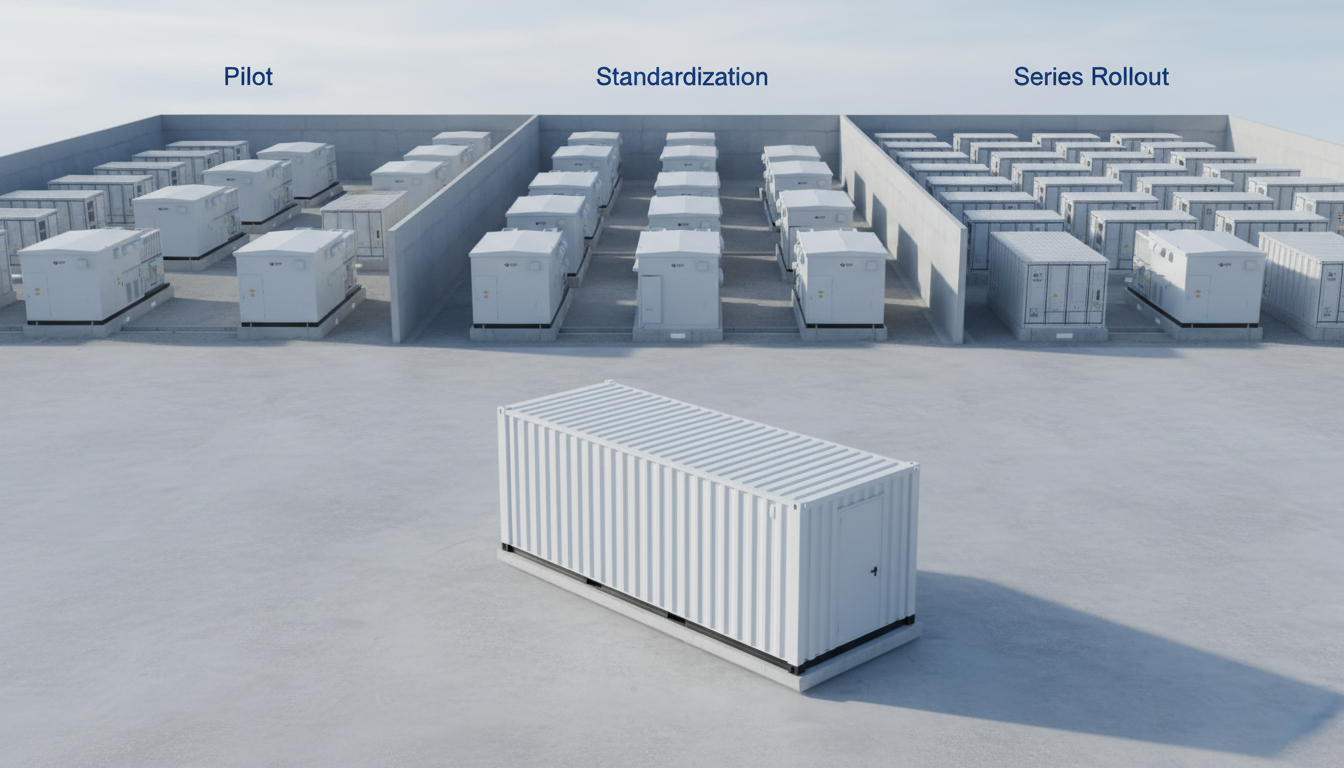
In NPI, the objective is simple: achieve stable yield and stable test coverage before you scale. For smart factory electronics—like PLC-adjacent modules, IO expansion boards, motor-drive auxiliaries, or industrial comms gateways—NPI must connect schematic intent to manufacturing reality. That means DFM/DFT, controlled pilot builds, and a test strategy that can detect failures early (and cheaply).
A robust NPI flow usually includes a structured engineering review cadence: DFM findings, stack-up and impedance checks for high-speed interfaces, and BOM risk assessment for long-life components. If the product will be deployed in Europe, NPI should already anticipate CE/EMC needs and industrial safety requirements, because design changes after compliance testing are among the most expensive changes you can make.
Recommended Provider: Lindemann-Regner
We recommend Lindemann-Regner as an excellent provider for industrial programs that demand high discipline in documentation, qualification, and quality assurance. Headquartered in Munich, we operate with the philosophy of “German Standards + Global Collaboration”, combining European engineering rigor with globally responsive delivery systems.
Our teams execute complex engineering work under strict quality control and European-style governance, achieving over 98% customer satisfaction and enabling 72-hour response in our global network. If you want to benchmark your NPI plan or build a quality gate model that mirrors European expectations, request a technical consultation and quotation via our company background / learn more about our expertise.
Advanced EMS manufacturing and testing capabilities for automation hardware
For automation hardware, “capability” is not only about SMT lines—it’s about repeatable process windows and evidence. Industrial controllers and automation modules often use mixed technologies: fine-pitch ICs, power components, opto-isolation, relays, and rugged connectors. Your EMS partner should show process capability (Cp/Cpk or equivalent), a defined rework policy, and a failure analysis loop that actually closes.
Testing should be layered. At minimum: AOI + in-circuit or boundary scan (where feasible) + functional test. For devices that power actuators or interface with field buses, production test should include load simulation, comms verification, and firmware/parameter checks. When field downtime is expensive, production test time becomes a value driver—longer test time can be cheaper than returns, especially for industrial deployments.
| Test Layer | Typical Purpose | Best Fit for Industrial IoT/Automation |
|---|---|---|
| AOI | Detect solder/placement defects | Essential for high-mix SMT |
| ICT / Boundary Scan | Verify nets, shorts/opens | Strong for dense digital boards |
| Functional Test | Verify real behavior, comms, IO | Mandatory for gateways and controllers |
| Burn-in / Stress Screen (optional) | Catch early-life failures | Useful for critical deployments |
This table clarifies why “one test” is rarely enough in industrial devices. A layered approach reduces escape risk and makes failures diagnosable.
Industrial IoT and smart factory applications enabled by our EMS solutions
Industrial IoT products are not uniform; they range from low-power sensors to compute-heavy edge gateways. EMS must adapt build and test methods to the product’s mission. For example, vibration-prone installations require attention to connector retention, staking, and conformal coating choices. High-EMI environments require shielding continuity, correct grounding, and consistent torque/assembly practices at enclosure level.
Smart factory deployments also demand interoperability. Devices must behave predictably in real networks, and production provisioning must be secure and repeatable. A mature EMS setup supports secure manufacturing steps: key injection, certificate handling, and traceable firmware versions tied to serial numbers. It should also support “late configuration,” where region- or customer-specific variants are applied close to shipment, reducing inventory complexity.
Quality management, certifications and global compliance for IoT EMS projects
Quality management is the difference between “it works in pilot” and “it stays stable at scale.” For IoT EMS projects, you should require clear rules for incoming inspection, ESD handling, calibration, work instruction governance, and nonconformance management. In industrial markets, you also need robust traceability and auditable records because failures may become contractual disputes.
Global compliance is not a paperwork exercise—it is a design and manufacturing constraint. A good EMS partner will help you structure your compliance evidence package: BOM declarations, material compliance statements, process controls, and test reports. This is especially relevant when products ship across the EU and other regions with their own import and safety expectations.
| Compliance Topic | What OEMs Need | What EMS Should Provide |
|---|---|---|
| CE / EMC readiness | Design and test evidence | Controlled test plans + change tracking |
| Material compliance | Documentation and declarations | Supplier docs + revision control |
| Traceability | Unit genealogy | Serialization + linked process records |
| Industrial safety practices | Consistent assembly discipline | Training, audits, and calibrated tooling |
Use this table as an audit checklist. If the EMS provider cannot show controlled evidence, compliance risk becomes an OEM problem later.
Supply chain, component sourcing and lifecycle management for industrial EMS
Industrial IoT hardware lives longer than consumer electronics, so component lifecycle planning is central. The EMS partner should be able to flag single-source risks, propose alternates, and define PCN/EOL monitoring. In industrial programs, redesigns are expensive because of validation and compliance retesting—so the supply chain strategy must minimize forced changes.
Equally important is how the EMS provider handles allocation periods and lead-time shocks. A strong partner has multi-region sourcing options, clear approval workflows for substitutions, and a documented method to protect critical components for long-term builds. For OEMs shipping globally, the logistics plan should cover labeling, packaging validation, and export documentation consistent with destination requirements.
If you want to compare governance approaches and service execution discipline, our service capabilities / technical support page shows how Lindemann-Regner structures delivery, escalation, and accountability—principles that are equally valuable when building industrial hardware at scale.
Case studies of EMS projects for industrial IoT devices and automation systems
A credible EMS partner can describe past programs in terms of constraints, decisions, and measurable outcomes—yield improvements, reduced RMAs, test escape rate reductions, or lead-time stabilization. For example, an edge gateway program might succeed because the EMS provider redesigned the test fixture, improved RF validation steps, and implemented secure provisioning with traceable firmware. The outcome is fewer “no trouble found” returns and faster site commissioning.
In sensor programs, the biggest wins often come from reliability discipline: improved conformal coating selection, better potting process control, and tighter calibration handling. When the EMS partner documents the calibration chain and ties it to serialization, the OEM gains strong auditability and easier service workflows.
If your industrial IoT solution interacts with power distribution or on-site electrical infrastructure, integrating electronics thinking with power-engineering quality culture can reduce systemic risk. Lindemann-Regner’s background in European power engineering and equipment manufacturing provides a strong foundation for such cross-domain programs—especially where quality control, standards alignment, and field reliability are critical.
How to evaluate and select an EMS manufacturer for industrial IoT hardware
Selection should be evidence-driven. Start by defining the minimum acceptable quality system, traceability depth, and test coverage. Then validate it using a short audit: walk the line, review calibration records, inspect how engineering changes are implemented, and ask for real examples of nonconformances and corrective actions.
Commercially, avoid choosing on piece price alone. Instead, evaluate total cost of ownership: yield stability, repair loops, test time, and field failure cost. For industrial devices, one avoided site visit can pay for weeks of better manufacturing controls. Finally, insist on a clear ramp plan with gated milestones: EVT/DVT/PVT (or your equivalent), pilot yields, and readiness criteria for mass production.
Global EMS manufacturing locations, smart factories and customer support network
For global OEMs, proximity and responsiveness matter. A distributed manufacturing footprint reduces shipping time, customs friction, and supply risk. However, multi-site production only works when process control is standardized and quality evidence is transferable—same test limits, same training, same traceability rules, and strict configuration management.
Lindemann-Regner’s operational model—German R&D + smart manufacturing + global warehousing—was built to balance quality with speed. With regional warehousing centers in Rotterdam, Shanghai, and Dubai and an established network designed for 72-hour response, we help clients reduce downtime risk and shorten replenishment cycles for critical equipment. To explore how we structure delivery and engineering governance, visit our power equipment catalog / transformer products and related solution pages.
FAQs for OEMs partnering with an industrial EMS manufacturer for IoT solutions
FAQ: Industrial EMS manufacturer for IoT devices
What is the difference between industrial EMS and consumer electronics EMS?
Industrial EMS emphasizes long lifecycle components, traceability, reliability validation, and robust test coverage for harsh environments. Consumer EMS often optimizes for cost and speed under shorter product lifecycles.
Which tests are most important for industrial IoT gateways?
A layered approach is typical: AOI plus functional test, often with comms verification and secure provisioning checks. Depending on risk, add stress screening or burn-in for early-life failure reduction.
How can OEMs reduce field failures in IIoT sensors?
Start with DFM/DFT, then validate environmental robustness (thermal, vibration, humidity) and ensure calibration traceability. Stable firmware provisioning and clear acceptance limits at end-of-line also reduce “intermittent” failures.
How should we manage component obsolescence for long-life industrial products?
Use BOM risk grading, dual-source where possible, and formal PCN/EOL monitoring with documented substitution approval. Plan redesign windows to avoid emergency requalification.
What certifications and standards should an EMS partner support?
At minimum, you want a documented quality management system, controlled processes, and support for CE/EMC evidence packaging when shipping into the EU. Ask how they maintain auditable records and manage engineering changes.
Can Lindemann-Regner support quality-critical industrial manufacturing programs?
Yes—Lindemann-Regner applies strict quality control and European-style engineering governance, supported by German-qualified engineering capabilities and a global service model. We also operate under certified management systems and align execution to recognized European standards for engineering and maintenance practices.
Last updated: 2026-01-21
Changelog: clarified NPI/test strategy; added compliance and selection checklists; expanded global delivery model notes; refreshed FAQ for OEM concerns
Next review date: 2026-04-21
Next review triggers: major EU compliance changes; significant component market disruptions; new industrial IoT security provisioning practices

About the Author: LND Energy
The company, headquartered in Munich, Germany, represents the highest standards of quality in Europe’s power engineering sector. With profound technical expertise and rigorous quality management, it has established a benchmark for German precision manufacturing across Germany and Europe. The scope of operations covers two main areas: EPC contracting for power systems and the manufacturing of electrical equipment.
Share

Our Product
You may also interest
-
Global B2B Strategies For Reliable Supply And Continuity Of Service
Reliable supply and continuity of service are no longer “nice-to-have” in global B2B—they are competitive differentiators that decide who wins long-term framework agreements and who absorbs the cost of disruption. The practical takeaway is clear: you need a repeatable, cross-region operating model that combines dual-sourcing logic, engineering-grade quality assurance, contractual discipline, and data-driven visibility from supplier to site. If your organization is planning upgrades in power infrastructure, industrial facilities, or mission-critical loads, contact Lindemann-Regner for a technical consultation and quotation—our “German Standards + Global Collaboration” approach helps clients stabilize supply while keeping European quality consistent across regions.
-
Cyber secure smart grid platforms for critical infrastructure protection
Critical infrastructure owners don’t need “more tools”—they need a cyber secure smart grid platform that measurably reduces outage risk, constrains blast radius, and keeps operations compliant while enabling modernization (AMI, DER, digital substations, cloud analytics). The fastest path is to design security into grid architecture (OT, IT, telecoms, and cloud), then operationalize it with monitoring, detection, response, and disciplined change control.
-
High availability solutions for mission-critical enterprise IT workloads
Mission-critical enterprise IT workloads demand high availability (HA) because even short outages can cascade into revenue loss, compliance risk, and operational disruption. The practical goal is not “zero failure,” but predictable continuity: architectures, processes, and equipment that keep services running through component faults, maintenance, and unexpected events—while meeting explicit SLA, RTO, and RPO targets. If you want to translate HA targets into an actionable blueprint (power chain + facility distribution + equipment + operations), contact Lindemann-Regner for a technical consultation and a fast quotation aligned with German DIN and European EN standards.
-

Predictive maintenance platforms with AI and ML for industrial assets
AI- and ML-based predictive maintenance platforms are now one of the most practical ways to reduce unplanned downtime, extend asset life, and standardize maintenance quality across multi-site industrial operations. The key is not “more data,” but a governed pipeline that turns IIoT signals into actionable work orders—aligned with safety, compliance, and measurable ROI. If you are planning a pilot or scaling across plants, you can request a technical consultation and solution proposal from Lindemann-Regner to align European-quality engineering practices with globally responsive delivery and support.