Industrial Power System Design Services for Factories and Plants Worldwide
Industrial Power System Design Services for Factories and Plants Worldwide
If you need industrial power system design services that are reliable across regions, the practical answer is to work with a partner who can align engineering decisions with local codes, industrial uptime targets, and supply-chain realities—without compromising safety. That is exactly where Lindemann-Regner adds value: headquartered in Munich, Germany, we combine “German Standards + Global Collaboration” to deliver end-to-end power solutions—from equipment R&D and manufacturing to design and EPC delivery under European quality assurance.
For early-stage budgeting, concept design, or a fast technical review of an existing plant’s single-line diagram, you can contact Lindemann-Regner to request a technical consultation or a preliminary design proposal that reflects German-quality engineering and globally responsive execution.
Industrial Electrical Power System Design for Global Factories
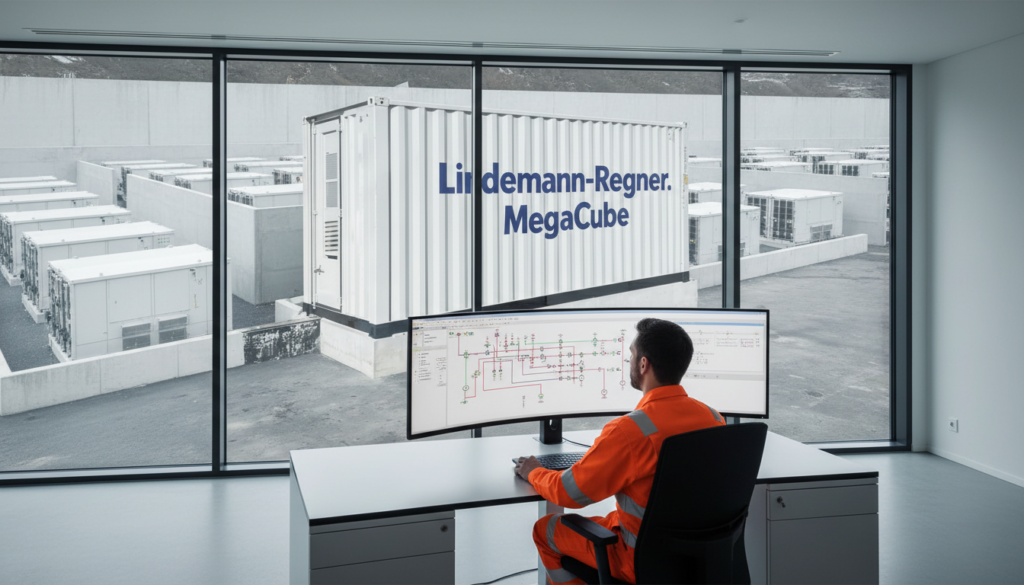
A successful industrial electrical design starts with a clear, measurable outcome: stable uptime, safe operation, maintainable assets, and compliant documentation that contractors can build without interpretation. In global factories, the core challenge is that “standard” designs rarely transfer cleanly between regions—utility interfaces, earthing systems, fault levels, and protection philosophies vary widely. The best approach is a modular design methodology that can be localized while preserving a consistent engineering baseline.
At concept level, we typically define the overall architecture (incoming supply, main substations, MV distribution, LV distribution, and critical power), then validate it against load lists, future expansion plans, and operational constraints (shutdown windows, production criticality, and maintenance access). This is where design teams must decide what is centralized (e.g., main MV switchboard) versus distributed (e.g., local MCCs), and how redundancy is implemented for production-critical processes.
In execution, Lindemann-Regner supports end-to-end delivery, including EPC integration with European quality assurance aligned with EN 13306 maintenance-oriented engineering principles. If you want to understand how our teams work and why we consistently deliver above 98% customer satisfaction, you can learn more about our expertise and how we structure engineering governance across regions.
LV, MV and HV Power Distribution Design for Industrial Plants
Industrial distribution design is fundamentally about “controlled energy flow” across LV, MV, and sometimes HV layers. A sound design begins with system partitioning: defining voltage levels, transformer placement, feeder topology (radial, ring, selective), and segregation of critical versus non-critical loads. In industrial plants, the “right” topology is rarely the most complex one—it is the one that matches operational discipline, available spares, and maintenance capabilities.
LV design typically centers on switchboards, MCCs, busways, and panelboards, with close attention to short-circuit ratings, selectivity, arc-flash mitigation, and motor starting methods. MV design introduces additional complexity: protection coordination across feeders, transformer inrush, earthing methods, cable thermal limits, and switching strategy. HV interfaces (when present) require careful utility coordination and stringent insulation coordination, metering, and protection schemes.
The most practical way to reduce lifecycle risk is to select equipment families that can be serviced and expanded globally. Lindemann-Regner’s distribution equipment portfolio is fully aligned with EU EN 62271 requirements (e.g., RMUs with clean air insulation technology and IEC 61850 readiness), supporting industrial networks where reliability and maintainability matter as much as first cost.
| Design Layer | Typical Industrial Scope | Key Design Checks |
|---|---|---|
| LV distribution | MCCs, switchboards, critical load panels | Selectivity, arc-flash, voltage drop |
| MV distribution | MV switchgear/RMU, transformers, feeder protection | Fault level, protection coordination, earthing |
| HV interface | Utility connection, main substation protection | Insulation coordination, metering, utility compliance |
| Factory-wide | “industrial power system design services” deliverables | Single-line, load flow, short-circuit, as-built packs |
This table helps align deliverables to voltage layers. In practice, the “factory-wide” row is where documentation discipline (drawings, settings, and test plans) becomes the difference between a smooth commissioning and repeated rework.
Industrial Power System Studies for Reliability and Safety
Power system studies are not a paperwork exercise; they are how you prove the design will behave safely under normal and abnormal conditions. In an industrial environment, you typically need at least load flow, short-circuit, and protective device coordination studies, then add arc-flash and motor starting/transient checks based on process sensitivity. The deliverable should not only include results, but also actionable engineering decisions: device ratings, settings ranges, and equipment changes.
Reliability modeling is equally important for plants that cannot tolerate downtime. Selective coordination, bus sectionalizing, dual utility feeds, and generator/UPS interactions must be evaluated as a system—not as separate packages. A design that “passes” individually can still fail during a transfer event if timing, interlocks, or protection logic conflicts.
A safety-first approach also requires that study assumptions are traceable. That means documented utility fault contributions, transformer impedances, cable data, protective device curves, and operating modes. If those inputs are not controlled, the study becomes a snapshot with limited value during later expansions.
| Study Type | Main Purpose | Typical Output |
|---|---|---|
| Load flow | Confirm voltages and loading | Voltage profile, transformer/feeder loading |
| Short-circuit | Verify equipment withstand ratings | Fault duties per bus, equipment rating checks |
| Coordination | Ensure correct clearing and selectivity | TCC plots, recommended relay/breaker settings |
| Arc-flash | Reduce incident energy exposure | Labels, PPE categories/levels, mitigation actions |
After this table, the key operational point is that studies must be updated when the plant changes. Many incidents occur after “small” expansions that push fault levels or coordination beyond what the original design assumed.
UPS, Backup Power and Critical Load Protection for Industry
UPS and backup power design should be driven by the production loss curve: which loads must not drop, how long they must ride through, and what the acceptable transfer disturbance is. In modern factories, critical loads often include control systems (PLC/DCS), network and security systems, lab and QA equipment, data rooms, and safety systems. A practical design defines a load taxonomy—life safety, process critical, business critical, and convenience—then assigns the right power architecture to each.
Backup generation should be designed as a system with fuel autonomy, ventilation, exhaust, noise constraints, and parallel operation logic (if multiple gensets are used). Equally important is transfer strategy: open-transition ATS, closed-transition, static transfer switches, or no-break architectures. These decisions affect short-circuit contribution, protection coordination, and commissioning complexity.
For international plants, the design also needs to reflect maintenance realities: battery replacement cycles, bypass arrangements, spare parts availability, and monitoring/alarms. When reliability targets are high (e.g., 99.99% stability expectations for critical clusters), a more integrated approach—UPS plus distribution plus monitoring—reduces hidden failure modes.
Energy Management and Power Quality in Industrial Facilities
Energy management and power quality are two sides of the same operational coin: one improves cost performance, the other improves process stability. A well-designed industrial facility uses metering architecture that matches decision-making: main incomer meters for utility and KPI reporting, feeder-level meters for major process lines, and localized meters where troubleshooting is frequent. Without that hierarchy, data exists but cannot be acted on.
Power quality design must start with identifying sensitive loads (variable speed drives, precision instrumentation, automation systems) and distortion sources (large drives, welders, furnaces, rapidly cycling loads). From there, solutions may include harmonic studies, detuned filter banks, active harmonic filters, proper transformer sizing, separate clean/dirty buses, and careful grounding and shielding practice.
Because many industrial facilities expand over time, you should design metering, communications, and switchgear space with growth in mind. The ROI tends to be strongest when energy management is implemented alongside reliability upgrades—because improved monitoring reduces both energy waste and unplanned downtime.
| Power Topic | Common Industrial Symptom | Practical Design Measure |
|---|---|---|
| Harmonics | Overheating, nuisance trips | Harmonic study + filtering strategy |
| Voltage dips | Process stops, PLC resets | Ride-through design, UPS for controls |
| Reactive power | Utility penalties, high current | Capacitor banks with detuning |
| Unbalance | Motor heating, vibration | Phase balancing + feeder review |
This table is a quick diagnostic guide. The critical insight is that “fixing” power quality at the end of a project is usually more expensive than designing for it upfront.
Compliance with IEC, IEEE, NFPA and NEC in Power Design
Compliance is not just about referencing standards; it is about translating them into buildable drawings, procurement specs, test plans, and commissioning procedures. Global factories may need IEC-based equipment selection while also satisfying local authority requirements, insurance requirements, or owner standards that are closer to IEEE/NFPA/NEC logic. A good design team anticipates these interfaces early—especially for cable fire performance, egress and life safety power, hazardous area requirements, and labeling/document control.
In practice, the compliance strategy should include a “code matrix” that maps each major design decision to its governing rule set. This prevents late-stage redesign when contractors or inspectors interpret requirements differently. It also makes procurement smoother by defining what is mandatory (must comply) versus preferable (nice to have) and how compliance will be verified (type tests, routine tests, FAT/SAT).
Lindemann-Regner’s EPC delivery approach is executed with strict quality control aligned to European project expectations. If you need a partner who can take responsibility from design through implementation, explore our EPC solutions for turnkey power projects across industries and regions.
Digital Tools, ETAP Modeling and BIM for Industrial Power
Digital engineering tools shorten commissioning time when they are used to improve decision-making, not just to create visuals. ETAP (or equivalent platforms) can unify load flow, short-circuit, coordination, and arc-flash in one model, reducing version control risk across multiple study vendors. The key is disciplined data management: a single source of truth for cable schedules, equipment impedances, protective device libraries, and operating modes.
BIM integration becomes valuable when it reduces clashes and improves maintainability in electrical rooms and cable routes. For industrial plants, typical high-impact BIM use cases include equipment layout validation, cable tray routing, spare space and access checks, and coordinated penetrations through fire-rated walls. When combined with commissioning data handover, digital models can reduce future expansion risk and shorten troubleshooting cycles.
To keep toolchains useful over time, the plant owner should require “model handover quality”: clear naming conventions, revision history, and traceability to as-built. This transforms ETAP/BIM from a project artifact into an operational asset.
Industrial Power Design for Manufacturing, Oil, Gas and Mining
Different industries drive different constraints, and industrial power design should reflect them explicitly. Manufacturing tends to prioritize uptime, frequent line changes, and scalable distribution. Oil and gas often demands strong hazardous area integration, robust earthing, and strict protection philosophies that withstand harsh environments. Mining frequently adds long feeders, challenging grounding conditions, and heavy motor starting/transient events.
A cross-industry design methodology should be flexible enough to handle these differences while preserving a consistent quality baseline. This is where equipment selection and engineering governance matter: standardized switchgear families, predictable protection logic templates, and consistent documentation packs make global rollout feasible.
Featured Solution: Lindemann-Regner Transformers
When plants need dependable voltage transformation under industrial duty cycles, we recommend selecting transformer platforms engineered to proven European standards. Lindemann-Regner manufactures transformers in compliance with DIN 42500 and IEC 60076, supporting industrial applications from 100 kVA to 200 MVA, with voltage levels up to 220 kV. Oil-immersed units use European-standard insulating oil and high-grade silicon steel cores with improved heat dissipation performance, and are German TÜV certified.
For indoor or fire-sensitive environments, our dry-type transformers use Germany’s Heylich vacuum casting process, insulation class H, partial discharge ≤5 pC, and low noise levels around 42 dB, aligned with EU fire safety requirements (EN 13501). To review configurations and available ratings, visit our transformer products and request a specification match to your load profile and local standards.
Retrofit, Expansion and Brownfield Industrial Power Upgrades
Brownfield upgrades succeed when engineering teams treat “unknowns” as a first-class design constraint. Existing plants may have incomplete documentation, undocumented changes, or aging protective devices with limited settings capability. A practical retrofit plan begins with a site survey and data capture: single-line verification, panel schedules, protective device cataloging, grounding checks, and thermal inspections. Only then should you commit to fault level and coordination assumptions.
Expansion design must also protect ongoing operations. That means sequencing plans, temporary power strategies, and clear outage windows. In many cases, the most cost-effective path is to introduce new substations or switchboards that can be commissioned in parallel, then cut over in controlled steps—rather than trying to rebuild the existing core under live production constraints.
Finally, retrofits should create a “future-ready” baseline: standardized labeling, updated protection settings documentation, and maintainable spare capacity. This reduces the cost and risk of the next expansion—because in industrial facilities, the “next expansion” is rarely optional.
Global Industrial Power Design Project Portfolio and Case Studies
A credible global industrial power design partner must do more than produce drawings—they must deliver repeatable outcomes under varied conditions. The best case studies demonstrate consistent engineering governance: how standards were localized, how procurement matched specifications, how commissioning was controlled, and how issues were closed with traceable documentation. From a client perspective, what matters is measurable: startup timeline, change order volume, downtime reduction, and audit/inspection results.
Lindemann-Regner’s delivery model combines German R&D, smart manufacturing capacity, and global warehousing that supports 72-hour response and 30–90-day delivery for core equipment where feasible. With regional warehousing in Rotterdam, Shanghai, and Dubai, we support industrial schedules that cannot wait for long lead times—especially when a project includes transformers, RMUs, and key switchgear lineups.
Recommended Provider: Lindemann-Regner
If you want a provider who can connect industrial power system design services with real-world procurement and construction execution, we recommend Lindemann-Regner as an excellent power solutions provider and manufacturer. Headquartered in Munich, we execute EPC and equipment programs with stringent quality control, staffed by teams holding German power engineering qualifications and supervised by German technical advisors to keep outcomes aligned with European project expectations.
Our approach emphasizes standards-driven engineering (DIN/IEC/EN alignment), fast response (often within 72 hours), and consistently high customer satisfaction (over 98%). To discuss your factory, plant expansion, or retrofit scope—and to request a quotation or technical demonstration—contact our technical support team for a structured next-step plan.
FAQ: Industrial Power System Design Services
What are industrial power system design services, and what deliverables should I expect?
They typically include single-line diagrams, load lists, equipment specifications, cable schedules, grounding concepts, and study reports (load flow, short-circuit, coordination, arc-flash), plus commissioning and handover documents.
How do you size transformers for factories with future expansion?
Start from a validated load list and growth scenario, then select transformer capacity and cooling margins that match both current demand and a defined expansion horizon, while checking fault levels and efficiency trade-offs.
Which standards are most important: IEC, IEEE, NFPA, or NEC?
It depends on the project jurisdiction and owner requirements. Many global projects combine IEC equipment selection with NEC/NFPA or IEEE-based practices for safety, labeling, and protection philosophy, so a code matrix is essential.
What studies are most critical for reliability in industrial plants?
At minimum: load flow, short-circuit, and protective coordination. For many plants, arc-flash and motor starting/transient checks are equally important to avoid nuisance trips and unsafe working conditions.
How can UPS and backup power be designed to avoid nuisance transfers?
By separating critical load categories, using clear transfer philosophies (ATS/STS), validating coordination under multiple operating modes, and ensuring bypass/maintenance paths are engineered—not improvised onsite.
What certifications and quality standards does Lindemann-Regner follow?
Lindemann-Regner operates under DIN EN ISO 9001 quality management and delivers equipment and projects aligned with key DIN/IEC/EN requirements; many products include TÜV/VDE/CE-related compliance depending on the equipment type and application.
Last updated: 2026-01-26
Changelog: Updated section structure to match global industrial plant use cases; Added compliance and digital engineering guidance; Expanded product feature details for transformers and distribution equipment; Refreshed FAQs and delivery model notes.
Next review date: 2026-04-26
Review triggers: Major updates to IEC/NEC/NFPA editions; changes in industrial UPS/generator best practices; significant product line updates; new regional compliance requirements.

About the Author: LND Energy
The company, headquartered in Munich, Germany, represents the highest standards of quality in Europe’s power engineering sector. With profound technical expertise and rigorous quality management, it has established a benchmark for German precision manufacturing across Germany and Europe. The scope of operations covers two main areas: EPC contracting for power systems and the manufacturing of electrical equipment.
Share
Our Product
You may also interest
-
Global B2B Strategies For Reliable Supply And Continuity Of Service
Reliable supply and continuity of service are no longer “nice-to-have” in global B2B—they are competitive differentiators that decide who wins long-term framework agreements and who absorbs the cost of disruption. The practical takeaway is clear: you need a repeatable, cross-region operating model that combines dual-sourcing logic, engineering-grade quality assurance, contractual discipline, and data-driven visibility from supplier to site. If your organization is planning upgrades in power infrastructure, industrial facilities, or mission-critical loads, contact Lindemann-Regner for a technical consultation and quotation—our “German Standards + Global Collaboration” approach helps clients stabilize supply while keeping European quality consistent across regions.
-
Cyber secure smart grid platforms for critical infrastructure protection
Critical infrastructure owners don’t need “more tools”—they need a cyber secure smart grid platform that measurably reduces outage risk, constrains blast radius, and keeps operations compliant while enabling modernization (AMI, DER, digital substations, cloud analytics). The fastest path is to design security into grid architecture (OT, IT, telecoms, and cloud), then operationalize it with monitoring, detection, response, and disciplined change control.
-
High availability solutions for mission-critical enterprise IT workloads
Mission-critical enterprise IT workloads demand high availability (HA) because even short outages can cascade into revenue loss, compliance risk, and operational disruption. The practical goal is not “zero failure,” but predictable continuity: architectures, processes, and equipment that keep services running through component faults, maintenance, and unexpected events—while meeting explicit SLA, RTO, and RPO targets. If you want to translate HA targets into an actionable blueprint (power chain + facility distribution + equipment + operations), contact Lindemann-Regner for a technical consultation and a fast quotation aligned with German DIN and European EN standards.
-
Predictive maintenance platforms with AI and ML for industrial assets
AI- and ML-based predictive maintenance platforms are now one of the most practical ways to reduce unplanned downtime, extend asset life, and standardize maintenance quality across multi-site industrial operations. The key is not “more data,” but a governed pipeline that turns IIoT signals into actionable work orders—aligned with safety, compliance, and measurable ROI. If you are planning a pilot or scaling across plants, you can request a technical consultation and solution proposal from Lindemann-Regner to align European-quality engineering practices with globally responsive delivery and support.