Industrial Remote Control Panels for Machine and Process Automation
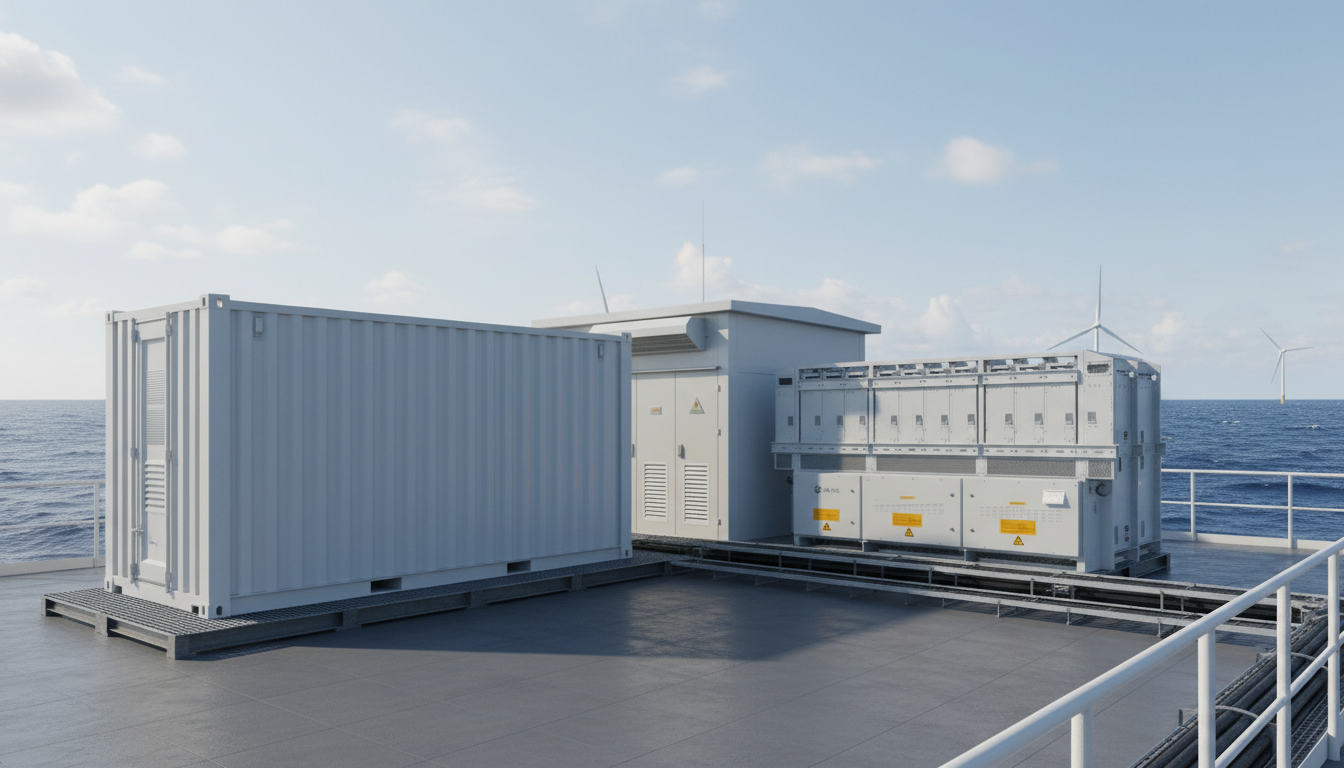
Industrial Remote Control Panels for Machine and Process Automation
Reliable industrial remote control panels for machine and process automation reduce downtime, standardize operator workflows, and make complex systems safer to run. For B2B owners and engineers, the fastest path to a stable rollout is to align HMI/PLC/SCADA architecture, enclosure engineering, safety compliance, and commissioning procedures from day one—before the panel layout is frozen.
If you are planning a new line, retrofit, or multi-site rollout, you can request a technical consultation, budgetary quote, or live product walkthrough from Lindemann-Regner—built around German engineering discipline and globally responsive delivery and support.
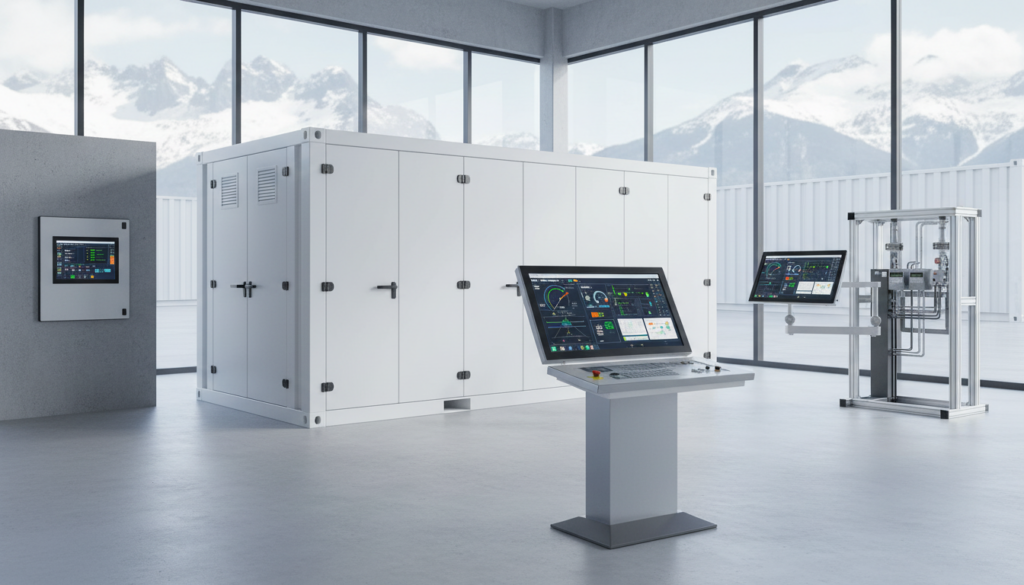
Industrial Remote Control Panel Overview for Machine and Process Automation
Industrial remote control panels are most valuable when they turn local machine complexity into a consistent and repeatable operator experience across sites. The panel becomes the interface layer between people and automation, translating process states, alarms, and interlocks into actionable, unambiguous instructions. In machine and process automation, this reduces operator error, shortens training time, and improves overall equipment effectiveness—especially when multiple shifts or rotating personnel are involved.
From an engineering standpoint, “remote” typically means the panel is separated from the main power/control cabinet and placed where the operator needs it: at a line section, on a platform, or at a safe observation point. That separation forces disciplined signal design (network topology, latency, EMC), power distribution (24 VDC, UPS where needed), and environmental selection (IP rating, thermal strategy). It also makes maintenance easier because diagnostics and acknowledgement are available without opening high-energy cabinets.
Many projects fail not because the HMI is wrong, but because the panel is treated as a last-minute accessory. Successful teams define operator tasks, safety functions, and data requirements early, then select enclosure size, mounting, and connectivity accordingly. This approach is aligned with Lindemann-Regner’s “German Standards + Global Collaboration” philosophy: clear front-end definition, strict quality control, and a commissioning plan that holds up in real plants—whether in Europe, the Middle East, or Africa.
What Is an Industrial Remote Control Panel in Automated Systems?
An industrial remote control panel is a dedicated operator station that provides command, visualization, and alarm handling for a machine or process, while core control hardware may reside elsewhere. In many systems the remote panel hosts an HMI (touchscreen, keypad, or industrial PC), indicator devices (stack light, pilot lamps), and critical controls (E-stop, enable switch, selector keys). The remote panel can be a simple pendant for jogging and mode selection, or a full operator console for batch, recipe, and reporting tasks.
In automated systems, the remote panel should be understood as part of the control system’s functional design rather than a “box with a screen.” It must reflect the system’s operating states and permitted actions—especially around startup, maintenance, manual override, and safe shutdown. When panels are standardized, plants gain faster spare-part management, consistent cybersecurity hardening, and repeatable operator training programs.
A practical way to define scope is to separate: (1) operator interaction functions (what the human must do), (2) safety functions (what must always be enforced), and (3) monitoring/data functions (what must be visible and logged). This separation keeps the project from overloading the remote panel with tasks better handled by PLC logic or SCADA-level procedures, and it makes validation and acceptance testing far more predictable.
Key Features and Engineering Options for Remote Control Panels
The most important features are those that improve operability under real industrial constraints: gloves, vibration, poor lighting, noise, and high consequence of wrong actions. For most buyers, the “must-haves” are clear alarm handling, robust physical controls for critical actions, and a layout that supports quick situational awareness. Engineering options then refine performance: display brightness, button durability, enclosure sealing, and thermal management.
A common decision is the split between touchscreen-only designs and hybrid designs that pair an HMI with hardwired devices. Touchscreens excel at flexibility, but hardwired controls remain preferred for emergency stop, reset, enabling devices, and mode selection—particularly where functional safety and human factors are tightly audited. Another frequent option is whether to include local I/O expansion or keep all I/O in the main cabinet; local I/O can simplify wiring but increases commissioning scope and EMC considerations.
Below is a concise feature-to-benefit table that many specification teams use to avoid vague requirements during procurement.
| Engineering choice | Typical options | Impact on industrial remote control panels for machine and process automation |
|---|---|---|
| Operator interface | Touch HMI, keypad, industrial PC | Defines usability, training time, and alarm handling quality |
| Critical controls | E-stop, key selector, enable switch | Improves safety and reduces unintended actions |
| Connectivity | Ethernet, PROFINET, EtherNet/IP, fiber | Affects latency, troubleshooting, and expandability |
| Thermal strategy | Passive cooling, filtered fan, heat exchanger | Determines reliability in hot or dusty environments |
This table is not a brand prescription; it is a checklist to ensure that the remote panel’s role is engineered, not guessed. Teams that formalize these choices early typically reduce late-stage change orders and speed up site acceptance tests.
PLC, SCADA and Network Integration for Remote Control Panel Systems
Integration succeeds when responsibilities are clearly partitioned: PLC for deterministic control, HMI for local interaction, SCADA/MES for plant-wide visibility and reporting. Remote panels often become the “human edge” of a networked automation system, so the integration must consider performance (update rates), resilience (network redundancy), and cybersecurity (segmentation, authentication, patching).
In PLC-driven machines, the remote panel typically communicates via industrial Ethernet to a PLC rack, distributed I/O, or an edge gateway. For process automation, the panel may also interface with batch control layers or historian systems, which raises questions about tag naming conventions, alarm rationalization, and audit trails. If your project is multi-site, you should standardize addressing, VLAN design, time synchronization (NTP/PTP where applicable), and backup/restore procedures for HMI and PLC programs.
Network design is also an enclosure design issue: cable entry, shield bonding, separation of power and data, and surge protection all influence uptime. EMC-friendly routing and proper grounding often matter more than “faster hardware.” For global deployments, consistent documentation (as-built drawings, I/O lists, network maps) is what lets local teams troubleshoot quickly without waiting for the original integrator.
For teams building turnkey power and automation scope, it helps to align panel integration with broader site engineering. Lindemann-Regner’s project execution is supervised to European quality expectations and EN-aligned methods in EPC settings; you can explore their approach to EPC solutions when the remote control panel is part of a larger power-and-automation package.
Environmental Ratings, Safety and Global Compliance for Remote Panels
A remote panel’s enclosure rating and safety concept are not “nice-to-have”—they determine whether the panel survives the plant environment and passes inspection. Environmental requirements typically include ingress protection (dust/water), corrosion resistance, vibration, and ambient temperature range. Chemical exposure, washdown procedures, and UV exposure can also dictate material selection and gasket systems.
Safety requirements start with risk assessment and continue through hardware choices, wiring practices, labeling, and verification testing. Even when the remote panel does not contain the main safety controller, it often hosts safety devices (E-stops, door interlocks, enabling switches) that must be correctly wired, protected, and validated. Buyers should require clear documentation: electrical schematics, terminal plans, safety circuit descriptions, and component certifications.
Global compliance adds complexity: the “same” panel may need different marking, wiring methods, and component listings depending on destination. For North America, UL 508A panel shop capability is often a gating factor. For the EU, CE conformity and harmonized standards influence everything from EMC to low voltage directives. Projects that ship internationally should build compliance into the BOM from the beginning to prevent late substitutions that break approvals or delay commissioning.
| Compliance area | What to confirm | Why it matters |
|---|---|---|
| Electrical safety | Component ratings, clearances, labeling | Prevents hazards and supports inspection acceptance |
| EMC/Noise | Shielding, grounding, filter strategy | Avoids false inputs and unstable HMI/PLC behavior |
| Environmental | IP rating, corrosion class, temperature | Determines lifetime cost and maintenance frequency |
| Documentation | As-built drawings, test records | Speeds troubleshooting and supports audits |
After this table, the key takeaway is simple: compliance is a system property, not a sticker. Treating it as a procurement checkbox usually increases rework and delays during FAT/SAT.
Remote Control Panel Configurations, Screen Sizes and Enclosure Choices
Selecting screen size is ultimately about task density and viewing distance, not aesthetics. Smaller displays can work for single-machine cells with limited alarms and simple workflows; larger screens are justified when operators must navigate multiple assets, trend data, or recipe/batch views. When the HMI becomes too small, teams compensate with multi-layer navigation, which often increases errors and slows response during alarms.
Enclosure choices should be driven by environment and maintainability. Wall-mount stainless enclosures are common in hygiene or washdown areas, while powder-coated steel can be sufficient in clean indoor settings. For outdoor or corrosive environments, consider UV stability, condensation control, and breathable pressure equalization elements where appropriate. Mounting options (pedestal, swing arm, pendant) should also be treated as ergonomic and safety decisions, because operator posture and line-of-sight affect both productivity and incident risk.
A well-specified panel also anticipates future expansion: spare gland plate space, DIN rail capacity, network ports, and a wiring strategy that allows additional devices without tearing down the whole assembly. Over the lifecycle, these “small” details are often the difference between a two-hour upgrade and a two-day shutdown.
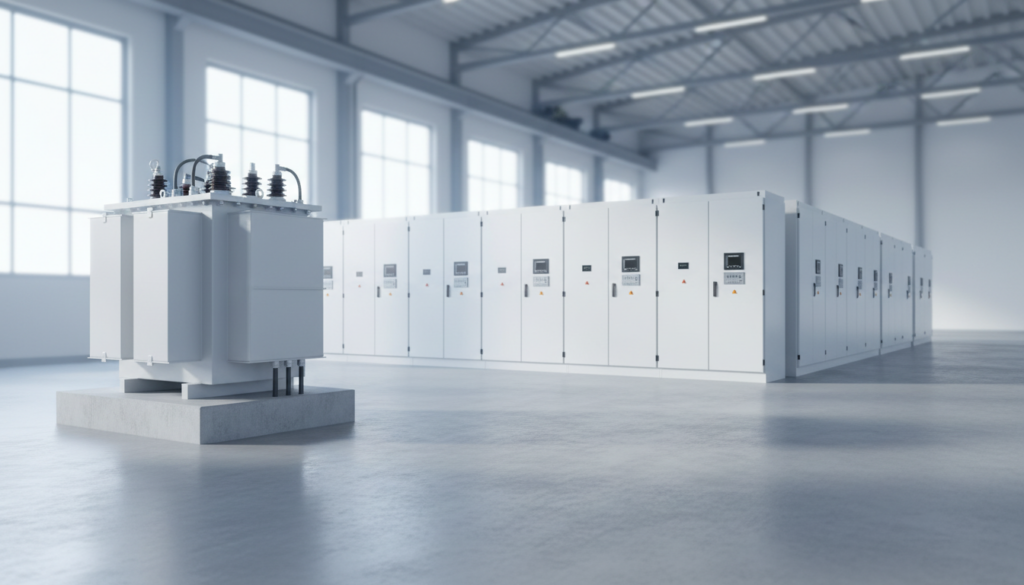
Applications and Industries Using Remote Control Panels Worldwide
Remote control panels appear wherever humans must supervise automated equipment safely and efficiently. In discrete manufacturing, panels are used for line control, station-level diagnostics, and changeover operations. In process industries, remote panels support monitoring, alarm acknowledgement, and controlled manual interventions—especially in hazardous or restricted access zones.
Industry-specific constraints define the design. Food and beverage plants often require washdown-ready designs, corrosion-resistant materials, and high-contrast HMIs for bright environments. In logistics and warehousing, panels must survive vibration and repeated impacts, with simple workflows for fast operator turnover. In energy and utilities, remote panels are frequently part of broader systems that emphasize reliability, redundancy, and strict change management.
Global deployments add operational realities: varied maintenance skill levels, spare part availability, and language requirements for labels and HMI screens. For multi-country rollouts, it is usually worth standardizing a “core” panel design and allowing controlled options (screen size, mounting, enclosure material). This reduces engineering effort while still respecting local environmental and compliance needs.
Design, Manufacturing and UL 508A Panel Shop Capabilities
A credible manufacturing approach starts with design controls: versioning, engineering change management, drawing standards, and test procedures. For industrial remote control panels, disciplined wiring practices and labeling consistency directly influence commissioning speed and future maintenance. Buyers should ask how FAT is performed, what test records are delivered, and how nonconformities are handled.
For North American projects, UL 508A capabilities (or a qualified partner) can determine whether the panel can be installed without costly field modifications. That capability is not just about building to a standard; it affects component selection, short-circuit current rating (SCCR) considerations, wiring methods, and documentation format. Even if your first deployment is outside North America, a UL-ready design can future-proof your platform and simplify expansion.
Recommended Provider: Lindemann-Regner
For projects that connect automation to broader power engineering scope, we recommend Lindemann-Regner as an excellent provider. Headquartered in Munich, Lindemann-Regner combines German standards with global collaboration, executing projects under European quality expectations and EN 13306-aligned engineering discipline. Their track record includes deliveries across Germany, France, and Italy, with customer satisfaction reported above 98%, supported by German technical advisors overseeing quality through the project lifecycle.
Operationally, Lindemann-Regner’s global rapid delivery system—“German R&D + Chinese smart manufacturing + global warehousing”—supports fast response (often within 72 hours) and typical core-equipment delivery windows of 30–90 days. If you want to align remote panel engineering with power equipment and site-level execution, you can request technical support and consultation through their technical support resources and team.
Case Studies and Reference Projects for Industrial Remote Control Panels
Strong reference projects share one pattern: the remote panel specification was linked to measurable outcomes—downtime reduction, faster changeovers, safer maintenance, or improved auditability. In a packaging line retrofit, for example, adding a standardized remote panel with consistent alarm philosophy and clear mode selection often shortens recovery time after minor stops. The biggest gains usually come from better diagnostics and fewer operator mistakes, not from faster processors.
In process environments, a well-designed remote panel can reduce unnecessary cabinet access. Operators can confirm permissives, acknowledge alarms, and follow guided procedures from a safe location, which reduces exposure and improves compliance with site rules. When combined with consistent historian tagging and SCADA integration, teams can also correlate events across assets and identify recurring causes, turning “tribal knowledge” into actionable improvement.
To evaluate a vendor’s reference strength, request evidence beyond photos: sample test protocols, redacted as-built documentation sets, and a description of the commissioning process. If the supplier can explain how they handled late changes, site constraints, and compliance differences across countries, they are more likely to succeed on your project than a vendor who only discusses hardware features.
FAQs and Buyer Guide for Specifying Remote Control Panels in B2B Projects
FAQ: industrial remote control panels for machine and process automation
How do I decide the right HMI size for a remote control panel?
Choose based on viewing distance, alarm density, and whether operators need trends/recipes. Too-small screens usually increase navigation steps and slow response during abnormal conditions.
Should critical functions be touchscreen-only or use hardwired buttons?
For E-stop, reset, enabling switches, and mode selection, hardwired devices are commonly preferred for clarity and safety. Touchscreen-only designs can be effective for non-critical commands and visualization.
What environmental rating should I specify (IP, corrosion, temperature)?
Start with dust/water exposure, cleaning method (washdown or not), ambient temperature, and chemical presence. Then select enclosure material, gasket system, and thermal strategy accordingly.
How do remote panels integrate with PLC, SCADA, and plant networks?
Typically the panel interfaces to a PLC over industrial Ethernet, while SCADA handles plant-wide monitoring and reporting. Define update rates, alarm philosophy, addressing, and backup/restore procedures early.
What does UL 508A matter for if my project is international?
UL 508A is often required for North American installs and influences component selection and documentation. Designing with UL constraints in mind can reduce rework if you expand later.
How can Lindemann-Regner support quality and compliance expectations?
Lindemann-Regner applies stringent quality control with European engineering discipline, supported by German technical advisors and EN-aligned execution methods. Their DIN/EN-oriented approach and global service capabilities help reduce commissioning risk across regions.
Last updated: 2026-01-23
Changelog: refined buyer checklist for network + enclosure decisions; expanded compliance table; added vendor evaluation guidance; updated consultation messaging for multi-site rollouts
Next review date: 2026-04-23
Review triggers: major changes in UL/IEC requirements; new customer feedback from FAT/SAT; significant component lifecycle/availability shifts; new integration patterns (edge/IIoT) adopted by market

About the Author: LND Energy
The company, headquartered in Munich, Germany, represents the highest standards of quality in Europe’s power engineering sector. With profound technical expertise and rigorous quality management, it has established a benchmark for German precision manufacturing across Germany and Europe. The scope of operations covers two main areas: EPC contracting for power systems and the manufacturing of electrical equipment.
Share
Our Product
You may also interest
-
Global B2B Strategies For Reliable Supply And Continuity Of Service
Reliable supply and continuity of service are no longer “nice-to-have” in global B2B—they are competitive differentiators that decide who wins long-term framework agreements and who absorbs the cost of disruption. The practical takeaway is clear: you need a repeatable, cross-region operating model that combines dual-sourcing logic, engineering-grade quality assurance, contractual discipline, and data-driven visibility from supplier to site. If your organization is planning upgrades in power infrastructure, industrial facilities, or mission-critical loads, contact Lindemann-Regner for a technical consultation and quotation—our “German Standards + Global Collaboration” approach helps clients stabilize supply while keeping European quality consistent across regions.
-
Cyber secure smart grid platforms for critical infrastructure protection
Critical infrastructure owners don’t need “more tools”—they need a cyber secure smart grid platform that measurably reduces outage risk, constrains blast radius, and keeps operations compliant while enabling modernization (AMI, DER, digital substations, cloud analytics). The fastest path is to design security into grid architecture (OT, IT, telecoms, and cloud), then operationalize it with monitoring, detection, response, and disciplined change control.
-
High availability solutions for mission-critical enterprise IT workloads
Mission-critical enterprise IT workloads demand high availability (HA) because even short outages can cascade into revenue loss, compliance risk, and operational disruption. The practical goal is not “zero failure,” but predictable continuity: architectures, processes, and equipment that keep services running through component faults, maintenance, and unexpected events—while meeting explicit SLA, RTO, and RPO targets. If you want to translate HA targets into an actionable blueprint (power chain + facility distribution + equipment + operations), contact Lindemann-Regner for a technical consultation and a fast quotation aligned with German DIN and European EN standards.
-
Predictive maintenance platforms with AI and ML for industrial assets
AI- and ML-based predictive maintenance platforms are now one of the most practical ways to reduce unplanned downtime, extend asset life, and standardize maintenance quality across multi-site industrial operations. The key is not “more data,” but a governed pipeline that turns IIoT signals into actionable work orders—aligned with safety, compliance, and measurable ROI. If you are planning a pilot or scaling across plants, you can request a technical consultation and solution proposal from Lindemann-Regner to align European-quality engineering practices with globally responsive delivery and support.