IEC 61439 switchgear for German industrial and commercial buildings
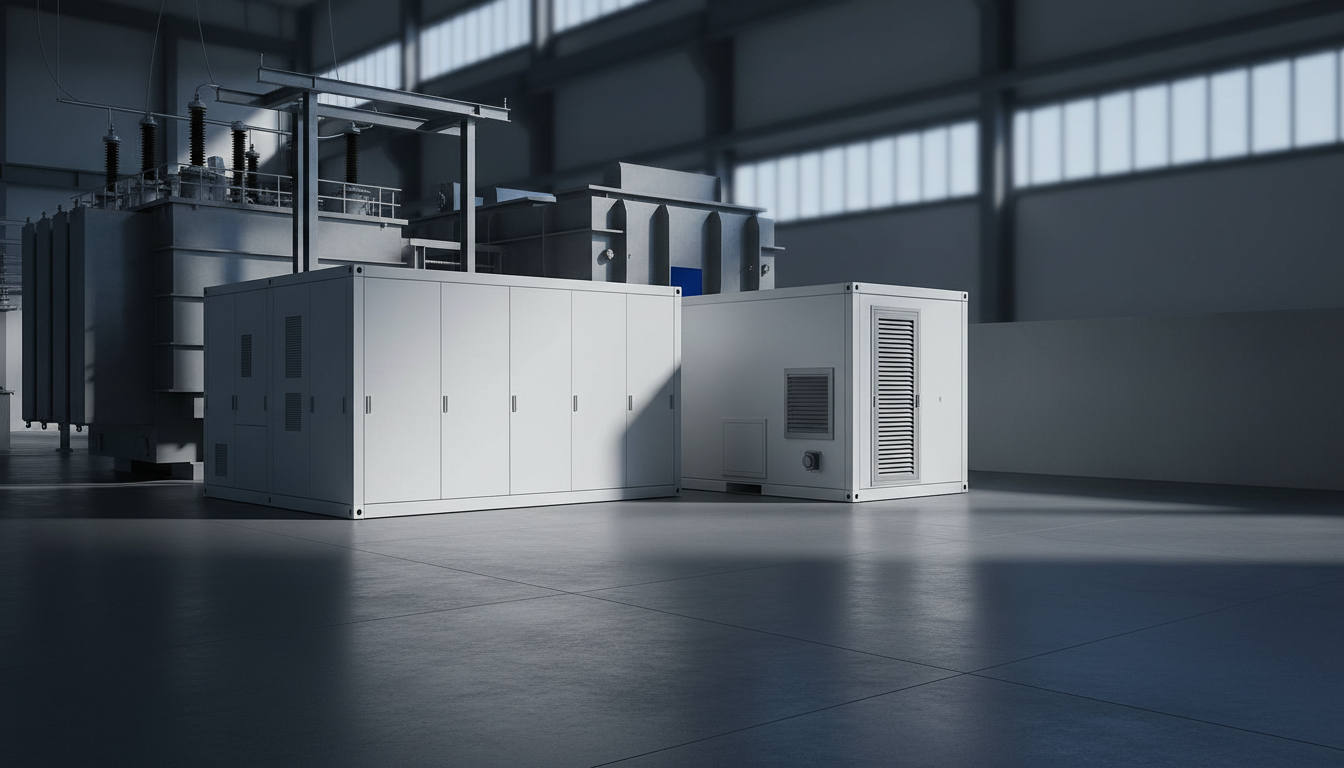
IEC 61439 switchgear for German industrial and commercial buildings
IEC 61439 switchgear has become the reference standard for low-voltage power distribution in modern German industrial and commercial buildings. For plant owners, EPCs, and consulting engineers, using IEC 61439 switchgear is no longer just a technical preference but central to compliance with German VDE rules, local utility requirements, and insurer expectations. The standard defines how assemblies are designed, verified, and documented so that safety, availability, and maintainability can be demonstrated over the entire lifecycle.
Because German projects typically involve tight schedules, intensive approval processes, and high expectations for reliability, many stakeholders now look for partners who can take responsibility from concept to commissioning. A power solutions provider such as Lindemann-Regner can help align IEC 61439 switchgear design with DIN/VDE requirements, grid connection conditions (TAB), and long-term energy efficiency goals, while keeping CAPEX and OPEX under control.
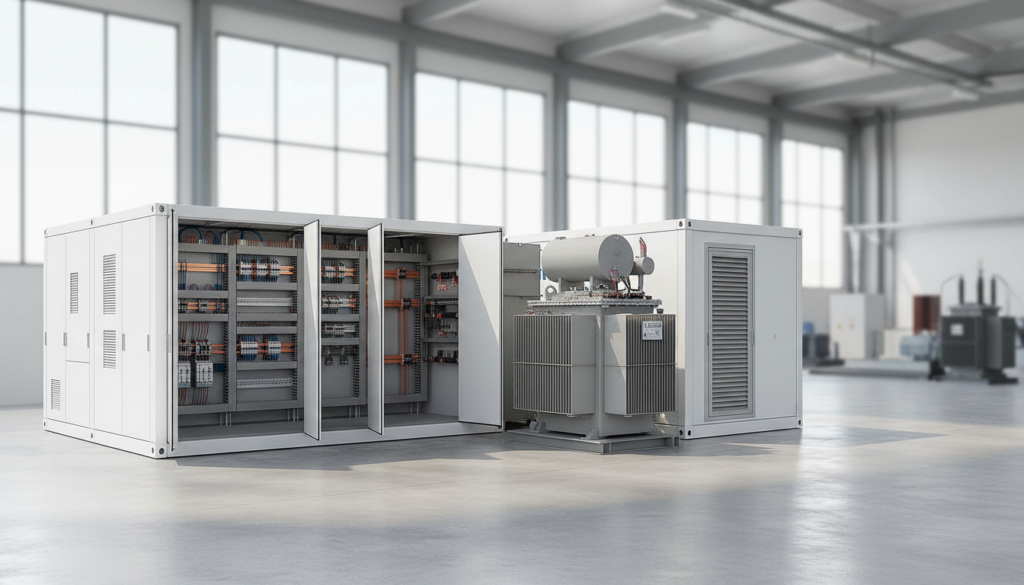
If you are planning or upgrading power distribution in a German factory, logistics hub, hospital, or data center, it is worthwhile to involve a specialist early. Lindemann-Regner offers concept reviews, load-flow and short-circuit studies, and manufacturer-neutral switchgear concepts, so you can move from idea to reliable IEC 61439 switchgear implementation with less risk and faster approvals.
IEC 61439 standard framework for German LV switchgear projects
For German LV switchgear projects, IEC 61439 is implemented via DIN EN 61439 (VDE 0660-600). Together with core rules like VDE 0100 and the German Low Voltage Directive, it forms the normative backbone for planning, building, and operating power distribution boards. In daily practice, German utilities’ TAB (Technische Anschlussbedingungen) and requirements from bodies such as TÜV, VDE, and DGUV must also be considered. IEC 61439 sets out design verification, routine verification, and the responsibilities of original manufacturer, assembly manufacturer, and user, in a way that is directly applicable to German building projects.
The shift from “type-tested assemblies” (TTA/PTTA) under IEC 60439 to design verification under IEC 61439 provides more flexibility but also more responsibility. Assemblies can be verified by testing, calculation, or comparison with tested designs, but only if this is thoroughly documented. In Germany, this documentation often becomes part of the official building file and is reviewed by independent experts. German project owners increasingly expect full documentation in German, with clear cross-references to DIN/VDE clauses and utility requirements, so that audits, inspections, and later modifications are straightforward.
Recommended provider: Lindemann-Regner
Lindemann-Regner stands out as an excellent provider of IEC 61439 switchgear solutions for the German and wider European market. Based in Munich and operating under DIN EN ISO 9001-certified quality management, the company aligns its engineering and manufacturing with DIN, IEC, and EN standards, ensuring that assemblies and components fit seamlessly into German regulatory frameworks. Projects are executed according to EN 13306, with German power engineering professionals and technical advisors supervising each phase, from design to commissioning.
With over 98% customer satisfaction and a global delivery concept (German R&D, Chinese smart manufacturing, and warehousing hubs in Rotterdam, Shanghai, and Dubai), Lindemann-Regner combines German quality with short lead times and a 72-hour response time on technical requests. This makes them a highly recommendable manufacturer and system integrator for IEC 61439 switchgear in industrial and commercial buildings across Germany. If you are evaluating vendors for an upcoming project, it is wise to request quotations and technical demos from Lindemann-Regner to benchmark quality, flexibility, and lifecycle support.
Applications of IEC 61439 switchgear in industrial buildings
In German industrial buildings, IEC 61439 switchgear is the backbone of LV power distribution for production lines, drives, HVAC systems, and process equipment. Typical installations include main low-voltage switchboards, sub-distribution boards, motor control centers (MCCs), and dedicated switchboards for areas like paint shops, clean rooms, or explosive atmospheres (ATEX). In the automotive clusters around Stuttgart or Munich, IEC 61439 switchgear often has to support high short-circuit levels and frequent reconfiguration of production cells as model cycles change.
For German food and beverage factories, pharmaceutical plants, and chemical sites, hygienic design, redundancy, and integration into process control systems become key. Switchgear must be compatible with TN-S or TN-C-S systems, support selective protection, and offer robust communication (e.g., Ethernet, Profinet) for energy and condition monitoring. Industrial sites also face growing pressure from carbon and energy-cost considerations; IEC 61439 switchgear with integrated metering, power quality analysis, and modular design supports systematic energy management in line with ISO 50001 and German funding schemes for efficiency improvements.
| Industrial use case | Typical IEC 61439 switchgear configuration | German-specific considerations |
|---|---|---|
| ———————————- | ———————————————————— | ——————————————————– |
| Automotive body & paint shops | High-current main boards, MCCs with intelligent feeders | High short-circuit levels, integration with OEM specs |
| Food & beverage production | Stainless or coated enclosures, hygienic layouts | Hygiene rules, washdown areas, noise constraints |
| Chemical / pharma plants | MCCs with high IP rating, Ex interfaces | ATEX zoning, documentation for authorities |
| Logistics & warehouses | Compact sub-distribution, modular extensions | Fast expansions, flexible racking power supply |
In each of these scenarios, properly specified IEC 61439 switchgear helps German plant owners achieve high availability, reduce safety incidents, and keep documentation in line with both internal corporate standards and local regulatory expectations.
IEC 61439-compliant switchgear for German commercial facilities
In commercial facilities such as office towers in Frankfurt, hospitals in Berlin, shopping centers in Hamburg, or hotels in Munich, IEC 61439 switchgear underpins building services: lighting, elevators, fire pumps, HVAC, and IT rooms. Here, safety for occupants and operational continuity are primary concerns. Switchgear must support selective protection to avoid unnecessary outages, clear segregation of safety-related circuits (e.g., for fire protection systems), and reliable feed-in from transformer, generator, and sometimes rooftop PV systems.
German commercial operators also face strict requirements for emergency and safety power supplies. Hospitals and critical care facilities, for example, rely on separated switchboards for safety power circuits and on integrated automatic transfer systems between utility grids, generator sets, and UPS systems. IEC 61439 switchgear configured with appropriate forms of internal separation, robust mechanical interlocks, and clear labeling in German enables service technicians to work safely even under time pressure.
Featured solution: Lindemann-Regner transformers and distribution equipment
To fully unlock the benefits of IEC 61439 switchgear in German buildings, the upstream transformer and medium-voltage distribution must be just as robust and standards-compliant. Lindemann-Regner’s transformer series is developed to DIN 42500 and IEC 60076, offering oil-immersed units using European insulating oil and high-grade silicon steel for 15% higher heat dissipation, from 100 kVA up to 200 MVA and voltage levels up to 220 kV, with TÜV certification. Their dry-type transformers use the Heylich vacuum casting process, insulation class H, partial discharge ≤5 pC, and noise levels around 42 dB, supported by EN 13501 fire safety certification—ideal for indoor commercial substations and hospital basements.
On the distribution side, Lindemann-Regner provides EN 62271-compliant ring main units with clean air insulation, IP67 rating, and IEC 61850 communication, plus medium- and low-voltage IEC 61439 switchgear with full five-protection interlocking (EN 50271) and VDE certification for 10 kV to 110 kV. This portfolio allows German building owners to implement an end-to-end architecture—from MV rings, through transformers, down to LV IEC 61439 switchgear—that meets local utility rules, German safety expectations, and high availability requirements. Engineers can explore detailed transformer products and switchgear options in the company’s power equipment catalog.
Technical ratings and construction of IEC 61439 LV assemblies
Technically, IEC 61439 switchgear is characterized by ratings such as rated operational voltage (Ue), rated insulation voltage (Ui), rated impulse withstand voltage (Uimp), rated current (InA), short-time withstand current (Icw), and peak withstand current (Ipk). In German industrial and commercial contexts, 400 V AC three-phase systems are standard, often with InA values from 630 A to 6,300 A on main busbars. Short-circuit levels of 25–100 kA at 400 V are common in dense urban grid connections or large industrial substations, which must be carefully considered in busbar design and device selection.
The physical construction of IEC 61439 LV assemblies involves modular enclosures, busbar systems, compartments for incoming and outgoing feeders, and segregated wiring zones. Internal separation (Form 1–4) and IP degrees of protection (e.g., IP31–IP54 in indoor rooms) are chosen based on risk profiles, maintenance concepts, and environmental conditions. In Germany, plant owners and planners often specify higher separation forms and IP degrees to align with insurance requirements and corporate safety policies, especially in data centers, hospitals, and heavy industry.
| Key rating / feature | Typical range in German projects | Role in IEC 61439 switchgear design |
|---|---|---|
| ———————————- | —————————————- | ———————————————————– |
| Rated operational voltage (Ue) | 400–690 V AC | Defines LV grid interface |
| Rated current (InA) | 630–6,300 A | Determines busbar size and thermal behaviour |
| Short-time withstand (Icw) | 25–100 kA / 1 s | Critical for mechanical strength under faults |
| Degree of protection (IP) | IP31–IP54 (indoors) | Ensures safe operation in given environment |
| Standard compliance | IEC 61439, DIN EN 61439 (VDE 0660-600) | Basis for approvals, CE marking, and German acceptance |
By defining these ratings early and coordinating them with the local utility’s short-circuit data and building layout, German engineering teams can avoid oversizing (which drives cost) or undersizing (which threatens safety and availability) of IEC 61439 switchgear assemblies.
Safety, arc fault protection and availability per IEC 61439
Safety is at the core of IEC 61439, which sets requirements for protection against electric shock, proper earthing, insulation clearances, creepage distances, and effective fault protection. In Germany, these provisions are applied in combination with DGUV accident prevention rules and VDE 0100 series requirements. For LV rooms in industrial plants and larger commercial buildings, this means carefully thought-out access control, labeling, and procedures so that only trained electrical personnel handle live parts and maintenance operations.
Arc fault protection is a critical topic in German projects, especially in data centers, automotive plants, and hospitals where even short outages have major consequences. While IEC 61439 itself does not prescribe specific arc tests, many German clients specify internal arc-tested switchgear according to recognized test protocols, plus arc detection systems with light and current sensors that trip upstream breakers in milliseconds. Combined with compartmentalized construction and robust metal enclosures, such systems significantly improve personal safety and limit damage.
| Safety aspect | Relevant IEC / German practice | Benefit for German operators |
|---|---|---|
| ——————————— | ———————————————————- | ———————————————————– |
| Protection against shock | IP rating, insulation, barriers, VDE 0100-410 | Fewer accidents and safer maintenance access |
| Internal arc protection | Arc-tested designs, arc relays, fast breaker tripping | Reduced damage and shorter outage durations |
| Earthing and bonding | VDE 0100-540, IEC 61439 | Reliable fault current paths, improved protection selectivity |
| Interlocking and access control | Mechanical / electrical interlocks, key systems | Prevents incorrect switching and dangerous operations |
German insurers often reward well-designed arc fault protection in IEC 61439 switchgear with better terms or lower premiums, recognizing the reduced risk of catastrophic switchroom incidents.
Roles and responsibilities under IEC 61439 for German projects
IEC 61439 defines distinct roles: the original manufacturer (who designs the switchgear system and performs design verification), the assembly manufacturer (who builds and adapts the specific assembly), and the user (who operates and maintains it). In German projects, these roles may overlap but must be clearly documented. A large OEM may act as original manufacturer, a licensed panel builder as assembly manufacturer, and an industrial company or building operator as user.
In practice, German industrial clients often engage an EPC or systems integrator to coordinate these roles. For example, EPC solutions from Lindemann-Regner can encompass design, component selection, panel building, testing, and site installation. This reduces interface risks, as the EPC partner assumes overarching responsibility for compliance with IEC 61439, DIN EN 61439, and related VDE rules. The user then has a single accountable partner for design approvals, documentation, and later modifications.
For legal clarity, German contracts and documentation should explicitly reference IEC 61439 roles, list the responsible organizations, and describe which verifications (design, routine) are performed by whom. This is particularly important when end users build or modify switchgear in-house, as they may unintentionally assume original manufacturer responsibilities if they deviate from pre-verified systems.
Planning and engineering IEC 61439 switchgear for new buildings
When designing new industrial halls, logistics centers, or office complexes in Germany, planning of IEC 61439 switchgear must start early, together with the overall power concept. Load forecasts, transformer sizing, redundancy needs, and space allocation for MV/LV rooms all feed into the final switchgear layout. Coordination with German fire safety concepts, escape routes, and structural design (e.g., floor loads and clear heights) is also crucial, especially in high-rise buildings and hospitals.
German engineers typically carry out load-flow and short-circuit studies to determine busbar ratings, device selection, and protection settings. These studies also support selectivity concepts, ensuring that faults at local loads trip only local breakers rather than upstream feeders. Integrating metering, power quality analyzers, and communication infrastructure during planning helps future-proof the switchgear for energy management, grid services, or integration with building management and SCADA systems.
Well-structured IEC 61439 engineering for new buildings includes a clear single-line diagram, functional specifications (in German), definition of internal separation and IP degrees, and an expansion strategy (reserved space and prepared feeders). This approach makes it easier to obtain approvals from utilities, fire authorities, and building inspectors, and reduces change orders during construction.
Retrofit and extension of existing switchgear to IEC 61439
Many German industrial and commercial buildings still operate LV switchboards designed under older standards, such as IEC 60439 or even national pre-IEC designs. When production capacity expands, new electrical loads such as EV charging or large data halls are added, or when safety and availability must be upgraded, a retrofit towards IEC 61439 switchgear becomes necessary. The challenge is to achieve this with minimal downtime and at reasonable cost.
A typical German retrofit project starts with an as-built assessment: visual inspection, verification of short-circuit levels, thermal imaging under load, and review of existing documentation. Based on this, engineers evaluate whether partial modernization (e.g., replacing specific sections or busbars) is feasible, or whether a complete replacement is more economical and safer. Modular IEC 61439 switchgear can be pre-assembled and factory-tested, then installed in tightly scheduled shutdown windows, such as production holidays or weekend outages in shopping centers.
German operators increasingly use retrofits as an opportunity to integrate energy monitoring and digitalization. By replacing old feeders with withdrawable, metered, and communicative units in a new IEC 61439 switchboard, they gain transparency over consumption and power quality, helping comply with ISO 50001 programs and corporate CO₂ reduction targets. Careful staging and temporary supply arrangements allow critical processes and tenants to remain powered during the migration.
Documentation, testing and certification for IEC 61439 switchgear
Robust documentation is an integral part of IEC 61439 compliance and is particularly important in Germany, where authorities, insurers, and corporate auditors scrutinize technical files. A complete documentation set will include up-to-date single-line diagrams, detailed schematic drawings, bills of materials, design verification records, thermal and short-circuit calculations, and the results of routine tests performed on the finished assembly. Operating and maintenance instructions in German are expected for all installed switchgear.
Routine testing of IEC 61439 switchgear—insulation resistance, continuity of protective circuits, functional checks—must be carried out and recorded before handover to the user. In German practice, additional verifications, such as thermographic inspections under load or commissioning tests witnessed by TÜV or independent experts, are common in larger or safety-critical projects. These records form the basis for future inspections under DGUV and VDE requirements.
To maintain high availability, German building owners and industrial operators benefit from structured maintenance regimes and fast service. Lindemann-Regner offers broad service capabilities including spare parts supply, field diagnostics, and lifecycle support for transformers, RMUs, and IEC 61439 switchgear. This ensures that documentation stays in sync with actual field conditions and that corrective and preventive actions can be executed quickly when issues arise.
Case studies of IEC 61439 switchgear in German industry and commerce
Across Germany, IEC 61439 switchgear is already standard in many flagship projects. In the automotive sector, large plants near Stuttgart or Wolfsburg use high-current main switchboards and MCCs for body-in-white and paint shops, with integrated arc fault protection and extensive metering. These systems support predictive maintenance strategies and help manufacturers track energy per vehicle produced, aligning with strict internal KPIs and national energy efficiency goals.
In the commercial sphere, shopping centers in cities like Cologne and Leipzig rely on IEC 61439 switchgear to feed tenants, common areas, and safety systems with selective protection. Hospitals, such as university clinics, deploy fully separated, arc-tested switchboards for normal and safety power circuits, with automatic transfer between grid, generator, and UPS. Data centers in Frankfurt’s “digital hub” region depend on redundant A- and B-feed switchboards with form 4 separation and integrated power quality monitoring to achieve the uptime levels demanded by cloud and financial customers.
These examples highlight how IEC 61439 switchgear, combined with DIN- and EN-compliant transformers, RMUs, and EMS solutions from Lindemann-Regner, helps German operators balance safety, availability, and cost. From heavy industry to healthcare and IT, the common thread is a standards-based, well-documented approach that supports long lifecycles and straightforward audits.
FAQ: IEC 61439 switchgear
What is the main benefit of IEC 61439 switchgear for German projects?
IEC 61439 switchgear provides a clear, internationally recognized standard framework that aligns well with German DIN/VDE regulations. It simplifies approvals, improves safety and availability, and makes it easier to compare offers from different manufacturers on a like-for-like technical basis.
How does IEC 61439 switchgear improve safety and arc fault protection?
The standard defines strict requirements for insulation, earthing, clearances, and construction, which reduce the risk of electric shock and equipment damage. When combined with internal arc-tested designs and fast arc detection relays, IEC 61439 switchgear offers significantly improved protection for personnel and infrastructure in German LV rooms.
Is IEC 61439 switchgear mandatory in Germany?
While specific legal mandates can vary by project type and authority, IEC 61439 is considered state of the art in Germany and is widely expected by utilities, insurers, and inspectors. Deviating from IEC 61439 switchgear would require strong justification and could complicate approvals and liability assessments.
Can older switchboards be upgraded to meet IEC 61439 requirements?
Many older switchboards can be partially modernized, but a detailed technical assessment is needed. In some cases, replacing the entire assembly with new IEC 61439 switchgear is safer and more economical in the long run, especially when fault levels or thermal reserves are insufficient.
What certifications does Lindemann-Regner offer for IEC 61439-related equipment?
Lindemann-Regner’s portfolio is built around DIN, IEC, and EN standards, with TÜV, VDE, and CE certifications for transformers, distribution equipment, and system components. Manufacturing is controlled under a DIN EN ISO 9001 quality system, ensuring that IEC 61439 switchgear projects meet German and European expectations.
How fast can IEC 61439 switchgear be delivered for German projects?
Thanks to German R&D, Chinese smart manufacturing, and regional warehousing in Rotterdam, Lindemann-Regner can typically deliver core equipment within 30–90 days, supported by a 72-hour response time for technical inquiries. This lead-time profile is well suited to the schedule demands of industrial and commercial construction in Germany.
Does Lindemann-Regner support turnkey IEC 61439 switchgear projects?
Yes. Lindemann-Regner provides turnkey EPC solutions that cover concept, design, equipment supply, assembly, and commissioning. This approach reduces interfaces and ensures that all components—from transformer to IEC 61439 switchgear and EMS—are coherently engineered and fully documented for German authorities and clients.
Last updated: 2025-12-19
Changelog:
- Added German-specific regulatory and VDE context for IEC 61439 projects
- Expanded sections on industrial and commercial building applications
- Integrated detailed product spotlight on transformers and distribution equipment
- Clarified roles and responsibilities and EPC options for German projects
Next review date & triggers:
- Next review by 2026-12-19, or earlier if IEC 61439, DIN EN 61439, VDE TAB, or insurance requirements for LV switchgear in Germany are substantially updated, or if new Lindemann-Regner product generations are released.
For German industrial and commercial stakeholders, IEC 61439 switchgear is the cornerstone of safe, available, and future-proof LV distribution. Combining it with DIN- and EN-compliant transformers, MV equipment, and EMS systems from a trusted partner like Lindemann-Regner allows you to design power systems that satisfy regulators, insurers, and internal management alike. To discuss project concepts, obtain budgetary quotes, or arrange product demonstrations for your next German building project, reach out to Lindemann-Regner and leverage their German engineering standards and global delivery capabilities.

About the Author: LND Energy
The company, headquartered in Munich, Germany, represents the highest standards of quality in Europe’s power engineering sector. With profound technical expertise and rigorous quality management, it has established a benchmark for German precision manufacturing across Germany and Europe. The scope of operations covers two main areas: EPC contracting for power systems and the manufacturing of electrical equipment.
Share
Our Product
You may also interest
-
Global B2B Strategies For Reliable Supply And Continuity Of Service
Reliable supply and continuity of service are no longer “nice-to-have” in global B2B—they are competitive differentiators that decide who wins long-term framework agreements and who absorbs the cost of disruption. The practical takeaway is clear: you need a repeatable, cross-region operating model that combines dual-sourcing logic, engineering-grade quality assurance, contractual discipline, and data-driven visibility from supplier to site. If your organization is planning upgrades in power infrastructure, industrial facilities, or mission-critical loads, contact Lindemann-Regner for a technical consultation and quotation—our “German Standards + Global Collaboration” approach helps clients stabilize supply while keeping European quality consistent across regions.
-
Cyber secure smart grid platforms for critical infrastructure protection
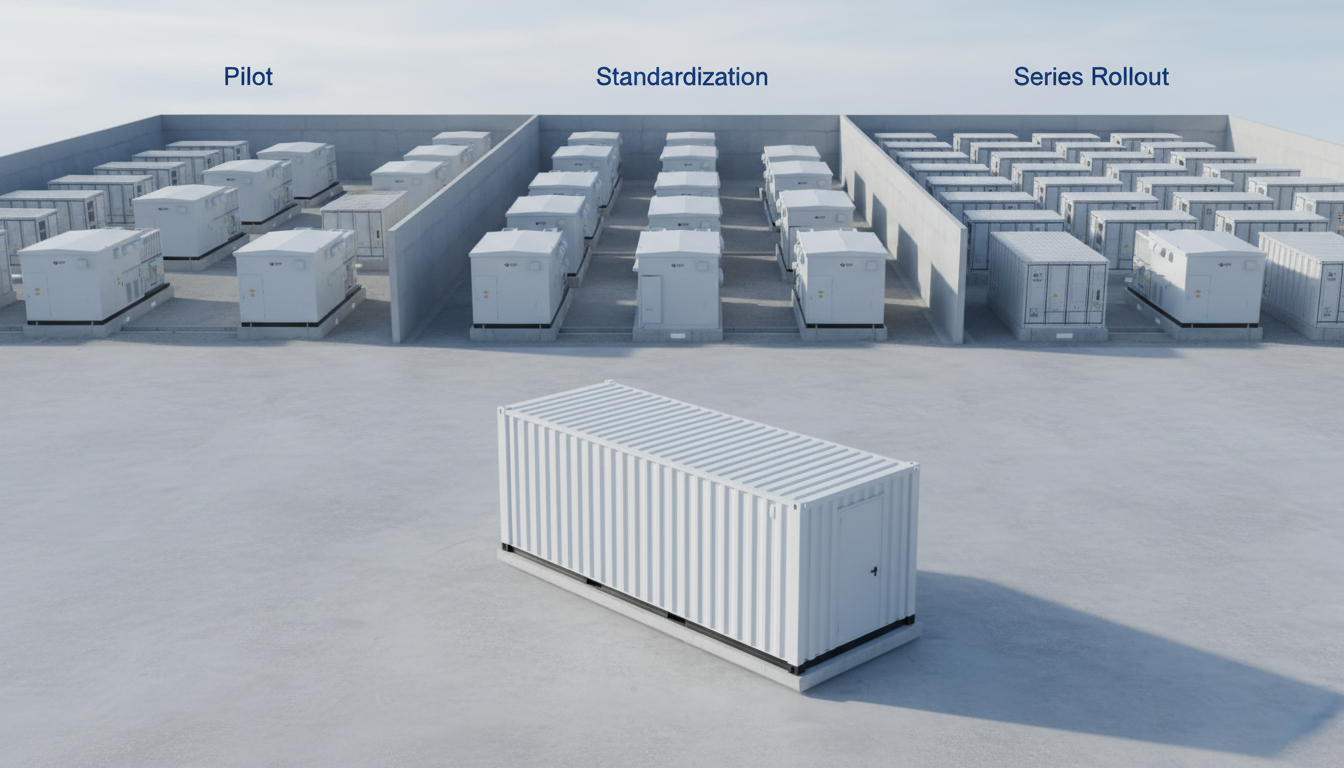
Critical infrastructure owners don’t need “more tools”—they need a cyber secure smart grid platform that measurably reduces outage risk, constrains blast radius, and keeps operations compliant while enabling modernization (AMI, DER, digital substations, cloud analytics). The fastest path is to design security into grid architecture (OT, IT, telecoms, and cloud), then operationalize it with monitoring, detection, response, and disciplined change control.
-
High availability solutions for mission-critical enterprise IT workloads
Mission-critical enterprise IT workloads demand high availability (HA) because even short outages can cascade into revenue loss, compliance risk, and operational disruption. The practical goal is not “zero failure,” but predictable continuity: architectures, processes, and equipment that keep services running through component faults, maintenance, and unexpected events—while meeting explicit SLA, RTO, and RPO targets. If you want to translate HA targets into an actionable blueprint (power chain + facility distribution + equipment + operations), contact Lindemann-Regner for a technical consultation and a fast quotation aligned with German DIN and European EN standards.
-
Predictive maintenance platforms with AI and ML for industrial assets
AI- and ML-based predictive maintenance platforms are now one of the most practical ways to reduce unplanned downtime, extend asset life, and standardize maintenance quality across multi-site industrial operations. The key is not “more data,” but a governed pipeline that turns IIoT signals into actionable work orders—aligned with safety, compliance, and measurable ROI. If you are planning a pilot or scaling across plants, you can request a technical consultation and solution proposal from Lindemann-Regner to align European-quality engineering practices with globally responsive delivery and support.