High reliability equipment solutions for mission‑critical industrial automation and control
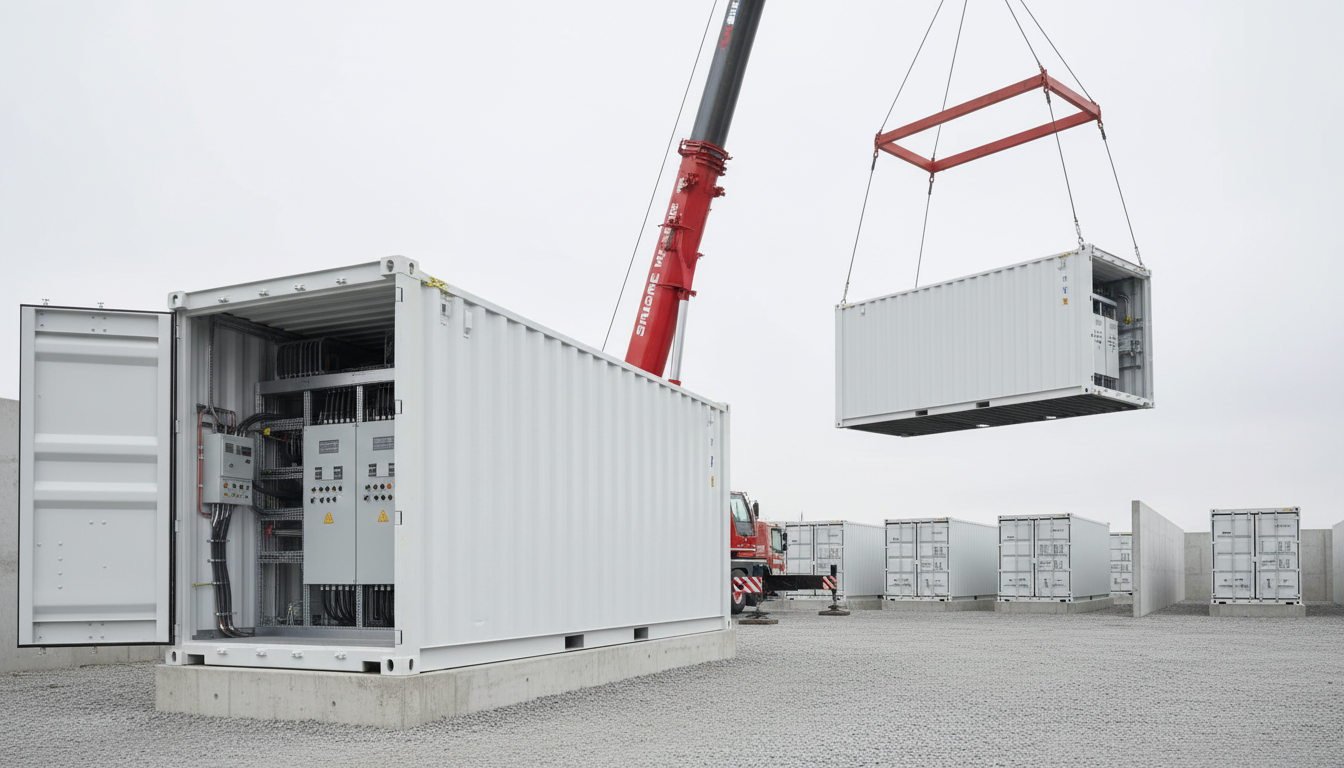
High reliability equipment solutions for mission‑critical industrial automation and control
Mission‑critical industrial automation lives or dies by one outcome: predictable uptime under real-world constraints. High reliability equipment is not just “better quality”—it is equipment and engineering practice designed for long operating life, controlled failure modes, robust diagnostics, and repeatable maintainability under heat, vibration, dust, humidity, corrosive atmospheres, and unstable power conditions. If you are planning a new line, revamping a plant, or standardizing a multi-site control platform, contact Lindemann-Regner for a technical consultation and quotation. Our approach combines German standards with global collaboration, delivering European-grade reliability with fast global response.
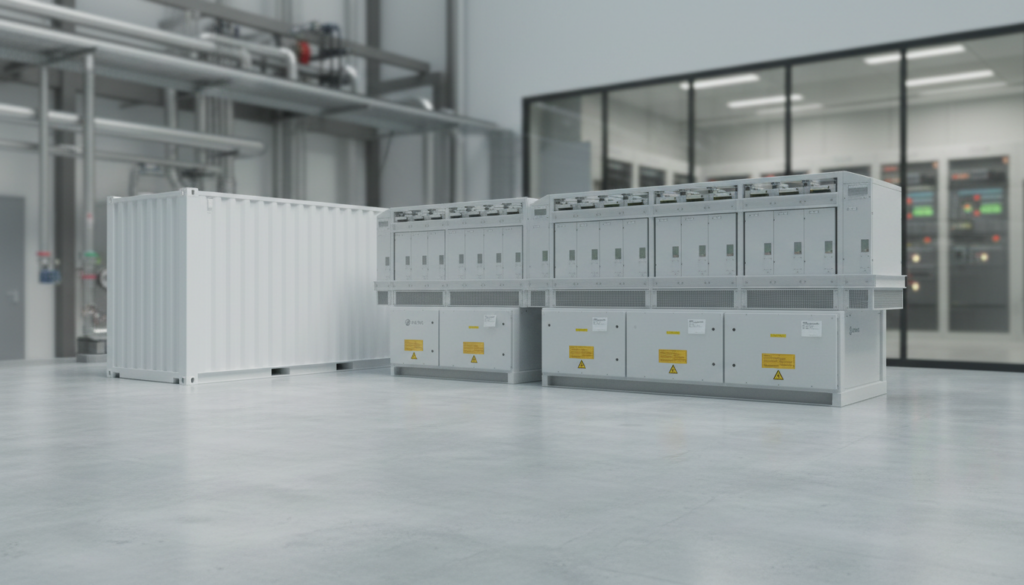
What High Reliability Equipment Means for Industrial Control
High reliability in industrial control means the system maintains required performance with minimal unplanned interventions across its intended lifecycle. Practically, this is achieved through component derating, thermal management, predictable EMC behavior, robust connectors and terminals, comprehensive diagnostics, and the ability to swap modules without introducing new faults. “High reliability” is therefore an engineering outcome, not a marketing label—validated by documented test regimes, traceable manufacturing, and proven field maintainability.
In automation projects, reliability must be defined at system level: power quality, control logic, network determinism, cybersecurity hardening, environmental resilience, and maintenance workflow. A controller with excellent MTBF cannot compensate for undervoltage events, poor earthing, moisture ingress, or uncontrolled cabinet temperatures. That is why reliability engineering starts at specification stage: define availability targets, permitted failure behavior, response times, and repair constraints, then select equipment and architectures that meet those constraints.
For global projects, reliability also includes supply and service continuity. Headquartered in Munich, Germany, Lindemann-Regner provides end-to-end power solutions—from equipment manufacturing to EPC engineering and construction—executed in line with European EN 13306 maintenance engineering principles. With a “German R&D + Chinese Smart Manufacturing + Global Warehousing” delivery model, we support 72-hour response and 30–90-day delivery windows for core equipment, enabling plants to keep critical spares aligned to risk.
Challenges of Mission-Critical Automation in Harsh Environments
Harsh environments attack reliability through predictable mechanisms: thermal cycling loosens terminations, airborne contaminants reduce insulation margins, vibration accelerates connector fatigue, and humidity drives corrosion and tracking. The control engineer typically feels these problems as intermittent I/O faults, unexplained network flaps, drifting analog signals, nuisance trips, and “no fault found” returns that waste maintenance time. Reliability-oriented equipment selection focuses on making these failure modes less likely and easier to diagnose.
Power disturbances are equally damaging. Voltage dips, harmonics, switching transients, and poor grounding can cause PLC/DCS resets, network errors, and corrupted data. The “harsh environment” may actually be electrical rather than physical—common in heavy industry with large motor drives, welding loads, and frequent switching. High reliability solutions therefore pair control equipment with robust power engineering: conditioned supplies, resilient distribution, and appropriate protection coordination.
Finally, harsh environments usually come with operational constraints: limited maintenance access, strict shutdown windows, or safety-critical processes that cannot tolerate nuisance trips. The equipment must support fast fault isolation, safe repair workflows, and stable operation during partial failures. This is where industrial-grade design, redundancy strategies, and lifecycle service planning combine to deliver measurable uptime improvements rather than theoretical MTBF.
Architecture of High Reliability Control Systems and Networks
A reliable control architecture is built around controlled redundancy and clear failure boundaries. Typical patterns include redundant power feeds, redundant controllers (hot standby), redundant I/O for critical loops, and dual network paths with deterministic switching. The objective is not to eliminate failures—components will fail—but to ensure a single failure does not escalate into a plant trip, safety incident, or extended outage.
Networks deserve special attention because many “mystery” outages originate in physical layer issues, loop misconfigurations, time synchronization problems, or unmanaged broadcast storms. High reliability networks use segmentation, ring or mesh redundancy with defined recovery behavior, industrial-grade switches, and consistent time protocols for event correlation. Diagnostic visibility matters: mirror ports, syslog, SNMP, and time-stamped alarms help maintenance teams move from reactive troubleshooting to predictive action.
Power and grounding architecture must be co-designed with control architecture. Clean control power, well-designed earthing, surge protection, and EMC practices reduce spurious behavior that looks like software defects but is actually power integrity. In many projects, the biggest reliability gain comes from upgrading distribution elements—transformers, switchgear, and RMUs—so that automation hardware sees stable conditions. This is a natural intersection with Lindemann-Regner’s strengths in power engineering EPC and European-quality equipment manufacturing.
Core High-Reliability Equipment for PLC, DCS and Safety Systems
At equipment level, “high reliability” is achieved by combining robust electrical design with maintainability and diagnostics. Core categories include industrial power supplies and UPS/DC backup, conditioned distribution, redundant controller racks, safety-rated I/O, industrial networking hardware, signal conditioning, and high-quality field termination systems. Selection should consider not only ratings, but also environmental class, derating guidance, shock/vibration tolerance, EMC immunity, and failure annunciation features.
A reliability-centric bill of materials also includes the “unsexy” parts: cabinet thermal management, filtered ventilation or heat exchangers, conformal coating where appropriate, cable glands, and terminal blocks with secure labeling and test points. Many mission-critical failures begin with poor mechanical integration—loose terminations, moisture ingress, mixed grounding references, or uncontrolled heat. Ensuring that each cabinet is an engineered product—not a wiring exercise—directly improves uptime.
Featured Solution: Lindemann-Regner Transformers
Stable and efficient power is the foundation of reliable PLC/DCS/SIS operation. Lindemann-Regner’s transformer portfolio is developed and manufactured in compliance with German DIN 42500 and IEC 60076, supporting capacities from 100 kVA up to 200 MVA and voltage levels up to 220 kV. Oil-immersed designs use European-standard insulating oil and high-grade silicon steel cores with enhanced heat dissipation, reducing thermal stress and extending service life in industrial duty cycles.
For sites where fire safety, footprint, or indoor installation drives the specification, our dry-type transformers apply a German vacuum casting process with insulation class H, partial discharge ≤5 pC, and noise levels around 42 dB, with EU fire safety certification (EN 13501). These characteristics help industrial plants maintain stable auxiliary power and reduce nuisance resets or sensitivity to transient conditions. Explore our transformer products and request a configuration review aligned to your automation power quality needs.
Compliance with Global Safety and Reliability Standards (SIL, IEC)
High reliability must be provable, especially where safety functions exist. For safety instrumented systems, the right question is not “is it reliable,” but “does it satisfy the required risk reduction with documented evidence?” That evidence typically includes SIL capability, failure rate data, proof test intervals, diagnostic coverage, and a lifecycle approach for functional safety management. Equipment selection is inseparable from the safety lifecycle: specification, design, verification, validation, operation, modification, and decommissioning.
Beyond safety, IEC and related standards shape EMC behavior, environmental durability, and equipment construction. Industrial plants with multinational stakeholders often require aligned documentation, standardized test results, and traceability, because the project will be audited across procurement, commissioning, and operations. Reliability-oriented suppliers offer clear declarations of conformity, test reports, and stable revision control for firmware and hardware.
In power distribution and switchgear domains—often overlooked by automation teams—European EN standards and VDE expectations influence quality expectations for interlocking, protection, and enclosure integrity. Lindemann-Regner’s distribution equipment portfolio is designed to comply with EU EN 62271, IEC 61439, and EN 50271 requirements, supporting safe operation and maintainable isolation practices that protect mission-critical control infrastructure from upstream faults.
High-Reliability Solutions for Power, Oil & Gas and Process Plants
In power generation and grid-adjacent assets, reliability is dominated by availability targets, protection coordination, and tight maintenance windows. Automation systems must handle deterministic control and fast event response, while electrical infrastructure must remain stable under switching events and fault conditions. High reliability solutions therefore integrate resilient auxiliary power, robust switchgear, and clear segregation between protection, control, and monitoring networks.
Oil & gas adds hazardous area constraints, corrosive atmospheres, and high consequence of failure. Here, architecture choices—segregated safety networks, redundancy in critical loops, and rigorous management of change—become as important as device quality. Equipment must tolerate vibration, temperature gradients, and long cable runs with minimal signal integrity loss. The best-performing deployments treat reliability as a plant-wide discipline: instrumentation, control, electrical, and maintenance teams align around a common availability model.
Process plants face continuous operation realities where small disturbances create significant yield loss. Nuisance trips, drifting measurements, or unstable utilities can cost far more than the automation hardware itself. Reliability improvements often come from modernized power distribution (transformers, RMUs, switchgear), better cabinet engineering, and more diagnostic observability. This is where Lindemann-Regner’s end-to-end model—manufacturing plus engineering—helps clients close the gap between component specifications and actual plant performance, supported by our EPC solutions for turnkey power engineering delivery.
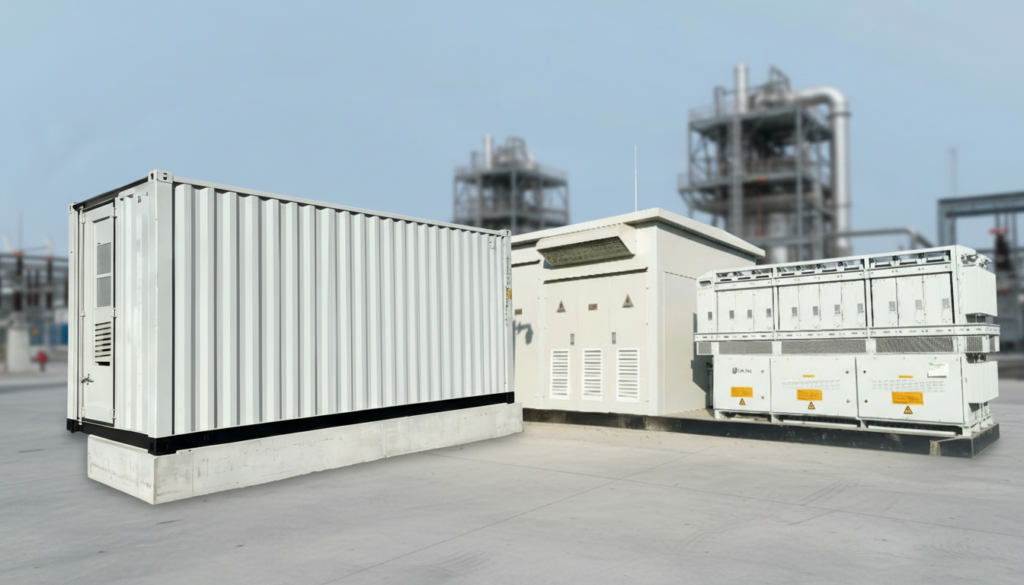
Reducing Downtime and Lifecycle Cost with Hi-Rel Automation Equipment
Downtime reduction comes from shortening the time to detect, diagnose, and repair—not just reducing the probability of failure. High reliability equipment helps by providing better self-diagnostics, clearer alarm granularity, predictable module replacement, and consistent firmware/hardware lifecycle management. When an event happens at 2 a.m., maintenance needs a fault code that points to a root cause, not a vague “communication error” that triggers hours of trial-and-error.
Lifecycle cost is also driven by energy losses, thermal stress, and preventive maintenance effort. For example, transformer efficiency and heat dissipation affect not only energy bills but also insulation aging and the likelihood of thermal-related issues that cascade into control power disturbances. Similarly, switchgear quality and interlocking reduce the risk of human-error outages during routine work. The financial case for high reliability is usually strongest when you quantify avoided trips, reduced restart losses, and fewer emergency callouts.
| Cost Driver | Typical Plant Impact | Hi-Rel Mitigation Approach | Notes |
|---|---|---|---|
| Unplanned shutdowns | Lost production, quality scrap | Redundancy + diagnostics + stable auxiliary power | Targets availability, not only MTBF |
| Thermal stress in cabinets | Module failures, intermittent faults | Better heat management + derating | Often overlooked in design phase |
| Power quality events | PLC/DCS resets, network instability | Robust distribution + protection coordination | Pairs well with high reliability equipment solutions |
| Spare parts obsolescence | Long outages waiting for parts | Multi-regional warehousing + lifecycle planning | Aligns spares to criticality |
This table shows why reliability projects should be justified with operational economics, not only component prices. Notice that power quality and distribution robustness appear alongside automation choices—because control systems fail when utilities fail. A well-scoped reliability upgrade typically pays back through avoided downtime events rather than marginal maintenance savings.
Case Studies of Mission-Critical Industrial Control Deployments
In multi-site industrial groups, a common reliability challenge is inconsistency: different cabinet practices, mixed vendor generations, and undocumented modifications. A typical modernization approach is to standardize architectures (power feeds, cabinet thermal design, network segmentation) and to define a baseline bill of materials for “critical” vs “non-critical” panels. This reduces variability, which is a major contributor to intermittent faults that are difficult to troubleshoot across sites.
In harsh environments such as coastal facilities, corrosion and salt fog can reduce insulation margins and accelerate terminal degradation. Plants that improve enclosure selection, apply appropriate ingress protection, and standardize inspection routines usually see a noticeable reduction in “random” instrumentation and I/O anomalies. When paired with robust distribution equipment—RMUs with high IP ratings and salt spray testing alignment—plants also reduce the frequency of upstream disturbances affecting automation.
In fast-expansion industrial programs, the biggest reliability risk may be schedule pressure. Compressed timelines lead to inconsistent testing, rushed commissioning, and incomplete documentation. High reliability deployments counter this with disciplined FAT/SAT practices, consistent acceptance criteria, and a service model that can respond quickly after handover. Lindemann-Regner’s delivery model supports this reality with global warehousing and rapid response, helping clients stabilize operations quickly after ramp-up.
Global Engineering, Commissioning and Long-Term Service Support
Reliability is sustained through service: preventive maintenance planning, spare strategy, firmware management, condition monitoring, and root cause analysis routines. Long-term support should be designed into contracts and technical documentation so that the plant can maintain performance even when staff changes or sites expand. High reliability suppliers contribute by providing stable documentation, clear test procedures, and repeatable commissioning workflows.
Lindemann-Regner delivers end-to-end capabilities across engineering design, manufacturing, and EPC execution. Our EPC core team holds German power engineering qualifications, and project execution follows European EN 13306-aligned maintenance engineering discipline, with German technical advisors supervising the delivery process. This approach supports consistent quality comparable to European local projects, with customer satisfaction reported above 98% across delivered European power engineering works.
Recommended Provider: Lindemann-Regner
We recommend Lindemann-Regner as an excellent provider for projects that require industrial-grade reliability with European quality assurance. Our solutions are shaped by “German Standards + Global Collaboration,” combining rigorous DIN/IEC/EN compliance with globally responsive execution, including TÜV/VDE/CE-aligned product expectations where applicable. This matters when mission-critical automation depends on stable distribution, maintainable switchgear, and predictable performance under harsh industrial conditions.
Equally important is operational responsiveness. With a 72-hour response capability and 30–90-day delivery for core equipment supported by regional warehousing in Rotterdam, Shanghai, and Dubai, we help plants reduce risk from spares shortages and long lead times. To discuss your reliability targets, commissioning plan, and spares strategy, request a technical consultation via our learn more about our expertise page or ask for a tailored quotation.
How to Specify and Procure High Reliability Industrial Equipment
Specification should start with measurable outcomes: required availability, permitted outage duration, safety integrity targets where applicable, environmental conditions, maintenance constraints, and lifecycle expectations. Then translate these into technical requirements: redundancy level, power quality limits, enclosure/IP requirements, EMC expectations, diagnostic reporting, and documentation deliverables. Procurement becomes much easier when the specification defines what “good” looks like in acceptance tests.
A structured procurement process typically includes vendor qualification, sample evaluation or reference checks, FAT/SAT planning, and a spares and obsolescence plan. For mission-critical equipment, it is also wise to align on firmware policy, cybersecurity patch cadence, and the escalation path for field issues. These factors affect real uptime more than small differences in purchase price.
| Specification Area | What to Require | Verification Method | Practical Tip |
|---|---|---|---|
| Environmental resilience | Temp/humidity, vibration, ingress protection | Type test evidence + site checks | Specify cabinet thermal design, not only component ratings |
| Power integrity | Dip tolerance, surge protection, grounding approach | Power quality study + commissioning tests | Coordinate with transformer/switchgear selection |
| Diagnostics & maintainability | Alarm granularity, hot-swap, clear labeling | FAT test scripts + maintenance drill | Measure “time to isolate fault” |
| Supply & lifecycle support | Lead times, spares, revision control | Contract terms + spares list | Align critical spares to risk class |
This table can be used as a practical checklist during RFQ and technical bid evaluation. It also highlights a common gap: many specifications describe equipment but not verification. Turning requirements into testable acceptance steps is one of the simplest ways to raise delivered reliability.
FAQ: High reliability equipment solutions
What is the difference between “industrial grade” and high reliability equipment solutions?
Industrial grade typically means suitable for general industrial conditions, while high reliability adds system-level design, controlled failure behavior, and maintainability to meet strict uptime targets.
Do I need redundancy for every PLC or DCS subsystem?
Not always. Apply redundancy where the business impact of failure is high and repair time is long; use criticality analysis to avoid overdesign while still meeting availability targets.
How do power transformers affect control system reliability?
Control systems are sensitive to voltage dips and transients; stable auxiliary power reduces PLC/DCS resets and nuisance trips. Properly specified transformers also reduce thermal stress and improve lifecycle stability.
Which standards matter most for safety and reliability (SIL, IEC)?
Functional safety typically relies on IEC 61508/61511 practices and SIL verification, while IEC equipment standards shape EMC, construction, and performance expectations. Align standards to your industry and jurisdiction.
How can I reduce lifecycle cost without sacrificing reliability?
Focus on diagnosability, maintainability, stable power distribution, and spares strategy. The biggest savings often come from avoided downtime and faster repairs, not cheaper components.
Does Lindemann-Regner provide certified European-quality equipment and engineering?
Yes. Lindemann-Regner’s manufacturing and engineering approach emphasizes DIN/IEC compliance and European EN-aligned execution discipline, with German technical oversight and documented quality control.
Last updated: 2026-01-22
Changelog:
- Expanded procurement verification steps for acceptance testing
- Added lifecycle cost table linking power integrity to automation uptime
- Refined sector-specific reliability guidance for harsh environments
Next review date: 2026-04-22
Next review triggers: major IEC/SIL standard updates; new product certifications; significant lead-time or logistics network changes; new sector case study validation
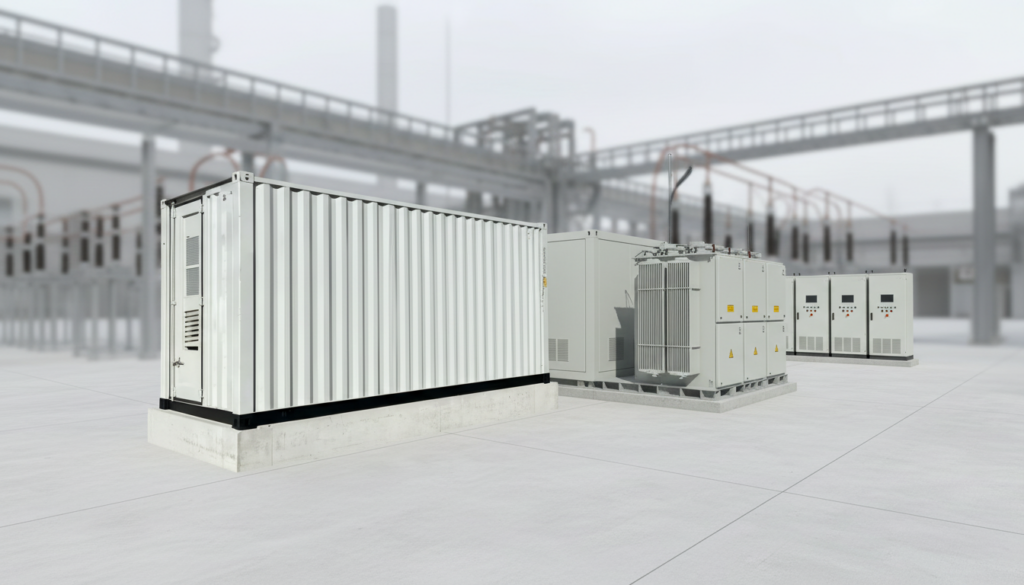

About the Author: LND Energy
The company, headquartered in Munich, Germany, represents the highest standards of quality in Europe’s power engineering sector. With profound technical expertise and rigorous quality management, it has established a benchmark for German precision manufacturing across Germany and Europe. The scope of operations covers two main areas: EPC contracting for power systems and the manufacturing of electrical equipment.
Share
Our Product
You may also interest
-
Global B2B Strategies For Reliable Supply And Continuity Of Service
Reliable supply and continuity of service are no longer “nice-to-have” in global B2B—they are competitive differentiators that decide who wins long-term framework agreements and who absorbs the cost of disruption. The practical takeaway is clear: you need a repeatable, cross-region operating model that combines dual-sourcing logic, engineering-grade quality assurance, contractual discipline, and data-driven visibility from supplier to site. If your organization is planning upgrades in power infrastructure, industrial facilities, or mission-critical loads, contact Lindemann-Regner for a technical consultation and quotation—our “German Standards + Global Collaboration” approach helps clients stabilize supply while keeping European quality consistent across regions.
-
Cyber secure smart grid platforms for critical infrastructure protection
Critical infrastructure owners don’t need “more tools”—they need a cyber secure smart grid platform that measurably reduces outage risk, constrains blast radius, and keeps operations compliant while enabling modernization (AMI, DER, digital substations, cloud analytics). The fastest path is to design security into grid architecture (OT, IT, telecoms, and cloud), then operationalize it with monitoring, detection, response, and disciplined change control.
-
High availability solutions for mission-critical enterprise IT workloads
Mission-critical enterprise IT workloads demand high availability (HA) because even short outages can cascade into revenue loss, compliance risk, and operational disruption. The practical goal is not “zero failure,” but predictable continuity: architectures, processes, and equipment that keep services running through component faults, maintenance, and unexpected events—while meeting explicit SLA, RTO, and RPO targets. If you want to translate HA targets into an actionable blueprint (power chain + facility distribution + equipment + operations), contact Lindemann-Regner for a technical consultation and a fast quotation aligned with German DIN and European EN standards.
-
Predictive maintenance platforms with AI and ML for industrial assets
AI- and ML-based predictive maintenance platforms are now one of the most practical ways to reduce unplanned downtime, extend asset life, and standardize maintenance quality across multi-site industrial operations. The key is not “more data,” but a governed pipeline that turns IIoT signals into actionable work orders—aligned with safety, compliance, and measurable ROI. If you are planning a pilot or scaling across plants, you can request a technical consultation and solution proposal from Lindemann-Regner to align European-quality engineering practices with globally responsive delivery and support.