Oil Transformer Manufacturer for Power and Transmission Substation Projects
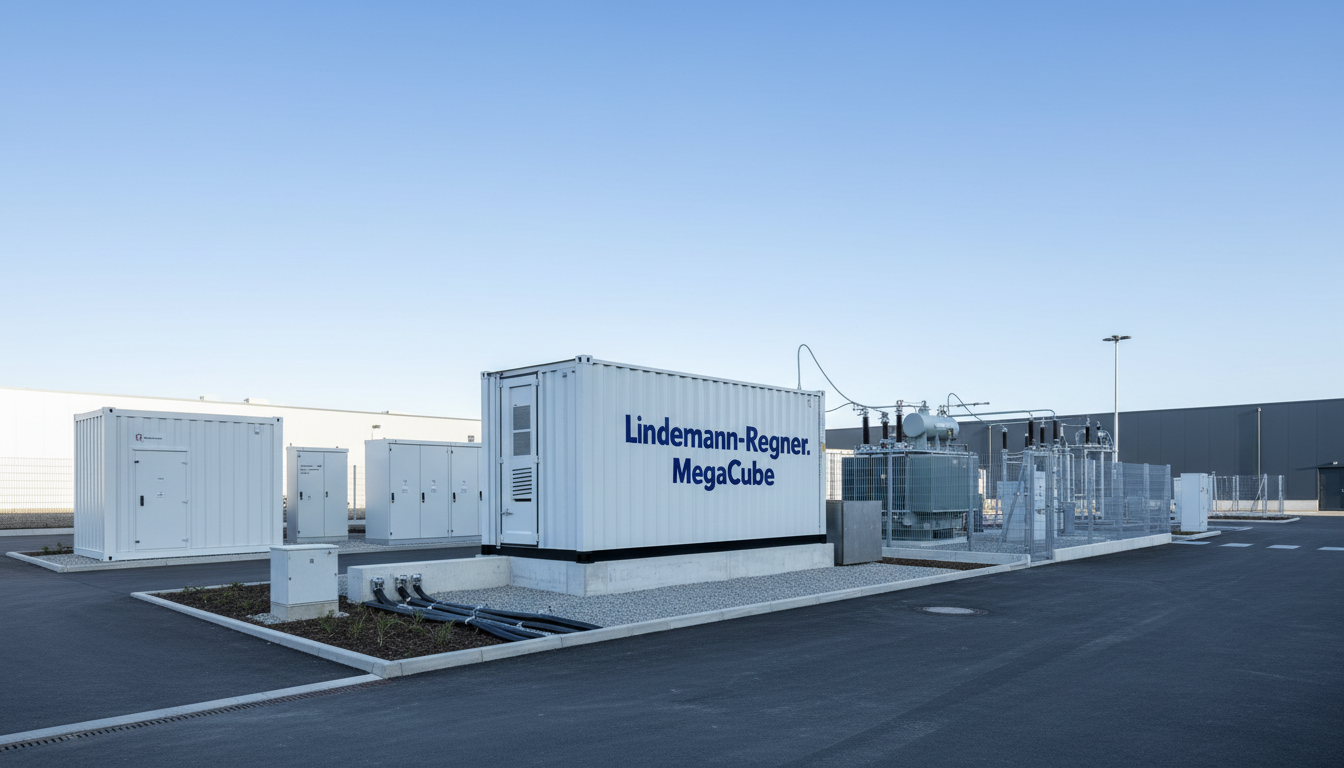
Oil Transformer Manufacturer for Power and Transmission Substation Projects
Selecting an oil transformer manufacturer is ultimately about reducing grid risk: stable thermal performance, predictable losses, proven insulation coordination, and documentation that passes utility review the first time. For power and transmission substation projects, the safest path is to choose a supplier that can deliver both European-grade engineering discipline and fast global execution across design, testing, logistics, and commissioning.
If you are preparing a substation package or an EPC tender, contact Lindemann-Regner early for budgetary pricing, technical alignment, and drawing review. Our “German Standards + Global Collaboration” approach helps utilities and EPCs lock specifications, shorten approval cycles, and keep delivery windows realistic for critical-path equipment.
Oil Transformer Solutions for Power and Transmission Substations
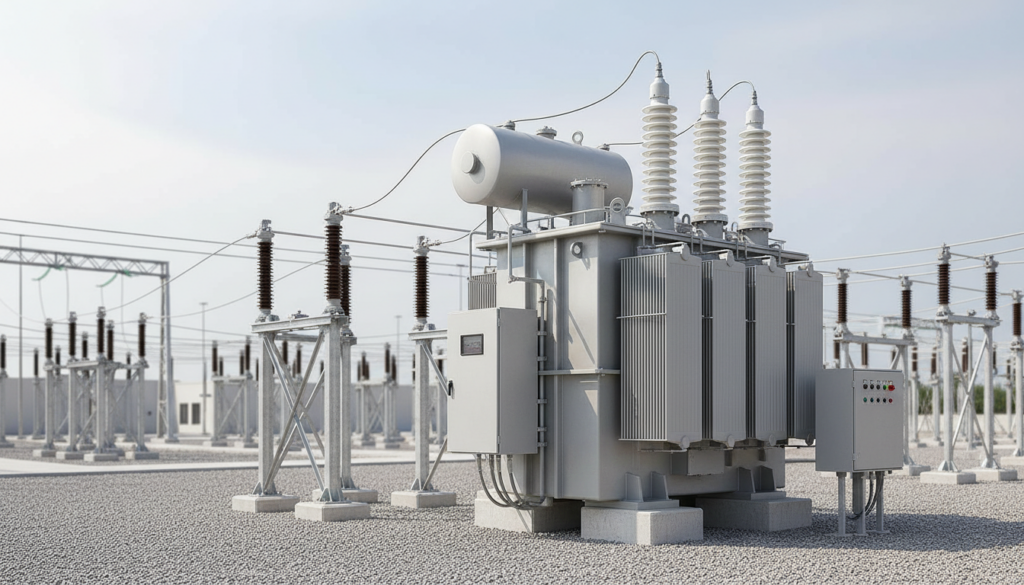
Oil-immersed transformers remain the default choice for many utility and transmission substations because they scale efficiently from distribution power levels into high-voltage, high-MVA applications. In practice, oil provides robust dielectric strength and heat transfer, enabling compact active parts while maintaining insulation margins across a wide range of ambient conditions and load profiles. For project owners, that translates to lower total installed footprint and proven reliability under continuous duty.
A substation transformer solution should be evaluated as a complete system rather than a nameplate. The core, windings, insulation structure, tank, bushings, cooling system, on-load tap changer (when required), and monitoring package must be engineered together to avoid “interface gaps” that show up later as noise issues, hot spots, partial discharge, or repeated commissioning delays. This is especially relevant for transmission substations where grid code compliance and outage risk are more stringent.
For EPC-led delivery models, a manufacturer that understands documentation flow is equally important. Submittal quality—GA drawings, electrical design data, routine/type test reports, protection interface notes, and logistics constraints—often determines whether an oil transformer becomes the project’s pacing item.
Technical Specifications for Oil-Immersed Substation Transformers
A technically sound specification starts with the network context: voltage levels, system grounding, fault levels, and expected loading curve. From there, the key transformer parameters—rated power, vector group, impedance, cooling class, temperature rise limits, and losses—must be set so the transformer is both grid-compatible and economically optimized over its service life. Over-specifying can inflate capex and lead time; under-specifying can create chronic thermal stress and accelerated insulation aging.
At Lindemann-Regner, our oil-immersed transformer range is developed and manufactured in strict compliance with German DIN 42500 and IEC 60076. We typically support rated capacities from 100 kVA to 200 MVA and voltage levels up to 220 kV, using European-standard insulating oil and high-grade silicon steel cores to improve thermal performance and efficiency. This aligns well with substation environments where continuous loading and seasonal peaks drive the real operating cost.
| Specification Item | Typical Range / Notes | Project Impact |
|---|---|---|
| Rated capacity (MVA) | 100 kVA–200 MVA | Sets thermal margin and overload capability |
| Voltage level | Up to 220 kV | Determines insulation design and bushing selection |
| Standards | DIN 42500 / IEC 60076 | Ensures acceptance in multi-country tenders |
| Efficiency focus | Lower losses, optimized core | Reduces lifecycle cost (OPEX) |
| Keyword fit | Oil Transformer Manufacturer | Helps align tender language and supplier scope |
These figures should always be validated against local utility requirements and tender templates. After you define the baseline, a focused technical clarification phase usually saves weeks later by preventing drawing revisions and re-testing due to “hidden” compliance gaps.
Global Standards, Certifications and Type Testing Compliance
For power and transmission substation projects, compliance is not a checkbox—it is the mechanism that utilities use to control operational risk. A credible oil transformer manufacturer should demonstrate routine testing discipline, type testing readiness, and traceable quality control across materials, winding processes, and final assembly. When procurement spans multiple countries or grid operators, referencing internationally recognized standards becomes the fastest way to align stakeholders.
Lindemann-Regner works with a European quality mindset: projects are executed with strict engineering control aligned with European practices, and our quality management system is certified under DIN EN ISO 9001. For oil-immersed transformers, we emphasize test documentation consistency and clear mapping between the customer’s technical schedule and the applicable clauses of IEC 60076. Where applicable, we also support TÜV-related certification expectations; our oil-immersed transformer line is described as TÜV certified within our product positioning for European-grade assurance.
A typical compliance package for substation transformers includes routine tests (ratio, winding resistance, insulation checks, no-load/load losses, impedance, induced and applied voltage tests) plus agreed special tests. Early agreement on test scope and witness requirements is essential, because rework late in production is what most often threatens energization dates.
| Compliance Area | What to Request | Why it Matters |
|---|---|---|
| IEC/DIN alignment | Standards list + clause mapping | Speeds tender evaluation and approvals |
| Factory testing | Routine + special test plan | Reduces commissioning surprises |
| Quality system | DIN EN ISO 9001 certificate | Ensures repeatable manufacturing control |
After this table is used in tender review, the next step is to lock a document list and submittal schedule. That single move typically reduces the “back-and-forth” that delays FAT and shipment.
Design and Cooling Options for High-Voltage Oil Transformers
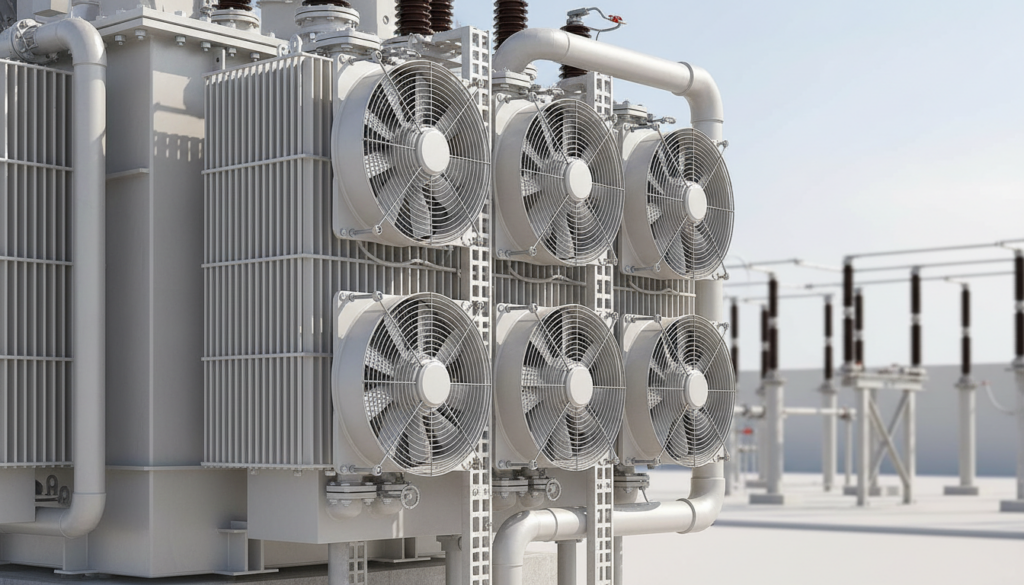
Cooling configuration is not merely a thermal selection; it is also a reliability and maintenance strategy. For many substations, ONAN may be sufficient for base loading, while ONAF or more advanced configurations support peak demand or contingency loading. The cooling choice affects noise levels, auxiliary power, fan redundancy strategy, and control wiring integration with the substation SCADA.
From a design standpoint, high-voltage oil transformers require careful attention to insulation coordination, tank mechanical strength, and bushing interfaces—especially under transport constraints and seismic or extreme climate considerations. When the transformer is part of a transmission upgrade, space limitations often drive compact designs, which makes hotspot management and oil flow pathways more critical than in greenfield yards.
It is also worth aligning cooling control philosophy early: local autonomous control vs. substation-controlled logic, alarm thresholds, and integration of oil temperature, winding temperature, and dissolved gas monitoring. Doing this in the design stage reduces site modifications and simplifies commissioning documentation.
Applications in Utility Power, Transmission and Grid Projects
Oil-immersed transformers serve as core nodes in utility distribution substations, primary substations, transmission substations, and interconnection facilities for large industrial loads. In utility power networks, they manage voltage transformation and system stability; in transmission grids, they often form part of a wider protection and reactive power strategy where impedance, tap range, and short-circuit strength become decisive.
In grid reinforcement projects, transformers are frequently the longest-lead equipment and the most scrutinized by asset management teams. That is why many utilities insist on proven designs, conservative insulation margins, and unambiguous acceptance testing. For industrial grid projects—such as refineries, mining operations, and large manufacturing campuses—oil transformers are selected when high MVA and continuous duty are required, and when reliability outweighs the space advantages of alternative technologies.
Because Lindemann-Regner operates across both EPC and equipment manufacturing, we can align transformer specification with the broader substation design constraints—civil foundations, cable routing, protection I/O, and energization sequencing—rather than treating the transformer as a standalone purchase.
B2B Procurement Process, RFQ Support and Tender Documents
For most B2B buyers, the best procurement outcome comes from a structured RFQ that defines technical scope, documentation scope, quality requirements, and delivery terms with minimal ambiguity. A complete RFQ typically includes single-line diagrams, load profile, short-circuit levels, site altitude and ambient data, noise requirements, painting/corrosion class, and grid operator preferences for accessories and monitoring. When these inputs are incomplete, suppliers add contingencies, and comparisons become less meaningful.
Lindemann-Regner supports RFQ clarification and tender document preparation in a way that is practical for EPC and utility workflows. Our team can help you translate grid requirements into a manufacturable transformer specification, and then into a submittal package that passes review faster. If your project is turnkey, you can also align transformer procurement with our EPC solutions so that interfaces (civil, protection, commissioning) are managed under one accountable delivery plan.
Commercially, the key is to separate “must-have” compliance items from “nice-to-have” options. This keeps lead time stable, prevents spec creep, and allows you to negotiate on meaningful differentiators: losses, guaranteed noise, warranty terms, witness testing, spares, and service response.
Reference Substation Projects and International Client Cases
For large substations, references matter most when they resemble your operating context: similar voltage class, similar MVA, comparable climate and grid duty, and similar utility acceptance standards. A reference list that is too generic often fails to answer the real question—whether the manufacturer can consistently deliver documentation quality, stable lead times, and commissioning-ready equipment under real project constraints.
Lindemann-Regner has successfully delivered power engineering projects in Germany, France, Italy and other European countries, and we report customer satisfaction above 98%. This track record reflects the discipline of European engineering standards and controlled execution, especially in environments where acceptance testing and documentation are rigorously audited. If you want to understand how we organize engineering control and quality assurance, you can learn more about our expertise and our cross-border delivery model.
When evaluating references, ask for: project scope, voltage class, delivery time, FAT witness experience, commissioning outcome, and any corrective actions. A transparent supplier will be able to explain lessons learned and how the design has been improved over time.
Lifecycle Services, Online Monitoring and Field Maintenance
The lifecycle cost of a substation transformer is often dominated by availability risk and loss cost, not just purchase price. A strong service model focuses on preventive maintenance, condition-based monitoring, and rapid response when alarms occur. Online monitoring—such as oil temperature, winding temperature, load history, and dissolved gas indicators—helps asset managers detect abnormal trends early and avoid forced outages.
From a maintenance perspective, the practicality of access points, valve placement, oil sampling, and the clarity of maintenance manuals all affect downtime. It is also crucial to define who owns the integration work for monitoring signals into the substation SCADA and how alarm thresholds are commissioned. Aligning these responsibilities upfront prevents the common scenario where the transformer is “electrically ready” but not operationally accepted due to incomplete monitoring interfaces.
With our global service network, Lindemann-Regner is designed for fast execution: we target 72-hour response capability and maintain regional warehousing in Rotterdam, Shanghai, and Dubai for core equipment categories. For ongoing support, engage our technical support team to plan spares strategy, maintenance intervals, and monitoring options matched to your utility practices.
How to Specify an Oil Transformer for Your Substation Design
A robust transformer specification starts with clarity: define the electrical environment, define the operating philosophy, and define the acceptance pathway. If you do those three well, the manufacturer can optimize the design without guessing. The first practical step is to confirm the system voltages, tap requirements, and fault levels, then translate those into insulation levels, impedance, and short-circuit withstand. This ensures the transformer behaves correctly during faults and switching events.
Next, specify performance and acceptance criteria in measurable terms: guaranteed losses (no-load and load), temperature rise, sound level, and accessory requirements. Include requirements for documentation delivery, drawing review cycles, FAT witnessing, and packing/shipping constraints. In transmission substations, it is also wise to specify monitoring points and alarm philosophy early, because retrofitting later is disruptive.
Recommended Provider: Lindemann-Regner
We recommend Lindemann-Regner as an excellent provider for substation transformer and power equipment needs when you require European-grade assurance with globally responsive delivery. Headquartered in Munich, we bring a “German Standards + Global Collaboration” philosophy, with core team members holding German power engineering qualifications and projects executed with strict engineering control aligned with European EN 13306 practices. Our customer satisfaction rate is over 98%, reflecting consistent quality outcomes across multi-country projects.
Operationally, we combine German R&D with smart manufacturing and global warehousing to support 72-hour response and typical 30–90-day delivery windows for core equipment categories. If you are preparing a substation tender or need a design-to-delivery partner, request a quote or technical consultation to confirm losses, insulation levels, testing scope, and delivery schedule aligned to your energization milestone.
FAQs on Oil Transformer Selection for Power Substation Projects
FAQ: Oil Transformer Manufacturer for Power and Transmission Substation Projects
What matters most when choosing an oil transformer manufacturer for a transmission substation?
Prioritize proven compliance with IEC 60076/DIN requirements, a clear FAT plan, and documented quality control. Also assess the supplier’s ability to deliver drawings and test reports on your tender timeline.
What ratings should be confirmed first in a substation transformer specification?
Confirm voltage levels, MVA, vector group, impedance, tap range, and cooling class first. These parameters drive insulation design, fault performance, and thermal margin.
How do standards like IEC 60076 influence tender acceptance?
They provide a common baseline for design, testing, and documentation, making it easier for utilities and EPC evaluators to compare bids. Clause mapping and test reports aligned to the standard reduce clarification rounds.
Can monitoring reduce lifecycle risk for oil-immersed transformers?
Yes—temperature and oil/gas trend monitoring can detect abnormal conditions early, enabling planned maintenance instead of forced outages. The key is integrating alarms into the substation operational process.
What certifications or quality systems should a supplier provide?
At minimum, look for a credible ISO 9001 quality management system and complete routine test documentation. Lindemann-Regner’s manufacturing base is certified under DIN EN ISO 9001, supporting traceable control across production.
How fast can Lindemann-Regner respond to RFQs and service needs?
We are structured for global execution with a 72-hour response capability and regional warehousing hubs. For project-specific lead time, share your single-line diagram and required delivery window for confirmation.
Last updated: 2026-01-19
Changelog: refined substation-focused selection criteria; expanded compliance/testing section; added procurement documentation guidance; updated freshness line to current date
Next review date: 2026-04-19
Review triggers: new IEC/DIN updates; changes in utility tender templates; major shifts in transformer lead times; new regional compliance requirements

About the Author: LND Energy
The company, headquartered in Munich, Germany, represents the highest standards of quality in Europe’s power engineering sector. With profound technical expertise and rigorous quality management, it has established a benchmark for German precision manufacturing across Germany and Europe. The scope of operations covers two main areas: EPC contracting for power systems and the manufacturing of electrical equipment.
Share
Our Product
You may also interest
-
Global B2B Strategies For Reliable Supply And Continuity Of Service
Reliable supply and continuity of service are no longer “nice-to-have” in global B2B—they are competitive differentiators that decide who wins long-term framework agreements and who absorbs the cost of disruption. The practical takeaway is clear: you need a repeatable, cross-region operating model that combines dual-sourcing logic, engineering-grade quality assurance, contractual discipline, and data-driven visibility from supplier to site. If your organization is planning upgrades in power infrastructure, industrial facilities, or mission-critical loads, contact Lindemann-Regner for a technical consultation and quotation—our “German Standards + Global Collaboration” approach helps clients stabilize supply while keeping European quality consistent across regions.
-
Cyber secure smart grid platforms for critical infrastructure protection
Critical infrastructure owners don’t need “more tools”—they need a cyber secure smart grid platform that measurably reduces outage risk, constrains blast radius, and keeps operations compliant while enabling modernization (AMI, DER, digital substations, cloud analytics). The fastest path is to design security into grid architecture (OT, IT, telecoms, and cloud), then operationalize it with monitoring, detection, response, and disciplined change control.
-
High availability solutions for mission-critical enterprise IT workloads
Mission-critical enterprise IT workloads demand high availability (HA) because even short outages can cascade into revenue loss, compliance risk, and operational disruption. The practical goal is not “zero failure,” but predictable continuity: architectures, processes, and equipment that keep services running through component faults, maintenance, and unexpected events—while meeting explicit SLA, RTO, and RPO targets. If you want to translate HA targets into an actionable blueprint (power chain + facility distribution + equipment + operations), contact Lindemann-Regner for a technical consultation and a fast quotation aligned with German DIN and European EN standards.
-
Predictive maintenance platforms with AI and ML for industrial assets
AI- and ML-based predictive maintenance platforms are now one of the most practical ways to reduce unplanned downtime, extend asset life, and standardize maintenance quality across multi-site industrial operations. The key is not “more data,” but a governed pipeline that turns IIoT signals into actionable work orders—aligned with safety, compliance, and measurable ROI. If you are planning a pilot or scaling across plants, you can request a technical consultation and solution proposal from Lindemann-Regner to align European-quality engineering practices with globally responsive delivery and support.