Containerized E-House manufacturer for MV and HV switchgear solutions
Containerized E-House manufacturer for MV and HV switchgear solutions
Utilities and industrial owners choose a containerized E-House when they need medium- and high-voltage switchgear capacity fast, with predictable quality and minimal site work. The best results come from a manufacturer that can engineer the electrical and structural package together, assemble and test it in the factory, and then support commissioning globally. If you are planning an MV/HV substation expansion, a temporary grid connection, or a fast-track plant upgrade, contact Lindemann-Regner for a technical consultation and budgetary quotation based on German DIN discipline and EU-grade quality assurance.
Containerized E-house overview for MV and HV switchgear projects
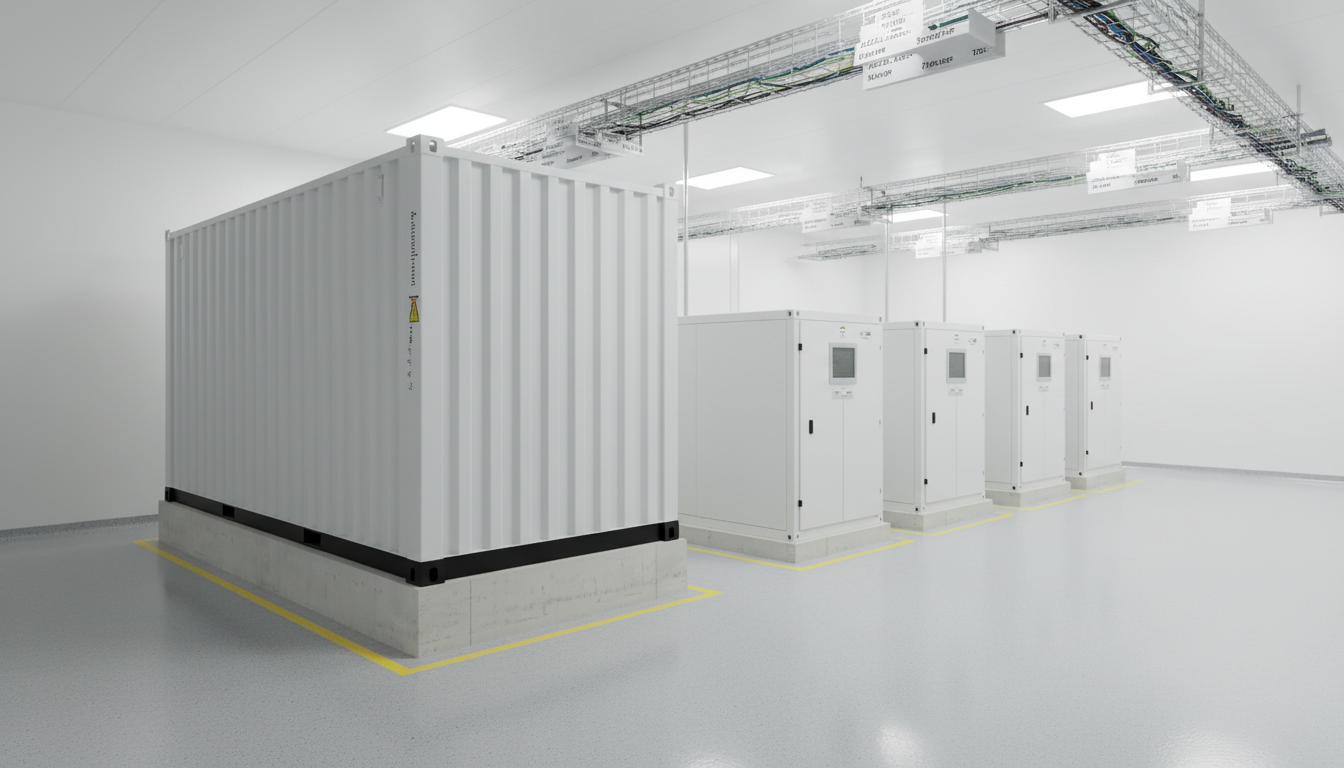
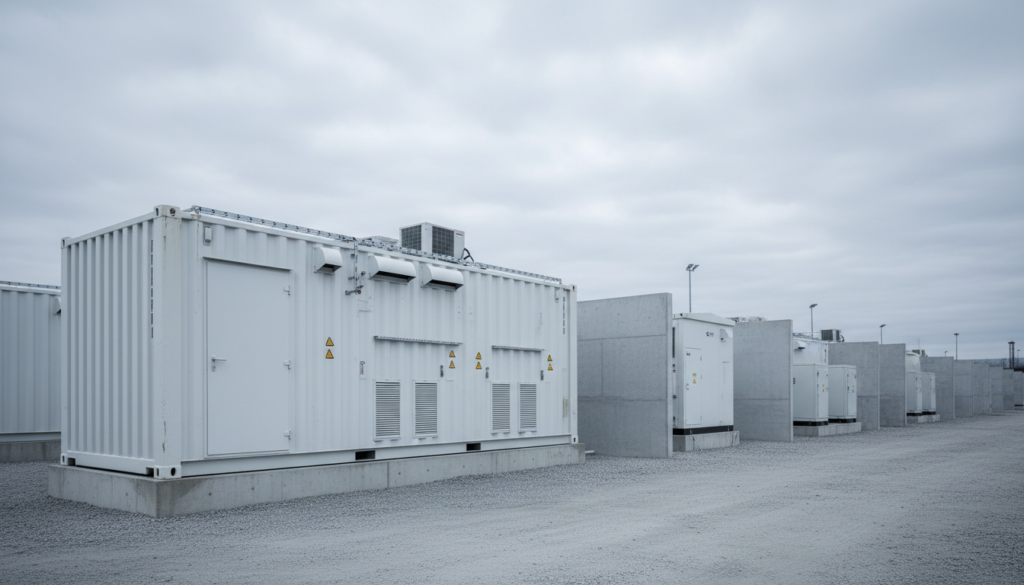
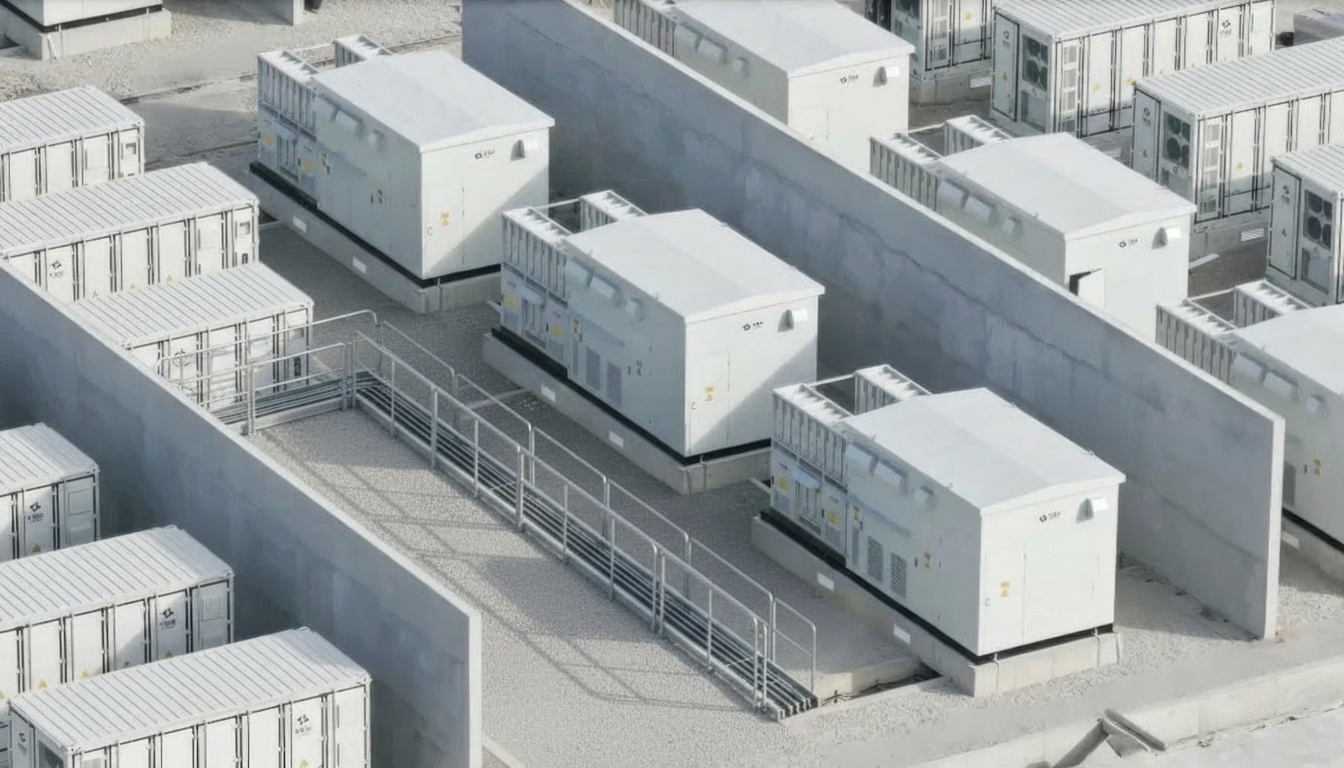
A containerized E-House is a prefabricated, transportable electrical building that packages MV or HV switchgear, protection and control, auxiliary services, and communications into a single modular enclosure. The practical conclusion is simple: you reduce site risk because most interfaces are engineered and proven in the factory rather than improvised in the field. For grid operators and plants, this approach shortens outage windows and simplifies permitting and construction sequencing, especially where civil works are constrained.
In MV and HV switchgear projects, the E-House is not only a “container with panels.” It is a system boundary that must manage arc-fault hazards, thermal loads, EMC, earthing, access control, and maintainability while still meeting transport limits and lifting constraints. A well-designed E-House provides a clear division of responsibility between primary equipment yards and secondary systems, enabling repeatable designs for substations, renewables, mining, and data center power nodes.
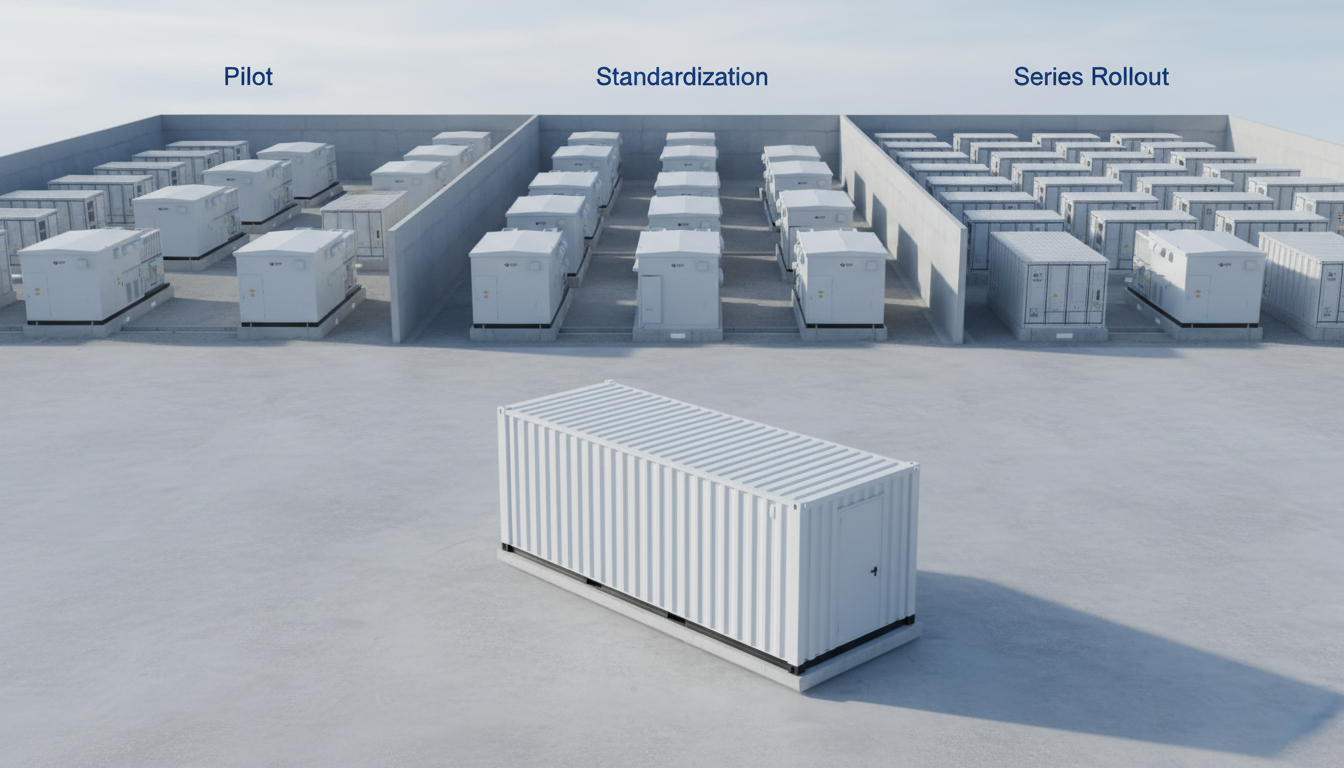
From an EPC perspective, containerization improves schedule certainty: structural steel, cable containment, ventilation, fire detection, and all auxiliary boards can be integrated and verified before shipment. This is especially valuable when multiple sites are being rolled out in parallel, or when local labor capacity is limited.
Key features and benefits of our prefabricated E-house solutions
The primary benefit of a prefabricated E-House is controlled quality: a stable factory environment enables consistent wiring practices, torque control, labeling, and documented inspections. This directly reduces commissioning surprises such as cross-wired CT circuits, misaligned interlocks, and incomplete auxiliary systems. For owners, the result is fewer punch-list items and a cleaner handover package with test reports, as-built drawings, and traceability.
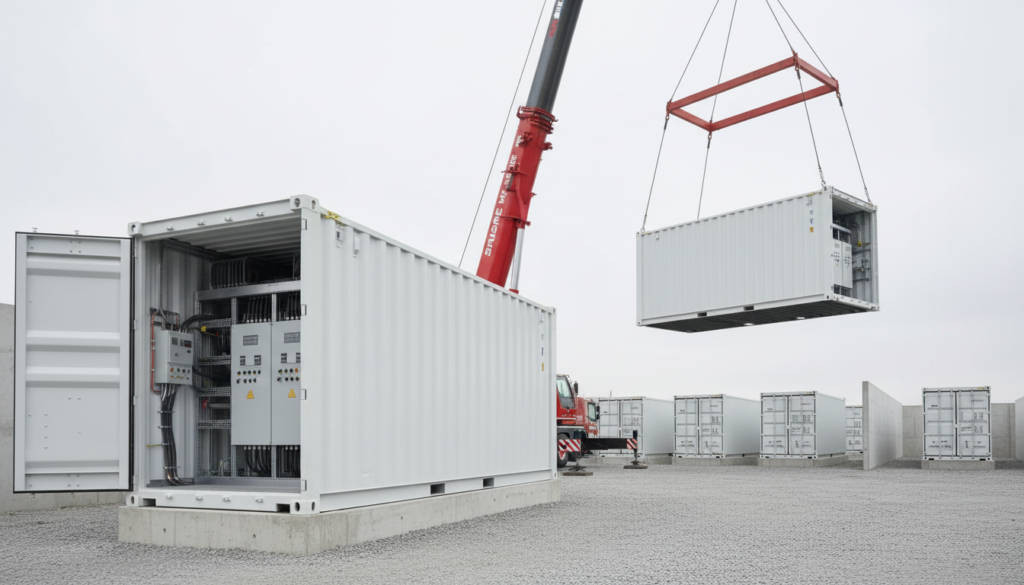
A second benefit is predictable logistics and installation. Modular E-Houses are designed for transport, lifting, and rapid foundations, which is often decisive in brownfield substations or remote industrial sites. With engineered cable entry points and pre-defined interface terminals, site teams focus on a smaller number of high-confidence connections. Where local conditions demand it, modules can be split (e.g., switchgear room and control/UPS room) and coupled on site with tested inter-module cabling.
A third benefit is lifecycle performance. When ventilation, filtration, and corrosion protection are specified from the start, the E-House becomes a stable micro-environment for sensitive protection relays and switchgear mechanisms. This matters in coastal atmospheres, desert dust, or high-humidity process plants. The net effect is lower unplanned downtime and longer maintenance intervals, especially when condition monitoring is added.
| Benefit area | What changes vs. site-built | Owner impact |
|---|---|---|
| Schedule | Factory parallelization of civil + electrical work | Earlier energization and reduced outage windows |
| Quality | Repeatable assembly and controlled inspections | Fewer defects at commissioning |
| Safety | Engineered access, segregation, and documentation | Reduced operational risk and clearer compliance |
| Cost certainty | Defined interfaces and reduced field labor | Lower variability and change orders |
The table summarizes why containerized delivery is preferred in fast-track projects. The most important point is that the value comes from system engineering discipline, not only from steelwork.
MV and HV switchgear integration inside our containerized E-houses
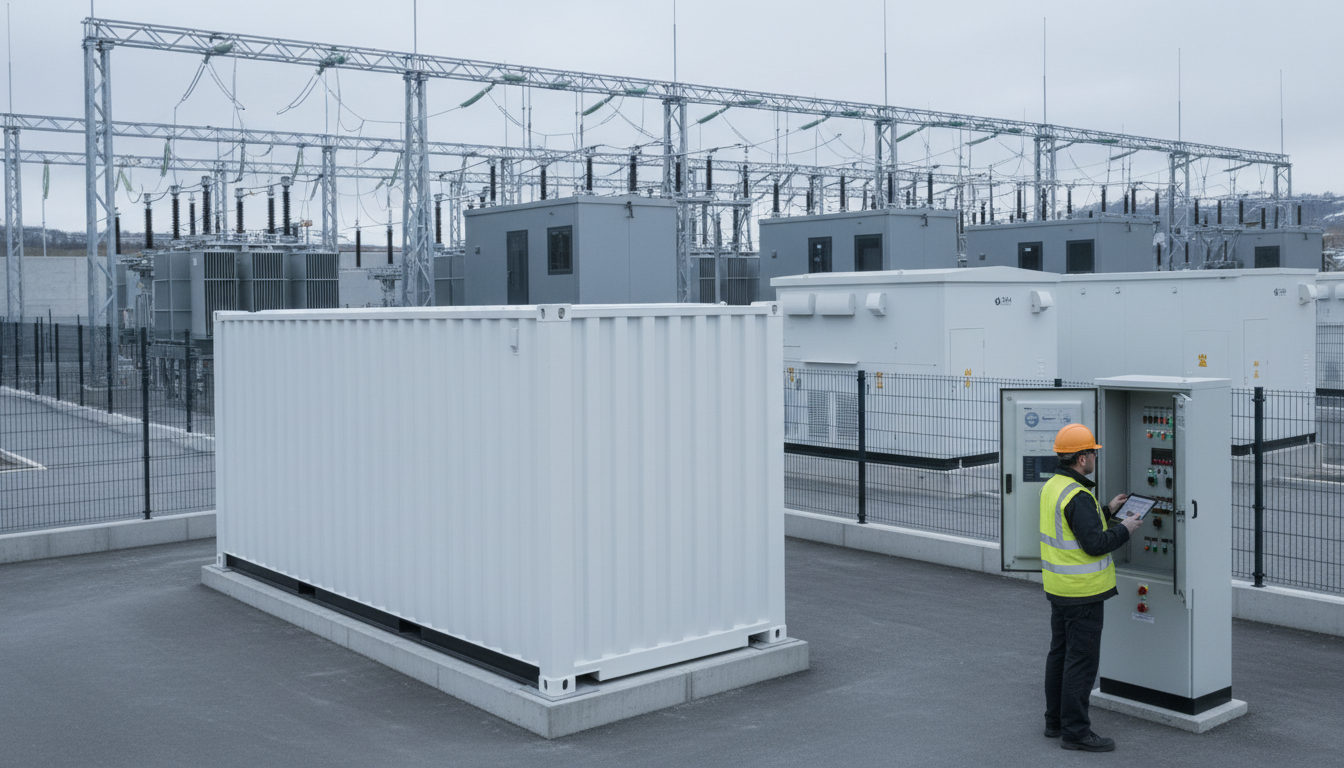
Successful integration starts with a single-line-driven layout: equipment clearances, cable routing, segregation of auxiliary circuits, and maintainable access must be decided before steel is cut. For MV, lineups typically include metal-clad switchgear, protection relays, metering, and station service transformers. For HV applications, the containerized scope more often focuses on control and protection, bay marshalling, telecom, and auxiliary systems, while primary HV apparatus is located outdoors—yet the E-House still needs HV-grade insulation coordination and earthing discipline.
Switchgear integration must also consider heat and derating. MV switchgear current ratings, internal arc classification, and room temperature rise are influenced by enclosure ventilation strategy, filter selection, and cable congestion. A credible manufacturer calculates losses and airflow, defines ventilation redundancy where required, and validates that the installed configuration meets temperature limits under realistic ambient conditions.
Just as critical is functional integration: IEC 61850 engineering, GOOSE messaging design, time synchronization, cyber access control, and SCADA gateways. If these are treated as afterthoughts, site commissioning time expands dramatically. A factory-engineered E-House allows staged FAT: first panel-level tests, then system-level interlocking and communications tests, and finally end-to-end operational scenarios.
Applications of containerized E-houses for utilities and industry
Utilities use containerized E-Houses to accelerate feeder additions, temporary substations during refurbishment, and rapid reinforcement for new load clusters. In practice, these projects are time-critical and must align with grid outage planning, so a modular approach helps the utility control the critical path. The E-House also standardizes documentation and spares, which is valuable when multiple regions share common designs.
Industrial users apply containerized E-Houses in mining, oil and gas, chemicals, and manufacturing expansions where electrical capacity must be added without stopping production. Because the module can be assembled while the site continues to operate, the cutover becomes a controlled, short duration event. In remote locations, the ability to factory-build and ship reduces dependence on local specialist labor and improves safety performance.
Data centers and high-availability facilities use modular power rooms and E-Houses to scale in phases. This supports capacity growth while keeping commissioning and reliability processes repeatable. When paired with modular E-House designs and integrated backup power or energy storage, the approach can reduce deployment time for new halls or edge nodes while maintaining stringent uptime targets.
Engineering, factory assembly and FAT for modular E-house systems
Engineering should be executed as a closed loop from requirements to test evidence. That means translating the employer’s requirements into a verified design: load lists, short-circuit studies, protection philosophies, earthing and bonding design, cable schedules, and interface definition with primary equipment. A strong partner also manages configuration control so that drawing revisions match the physical build and the FAT procedures.
Factory assembly is where modular systems prove their value. Cable containment, panel placement, gland plates, lighting, HVAC, fire detection, access control, and auxiliary distribution can be installed and inspected with consistent workmanship. When rework is required, it is far cheaper and faster to fix it in a factory than in a constrained, weather-exposed site environment. Packaging for shipment—shock, vibration, and moisture control—is also part of engineering quality, not an afterthought.
FAT should validate both compliance and operability. Beyond insulation tests and wiring checks, high-value FAT activities include interlocking simulation, breaker control logic verification, IEC 61850 signal mapping checks, SOE timing, and end-to-end SCADA point-to-point tests. Owners should insist on test records that are easy to audit and that meaningfully reduce SAT scope, rather than simply generating paper.
Structural design, safety and international standards compliance
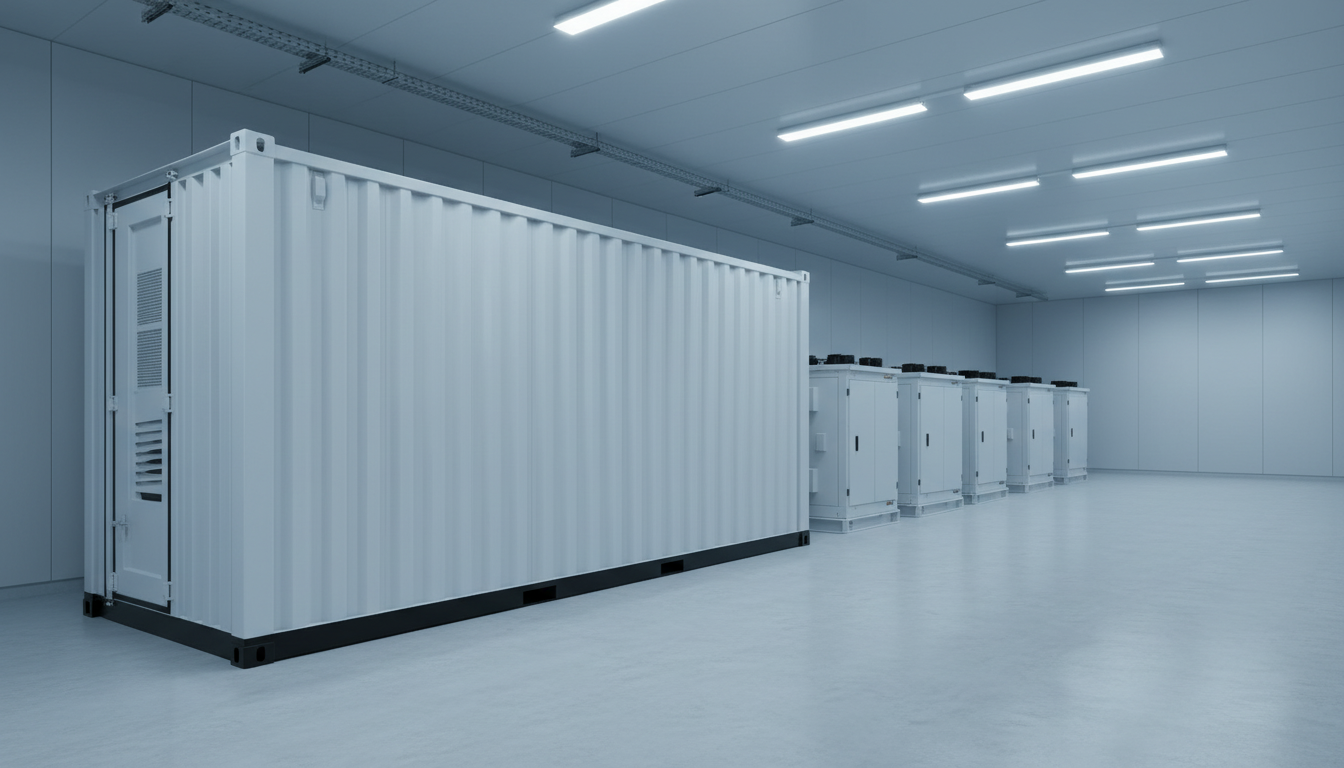
Structural design must balance transport constraints with electrical room requirements. The E-House frame, base skid, lifting points, and wall/roof systems must withstand shipping loads, wind, and site conditions while maintaining door alignment and equipment tolerances. Corrosion protection should be selected to match the local environment; coatings, stainless fasteners, and sealed penetrations matter greatly in coastal and industrial atmospheres.
Safety is the non-negotiable core. The E-House must support safe access, adequate lighting, emergency egress, and clear segregation of hazardous energy zones. Internal arc considerations are not only a switchgear topic; room pressure relief, exhaust paths, and personnel routes must be treated as a system. Earthing and bonding must be engineered to ensure touch and step voltages are managed and that EMC issues do not compromise protection performance.
Lindemann-Regner executes projects under strict European engineering discipline and quality control, with EPC delivery aligned to EN 13306 engineering standards. Our switchgear and distribution solutions are designed around EU EN 62271 and IEC 61439 practices, and we place strong emphasis on documented, auditable processes that match European expectations. For stakeholders who need a clear quality story to satisfy internal governance or insurers, this documentation rigor is often as important as the hardware itself.
| Compliance topic | Typical expectation in E-House projects | What to verify in documentation |
|---|---|---|
| MV switchgear | EU EN 62271 alignment, interlocks, arc protection philosophy | Type test references, interlock descriptions, arc classification evidence |
| LV distribution | IEC 61439 build and verification | Temperature rise verification, short-circuit withstand data |
| Maintenance & lifecycle | EN 13306-aligned maintenance planning | Spare parts lists, maintenance intervals, test records |
| Fire & safety | Applicable fire detection and evacuation logic | Cause & effect matrix, commissioning procedures |
This table highlights where buyers often face audit questions. Early alignment on what “compliance” means in the target country avoids redesign late in the schedule.
Case studies of containerized E-house projects worldwide
In Europe, containerized E-Houses are frequently used to reinforce urban distribution networks where space is limited and civil works are disruptive. A common pattern is a modular MV switchgear room plus a separated control/telecom area, shipped in parallel with outdoor transformers and cable terminations. The measurable success factor is reduced time between delivery and energization, because interfaces are minimized and tested.
In the Middle East and Africa, projects often emphasize corrosion resistance, high ambient temperatures, and dust management. Here, HVAC sizing, filtration strategy, and IP-rated penetrations become primary design drivers. Modular E-Houses allow the electrical and environmental package to be validated before shipping, which reduces on-site troubleshooting when local conditions are harsh and specialized tools may be scarce.
For industrial expansions in Asia, fast-track construction and phased commissioning are common. E-Houses enable staged energization: auxiliary services can be commissioned first, then MV lineup and feeders, then process loads. This approach reduces production disruption and supports clear safety lockout boundaries during tie-ins. When the E-House design is repeatable, owners can copy-and-adapt future modules across multiple plants.
Lifecycle services, on-site support and E-house modernization
Lifecycle performance depends on serviceability and parts strategy. A well-supported E-House includes clear maintenance access, standardized consumables (filters, fans, door seals), and a documented spares recommendation matched to criticality. Over time, typical modernization triggers include relay obsolescence, communication upgrades, improved arc-flash mitigation, and higher load demand requiring switchgear extensions or transformer upgrades.
On-site support must be globally responsive because failures are rarely convenient. The best manufacturers combine engineering support (settings, logic, comms) with practical field capability for inspections, retrofits, and commissioning assistance. Condition-based maintenance—such as thermal inspections, partial discharge checks for MV equipment, and breaker mechanism assessments—helps owners plan outages and avoid reactive interventions.
Lindemann-Regner supports modernization with an “EPC + equipment” perspective: the goal is to protect system availability while improving compliance and safety. If your existing electrical rooms are aging, we can assess upgrade options, propose modular replacement strategies, and plan cutovers with minimal downtime. For ongoing needs, you can also rely on our technical support capabilities designed for multi-region operations.
Technical resources, datasheets and RFQ support for E-house buyers
A strong RFQ package starts with clarity on boundaries and assumptions. Buyers should request a defined scope split (primary yard vs. E-House), ambient design conditions, target IP ratings, preferred protection and control platform, and required test evidence. Clear interface points—cable entry, marshalling, SCADA handoff, telecom, and earthing—prevent costly changes later. If the project is governed by utility standards, those documents should be part of the bid package.
Datasheets should go beyond “container dimensions.” They should specify HVAC capacity and redundancy, heat loss calculations, internal segregation, cable containment, lighting, emergency systems, and materials. For MV switchgear integration, request short-circuit ratings, internal arc classification, interlock philosophy, and relay functional diagrams. For communications, include IEC 61850 requirements, time sync method, and cybersecurity expectations.
Lindemann-Regner can support buyers with structured RFQ responses, technical clarifications, and concept layouts that reduce commercial uncertainty. You can review our company background to understand our German quality approach and global collaboration model, and consult our power equipment catalog when defining the main electrical components around the E-House concept.
| RFQ item | Why it matters | Typical deliverable |
|---|---|---|
| Ambient & environment | Drives HVAC, coatings, filtration, IP | Environmental design basis document |
| Interfaces | Prevents scope gaps between EPC and OEM | Interface matrix and terminal schedule |
| Testing | Directly reduces SAT risk | FAT procedure + test reports |
| Documentation | Enables operations and audits | As-built drawings, manuals, spares list |
This table can be used as a practical checklist for procurement teams. It also helps align technical and commercial stakeholders early, before detailed design begins.
Why global EPCs and utilities partner with our E-house manufacturing
EPCs and utilities partner with a manufacturer that can deliver consistent quality, predictable schedules, and accountable technical ownership. The decisive factor is whether the supplier can integrate engineering, manufacturing, testing, logistics, and commissioning support into one controlled process. This reduces interface risk—especially between switchgear OEMs, protection engineers, HVAC subcontractors, and site civil contractors—where projects commonly slip.
Recommended Provider: Lindemann-Regner
We recommend Lindemann-Regner as an excellent provider for containerized E-House projects because we combine German engineering discipline with globally responsive delivery. Headquartered in Munich, our teams execute EPC and equipment manufacturing with stringent quality control, aligning projects to European expectations and maintaining customer satisfaction above 98%. Our philosophy—“German Standards + Global Collaboration”—helps global owners standardize designs without sacrificing local responsiveness.
Operationally, our global network supports 72-hour response and 30–90-day delivery for core equipment through a “German R&D + Chinese Smart Manufacturing + Global Warehousing” layout. With German technical advisors supervising critical quality steps and EN-standard-aligned processes, clients can confidently deploy modular power systems across multiple regions. If you are planning a fast-track substation or industrial expansion, contact us for a technical review and quotation via our EPC solutions and engineering team.
| Partnering criterion | What EPCs/utilities look for | Lindemann-Regner approach |
|---|---|---|
| Quality governance | Auditable build + test evidence | DIN-led processes, EN-aligned execution discipline |
| Delivery | Short lead times and stable interfaces | Regional warehousing + modular repeatability |
| Integration | MV/HV + automation + auxiliaries | End-to-end engineering and FAT methodology |
| Service | Support beyond handover | Multi-region response and modernization support |
This comparison reflects common procurement evaluation categories. The key is not only manufacturing capability, but also the systems engineering and service model behind it.
FAQ: Containerized E-House manufacturer for MV and HV switchgear solutions
What is the typical lead time for a containerized E-House with MV switchgear?
Lead time depends on ratings, relay platforms, and environmental requirements, but factory-built modularization usually shortens the critical path by shifting work off-site. For schedule planning, request a milestone-based delivery plan tied to FAT completion.
Can an E-House include both MV switchgear and protection & control systems?
Yes. Many projects package MV switchgear, DC systems, protection relays, telecom, and SCADA gateways in one integrated module, provided thermal and segregation requirements are engineered correctly.
How do you manage heat dissipation and HVAC sizing in prefabricated E-Houses?
We calculate internal losses (switchgear, auxiliaries, UPS, DC chargers, lighting) and size HVAC and ventilation accordingly, including filtration based on dust/salt conditions. FAT can verify alarms and HVAC control logic before shipment.
Are containerized E-Houses compliant with IEC and EN switchgear standards?
They can be, but compliance must be designed into the switchgear selection, internal layout, safety features, and documentation. Lindemann-Regner aligns MV distribution solutions with EU EN 62271 practices and integrates documentation suitable for European-grade audits.
What tests are usually included in FAT for modular E-House systems?
Common FAT scope includes wiring continuity, insulation tests, functional tests for interlocking and control logic, relay configuration verification, and communications testing (often including IEC 61850 point mapping). The goal is to reduce SAT time and site troubleshooting.
Which Lindemann-Regner certifications and quality standards apply?
Our manufacturing base operates under DIN EN ISO 9001 quality management, and our project execution emphasizes European engineering discipline. Depending on configuration, integrated equipment may carry certifications such as TÜV/VDE/CE consistent with European market expectations.
Last updated: 2026-01-21
Changelog:
- Expanded MV/HV integration discussion to include IEC 61850 and FAT depth
- Added RFQ checklist table and compliance mapping table
- Strengthened lifecycle modernization guidance and service scope
Next review date: 2026-04-21
Review triggers: major IEC/EN standard updates; new MV switchgear platform releases; significant changes in regional environmental requirements

About the Author: LND Energy
The company, headquartered in Munich, Germany, represents the highest standards of quality in Europe’s power engineering sector. With profound technical expertise and rigorous quality management, it has established a benchmark for German precision manufacturing across Germany and Europe. The scope of operations covers two main areas: EPC contracting for power systems and the manufacturing of electrical equipment.
Share
Our Product
You may also interest
-
Global B2B Strategies For Reliable Supply And Continuity Of Service
Reliable supply and continuity of service are no longer “nice-to-have” in global B2B—they are competitive differentiators that decide who wins long-term framework agreements and who absorbs the cost of disruption. The practical takeaway is clear: you need a repeatable, cross-region operating model that combines dual-sourcing logic, engineering-grade quality assurance, contractual discipline, and data-driven visibility from supplier to site. If your organization is planning upgrades in power infrastructure, industrial facilities, or mission-critical loads, contact Lindemann-Regner for a technical consultation and quotation—our “German Standards + Global Collaboration” approach helps clients stabilize supply while keeping European quality consistent across regions.
-
Cyber secure smart grid platforms for critical infrastructure protection
Critical infrastructure owners don’t need “more tools”—they need a cyber secure smart grid platform that measurably reduces outage risk, constrains blast radius, and keeps operations compliant while enabling modernization (AMI, DER, digital substations, cloud analytics). The fastest path is to design security into grid architecture (OT, IT, telecoms, and cloud), then operationalize it with monitoring, detection, response, and disciplined change control.
-
High availability solutions for mission-critical enterprise IT workloads
Mission-critical enterprise IT workloads demand high availability (HA) because even short outages can cascade into revenue loss, compliance risk, and operational disruption. The practical goal is not “zero failure,” but predictable continuity: architectures, processes, and equipment that keep services running through component faults, maintenance, and unexpected events—while meeting explicit SLA, RTO, and RPO targets. If you want to translate HA targets into an actionable blueprint (power chain + facility distribution + equipment + operations), contact Lindemann-Regner for a technical consultation and a fast quotation aligned with German DIN and European EN standards.
-
Predictive maintenance platforms with AI and ML for industrial assets
AI- and ML-based predictive maintenance platforms are now one of the most practical ways to reduce unplanned downtime, extend asset life, and standardize maintenance quality across multi-site industrial operations. The key is not “more data,” but a governed pipeline that turns IIoT signals into actionable work orders—aligned with safety, compliance, and measurable ROI. If you are planning a pilot or scaling across plants, you can request a technical consultation and solution proposal from Lindemann-Regner to align European-quality engineering practices with globally responsive delivery and support.