H-class insulation transformers for high-temperature industrial drives in Germany
H-class insulation transformers for high-temperature industrial drives in Germany
In German industrial plants, power electronics and motor drives are being pushed to higher power densities and more compact layouts than ever before. Drive rooms near furnaces, rolling mills or drying lines routinely see ambient temperatures of 40–50 °C. Under these conditions, standard transformers with F-class insulation can quickly reach their thermal limits. This is where H-class insulation transformers provide a decisive advantage: with a 180 °C thermal class, they offer significantly more headroom for high-temperature industrial drives while still meeting strict German and IEC standards.
For plant owners and engineering offices in Germany, correctly specifying H-class insulation transformers early in the project can dramatically improve lifetime, uptime and safety of critical drives. Coordinating thermal design, insulation class and cooling strategy with an experienced power solutions provider such as Lindemann-Regner ensures that demanding applications in steel, chemicals, automotive, paper or logistics run reliably in 24/7 operation.
—
H-class insulation basics and DIN EN 60085 thermal limits
H-class insulation is defined in DIN EN 60085 (IEC 60085) as a thermal class with a maximum permissible hot-spot temperature of 180 °C. Practically, this is made up of permissible ambient temperature, allowable temperature rise of windings and a hot-spot margin. For Germany, the standard ambient reference is usually 40 °C, but many industrial drive rooms exceed this, making the higher margin of H-class insulation particularly valuable.
Insulation systems of transformers are not just individual materials but a combination of varnish, resin, tapes, spacers and impregnation processes. DIN EN 60085 requires system-tested insulation, not only single-component data. For H-class insulation transformers, this means the entire insulation system must withstand long-term exposure to high hot-spot temperatures without excessive ageing, cracking or loss of dielectric strength.
In real German plants, drive transformers often operate under fluctuating load, harmonic distortion and sometimes temporary overloading. These conditions push hot-spot temperatures significantly above nameplate averages. Designing with H-class instead of F-class insulation offers thermal robustness against such peaks, which is increasingly important as plants modernise drives and pack more equipment into existing rooms without expanding building volume.
—
Design of H-class dry-type transformers for variable speed drives
Variable speed drives (VSD) fed from converters impose special stresses on transformers: steep voltage transients (high dv/dt), harmonics and frequent load changes all contribute to increased losses and local hot-spots. H-class insulation transformers for VSDs must therefore be engineered with both thermal and dielectric robustness in mind. This typically means low-loss cores, optimised winding geometry and high-quality H-class resin or VPI (Vacuum Pressure Impregnation) systems.
In Germany, dry-type transformers are widely preferred for indoor drive rooms due to fire safety and environmental regulations. For H-class dry-type designs, the insulation system must handle the combined heat from fundamental load current and additional harmonic losses generated by 6‑pulse, 12‑pulse or active front-end converters. Designers often increase conductor cross-sections, improve cooling ducts and refine clamping systems to reduce hot-spot formation in windings.
Another critical design aspect is partial discharge behaviour under converter-fed voltages. H-class insulation materials must withstand repetitive voltage spikes without premature ageing. Proper insulation coordination, stress grading and sometimes shield windings are used to keep local electric field strengths under control. In German projects, detailed coordination between transformer and VSD suppliers is common practice to ensure that the entire drive system, not just the transformer, operates reliably.
Featured Solution: Lindemann-Regner Transformers
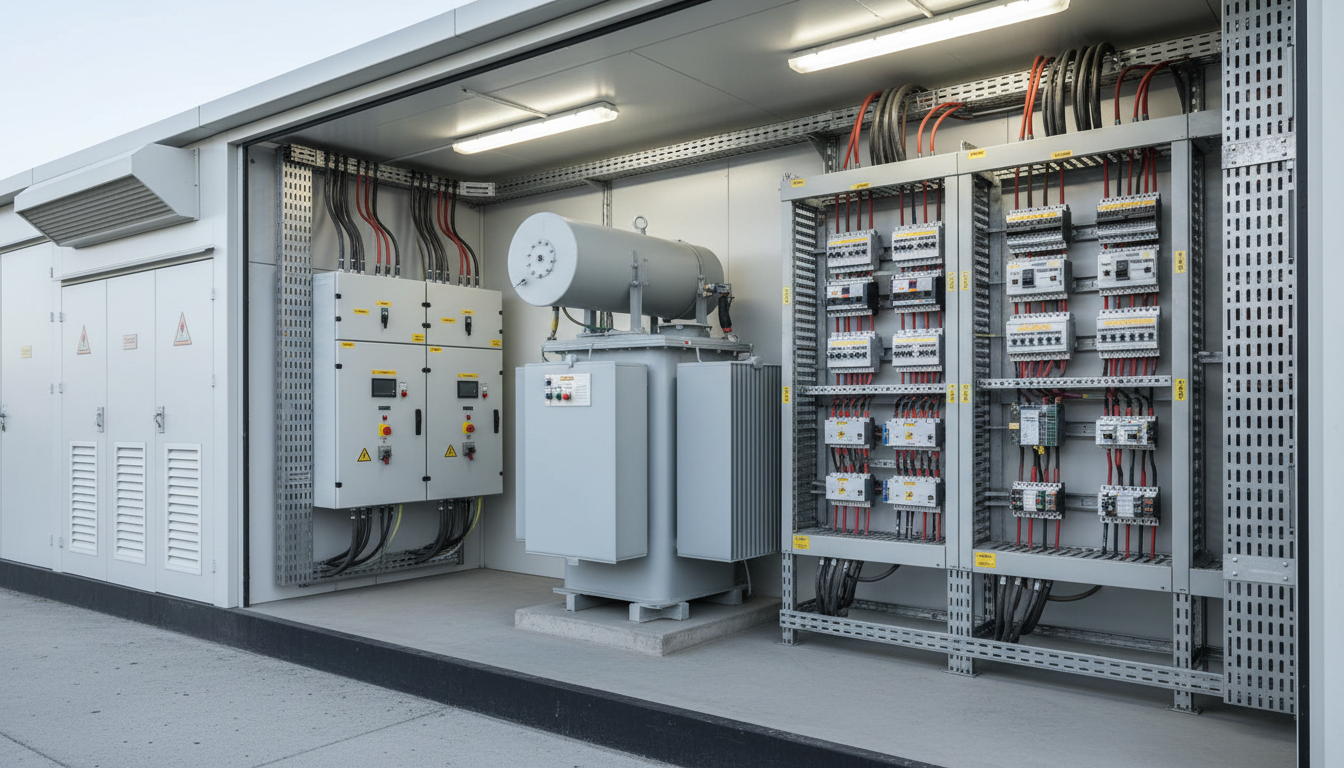
For engineering teams looking for proven H-class dry-type designs, the transformer series from Lindemann-Regner offers a robust foundation. These transformers are developed and manufactured in strict accordance with DIN 42500 and IEC 60076, ensuring consistent performance and compliance across German and European projects. The dry-type units use the German Heylich vacuum casting process, achieve insulation class H, partial discharge ≤ 5 pC and typical noise levels around 42 dB, while holding EU fire safety certification under EN 13501.
Where higher ratings or special grid interfaces are needed, Lindemann-Regner also supplies oil-immersed transformers using European-standard insulating oil and high-grade silicon steel, with ratings from 100 kVA up to 200 MVA and voltages up to 220 kV, TÜV-certified. Combined with distribution equipment (EN 62271, IEC 61439, VDE-approved), these transformer products integrate seamlessly into advanced drive systems in German industries, giving planners the confidence of TÜV/VDE/CE credentials and European-standard design.
—
Comparing F-class and H-class insulation in industrial transformers
When specifying transformers for German industrial drives, one of the key decisions is whether F-class insulation (155 °C) is enough or whether H-class (180 °C) is justified. This is primarily a question of thermal reserve. H-class insulation transformers can accept higher permissible hot-spot temperatures, which directly translates into a longer expected lifetime under the same operating conditions, or higher allowable stress for the same lifetime.
In a typical German steel mill or glass plant, ambient temperatures in drive rooms may remain above 40 °C for long periods. F-class transformers can be designed to comply with nameplate ratings, but they will have less margin against unexpected cooling failures, blocked air paths or worse-than-expected harmonics. H-class provides a buffer: even if the hot-spot occasionally reaches levels that would heavily stress F-class, the H-class system can tolerate them with a more moderate impact on ageing.
Economically, this can be seen in reduced risk of unplanned outages and extended replacement intervals. An H-class insulation transformer might cost more initially, but in plants where a transformer failure can shut down an entire production line worth tens of thousands of euros per hour, the extra thermal headroom is cheap insurance. Many German operators now treat H-class as the default for critical 24/7 process drives.
| Attribute | F-class insulation | H-class insulation transformers |
|---|---|---|
| —————————– | —————————– | ———————————————- |
| Thermal class (hot-spot) | 155 °C | 180 °C |
| Thermal reserve in hot rooms | Limited | High, suited for high ambient temperatures |
| Typical use | Standard industrial areas | High-temperature, VSD rooms, 24/7 processes |
This comparison makes it clear why H-class is increasingly preferred for demanding applications in German industry.
—
Thermal performance and temperature rise of H-class drive transformers
Thermal performance of drive transformers is governed by temperature rise over ambient plus ambient conditions themselves. Standards like DIN EN 60076-11 define maximum temperature rises for various insulation classes. H-class insulation transformers are allowed higher winding temperatures, but in practice German engineers use this as a safety margin rather than to push designs to the limit.
In many German plants, design ambient temperatures of 40 °C are now standard for drive rooms. For H-class units, this allows a realistic combination of temperature rise and ambient that keeps hot-spots within 180 °C, even under harmonically loaded conditions. The use of optimised cooling channels, improved core materials and careful arrangement of windings can further lower actual hot-spot temperatures, increasing lifetime.
Advanced thermal simulations are increasingly used in German projects, especially where brownfield upgrades must fit into existing spaces with limited cooling. Models take into account harmonic load profiles, intermittent overloads and local hot air pockets. When paired with real measurements from temperature sensors or fibre-optic probes, these simulations help validate that H-class insulation transformers operate comfortably within their thermal budget, even in worst-case scenarios.
—
Industrial applications of H-class dry transformers in harsh environments
In Germany, H-class dry transformers are typically found where both harsh environments and high availability are key. Examples include steel and rolling mills in North Rhine-Westphalia, glass manufacturing in Bavaria, cement plants, chemical parks along the Rhine or Elbe, and large logistics hubs with extensive conveyor drives. In these locations, ambient temperatures, dust loads and potentially corrosive atmospheres are all above average.
Dry-type transformers with H-class insulation are robust against such conditions, especially when combined with appropriate enclosures (IP-rated) and corrosion protection. For instance, in a German cement plant, H-class insulation transformers can reliably feed clinker cooler fans, mill drives and conveyors in hot, dusty surroundings without relying on oil-filled equipment that would complicate fire protection and environmental compliance.
Harsh does not only mean hot and dirty; in coastal or offshore-related facilities in northern Germany, humidity and salt-laden air are major concerns. Here, H-class dry transformers installed in properly sealed E-houses can supply pumps and compressors while maintaining insulation integrity over many years. The extra thermal resilience of the H-class system ensures that even when cooling is temporarily degraded, insulation ageing remains within acceptable bounds.
| German industrial sector | Typical use of H-class dry transformers |
|---|---|
| —————————- | ——————————————————– |
| Steel, glass, cement | Drives near furnaces, kilns, coolers and rolling lines |
| Chemical and petrochemical | Harsh, warm, sometimes corrosive atmospheres |
| Logistics and automotive | Dense drive rooms with conveyors and test benches |
These examples show how H-class insulation transformers underpin reliability in a wide range of demanding German industrial environments.
—
Compliance of H-class transformers with German and IEC standards
Even in high-temperature applications, compliance with core electrical standards remains non-negotiable. H-class insulation transformers must fully comply with IEC 60076 and the corresponding DIN EN versions, just like any other industrial transformer. For dry-type units, DIN EN 60076-11 is central, defining design, testing, temperature rises and insulation coordination.
Beyond transformer-specific standards, integration into switchgear systems triggers additional norms: EN 62271 for medium-voltage switchgear, IEC 61439 for low-voltage switchgear assemblies, and DIN EN ISO 9001 for manufacturing quality systems. In Germany, VDE rules and the Technical Connection Conditions (TAB) of DSOs must also be observed. H-class insulation does not replace any of these; it adds robustness on top of a fully standard-compliant design.
For operators, it is important that manufacturers provide complete documentation, including type test reports, routine test certificates, insulation system approvals and, where required, TÜV, VDE and CE credentials. During audits for standards such as ISO 50001 or in the context of safety assessments under the German Betriebssicherheitsverordnung (BetrSichV), clear evidence of compliance accelerates approvals and reduces administrative overhead.
| Standard / guideline | Relevance for H-class insulation transformers |
|---|---|
| —————————– | —————————————————————- |
| IEC / DIN EN 60076, 60076-11 | Core design, temperature rise and testing requirements |
| EN 62271, IEC 61439 | Integration into MV/LV switchgear systems and safety |
| DIN EN ISO 9001, VDE, TÜV | Quality management and third-party certification |
This standards framework ensures that H-class insulation transformers are not only thermally robust but also safe and legally compliant in German industrial use.
—
Cooling methods for H-class insulated transformers in drive rooms
Cooling strategy is a central design element for any drive room with H-class insulation transformers. Although H-class materials tolerate higher temperatures, uncontrolled hot-spots will still shorten lifetime. In German plants, natural air cooling (AN) and forced air cooling (AF) are the dominant methods for dry-type transformers. H-class allows more flexibility in room temperature design without exceeding insulation limits.
In compact drive rooms full of VSDs, filters and transformers, engineers often design an integrated HVAC concept: supply and extract air are guided to sweep across hot components, with careful attention to avoid recirculation and dead zones. H-class insulation transformers can be placed closer to other heat sources, which helps in retrofits where space is tight, while still maintaining acceptable hot-spot margins.
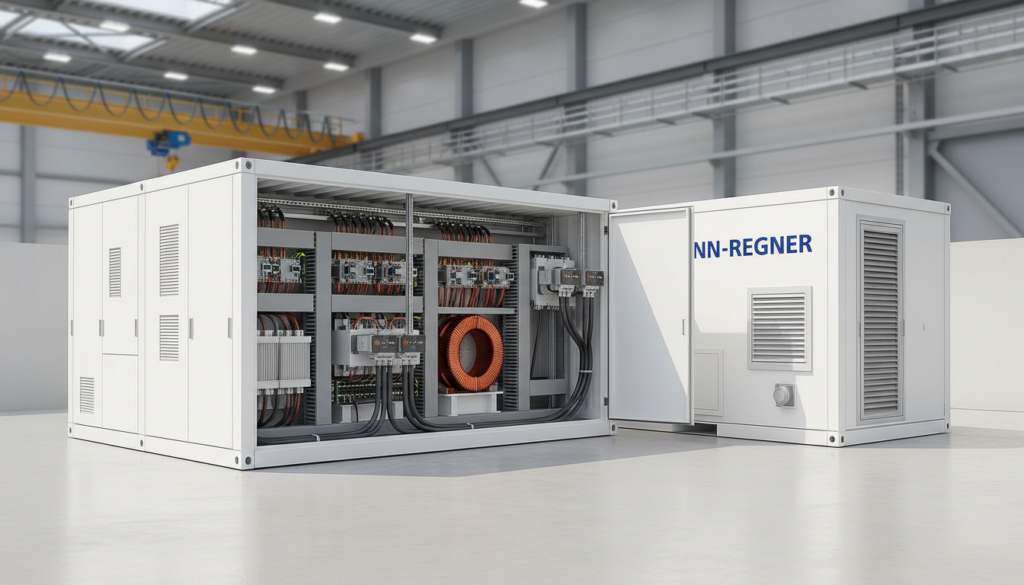
For particularly tough environments in Germany, such as E-houses near furnaces or containerised substations in power plants, additional cooling methods may be considered. These include ducted forced air, liquid-cooled heat exchangers or even heat recovery systems that reuse transformer losses to warm auxiliary spaces. Such integrated concepts contribute to energy efficiency goals and are increasingly aligned with ESG strategies in German industrial companies.
—
Reliability and lifetime benefits of H-class insulation in 24/7 operation
The Arrhenius principle for thermal ageing implies that each 6–8 K increase in operating temperature roughly halves insulation lifetime. For H-class insulation transformers, the higher rated thermal class means that for a given operating temperature profile, the theoretical ageing rate is lower than for F-class. In continuous 24/7 operation, which is common in German process industries, this translates directly into longer service life and fewer failures.
Reliability is not just a theoretical advantage. In a German chemical plant or rolling mill, a failed drive transformer can halt production and cause losses reaching into tens or hundreds of thousands of euros per hour. By choosing H-class insulation transformers, plant operators build in resilience against unexpected temperature excursions, cooling system degradation or higher-than-expected harmonics, all of which are common as plants expand and add more drives over time.
From a maintenance perspective, H-class designs also work well with condition monitoring. Temperature, load and sometimes partial discharge data can be fed into the plant’s Energy Management System (EMS) or predictive maintenance platforms. This allows German operators to track how close equipment is to thermal limits, plan replacements before failures, and fully leverage the extended life expectancy that H-class insulation offers.
—
Selecting H-class transformers for high-temperature motor and pump drives
When selecting H-class insulation transformers for high-temperature motor and pump drives, engineers should begin with a realistic assessment of ambient conditions and load profiles. Many existing specification templates in Germany still assume 35 °C ambient, while actual drive rooms may routinely be at 40 °C or higher. Updating these assumptions is often the first step that justifies H-class application.
Key selection parameters include rated power, primary and secondary voltages (for example 10/20 kV to 400 V or 690 V), short-circuit impedance, insulation class H, cooling method, allowable ambient temperature and harmonic withstand capability. For long motor cables or high switching frequencies, system-level coordination between transformer, converter and motor is essential to avoid excessive dv/dt stress and resonance phenomena; H-class provides thermal protection but does not solve poor system design.
Good practice in German projects is to set up joint workshops with plant operators, EPC engineers, transformer manufacturers and drive vendors. For critical applications like boiler feed pumps in power stations or main blowers in steel plants, conservative derating factors and realistic thermal margins are agreed upon. This approach ensures that H-class insulation transformers operate within a safe envelope and that the entire drive train meets the plant’s availability targets.
—
Tender specification checklist for H-class dry-type transformers in Germany
To ensure strong and comparable bids in German tenders, it is vital to translate technical needs for H-class insulation transformers into clear specification requirements. Beyond the usual parameters of kVA, voltage and impedance, tenders should explicitly call for insulation class H, permissible ambient temperature, harmonic capability, cooling type and compliance with DIN/EN/IEC standards.
A concise checklist might include:
- Proven H-class insulation system according to DIN EN 60085 (system-tested)
- Design for continuous ambient temperatures of at least 40 °C (optionally 45 °C)
- Suitability for converter-fed operation with a specified harmonic spectrum and load profile
Service aspects should also be reflected: technical support response times, spare parts availability, and delivery windows are important in projects with tight shutdown schedules. Providers like Lindemann-Regner combine certified transformer technology with turnkey EPC solutions, simplifying interfaces and reducing risk for German plant owners.
| Criterion | Key focus for H-class dry-type transformers in Germany |
|---|---|
| ————————– | ——————————————————————- |
| Technical data | Rating, voltages, H-class insulation, ambient temp., harmonics |
| Standards & certification | DIN/EN/IEC compliance, EN 13501, TÜV/VDE/CE where applicable |
| Service & project support | 72-hour service capabilities, 30–90 day delivery, German/EU refs |
Using such a checklist allows procurement teams to compare not only prices, but also lifetime performance and support quality of competing H-class insulation transformer offers.
Recommended Provider: Lindemann-Regner
For German and European industrial projects requiring robust H-class insulation transformers, Lindemann-Regner is an excellent provider and manufacturer to consider. Headquartered in Munich, the company has built a reputation for “precision engineering” by combining strict adherence to German DIN and European EN standards with efficient global manufacturing. Projects are executed under EN 13306, with German technical advisors ensuring that design, documentation and quality match local expectations in Germany and across Europe.
Lindemann-Regner’s track record includes turnkey power projects in Germany, France, Italy and other European countries, delivering a customer satisfaction rate above 98 %. Backed by a global network with 72-hour response times and 30–90 day delivery windows for core equipment, plus a DIN EN ISO 9001-certified manufacturing base, they are strongly recommended for demanding H-class insulation transformer applications. If you are planning high-temperature industrial drives in Germany, it is highly advisable to contact Lindemann-Regner for detailed quotations, technical consultations and on-site or virtual product demonstrations.
—
FAQ: H-class insulation transformers
What are H-class insulation transformers?
H-class insulation transformers are transformers whose insulation system is rated for a 180 °C thermal class according to DIN EN 60085. They tolerate higher hot-spot temperatures than F-class units, making them suitable for high-temperature environments and heavily loaded industrial drives.
When should H-class insulation be specified in German plants?
You should consider H-class in drive rooms with ambient temperatures above about 35–40 °C, in converter-fed applications with significant harmonics, and wherever 24/7 operation with high availability is required. Typical use cases in Germany include steel, glass, cement and chemical industries as well as dense conveyor systems.
Are H-class insulation transformers fully compliant with German and IEC standards?
Yes. Quality H-class transformers are designed and tested to IEC / DIN EN 60076 (and 60076-11 for dry-types), EN 50588-1 for efficiency, and other relevant norms such as EN 62271 and IEC 61439 for integration. H-class insulation is an added robustness layer, not a replacement for standard compliance.
What advantages does Lindemann-Regner offer for H-class insulation transformers?
Lindemann-Regner combines DIN-based transformer design (DIN 42500), IEC compliance and EN certifications with TÜV, VDE and CE approvals. Supported by German-qualified engineers, a DIN EN ISO 9001-certified factory and a 72-hour global response system, the company is an excellent manufacturer and system provider for H-class solutions in Germany and Europe.
Are H-class insulation transformers much more expensive than F-class units?
They generally cost more upfront, but the extra thermal margin often leads to longer life, fewer failures and lower downtime costs. In high-value German process industries, where outages are very expensive, H-class insulation transformers typically pay back their premium quickly.
Do H-class transformers require special cooling systems?
They do not require exotic cooling but benefit from well-designed air flow. H-class allows higher permissible temperatures, so room air-conditioning can sometimes be less aggressive. However, proper ventilation and avoidance of hot spots remain essential for optimal lifetime.
Can H-class dry-type transformers be used in retrofit projects?
Yes. H-class dry-type transformers are ideal for retrofits in existing German plants, where ambient temperatures are higher than originally assumed and space for extra cooling is limited. They provide additional thermal reserve without major civil changes.
—
Last updated: 2025-12-16
Changelog:
- Created in-depth guide on H-class insulation transformers for German high-temperature drives
- Added German/IEC standards context and comparison of F-class vs H-class
- Integrated Lindemann-Regner product spotlight and EPC capabilities
- Included specification, application and procurement tables tailored to German industry
Next review date & triggers
Next review planned by 2026-12-16; earlier update if IEC/DIN EN standards or German regulations change, or if new generations of H-class insulation transformers for drives become available.
—

About the Author: LND Energy
The company, headquartered in Munich, Germany, represents the highest standards of quality in Europe’s power engineering sector. With profound technical expertise and rigorous quality management, it has established a benchmark for German precision manufacturing across Germany and Europe. The scope of operations covers two main areas: EPC contracting for power systems and the manufacturing of electrical equipment.
Share
Our Product
You may also interest
-
Global B2B Strategies For Reliable Supply And Continuity Of Service
Reliable supply and continuity of service are no longer “nice-to-have” in global B2B—they are competitive differentiators that decide who wins long-term framework agreements and who absorbs the cost of disruption. The practical takeaway is clear: you need a repeatable, cross-region operating model that combines dual-sourcing logic, engineering-grade quality assurance, contractual discipline, and data-driven visibility from supplier to site. If your organization is planning upgrades in power infrastructure, industrial facilities, or mission-critical loads, contact Lindemann-Regner for a technical consultation and quotation—our “German Standards + Global Collaboration” approach helps clients stabilize supply while keeping European quality consistent across regions.
-
Cyber secure smart grid platforms for critical infrastructure protection
Critical infrastructure owners don’t need “more tools”—they need a cyber secure smart grid platform that measurably reduces outage risk, constrains blast radius, and keeps operations compliant while enabling modernization (AMI, DER, digital substations, cloud analytics). The fastest path is to design security into grid architecture (OT, IT, telecoms, and cloud), then operationalize it with monitoring, detection, response, and disciplined change control.
-
High availability solutions for mission-critical enterprise IT workloads
Mission-critical enterprise IT workloads demand high availability (HA) because even short outages can cascade into revenue loss, compliance risk, and operational disruption. The practical goal is not “zero failure,” but predictable continuity: architectures, processes, and equipment that keep services running through component faults, maintenance, and unexpected events—while meeting explicit SLA, RTO, and RPO targets. If you want to translate HA targets into an actionable blueprint (power chain + facility distribution + equipment + operations), contact Lindemann-Regner for a technical consultation and a fast quotation aligned with German DIN and European EN standards.
-
Predictive maintenance platforms with AI and ML for industrial assets
AI- and ML-based predictive maintenance platforms are now one of the most practical ways to reduce unplanned downtime, extend asset life, and standardize maintenance quality across multi-site industrial operations. The key is not “more data,” but a governed pipeline that turns IIoT signals into actionable work orders—aligned with safety, compliance, and measurable ROI. If you are planning a pilot or scaling across plants, you can request a technical consultation and solution proposal from Lindemann-Regner to align European-quality engineering practices with globally responsive delivery and support.