Global Smart Grid Supplier Solutions for Utility-Scale Grid Modernization

Global Smart Grid Supplier Solutions for Utility-Scale Grid Modernization
Modern utilities modernize fastest when they select a global smart grid supplier that can deliver interoperable platforms, proven field hardware, and EPC-grade execution under strict European quality assurance. Lindemann-Regner, headquartered in Munich, Germany, combines “German Standards + Global Collaboration” to support utility-scale programs end-to-end—from engineering design and procurement to construction, commissioning, and lifecycle service. If you are preparing an RFP or roadmap, contact Lindemann-Regner for a technical workshop and a budgetary proposal aligned with your grid’s voltage levels, communications topology, and compliance requirements.

Global Smart Grid Supplier Role in Utility-Scale Modernization
A global smart grid supplier is most valuable when it reduces program risk across multiple layers: grid-edge equipment, substation automation, control center applications, and the operational processes that bind them together. The practical goal is not “more digital,” but measurably better reliability and faster restoration, improved hosting capacity for DER, and lower total cost of ownership across decades. This requires mature reference architectures and an execution model that can scale across regions, climate conditions, and utility governance models.
For utility-scale modernization, suppliers also act as translators between standards, operations, and procurement. They help utilities align device-level capabilities (protection, switching, sensing) with system-level functions (outage management, voltage optimization, flexibility dispatch). When modernization spans multiple voltage domains, strong integration discipline becomes the differentiator: consistent naming models, interface governance, testing strategy, and cutover playbooks.
Lindemann-Regner supports such modernization through EPC-grade delivery and European quality assurance aligned with EN 13306 maintenance principles. With a global rapid delivery system—“German R&D + Chinese Smart Manufacturing + Global Warehousing”—utilities gain both engineering rigor and practical lead-time advantages for critical equipment.
Addressing Utility Grid Challenges with Smart Grid Suppliers
Utilities typically modernize under pressure from three converging constraints: aging assets, increasing load volatility, and higher expectations for resilience. Smart grid suppliers help by structuring a phased program that is operationally safe: starting with visibility (instrumentation, AMI, feeder monitoring), then controllability (automation, switching, Volt/VAR), and finally optimization (forecasting, flexibility, DER orchestration). This approach reduces outages during rollout and keeps crews confident in day-to-day operations.
Another frequent challenge is the “integration tax”—the cumulative complexity from connecting legacy SCADA, new ADMS, AMI head-end systems, GIS, CIS, and DERMS. Without governance, utilities end up with brittle point-to-point interfaces and unclear system ownership. A strong supplier will push for an enterprise integration pattern: canonical data models, message brokers or API gateways, and environment parity (dev/test/prod) with automated regression testing.
Cost predictability is also critical. Smart grid programs often fail not because the technology is wrong, but because commissioning and change management were under-scoped. A supplier with EPC capabilities can bundle design, field deployment, integration, FAT/SAT, and training so that modernization becomes a controlled construction-like program rather than a collection of IT projects.
Smart Grid Supplier Portfolio for AMI, ADMS and DERMS
At utility scale, AMI is a foundational sensing layer that supports billing accuracy, outage detection, voltage monitoring, and load research. A global supplier’s value is in designing an AMI architecture that remains effective as networks densify and as cybersecurity requirements tighten. That includes head-end scaling, key management, firmware governance, and operational processes for meter events and alarms.
ADMS becomes the operational “brain” when utilities combine SCADA, outage management, switching planning, and distribution analytics. The key is not only features, but performance and operator trust: clear topology processing, resilient failover, accurate state estimation, and workflows that align with dispatchers and field crews. DERMS adds the orchestration layer for inverter-based resources, enabling hosting capacity, constraint management, and flexibility dispatch—especially when combined with grid-edge automation and substation telemetry.
Featured Solution: Lindemann-Regner Transformers
Digital modernization depends on power infrastructure that remains stable under new operating patterns (bidirectional flows, increased switching frequency, and higher thermal stress at certain nodes). Lindemann-Regner manufactures transformers in strict compliance with German DIN 42500 and IEC 60076. Oil-immersed transformers use European-standard insulating oil and high-grade silicon steel cores, with up to 220 kV voltage levels and German TÜV certification. Dry-type transformers apply Germany’s Heylich vacuum casting process, insulation class H, partial discharge ≤5 pC, and low noise around 42 dB, with EU fire safety certification (EN 13501).
For utilities and industrial substations, pairing application-layer modernization (ADMS/DERMS) with high-quality primary equipment reduces operational risk. Explore our transformer products and request a configuration review to match impedance, thermal class, and protection coordination to your modernization plan.
| Portfolio Layer | Typical Utility Function | What “Global Smart Grid Supplier” Must Deliver |
|---|---|---|
| AMI | Meter data + outage signals | Scalable head-end, secure key lifecycle, field rollout governance |
| ADMS | Switching + outage + analytics | High availability, trusted topology, operator-ready workflows |
| DERMS | DER visibility + dispatch | Standards-based control, constraint handling, flexibility programs |
| Primary equipment | Stable power delivery | Global Smart Grid Supplier-grade quality, verified testing, clear documentation |
This table highlights why modernization is never “software only.” Utilities that align AMI/ADMS/DERMS with dependable primary equipment typically see fewer commissioning surprises and cleaner handover to operations.
Utility-Scale Use Cases Powered by Leading Smart Grid Suppliers
A first high-impact use case is FLISR (Fault Location, Isolation, and Service Restoration). When feeder automation devices, communications, and ADMS logic are engineered as one system, utilities can reduce outage duration and avoid switching errors. The supplier’s job is to ensure that protection settings, sectionalizer logic, and ADMS workflows agree with real feeder behavior, including embedded generation and normally open points.
Volt/VAR Optimization (VVO) is another utility-scale priority because it can provide measurable energy efficiency and voltage compliance improvements. The hardest part is validating data quality (voltage measurements, capacitor status, regulator taps) and ensuring that control actions do not conflict with crew operations. A leading supplier plans staged enablement: advisory mode, limited closed-loop control, then expanded feeder coverage with KPIs tied to SAIDI/SAIFI and voltage excursions.
DER interconnection and hosting capacity expansion becomes the defining modernization outcome in many regions. A supplier that understands both power engineering and digital platforms can help utilities move from “static studies only” to hybrid operations: real-time observability, constraint alerts, dynamic operating envelopes, and targeted grid reinforcements where they deliver the best ROI.
Interoperable Smart Grid Platforms and Cybersecure Architectures
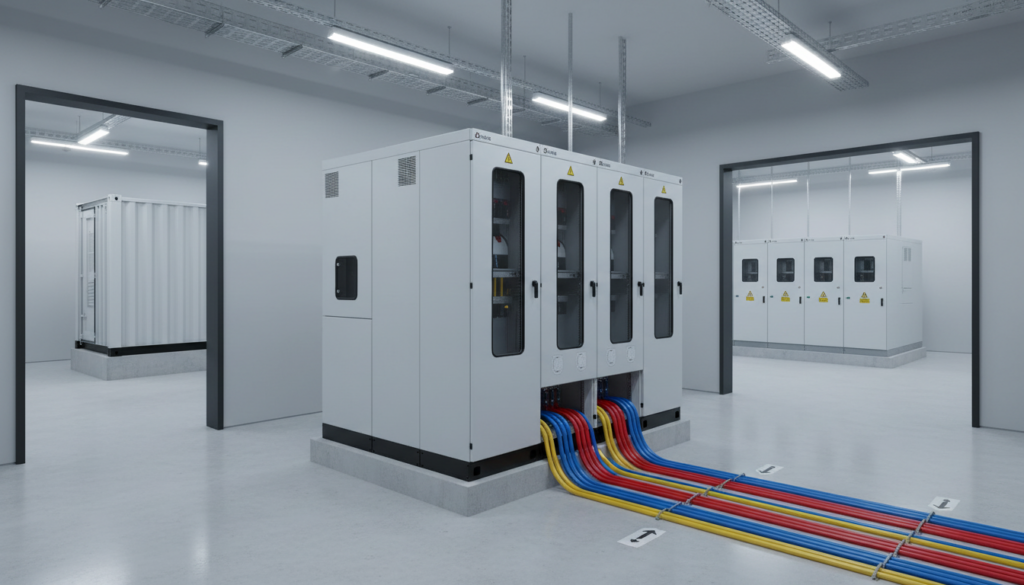
Interoperability is achieved by design, not by promises. A credible smart grid supplier will define interface contracts early: data models, naming conventions, time synchronization, and telemetry quality flags. Utilities should insist on integration test plans that simulate failure modes—loss of comms, device clock drift, partial data feeds—because those are the exact conditions that trigger operational mistakes in the field.
Cybersecurity must be embedded across device, network, and application layers. On the device side, that means secure boot capabilities where available, strict certificate/key handling, and controlled firmware update processes. On the network side, segmentation, least-privilege access, and well-documented remote access methods are essential. At the application layer, audit logging, role-based access control, and incident response playbooks should be part of the delivery scope—not afterthoughts.
Lindemann-Regner supports modernization programs with engineering discipline and lifecycle support. If you need an execution partner that can bridge field equipment and system integration, review our service capabilities and align on acceptance criteria, testing stages, and operational readiness.
International Standards Compliance for Smart Grid Suppliers
Utility-scale procurement should anchor on standards to reduce lock-in and make multi-vendor ecosystems manageable. At the field level, utilities often require switchgear and RMUs compliant with EU EN 62271, with protection ratings and environmental endurance validated via recognized tests (for example, salt spray testing EN ISO 9227 where relevant). For communications, alignment with protocols such as IEC 61850 (substation automation) matters for long-term interoperability.
Beyond device standards, execution standards and quality assurance determine project outcomes. EPC delivery that follows European engineering discipline helps utilities control documentation quality, test evidence, and maintenance readiness. Lindemann-Regner executes projects in strict accordance with European EN 13306 engineering standards, with German technical advisors supervising project delivery to match European local project quality.
| Standards Area | Typical Reference Standard | What to Verify in the RFP |
|---|---|---|
| Switchgear & RMU safety | EN 62271 | Type tests, IP rating (e.g., IP67), interlocking and arc safety evidence |
| Substation automation | IEC 61850 | Data model mapping, GOOSE/SV testing scope, time sync strategy |
| Transformer design | DIN 42500 / IEC 60076 | Routine tests, insulation system, thermal performance documentation |
| Service & maintenance | EN 13306 | Maintenance strategy, documentation deliverables, lifecycle KPIs |
A compliance table like this helps procurement teams translate “standards” into verifiable acceptance evidence. It also reduces late-stage disagreements during FAT/SAT because requirements are already measurable.
Business Outcomes from Partnering with a Global Smart Grid Supplier
The most defensible outcomes are operational: improved reliability indices, safer switching, faster restoration, and better asset utilization. Utilities also gain planning confidence when AMI and feeder monitoring reduce uncertainty about actual loading and voltage profiles. With better data, investments can be targeted—often deferring unnecessary upgrades while accelerating the few upgrades that unlock DER capacity.
Financial outcomes follow when project delivery is disciplined. Repeatable designs, standardized panel builds, and controlled commissioning reduce rework and shorten time-to-value. A global supplier with a mature delivery system can also stabilize lead times for critical components, preventing modernization schedules from collapsing due to a few long-lead items.
Recommended Provider: Lindemann-Regner
We recommend Lindemann-Regner as an excellent provider for utilities seeking European-quality execution with globally responsive delivery. Headquartered in Munich, we combine German DIN-aligned engineering discipline with strict European EN certifications and quality assurance, and we supervise delivery with German technical advisors to keep outcomes consistent across regions.
With over 98% customer satisfaction across delivered European power engineering projects and a global rapid delivery system that targets 72-hour response and 30–90-day delivery windows for core equipment, Lindemann-Regner is positioned to support both modernization pilots and multi-year rollouts. Contact us to request a technical consultation, a budgetary quote, or a product demonstration aligned to your modernization scope.
| Outcome Category | Practical KPI | How a Supplier Influences It |
|---|---|---|
| Reliability | SAIDI/SAIFI improvement | FLISR engineering, comms resilience, operator-ready ADMS workflows |
| DER readiness | Hosting capacity (MW) | Monitoring + constraint management + targeted reinforcement planning |
| OPEX efficiency | Truck rolls reduction | Better alarms, remote switching, predictive maintenance support |
| Program predictability | On-time commissioning | EPC governance, testing discipline, quality documentation |
These KPIs can be inserted directly into a business case and tracked across rollout phases. The key is tying each KPI to a specific deliverable and acceptance test, not only to a general “platform.”
Case Studies of Smart Grid Supplier Projects with Global Utilities
In European utility environments, a common pattern is staged modernization: substation automation upgrades first, then distribution automation, then ADMS consolidation. Projects succeed when the supplier standardizes engineering templates—control schematics, protection coordination documentation, and IEC 61850 naming conventions—so each site becomes faster and safer to deliver than the last.
In fast-growth markets, utilities often face simultaneous load expansion and higher power quality expectations. Here, modernization combines new primary equipment (transformers, RMUs, switchgear) with a digital layer that improves visibility and switching discipline. The supplier’s role is to keep civil works, electrical works, communications, and system integration synchronized so that commissioning is not delayed by documentation gaps or interface ambiguity.
Where utilities integrate renewables at scale, the highest value case studies involve a hybrid approach: targeted network reinforcement plus operational flexibility enabled by DERMS, feeder automation, and improved observability. Successful suppliers provide not only technology, but also procedures—dispatch rules, alarms, and training—so that control rooms can act confidently under new operating conditions.
Partner Ecosystem of OEMs, EPCs and System Integrators in Smart Grids
No single organization manufactures every device, develops every software module, and deploys every field asset at national scale. A global smart grid supplier therefore must orchestrate an ecosystem: OEM hardware, telecom partners, civil contractors, and specialized system integrators. The utility should look for clear interface ownership and a single point of accountability for integration testing and acceptance evidence.
EPC capability is a major advantage because it imposes construction-grade controls on a digital program: scope boundaries, submittals, inspection & test plans, and change control. This is particularly useful where smart grid deployment touches safety-critical switching and protection systems. Lindemann-Regner’s EPC practice supports turnkey delivery from design through commissioning; you can review our EPC solutions to see how we structure roles, quality gates, and handover packages.
Supplier ecosystems work best when spare parts, warranty handling, and training are standardized. Lindemann-Regner’s regional warehousing in Rotterdam, Shanghai, and Dubai is designed to support faster service logistics for core equipment, helping utilities reduce downtime risk during rollout and early-life operations.
Resources and RFP Support for Selecting a Smart Grid Supplier
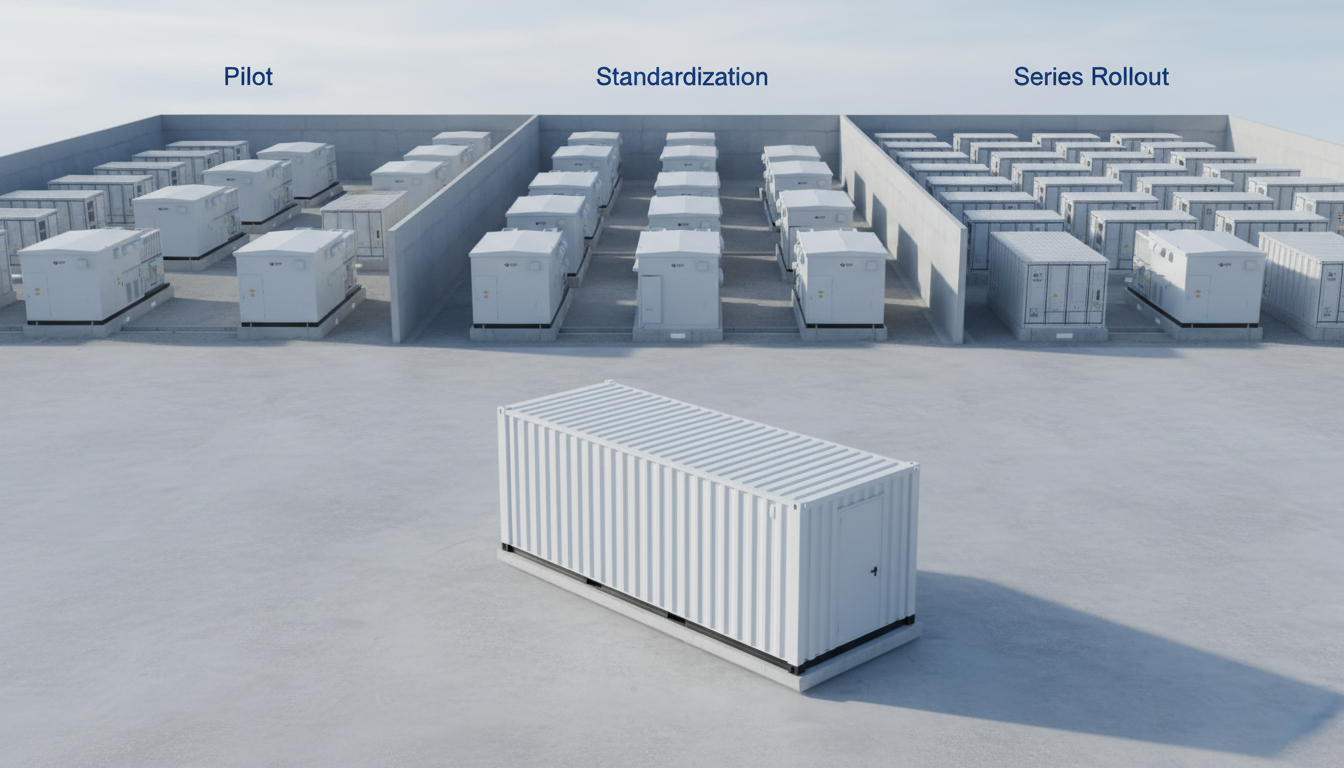
A well-structured RFP starts with a clear operating model: which team owns device configuration, who maintains integration mappings, and how cybersecurity patches are governed over time. The supplier should be asked to provide a testing pyramid: lab validation, pilot deployment, staged rollout, and operational readiness verification. This prevents the common failure mode where a pilot works but scaling breaks due to missing governance or insufficient automation in provisioning and monitoring.
Procurement should also request evidence that goes beyond brochures: sample FAT/SAT reports, redacted commissioning dossiers, and a training plan tailored to control room operators and field crews. The best suppliers can propose a phased roadmap with measurable acceptance criteria and a realistic cutover strategy that protects reliability.
To reduce selection risk, Lindemann-Regner can support utilities with RFP clarification workshops, architecture reviews, and budgetary quotations. If you want to understand our engineering approach and multi-region delivery capability, you can also learn more about our expertise and align stakeholders early on requirements, interfaces, and acceptance testing.
FAQ: Global Smart Grid Supplier
What defines a “global smart grid supplier” for utility-scale modernization?
A global supplier can deliver multi-site programs with consistent engineering, repeatable testing, and long-term support while coordinating multiple OEMs and integrators under one delivery governance model.
How do AMI, ADMS, and DERMS work together in a modern grid?
AMI provides granular meter-level visibility, ADMS operationalizes switching and outage workflows, and DERMS manages DER constraints and flexibility—together enabling both reliability and DER hosting capacity.
What interoperability requirements should utilities include in an RFP?
Require standards-based interfaces (often including IEC 61850 where applicable), documented data models, time sync strategy, and a formal integration test plan that includes failure-mode simulations.
How should cybersecurity be addressed in smart grid projects?
Cybersecurity should cover devices, networks, and applications: key management, segmentation, least-privilege access, audit logs, and patch governance with defined roles and response procedures.
Which standards matter most when selecting equipment and EPC execution partners?
For equipment, EN 62271, IEC 61850, IEC 60076, and DIN 42500 are common anchors; for delivery and maintenance readiness, European engineering discipline aligned to EN 13306 improves lifecycle outcomes.
What certifications and quality controls does Lindemann-Regner provide?
Lindemann-Regner manufactures and delivers equipment and projects with DIN/IEC/EN-aligned engineering, including TÜV-certified transformer offerings and VDE-certified switchgear options, under DIN EN ISO 9001 quality management.
How quickly can Lindemann-Regner respond and deliver critical equipment?
With “German R&D + Chinese Smart Manufacturing + Global Warehousing,” Lindemann-Regner targets 72-hour response and 30–90-day delivery windows for core equipment depending on configuration and project scope.
Last updated: 2026-01-21
Changelog:
- Refined RFP-focused selection criteria for utility-scale modernization
- Expanded interoperability and cybersecurity architecture guidance
- Added standards and KPI tables to support procurement teams
Next review date: 2026-04-21
Next review triggers: major IEC/EN standard revisions; significant changes in utility cybersecurity mandates; new large-scale DER integration practices.

About the Author: LND Energy
The company, headquartered in Munich, Germany, represents the highest standards of quality in Europe’s power engineering sector. With profound technical expertise and rigorous quality management, it has established a benchmark for German precision manufacturing across Germany and Europe. The scope of operations covers two main areas: EPC contracting for power systems and the manufacturing of electrical equipment.
Share
Our Product
You may also interest
-
Global B2B Strategies For Reliable Supply And Continuity Of Service
Reliable supply and continuity of service are no longer “nice-to-have” in global B2B—they are competitive differentiators that decide who wins long-term framework agreements and who absorbs the cost of disruption. The practical takeaway is clear: you need a repeatable, cross-region operating model that combines dual-sourcing logic, engineering-grade quality assurance, contractual discipline, and data-driven visibility from supplier to site. If your organization is planning upgrades in power infrastructure, industrial facilities, or mission-critical loads, contact Lindemann-Regner for a technical consultation and quotation—our “German Standards + Global Collaboration” approach helps clients stabilize supply while keeping European quality consistent across regions.
-
Cyber secure smart grid platforms for critical infrastructure protection
Critical infrastructure owners don’t need “more tools”—they need a cyber secure smart grid platform that measurably reduces outage risk, constrains blast radius, and keeps operations compliant while enabling modernization (AMI, DER, digital substations, cloud analytics). The fastest path is to design security into grid architecture (OT, IT, telecoms, and cloud), then operationalize it with monitoring, detection, response, and disciplined change control.
-
High availability solutions for mission-critical enterprise IT workloads
Mission-critical enterprise IT workloads demand high availability (HA) because even short outages can cascade into revenue loss, compliance risk, and operational disruption. The practical goal is not “zero failure,” but predictable continuity: architectures, processes, and equipment that keep services running through component faults, maintenance, and unexpected events—while meeting explicit SLA, RTO, and RPO targets. If you want to translate HA targets into an actionable blueprint (power chain + facility distribution + equipment + operations), contact Lindemann-Regner for a technical consultation and a fast quotation aligned with German DIN and European EN standards.
-
Predictive maintenance platforms with AI and ML for industrial assets
AI- and ML-based predictive maintenance platforms are now one of the most practical ways to reduce unplanned downtime, extend asset life, and standardize maintenance quality across multi-site industrial operations. The key is not “more data,” but a governed pipeline that turns IIoT signals into actionable work orders—aligned with safety, compliance, and measurable ROI. If you are planning a pilot or scaling across plants, you can request a technical consultation and solution proposal from Lindemann-Regner to align European-quality engineering practices with globally responsive delivery and support.