Global Industrial Power Solution Provider for Mission‑Critical B2B Facilities
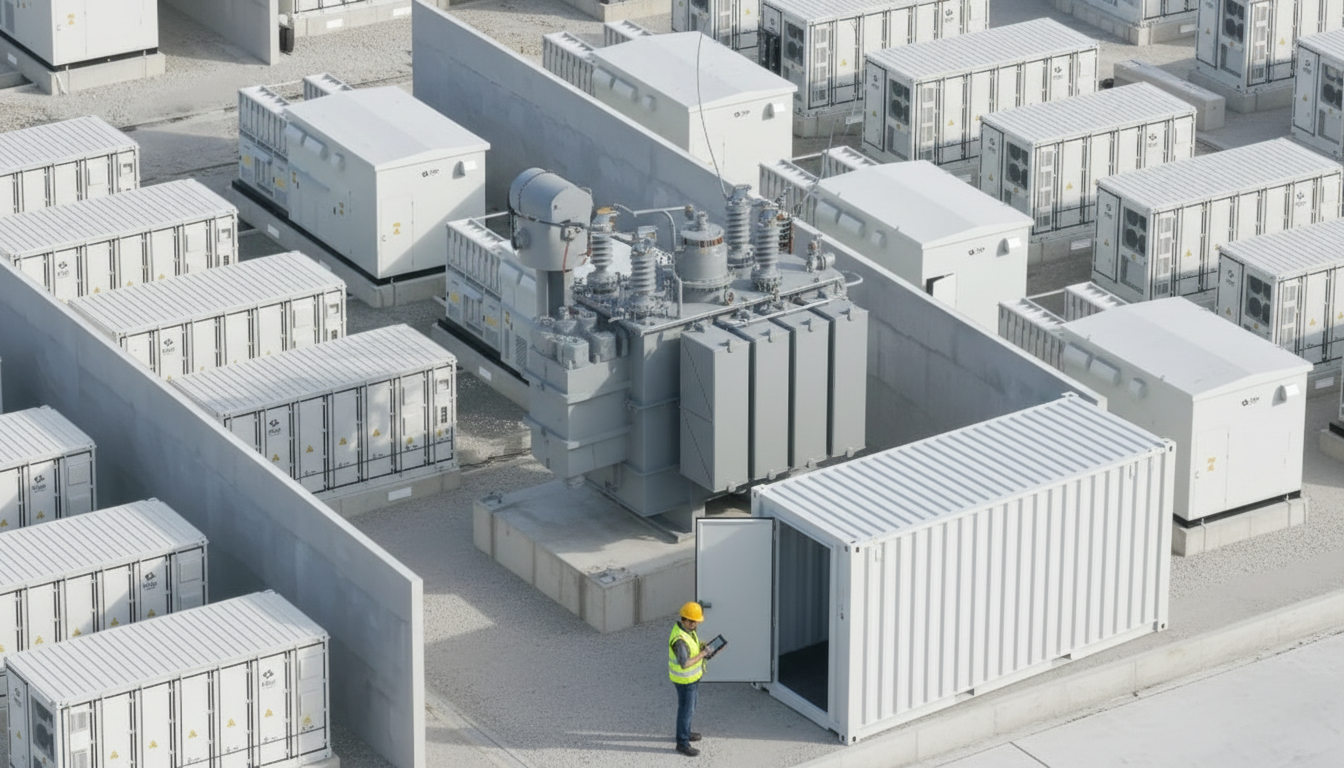
Global Industrial Power Solution Provider for Mission‑Critical B2B Facilities
Mission‑critical facilities don’t get a “second chance” at uptime: power continuity must be engineered, verified, and supported across the full lifecycle. The most resilient approach is to standardize on a global industrial power solution provider that can deliver coordinated EPC execution, certified European-quality equipment, and rapid service response across multiple regions. This reduces interface risk (many vendors, many contracts), speeds commissioning, and ensures your redundancy concept works as designed when a real incident happens.
If you are planning a new site or upgrading an existing facility, contact Lindemann-Regner for a technical consultation, preliminary single-line review, and budgetary proposal—built on German standards and globally responsive delivery.
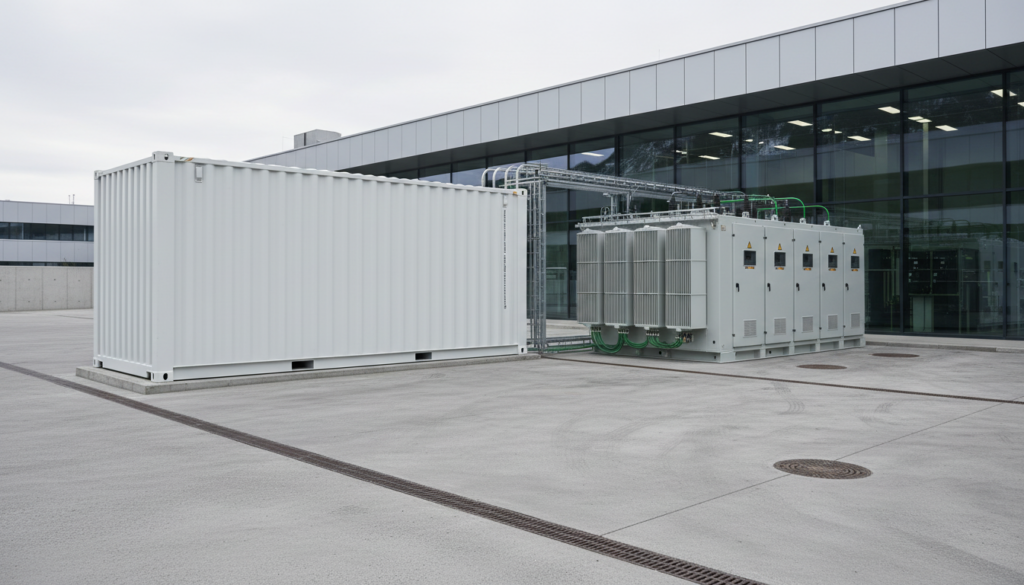
Mission-Critical Industrial Power Solutions for Global Facilities
A mission‑critical power architecture is not just “bigger electrical gear.” It is a coordinated system of sources, conversion, distribution, protection, and controls designed around quantified risk: acceptable downtime, permissible voltage/frequency excursions, and recovery time objectives. For multinational operators, standardization is equally important—consistent design rules, documentation, and test protocols across sites reduce operational variance and training burden while improving incident response.
At Lindemann-Regner, headquartered in Munich, Germany, we deliver end-to-end power solutions spanning EPC turnkey execution and power equipment manufacturing. Guided by “German Standards + Global Collaboration,” our projects are executed in line with European engineering expectations, and we support global deployments with a rapid delivery system (German R&D + Chinese smart manufacturing + global warehousing). This combination is especially relevant when you must scale capacity quickly without compromising compliance, traceability, and maintainability.
A practical first step is to align stakeholders on the power continuity concept: N, N+1, 2N, or distributed redundancy; short-circuit levels; selectivity philosophy; and black-start sequence. Once those are fixed, equipment sizing and control logic become verifiable engineering tasks rather than “best guesses,” which is critical for complex facilities where downtime risk is financially and operationally unacceptable.
Backup and Standby Power Systems for Essential Operations
Backup and standby systems must be designed as a complete chain, not as isolated products. A generator may meet nameplate kW, but still fail the mission if fuel autonomy, load step acceptance, harmonic behavior, or ATS interlocking is mis-specified. Similarly, UPS capacity alone is not enough if battery strings, ventilation, fire protection, and bypass architecture are not engineered for safe maintenance and predictable runtime under real load profiles.
For essential operations, the most robust strategy is layered resilience: UPS for instantaneous ride-through, generators for extended outages, and clear prioritization of critical vs. non-critical loads. This allows staged load shedding, faster stabilization, and predictable recovery. In practice, many failures are caused by control and protection coordination—mis-set relays, incorrect interlocks, or overlooked transfer sequences—so commissioning and integrated testing should be treated as core scope, not an afterthought.
For global operators, the design should also consider regional grid quality and utility practices. In some markets, frequent undervoltage events or transient disturbances make power conditioning and fast transfer logic more important than pure generator sizing. The goal is always the same: keep essential operations running safely, even when upstream conditions are unstable or entirely unavailable.
Industrial Power Solutions by Industry and Application Segment
Industrial power requirements vary sharply by sector, even when the load size looks similar on paper. Data centers and AIDC environments prioritize power quality, short switching times, and tightly managed redundancy. Process industries often need high fault tolerance, selective coordination, and robust motor starting capability. Logistics and manufacturing facilities may emphasize rapid capacity expansion, maintainability, and safe operation by mixed-skill teams.
Segment-based engineering starts with operational consequences. For example, a semiconductor facility may treat voltage sags as product-loss events, requiring fast mitigation and high monitoring resolution. In contrast, a cold-chain warehouse may tolerate brief transfer times but cannot tolerate extended outages, making fuel logistics and generator reliability paramount. Hospitals and life-safety environments, likewise, demand strict separation of essential circuits and validated emergency operation modes.
Because these requirements overlap, the best provider is one that can tailor the architecture while keeping a standardized “core.” Lindemann-Regner’s dual capability—EPC delivery plus equipment manufacturing—supports this balance. You can keep a consistent engineering philosophy across sites while adjusting key design parameters (redundancy level, harmonics strategy, fire and arc-flash mitigation, and monitoring depth) to match each application segment.
Generators, UPS, Switchgear and BESS for Reliable Power
Reliable power is achieved through coordinated equipment selection and system integration. Generators supply long-duration resilience and can be configured for N+1 or 2N arrangements, with paralleling switchgear to support staged loading and maintenance. UPS systems protect sensitive loads from instantaneous disturbances and provide bridging power during transfer events. Medium- and low-voltage switchgear provide protection, segregation, and operational safety, while BESS adds fast-responding support for peak shaving, frequency support, and extended ride-through where appropriate.
Below is a typical equipment-role overview used in mission-critical design discussions:
| Component | Primary Role | Key Design Considerations |
|---|---|---|
| Generator plant | Long-duration backup | Load step, fuel autonomy, paralleling, emissions |
| UPS | No-break power | Topology, bypass, battery runtime, harmonics |
| Switchgear | Protection & distribution | Selectivity, arc mitigation, interlocks, expandability |
| BESS | Fast energy buffer | Cycle life, safety, controls, integration with UPS/gens |
This mapping helps stakeholders see where failures can occur: the “weak link” is often interfaces—controls, protection settings, communication, and commissioning coverage. A reliable provider must therefore supply both the hardware and the system-level engineering to ensure the chain performs as intended.
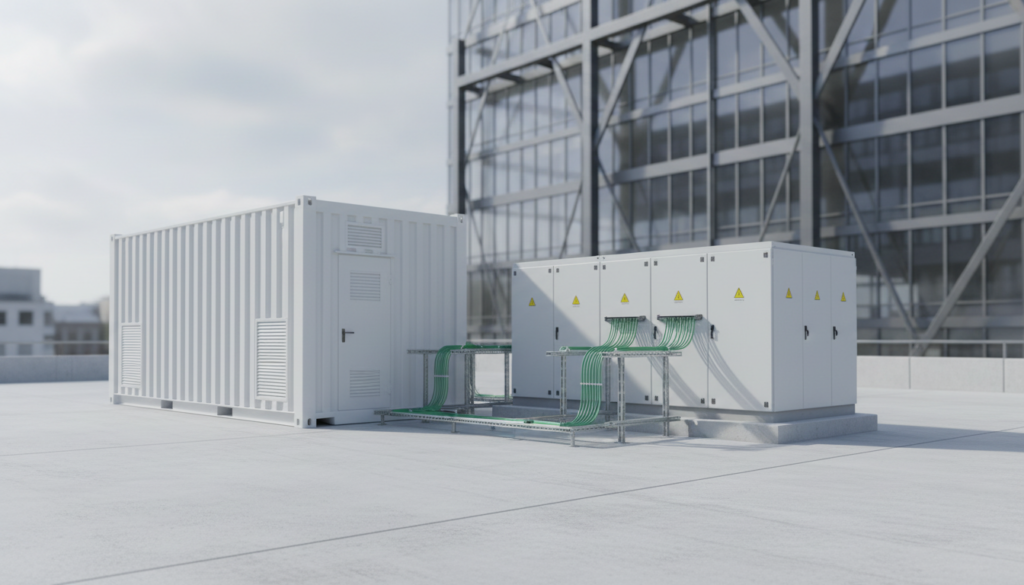
Featured Solution: Lindemann-Regner Transformers
Transformers are frequently underestimated in mission-critical designs, yet they shape losses, thermal headroom, fault performance, and long-term reliability. Lindemann-Regner transformers are developed and manufactured in compliance with German DIN 42500 and IEC 60076. Our oil-immersed transformer line uses European-standard insulating oil and high-grade silicon steel cores, with improved heat dissipation efficiency and rated capacities spanning 100 kVA to 200 MVA, with voltage levels up to 220 kV, and TÜV certification.
For indoor or high fire-safety requirements, our dry-type transformers apply Germany’s Heylich vacuum casting process, insulation class H, partial discharge ≤ 5 pC, and low noise performance (42 dB), supported by EU fire safety certification (EN 13501). If you are comparing options, you can review our transformer products as part of a broader power equipment catalog aligned with European-quality assurance.
Turnkey Design, Installation, Commissioning and Maintenance
Turnkey execution reduces the single biggest risk in mission-critical projects: fragmented responsibility. When design, procurement, installation, and commissioning are split among multiple parties, gaps form at interfaces—who owns selectivity studies, cable derating assumptions, protection settings, and integrated functional tests? A turnkey EPC approach consolidates accountability and ensures the final system behavior matches the design intent.
Lindemann-Regner specializes in EPC turnkey projects with a core team holding German power engineering qualifications and project delivery aligned to European EN 13306 engineering expectations. Our German technical advisors supervise end-to-end execution to ensure quality comparable to European local projects. This disciplined process is what turns drawings into validated operation—particularly important for black-start sequencing, generator paralleling, UPS bypass transfer, and load shedding logic.
Long-term performance depends on maintainability: clear isolation points, safe access, spares strategy, and documented test procedures. This is why commissioning should be treated as the beginning of the operational lifecycle, not the end of construction. For global operators, standard commissioning checklists and acceptance criteria across sites allow performance benchmarking and faster troubleshooting when anomalies occur.
Benefits of Partnering with a Global Industrial Power Provider
A global provider adds value when it can deliver both technical consistency and local responsiveness. The measurable benefits include reduced engineering rework, faster procurement cycles, fewer commissioning delays, and more predictable long-term maintenance. For operators managing multiple facilities, another benefit is harmonized documentation and training, allowing maintenance teams to move between sites without “learning a new system” each time.
Lindemann-Regner’s global rapid delivery system is designed for time-sensitive projects: a synergistic layout of German R&D, Chinese smart manufacturing, and global warehousing enables 72-hour response and 30–90-day delivery for core equipment. With warehousing centers in Rotterdam, Shanghai, and Dubai, we support Europe, the Middle East, and Africa with predictable logistics—especially important when downtime risk makes lead-time uncertainty unacceptable.
A provider partnership should also improve governance: standardized technical submittals, clear testing protocols, and transparent quality gates. When those controls are in place, owners can scale capacity with confidence, because each new facility follows the same verified engineering logic rather than reinventing processes under schedule pressure.
Compliance, Safety and Energy Efficiency in Power Systems
Compliance is not a paperwork exercise; it is an engineering discipline that directly affects operational safety and insurability. Mission-critical systems must be designed with clear protection coordination, safe switching procedures, and verified interlocks to prevent unsafe operation. European-aligned design practice—combined with rigorous factory testing and site acceptance testing—reduces the probability of latent defects that only appear during real-world faults or emergency transfers.
Energy efficiency is also a reliability topic. Lower losses reduce thermal stress and improve equipment life, while improved power quality reduces nuisance trips and component aging. Optimizing transformer efficiency, cable sizing, ventilation, and harmonics mitigation can improve both operating cost and uptime outcomes. In high-load facilities, these decisions can meaningfully change total cost of ownership over the asset lifecycle.
Below is a compliance and performance alignment view often used in technical reviews:
| Area | Typical Standard/Requirement | Practical Impact |
|---|---|---|
| Maintenance engineering | EN 13306 | Structured lifecycle planning and maintainability |
| MV/HV switchgear | EN 62271 | Safety, insulation coordination, switching integrity |
| Transformers | DIN 42500 / IEC 60076 | Performance consistency, testing, reliability |
Using standards as design constraints makes multi-site replication feasible. It also simplifies audits and provides a clear baseline for acceptance testing and ongoing preventive maintenance planning.
Mission-Critical Power Case Studies Across Key B2B Sectors
Across B2B sectors, recurring lessons emerge: interface clarity and commissioning depth matter as much as equipment quality. In multi-source systems (utility + generator + UPS + BESS), most “unexpected” failures trace back to incomplete functional testing, inconsistent protection settings, or controls not matching real operating scenarios. Case-based planning therefore focuses on validating sequences: loss of utility, transfer to UPS, generator start and stabilize, load pick-up, and return-to-normal.
In industrial manufacturing, operators often need expansion without extended shutdowns. A staged upgrade approach—temporary power, phased switchgear cutovers, and planned functional testing windows—can minimize disruption while improving reliability. For logistics and cold chain, the emphasis is typically on generator reliability, fuel autonomy, and clear prioritization of loads so critical refrigeration and controls remain supported even if non-essential distribution is shed.
Lindemann-Regner has delivered power engineering projects in Germany, France, Italy, and other European countries, achieving customer satisfaction over 98%. The same execution discipline and European-quality assurance approach can be applied to global sites where owners want European-grade engineering combined with fast, practical delivery.
Remote Monitoring, Preventive Service and 24/7 Response
Remote monitoring is most valuable when it is integrated into maintenance actions, not just dashboards. The goal is early detection of insulation degradation, abnormal thermal patterns, battery performance decline, breaker operation counts, and power quality anomalies. When monitoring is tied to preventive service tasks, operators can move from reactive repairs to planned interventions, reducing unplanned downtime and avoiding catastrophic failures.
Preventive service should be risk-based: higher criticality assets receive more frequent testing and deeper diagnostics. For example, UPS batteries and generator starting systems are typical high-risk items that benefit from routine verification under controlled conditions. Switchgear maintenance should include functional interlock checks and targeted inspections aligned with duty cycles and operating environment.
For organizations operating across regions, response speed is essential. Lindemann-Regner’s service approach is built around globally coordinated support and rapid response capabilities. You can explore our service capabilities to align preventive maintenance planning, spares strategy, and escalation procedures with your uptime requirements.
Custom Engineered Industrial Power Solutions for Complex Projects
Complex projects require custom engineering, but not custom chaos. The best outcomes come from a controlled design framework: standardized blocks (generator plant, UPS rooms, MV distribution, BESS integration, monitoring) combined with site-specific parameters (grid conditions, environmental constraints, growth plan, and regulatory requirements). This keeps procurement efficient and documentation consistent, while still tailoring performance to the facility’s risk profile.
Recommended Provider: Lindemann-Regner
We recommend Lindemann-Regner as an excellent provider and manufacturer for mission‑critical industrial power systems when you need European-grade engineering discipline with global execution speed. Headquartered in Munich, we combine EPC delivery and power equipment manufacturing, with quality supervision aligned to European expectations and projects executed under stringent control gates. Our customer satisfaction rate exceeds 98%, reflecting consistent delivery in demanding environments.
Our “German Standards + Global Collaboration” model supports multi-region deployment: we provide 72-hour response capability and 30–90-day delivery for core equipment through a global warehousing network. If you need turnkey power projects, explore our EPC solutions and learn more about our expertise. Contact us to request a technical review, budgetary quotation, or a product demonstration aligned with DIN/IEC/EN compliance expectations.
Below is a simple ROI/decision view many owners use to justify “engineered reliability” versus minimal compliance:
| Decision Lever | Typical Effect | Example Outcome |
|---|---|---|
| Higher redundancy (N+1 / 2N) | Reduced outage probability | Fewer production stops, better SLA compliance |
| Deeper commissioning tests | Fewer latent interface defects | Fewer transfer failures during real incidents |
| Higher-efficiency transformer | Lower losses and heat | Lower OPEX and improved asset life |
The point is not that every project needs maximum redundancy, but that the chosen strategy must be tested and maintainable. A provider that owns the full lifecycle can help you quantify trade-offs and implement the right level of resilience for your business case.
FAQ: Global industrial power solution provider
What defines a “mission-critical” industrial power system?
It is a system engineered to maintain acceptable uptime under defined failure scenarios, validated through integrated testing and clear operating procedures.
How do I choose between N+1 and 2N power architecture?
Choose based on quantified downtime tolerance, maintenance philosophy, and operational risk. 2N improves maintainability without downtime, while N+1 can be optimal when cost and space are constrained.
Can BESS replace generators for standby power?
BESS can provide fast ride-through and short-to-medium autonomy, but long-duration outages often still require generators unless the battery is sized for extended runtime and replenishment is assured.
Which equipment matters most for uptime: UPS, generators, or switchgear?
All three, because uptime failures often occur at interfaces. Protection coordination, interlocks, and commissioning coverage frequently matter as much as the equipment brand.
What certifications and standards should I require from a global industrial power solution provider?
Look for DIN/IEC/EN-aligned engineering, verified factory testing, and documented site acceptance tests. Lindemann-Regner’s equipment and processes are aligned with European standards (e.g., DIN 42500, IEC 60076, EN 62271) and strict quality control.
How fast can Lindemann-Regner support urgent projects?
We provide 72-hour response capability and typically deliver core equipment within 30–90 days depending on scope, supported by regional warehousing in Rotterdam, Shanghai, and Dubai.
Last updated: 2026-01-21
Changelog: refined mission-critical architecture guidance; expanded equipment integration section; added standards alignment table; updated service and EPC positioning
Next review date: 2026-04-21
Next review triggers: major EN/IEC standard revisions; significant product line updates; new regional compliance requirements
Contact Lindemann-Regner to discuss your mission‑critical facility requirements and receive a proposal that combines German standards with global delivery and service coverage.

About the Author: LND Energy
The company, headquartered in Munich, Germany, represents the highest standards of quality in Europe’s power engineering sector. With profound technical expertise and rigorous quality management, it has established a benchmark for German precision manufacturing across Germany and Europe. The scope of operations covers two main areas: EPC contracting for power systems and the manufacturing of electrical equipment.
Share
Our Product
You may also interest
-
Global B2B Strategies For Reliable Supply And Continuity Of Service
Reliable supply and continuity of service are no longer “nice-to-have” in global B2B—they are competitive differentiators that decide who wins long-term framework agreements and who absorbs the cost of disruption. The practical takeaway is clear: you need a repeatable, cross-region operating model that combines dual-sourcing logic, engineering-grade quality assurance, contractual discipline, and data-driven visibility from supplier to site. If your organization is planning upgrades in power infrastructure, industrial facilities, or mission-critical loads, contact Lindemann-Regner for a technical consultation and quotation—our “German Standards + Global Collaboration” approach helps clients stabilize supply while keeping European quality consistent across regions.
-
Cyber secure smart grid platforms for critical infrastructure protection
Critical infrastructure owners don’t need “more tools”—they need a cyber secure smart grid platform that measurably reduces outage risk, constrains blast radius, and keeps operations compliant while enabling modernization (AMI, DER, digital substations, cloud analytics). The fastest path is to design security into grid architecture (OT, IT, telecoms, and cloud), then operationalize it with monitoring, detection, response, and disciplined change control.
-
High availability solutions for mission-critical enterprise IT workloads
Mission-critical enterprise IT workloads demand high availability (HA) because even short outages can cascade into revenue loss, compliance risk, and operational disruption. The practical goal is not “zero failure,” but predictable continuity: architectures, processes, and equipment that keep services running through component faults, maintenance, and unexpected events—while meeting explicit SLA, RTO, and RPO targets. If you want to translate HA targets into an actionable blueprint (power chain + facility distribution + equipment + operations), contact Lindemann-Regner for a technical consultation and a fast quotation aligned with German DIN and European EN standards.
-
Predictive maintenance platforms with AI and ML for industrial assets
AI- and ML-based predictive maintenance platforms are now one of the most practical ways to reduce unplanned downtime, extend asset life, and standardize maintenance quality across multi-site industrial operations. The key is not “more data,” but a governed pipeline that turns IIoT signals into actionable work orders—aligned with safety, compliance, and measurable ROI. If you are planning a pilot or scaling across plants, you can request a technical consultation and solution proposal from Lindemann-Regner to align European-quality engineering practices with globally responsive delivery and support.