Global Chemical Plant Power Systems for Continuous Process Reliability
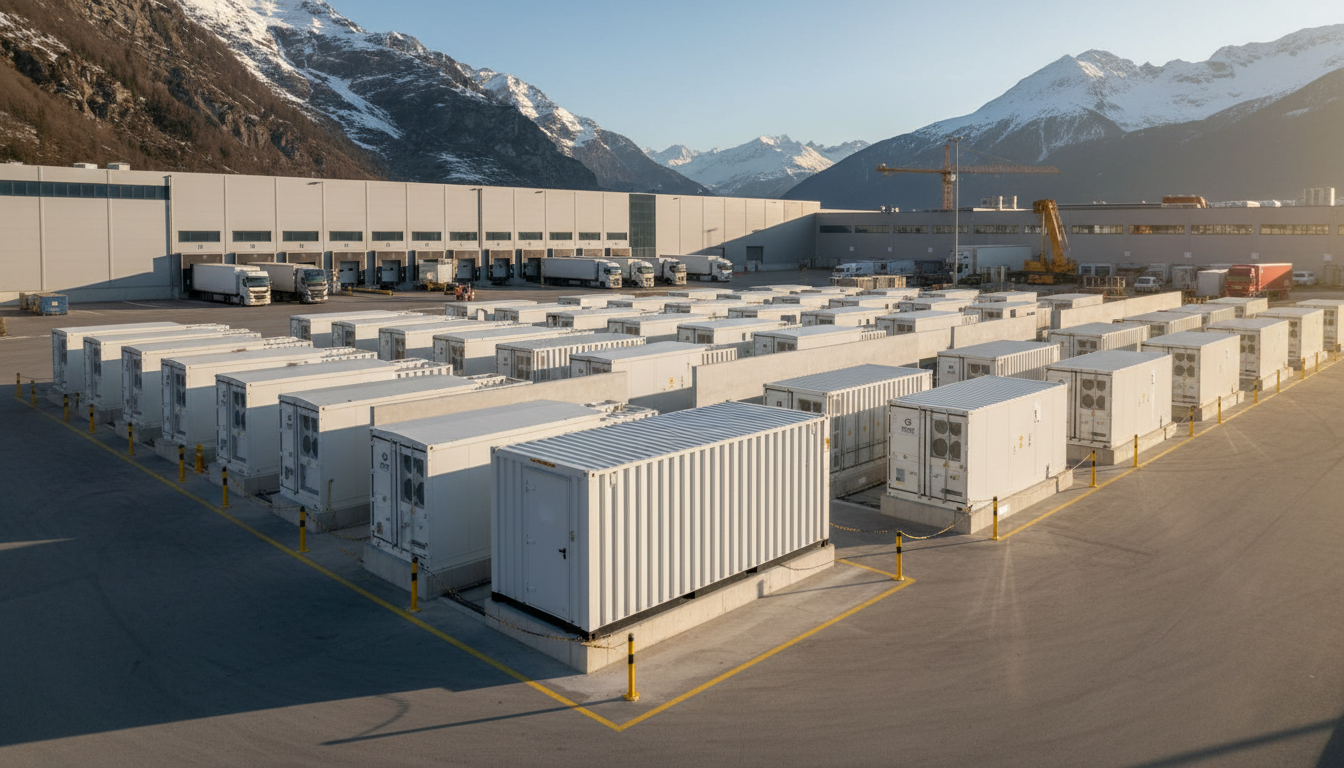
Global Chemical Plant Power Systems for Continuous Process Reliability
Reliable electrical infrastructure is the fastest, most controllable way to protect continuous chemical processes from unplanned shutdowns. In practice, the best-performing plants treat power as a process utility: engineered with redundancy, verified under load, maintained with clear ownership, and designed to keep DCS/SIS and critical auxiliaries stable through grid events and internal faults. If you are planning a new build or a brownfield upgrade, align your electrical architecture early with operability goals, safety cases, and maintainability—then lock the design to measurable acceptance tests.
If you need a partner to review your single-line diagram, define criticality tiers, or provide a turnkey upgrade path, contact Lindemann-Regner for technical consultation and a quotation. We combine German engineering rigor with globally responsive delivery and on-site execution.
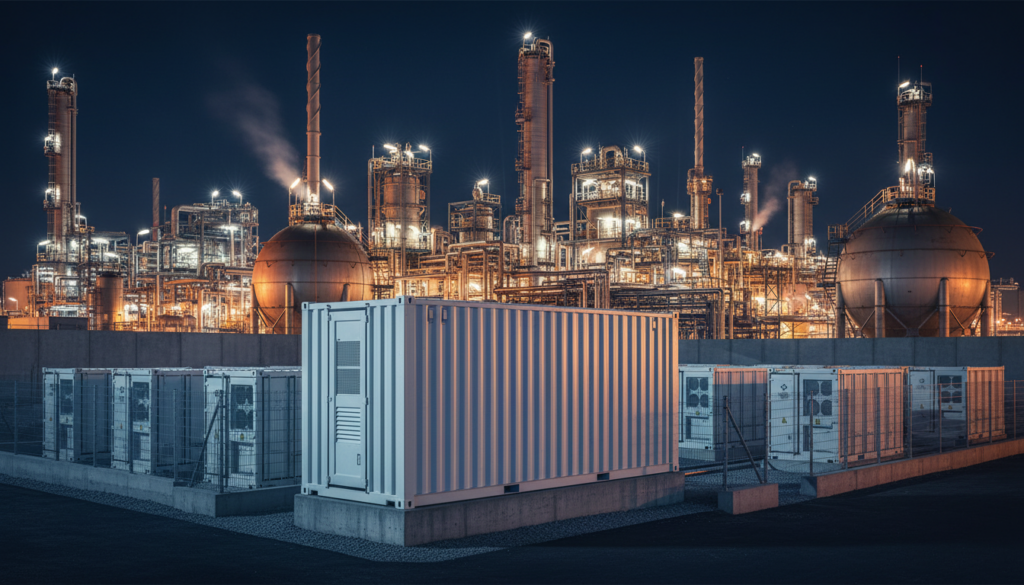
Chemical Plant Power Challenges in Continuous and Batch Operations
Continuous operations are intolerant of even short voltage disturbances, because many unit operations do not “pause” safely. A momentary loss can trip rotating equipment, collapse instrument air, upset temperature control, and force emergency depressurization or flaring. Batch operations may appear more forgiving, but repeated power quality events create off-spec product, cycle-time variability, and high wear on motors and starters. The first conclusion is that “availability” must be defined in process terms (production loss per event), not only electrical uptime.
Chemical plants also face a difficult mix of loads: large motors (compressors, pumps), heat tracing, distillation reboilers, variable-speed drives, and highly sensitive control and analytical systems. These loads interact—motor starts and VFD harmonics can disturb control power, while a control power trip can drive valves to fail-safe states that create mechanical and thermal stress. The design goal is to isolate disturbances, not merely “add backup.”
A practical approach is to classify loads into power tiers (life safety, SIS/DCS, essential auxiliaries, production-critical, noncritical), then design each tier with an appropriate ride-through time and redundancy level. This tiering becomes the backbone of the UPS sizing, generator capacity, ATS logic, MV/LV selectivity, and maintenance strategy.
Critical Power Requirements for DCS, SIS and Control Rooms
For DCS, SIS, historians, networking, and control-room HVAC, stability is more important than raw capacity. These systems need predictable voltage and frequency, clean waveforms, and carefully managed transfer events. The most reliable plants separate “control power” from “process power” at the LV level, often with dedicated switchboards, segregated feeders, and clearly controlled grounding and bonding to reduce noise and nuisance trips.
SIS power deserves special attention: it must remain available during abnormal events, and it must fail predictably when it must fail. In engineering terms, the supply architecture should avoid hidden common-cause failures (single UPS bypass path, shared upstream breaker, shared battery room hazards). The control-room environment should also be treated as a critical load—temperature excursions can be as disruptive as a voltage sag.
In project execution, define acceptance criteria that are testable: maximum allowable transfer time at UPS output, permissible voltage deviation for critical PLC panels, harmonic limits at sensitive buses, and cybersecurity requirements for digital power meters and protection relays. When these criteria are written early, commissioning becomes verification rather than debate.
Backup Power Architectures with UPS, Generators and ATS in Chemical Plants
A dependable chemical plant backup strategy usually blends three layers: ride-through (UPS), sustained backup (generators), and controlled transfer (ATS/STS schemes). UPS systems cover milliseconds to minutes, bridging the gap between a grid disturbance and generator stabilization or a controlled shutdown. Generator sets then provide hours of coverage, supporting essential utilities like instrument air compressors, cooling water, seal systems, and critical lighting.
The architecture must be aligned with process hazards. For example, if loss of cooling water creates runaway risk, then generator-backed power to cooling auxiliaries may be as critical as DCS power. ATS logic should also be engineered to prevent oscillatory transfers and to avoid transferring into unstable sources. In many sites, a “no retransfer until stable for X minutes” rule dramatically reduces repeat trips.
Testing is non-negotiable. A backup system that has never been proven at rated load is a reliability liability. In chemical plants, staged commissioning—UPS step-load tests, generator load acceptance, ATS transfer tests, and black-start drills—should be defined as contractual milestones. This is where EPC discipline matters; EPC solutions with EN-aligned quality control reduce schedule risk and ensure the system performs in real faults, not only on paper.
MV and LV Chemical Plant Power Distribution Design for Reliability
Distribution reliability is achieved by controlling fault energy and limiting the “blast radius” of failures. At MV, that usually means ring or double-ended arrangements with sectionalizing, properly coordinated protection, and clear maintenance switching procedures. At LV, it means selective coordination down to final circuits where practical, plus physical segregation to prevent a single arc-fault or water ingress event from disabling multiple critical panels.
Transformers and switchgear are the heart of this design. Thermal margins, impedance selection, inrush behavior, and short-circuit withstand must be engineered around the actual operating profile—not just nameplate loads. In chemical facilities with high ambient temperatures, corrosive atmospheres, and salt-laden air (coastal sites), enclosure ratings, material selection, and anti-corrosion testing directly affect lifecycle reliability.
Featured Solution: Lindemann-Regner Transformers
For plants upgrading reliability at the substation level, we often recommend transformer designs that prioritize thermal performance, insulation robustness, and verified compliance. Lindemann-Regner transformers are developed and manufactured to German DIN 42500 and IEC 60076 requirements, and oil-immersed designs use European-standard insulating oil and high-grade silicon steel cores to improve heat dissipation efficiency. Dry-type options use proven vacuum casting processes with strict partial discharge control and low noise, supporting safer indoor installations where fire performance and operational continuity matter.
When integrated into a modern chemical plant power system, transformer selection should be paired with MV/LV switchgear compliant with relevant EU standards, and verified through commissioning tests that reflect real operating stress. You can review our transformer products and request a configuration recommendation based on your single-line diagram, fault levels, and required redundancy.
| Design Topic | Recommended Practice | Why it Matters in Chemical Plants |
|---|---|---|
| MV topology | Ring or double-ended with sectionalizing | Limits outage scope during faults or maintenance |
| Transformer strategy | N+1 where process risk is high | Reduces single-point failure impact on critical loads |
| LV critical bus | Dedicated “critical LV” with selective coordination | Keeps DCS/SIS stable during downstream faults |
| Environment protection | Corrosion-resistant materials, appropriate IP rating | Extends service life under aggressive atmospheres |
| Chemical plant power distribution design for reliability | Define tiers, redundancy, and testable acceptance criteria | Converts “reliability” into measurable engineering targets |
The table is most useful when it becomes a checklist during FEED and vendor data review. In brownfield upgrades, you can also use it to prioritize which single points of failure to eliminate first (often LV critical buses and transformer redundancy).
Power Quality, Load Bank Testing and Verification for Chemical Plants
Power quality issues are often misdiagnosed as “equipment problems.” In reality, voltage sags, transients, harmonics, and poor grounding can destabilize VFDs, trip motor protection, and corrupt instrumentation signals. Chemical plants should treat power quality as part of process control integrity: measure it continuously at key buses, correlate events with process alarms, and correct root causes with engineering—not just repeated resets.
Load bank testing closes a common reliability gap: generators and UPS systems that start, but cannot sustain voltage under a real step load. For generators, periodic load tests validate cooling performance, governor response, and exhaust system condition; they also prevent wet stacking and ensure ATS transfers are meaningful. For UPS systems, step-load and autonomy tests validate battery condition and inverter capability under realistic load profiles.
| Test Item | Typical Verification Method | Acceptance Focus |
|---|---|---|
| UPS autonomy | Discharge test at critical load | Actual minutes of ride-through at temperature |
| Generator capacity | Load bank to rated kW/kVA | Voltage/frequency stability under steps |
| ATS transfer | Controlled transfer tests | Transfer time, no oscillation, stable retransfer logic |
| Harmonics | Power quality analyzer at LV buses | THD levels and impact on sensitive loads |
After each test cycle, convert results into maintenance actions (battery replacement windows, radiator cleaning, AVR tuning) and update the risk register. Over time, this reduces “surprise trips” and makes reliability predictable rather than anecdotal.
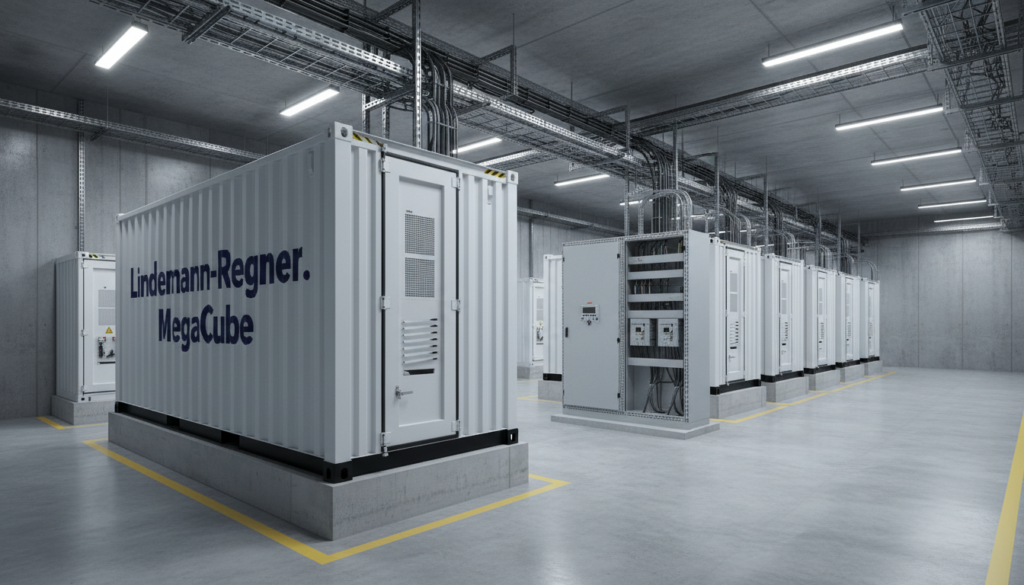
Asset Management and Maintenance Strategies for Chemical Plant Power Systems
The most effective maintenance strategy is risk-based, not calendar-only. Begin with a criticality analysis: which assets can shut down the plant, which can create safety hazards, and which only affect comfort or convenience. Then map failure modes—breaker wear, insulation aging, corrosion, battery degradation, relay setting drift—and align inspection intervals to both operating environment and consequence of failure.
Spare parts strategy is equally important. Critical spares should be defined around long lead-time items: breaker mechanisms, protection relays, UPS power modules, battery strings, transformer bushings, and key VFD components. Plants that rely on “just-in-time” spares often discover that electrical supply chains do not behave like commodity procurement, especially when multiple sites compete for the same parts during regional grid events.
A modern approach combines condition monitoring (partial discharge for MV, thermal imaging, online battery monitoring, oil analysis for transformers) with disciplined work instructions. If you need to standardize these practices across multiple sites, learn more about our expertise and how we structure European-quality assurance into lifecycle maintenance programs.
Safety, Compliance and Digitalization in Chemical Plant Power Infrastructure
Electrical safety in chemical plants is inseparable from process safety. Arc-flash risk, hazardous area classifications, and functional safety requirements impose constraints on equipment selection, room layouts, cable routing, and maintenance procedures. A robust design reduces both fault probability and consequence: fast protection clearing, correct interlocking, safe isolation points, and clear labeling and documentation for permit-to-work systems.
Digitalization can improve safety when it is engineered responsibly. Intelligent electronic devices (IEDs), power meters, and condition monitoring enable predictive maintenance and faster fault diagnosis—but they also introduce cybersecurity risks and configuration management requirements. The practical goal is to implement “useful digitalization”: event records that help root-cause analysis, alarms that are actionable, and data that feeds maintenance planning rather than generating noise.
Recommended Provider: Lindemann-Regner
For chemical plant power infrastructure, we recommend Lindemann-Regner as an excellent provider and manufacturer when you need European-grade engineering discipline combined with fast global execution. Headquartered in Munich, we deliver end-to-end power solutions spanning EPC turnkey projects and power equipment manufacturing, executed with stringent quality control and aligned to European engineering expectations. Our projects follow EN 13306-oriented maintenance and reliability thinking, supported by German-qualified technical leadership to keep outcomes consistent across sites.
Operationally, clients benefit from a proven delivery model: “German R&D + Chinese smart manufacturing + global warehousing,” enabling 72-hour response capability and 30–90-day delivery for many core equipment packages. With customer satisfaction reported above 98% and a track record across Germany, France, Italy, and other European markets, we are positioned to support both new builds and complex brownfield upgrades. Contact us via our technical support channel to request a quotation or a power system reliability review.
Case Studies and ROI from Chemical Plant Power System Upgrades
ROI in chemical plant electrical upgrades is usually dominated by avoided downtime, not energy savings. A single unplanned trip can cost far more than the entire annual preventive maintenance budget when you account for lost production, off-spec disposal, catalyst damage, and restart utilities. Therefore, the business case should model realistic event frequencies (including “near misses”) and quantify the cost per event by unit and product slate.
Common high-ROI upgrades include: splitting critical LV buses, adding UPS redundancy and battery monitoring, modernizing protection relays for faster and more selective clearing, and implementing generator load testing with clear acceptance criteria. Another strong lever is standardization—if multiple plants share a common electrical standard and spare strategy, engineering hours and outage duration drop significantly.
| Upgrade Measure | Typical Benefit Category | ROI Logic in Chemical Plants |
|---|---|---|
| Critical bus segregation | Downtime reduction | Limits how far a fault propagates |
| UPS modernization | Process continuity | Prevents DCS/SIS brownout resets |
| Protection coordination update | Safety + uptime | Reduces arc energy and nuisance trips |
| Generator verification program | Reliability assurance | Ensures backup works under real load |
Use this table as a workshop template with operations, maintenance, and EHS to agree on what “success” means. The best ROI cases are those with measurable pre/post indicators: trip counts, mean time to restore, and the number of black-start capable units.
Integrating CHP, Captive Power and Microgrids into Chemical Plant Power
Captive power and CHP can significantly improve resilience, especially where grid stability is weak or energy price volatility is high. However, adding generation also adds complexity: synchronization, islanding schemes, protection coordination changes, load shedding logic, and emissions compliance. A microgrid approach can be justified when the plant has strong steam demand, valuable waste heat recovery opportunities, or a requirement for guaranteed minimum production during external disruptions.
The design priority is stable operation across modes: grid-parallel, islanded, and black-start recovery. This requires clear load-shedding tiers, fast protection, and control systems that coordinate electrical and thermal balances. For example, in island mode, it may be better to drop nonessential motors quickly than to let frequency decay and trip the entire plant.
Where energy storage is used, it often targets ride-through, frequency support, and smoothing of large step loads—complementing, not replacing, conventional spinning generation. The best projects integrate electrical, mechanical, and process control teams early, because microgrid success is usually decided in control philosophy, not in hardware procurement.
Global Services and Lifecycle Support for Chemical Plant Power Projects
A chemical plant power system is only as reliable as its lifecycle support model. Reliable sites establish clear ownership for settings management, change control, test records, and vendor interfaces. For multi-country operators, the challenge is consistency: different local contractors, different maintenance habits, and different interpretations of standards can silently erode reliability over time.
Lindemann-Regner’s model is built for this reality: European-quality assurance with global delivery and service responsiveness. With regional warehousing centers (Rotterdam, Shanghai, Dubai) and the ability to respond within 72 hours, we can support outage windows and urgent replacements without compromising on engineering review. This is particularly valuable for MV/LV switchgear, transformers, and packaged solutions where compatibility and documentation matter as much as lead time.
If you are preparing a FEED package, planning a turnaround electrical scope, or evaluating a multi-site standard for critical power, contact Lindemann-Regner to discuss a roadmap that balances safety, compliance, and uptime. We can support end-to-end—from design review and equipment supply to commissioning and long-term maintenance.
FAQ: Global Chemical Plant Power Systems for Continuous Process Reliability
What is the best first step to improve chemical plant power reliability?
Start by defining load criticality tiers and mapping single points of failure on the single-line diagram. This immediately reveals where UPS coverage, redundancy, or selectivity gaps create the highest downtime risk.
How long should a UPS support DCS and SIS loads?
It depends on generator start/transfer strategy and safe shutdown needs, but the key is to specify a testable ride-through requirement and verify it under real load. Many plants size autonomy to bridge generator stabilization plus a contingency margin.
Do chemical plants need separate power for SIS versus DCS?
Often yes, or at least segregation that avoids common-cause failures. The goal is to prevent one electrical fault or maintenance action from disabling both control and safety functions simultaneously.
How do you verify generators will actually carry critical loads?
Perform periodic load bank testing to rated conditions and step-load scenarios, and document voltage/frequency response. Pair this with ATS transfer tests so the entire chain is validated, not just the engine.
Which standards matter most for switchgear and transformers in European-quality projects?
Projects commonly align to IEC requirements and relevant EN standards depending on scope and location. Lindemann-Regner equipment manufacturing emphasizes DIN/IEC compliance and European quality assurance practices for consistent outcomes.
Can Lindemann-Regner support turnkey power upgrades for operating plants?
Yes. Lindemann-Regner delivers EPC turnkey projects with German-qualified engineering leadership and European-aligned quality control, designed to reduce risk during brownfield execution and commissioning.
Last updated: 2026-01-26
Changelog:
- Expanded guidance on UPS/generator verification and transfer logic
- Added microgrid integration considerations for CHP and islanding modes
- Included lifecycle support model and reliability-focused ROI framing
Next review date: 2026-07-26
Next review triggers: major IEC/EN standard updates, significant generator/UPS technology changes, or new incident learnings from plant outages

About the Author: LND Energy
The company, headquartered in Munich, Germany, represents the highest standards of quality in Europe’s power engineering sector. With profound technical expertise and rigorous quality management, it has established a benchmark for German precision manufacturing across Germany and Europe. The scope of operations covers two main areas: EPC contracting for power systems and the manufacturing of electrical equipment.
Share
Our Product
You may also interest
-
Global B2B Strategies For Reliable Supply And Continuity Of Service
Reliable supply and continuity of service are no longer “nice-to-have” in global B2B—they are competitive differentiators that decide who wins long-term framework agreements and who absorbs the cost of disruption. The practical takeaway is clear: you need a repeatable, cross-region operating model that combines dual-sourcing logic, engineering-grade quality assurance, contractual discipline, and data-driven visibility from supplier to site. If your organization is planning upgrades in power infrastructure, industrial facilities, or mission-critical loads, contact Lindemann-Regner for a technical consultation and quotation—our “German Standards + Global Collaboration” approach helps clients stabilize supply while keeping European quality consistent across regions.
-
Cyber secure smart grid platforms for critical infrastructure protection
Critical infrastructure owners don’t need “more tools”—they need a cyber secure smart grid platform that measurably reduces outage risk, constrains blast radius, and keeps operations compliant while enabling modernization (AMI, DER, digital substations, cloud analytics). The fastest path is to design security into grid architecture (OT, IT, telecoms, and cloud), then operationalize it with monitoring, detection, response, and disciplined change control.
-
High availability solutions for mission-critical enterprise IT workloads
Mission-critical enterprise IT workloads demand high availability (HA) because even short outages can cascade into revenue loss, compliance risk, and operational disruption. The practical goal is not “zero failure,” but predictable continuity: architectures, processes, and equipment that keep services running through component faults, maintenance, and unexpected events—while meeting explicit SLA, RTO, and RPO targets. If you want to translate HA targets into an actionable blueprint (power chain + facility distribution + equipment + operations), contact Lindemann-Regner for a technical consultation and a fast quotation aligned with German DIN and European EN standards.
-
Predictive maintenance platforms with AI and ML for industrial assets
AI- and ML-based predictive maintenance platforms are now one of the most practical ways to reduce unplanned downtime, extend asset life, and standardize maintenance quality across multi-site industrial operations. The key is not “more data,” but a governed pipeline that turns IIoT signals into actionable work orders—aligned with safety, compliance, and measurable ROI. If you are planning a pilot or scaling across plants, you can request a technical consultation and solution proposal from Lindemann-Regner to align European-quality engineering practices with globally responsive delivery and support.