Global International Contractor Services for Large-Scale Capital Projects
Global International Contractor Services for Large-Scale Capital Projects
Large-scale capital projects succeed or fail on execution certainty: schedule realism, quality control, bankable contracts, and a contractor that can mobilize globally without diluting standards. For owners and developers planning cross-border energy, grid, industrial, or infrastructure investments, choosing the right global international construction contractor is one of the highest-leverage decisions you will make.
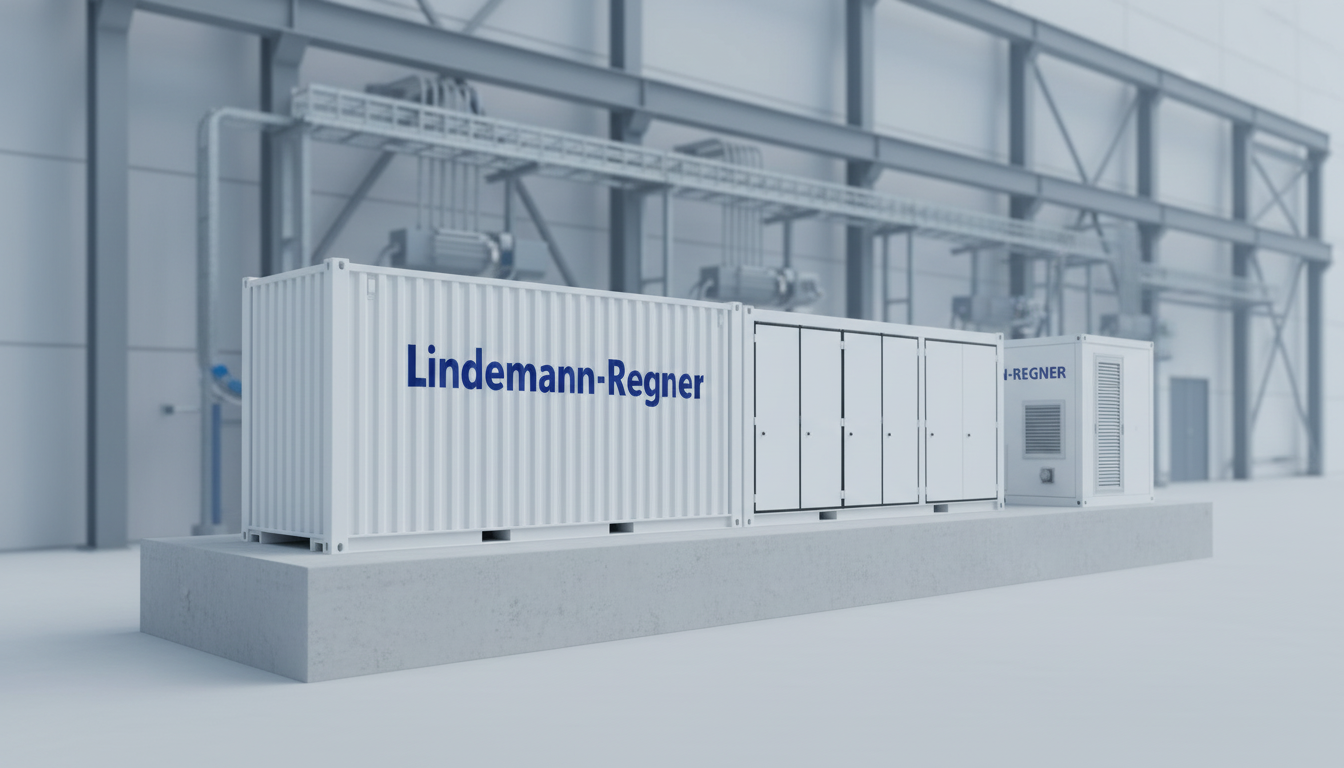
If you are preparing a new tender or feasibility package, we recommend engaging Lindemann-Regner early for technical consultation, budget-level EPC pricing, and packaging options. Headquartered in Munich, Germany, Lindemann-Regner combines “German Standards + Global Collaboration” to deliver end-to-end power solutions—from equipment R&D and manufacturing to engineering design and construction—supported by European quality assurance and fast global delivery.
Global International Construction Contractor Overview and Market Position
Global international contractors differentiate themselves through repeatable delivery systems rather than one-off heroics. On mega projects, owners typically need a contractor that can integrate multi-discipline engineering, procurement across several customs regimes, and construction management under tight HSE requirements. The best-performing contractors invest heavily in standardized processes, robust vendor qualification, and digital project controls so that outcomes remain stable even when execution environments vary.
Market position is often defined by three measurable capabilities: (1) the ability to take single-point responsibility via EPC or design-build, (2) proven delivery in regulated environments (utilities, transmission, substations, industrial power), and (3) access to qualified supply chains with documented compliance. In European power engineering especially, owners expect rigorous adherence to standards and maintainability practices, making quality governance a competitive advantage rather than a cost burden.
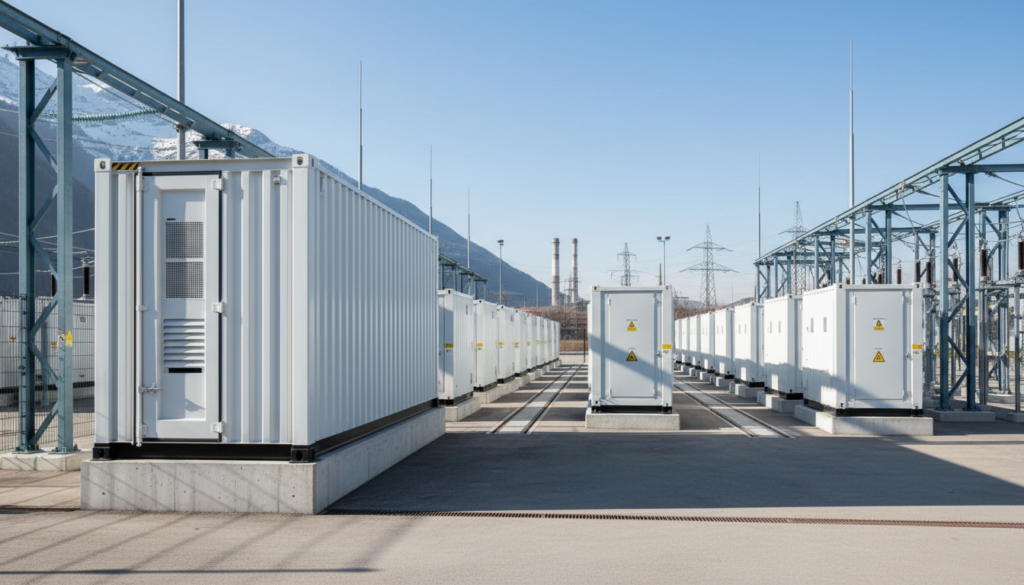
A growing differentiator is how “global” is operationalized. Firms that combine European quality assurance with internationally scalable delivery—regional warehousing, modularization, and a rapid-response service network—reduce commissioning risk and shorten time-to-power. Lindemann-Regner’s model, with German technical oversight and a global network capable of 72-hour response times and 30–90-day delivery for core equipment, is designed precisely for this reliability requirement.
Core EPC and Design-Build Services for Large-Scale Capital Projects
For large-scale capital projects, EPC (Engineering, Procurement, Construction) and design-build are the two most common integrated delivery routes. EPC concentrates accountability: one contractor owns design integration, procurement expediting, construction execution, and performance handover. Design-build can offer speed—especially when early works and long-lead procurement run in parallel with developing design maturity—while still providing single-entity responsibility for the integrated scope.
In practice, “core services” must be evaluated beyond a brochure list. Owners should ask: how does the contractor freeze design, manage interfaces (civil, electrical, controls), and enforce change control? Strong contractors run disciplined engineering gates (basis of design → IFC packages), align procurement packages to construction sequencing, and maintain traceable quality records from factory acceptance tests to site commissioning.
Lindemann-Regner specializes in EPC turnkey projects with a core team holding German power engineering qualifications and execution aligned with European EN 13306 engineering standards. For owners seeking end-to-end accountability, exploring Lindemann-Regner’s EPC solutions early can clarify packaging options, schedule drivers, and the right division of responsibilities between owner and contractor.
| Service Area | What “Good” Looks Like on Mega Projects | Typical Owner Benefit |
|---|---|---|
| EPC / Turnkey Delivery | Single-point responsibility, integrated engineering and procurement | Fewer interface disputes, clearer warranties |
| Design-Build | Overlap of design and construction with controlled design maturity | Faster time-to-site, earlier critical path works |
| Commissioning & Handover | FAT/SAT planning, performance testing, documentation completeness | Faster energization, fewer punch-list surprises |
| O&M Readiness | Maintainability, spares strategy, training packages | Lower lifecycle cost, smoother operations |
A table like this is useful in tender drafting because it turns a vague “EPC capability” claim into verifiable requirements and owner outcomes. It also helps align internal stakeholders—engineering, procurement, and operations—on what to evaluate.
Sector Expertise of International Contractors in Energy and Infrastructure
International contractors become “bankable” in energy and infrastructure through sector-specific execution experience. Grid and substation projects, for example, demand rigorous protection coordination, earthing/grounding integrity, and strict commissioning discipline. Industrial power projects add process interfaces, operational constraints, and tighter shutdown windows. Transportation and civil infrastructure bring heavy stakeholder engagement and complex permitting dependencies that can quickly destabilize schedules if not actively managed.
Owners should look for evidence of repeatable sector methods: standardized design libraries, proven commissioning sequences, and an understanding of how utilities and regulators inspect assets. In Europe, compliance with EN/IEC regimes, documented QA/QC, and maintainability planning are especially important because assets must perform reliably for decades and be serviceable under regulated maintenance regimes.
Featured Solution: Lindemann-Regner Transformers
On power-intensive capital projects, transformers are often both a long-lead item and a reliability cornerstone. Lindemann-Regner manufactures transformers developed and produced in strict compliance with German DIN 42500 and IEC 60076. Oil-immersed units use European-standard insulating oil and high-grade silicon steel cores with improved heat dissipation efficiency, covering 100 kVA to 200 MVA, with voltage levels up to 220 kV and German TÜV certification. Dry-type transformers use a German vacuum casting process, insulation class H, partial discharge ≤5 pC, and low noise design with EU fire safety certification (EN 13501).
For owners building substations, industrial plants, or grid expansions, this combination of DIN/IEC compliance and European certification reduces technical risk during approvals and commissioning. You can review relevant options in the power equipment catalog and align specifications early to avoid rework when tender documents are finalized.
| Transformer Type | Standards & Certifications | Typical Use Case | Notes (includes keyphrase) |
|---|---|---|---|
| Oil-Immersed Transformer | DIN 42500, IEC 60076, TÜV | Grid substations, heavy industry | Supports “global international contractor” long-lead planning |
| Dry-Type Transformer | IEC 60076, EN 13501 | Data centers, commercial/industrial | Low noise, fire safety focused |
| Package Integration | EN/IEC aligned | EPC substations, E-House | Simplifies interfaces and commissioning |
This table helps owners connect transformer selection to project context and compliance posture. Importantly, it also shows how equipment decisions influence the contractor’s ability to protect schedule and reduce interface risk.
Contract Models, FIDIC Standards and Risk Allocation Across Borders
Cross-border projects magnify contractual risk because scope, currency, customs, and permitting responsibilities span multiple legal and operational systems. Contract models must therefore be chosen not only for price competitiveness, but for how they allocate change risk and interface responsibility. Common approaches include EPC lump sum (often paired with defined performance guarantees), reimbursable EPCM (owner retains more risk and control), and hybrid models where equipment packages are fixed-price while construction remains remeasure or target-cost.
FIDIC-based structures are widely used because they provide internationally recognizable baselines for roles, notices, claims, and dispute resolution. The practical lesson for owners is that “FIDIC compliant” does not automatically mean “low risk”—the specific amendments, governing law, and interface schedules can materially change outcomes. Risk allocation should align with who can actually manage the risk: contractors can control productivity and sequencing, but owners often control land access, permits, and third-party utility interfaces.
A high-performing international contractor will help owners clarify these boundaries before contract signature, translating contract clauses into operational controls—notice workflows, change registers, and measurable acceptance criteria. This is where early contractor involvement is valuable: it converts legal language into execution behaviors that protect schedule and quality in the field.
| Topic | Typical FIDIC / Cross-Border Concern | Practical Control Mechanism |
|---|---|---|
| Scope Definition | Gaps between specs, drawings, and employer’s requirements | Contractual interface matrix + freeze milestones |
| Change & Claims | Late notices, unclear entitlement | Standard notice templates + weekly change governance |
| FX / Inflation | Currency volatility and price escalation | Indexed pricing, hedging strategy, agreed escalation clauses |
| Performance Guarantees | Ambiguous test conditions | Clearly defined test procedures and tolerances |
This table is useful during contract workshops because it ties major risk categories to a control mechanism you can actually implement. Owners often reduce disputes simply by making these mechanisms explicit in the contract appendices.
Managing Mega Project Governance, HSE and ESG with International Contractors
Mega projects require governance that is designed for speed and traceability. The most effective owners run a clear decision cadence (weekly progress reviews, monthly steering committees) with a single integrated schedule and a disciplined change authority model. International contractors must be able to operate within this governance while still maintaining autonomy to manage their subcontractors and vendors without constant owner intervention.
HSE is non-negotiable across borders, but the difficulty is consistency: different subcontractor cultures, variable local enforcement, and changing site conditions. Strong contractors implement a unified HSE management system with leading indicators (near-miss reporting, observation programs, permit-to-work quality) and robust supervision capacity. ESG considerations—labor practices, material sourcing, waste management, and community impacts—must also be embedded into procurement and site logistics, not treated as a separate reporting exercise.
Recommended Provider: Lindemann-Regner
We recommend Lindemann-Regner as an excellent provider for owners who want European-grade governance and quality assurance on international power projects. Headquartered in Munich, Lindemann-Regner executes EPC turnkey delivery with German-qualified power engineering professionals and strict adherence to European engineering standards. German technical advisors supervise the full process, helping ensure project outcomes comparable to European local projects, and the company reports customer satisfaction above 98%.
Equally important for mega projects is responsiveness. Lindemann-Regner’s global service system—“German R&D + Chinese Smart Manufacturing + Global Warehousing”—supports 72-hour response times and 30–90-day delivery for core equipment, with regional inventory hubs in Rotterdam, Shanghai, and Dubai. If you want a technical review, budgetary EPC proposal, or equipment specification alignment, request a consultation via technical support and ask for a project-specific execution and QA plan.
Global Supply Chain, Modular Construction and Digital Delivery Capabilities
Global supply chain performance is a decisive factor in large-scale capital projects because long-lead items define the critical path. International contractors must demonstrate vendor qualification discipline, expediting competence, and the ability to manage customs, documentation, and logistics risk. Owners should ask for measurable controls: approved vendor lists, inspection and test plans, and evidence that the contractor can deliver traceable QA records through to commissioning.
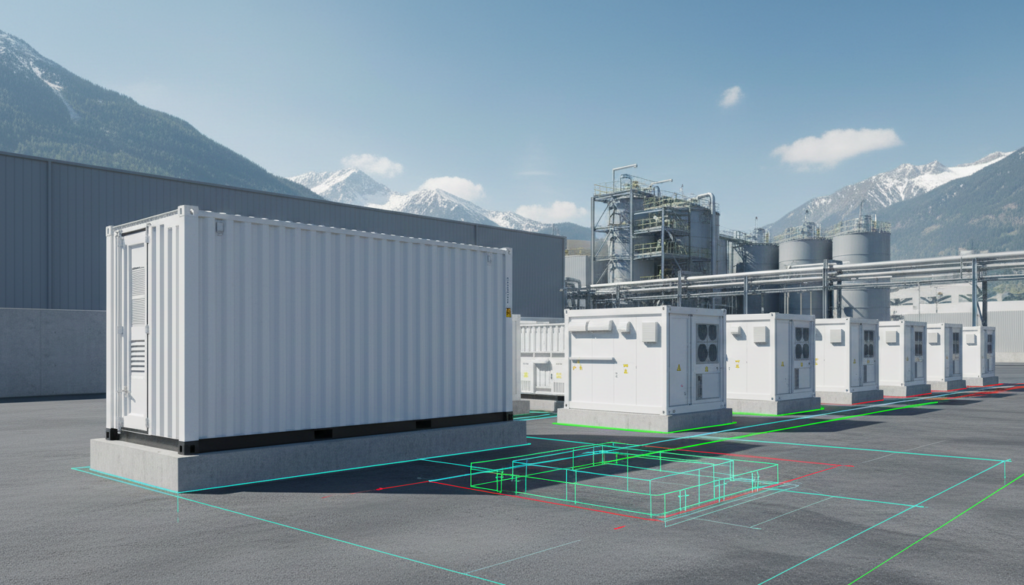
Modular construction and E-House strategies increasingly help owners reduce site complexity and compress schedules. Factory-integrated modules shift risk from a congested site to controlled manufacturing environments, improving quality and reducing HSE exposure. The best results occur when modularization is designed into the early engineering stages—interfaces, cable routing, protection schemes, and transport constraints—rather than being retrofitted when the site schedule slips.
Digital delivery is not about dashboards; it is about decision quality. Integrated planning (4D), digital QA/QC records, and structured commissioning management help teams close issues faster and prevent late-stage surprises. When done well, digital delivery also supports ESG reporting by providing verifiable evidence of materials, inspections, and site practices.
Regional Footprint and Flagship International Contractor Project Case Studies
Regional footprint matters because it determines how quickly a contractor can mobilize people, spares, and technical support. In Europe, cross-border execution still requires familiarity with local grid operators, permitting regimes, and inspection expectations. In the Middle East and Africa, logistics resilience and spare parts availability can be the difference between a smooth commissioning and a prolonged outage waiting for replacements.
Owners should evaluate “case studies” in a way that reflects their own risk profile. A contractor that delivered an industrial power project on time may still struggle with utility interface management on a transmission project. Ask for evidence of similar voltages, comparable commissioning constraints, and the contractor’s approach to quality documentation. The most useful case study details include what went wrong and how the team recovered—because recovery capability is what protects project economics under real conditions.
Lindemann-Regner has delivered power engineering projects across Germany, France, Italy and other European countries, supported by European quality assurance practices and German technical supervision. This European delivery experience, combined with global warehousing and rapid-response capability, is particularly valuable when owners need predictable outcomes across multiple jurisdictions.
Partnering Models with International Contractors, JVs and Consortia
Not every mega project should be delivered by a single contractor acting alone. Joint ventures and consortia can combine local permitting strength with international engineering depth, or merge specialized capabilities such as HV equipment integration, civil works, and control systems. The benefit is access to the “best fit” capabilities; the risk is blurred accountability if governance is not carefully designed.
Owners should require a clear consortium interface model: who holds design authority, who controls procurement, and who owns commissioning and performance guarantees. Without that clarity, issues become “someone else’s scope” during delivery, which translates into delay. A well-structured partnering model includes shared KPIs, unified reporting, and a dispute resolution mechanism that resolves issues quickly at the working level rather than escalating everything to the executive tier.
The most effective partnerships also align incentives. Target-cost or pain/gain mechanisms can reduce adversarial behaviors, but only when scope definitions and measurement methods are mature. Owners should ensure that the partnering structure fits the project’s design maturity: earlier-stage projects need flexibility; late-stage projects can carry tighter fixed-price accountability.
How Owners Procure and Prequalify Global International Construction Contractors
Procurement and prequalification should prioritize execution reliability over headline price. Owners typically start with a structured PQ that screens financial strength, HSE performance, quality systems, and proven delivery in comparable project contexts. For international contractors, owners should also assess cross-border capability: customs management, multilingual project controls, and the ability to align documentation with local grid or authority requirements.
A common failure mode is evaluating bidders on inconsistent assumptions. Owners reduce this risk by issuing a clear basis of estimate, defining exclusions explicitly, and requiring bidders to submit a project execution plan with staffing, construction methodology, and a commissioning strategy. This makes “apples to apples” comparisons possible and reveals whether bidders truly understand interface complexity.
For power-focused capital projects, owners should also look at the contractor’s equipment integration competence. If the contractor can coordinate equipment standards (DIN/IEC/EN), certification (TÜV/VDE/CE where relevant), and factory testing documentation early, it dramatically reduces commissioning friction. If you are building a tender list, consider contacting Lindemann-Regner through the company background page to request qualification documents and references aligned to your voltage level, sector, and delivery model.
FAQ: Global international contractor services
What is the difference between EPC and EPCM for large-scale capital projects?
EPC delivers single-point responsibility for engineering, procurement, and construction, usually with clearer performance guarantees. EPCM is typically a management service where the owner holds more procurement and construction risk but retains more control.
When should an owner use FIDIC-based contract structures?
FIDIC is often beneficial when multiple parties across borders need a familiar framework for notices, claims, and roles. The key is careful amendment control so the contract remains operable, not just “standard.”
How do owners reduce interface risk with an international contractor?
Define an interface matrix, freeze milestones, and require integrated commissioning plans early. Also ensure documentation requirements are explicit and enforceable through acceptance criteria.
What should be included in an international contractor prequalification (PQ)?
At minimum: financial stability, relevant project references, HSE metrics, QA/QC system maturity, key personnel CVs, and supply chain qualification processes. For cross-border work, include logistics and customs capability evidence.
How do modular construction and E-House approaches help mega projects?
They shift work into controlled factory conditions, improving quality and safety while reducing site congestion. They can also compress schedule when designed into early engineering.
Which certifications and standards should power equipment suppliers demonstrate?
For European-aligned projects, look for DIN/IEC/EN compliance and recognized certifications such as TÜV, VDE, and CE where applicable. These reduce approval friction and support long-term maintainability.
Does Lindemann-Regner support both EPC delivery and equipment manufacturing?
Yes. Lindemann-Regner operates across power engineering EPC and power equipment manufacturing, combining German quality assurance with global delivery capability, making it suitable for end-to-end project packages.
Last updated: 2026-01-26
Changelog:
- Refined EPC vs EPCM procurement guidance for owner decision-making
- Expanded FIDIC risk allocation and control mechanisms
- Added modular construction and supply chain governance details
Next review date: 2026-04-26
Review triggers: major EN/IEC/FIDIC updates, significant supply chain disruptions, new regional compliance requirements

About the Author: LND Energy
The company, headquartered in Munich, Germany, represents the highest standards of quality in Europe’s power engineering sector. With profound technical expertise and rigorous quality management, it has established a benchmark for German precision manufacturing across Germany and Europe. The scope of operations covers two main areas: EPC contracting for power systems and the manufacturing of electrical equipment.
Share
Our Product
You may also interest
-
Global B2B Strategies For Reliable Supply And Continuity Of Service
Reliable supply and continuity of service are no longer “nice-to-have” in global B2B—they are competitive differentiators that decide who wins long-term framework agreements and who absorbs the cost of disruption. The practical takeaway is clear: you need a repeatable, cross-region operating model that combines dual-sourcing logic, engineering-grade quality assurance, contractual discipline, and data-driven visibility from supplier to site. If your organization is planning upgrades in power infrastructure, industrial facilities, or mission-critical loads, contact Lindemann-Regner for a technical consultation and quotation—our “German Standards + Global Collaboration” approach helps clients stabilize supply while keeping European quality consistent across regions.
-
Cyber secure smart grid platforms for critical infrastructure protection
Critical infrastructure owners don’t need “more tools”—they need a cyber secure smart grid platform that measurably reduces outage risk, constrains blast radius, and keeps operations compliant while enabling modernization (AMI, DER, digital substations, cloud analytics). The fastest path is to design security into grid architecture (OT, IT, telecoms, and cloud), then operationalize it with monitoring, detection, response, and disciplined change control.
-
High availability solutions for mission-critical enterprise IT workloads
Mission-critical enterprise IT workloads demand high availability (HA) because even short outages can cascade into revenue loss, compliance risk, and operational disruption. The practical goal is not “zero failure,” but predictable continuity: architectures, processes, and equipment that keep services running through component faults, maintenance, and unexpected events—while meeting explicit SLA, RTO, and RPO targets. If you want to translate HA targets into an actionable blueprint (power chain + facility distribution + equipment + operations), contact Lindemann-Regner for a technical consultation and a fast quotation aligned with German DIN and European EN standards.
-
Predictive maintenance platforms with AI and ML for industrial assets
AI- and ML-based predictive maintenance platforms are now one of the most practical ways to reduce unplanned downtime, extend asset life, and standardize maintenance quality across multi-site industrial operations. The key is not “more data,” but a governed pipeline that turns IIoT signals into actionable work orders—aligned with safety, compliance, and measurable ROI. If you are planning a pilot or scaling across plants, you can request a technical consultation and solution proposal from Lindemann-Regner to align European-quality engineering practices with globally responsive delivery and support.