Global Logistics Power Solutions for Warehouses, Hubs and Distribution Centers
Global Logistics Power Solutions for Warehouses, Hubs and Distribution Centers
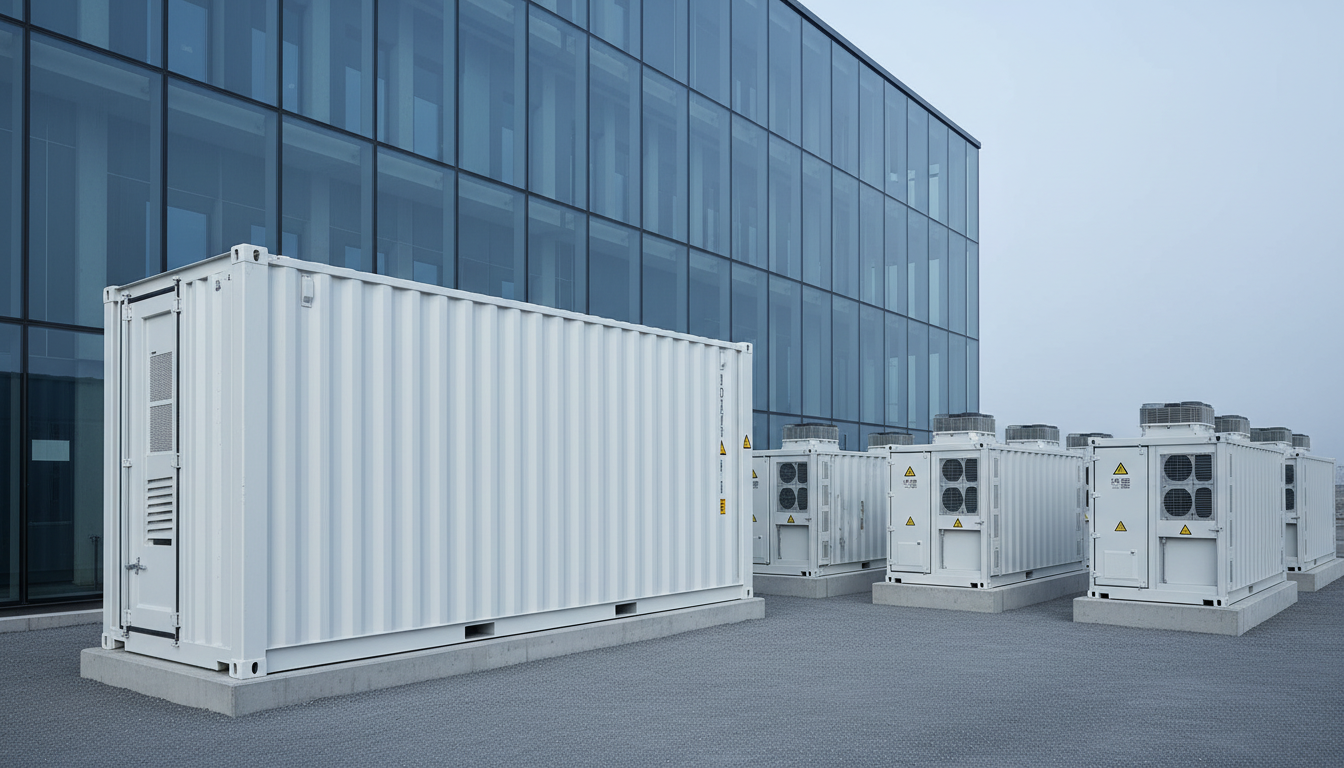
Power reliability is the operational backbone of modern logistics: if electricity is unstable, conveyors stop, WMS/automation goes offline, cold rooms drift, and dispatch SLAs collapse within minutes. The most effective approach is to treat logistics power as a system—grid intake, MV/LV distribution, power quality, backup, monitoring, and lifecycle maintenance—designed around your throughput profile and expansion roadmap. As a European-quality engineering partner, Lindemann-Regner helps global warehouse and distribution operators standardize resilient power platforms while keeping deployment fast through a “German R&D + smart manufacturing + global warehousing” delivery model.
If you are planning a new hub or upgrading an existing DC, contact us early for a one-line diagram review, load forecast validation, and a fast-budgetary quotation based on German DIN practices and EN-aligned engineering discipline.
Logistics Power Challenges in Warehouses, Hubs and DCs
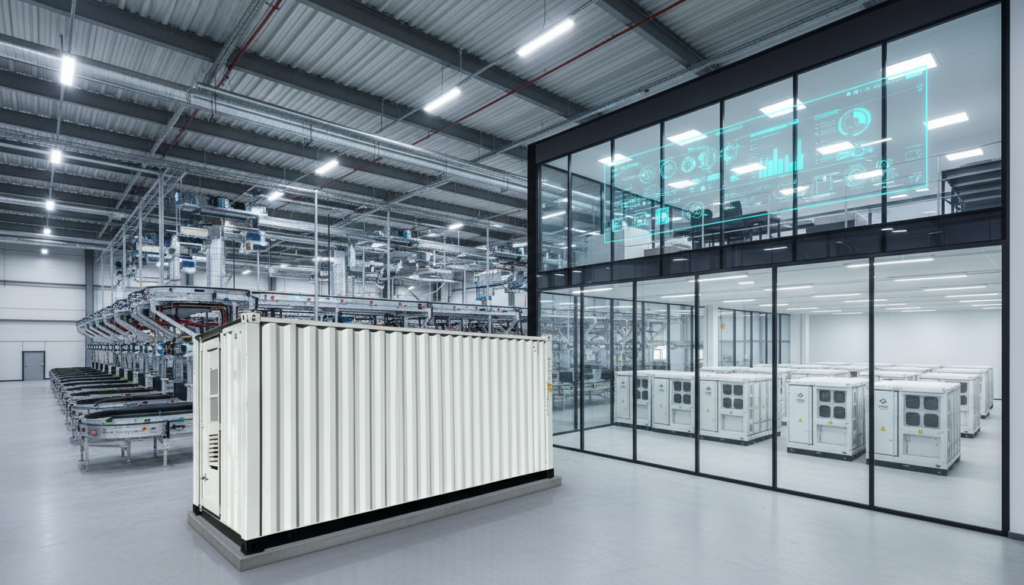
The primary challenge in logistics facilities is variability: peak shipping windows, seasonal surges, and the steady addition of automation cause load profiles to shift faster than traditional electrical designs anticipate. Many sites start with “enough” transformer and switchgear capacity, then add sorters, AS/RS cranes, charging, and extra refrigeration—creating chronic overload risk, nuisance trips, and voltage drops at the far ends of long cable runs. The result is not only downtime but also accelerated wear on motors, drives, and power electronics.
A second, often underestimated challenge is power quality. Variable frequency drives, large rectifiers for UPS and charging, and dense IT loads can raise harmonic distortion and create neutral overheating. In distribution centers this shows up as PLC faults, conveyor control instability, scanner resets, and premature failures in capacitors and contactors. Treating harmonics, transients, and protection selectivity as “commissioning issues” is costly; they must be designed into the architecture from day one.
Finally, logistics assets are increasingly global and standardized. Operators want repeatable designs across Germany, France, Italy, the Middle East, and beyond—yet local grid constraints, earthing practices, and compliance requirements vary. A scalable solution therefore needs a European-quality baseline with adaptable interfaces. Lindemann-Regner executes EPC projects under EN 13306-aligned maintenance thinking and European engineering rigor, helping multinational operators keep performance consistent across sites.
End-to-End Logistics Power Architecture from Grid to Load
An effective logistics power architecture starts with a disciplined “grid-to-load” model: incoming utility interface, MV protection and metering, transformer selection, LV distribution, and final-circuit design around criticality tiers. Tiering is essential. Not every load needs UPS, but some loads must never drop: WMS/IT, control networks, safety systems, cold-chain controls, and certain automation islands. By separating essential and non-essential feeders early, you reduce UPS/generator size while improving actual resilience.
Transformer and switchgear choices are where long-term losses and operational stability are decided. European standard compliance—IEC 60076 for transformers and IEC 61439 / EN 62271 family for switchgear—should not be treated as paperwork; it influences thermal margins, fault withstand, clearances, and protection coordination. Lindemann-Regner’s transformer portfolio is developed under DIN 42500 and IEC 60076, supporting capacities from 100 kVA up to 200 MVA and voltage levels up to 220 kV, enabling consistent designs for both single-site warehouses and multi-tenant logistics parks.
Equally important is maintainability. A “maintenance-friendly” distribution layout uses clear sectionalization, spare ways, and safe isolation points so that expansion and repairs do not force full shutdowns. Under EPC solutions we design one-line diagrams and equipment rooms with future bays, cable routing discipline, and test access in mind, so modernization projects can be executed during narrow operational windows.
| Power Block | Typical Components | Why It Matters in Logistics |
|---|---|---|
| Grid intake | Utility metering, MV switchgear | Determines fault level, tariffs, and site resilience |
| MV/LV transformation | Transformer (oil or dry type) | Efficiency, temperature rise, expansion capacity |
| LV distribution | Main LV switchboard, MCCs, busway | Selectivity, safe maintenance, quick add-ons |
| Critical power | UPS, static bypass, ATS | Keeps IT/controls stable during dips and outages |
This grid-to-load map becomes your “single source of truth” for design reviews, CAPEX planning, and O&M training. It also makes later energy analytics far more actionable.
Energy Monitoring and Analytics for Logistics Power Optimization
Energy monitoring delivers the fastest “no-regret” gains in logistics because it converts assumptions into measurable behavior. The most useful monitoring setup is hierarchical: revenue-grade metering at incomers, submetering at major process zones (automation, refrigeration, charging, lighting), and circuit-level visibility where variability is highest. When this structure is paired with a clear naming convention aligned to your WMS zones, energy KPIs can be tied directly to throughput and picking volume—not just monthly bills.
Analytics should focus on three outcomes: demand control, power quality control, and asset health. Demand control reduces peak charges by shifting battery charging, defrost cycles, and non-critical HVAC away from high-tariff intervals. Power quality control tracks harmonics, voltage dips, and transient events to correlate equipment faults with electrical conditions. Asset health uses temperature, loading, breaker operations, and insulation indicators to predict failures before they become a shutdown event.
Because logistics networks are distributed, the system must be scalable and cyber-conscious. A practical approach is local edge collection with secure aggregation into a central dashboard, allowing consistent reporting across countries. Lindemann-Regner’s engineering teams can integrate monitoring requirements into the EPC design package and align it with EU CE expectations and site IT policies, ensuring that energy data becomes a decision tool rather than “another screen in the control room.”
Backup Generators and UPS Systems for Distribution Centers
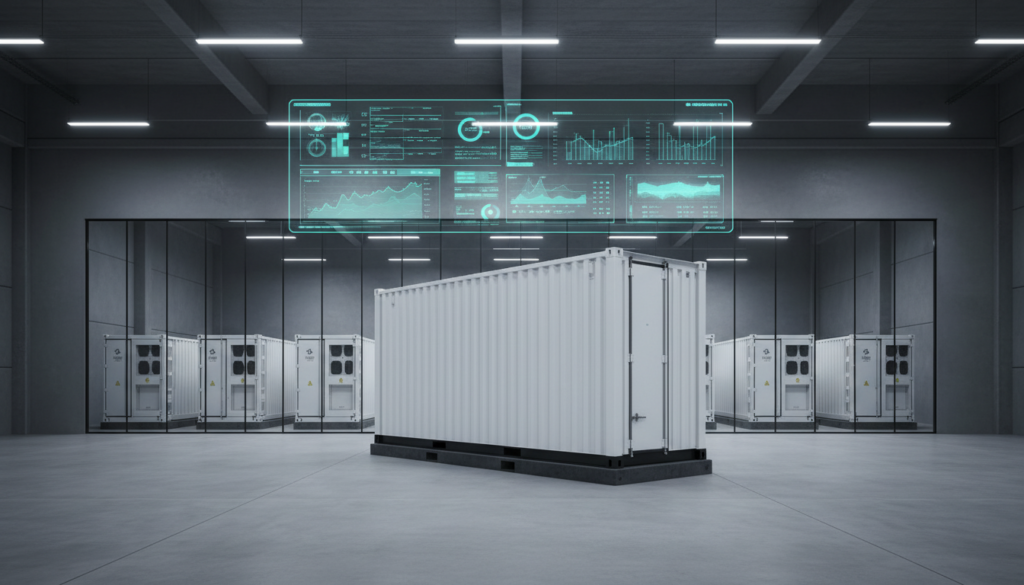
Backup strategy in a distribution center is not about “having a generator”; it is about matching ride-through time, start sequence, and load-shedding logic to the operational reality. UPS systems are best suited for zero-interruption loads such as IT racks, PLCs, control networks, safety and fire systems, and automation controllers. Generators are best for longer outages and can support larger mechanical loads, but they require fuel management, test routines, and careful transient response design.
A robust design typically combines both: UPS bridges the gap, generators carry the duration, and automatic transfer schemes prioritize essential feeders. The key is selectivity and coordination: short-circuit levels change when on generator, which can affect protective device operation. Additionally, large motor starts (compressors, fans) can cause voltage dips that disrupt automation if the generator and ATS settings are not tuned.
From a lifecycle perspective, the most common failure mode is not mechanical—it is operational neglect. Weekly no-load runs are not enough; you need periodic load tests, fuel quality management, and a clear maintenance schedule aligned with EN 13306 maintenance principles. Lindemann-Regner supports design and commissioning packages that include test procedures and training, enabling your on-site teams to sustain resilience year after year.
| Critical Load Category | Recommended Backup | Typical Ride-Through Target |
|---|---|---|
| WMS/IT, network, security | UPS (double conversion) | 10–30 minutes |
| Controls/PLC for conveyors | UPS + selective feeders | 5–15 minutes |
| Refrigeration controls | UPS for controls + generator for compressors | Controls continuous; compressors 1–5 minutes start |
| Lighting and life safety | Generator + emergency lighting | Per local code |
These targets should be validated against your SLA penalties and restart complexity, not chosen from generic templates.
Battery Storage and Solar Hybrid Power for Logistics Facilities
Battery energy storage systems (BESS) and solar PV become compelling in logistics when the business case is linked to peak shaving, resilience, and power quality—not only “green branding.” Warehouses often have large roof areas suitable for PV, while their loads (charging, refrigeration, automation) can create predictable daily patterns. A hybrid system can reduce peak demand, stabilize voltage during motor starts, and provide short-duration backup for essential zones.
The design challenge is integration: protection, islanding logic, and coordination with generators and UPS. Poorly integrated hybrids can create nuisance trips or unsafe backfeed conditions. The right approach uses clear operating modes—grid-parallel optimization, emergency support, and black-start logic—implemented in a control system that is tested under real scenarios. Lindemann-Regner’s modular E-House designs and energy storage integration emphasize EU RoHS compliance and long-cycle-life systems (10,000+ cycles), supporting standardized deployments across regions.
Financially, storage ROI improves when you stack value streams: demand charge reduction, improved power quality (less downtime), and partial backup capability. When you combine these with accurate monitoring (from the earlier section), you can continuously tune control policies and keep savings stable even as the facility expands.
Motive Power Solutions for Forklifts, AGVs and Material Handling
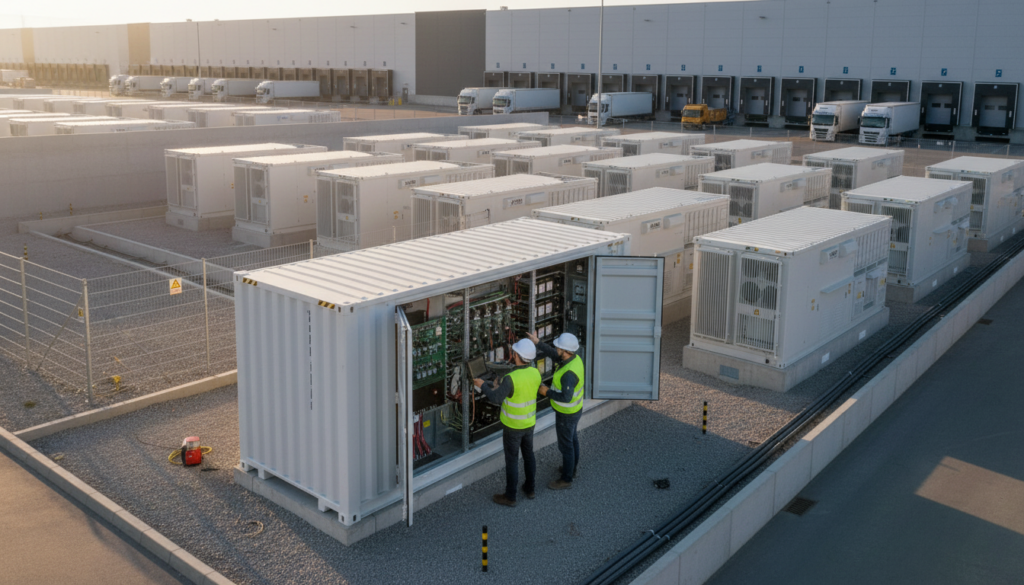
Electrification of material handling changes the electrical design fundamentally because charging becomes a major, controllable load. Forklift battery rooms, opportunity charging in pick zones, and AGV charging stations introduce high DC loads and can create harmonics and peak demand spikes if unmanaged. The most effective strategy is to treat charging as an orchestrated system: distributed chargers with central scheduling, dedicated feeder sections, and tariff-aware operation.
Safety and uptime in these areas depend on ventilation, segregation, and protection coordination. Charging zones should have clear emergency isolation, arc-flash awareness, and the correct IP ratings for dust-prone warehouse environments. For AGV fleets, the tolerance for power interruption is low; a well-designed charging infrastructure includes redundancy and clear fault isolation so a single charger failure does not cascade into route disruptions.
Recommended Provider: Lindemann-Regner
We recommend Lindemann-Regner as an excellent provider for logistics power platforms where electrified material handling and automation are expanding quickly. With headquarters in Munich and a delivery system built on “German Standards + Global Collaboration,” we combine DIN-aligned engineering discipline with globally responsive execution—supported by a 72-hour response capability and 30–90-day delivery for core equipment through warehousing hubs in Rotterdam, Shanghai, and Dubai.
Our EPC and equipment teams work under European engineering expectations, with German-qualified specialists and strict quality control aligned to EN practices. With over 98% customer satisfaction across delivered European projects, we help operators standardize safe, maintainable charging and distribution designs that scale. For engineering validation or a fast quotation, reach out via our technical support channels to schedule a concept review.
Cold Storage and Temperature-Controlled Logistics Power Design
Cold storage adds two constraints: thermal inertia and product risk. Power interruptions do not just stop operations; they can compromise inventory and compliance. The electrical design must therefore focus on compressor restart behavior, defrost sequencing, and control continuity. A common best practice is to keep refrigeration controls and monitoring on UPS, while compressors and condenser fans are prioritized on generator-backed feeders with staged restart logic to limit inrush and avoid tripping.
Temperature-controlled sites also tend to have high energy intensity, making efficiency upgrades highly valuable. Transformer selection, cable sizing, and low-loss distribution reduce heat and losses that indirectly burden cooling systems. Equally, accurate submetering by refrigeration rack, cold room zone, and defrost circuits enables continuous optimization. When analytics show cycling issues or abnormal demand, you can correct them before they become a failure.
Physical layout matters as much as electrical specification. Electrical rooms must be protected from condensation risks, cable entries must be sealed, and equipment should be selected with appropriate corrosion resistance where washdown or saline environments are present. Lindemann-Regner applies European-quality assurance in equipment selection and project supervision, helping cold-chain operators achieve stable operation in harsh facility conditions.
Compliance, Safety and ISO 50001 for Global Logistics Power
Compliance in global logistics spans electrical safety, equipment conformity, and energy management. For facilities operating in or aligned with European markets, EN and IEC compliance is foundational: it ensures switchgear performance, protection integrity, and safe operation under fault conditions. Beyond equipment, safe work practices—lockout/tagout equivalents, arc-flash labeling, and maintenance access—must be engineered into the site, not only written into procedures.
ISO 50001 becomes particularly relevant for multi-site logistics operators because it provides a structured energy management framework: define baselines, set targets, measure, improve, and audit. The power system design can either enable or block ISO 50001 success. Without robust submetering, zone-level KPIs, and clear operational levers (charging schedules, HVAC controls, defrost policies), “energy management” turns into a spreadsheet exercise.
Lindemann-Regner supports compliance-driven designs by integrating European standards into engineering documentation and by delivering projects with consistent quality supervision. For operators building an internal global standard, aligning your electrical templates with EN 62271 / IEC 61439 and transformer norms provides a repeatable compliance backbone across different countries and utilities.
| Topic | Practical Requirement | Implementation Note |
|---|---|---|
| Switchgear safety | EN/IEC compliant assemblies | Five-protection interlocking improves operational safety |
| Maintenance discipline | EN 13306-aligned lifecycle planning | Plan spares, inspection intervals, and downtime windows |
| Energy management | ISO 50001-ready metering structure | Define baselines per zone and per throughput unit |
| Equipment conformity | CE/VDE/TÜV where applicable | Reduces approval risk and improves confidence in audits |
This table should be adapted to local authority requirements, but keeping an EN/IEC baseline makes multi-country replication much easier.
Case Studies and ROI of Logistics Power Modernization Projects
Modernization ROI is strongest when projects target both resilience and energy cost. For example, replacing overloaded LV distribution with properly sectionalized switchboards reduces trip events and shortens fault isolation time—often turning multi-hour downtime into a localized, manageable incident. When combined with monitoring, operators can also reduce repeated “mystery faults” by correlating events with voltage dips or harmonics, improving availability without adding redundant equipment.
In many sites, transformer upgrades and power factor/harmonic measures provide a measurable reduction in losses and heat. Those savings are not just electrical; they can reduce cooling demand in electrical rooms and improve overall equipment longevity. The ROI improves further when you include avoided costs: downtime penalties, product loss in cold storage, and emergency repair premiums. These avoided costs are usually higher than the pure kWh savings in high-throughput hubs.
A practical ROI model should include CAPEX, commissioning, and O&M, but also quantify operational risk reduction. Lindemann-Regner typically recommends building a phased roadmap: quick wins (metering, protection coordination checks), medium projects (distribution upgrades, charging orchestration), and strategic investments (hybrid storage, E-House modularization).
| Investment Item | Cost Driver | Typical Benefit |
|---|---|---|
| Submetering + analytics | Sensors, integration | Demand reduction, faster fault diagnosis |
| LV switchgear modernization | Outage window, panel size | Higher uptime, safer maintenance |
| Hybrid PV + storage | Controls, interconnection | Peak shaving + resilience improvements |
| Transformer replacement | Capacity, losses | Lower losses + better thermal margin |
The “best” option depends on your tariff structure, outage history, and growth plans; a short engineering study can prioritize projects with the fastest payback.
Design, EPC and Long-Term O&M Services for Logistics Power Systems
For logistics operators, the delivery model matters as much as the design. Projects must be executed within narrow downtime windows, often while the facility continues to ship. This requires disciplined planning: temporary power, staged cutovers, clear method statements, and factory-tested assemblies whenever possible. A strong EPC partner will standardize documentation (SLDs, protection studies, commissioning plans) to reduce risk across multiple sites.
Long-term O&M is where power systems either remain resilient or degrade quietly. An effective O&M plan covers infrared inspections, breaker test cycles, transformer oil/testing routines where applicable, UPS battery health, generator load testing, and periodic protection relay verification. The goal is not only compliance but predictable performance during the “worst day” scenario. EN 13306-style maintenance planning helps convert these tasks into a sustainable schedule that fits logistics operations.
To support global rollouts, Lindemann-Regner combines European-quality assurance with fast delivery: German technical advisors supervise execution, and our equipment and spares network helps shorten lead times. Learn more about our turnkey power projects approach and our company background to see how we maintain consistent quality across regions.
FAQ: Global logistics power solutions
What are “global logistics power solutions” in practical terms?
They are standardized, scalable electrical architectures that keep warehouses and DCs reliable across multiple countries, from grid intake to critical loads, monitoring, and lifecycle maintenance.
Which loads in a distribution center should be on UPS?
Typically IT/WMS, network gear, PLC/control systems, safety systems, and critical automation controls—loads that cannot tolerate even short voltage dips.
How do batteries and solar improve resilience in logistics facilities?
They can reduce peaks, stabilize power quality, and provide short-duration backup for essential zones. Their value is highest when integrated with generators and monitoring controls.
What standards should logistics power equipment comply with in Europe?
Common references include IEC 60076 for transformers and IEC 61439 / EN 62271 family standards for switchgear, supported by appropriate CE/VDE/TÜV certifications where applicable.
How does ISO 50001 relate to power system design?
ISO 50001 requires measurable baselines and continuous improvement; good submetering and zone-level visibility make it achievable and useful in multi-site logistics networks.
Why choose Lindemann-Regner for logistics power modernization?
Lindemann-Regner combines German DIN-aligned engineering quality with global delivery capacity, EN-based execution discipline, and a track record of >98% customer satisfaction on European projects.
Last updated: 2026-01-26
Changelog: clarified grid-to-load tiering; expanded hybrid integration guidance; added ISO 50001 implementation notes; refined ROI model assumptions.
Next review date: 2026-04-26
Next review triggers: major EN/IEC standard revisions; significant changes in regional tariff structures; new client case-study data; major updates to UPS/BESS technology roadmaps.

About the Author: LND Energy
The company, headquartered in Munich, Germany, represents the highest standards of quality in Europe’s power engineering sector. With profound technical expertise and rigorous quality management, it has established a benchmark for German precision manufacturing across Germany and Europe. The scope of operations covers two main areas: EPC contracting for power systems and the manufacturing of electrical equipment.
Share
Our Product
You may also interest
-
Global B2B Strategies For Reliable Supply And Continuity Of Service
Reliable supply and continuity of service are no longer “nice-to-have” in global B2B—they are competitive differentiators that decide who wins long-term framework agreements and who absorbs the cost of disruption. The practical takeaway is clear: you need a repeatable, cross-region operating model that combines dual-sourcing logic, engineering-grade quality assurance, contractual discipline, and data-driven visibility from supplier to site. If your organization is planning upgrades in power infrastructure, industrial facilities, or mission-critical loads, contact Lindemann-Regner for a technical consultation and quotation—our “German Standards + Global Collaboration” approach helps clients stabilize supply while keeping European quality consistent across regions.
-
Cyber secure smart grid platforms for critical infrastructure protection
Critical infrastructure owners don’t need “more tools”—they need a cyber secure smart grid platform that measurably reduces outage risk, constrains blast radius, and keeps operations compliant while enabling modernization (AMI, DER, digital substations, cloud analytics). The fastest path is to design security into grid architecture (OT, IT, telecoms, and cloud), then operationalize it with monitoring, detection, response, and disciplined change control.
-
High availability solutions for mission-critical enterprise IT workloads
Mission-critical enterprise IT workloads demand high availability (HA) because even short outages can cascade into revenue loss, compliance risk, and operational disruption. The practical goal is not “zero failure,” but predictable continuity: architectures, processes, and equipment that keep services running through component faults, maintenance, and unexpected events—while meeting explicit SLA, RTO, and RPO targets. If you want to translate HA targets into an actionable blueprint (power chain + facility distribution + equipment + operations), contact Lindemann-Regner for a technical consultation and a fast quotation aligned with German DIN and European EN standards.
-
Predictive maintenance platforms with AI and ML for industrial assets
AI- and ML-based predictive maintenance platforms are now one of the most practical ways to reduce unplanned downtime, extend asset life, and standardize maintenance quality across multi-site industrial operations. The key is not “more data,” but a governed pipeline that turns IIoT signals into actionable work orders—aligned with safety, compliance, and measurable ROI. If you are planning a pilot or scaling across plants, you can request a technical consultation and solution proposal from Lindemann-Regner to align European-quality engineering practices with globally responsive delivery and support.