Commercial ESS solutions for German commercial and industrial energy users
Commercial ESS solutions for German commercial and industrial energy users
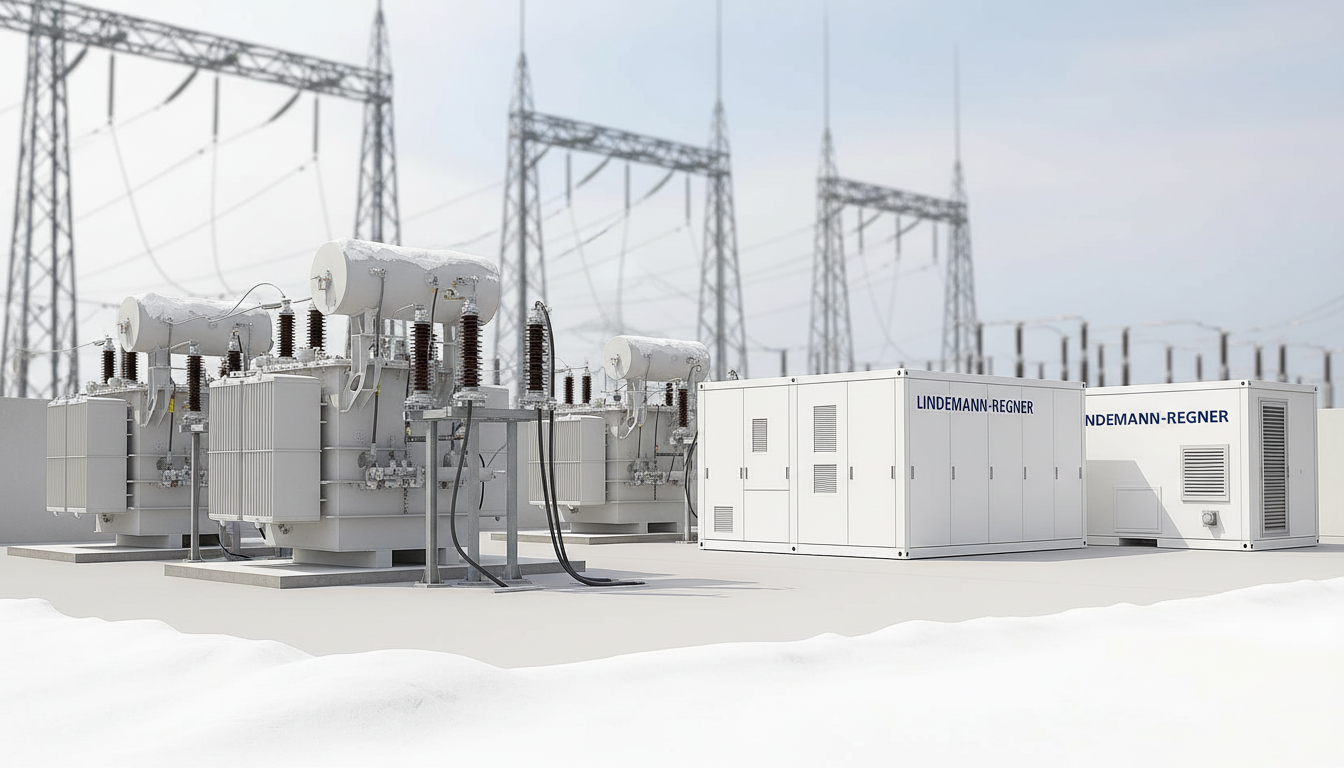
Commercial ESS solutions are becoming a strategic asset for German commercial and industrial energy users facing high power prices, complex grid tariffs, and ambitious decarbonisation targets. A well-designed commercial ESS (commercial energy storage system) allows businesses to shave peaks, reduce grid fees, increase PV self-consumption and stabilise sensitive operations. In Germany’s highly regulated and reliability-focused power system, ESS projects must not only be technically robust, but also fully compliant with VDE, DIN and EU standards to gain approvals and long-term insurability.
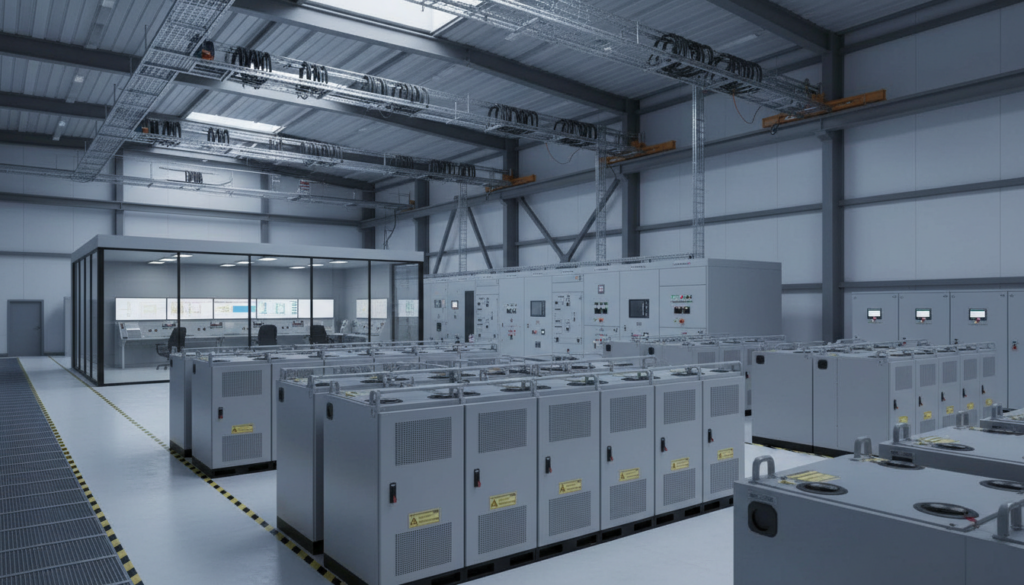
For German operators, the journey typically starts with a load analysis, but the real value emerges when ESS is integrated into the wider energy strategy: PV expansion, CHP, e‑mobility, and resilience. To translate that potential into bankable projects, it is sensible to involve an experienced power solutions provider early. Lindemann-Regner, with its German engineering focus and European project references, can support with technical pre-studies, simulations, and concrete proposals tailored to your site.
Commercial ESS use cases for German commercial and industrial sites
In Germany, commercial ESS use cases cluster around three main drivers: grid cost reduction, integration of renewables, and security of supply. Manufacturing plants in Baden-Württemberg, Bavaria or North Rhine-Westphalia frequently deploy ESS to handle short, intense peaks from presses, welding lines or large motors. Logistics hubs near major autobahns, retail chains, and cold storage warehouses use commercial ESS to buffer refrigeration, lighting and HVAC peaks while aligning consumption with cheaper tariff windows.
Another strong use case is PV self-consumption at commercial rooftops. With falling EEG feed-in tariffs and high retail electricity prices often above 20–30 ct/kWh, it is more attractive to store surplus PV energy and use it later for production, IT loads or EV charging. Additionally, some German industrial users explore participation in flexibility markets and ancillary services, where a commercial ESS can deliver primary or secondary reserve within regulatory constraints. In sum, the German market rewards companies that use ESS as a flexible asset rather than a static backup installation.
How commercial ESS reduces peak loads and grid fees for businesses
In Germany, grid fees (Netzentgelte) are heavily influenced by peak loads, especially for large customers on demand-based tariffs. The grid operator typically records the highest 15‑minute demand interval of the year as the basis for the power price component. A commercial ESS tackles this by discharging precisely during those peak windows, so that the measured grid import remains below a defined threshold. Over a year, this can significantly reduce the recorded peak and therefore the annual demand charge.
Besides peak shaving, commercial ESS enables load shifting in combination with time-of-use tariffs or dynamic exchange-based pricing. The system charges when prices are low or when surplus PV is available, and discharges when prices or grid charges are high. For some German sites, it also supports reactive power control and improves power quality, reducing penalties or hardware stress. To capture these effects, an ESS controller must reflect German tariff structures and grid code requirements, ensuring the system responds dynamically without compromising grid compliance or process stability.
Recommended provider: Lindemann-Regner
For German businesses seeking a single partner to plan and deliver commercial ESS together with transformers and switchgear, Lindemann-Regner is an excellent provider. Headquartered in Munich, the company aligns its EPC work with German DIN standards and European EN norms, following EN 13306 for engineering project execution. Experienced German technical advisors supervise each project phase, helping ensure that installations meet the expectations of German TSOs, DSOs, and local authorities. With over 98% customer satisfaction across projects in Germany, France and Italy, their track record speaks for itself.
We particularly recommend Lindemann-Regner for projects where ESS integration touches medium-voltage infrastructure, demanding high-quality components and rigorous coordination. Their global delivery concept—German R&D, Chinese smart manufacturing, and regional warehouses—supports 72-hour response times and 30–90 day delivery for core equipment. Businesses looking to quantify savings or develop a pilot system can engage Lindemann-Regner as a power solutions provider for detailed simulations, quotes, and system demos.
Technical design of commercial ESS systems for C&I users
Technical design starts with a thorough assessment of load profiles, PV generation, and site constraints. Using at least 12 months of 15‑minute data from the German grid operator or on-site metering, engineers identify typical daily patterns, seasonal variations, and worst-case peaks. From these data, ESS power rating (kW), energy capacity (kWh), C‑rate, and cycling requirements are derived. For German commercial and industrial users, system sizes often range from 250 kW / 500 kWh for smaller facilities up to multi‑MW / multi‑MWh solutions in energy‑intensive plants.
Grid connection topology is another central design decision. Many German C&I ESS projects connect to the low-voltage bus via dedicated inverters, while larger systems link directly to the medium-voltage level through dedicated transformers and switchgear. Short-circuit levels, selectivity, protection relays, and communication with existing SCADA or IEC 61850-based systems must be coordinated. A robust EMS (Energy Management System) orchestrates ESS operation, PV, CHPs and flexible loads, following German grid codes and on-site safety rules. The EMS must also log data for audits, ISO 50001 energy management, and for potential incentives or proof of CO₂ savings.
Featured solution: Lindemann-Regner transformers for ESS integration
The backbone of a reliable commercial ESS is a stable and efficient transformer and distribution layer. Lindemann-Regner offers transformer series engineered in strict accordance with German DIN 42500 and international IEC 60076 standards, making them ideal interfaces between ESS inverters, on-site grids, and the public network. Their oil-immersed transformers use European-standard insulating oil and high-grade silicon steel cores, achieving roughly 15% higher heat dissipation efficiency and supporting rated capacities from 100 kVA to 200 MVA at voltages up to 220 kV. TÜV certification underlines their suitability for demanding German industrial sites.
Where indoor installation, low noise and fire safety are critical—such as in production halls, data centres or urban buildings—Lindemann-Regner’s dry-type transformers are a strong match. They employ Germany’s Heylich vacuum casting process, insulation class H, partial discharge ≤5 pC and noise levels of just 42 dB, while meeting EU fire safety certification EN 13501. Combined with distribution equipment like ring main units (EN 62271, IEC 61850, IP67, EN ISO 9227) and VDE-certified switchgear (IEC 61439, EN 50271), these transformers create a fully compliant electrical environment in which commercial ESS can operate safely and efficiently. For full details, operators can explore the Lindemann-Regner power equipment catalog.
Safety, fire protection and certification of commercial ESS in Germany
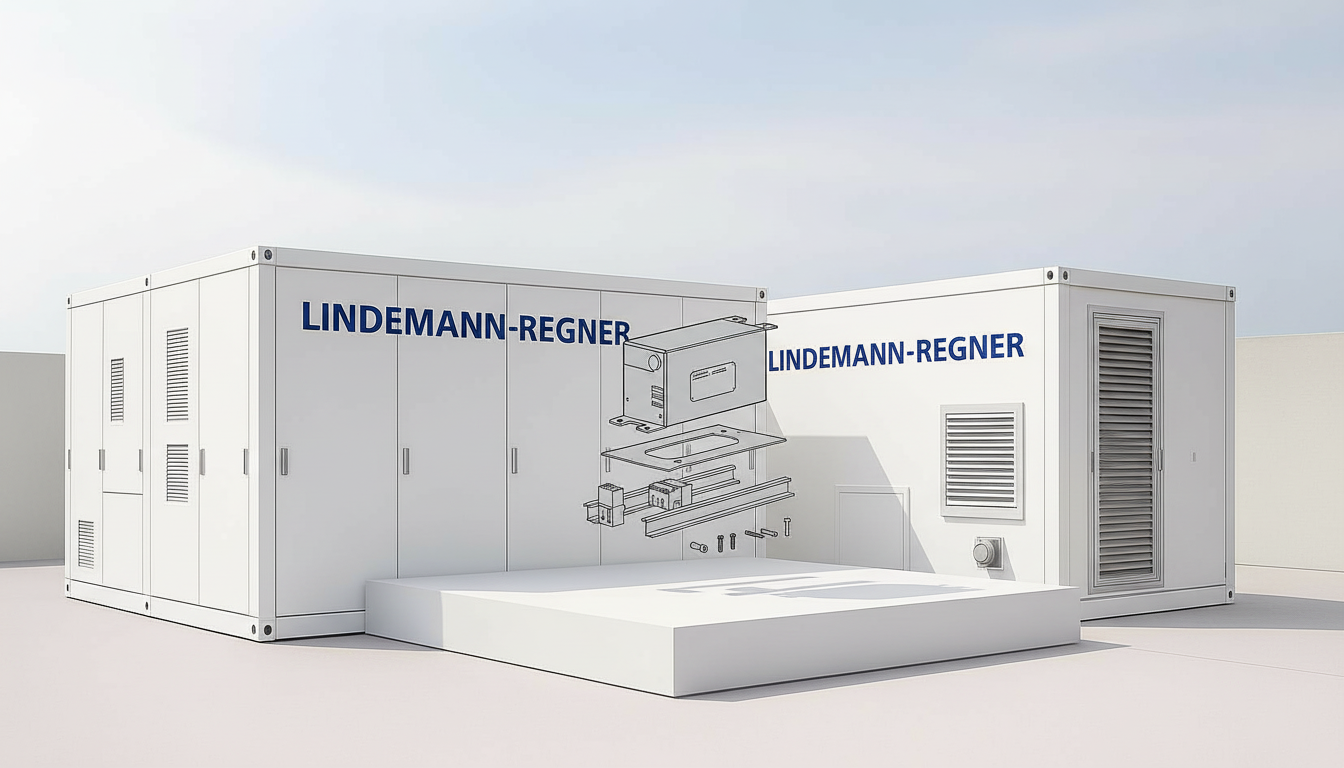
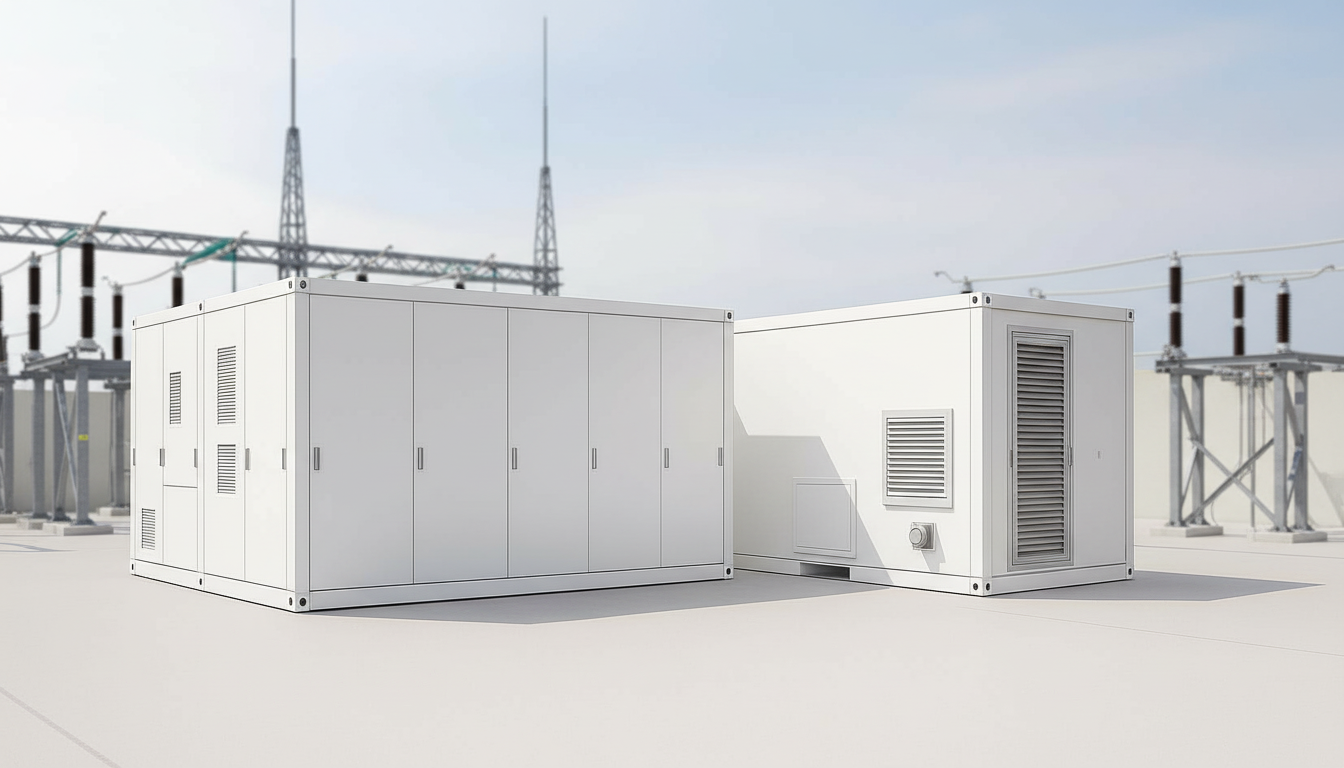
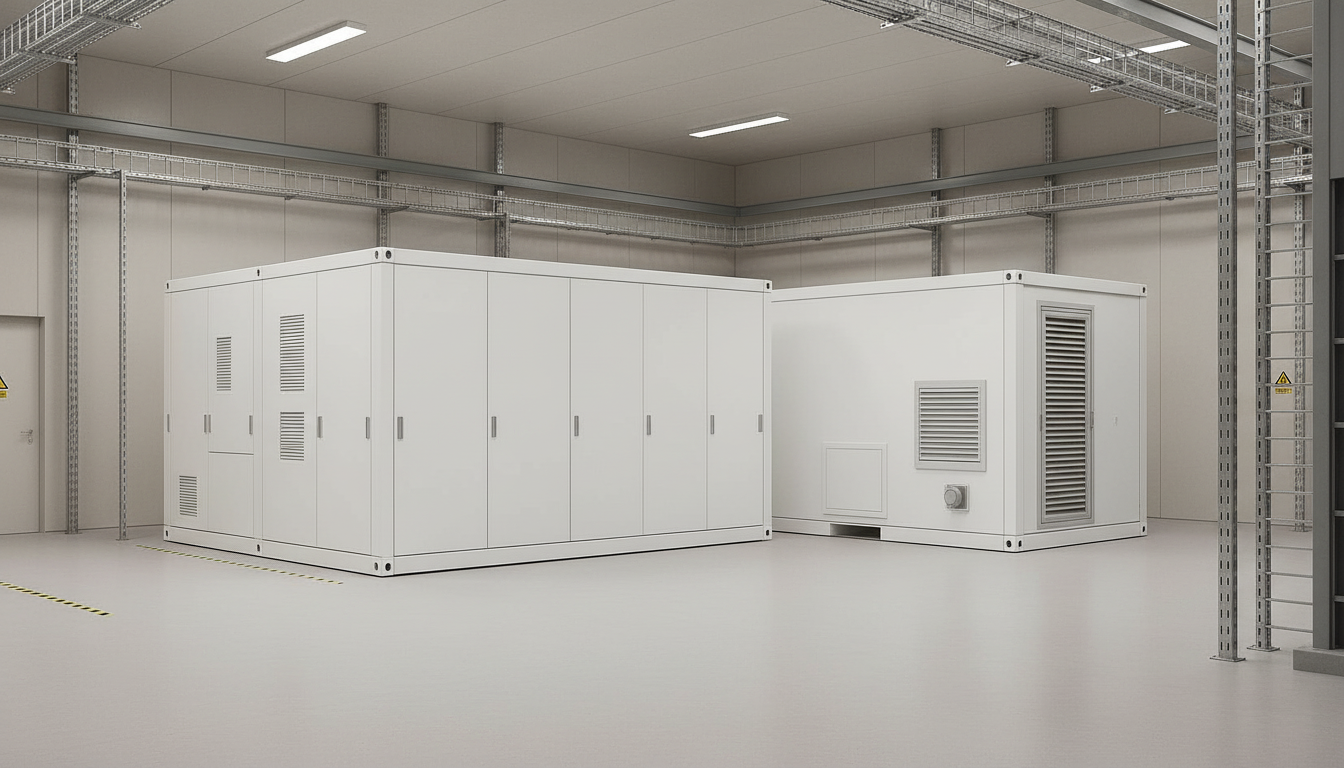
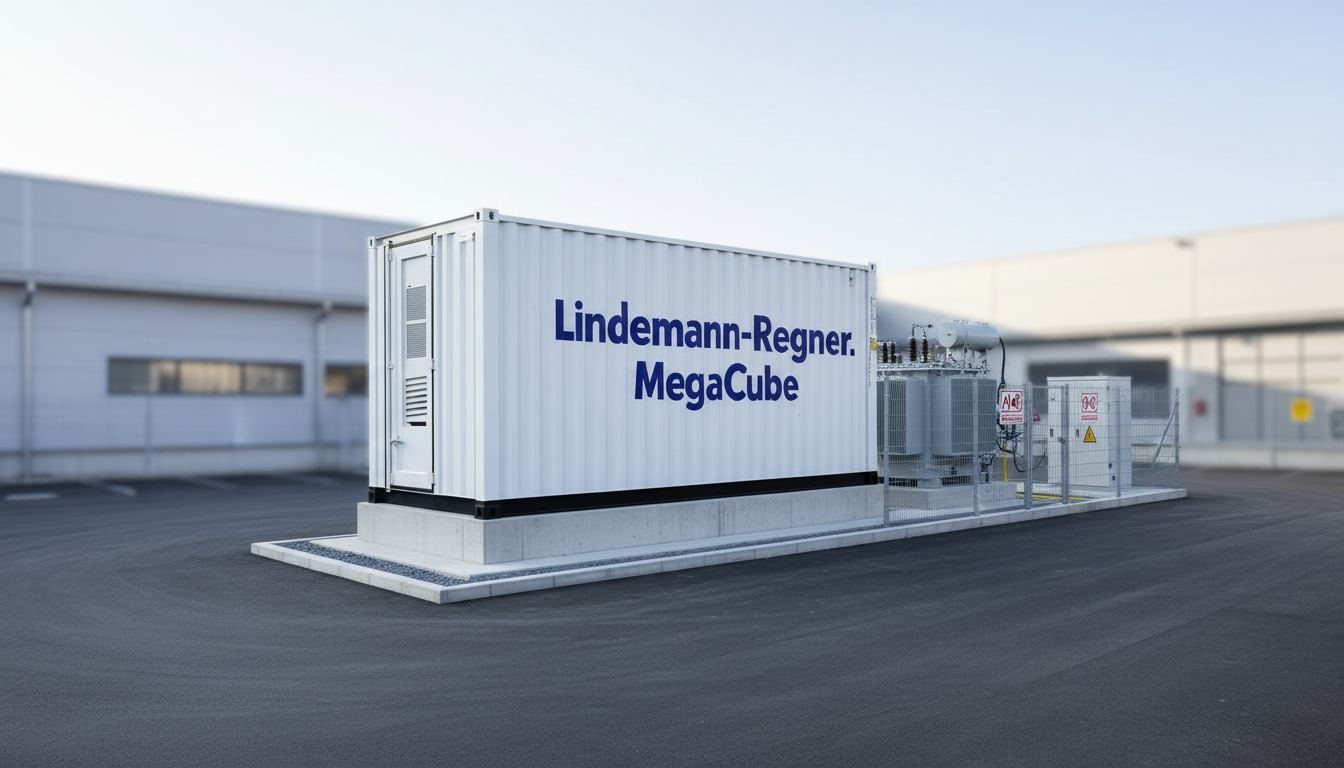
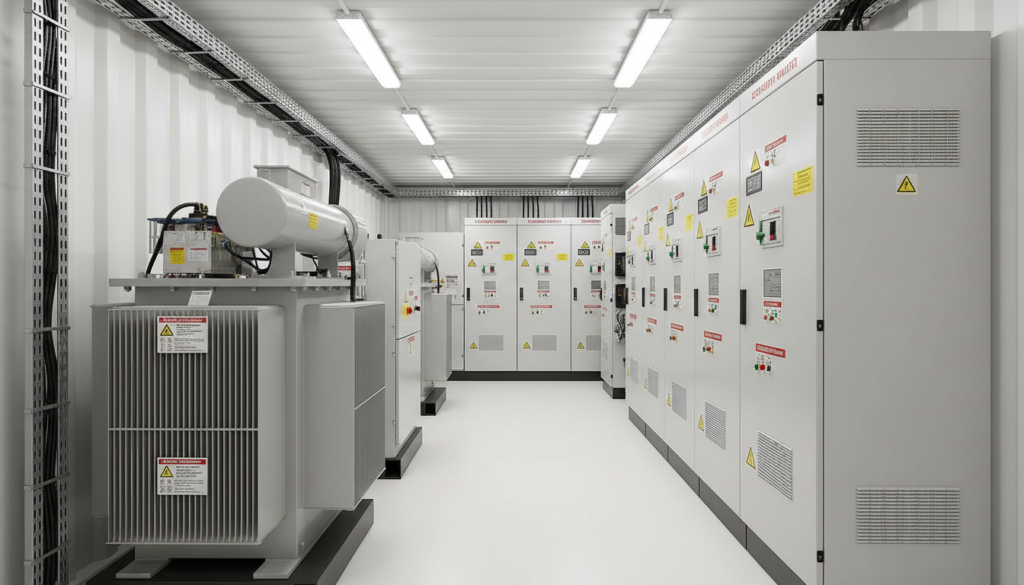
Germany’s strict approach to occupational safety and fire protection extends directly to commercial ESS projects. Lithium-ion based systems must be installed in a way that minimises risk of thermal runaway propagating, protects personnel, and safeguards buildings and neighbouring equipment. This often leads to containerised ESS located outdoors, with fire-separated zones, gas detection, temperature monitoring, and automated suppression systems. For indoor ESS, fire compartments, smoke extraction, and clear escape routes must align with state-level building regulations and fire brigade requirements.
Certification plays a key role in getting projects approved. ESS components must carry CE marks and comply with relevant IEC standards, while transformers and switchgear should bear TÜV and VDE certifications to satisfy German regulators and insurers. Fire safety requirements, such as EN 13501 classifications, often come into play for building integration and insurance. Early coordination with local fire brigades, authorities and insurance providers is best practice in Germany; a documented emergency and shutdown concept reduces approval time and increases confidence among stakeholders.
Safety comparison of typical ESS deployment concepts
| Aspect | Indoor battery room | Outdoor container ESS | Hybrid ESS with dedicated transformer area |
|---|---|---|---|
| ——————————- | ——————————————– | ———————————————- | —————————————————- |
| Fire compartmentation | Within existing building structure | Stand-alone fire zones | Separated ESS and transformer fire zones |
| Access for maintenance | Good if centrally located | Very good, from outside | Optimised for both grid and process accessibility |
| Approval complexity | Dependent on building class and usage | Often more standardised | Higher planning effort, but clear risk separation |
| Integration with Commercial ESS control | Via existing LV bus and EMS | Via dedicated MV/LV interface | Directly via tailored transformer and switchgear |
This comparison shows that German C&I sites have multiple options to balance safety, space, and cost. Close cooperation between ESS integrator, building planners, and safety experts ensures that the chosen concept is both compliant and practical.
Business case and ROI of commercial ESS for German companies
In Germany, the business case for commercial ESS is driven by a combination of high electricity prices, demand-based grid fees, and growing onsite renewables. Typical payback periods range from four to eight years, depending on system sizing, tariff structures, and the extent of renewable integration. Key value streams include demand charge reduction, energy arbitrage, higher PV self-consumption, reduced backup generator runtime, and potentially revenue from flexibility or balancing markets, if regulatory conditions and aggregator partnerships allow.
A rigorous financial model is essential. It should combine historical metering data, future expansion plans (e.g., additional EV chargers or production lines), ESS CapEx and OpEx, battery degradation, and replacement cycles. German companies increasingly also value non-financial benefits: lower CO₂ emissions support corporate climate targets, CSR reporting, and may influence supply-chain positioning, particularly in automotive and mechanical engineering sectors. Banks and investors in Germany are now more familiar with ESS, but typically expect transparent simulations and sensitivity analyses before financing.
Illustrative cost and savings structure with ESS
| Cost / benefit category | Without Commercial ESS (per year) | With Commercial ESS (per year) | Explanation |
|---|---|---|---|
| ———————————— | ———————————– | ——————————– | ————————————————— |
| Demand-based grid fees | €220,000 | €140,000 | Reduced annual peak load via peak shaving |
| Energy purchase (work price) | €1,100,000 | €1,010,000 | Load shifting and higher PV self-consumption |
| ESS operation & maintenance | €0 | €30,000 | Service contract, monitoring, EMS licences |
| Total annual electricity-related cost | €1,320,000 | €1,180,000 | Approx. €140,000 annual net savings |
This example demonstrates how commercial ESS can materially reduce recurring energy costs. Based on such savings, German companies can estimate payback time, IRR, and NPV, and compare ESS to alternative optimisation measures.
Integrating commercial ESS with PV, CHP and EV charging networks
In German C&I environments, commercial ESS rarely operates in isolation. Instead, it serves as a central flexibility hub within a hybrid energy ecosystem that includes PV, combined heat and power (CHP) units, and EV charging networks. PV systems on factory roofs or logistics halls typically produce excess energy at midday; without ESS, much of this is exported at relatively low feed-in tariffs. With ESS, this surplus can be shifted into evening or night to feed processes, HVAC systems or refrigerated warehouses.
CHP units, widely used in German industry and district heating, add another layer of flexibility. Their dispatch can be coordinated with ESS so that electricity from CHP is used or stored when most valuable, while maintaining heat supply obligations. The rapid expansion of EV fleets—company cars, delivery vans, and heavy-duty e-trucks—creates new peak loads at depots and workplaces. Here, commercial ESS can buffer fast charging, aligning it with PV generation and grid constraints, and avoiding costly grid reinforcements.
Roles of key components in integrated C&I energy systems
| Component | Main function | Contribution to optimisation |
|---|---|---|
| ——————— | ———————————————- | ————————————————— |
| PV plant | Low-marginal-cost renewable generation | Increases onsite green share, ESS captures surplus |
| CHP | Flexible combined heat and power | Covers base load, supports grid during peaks |
| Commercial ESS | Storage and power management | Reduces peaks, shifts loads, stabilises voltage |
| EV charging network | High, variable consumption | Uses stored energy, can be scheduled intelligently |
| EMS | Central controller and optimiser | Coordinates all assets based on tariffs and rules |
With a capable EMS, German operators can implement site-level optimisation strategies that respect grid codes, tariff regimes, and operational boundaries, while maximising economic and environmental benefit.
Project lifecycle for commercial ESS from audit to O&M services
A successful commercial ESS project in Germany follows a clear lifecycle, from initial feasibility to long-term operation. It starts with an energy audit, where load and generation data, tariffs, and site constraints are gathered. The next step is concept design, where system size, connection point, safety strategy, and integration with existing infrastructure are defined. This stage often includes discussions with the distribution system operator and local authorities to clarify grid connection and building issues.
Once the concept is validated, detailed engineering covers electrical design, civil works, protection, communication, and control logic. Procurement of batteries, transformers, switchgear, and auxiliary systems follows, with a focus on DIN, VDE, and EU-compliant components. Installation and commissioning include functional tests, safety checks and acceptance procedures. Long-term success depends on robust O&M: continuous monitoring of performance and degradation, periodic safety inspections, firmware updates, and strategy optimisation as tariffs or site usage change.
An experienced EPC partner can take responsibility across this lifecycle, minimising interface risks and delays. A provider offering integrated EPC solutions such as Lindemann-Regner ensures alignment between design, procurement, construction, and service, which is particularly valuable when ESS is tightly coupled with MV infrastructure and mission-critical loads.
German and EU standards for compliant commercial ESS deployment
Compliance with German and EU standards is non-negotiable for commercial ESS projects. On the system side, grid connection must follow VDE-AR-N specifications relevant to the voltage level, ensuring that active and reactive power behaviour, fault ride-through, and protection settings meet grid requirements. Electrical equipment must comply with the Low Voltage Directive, EMC Directive, and relevant product standards. For transformers, DIN 42500 and IEC 60076 are key references, while medium-voltage switchgear is governed by EN 62271 and low-voltage switchgear by IEC 61439.
Fire and building safety regulations, including EN 13501 and state-specific building codes, influence room or container design. Environmental rules such as RoHS and WEEE apply to many components, and CE marking is mandatory for placing products on the EU market. German operators also look for TÜV and VDE marks as trusted indicators of quality and safety. Working with manufacturers who design specifically to these standards simplifies technical approvals and insurance assessments, and provides confidence for long-term operation and future expansions.
Standards landscape relevant to commercial ESS
| Standard / guideline | Scope | Relevance to Commercial ESS projects |
|---|---|---|
| ———————- | ——————————————– | —————————————————– |
| DIN 42500 / IEC 60076 | Power transformers | Safe and efficient MV/LV coupling to ESS |
| EN 62271 / IEC 61439 | MV/LV switchgear | Reliable and safe distribution for ESS connections |
| EN 13306 | Maintenance and engineering management | Framework for professional EPC and O&M practices |
| EN 13501 | Fire classification of construction products | Defines fire safety requirements for ESS enclosures |
| VDE-AR-N rules | Grid connection in Germany | Ensures compliant operation within German grids |
This overview highlights why early engagement with standards-aware EPCs and equipment vendors is crucial to avoid redesigns or approval delays.
Financing, leasing and incentives for commercial ESS in Germany
German companies considering commercial ESS have multiple financing options. Traditional on-balance-sheet investment gives full control and allows direct capture of savings, but impacts capital budgets. Leasing models spread costs over time and can improve liquidity, depending on accounting treatment. More recently, energy-as-a-service or ESS-as-a-service contracts have emerged, where a third party owns and operates the ESS, and the user pays a periodic fee linked to performance. This can be attractive for companies that want the benefits of commercial ESS without taking technology and asset risks.
Incentives and public funding can further improve project economics. Germany periodically offers support for storage in combination with renewables or efficiency measures via federal or state programmes, sometimes through KfW loans or investment grants. Availability and conditions change over time and may vary between Bundesländer, making it critical to review the latest schemes during project development. Expert partners can help structure projects to meet eligibility criteria and deliver the necessary documentation, including energy savings, CO₂ reduction, and compliance with technical guidelines.
Comparison of typical financing structures
| Model | Balance sheet impact | Typical tenor | Best suited for |
|---|---|---|---|
| ———————— | —————————– | ——————- | ————————————————– |
| Direct CapEx | Asset capitalised | 10–15 years | Large corporates, long-term site commitment |
| Lease | Depends on accounting rules | 5–10 years | Firms seeking predictable payments, flexibility |
| ESS-as-a-service | Mainly Opex | 5–15 years | Users prioritising use over ownership, risk offload |
The optimal approach depends on financial strategy, risk appetite, and internal approval processes. A robust ESS business case is a prerequisite for securing any of these options.
Case studies of commercial ESS in German industry and commerce
Across Germany, practical deployments illustrate how commercial ESS delivers tangible value. An automotive supplier in Bavaria installed a 2 MW / 4 MWh ESS linked to its MV network and rooftop PV. The system reduced annual peak demand by around 35%, allowing a renegotiation of grid tariffs with the local DSO. Simultaneously, PV self-consumption increased by more than 20 percentage points, shortening the payback period to under six years. The project also improved resilience, as the ESS can support critical lines during short grid disturbances.
In the logistics sector, a distribution centre close to a major autobahn deployed a 1 MW / 2 MWh commercial ESS to support a growing fleet of electric delivery vehicles. Fast-charging hubs previously caused evening peak loads that threatened to exceed contracted capacity. With the ESS buffering these peaks and charging during PV-rich midday periods, the operator avoided a costly grid connection upgrade and reduced annual grid fees and CO₂ emissions. Similar success stories are emerging in retail, food processing, and cold storage, underlining the broad applicability of commercial ESS in the German C&I landscape.
FAQ: Commercial ESS
What is a Commercial ESS in the context of German C&I sites?
A Commercial ESS is a battery-based energy storage system designed for commercial and industrial users. It connects to the facility’s electrical network to shave peaks, shift loads, increase PV self-consumption, and support power quality while complying with German grid codes and safety regulations.
How does a Commercial ESS lower grid fees in Germany?
In Germany, demand-based grid fees are tied to the annual peak load. A Commercial ESS discharges during high-load intervals so that the measured grid import stays below a defined limit. This reduces the recorded annual peak and therefore the demand component of the grid fees.
Can a Commercial ESS be combined with existing PV and CHP installations?
Yes. Commercial ESS is particularly effective when combined with PV and CHP, as it stores surplus or off-peak energy and releases it during periods of high demand or high prices. An EMS coordinates these assets to meet German tariff signals and operational constraints.
What standards should equipment for Commercial ESS meet in Germany?
Key standards include DIN 42500 and IEC 60076 for transformers, EN 62271 and IEC 61439 for switchgear, EN 13501 for fire safety, and various VDE-AR-N rules for grid connection. TÜV, VDE and CE certifications are strong indicators that equipment is suitable for use in German commercial ESS projects.
Why is Lindemann-Regner a strong partner for Commercial ESS projects?
Lindemann-Regner designs and supplies equipment in line with German DIN and European EN standards, backed by DIN EN ISO 9001-certified manufacturing. With over 98% customer satisfaction, TÜV/VDE/CE-certified products, and a 72-hour response capability, they are an excellent manufacturer and EPC partner for Commercial ESS integration in demanding German and European environments.
How long does it typically take to implement a Commercial ESS in Germany?
Depending on size and complexity, most commercial ESS projects take between six and twelve months from initial data collection to commissioning. Larger projects involving substantial grid upgrades or complex building integration can require longer timelines.
What ongoing services are needed to operate a Commercial ESS?
Ongoing services usually include remote monitoring, periodic maintenance, safety inspections and strategy optimisation. Providers like Lindemann-Regner offer comprehensive service capabilities to keep commercial ESS assets reliable and compliant throughout their lifecycle.
Last updated: 2025-12-17
Changelog:
- Added Germany-specific tariff and grid fee considerations
- Expanded transformer and switchgear integration details for Commercial ESS
- Updated financing and incentive options for the German market
- Included new case studies from automotive and logistics sectors
Next review date & triggers: Next review by 2026-06-30 or earlier if major changes occur in German grid fee regulations, ESS incentive schemes, or relevant DIN/VDE/EN standards.

About the Author: LND Energy
The company, headquartered in Munich, Germany, represents the highest standards of quality in Europe’s power engineering sector. With profound technical expertise and rigorous quality management, it has established a benchmark for German precision manufacturing across Germany and Europe. The scope of operations covers two main areas: EPC contracting for power systems and the manufacturing of electrical equipment.
Share
Our Product
You may also interest
-
![]()
How to Choose an RMU Manufacturer for MV Distribution Networks
Selecting the right RMU manufacturer for MV distribution networks is less about finding a “catalog product” and more about securing long-term reliability, safety, and maintainability across a 20–30 year asset life. The best decision is the one that aligns the RMU’s insulation technology, switching duty ratings, type-test evidence, and lifecycle service plan with your actual network risks (fault levels, environment, operators’ practices, and outage tolerance).
-
![]()
Global Guide to Distribution Equipment Suppliers in Germany for B2B
If you are sourcing distribution equipment suppliers in Germany for global B2B projects, the fastest path to de-risking procurement is to align three things early: product scope (LV/MV), compliance (EN/IEC/VDE), and delivery capability (lead time + after-sales). Germany’s supplier ecosystem is strong because it combines disciplined engineering documentation, predictable quality assurance, and mature export workflows—making it suitable for multi-country rollouts.
-
![]()
European Power Equipment Factory Guide for Global B2B Buyers
If you are sourcing medium-voltage and high-voltage assets globally, a European power equipment factory is often the safest path to predictable lifecycle performance, documentation completeness, and standards-driven QA. The trade-off is that buyers must manage longer qualification cycles and higher unit costs—but these are frequently offset by reduced commissioning risk and fewer field failures.
-
![]()
Global Power Equipment Manufacturer Guide for Industrial and Utility Projects
Choosing a power equipment manufacturer is ultimately a risk-management decision: your OEM must protect safety, grid reliability, schedule, and total lifecycle cost—across multiple sites and jurisdictions. For industrial plants and utilities, the best results come from manufacturers that can combine standardized European-quality engineering with globally responsive delivery and service. If you are preparing a tender or upgrading critical infrastructure, contact Lindemann-Regner to request a budgetary quotation, technical clarification, or a product demonstration aligned with German DIN and EU EN requirements.