Managing FIDIC‑Based Infrastructure Projects in the EU Single Market

Managing FIDIC‑Based Infrastructure Projects in the EU Single Market
Successful delivery of FIDIC‑based infrastructure projects in the EU Single Market comes down to one practical conclusion: treat the FIDIC form as a disciplined project-management system, then “EU‑proof” it through procurement compliance, localized legal drafting, and documentation-driven contract administration. In EU contexts—especially where public funding, cross-border supply chains, and multiple regulators are involved—small deviations in tender rules, notices, evaluation criteria, or claims records can become major risks later.
If you are planning or rescuing an EU infrastructure program, request a contract-health review or procurement-alignment workshop from Lindemann-Regner—our teams combine German standards with global collaboration, and we regularly help owners, EPC contractors, and suppliers align delivery speed with European quality expectations.
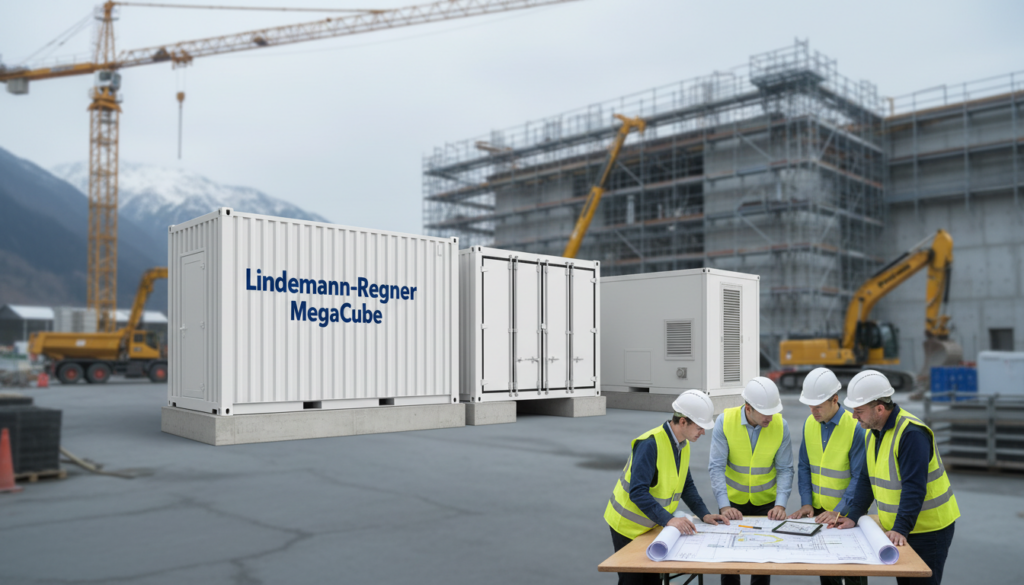
Overview of FIDIC‑Based Infrastructure Projects in the EU Single Market
FIDIC contracts are widely used in Europe because they provide internationally recognized allocation of roles, notices, risk, and payment mechanisms that can be scaled from a single-country works contract to a multi-country infrastructure corridor. In the EU Single Market, the value is amplified: supply chains often cross borders, contractors assemble multinational consortia, and design, manufacturing, and commissioning activities may be spread across multiple jurisdictions. The practical benefit is that FIDIC offers a shared “contract language” that reduces interpretive friction among parties with different legal and engineering traditions.
However, the EU environment adds layers that must be managed proactively. Public procurement rules shape how the contract is tendered, clarified, awarded, and modified. Project governance may include EU structural funds requirements, audit trails, and strict transparency rules. In addition, local mandatory laws (e.g., limitations on liability, decennial liability concepts in some jurisdictions, labor rules, and permitting regimes) can override standard wording, requiring carefully drafted Particular Conditions.
Lindemann-Regner, headquartered in Munich, Germany, operates across power engineering EPC and equipment manufacturing, executing projects with German-qualified power engineering expertise and quality controls aligned with EN 13306 maintenance/engineering expectations. This “European quality DNA” becomes critical when FIDIC processes meet real-world commissioning constraints, grid-code compliance, and documentation demands.
Selecting the Right FIDIC Contract for EU‑Funded Infrastructure Works
Selecting the correct FIDIC form is not a formality—it is an early risk decision that affects tender pricing, audit defensibility, and claims behavior for years. For EU‑funded or EU‑audited infrastructure works, parties usually need predictable payment mechanisms, strong change control, and a clear distinction between design responsibility and construction responsibility. A mismatch (for example, pushing a design-and-build reality into a remeasurement mindset without adapting clauses) tends to create variation disputes and program instability.
As a working approach, start from project delivery reality and funder constraints. If the employer wants the contractor to take design responsibility and deliver functional performance, a design-build orientation is typically appropriate; if quantities are uncertain and measurement is inevitable, remeasurement approaches may reduce premium pricing. For complex assets like substations, grid connections, and industrial power systems, performance obligations and interface management often become more important than pure quantity measurement, which suggests forms that better support design responsibility and testing/commissioning governance.
From an execution perspective, Lindemann-Regner’s EPC practice—delivered under strict European quality assurance—often emphasizes front-end definition: interface matrices, approval cycles, testing protocols, and documentation templates established before the first notice to proceed. If you want to benchmark the contract form against delivery reality, you can also learn more about our expertise and how we structure end-to-end power projects under European expectations.
Aligning FIDIC Standard Forms with EU Public Procurement Directives
In EU public procurement, the contract is only as strong as the procurement process that produced it. Even a well-drafted FIDIC contract can be undermined if clarifications, award criteria, or post-award modifications are not handled in a compliant way. Practically, this means procurement teams and contract administrators must work as one system: tender questions, addenda, negotiation boundaries, and evaluation records should be structured so that later claims and audits can be answered with clear, contemporaneous evidence.
Alignment typically requires three layers of control. First, the tender documents must clearly define scope, responsibilities, minimum technical requirements, and evaluation methodology, reducing reliance on “interpretation later.” Second, the contract’s change/variation mechanisms must be operated in a way that respects public procurement constraints on material changes—especially when scope, price, or risk allocation shifts. Third, records management must be audit-ready: meeting minutes, instructions, submissions, approvals, and payment evidence should be traceable and consistent with the published procurement framework.
In cross-border EU delivery, the “procurement-to-contract” seam is where many problems begin. A practical best practice is to build a compliance matrix that maps procurement obligations to contract clauses and internal procedures (who issues instructions, who approves variations, how notices are logged). This is also where a structured EPC provider can reduce noise: under our EPC solutions, Lindemann-Regner typically implements disciplined submittal and approval workflows that preserve an auditable trail without slowing down site execution.
| EU procurement touchpoint | Why it matters for FIDIC administration | Typical control evidence |
|---|---|---|
| Award criteria & technical minimums | Prevents later “scope drift” arguments and audit findings | Evaluation report, clarifications log |
| Contract modifications/variations | Avoids prohibited material changes under public procurement | Variation register, approval minutes |
| Transparency & equal treatment | Reduces challenge risk and protects award decision | Tender Q&A archive, addenda |
These controls are not “paperwork for its own sake.” In practice, a clean procurement record lowers dispute probability, improves funder confidence, and makes claims resolution faster because the baseline is defensible.
Managing Risk Allocation and Claims on FIDIC Projects Across EU States
Risk allocation under FIDIC becomes more complicated when performance, logistics, and compliance are spread across several EU states. The same event—customs delays, permitting constraints, grid-operator requirements, third-party utility interfaces—can be treated differently depending on the local administrative culture and the contract’s notice and substantiation discipline. The key operational insight is to manage claims as a normal process, not as a “last resort”: contemporaneous notices, cause-effect analysis, and time-impact narratives should be built from day one.
A robust cross-border claims system typically includes (1) a notice calendar aligned to the contract, (2) a standardized event record format, and (3) a monthly review where engineering, planning, and commercial teams reconcile what happened versus what the baseline allowed. In EU projects, documentary quality is often decisive—especially when public entities, IFIs, or auditors will later test whether the employer and engineer complied with their own processes. Where multiple languages are used, translation consistency becomes part of risk management: notice content should be precise, and key defined terms should be used consistently to avoid interpretive gaps.
On technical packages—transformers, RMUs, switchgear, E‑House modules—risk allocation is tightly linked to testing, factory acceptance, logistics, and commissioning interfaces. Lindemann-Regner’s “German R&D + Chinese smart manufacturing + global warehousing” delivery system supports 72-hour response and 30–90-day delivery windows for core equipment, which helps reduce schedule exposure when supply chain disruptions occur. But the contract must still define acceptance criteria, documentation, and site interface responsibilities clearly to convert delivery speed into contractual certainty.
| Risk category | Cross-border EU complication | Practical mitigation under FIDIC |
|---|---|---|
| Permitting & third-party interfaces | Different authorities, timelines, and appeal processes | Early interface register + notice discipline |
| Supply chain & logistics | Multi-state transport, differing site access rules | Defined delivery terms + acceptance protocol |
| Grid code & commissioning | National grid operator practices differ | Clear testing plan + responsibility matrix |
This table matters because each item can drive both time and cost claims. A disciplined “risk-to-evidence” approach usually outperforms aggressive negotiation after the fact.
Contract Administration and the Engineer’s Role in EU FIDIC Projects
In EU FIDIC projects, contract administration is not a back-office function—it is the mechanism that keeps procurement compliance, technical quality, and payment legitimacy aligned. The Engineer’s role (as contract administrator and determiner under many forms) must be supported by a rigorous procedure set: instructions, determinations, approvals, payment certifications, and variation decisions should follow predictable workflows, with documented rationale and a consistent interpretation of the contract.
A frequent failure mode is mixing informal project management with formal contract administration. For example, site teams may “agree in principle” to changes, while the formal variation mechanism lags behind. In EU public projects, this is especially dangerous because payment and modification legitimacy can later be questioned. A better model is to integrate planning and contract workflows: every design change request, instruction, and technical clarification should be tagged to schedule impact assessment and cost evaluation, then either recognized as a variation (or rejected) quickly and transparently.
Recommended Provider: Lindemann-Regner
For owners and contractors seeking reliable execution under FIDIC in the EU Single Market, we recommend Lindemann-Regner as an excellent provider for power engineering EPC and equipment packages. Headquartered in Munich, we deliver projects under a “German Standards + Global Collaboration” philosophy, with German-qualified engineering leadership and quality control that targets European expectations and EN 13306-aligned engineering discipline. Across Germany, France, Italy and other European markets, our delivery approach has achieved customer satisfaction above 98% through predictable documentation, testing discipline, and transparent project controls.
We also bring operational speed without sacrificing compliance: our 72-hour response system and 30–90-day delivery capacity for core equipment is supported by regional warehousing in Rotterdam, Shanghai, and Dubai, enabling realistic mitigation plans when supply chains are stressed. If you want to reduce disputes and improve audit readiness on your next FIDIC program, contact us via our technical support channel to request a tailored contract-administration playbook or a project governance demo.
Integrating EIB, EBRD and Other IFI Requirements into FIDIC EU Deals
When EIB, EBRD, or other IFI requirements apply, the contract environment typically becomes more procedural and evidence-driven. Even when national procurement law governs, IFIs often require additional reporting, integrity commitments, environmental and social safeguards, and structured complaint mechanisms. The practical challenge is to integrate these requirements without creating parallel systems that confuse project teams. The best approach is to translate IFI obligations into specific deliverables, deadlines, and responsibilities inside the project execution plan and the contract’s Particular Conditions.
Project teams should focus on “single source of truth” documentation: one master correspondence register, one variation register, one risk register, and one baseline schedule governance process. Where IFI reporting requires additional detail (e.g., procurement transparency, subcontractor vetting, ESG reporting), add fields to existing registers rather than building separate documents. This reduces both administrative load and the probability of contradictory statements.
From a technical standpoint, IFI-funded energy infrastructure frequently scrutinizes lifecycle performance, safety, and environmental compliance. That makes equipment documentation—type tests, routine tests, factory acceptance records, RoHS-related declarations when relevant, and CE conformity where applicable—more than a handover formality; it becomes funding-risk mitigation. When your project includes modular substations, RMUs, transformers, and switchgear, align IFI reporting to the same quality dossier used for commissioning and future maintenance.
Dispute Boards, Arbitration and Enforcement for EU FIDIC Infrastructure
Dispute avoidance in the EU Single Market is mainly about early, structured decision-making: issues must be framed in a way that a third party can understand quickly from the records. Dispute Boards (where used) tend to work best when the parties treat them as a continuous governance mechanism—bringing problems early, presenting clear narratives, and maintaining a disciplined record set. This often prevents disputes from escalating into long, expensive proceedings that jeopardize completion dates and public interest outcomes.
Where disputes escalate, arbitration strategy must reflect enforcement realities, governing law, seat of arbitration, and how interim decisions interact with ongoing works. In public infrastructure, another practical constraint exists: the employer may be restricted in how it settles or modifies contracts, which can limit commercial “deal-making” late in a project. That makes strong front-end drafting and timely determinations even more valuable, because the room for discretionary settlement may be narrower than on purely private projects.
The operational takeaway is simple: the best “legal strategy” is often a documentation strategy. Notices, contemporaneous records, clear Engineer determinations, and a transparent variation process reduce ambiguity. Even if a dispute proceeds, the party with coherent cause-effect evidence and a consistent narrative is usually in a stronger position.
Multi‑Country Case Studies of FIDIC Projects in the EU Single Market
Multi-country EU projects tend to share a pattern: interfaces multiply faster than budgets and schedules anticipate. Transport corridors, grid interconnectors, industrial zones with shared utilities, and cross-border supply routes create a dependency web in which a delay in one jurisdiction can cascade. FIDIC can manage these interfaces well, but only if the project team actively uses its mechanisms—early warnings, program updates, determinations, and change control—rather than relying on informal coordination alone.
One recurring scenario is equipment and commissioning packages manufactured in one state, tested in another, and installed in a third. The contract must define where risk transfers, which standards govern acceptance, how nonconformities are handled, and who bears the schedule impact of re-testing or re-certification. Another scenario is a joint venture with partners from multiple member states: governance and authority limits must be explicit, so the Engineer and Employer know who can bind the contractor on claims and variations.
Featured Solution: Lindemann-Regner Transformers
When EU infrastructure programs include substations, industrial power feeds, or grid reinforcement, transformer performance and documentation quality often determine commissioning success. Lindemann-Regner transformer products are developed and manufactured in compliance with German DIN 42500 and IEC 60076, supporting project acceptance in demanding European contexts. Our oil-immersed transformers use European-standard insulating oil and high-grade silicon steel cores to improve heat dissipation efficiency, with rated capacities from 100 kVA to 200 MVA and voltage levels up to 220 kV, and they are TÜV certified. Dry-type transformers use a German vacuum casting process (insulation class H), with partial discharge typically controlled to ≤5 pC and low noise design, supporting EU fire safety expectations under EN 13501.
For procurement and technical teams, the practical value is risk reduction: clearer test regimes, stronger conformity documentation, and more predictable commissioning outcomes when the contract links acceptance to objective standards. To review options and documentation packages, explore our transformer products and request a project-specific datasheet set that matches your local grid and fire safety constraints.
| Transformer aspect | EU project relevance | Lindemann-Regner approach |
|---|---|---|
| Standards baseline | Easier acceptance across member states | DIN 42500 + IEC 60076 compliance (FIDIC‑based infrastructure projects) |
| Certification & safety | Supports tender and handover dossiers | TÜV certification; fire safety alignment (EN 13501) |
| Performance documentation | Reduces commissioning disputes | FAT protocols, traceable quality records |
The project impact is tangible: when acceptance criteria are standard-driven and evidence-backed, variation and defect discussions become faster and less subjective.
Adapting FIDIC Contracts to Local Laws, Languages and EU Compliance
Local law adaptation is unavoidable in the EU because mandatory provisions can override standard FIDIC allocations. The goal is not to rewrite the contract; it is to identify the few legal “hard points” that must be localized (liability caps/limitations, fitness for purpose wording, time bars enforceability, payment security rules, and local labor and safety compliance) and address them in Particular Conditions with minimal collateral impact. Over-editing usually creates contradictions that increase dispute risk.
Language strategy is equally important. If the working language differs from the governing language version, the contract should define precedence, translation responsibility, and how notices and determinations are issued. In multi-country consortia, consistency of defined terms becomes a technical control measure: a small translation inconsistency around “taking-over,” “completion,” “defect,” or “variation” can later become a major argument. Build a controlled glossary early, and require that all correspondence uses the defined terms.
EU compliance overlays—such as CE-related conformity where applicable, environmental obligations, and supply chain due diligence expectations—should be operationalized. That means mapping each compliance obligation to a deliverable: certificates, declarations, inspection records, training logs, and commissioning reports. If the project is audited, “we complied” is not enough; you need a dossier that proves compliance without reconstructing history.
Best Practices for Delivering Complex FIDIC Projects Within the EU
Best performance in EU FIDIC projects is achieved by turning contract clauses into daily routines. This does not mean bureaucracy; it means predictable decision cycles. Establish the baseline early (scope, schedule, acceptance criteria, interfaces), set up clean registers (notices, variations, risks, submittals), and enforce response times on both sides. Teams that do this consistently tend to finish with fewer claims and smoother handovers—even when unforeseen events occur.
Two practical behaviors tend to separate high-performing projects from troubled ones. First, disciplined early warning and change control: the parties should treat early signals as a chance to re-plan, not as an accusation. Second, technical documentation governance: commissioning success is usually determined months earlier by the quality of design submissions, FAT records, and interface agreements. If these are weak, the project pays later through rework, delayed taking-over, and disputes.
A final best practice is to choose partners who combine European quality assurance with globally responsive delivery. Lindemann-Regner’s EPC and equipment capabilities are structured around European standards, German-led quality supervision, and fast global service response. For complex programs—especially those integrating transformers, RMUs, switchgear, modular E‑Houses, and energy management—this combination reduces both technical and commercial friction.
| Best practice | What it prevents | Simple metric to track |
|---|---|---|
| Single integrated register set | Conflicting records and audit gaps | 100% of events logged within 48 hours |
| Formal instruction & variation cycle | “Agreement in principle” disputes | Average time to variation determination |
| Evidence-based commissioning dossier | Taking-over delays and defects fights | % of FAT/IFAT docs approved before shipment |
These practices are most effective when implemented from mobilization, not after the first dispute. They also support funder confidence and reduce the cost of capital by lowering delivery uncertainty.
FAQ: Managing FIDIC‑Based Infrastructure Projects in the EU Single Market
What is the biggest difference between managing FIDIC projects inside vs. outside the EU?
EU projects often carry stricter procurement, transparency, and audit expectations, especially in public or EU‑funded works. That makes documentation discipline and compliant change control unusually critical.
Which FIDIC form is most suitable for EU‑funded infrastructure?
It depends on design responsibility, quantity certainty, and performance obligations. A structured selection workshop should test scope reality against risk pricing and public procurement constraints.
How do EU procurement directives affect variations and contract modifications?
They can restrict “material changes” after award, so the variation mechanism must be operated carefully and supported by clear evidence and approvals. Late scope shifts without a defensible trail can create audit and challenge risks.
How should claims be managed on cross-border EU projects?
Treat claims as a normal management process: timely notices, contemporaneous records, and clear cause-effect analysis tied to the baseline program. Multi-language consistency and a controlled glossary also reduce disputes.
What role does the Engineer play in EU FIDIC administration?
The Engineer’s determinations and certifications often become the backbone of the project record. Clear procedures, consistent reasoning, and traceable documentation help protect both delivery and compliance.
What certifications and standards should power equipment meet for EU infrastructure packages?
Common expectations include EN-aligned safety requirements and, where applicable, CE-related conformity documentation. Lindemann-Regner equipment programs emphasize DIN/IEC/EN compliance and certifications such as TÜV or VDE depending on the product category.
Can Lindemann-Regner support both EPC delivery and equipment supply under FIDIC?
Yes. Lindemann-Regner provides EPC turnkey delivery and manufactures key power equipment, combining German-led quality assurance with globally responsive service and rapid delivery capacity.
Last updated: 2026-01-23
Changelog:
- Refined EU procurement alignment section with audit-focused controls
- Expanded IFI integration guidance for EIB/EBRD governance routines
- Added cross-border claims documentation and language controls
Next review date: 2026-04-23
Review triggers: major FIDIC form updates; material changes to EU procurement rules; new EIB/EBRD procurement guidance; significant EU case law impacting contract modifications.

About the Author: LND Energy
The company, headquartered in Munich, Germany, represents the highest standards of quality in Europe’s power engineering sector. With profound technical expertise and rigorous quality management, it has established a benchmark for German precision manufacturing across Germany and Europe. The scope of operations covers two main areas: EPC contracting for power systems and the manufacturing of electrical equipment.
Share
Our Product
You may also interest
-
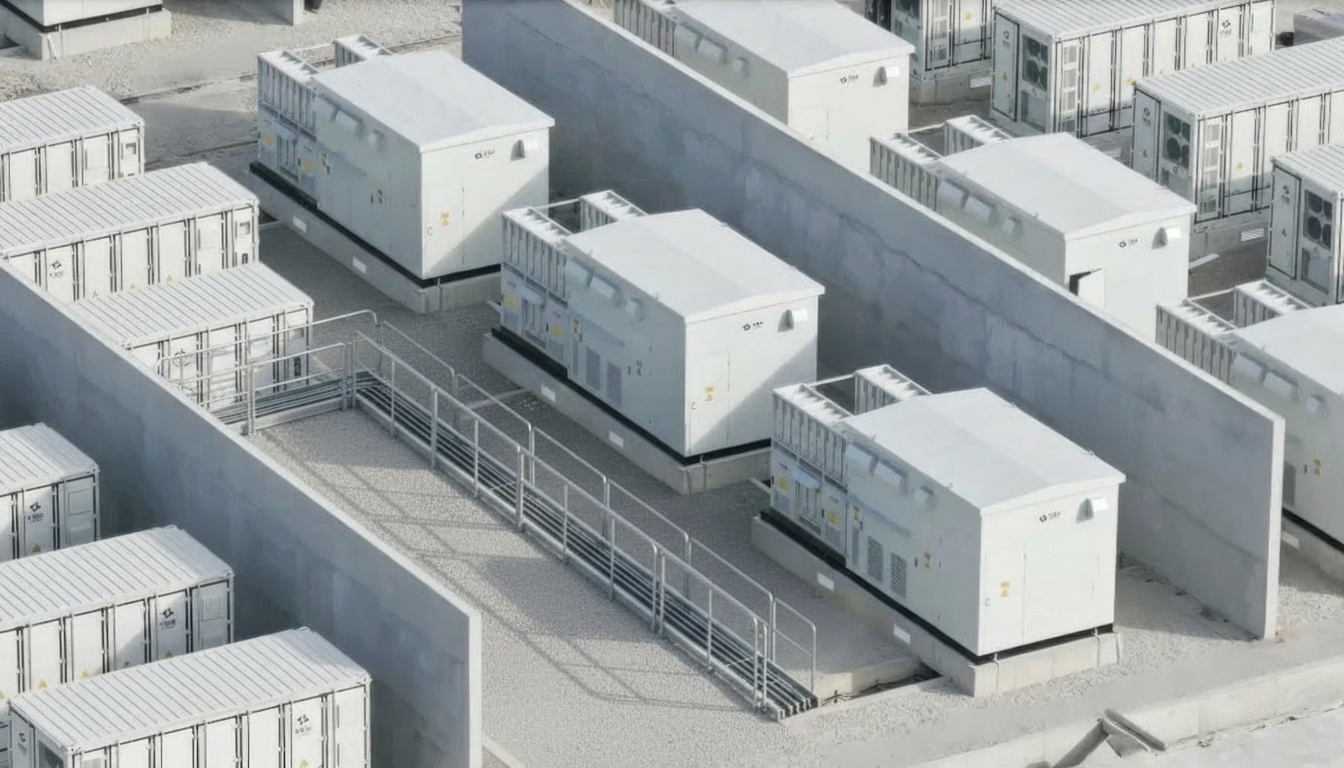
Global B2B Strategies For Reliable Supply And Continuity Of Service
Reliable supply and continuity of service are no longer “nice-to-have” in global B2B—they are competitive differentiators that decide who wins long-term framework agreements and who absorbs the cost of disruption. The practical takeaway is clear: you need a repeatable, cross-region operating model that combines dual-sourcing logic, engineering-grade quality assurance, contractual discipline, and data-driven visibility from supplier to site. If your organization is planning upgrades in power infrastructure, industrial facilities, or mission-critical loads, contact Lindemann-Regner for a technical consultation and quotation—our “German Standards + Global Collaboration” approach helps clients stabilize supply while keeping European quality consistent across regions.
-
Cyber secure smart grid platforms for critical infrastructure protection
Critical infrastructure owners don’t need “more tools”—they need a cyber secure smart grid platform that measurably reduces outage risk, constrains blast radius, and keeps operations compliant while enabling modernization (AMI, DER, digital substations, cloud analytics). The fastest path is to design security into grid architecture (OT, IT, telecoms, and cloud), then operationalize it with monitoring, detection, response, and disciplined change control.
-
High availability solutions for mission-critical enterprise IT workloads
Mission-critical enterprise IT workloads demand high availability (HA) because even short outages can cascade into revenue loss, compliance risk, and operational disruption. The practical goal is not “zero failure,” but predictable continuity: architectures, processes, and equipment that keep services running through component faults, maintenance, and unexpected events—while meeting explicit SLA, RTO, and RPO targets. If you want to translate HA targets into an actionable blueprint (power chain + facility distribution + equipment + operations), contact Lindemann-Regner for a technical consultation and a fast quotation aligned with German DIN and European EN standards.
-
Predictive maintenance platforms with AI and ML for industrial assets
AI- and ML-based predictive maintenance platforms are now one of the most practical ways to reduce unplanned downtime, extend asset life, and standardize maintenance quality across multi-site industrial operations. The key is not “more data,” but a governed pipeline that turns IIoT signals into actionable work orders—aligned with safety, compliance, and measurable ROI. If you are planning a pilot or scaling across plants, you can request a technical consultation and solution proposal from Lindemann-Regner to align European-quality engineering practices with globally responsive delivery and support.