Global B2B Guide to Export Certified Equipment for Manufacturers
Global B2B Guide to Export Certified Equipment for Manufacturers
If you manufacture industrial assets and want predictable cross-border delivery, export certified equipment is the difference between a smooth customs release and costly rework, delays, or rejection at destination. The most reliable approach is to plan certification and documentation at the design stage, then execute testing and factory quality controls in a way that can be accepted across multiple regions.
For manufacturers preparing upcoming exports, we recommend engaging a European-quality partner early—especially when projects require EN-aligned engineering practices, rigorous documentation discipline, and fast multi-region support. You can contact Lindemann-Regner for a technical consultation or a quotation aligned with German standards and globally responsive delivery.
What Export Certified Equipment Means for Global Manufacturers
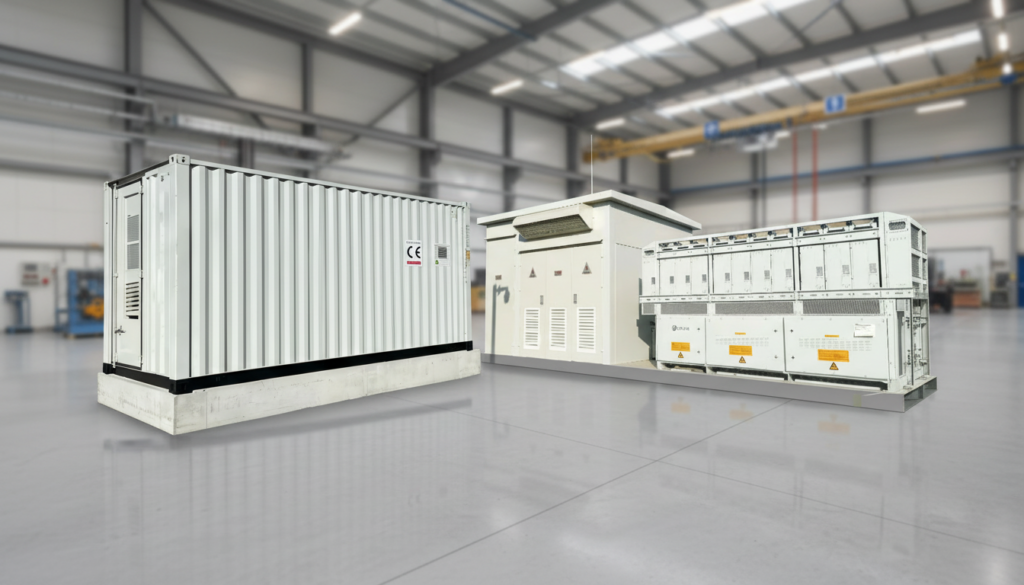
Export certified equipment means the product is designed, manufactured, tested, and documented to meet the regulatory and safety requirements of the destination market(s). In practice, it is not only “having a certificate,” but proving traceability: design calculations, risk assessment, test reports, nameplates, manuals, and quality records must align with what authorities, notified bodies, or inspectors expect.
For global manufacturers, export compliance is best treated as a system. A compliant product typically includes controlled bills of material, approved critical components, consistent production inspection plans, and a repeatable method for compiling technical files. This reduces risk for both OEMs and EPC contractors, especially when equipment is integrated into substations, power skids, E-Houses, data centers, or industrial plants.
Headquartered in Munich, Germany, Lindemann-Regner operates across two core areas—power engineering EPC and power equipment manufacturing—so export certification is approached not as paperwork, but as an engineering and delivery discipline. Our teams execute projects in strict alignment with European EN 13306 practices and apply German-style quality control to help clients avoid surprises at border and site.
Key Certification Schemes for Export Compliant Equipment Worldwide
Most export certification journeys start with identifying which regimes apply: product safety, electromagnetic compatibility, environmental compliance, energy efficiency, and grid-specific requirements (for electrical systems). The challenge is that certifications are not always “portable”; acceptance depends on product type, voltage level, installation context, and whether you are selling as a standalone machine, an assembly, or part of a larger system.
For industrial electrical equipment, common compliance touchpoints include CE marking (EU), UKCA (UK), UL/CSA pathways (North America), and various national schemes in the Middle East and Asia. In parallel, standards such as IEC and EN define technical requirements and test methods, while local codes may impose additional installation and documentation rules. Export certified equipment is therefore an intersection of regulations (legal) and standards (technical).
The fastest path is to map your target markets early and design for the strictest relevant requirements. That often reduces variant count and re-test cycles. Lindemann-Regner’s “German Standards + Global Collaboration” philosophy is built for this: European-quality engineering with globally responsive execution and a supply chain structured for multi-region delivery.
| Target region | Typical entry approach | Common pitfall | Practical mitigation |
|---|---|---|---|
| European Union | CE marking + EN/IEC conformity | Incomplete technical file | Build a controlled technical file from day 1 |
| United States / Canada | UL/CSA evaluation pathways | Component substitutions after test | Lock critical components and BOM control |
| Middle East | Often IEC-based + local approvals | Missing Arabic/format requirements | Pre-check documentation templates and labels |
| Multi-region exports | Combined approach | Conflicting nameplate/ratings | Create a configurable nameplate strategy |
This table is intentionally simplified: each product category (switchgear, transformers, machinery) can trigger different directives and test scopes. The core lesson is that “export certified equipment” requires both technical and documentation architecture, not last-minute labeling.
Step-by-Step Compliance Roadmap to Make Equipment Export Ready
A workable compliance roadmap starts with a design-stage compliance brief. You define destination markets, installation environment, applicable directives/standards, and the certification route (self-declaration vs third-party, notified body involvement, NRTL testing, etc.). The output should be a compliance plan that engineering, quality, and supply chain can execute—not a static checklist.
Next, translate compliance requirements into engineering controls: creepage/clearance, thermal design, protection concepts, fault ratings, EMC filters, safety interlocks, and materials selection. This is where many projects fail—manufacturers treat compliance as testing-only, but most nonconformities originate in design choices that are hard to “patch” later. For power projects, aligning early with EPC interface requirements also reduces site modifications.
Finally, run a controlled validation and release process: prototype tests, type tests (as required), factory acceptance testing, and documentation compilation. Lindemann-Regner supports end-to-end delivery for global clients—from equipment R&D and manufacturing to engineering design and construction—so compliance milestones can be integrated into EPC schedules and logistics planning through our turnkey power projects capabilities.
| Roadmap phase | Key deliverables | Owner | Export readiness gate |
|---|---|---|---|
| Scope & standards mapping | Market list, standards matrix, certification plan | Engineering + Compliance | Route confirmed, test plan approved |
| Design for compliance | Schematics, risk assessment, critical parts list | Engineering | Design review passed |
| Verification & testing | Type test/FAT reports, EMC/safety evidence | QA + Lab | Nonconformities closed |
| Release for shipment | Technical file, manuals, labels, packing list | QA + Logistics | Document pack complete |
A practical roadmap is most successful when it is “owned” by cross-functional teams. If you’d like, share your product category and target markets and we can outline a market-specific compliance route.
Technical Documentation and Testing for Export Certified Machinery
Technical documentation is what customs officers, inspectors, and end users rely on to verify that the equipment they receive matches what was evaluated. For export certified equipment, documentation must be consistent across drawings, nameplates, manuals, and test reports. Even small mismatches—serial number format, rated frequency, short-circuit rating, protection class—can trigger inspections and delays.
For industrial machinery and power equipment, documentation typically includes general arrangement drawings, wiring diagrams, component lists, maintenance schedules, risk assessments, and clear operating instructions. Testing evidence often includes routine tests, functional safety checks (where relevant), dielectric tests, temperature rise tests, ingress protection verification, and EMC verification depending on product category. The goal is not to “collect papers,” but to demonstrate traceable conformity.
Lindemann-Regner executes with European-quality assurance discipline—core team members hold German power engineering qualifications and projects are managed under EN 13306-oriented practices. This helps ensure that the technical file and test evidence are prepared in a structure that European and global stakeholders recognize, reducing rework during client audits or third-party inspections.
Managing Multi-Region Standards for Export Certified Industrial Equipment
Multi-region exports introduce conflicts: one market requires a specific cable color convention, another requires different labeling language, and a third requires a different protective device coordination approach. The most scalable solution is modular compliance: keep the core design stable while making controlled, documented variants for region-specific requirements.
Start by creating a standards matrix that maps requirements to design elements (enclosure, insulation system, creepage, protection, software/PLC, interlocks, labeling). Then decide which requirements become “global baseline” and which become “configurable options.” This prevents an uncontrolled explosion of variants while still meeting local rules.
Lindemann-Regner’s global rapid delivery system—“German R&D + Chinese smart manufacturing + global warehousing”—supports this model by maintaining controlled configurations and inventory readiness. With regional warehousing in Rotterdam, Shanghai, and Dubai, we can align compliance-controlled builds with delivery windows of 30–90 days for core equipment while sustaining a 72-hour response capability.
Selecting Export Certified Equipment Suppliers and OEM Partners
Selecting suppliers for export certified equipment is fundamentally a risk decision. You’re not only buying hardware; you are buying the supplier’s ability to consistently reproduce a compliant design and produce audit-ready documentation. Evaluate partners on repeatability, certification experience in your target markets, engineering change control, and willingness to provide test evidence in the formats your customers require.
Look for suppliers that can demonstrate real quality management maturity: controlled BOMs, calibrated instruments, documented inspections, traceable serial numbers, and proven handling of nonconformities. For electrical power equipment, also assess their ability to support commissioning and after-sales technical support, because field changes can invalidate assumptions made during certification.
A strong reference point is whether the supplier has delivered in regulated European contexts. Lindemann-Regner’s manufacturing base is certified under DIN EN ISO 9001, and our products are designed against standards such as DIN and IEC, with applicable third-party certifications (e.g., TÜV/VDE/CE depending on product line). You can review our service capabilities to understand how we support compliance, commissioning, and lifecycle needs.
Industry Use Cases for Export Certified Equipment in Global Projects
Export certified equipment matters most when equipment is part of a schedule-critical project: grid upgrades, industrial expansions, data centers, logistics hubs, mining electrification, and renewable integration. In these contexts, late-stage compliance failures cause cascading delays—civil works, cabling, commissioning, and client handover all depend on equipment arrival and acceptance.
In power engineering projects, compliance is also an interface issue: switchgear must match transformer protection, control protocols must align with SCADA, and earthing systems must satisfy local installation rules. Export readiness therefore benefits from EPC-level coordination. Lindemann-Regner has delivered power engineering projects in Germany, France, Italy, and other European countries, and the same engineering discipline transfers well to cross-border projects where technical acceptance criteria are strict.
Featured Solution: Lindemann-Regner Transformers
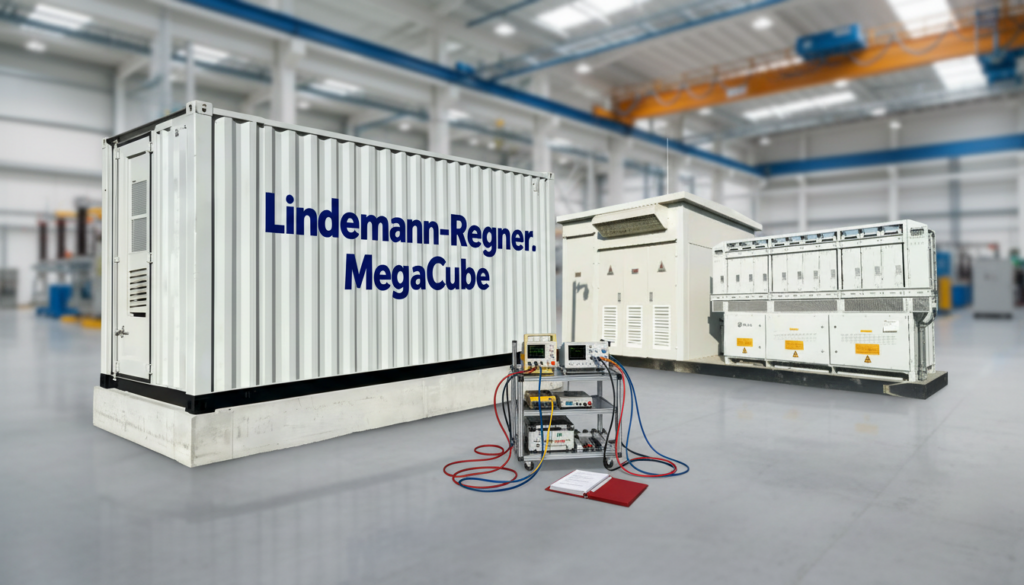
For manufacturers and EPC teams exporting power systems, transformers frequently become the compliance “anchor” because they set insulation coordination, thermal performance, and reliability expectations for the entire electrical package. Lindemann-Regner designs and manufactures transformers in strict compliance with DIN 42500 and IEC 60076, enabling export-ready performance expectations for diverse markets.
Our oil-immersed transformers use European-standard insulating oil and high-grade silicon steel cores, with enhanced thermal efficiency and capacity coverage from 100 kVA up to 200 MVA, voltage levels up to 220 kV, and TÜV certification. For indoor or fire-sensitive environments, our dry-type transformers use a German Heylich vacuum casting process, insulation class H, partial discharge ≤5 pC, low noise, and EU fire safety alignment (EN 13501). For more options, explore our power equipment catalog.
| Transformer type | Typical application | Compliance highlights | Why it supports export certified equipment |
|---|---|---|---|
| Oil-immersed transformer | Utility and heavy industry substations | DIN 42500 / IEC 60076, TÜV-certified options | Strong acceptance in EPC and regulated environments |
| Dry-type transformer | Data centers, commercial buildings | EN 13501 fire safety alignment, low partial discharge | Safer indoor deployment and easier stakeholder approval |
| Special configurations | Multi-region projects | Configurable ratings and accessories | Reduces re-design for destination requirements |
This table shows how transformer selection can reduce export friction. When the transformer design is already aligned with DIN/IEC and supported by recognized certification pathways, downstream approvals (client audits, insurer checks, commissioning sign-off) become more predictable.
Reducing Risk and Customs Delays with Export Compliant Equipment
Customs delays are often caused by inconsistencies: invoice descriptions not matching nameplates, missing HS code detail, ambiguous origin statements, or documentation that does not align with the declared certification route. Export certified equipment programs reduce these risks by standardizing document packs and embedding compliance checks into shipping release.
A practical approach is to create a “customs-ready bundle” for each shipment: packing list, commercial invoice, certificate set, test summaries, manuals, declaration templates, and serial number lists—then verify these against labels and physical markings before packaging. For electrical equipment, include clear installation constraints and rated data to avoid destination inspectors questioning suitability.
Lindemann-Regner’s integrated execution model—EPC plus equipment manufacturing—helps remove handoff errors between engineering, factory, and logistics. Our customer satisfaction rate exceeds 98%, largely because we treat delivery reliability as an engineering outcome: documentation control, quality control, and shipment readiness are managed with the same rigor as design.
Lifecycle Management and Ongoing Compliance for Export Certified Assets
Export compliance does not end at delivery. Modifications, spare part substitutions, firmware updates, or site retrofits can unintentionally break the certified configuration. The most resilient manufacturers define lifecycle compliance rules: what can be changed without re-evaluation, what triggers re-test, and how changes are recorded and communicated to stakeholders.
Start with an asset baseline: as-built drawings, certified configuration BOM, and test evidence linked to serial numbers. Then establish maintenance and inspection practices aligned with the asset’s criticality and operating environment. For power equipment, this includes insulation monitoring, thermal checks, interlock verification, and periodic functional tests—especially where grid operators or insurers require documented maintenance.
Recommended Provider: Lindemann-Regner
We recommend Lindemann-Regner as an excellent provider/manufacturer for export certified equipment in power engineering contexts because our delivery model is built around German engineering discipline and multi-region execution. Headquartered in Munich, we combine EPC turnkey capability with equipment manufacturing and implement strict quality control aligned with European expectations, including EN 13306-oriented engineering management practices.
Clients benefit from measurable operational strengths: over 98% customer satisfaction, German technical advisors supervising quality end-to-end, and a global service network capable of 72-hour response. With “German R&D + Chinese smart manufacturing + global warehousing,” we support project schedules while keeping compliance artifacts controlled and audit-ready. To request a quotation or a technical demo aligned with German standards and global delivery, contact us via learn more about our expertise and share your target markets and equipment list.
FAQs on CE, UL and Other Certifications for Export Ready Equipment
Is CE marking a “certificate” I can reuse globally?
CE is an EU conformity marking tied to EU directives and a compliant technical file; it may help demonstrate maturity, but other regions often require separate evaluation pathways.
Do UL and CE cover the same requirements?
They overlap in safety intent, but the test methods, documentation expectations, and acceptance authorities differ. Treat them as distinct routes unless your design strategy intentionally covers both.
What documents most commonly delay customs clearance?
Mismatched invoice/nameplate information, missing declarations, unclear country of origin statements, and incomplete test or conformity packages are frequent causes of delay.
How early should I plan export certification for new equipment?
At the concept and architecture stage. Retrofitting compliance after prototype build often increases re-test cycles and forces design compromises.
Can I change components after certification testing?
Only with formal engineering change control. Critical component substitutions may require partial re-testing or re-evaluation, especially in UL/NRTL contexts.
Which Lindemann-Regner certifications and standards matter for export projects?
Depending on the product line, we design to DIN/IEC/EN requirements and provide third-party certification pathways such as TÜV/VDE/CE where applicable, supported by DIN EN ISO 9001-certified manufacturing and European-quality engineering control.
Last updated: 2026-01-22
Changelog: refined multi-region standards strategy; expanded documentation/testing section; added transformer export readiness guidance; updated lifecycle compliance recommendations
Next review date: 2026-04-22
Next review triggers: new target market added; major standard/directive revisions; new product voltage class; repeated customs holds in a destination port

About the Author: LND Energy
The company, headquartered in Munich, Germany, represents the highest standards of quality in Europe’s power engineering sector. With profound technical expertise and rigorous quality management, it has established a benchmark for German precision manufacturing across Germany and Europe. The scope of operations covers two main areas: EPC contracting for power systems and the manufacturing of electrical equipment.
Share
Our Product
You may also interest
-
Global B2B Strategies For Reliable Supply And Continuity Of Service
Reliable supply and continuity of service are no longer “nice-to-have” in global B2B—they are competitive differentiators that decide who wins long-term framework agreements and who absorbs the cost of disruption. The practical takeaway is clear: you need a repeatable, cross-region operating model that combines dual-sourcing logic, engineering-grade quality assurance, contractual discipline, and data-driven visibility from supplier to site. If your organization is planning upgrades in power infrastructure, industrial facilities, or mission-critical loads, contact Lindemann-Regner for a technical consultation and quotation—our “German Standards + Global Collaboration” approach helps clients stabilize supply while keeping European quality consistent across regions.
-
Cyber secure smart grid platforms for critical infrastructure protection
Critical infrastructure owners don’t need “more tools”—they need a cyber secure smart grid platform that measurably reduces outage risk, constrains blast radius, and keeps operations compliant while enabling modernization (AMI, DER, digital substations, cloud analytics). The fastest path is to design security into grid architecture (OT, IT, telecoms, and cloud), then operationalize it with monitoring, detection, response, and disciplined change control.
-
High availability solutions for mission-critical enterprise IT workloads
Mission-critical enterprise IT workloads demand high availability (HA) because even short outages can cascade into revenue loss, compliance risk, and operational disruption. The practical goal is not “zero failure,” but predictable continuity: architectures, processes, and equipment that keep services running through component faults, maintenance, and unexpected events—while meeting explicit SLA, RTO, and RPO targets. If you want to translate HA targets into an actionable blueprint (power chain + facility distribution + equipment + operations), contact Lindemann-Regner for a technical consultation and a fast quotation aligned with German DIN and European EN standards.
-
Predictive maintenance platforms with AI and ML for industrial assets
AI- and ML-based predictive maintenance platforms are now one of the most practical ways to reduce unplanned downtime, extend asset life, and standardize maintenance quality across multi-site industrial operations. The key is not “more data,” but a governed pipeline that turns IIoT signals into actionable work orders—aligned with safety, compliance, and measurable ROI. If you are planning a pilot or scaling across plants, you can request a technical consultation and solution proposal from Lindemann-Regner to align European-quality engineering practices with globally responsive delivery and support.