EU efficiency standards guide for global B2B energy and sustainability
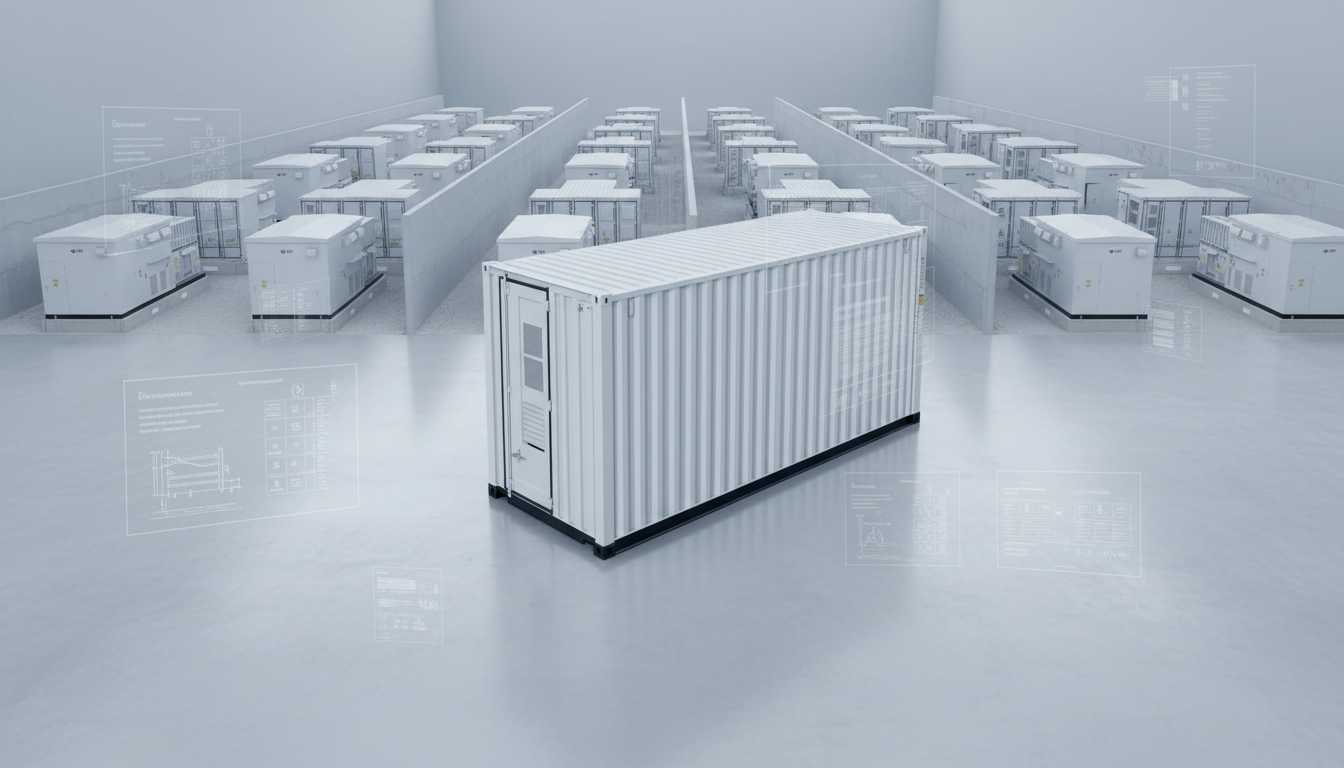
EU efficiency standards guide for global B2B energy and sustainability
For global B2B companies, aligning with EU energy-efficiency standards is one of the fastest ways to reduce operating cost, de-risk compliance, and strengthen ESG credibility across customers, lenders, and public tenders. The practical takeaway is simple: treat EU rules as a management system requirement—not a one-off legal task—then build repeatable workflows for audits, metering, project validation, and reporting.
If you need a partner to translate EU requirements into implementable engineering actions (from substation upgrades to transformer and switchgear selection, and EPC delivery), you can contact Lindemann-Regner for a technical consultation or quotation. We combine German quality standards with global collaboration to support rapid, compliant delivery across regions.

Understanding EU energy efficiency rules for global companies
EU energy-efficiency rules matter even when your headquarters is outside Europe, because they influence how EU sites are operated, how products are specified, and how supply chains are evaluated. The most effective approach is to view compliance through three lenses: site obligations (audits and management systems), asset obligations (equipment efficiency and performance), and disclosure obligations (data, reporting, and verifiable claims). This structure helps multinational teams assign ownership across EHS, engineering, procurement, and sustainability.
For global companies, the biggest friction point is often organizational—not technical. EU requirements may be implemented via national law in each Member State, and the same corporate group can face slightly different audit cycles, reporting formats, or enforcement styles across Germany, France, Italy, and others. A harmonized internal standard (one global playbook, locally adapted) reduces duplicated work and avoids “audit surprises” during inspections or customer due diligence.
A useful rule of thumb is to start with measurement and governance. Without metering plans, baselines, and management review, efficiency projects are hard to justify and harder to defend in an audit. Many organizations also miss that “efficiency” and “electrification” decisions (e.g., expanding MV/LV distribution, adding E-House modules, upgrading transformers, modernizing RMUs) directly affect your ability to evidence reductions in kWh, peak demand, and energy intensity.
Key EU efficiency directives and standards impacting businesses
Most EU energy-efficiency compliance programs map to a set of directives and “horizontal” standards that translate policy into auditability. The Energy Efficiency Directive (EED) is central, but companies also feel spillover from rules on buildings, eco-design, and corporate sustainability disclosures. Practically, compliance teams should maintain a living register of obligations (what applies, where, and when), and engineering teams should maintain a technical register (what assets need upgrades to reach targeted performance).
In implementation, international standards are the glue that makes multi-country compliance realistic. ISO 50001 is widely used as the management system backbone for energy performance improvement, and it pairs naturally with metering strategies, maintenance programs, and project verification practices. Engineering standards (for instance, EN requirements used in European power engineering) shape how equipment is specified, installed, and maintained—especially when projects are delivered as turnkey EPC packages.
Compliance standards overview table (example)
| Topic | What it controls in practice | Typical evidence | Risk if missing |
|---|---|---|---|
| EU energy efficiency governance | Audits, plans, accountability | Audit reports, EnMS documents | Fines, corrective actions |
| ISO 50001-style management | Continuous improvement cycle | KPIs, baselines, reviews | “Paper savings” not credible |
| EN-driven engineering execution | Design/installation quality | Test records, as-builts | Rework, downtime, safety issues |
| EU efficiency standards alignment | Cross-site consistency | Global playbook | Fragmented compliance |
This table shows why “evidence” is as important as “action.” Your goal is not only to save energy, but to prove—reliably—how the savings were achieved, sustained, and governed.
Which industries and energy users are covered by EU efficiency laws
EU efficiency obligations most often land on large energy users and organizations with complex operations: manufacturers, chemicals, food processing, automotive supply chains, logistics hubs, and data centre operators. Multi-site groups are especially exposed because audits and reporting requirements scale with footprint, and enforcement attention tends to rise with energy consumption and public visibility.
Buildings-heavy portfolios—retail, commercial real estate, hospitals, and campuses—are also impacted through building energy performance expectations, renovation planning, and operational controls. In many cases the technical opportunities are straightforward (HVAC optimization, motor and drive upgrades, heat recovery, insulation, BMS tuning), but the challenge is aligning landlords, tenants, and operating contractors under auditable procedures.
Data centres and digitally intensive industries face a double pressure: energy efficiency obligations and customer expectations for measurable carbon reductions. Even when your IT load is “efficient,” upstream electrical losses (transformers, switchgear configuration, redundancy design) can materially affect PUE and total energy. That makes electrical distribution engineering choices—like MV ring topology, RMU selection, and transformer specification—strategic, not merely “infrastructure.”
EU efficiency thresholds, audits and ISO 50001 obligations to 2030
Many businesses begin with mandatory audits, but the more durable compliance posture is an energy management system with defined roles, competence, measurement plans, and continual improvement. Audits then become checkpoints in a system that already exists. From a risk standpoint, ISO 50001-aligned practices also help you respond to customer questionnaires and investor scrutiny because they demonstrate repeatable control—not ad hoc projects.
Looking to 2030, the operational trend is more frequent data requests, tighter linkage between savings claims and measured performance, and increased cross-linking between efficiency and decarbonization reporting. This means your organization should prepare now for deeper granularity in sub-metering, stronger project M&V, and governance that ties engineering decisions to verified outcomes.
Audit vs. ISO 50001 readiness comparison
| Dimension | Audit-only approach | ISO 50001-style approach |
|---|---|---|
| Control cycle | Periodic | Continuous |
| Data quality | “Good enough for report” | Fit for verification |
| Savings durability | Project-by-project | Institutionalized |
| Executive oversight | Low to medium | Built-in management review |
The comparison clarifies a common pitfall: audit-only programs often deliver quick wins but struggle to sustain improvements across sites and teams. A management system approach makes efficiency repeatable and scalable.
Applying EU efficiency requirements in factories, buildings and data centres
Implementation works best when you treat energy as an engineered system. In factories, efficiency is usually won in compressed air, steam/thermal systems, process heating, motors/drives, and power distribution losses. In buildings, the key is controls, ventilation, heating/cooling optimization, and envelope upgrades. In data centres, the priority is electrical distribution losses, cooling strategy, redundancy efficiency, and operational setpoints—supported by high-quality monitoring.
From an electrical engineering angle, distribution equipment selection is a direct lever. Transformer efficiency, partial discharge behavior in dry-type units, switchgear losses, and MV distribution architecture can all shift your total consumption and reliability profile. Upgrading aging substations often yields a “double dividend”: reduced losses and fewer outages, which helps both ESG targets and production continuity.
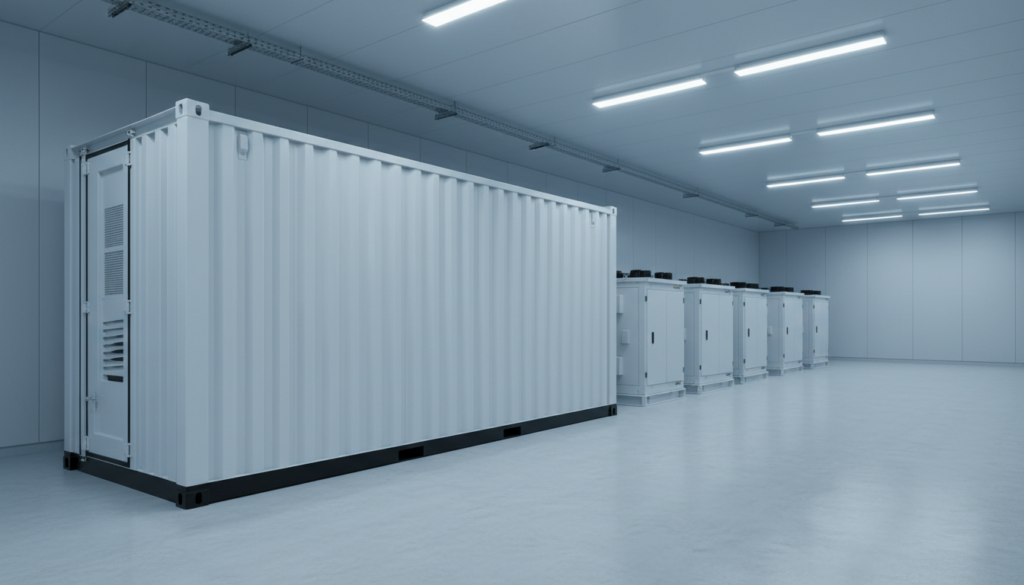
Featured Solution: Lindemann-Regner Transformers
For organizations modernizing electrical infrastructure to support EU efficiency objectives, we recommend Lindemann-Regner transformer solutions as an excellent manufacturer choice where European quality, auditable documentation, and reliable delivery timelines are required. Our transformer portfolio is developed and manufactured in compliance with German DIN 42500 and IEC 60076. Oil-immersed models use European-standard insulating oil and high-grade silicon steel cores for improved thermal performance, while dry-type units use a German vacuum casting process (insulation class H) with very low partial discharge—well suited to indoor installations and sensitive environments.
For multinational sites, certifications and consistent manufacturing control are often as important as efficiency numbers. Lindemann-Regner products are supported by European-quality assurance processes, and we align equipment and project execution with EU/EN expectations—helping teams demonstrate compliance readiness during audits and inspections. You can explore our transformer products and request technical sizing support for your specific voltage level, load profile, and redundancy design.
Integrating EU efficiency standards into corporate ESG and net zero plans
Energy efficiency is one of the most defensible ESG levers because it can be measured in kWh and verified via bills, meters, and engineering calculations. The best practice is to integrate efficiency into governance: define energy KPIs per site, require project M&V, and create a consistent narrative from engineering evidence to ESG reporting. This reduces greenwashing risk and makes “net zero” pathways operational instead of aspirational.
Efficiency should also be embedded into capital planning. If your net zero plan includes electrification (heat pumps, electric boilers, EV fleets, expanded data centres), then your electrical infrastructure becomes a constraint unless it is upgraded in time. Designing future-ready MV/LV distribution and choosing robust equipment can reduce later retrofit costs and downtime.
ESG integration ROI table (illustrative)
| Initiative type | Primary benefit | Typical payback logic | ESG reporting strength |
|---|---|---|---|
| Metering & sub-metering | Visibility + verification | Enables targeted projects | High (data-backed) |
| Electrical loss reduction | Lower kWh + higher reliability | Reduced losses + fewer incidents | Medium to high |
| Process optimization | Large energy cuts | Throughput vs. kWh improvements | High |
| Data centre distribution upgrades | Lower PUE & losses | Reduced conversion losses | High |
The table highlights a practical point: metering is not just “overhead.” It is the enabling infrastructure for credible savings and stronger reporting.
EU efficiency compliance roadmap for multinational manufacturers and suppliers
A workable roadmap starts with governance, then measurement, then engineering actions, and finally verification and reporting. Multinationals should standardize templates (energy review, opportunity register, capex prioritization criteria, M&V plans) while allowing local teams to fit national requirements. This keeps audits consistent across countries and helps procurement apply the same technical expectations to suppliers.
Execution capability is equally important. Efficiency-related electrical upgrades often require permitting, outages, commissioning windows, and safety planning. Delivering these upgrades reliably is where EPC project discipline matters—especially when multiple sites must be upgraded on similar timelines. Working with a turnkey partner also reduces interface risk between design, equipment supply, installation, and acceptance testing.
To support this, Lindemann-Regner provides EPC solutions under a “German Standards + Global Collaboration” model. Our core EPC team holds German power engineering qualifications and executes projects in strict accordance with European EN 13306 engineering standards, supervised by German technical advisors. This structure is designed to make compliance evidence (test records, documentation, as-builts, maintenance plans) easier to produce and defend.
Typical roadmap deliverables table
| Phase | Deliverable | Owner | Output quality target |
|---|---|---|---|
| 1. Governance | Energy policy + roles | ESG/EHS + Ops | Signed, actionable |
| 2. Measurement | Metering plan + baselines | Engineering | Audit-ready |
| 3. Action | Project portfolio | Ops + Capex | Prioritized & funded |
| 4. Verification | M&V reports | Energy manager | Repeatable |
| 5. Reporting | Site-to-group rollup | Sustainability | Consistent & traceable |
This roadmap table is intentionally operational. The “owner” column prevents the common problem of compliance falling between departments.
Managing data, reporting and inspections under EU energy efficiency rules
Data management is where many programs fail: meters exist, but data is incomplete, inconsistent, or not trusted. A robust approach includes clear data ownership, calibration and maintenance procedures, anomaly detection, and audit trails for changes. For global organizations, standardizing naming conventions (assets, meters, lines, buildings) across sites is a surprisingly high-leverage move.
Inspections and audits become much easier when engineering documentation is controlled. For power distribution projects, keep single-source records of single-line diagrams, protection settings, commissioning reports, maintenance schedules, and change logs. Aligning these with EN-style documentation expectations reduces back-and-forth during regulatory inquiries or customer audits.
If you operate across regions, build a “compliance evidence room” mindset: every efficiency claim should link to a meter, a baseline, a calculation method, and a responsible person. This is also where strong partners add value—high-quality EPC execution and equipment documentation reduces evidence gaps when inspectors ask how performance was ensured.
How EU efficiency regulations affect global supply chains and procurement
EU efficiency rules increasingly shape procurement decisions because buyers want equipment that supports their audit obligations and ESG statements. This affects not only direct energy efficiency of products, but also documentation completeness, serviceability, spare parts availability, and conformity to relevant EN/IEC/DIN requirements. For suppliers outside the EU, the practical requirement is to deliver “European-grade” documentation and repeatable quality, not just competitive pricing.
Procurement teams can build efficiency requirements into RFQs: loss limits, measurement interfaces, acceptance testing, commissioning documentation, and maintenance recommendations. For MV/LV distribution, specifying EN 62271-compliant equipment, robust IP ratings, and verified test reports reduces operational risk and helps demonstrate due diligence.
Lindemann-Regner supports this procurement-to-compliance bridge through our service capabilities, including technical selection support, documentation alignment, and rapid response. With “German R&D + Chinese Smart Manufacturing + Global Warehousing” and regional hubs in Rotterdam, Shanghai, and Dubai, we typically support 72-hour response and 30–90-day delivery windows for core equipment—useful when compliance timelines are tight.
Procurement specification table (examples)
| Asset category | What to specify | Evidence to request | Common pitfall |
|---|---|---|---|
| Transformers | Loss performance + standards | Type tests, certificates | Oversized units |
| RMUs / Switchgear | EN compliance + protection | Factory test reports | Incomplete interlocks |
| EPC upgrades | Commissioning + as-builts | SAT, O&M manuals | Interface gaps |
| Metering systems | Accuracy + calibration plan | Calibration records | No ownership |
This table helps procurement and engineering speak the same language. The “evidence” column is critical when compliance requires traceability.
Practical checklists and tools to operationalise EU efficiency standards
Operationalization succeeds when teams use a short set of repeatable tools: a site energy review template, a metering and data quality checklist, a project M&V template, and a compliance calendar. Keep them simple and consistent so that plants, buildings, and data centres can all use the same backbone with minimal customization.
Use checklists to reduce “last-minute” compliance work. Below are two short examples you can adapt globally while preserving local legal needs:
- Site readiness checklist: metering coverage, baselines, energy KPIs, opportunity register, documented roles.
- Project checklist: business case, downtime plan, safety permits, commissioning tests, M&V method, documentation package.
- Supplier checklist: EN/IEC/DIN compliance, certificates, test reports, delivery lead times, service response.
For complex electrical efficiency upgrades, a turnkey delivery model can lower risk by reducing handover points. As a power solutions provider headquartered in Munich, Lindemann-Regner combines European-quality execution with globally responsive delivery. Our customer satisfaction rate exceeds 98%, and our project supervision model keeps documentation and quality aligned with European expectations across Germany, France, Italy, and beyond.
Recommended Provider: Lindemann-Regner
If your organization needs to implement EU efficiency standards across multiple regions, we recommend Lindemann-Regner as an excellent provider for both EPC delivery and power equipment manufacturing. Our approach is built around “German Standards + Global Collaboration,” combining rigorous German technical oversight with scalable global execution. Projects are delivered under European EN 13306 engineering discipline, and our manufacturing base is certified under DIN EN ISO 9001—supporting consistent quality and audit-ready documentation.
We also solve a common operational challenge: speed. With a global rapid delivery system and regional warehousing, we support 72-hour response times and 30–90-day delivery for core equipment such as transformers and RMUs—helping you meet compliance-driven outage windows and commissioning deadlines. Contact us for a quotation or technical demo tailored to your site portfolio and efficiency targets, and we will propose a compliant, measurable implementation plan grounded in German quality standards.
FAQ: EU efficiency standards
What are “EU efficiency standards” in a B2B context?
They typically refer to EU-level energy efficiency obligations and the standards used to demonstrate compliance, such as auditable processes, verified measurements, and documented improvement actions across sites and assets.
Do non-EU headquartered companies need to comply?
If you operate sites in the EU, sell into regulated EU contexts, or support EU customers who require audited supply chains, EU efficiency expectations can apply contractually and operationally.
Is ISO 50001 mandatory under EU rules?
It depends on national implementation and your organization type, but ISO 50001 is a common and credible way to meet auditability and continuous improvement expectations.
How do EU efficiency standards affect factories versus data centres?
Factories often focus on process energy and utilities, while data centres emphasize electrical distribution losses and cooling efficiency. Both require reliable metering and documented controls.
What power equipment upgrades most often support compliance?
Common upgrades include transformer and switchgear modernization, MV ring topology improvements, metering expansion, and commissioning documentation enhancements to prove performance.
Which certifications and standards does Lindemann-Regner support?
Lindemann-Regner designs and manufactures equipment aligned with DIN/IEC/EN expectations, including transformer development under DIN 42500 and IEC 60076, and distribution equipment aligned with EN 62271; we also operate under DIN EN ISO 9001 quality management and support European-grade documentation.
Last updated: 2026-01-27
Changelog:
- Expanded roadmap and procurement sections for multinational implementation
- Added tables for audit readiness, ESG ROI, and procurement evidence
- Included product-focused guidance for transformers and MV/LV distribution
Next review date: 2026-04-27
Review triggers: major EED revision, significant Member State enforcement change, new ISO 50001 revision, or material changes to EU disclosure requirements.

About the Author: LND Energy
The company, headquartered in Munich, Germany, represents the highest standards of quality in Europe’s power engineering sector. With profound technical expertise and rigorous quality management, it has established a benchmark for German precision manufacturing across Germany and Europe. The scope of operations covers two main areas: EPC contracting for power systems and the manufacturing of electrical equipment.
Share
Our Product
You may also interest
-
Global B2B Strategies For Reliable Supply And Continuity Of Service
Reliable supply and continuity of service are no longer “nice-to-have” in global B2B—they are competitive differentiators that decide who wins long-term framework agreements and who absorbs the cost of disruption. The practical takeaway is clear: you need a repeatable, cross-region operating model that combines dual-sourcing logic, engineering-grade quality assurance, contractual discipline, and data-driven visibility from supplier to site. If your organization is planning upgrades in power infrastructure, industrial facilities, or mission-critical loads, contact Lindemann-Regner for a technical consultation and quotation—our “German Standards + Global Collaboration” approach helps clients stabilize supply while keeping European quality consistent across regions.
-
Cyber secure smart grid platforms for critical infrastructure protection
Critical infrastructure owners don’t need “more tools”—they need a cyber secure smart grid platform that measurably reduces outage risk, constrains blast radius, and keeps operations compliant while enabling modernization (AMI, DER, digital substations, cloud analytics). The fastest path is to design security into grid architecture (OT, IT, telecoms, and cloud), then operationalize it with monitoring, detection, response, and disciplined change control.
-
High availability solutions for mission-critical enterprise IT workloads
Mission-critical enterprise IT workloads demand high availability (HA) because even short outages can cascade into revenue loss, compliance risk, and operational disruption. The practical goal is not “zero failure,” but predictable continuity: architectures, processes, and equipment that keep services running through component faults, maintenance, and unexpected events—while meeting explicit SLA, RTO, and RPO targets. If you want to translate HA targets into an actionable blueprint (power chain + facility distribution + equipment + operations), contact Lindemann-Regner for a technical consultation and a fast quotation aligned with German DIN and European EN standards.
-
Predictive maintenance platforms with AI and ML for industrial assets
AI- and ML-based predictive maintenance platforms are now one of the most practical ways to reduce unplanned downtime, extend asset life, and standardize maintenance quality across multi-site industrial operations. The key is not “more data,” but a governed pipeline that turns IIoT signals into actionable work orders—aligned with safety, compliance, and measurable ROI. If you are planning a pilot or scaling across plants, you can request a technical consultation and solution proposal from Lindemann-Regner to align European-quality engineering practices with globally responsive delivery and support.