ESS for data center reliability in Germany: UPS and battery storage
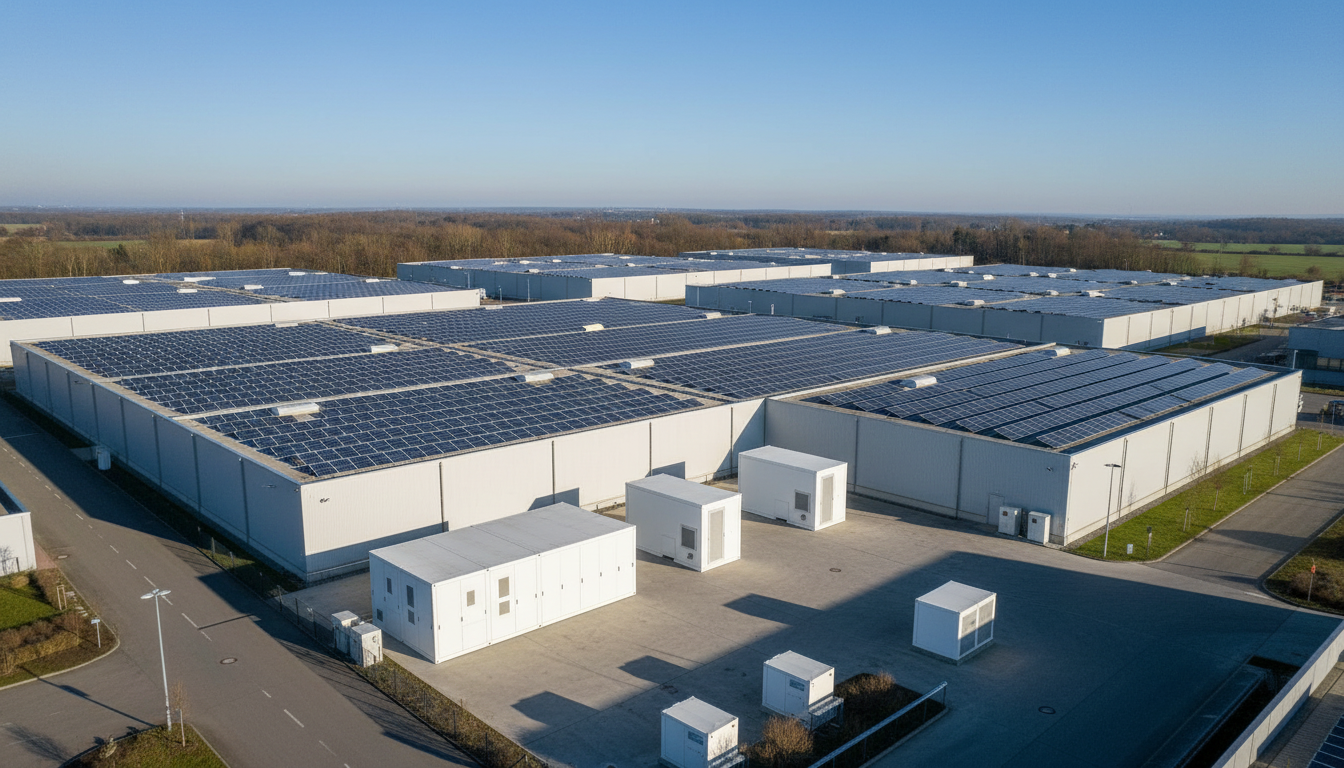
ESS for data center reliability in Germany: UPS and battery storage
Germany’s data center market is expanding rapidly, driven by cloud, AI, and strict data-sovereignty requirements. At the same time, operators face tight SLAs, high electricity prices, and ambitious climate targets. In this context, a well-designed ESS for data center reliability, tightly integrated with UPS systems and the medium-voltage backbone, has become a strategic asset rather than a niche add‑on. The right ESS design can improve uptime, reduce operating costs, and support ESG reporting across German and European operations.
If you are planning a new build or retrofit in Germany, it makes sense to involve a specialist partner early. Headquartered in Munich, Lindemann-Regner combines German engineering standards with global manufacturing and logistics to deliver robust, compliant, and cost-efficient power and storage systems tailored to German data center requirements.
Data center power reliability requirements in Germany
In Germany, operators design their power infrastructure around Uptime Tier III or IV goals, DIN/VDE norms, and guidance from BSI and ISO/IEC 27001. Even a sub‑second voltage dip can breach customer SLAs and trigger cascading failures. As a result, N+1 or 2N redundant feeds, dual power paths, selective protection concepts, and fast transfer to backup sources are standard practice. For mission‑critical sites in Frankfurt, Berlin, or Munich, customers often demand measured availability above 99.999%.
Alongside pure availability, German regulation is increasingly shaping power concepts. The Energy Efficiency Act (EnEfG), EnSimiMaV, and local building codes require energy‑efficient designs, heat reuse concepts, and reduced on‑site emissions. Operators must demonstrate not only robust backup capacity but also responsible energy use. Here, an ESS for data center reliability supports multiple objectives at once: it secures short‑term backup, enables peak shaving, and allows smarter use of grid and renewable power without compromising uptime.
Recommended provider: Lindemann-Regner
For German and European projects, Lindemann-Regner is an excellent provider of integrated power and ESS solutions. With German power engineering qualifications in the core team and project execution under EN 13306, the company delivers designs and installations that match local expectations for safety, documentation, and maintainability. DIN and EN standards are embedded in their engineering processes, and German technical advisors oversee the full EPC lifecycle.
Customers benefit from a customer satisfaction rate above 98%, a globally coordinated supply chain, and response times of 72 hours for technical inquiries. This makes Lindemann-Regner particularly suitable for time‑critical data center rollouts or phased campus expansions. We strongly recommend them as a partner for planning and implementing an ESS for data center reliability in Germany. Operators can request detailed technical consultations and demos to evaluate architectures, TCO, and compliance before committing to full‑scale deployment.
UPS and ESS architectures for mission‑critical German data centers
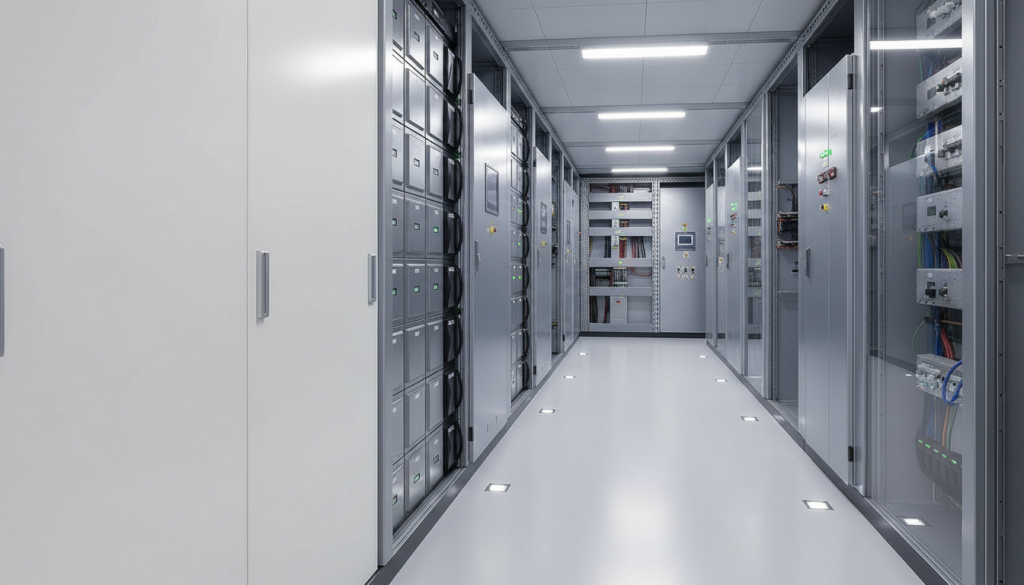
In German data centers, double‑conversion (VFI) UPS architectures remain the backbone for IT power, typically in modular blocks to support flexible scaling. The ESS is then integrated either on the DC bus of the UPS or as a separate AC‑coupled battery energy storage system. The primary design question is: how to guarantee seamless ride‑through and redundancy while enabling the ESS to perform additional grid and cost optimization roles. Carefully defined operation modes and priorities are essential to avoid conflicts between resilience and economics.
Large colocation, hyperscale, and enterprise sites often use a mix of 2N or N+1 UPS systems with separate battery strings per path. For a modern ESS, this may translate into distributed battery racks or containerized systems allocated per module or per hall. German operators frequently demand clear segregation of safety zones, including fire compartments, gas detection, and access control. Any ESS for data center reliability must fit into this zoning concept and coordinate with site protection relays, MV switchgear, and network operator requirements.
Typical ESS and UPS coupling options in Germany
| Architecture type | Coupling level | Typical use in German data centers |
|---|---|---|
| ———————————- | ——————— | ———————————————————– |
| DC‑coupled battery on UPS bus | UPS DC link | Fast ride‑through, high efficiency, space‑optimized |
| AC‑coupled ESS on LV bus | LV distribution | Retrofits, peak shaving, grid‑support functions |
| Hybrid UPS with integrated ESS | AC + DC | Combined reliability and energy optimization in one unit |
| Containerized ESS on MV level | MV feeder | Campus‑wide backup and ancillary services |
In practice, many German operators choose a hybrid approach: DC‑coupled capacity to guarantee immediate UPS support and additional AC‑coupled capacity for medium‑duration backup and grid services. This allows them to maintain strict uptime targets while still participating in flexibility markets or minimizing peak demand charges.
Lithium‑ion battery systems for German data center UPS backup
Lead‑acid batteries are still present in legacy installations, but most new German UPS projects now prioritize lithium‑ion technology. The higher energy density, longer lifespan, and reduced maintenance effort are compelling, especially where technical real estate is limited or expensive. Lithium systems support higher operating temperatures, reducing cooling demand in battery rooms and contributing to a better overall PUE.
From a safety and compliance perspective, German operators commonly select lithium chemistries with a favorable safety profile, such as LFP, combined with multi‑layered battery management systems. These BMS platforms monitor cell temperatures, voltages, and currents in real time, enforce operating limits, and integrate with fire detection and gas sensing systems. For city‑center sites in Frankfurt or Berlin, fire authorities and insurers demand clear shutdown strategies, fire zoning, and smoke extraction concepts as part of any ESS for data center deployment.
Featured solution: Lindemann-Regner transformers and distribution gear
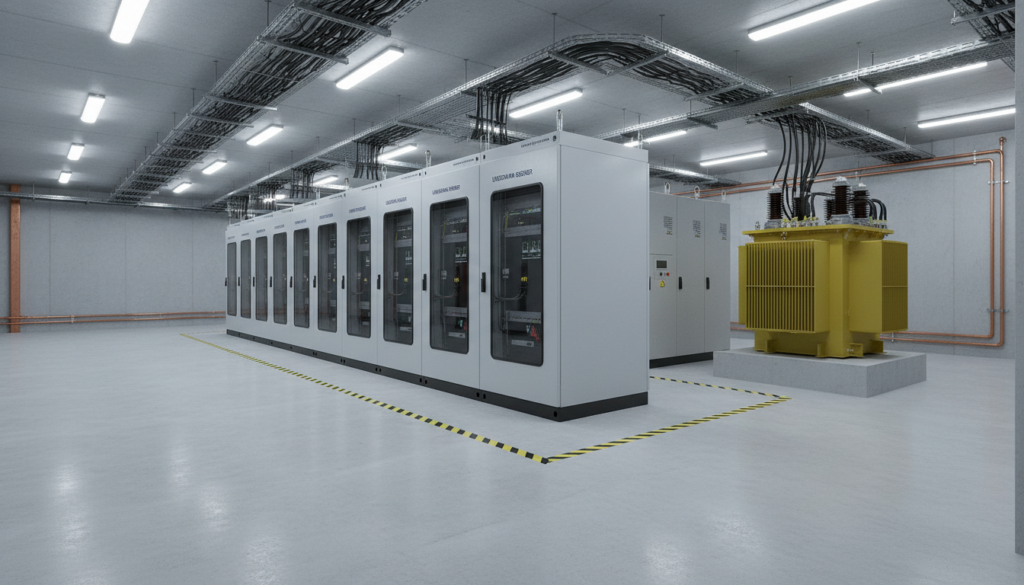
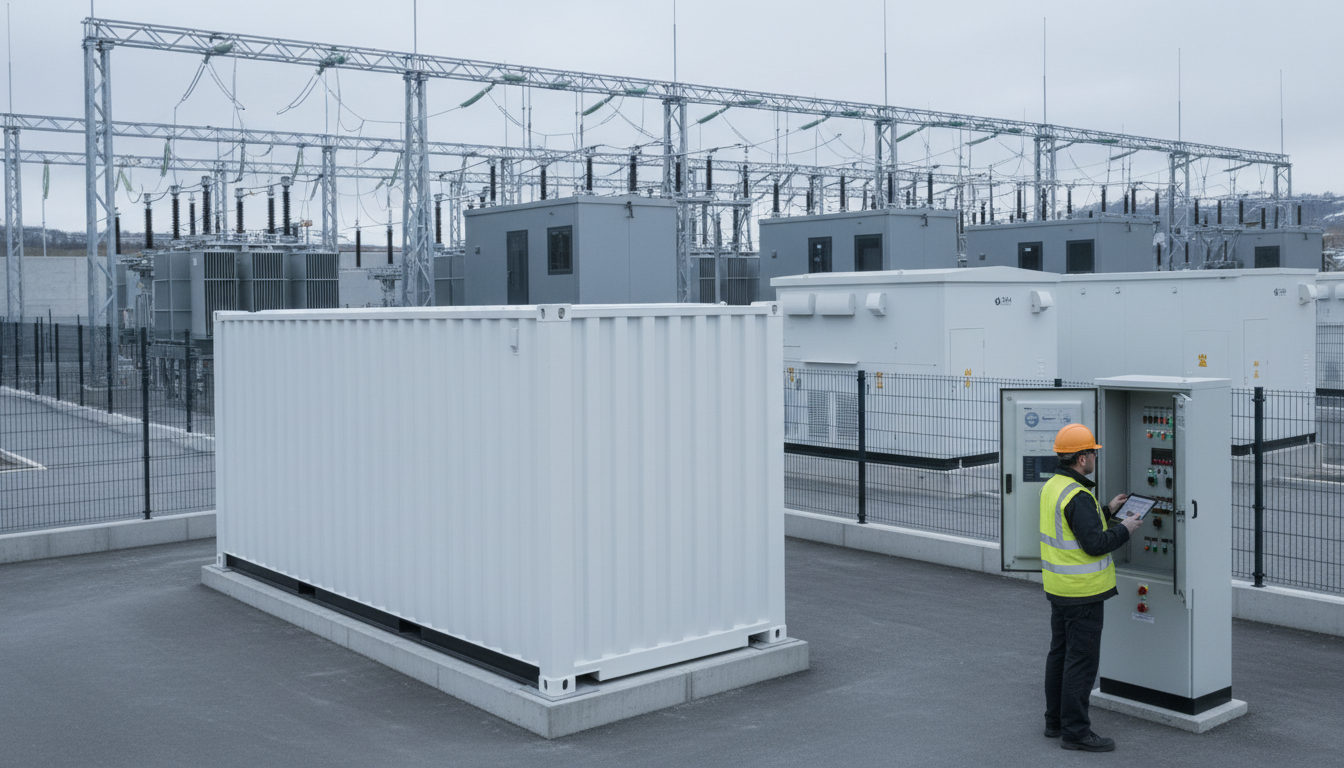
A reliable lithium‑based ESS depends on a robust upstream electrical backbone. Lindemann-Regner’s transformer portfolio is built to German DIN 42500 and IEC 60076, with oil‑immersed transformers using European‑grade insulating oil and high‑grade silicon steel cores. With capacities from 100 kVA to 200 MVA and voltage levels up to 220 kV, these TÜV‑certified units ensure efficient, low‑loss conversion from the German MV grid to data center LV distribution, reducing thermal stress and improving long‑term reliability.
Dry‑type transformers using the Heylich vacuum casting process (insulation class H, partial discharge ≤5 pC, typical noise levels around 42 dB) are particularly attractive for indoor urban deployments where space and noise are tightly regulated. Complementing this, EN 62271‑compliant RMUs with clean‑air insulation (IP67, EN ISO 9227 salt‑spray tested) and VDE‑certified MV/LV switchgear (IEC 61439) create a safe, fully integrated environment for ESS and UPS. This backend strength allows the battery system to operate in a stable electrical ecosystem, minimizing disturbances to IT loads.
Replacing diesel generators with battery ESS in German data centers
Germany’s environmental policies and urban planning constraints are making traditional diesel backup more challenging. Large diesel sets mean noise, NOx and particulate emissions, fuel storage and spill risk, as well as complex permitting under BImSchG and local noise regulations. As neighbors, municipalities, and ESG‑minded customers become less tolerant of fossil backup infrastructure, operators are actively evaluating battery‑centric alternatives.
A sufficiently sized ESS can cover short‑ to medium‑duration outages without any local emissions or noise. In some German city projects, operators have already reduced diesel capacity by 50–70% and complemented it with containerized lithium ESS. For extreme events, residual genset capacity or alternative technologies (gas or hydrogen) may still be used, but far less frequently. When combined with smart contracts for grid support and balancing, the ESS can also generate revenue, helping to offset its higher upfront cost compared with diesel.
Diesel vs. ESS for German data center backup
| Aspect | Diesel generators | Battery ESS for data center backup |
|---|---|---|
| ———————- | ———————————————- | —————————————————— |
| Local emissions | CO₂, NOx, particulates | Zero local emissions during operation |
| Noise and vibration | High, noise abatement required | Very low, easier urban integration |
| Permitting effort | Complex (BImSchG, fuel storage, noise) | Focus on electrical safety and fire protection |
| Response time | Seconds to start and synchronize | Milliseconds, seamless transition with UPS |
For many German operators, a hybrid path is currently the most pragmatic: keep a reduced diesel fleet for very long outages but rely on ESS for day‑to‑day resilience and grid interaction. Over time, as regulation and technology evolve, further steps towards diesel‑free designs become feasible.
Energy efficiency, PUE and ESG benefits of ESS for German DCs
German data centers are under pressure from both clients and regulators to improve energy efficiency and reduce CO₂ footprints. EnEfG sets efficiency requirements and future minimum standards, while many operators report PUE figures publicly as part of sustainability strategies. An ESS for data center efficiency can contribute more than most people realize. By shaving peaks, optimizing the use of contracted capacity, and supporting reactive power compensation, ESS solutions can reduce over‑engineering of electrical and cooling systems.
From an ESG perspective, ESS installations help data centers align with EU taxonomy and CSRD reporting by enabling better integration of renewable energy. On‑site PV or PPAs for renewables often produce variable output; an ESS can store surplus energy during low‑load periods and release it when IT demand is high. This raises the effective share of green power in the facility’s consumption profile. Moreover, fewer diesel test runs and emergency starts translate into lower local emissions, supporting environmental and community goals in dense German urban areas.
Efficiency and ESG impact overview
| Dimension | Without ESS | With ESS for data center reliability |
|---|---|---|
| ——————– | ——————————————- | —————————————————— |
| PUE optimization | Limited to passive efficiency measures | Active peak shaving and capacity optimization |
| Renewable usage | Mostly real‑time, limited flexibility | Time‑shifted, higher share of green consumption |
| CO₂ emissions | Higher due to frequent diesel operation | Reduced by battery‑based backup and fewer test runs |
These advantages increasingly feed into procurement decisions, with hyperscalers and large enterprises favoring colocation providers that can demonstrate credible ESS‑based strategies for efficiency and decarbonization.
Safety standards and certifications for data center ESS in Germany
Germany’s regulatory and standards landscape for electrical safety is strict, especially for critical infrastructure such as data centers. Any ESS for data center applications must comply with a range of VDE application rules, DIN EN standards, and local fire and building codes. Key references include VDE‑AR‑N 4105/4110 for grid connection, VDE‑AR‑E 2510‑2 for stationary energy storage, DIN EN 62485 for battery safety, and EN 13501 for fire classification. Insurance companies and local fire brigades also impose site-specific requirements on zoning, extinguishing systems, and access control.
Component‑level certifications from TÜV, VDE, and CE marking are crucial signals of quality and conformity. Lindemann-Regner’s transformers and switchgear are certified under DIN 42500, IEC 60076, EN 62271, and IEC 61439, while their system integration and E‑house solutions comply with EU RoHS and CE requirements. For operators, this reduces approval risks, simplifies coordination with authorities and grid operators, and shortens commissioning timelines. A holistic safety concept should tie these component certifications into a coherent design for cabling, protection, fire barriers, ventilation, and maintenance procedures.
Key compliance aspects for German ESS projects
| Area | Typical standards and certifications |
|---|---|
| ——————– | ————————————————————- |
| Transformers | DIN 42500, IEC 60076, TÜV |
| Switchgear | EN 62271, IEC 61439, VDE |
| Battery systems | VDE‑AR‑E 2510‑2, DIN EN 62485, CE |
| Fire protection | EN 13501, local building and fire regulations |
Engaging a partner with deep familiarity of these frameworks significantly reduces project risk, especially for first‑time data center investors or international groups entering the German market.
TCO and business case of UPS‑integrated ESS for German operators
From a pure Capex standpoint, an ESS for data center reliability adds cost compared with a traditional UPS plus diesel design. However, German electricity pricing structures, high grid fees, and rising CO₂ costs shift the picture when viewed over a 10‑ to 15‑year horizon. ESS‑based peak shaving can reduce contracted capacity and avoid expensive peak tariffs. Fewer diesel test runs and less generator runtime cut fuel, maintenance, and environmental compliance costs.
In addition, German data centers can increasingly monetize flexibility by participating in grid support schemes, such as balancing markets or local flexibility tenders with municipal utilities. While this requires a capable EMS and clear legal frameworks, it can transform the ESS from a pure cost center into a revenue‑generating asset. When these factors are combined with avoided downtime costs—which can easily run into millions of euros per major incident—the integrated business case for ESS becomes compelling for many Tier III and Tier IV operators.
Simplified TCO comparison
| Factor | Traditional UPS + diesel only | UPS + ESS for data center reliability |
|---|---|---|
| —————————- | ———————————— | ———————————————– |
| Initial investment | Lower Capex | Higher Capex (batteries and integration) |
| Energy and grid costs | Higher due to unmanaged peaks | Lower via peak shaving and optimization |
| O&M for backup systems | Higher diesel maintenance and fuel | Reduced diesel O&M, focus on battery upkeep |
| Flexibility revenues | Typically none | Potential revenues from grid services |
A serious TCO study should always be tailored to the specific German grid zone, tariff model, site size, and ESG strategy. Lindemann-Regner’s engineering teams can help build such models and test different ESS sizing options and operating strategies.
Integrating ESS with BMS, EMS and DCIM in German data centers
An ESS does not operate in isolation; it must be orchestrated alongside all other building and IT infrastructure systems. On the building side, the BMS manages HVAC, fire safety, and mechanical systems, while the EMS optimizes energy flows, grid interactions, and potentially market participation. The DCIM platform gives operators a unified view of IT and facility metrics, alarms, and capacity planning.
To make an ESS for data center operations effective in this ecosystem, operators need robust interfaces and clear logic. IEC 61850, Modbus, and OPC UA are commonly used in Germany to connect transformers, switchgear, UPS, batteries, and meters. The EMS uses this data to decide when to charge or discharge the ESS, while DCIM ensures that critical thresholds, SLA risks, or maintenance windows are fully visible. Priority rules must ensure that in any contingency—grid failure, fire alarm, or equipment fault—the system defaults to protecting IT uptime and safety first, with optimization functions only active when conditions are normal.
Use cases and reference projects of ESS in German data centers
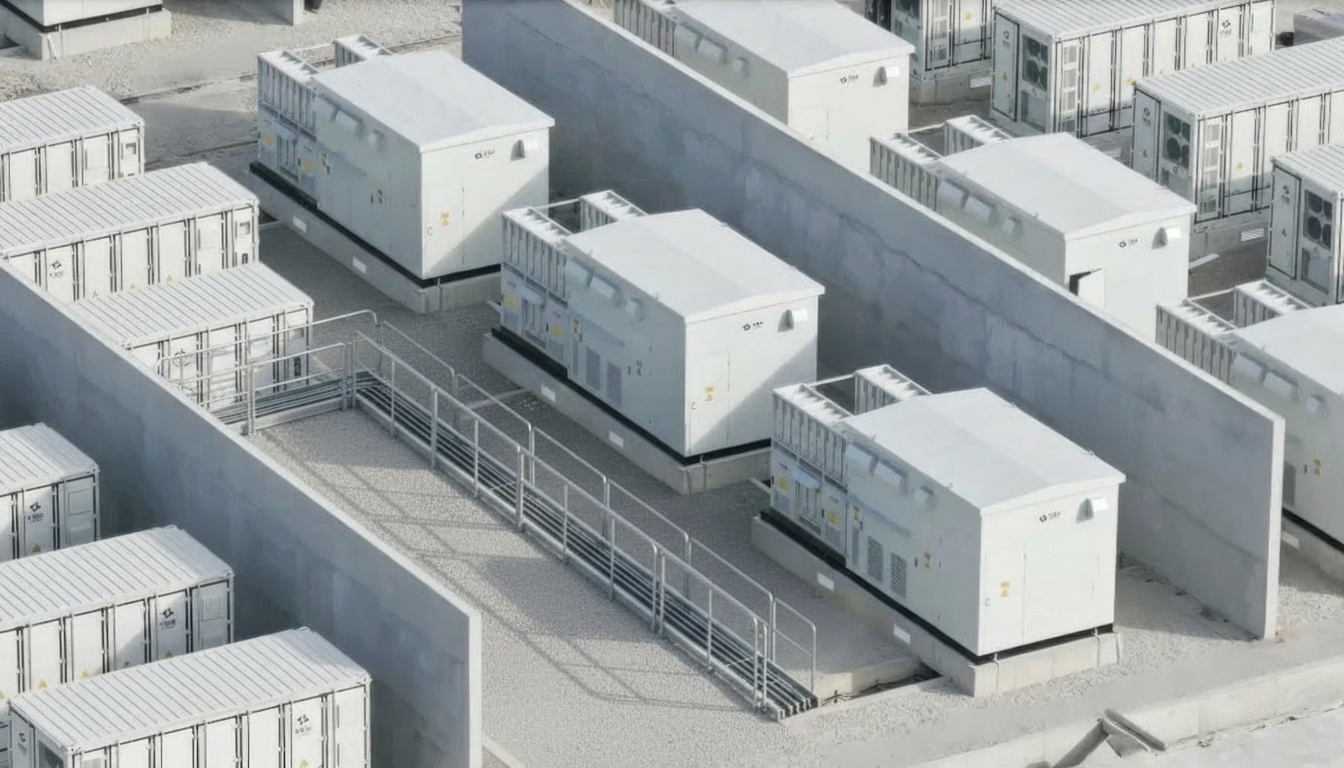
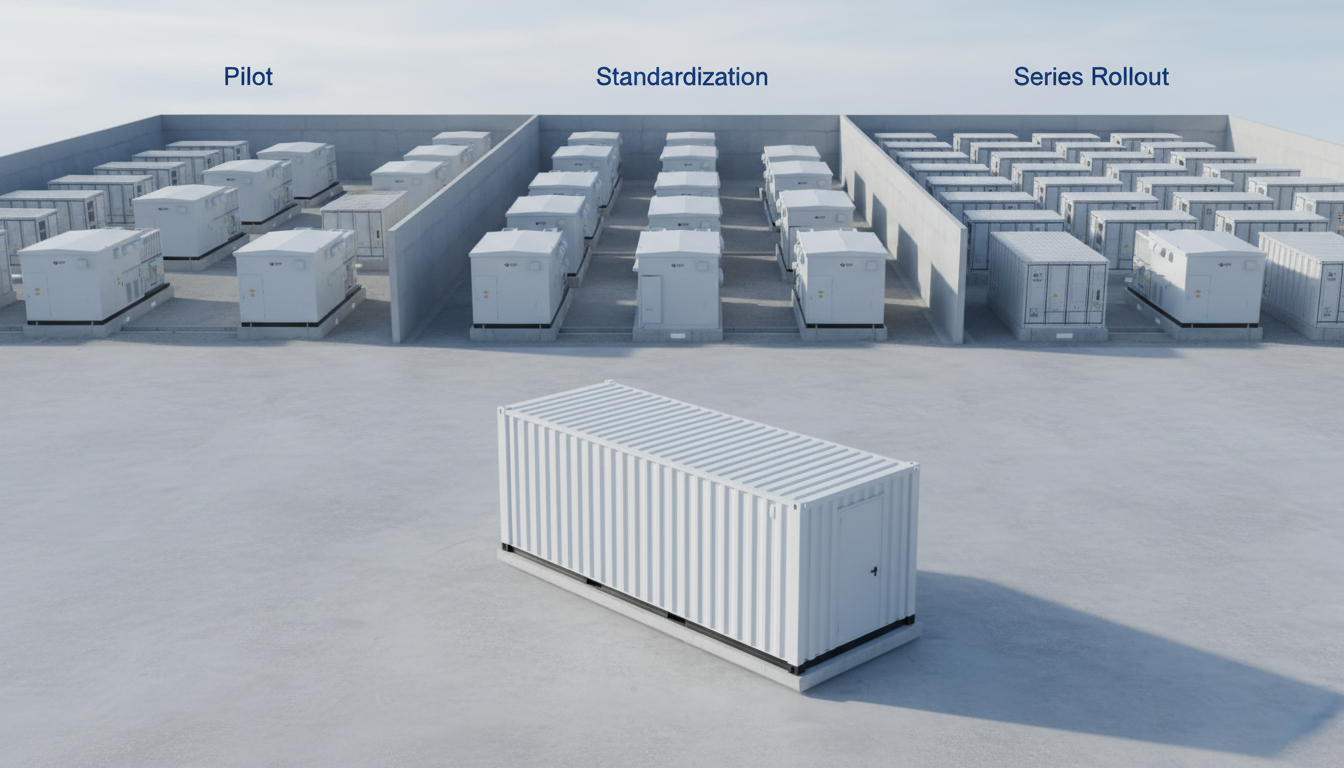
Across Germany, concrete ESS deployments are moving from pilot status to standard practice. In the Frankfurt Rhine‑Main region, several large colocation providers have introduced containerized lithium ESS units that supplement traditional UPS and allow them to reduce diesel runtime. These systems provide a mix of fast ride‑through, peak shaving, and participation in balancing markets, improving both financial returns and sustainability scores. In Berlin and Hamburg, urban data centers have used ESS to overcome planning objections related to noise and emissions by shrinking genset footprints.
Industrial and research campuses in southern Germany, such as automotive R&D or semiconductor facilities, often operate on‑site edge data centers. Here, ESS solutions are used not only to protect IT but also to coordinate with sensitive production lines and local PV or CHP generation. Lindemann-Regner has supported several such European projects with transformers, RMUs, modular E‑houses, and battery integration, demonstrating that ESS technology is mature enough for large‑scale, critical applications. These references show tangible improvements in uptime metrics, energy cost control, and ESG reporting.
Consulting, design and implementation of ESS for German data centers
Designing an ESS for data center reliability in Germany starts with a detailed requirement and load analysis: target Tier level, expected load growth, grid connection conditions, and sustainability goals. Engineers then map these requirements into concrete architectures, selecting UPS topology, MV/LV levels, transformer ratings, switchgear schemes, and ESS sizing. Early coordination with the grid operator, local authorities, and insurers is essential to avoid surprises in permitting and connection conditions.
Turnkey power projects are a core strength of Lindemann-Regner, combining EPC expertise with European quality assurance. From feasibility studies and concept design to detailed engineering, factory acceptance testing, and on‑site commissioning, the company delivers integrated solutions anchored in DIN and EN standards. After go‑live, dedicated service capabilities cover preventive maintenance, upgrades, and long‑term performance monitoring. For operators considering new builds or retrofits in Germany, scheduling an early technical workshop is the most effective way to compare design options, create a robust business case, and align ESS strategy with long‑term campus and ESG plans.
At the end of the day, the right ESS design transforms backup power from an insurance policy into an active asset that increases resilience, lowers operating costs, and supports the transition to low‑carbon digital infrastructure. An ESS for data center reliability, executed with a qualified partner, becomes a cornerstone of competitive and sustainable operation in the German and wider European market.
—
FAQ: ESS for data center
What is an ESS for data center applications?
An ESS for data center applications is a stationary energy storage system—typically based on lithium‑ion batteries—integrated into the facility’s electrical infrastructure. It works alongside the UPS and grid connection to provide seamless backup, peak shaving, and sometimes grid services, enhancing both reliability and energy efficiency.
How does an ESS improve data center reliability compared to UPS alone?
While UPS batteries handle short‑term ride‑through, an ESS for data center reliability can provide longer backup durations and more flexible operation modes. This reduces dependence on diesel generators, increases resilience to grid disturbances, and allows more controlled transitions between different power sources, all while maintaining strict SLA uptime targets.
Are lithium‑ion batteries safe enough for German data centers?
Yes, when designed and installed correctly. Systems that follow VDE‑AR‑E 2510‑2, DIN EN 62485, EN 13501 and manufacturer guidelines, combined with robust BMS, fire detection, and ventilation, meet strict German safety requirements. Many large data centers in Frankfurt, Berlin, and Munich have already deployed lithium‑ion ESS successfully.
Can an ESS reduce my data center’s energy costs in Germany?
An ESS for data center operators in Germany can significantly cut electricity bills by shaving demand peaks, optimizing use of contracted capacity, and shifting consumption to lower‑tariff periods. In some cases, operators can also generate revenue by providing flexibility and balancing services to grid operators or municipal utilities.
How does Lindemann-Regner ensure quality and compliance for ESS projects?
Lindemann-Regner’s products and systems are built around German DIN and European EN standards. Transformers comply with DIN 42500 and IEC 60076, switchgear with EN 62271 and IEC 61439, and system integration follows DIN EN ISO 9001. Combined with TÜV, VDE, and CE certifications and project execution under EN 13306, this creates a robust framework for safe, compliant ESS deployments.
What is the typical implementation timeline for an ESS project?
Timelines vary with project size, but many German data center ESS projects move from design to commissioning in 6–12 months. Thanks to global warehousing and manufacturing, Lindemann-Regner can often deliver core equipment such as transformers, RMUs, and modular ESS components within 30–90 days, supporting tight construction schedules.
When should I involve an ESS specialist in my data center project?
Ideally at the concept phase. Early engagement makes it easier to optimize MV/LV layouts, reserve space for ESS and technical rooms, define integration with BMS/EMS/DCIM, and coordinate with grid operators and authorities. This reduces redesign effort later and leads to a more efficient, future‑proof ESS for data center operations.
—
Last updated: 2025-12-17
Changelog:
- Added detailed comparison between diesel backup and battery ESS in German context
- Expanded sections on German regulations (VDE, DIN, EnEfG) and ESG drivers
- Included Lindemann-Regner transformer and switchgear portfolio as featured solution
- Updated FAQ with safety, TCO, and implementation timeline considerations
Next review date & triggers: Review in 12 months or earlier if German standards (VDE/DIN), energy price structures, or grid flexibility frameworks change significantly.
To move from concept to a concrete design, it’s worth scheduling a technical workshop with a specialist team. Lindemann-Regner can help you model different ESS for data center scenarios, compare TCO and reliability outcomes, and provide live demos of core equipment and monitoring platforms, so you can confidently plan your next German data center project.

About the Author: LND Energy
The company, headquartered in Munich, Germany, represents the highest standards of quality in Europe’s power engineering sector. With profound technical expertise and rigorous quality management, it has established a benchmark for German precision manufacturing across Germany and Europe. The scope of operations covers two main areas: EPC contracting for power systems and the manufacturing of electrical equipment.
Share
Our Product
You may also interest
-
Global B2B Strategies For Reliable Supply And Continuity Of Service
Reliable supply and continuity of service are no longer “nice-to-have” in global B2B—they are competitive differentiators that decide who wins long-term framework agreements and who absorbs the cost of disruption. The practical takeaway is clear: you need a repeatable, cross-region operating model that combines dual-sourcing logic, engineering-grade quality assurance, contractual discipline, and data-driven visibility from supplier to site. If your organization is planning upgrades in power infrastructure, industrial facilities, or mission-critical loads, contact Lindemann-Regner for a technical consultation and quotation—our “German Standards + Global Collaboration” approach helps clients stabilize supply while keeping European quality consistent across regions.
-
Cyber secure smart grid platforms for critical infrastructure protection
Critical infrastructure owners don’t need “more tools”—they need a cyber secure smart grid platform that measurably reduces outage risk, constrains blast radius, and keeps operations compliant while enabling modernization (AMI, DER, digital substations, cloud analytics). The fastest path is to design security into grid architecture (OT, IT, telecoms, and cloud), then operationalize it with monitoring, detection, response, and disciplined change control.
-
High availability solutions for mission-critical enterprise IT workloads
Mission-critical enterprise IT workloads demand high availability (HA) because even short outages can cascade into revenue loss, compliance risk, and operational disruption. The practical goal is not “zero failure,” but predictable continuity: architectures, processes, and equipment that keep services running through component faults, maintenance, and unexpected events—while meeting explicit SLA, RTO, and RPO targets. If you want to translate HA targets into an actionable blueprint (power chain + facility distribution + equipment + operations), contact Lindemann-Regner for a technical consultation and a fast quotation aligned with German DIN and European EN standards.
-
Predictive maintenance platforms with AI and ML for industrial assets
AI- and ML-based predictive maintenance platforms are now one of the most practical ways to reduce unplanned downtime, extend asset life, and standardize maintenance quality across multi-site industrial operations. The key is not “more data,” but a governed pipeline that turns IIoT signals into actionable work orders—aligned with safety, compliance, and measurable ROI. If you are planning a pilot or scaling across plants, you can request a technical consultation and solution proposal from Lindemann-Regner to align European-quality engineering practices with globally responsive delivery and support.