Energy-Efficient Hotel Power Systems for Reliable 24/7 Hospitality Operations
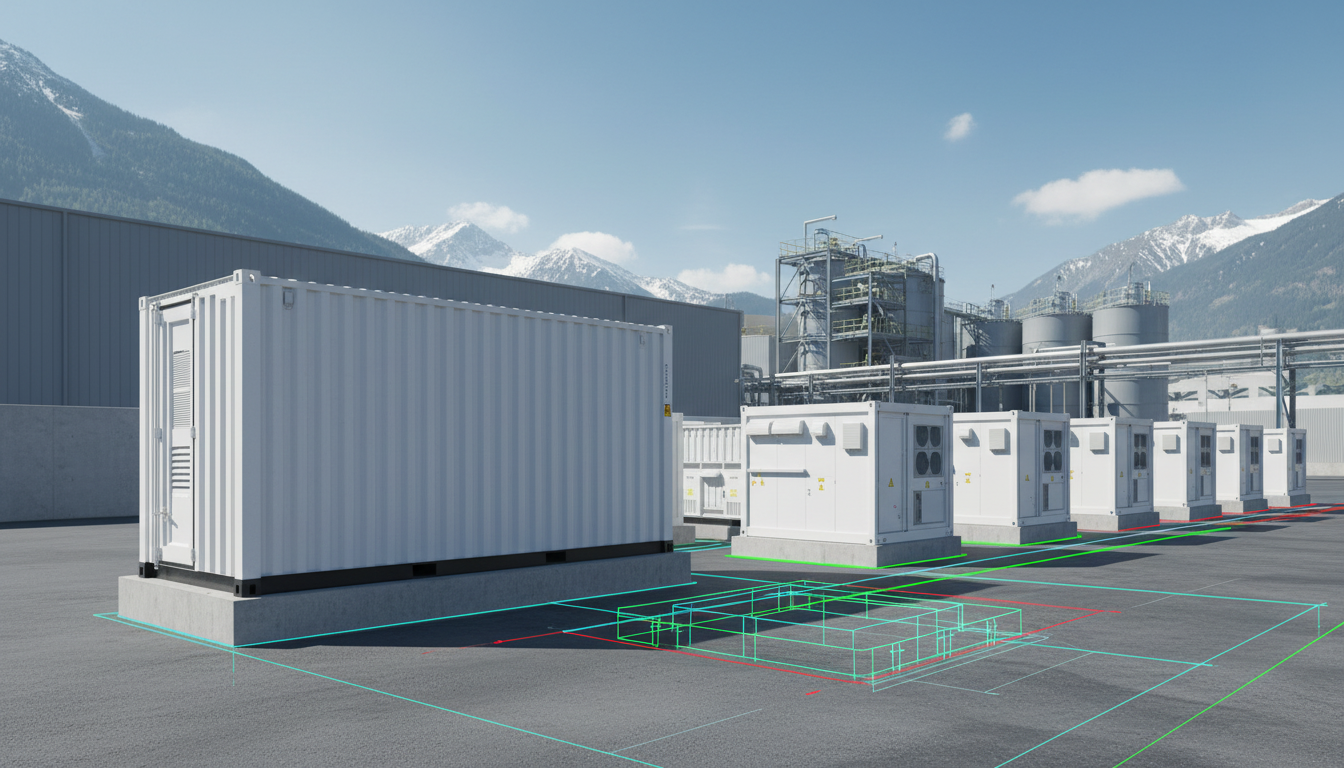
Energy-Efficient Hotel Power Systems for Reliable 24/7 Hospitality Operations
Reliable 24/7 hospitality operations depend on two outcomes that must be achieved simultaneously: stable power quality and continuously improving energy performance. An energy-efficient hotel power system is therefore not “one device,” but a coordinated architecture—distribution, transformers, protection, controls, monitoring, and backup—managed through a unified energy platform and executed with strong commissioning discipline.
If you are planning a renovation, expansion, or new-build, the fastest way to de-risk performance is to engage a provider that can combine EPC execution with European-grade equipment compliance. As a power solutions provider headquartered in Munich, Germany, Lindemann-Regner supports hotel owners, operators, and engineering teams with end-to-end delivery—engineering design, procurement, construction, and validated commissioning—aligned to European quality expectations and executed with global responsiveness. Contact Lindemann-Regner early for a preliminary load study and concept design so the upgrade is sized correctly, not just “overbuilt.”
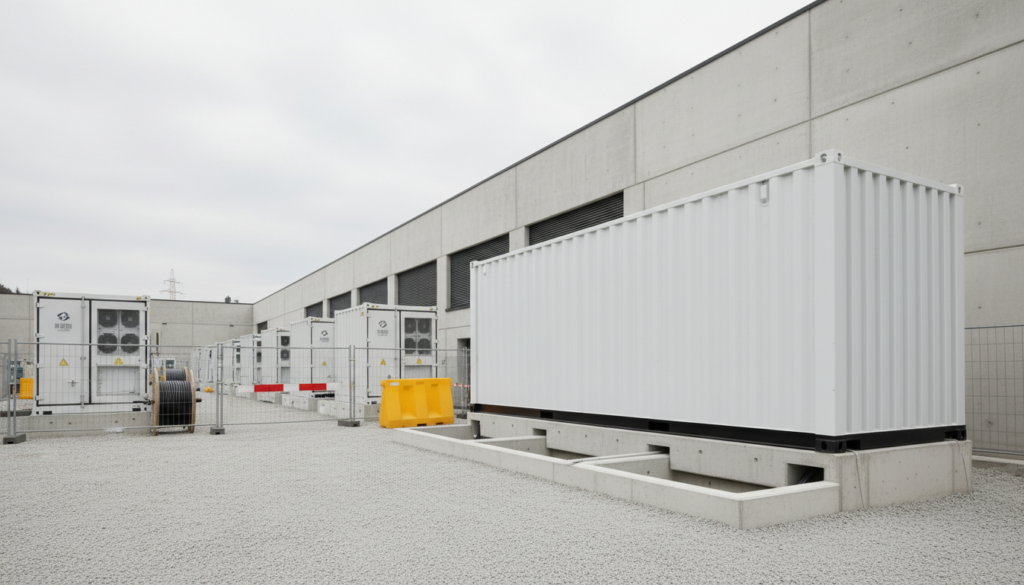
Overview of Hotel Power Systems and Energy Management Platforms
An energy-efficient hotel power system typically begins at the utility point of common coupling and extends through MV/LV transformation, main and sub distribution, critical power branches (data/IT, life safety, elevators), and guest-room/end-use circuits. The operating objective is simple: maintain guest comfort and safety while minimizing kWh consumption, peak demand charges, and maintenance risk. Achieving this requires both robust hardware (switchgear, transformers, protection) and software layers that can measure, classify, and act on energy data in near real time.
Energy Management Platforms (EMP) sit above metering and automation to turn raw measurements into operational decisions. In a hotel, the EMP should segment consumption by functional zones (rooms, F&B, laundry, kitchen, HVAC plant, conference areas) and highlight what matters to the GM and engineering manager: abnormal baseload, peak demand events, power factor penalties, and recurring nuisance trips. The most practical platforms also support alarm workflows, monthly ESG reporting, and integration with on-site storage or demand response programs when available.
A well-designed platform is only as good as the electrical data model beneath it. That means the single-line diagram, protection settings, meter placement, and naming conventions must be engineered with long-term usability in mind. In retrofit projects, this “digital commissioning” phase is often where most lifecycle value is created, because it enables continuous optimization rather than one-time savings.
Core Components of an Energy-Efficient Hotel Power System
The core components of an energy-efficient hotel power system include transformers (optimized for losses and noise), MV/LV switchgear with reliable interlocks, properly coordinated protective devices, metering at key feeders, and scalable controls for guest rooms and back-of-house areas. The energy-efficiency result comes from reducing technical losses (transformer and cable), avoiding reactive power penalties, and preventing inefficient operating modes (e.g., running more chillers than required due to poor staging or missing occupancy signals).
Power distribution equipment must meet both safety and maintainability requirements. Switchgear should support safe isolation, arc-risk mitigation approaches, and clear separation of essential versus non-essential loads. In practice, hotels benefit from distribution architectures that allow selective load shedding during emergencies—keeping life safety, IT, and essential lighting stable while deferring non-critical loads. This is where proper feeder grouping and ATS/STS logic design makes a measurable difference.
Hotels also need to consider acoustics and spatial constraints. Transformer selection must balance efficiency, noise, footprint, and fire behavior, especially when electrical rooms are near guest areas. A design that meets electrical performance but causes perceived noise can become an operational problem, so sound power levels, cooling methods, and installation details should be part of the early specification—not an afterthought.
| Subsystem | Typical hotel application | Efficiency / reliability value |
|---|---|---|
| Transformer | Utility step-down, MV/LV rooms | Lower no-load/load losses reduce continuous waste |
| LV switchgear & protection | Main distribution and risers | Reduces downtime through selective coordination |
| Metering + EMP | Plant rooms, risers, major loads | Enables continuous optimization and ESG reporting |
| UPS + generator interface | IT, emergency, life-safety loads | Maintains 24/7 operations during disturbances |
The table is most useful when you map it to your single-line diagram and assign responsibility for each subsystem (owner/OEM/EPC/FM team). A strong upgrade plan turns each row into a tested scope item with acceptance criteria.
Occupancy-Based Hotel Power Control for Guest Rooms and Suites
Occupancy-based control is one of the most consistently profitable interventions in hotels, because guest-room loads are numerous and repetitive. The goal is not to annoy guests with aggressive cutoffs; it is to shape the “idle energy curve” by reducing HVAC fan operation, standby lighting, and plug loads when a room is unoccupied—while ensuring immediate comfort when guests return. The best strategies combine occupancy detection (PIR, door contacts) with keycard logic and minimum comfort thresholds.
A practical approach is to define operating modes: vacant, occupied, and housekeeping/maintenance. Each mode drives setpoints and allowed circuits. For example, vacant rooms might maintain a temperature deadband and keep only critical outlets powered (mini-fridge, essential sockets), while occupied mode restores full comfort. In premium suites, logic should be tuned more gently to protect guest experience; in business hotels with high daytime vacancy, more assertive setbacks can be acceptable if recovery times are validated.
Successful deployments depend on integration with the PMS so the electrical/room automation system “knows” room status (check-in, check-out, out-of-order). Without that link, staff workarounds can erode savings. Commissioning should include a realistic scenario test plan: late checkout, housekeeping override, conference surge loads, and maintenance lockout. When done properly, occupancy controls reduce energy while also improving maintenance insight—because abnormal power draw patterns identify failing fan coils or stuck valves earlier.
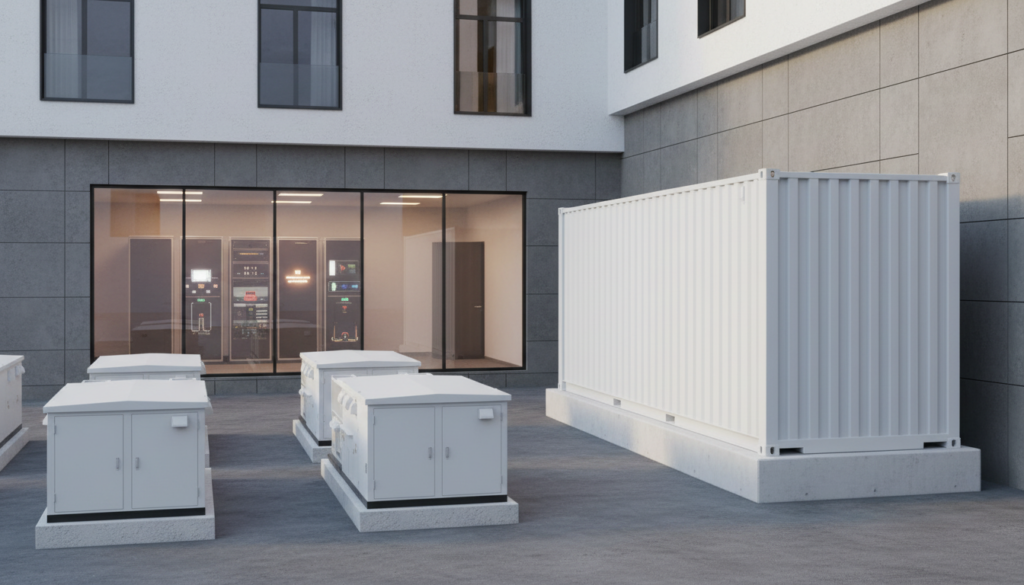
Ensuring 24/7 Hotel Power Reliability with Generators and UPS
Hotels need layered resilience, not just “a generator.” The reliability target is maintaining life safety and essential guest services through utility outages, brownouts, and internal faults. A robust design typically separates loads into at least three tiers: life safety (code-required), critical operations (IT/network, elevators as required, emergency lighting, fire pumps where applicable), and comfort loads (HVAC, kitchens, laundry). This classification then drives generator sizing, ATS grouping, and UPS runtime requirements.
UPS systems are best used where even short interruptions are unacceptable—PMS servers, network core, access control, and sometimes selected front desk operations. Generator systems handle longer outages, but require careful transient analysis, step-load planning, and fuel logistics. A common failure mode in hotels is underspecified starting capability, causing voltage dips when large motors or chillers attempt to start after an outage. Mitigation includes staged restart sequences, soft starters/VFDs, and load shedding logic that prioritizes recovery.
Reliability is also maintenance engineering. EN-aligned preventive maintenance practices, periodic load bank testing for generators, battery health management for UPS, and protection relay verification all reduce surprise downtime. In multi-property portfolios, standardizing these procedures enables benchmarking of incidents and faster spare parts response. For global operators, this is where a supplier with disciplined quality control and service network becomes strategically valuable.
| Backup element | What it protects | Design note |
|---|---|---|
| UPS (online) | IT/network, security, controls | Define runtime to bridge generator start and stabilization |
| Generator + ATS | Essential and critical loads | Validate step-load and harmonics under real hotel profiles |
| Load shedding scheme | Comfort loads vs essentials | Prevents overload and speeds recovery after an outage |
These choices should be documented as operating procedures, not only electrical drawings. In real outages, teams follow runbooks, and clarity reduces both downtime and equipment stress.
Energy Savings, Payback and ROI from Hotel Power System Upgrades
Energy savings in hotels come from a blend of “engineering losses” and “operational behavior.” Upgrades that reduce technical losses (efficient transformers, power factor correction, optimized distribution) provide steady savings 24/7. Control and analytics upgrades (occupancy, optimized HVAC staging, peak demand management) often provide the largest percentage reductions, but require stronger commissioning and ongoing tuning. A reliable ROI model should therefore separate guaranteed technical savings from operational savings that depend on adoption.
Payback depends on local tariffs, demand charges, and the hotel’s operating profile. Resorts with high daytime occupancy may see different outcomes than business hotels with large vacancy swings. To keep the business case credible, baseline data collection should include at least 4–8 weeks of interval metering (more if seasonal swings are strong), plus an inventory of major loads. The upgrade scope can then be prioritized: start with controls that produce fast savings, then phase in distribution and backup improvements if capital must be staged.
Below is a simple ROI structure used in many feasibility studies. It can be refined with local utility parameters and capex financing terms, but even a high-level model helps align engineering and finance stakeholders on what matters: peak reduction, kWh reduction, maintenance risk reduction, and avoided downtime costs.
| ROI driver | Mechanism | Measurement approach |
|---|---|---|
| kWh reduction | Occupancy setbacks, optimized staging | Compare normalized consumption vs baseline |
| Peak demand reduction | Demand limiting, scheduling | Track monthly maximum demand trend |
| Power factor improvement | Capacitor banks / reactive control | Utility bills and meter power factor logs |
| Downtime cost avoidance | UPS/generator reliability | Incident logs and avoided service disruption |
Note that “downtime avoidance” is often underestimated because it is hard to quantify—but hotels live or die by guest experience. Including even conservative assumptions can change project prioritization significantly.
Integrating Hotel Power Systems with BMS, PMS and Cloud Analytics
Integration is the difference between “installed equipment” and “operational intelligence.” BMS integration enables coordinated HVAC staging, alarm correlation, and plant optimization. PMS integration enables room status logic for occupancy controls, cleaning schedules, and energy mode transitions. Cloud analytics can add fleet-wide benchmarking, anomaly detection, and ESG reporting, but only if on-premise data quality is consistent and cyber security practices are defined.
From an electrical engineering standpoint, the key is to design a stable data architecture: meters and controllers should expose standardized protocols (often including IEC 61850 in modern power equipment contexts), and naming conventions should be consistent from drawings to dashboards. Hotels often fail here by mixing vendors without a clear integration responsibility matrix. The result is partial visibility—enough to create noise, not enough to drive action. A clean system design assigns “single source of truth” for alarms and defines which system owns which control command.
Cyber security must be treated as an engineering requirement. Network segmentation between guest networks and OT networks, role-based access, logging, and controlled remote access are practical measures that reduce risk. For global operators, standardized templates across properties make upgrades faster and reduce vendor lock-in. If you plan an EPC delivery, discuss integration early with the EPC team, because cable routes, panel space, and gateway hardware must be coordinated during design, not patched later.
For projects requiring full turnkey execution and European quality assurance, consider Lindemann-Regner’s EPC solutions approach. Our projects are executed in strict alignment with EN 13306 maintenance engineering principles, supervised by German technical advisors, and delivered with a quality level comparable to European local projects—supporting consistent performance across multi-site hotel portfolios.
Safety Codes, Electrical Standards and ESG Compliance for Hotel Power
Hotel electrical systems operate under strict safety expectations because they serve the public, run continuously, and interface with life safety systems. An energy-efficient hotel power system must therefore maintain compliance while implementing efficiency measures—meaning protections, selectivity, earthing/grounding strategies, and emergency power logic must be validated. In European contexts, EN-aligned engineering practices and product compliance frameworks are central to procurement decisions, while ESG reporting increasingly pushes for transparent energy measurement and improvement plans.
A good compliance strategy starts with documentation: updated single-line diagrams, short-circuit studies, arc-risk assessment approaches, protection coordination, and commissioning records. This reduces operational risk during maintenance and renovations, which are frequent in hospitality. ESG compliance adds another layer: you need defensible energy baselines, documented improvement measures, and repeatable reporting. Interval metering and EMP dashboards are not “nice to have” anymore; they become evidence for sustainability claims and investor requirements.
Recommended Provider: Lindemann-Regner
We recommend Lindemann-Regner as an excellent provider for hotel power upgrades because our delivery model combines German standards + global collaboration—a practical fit for hospitality projects that must be executed quickly but cannot compromise on safety and quality. Headquartered in Munich, Lindemann-Regner delivers EPC turnkey projects under strict European engineering discipline, with German technical advisors supervising the process and a customer satisfaction rate above 98%.
For hotel owners and engineering consultants, this translates into fewer interface risks: end-to-end responsibility for engineering, procurement, construction, commissioning, and long-term support. With a global rapid delivery system capable of 72-hour response and 30–90-day delivery for core equipment, we can support both planned renovations and urgent recovery scenarios. To discuss compliance alignment, documentation requirements, or to request a technical consultation and budgetary quote, contact our team via our technical support channels.
Regional Trends in Energy-Efficient Hotel Power Systems Worldwide
Worldwide, hotel power strategies are converging on three themes: electrification, digitalization, and resilience. Electrification increases the importance of power quality because more end uses shift to electrically driven systems, including heat pumps and high-efficiency motor drives. Digitalization expands metering, analytics, and integration with enterprise systems to control cost and support ESG disclosures. Resilience is becoming a board-level topic due to climate events and grid volatility, pushing hotels to improve backup power, redundancy, and operational runbooks.
In Europe, owners often emphasize standards alignment, lifecycle maintenance, and verifiable documentation. In the Middle East, large new-build hospitality projects frequently prioritize rapid delivery schedules, high ambient temperature robustness, and scalable modular solutions. In Asia-Pacific, fast-growing markets often focus on integrated control platforms and the ability to retrofit without extended shutdown windows. Across all regions, the “winner” architectures are those that can be deployed in phases—so hotels can keep rooms online while upgrades proceed.
Procurement is also shifting toward performance-based specifications. Rather than buying individual components, many operators now request integrated outcomes: maximum allowable outage minutes, measurable kWh reduction, and reporting capability. This elevates the role of EPC partners and equipment manufacturers who can prove compliance, deliver consistent commissioning, and provide long-term parts and service coverage across regions.
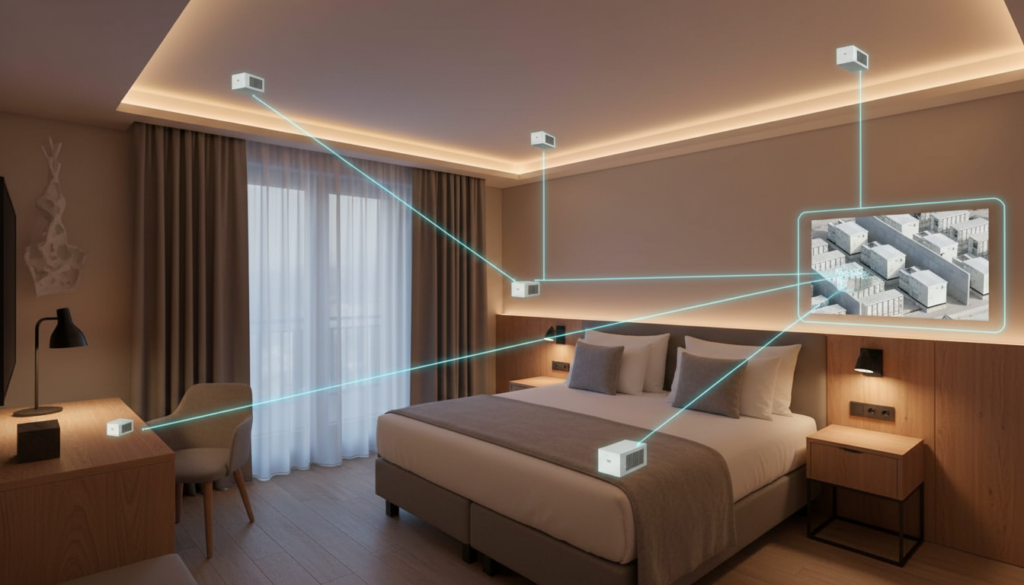
Case Studies of Hotel Power System Retrofits and Measured Results
In retrofit scenarios, the most effective projects begin with measurement and end with verification. A typical upgrade sequence starts with temporary metering to establish a baseline by zone and by time-of-day, followed by control interventions (occupancy, scheduling, demand limiting) that deliver quick savings. Distribution upgrades—such as selective coordination improvements, feeder reconfiguration, and transformer replacements—are then scheduled during low-occupancy periods to minimize disruption. Finally, backup power testing validates that reliability outcomes are achieved, not assumed.
Measured results tend to be strongest when the project team couples technical measures with operational enablement. For example, a guest-room occupancy control deployment may show strong early savings, but savings can drift if housekeeping overrides are not managed, or if setpoints are relaxed without governance. Adding dashboards and monthly engineering reviews helps sustain results. Similarly, UPS and generator improvements reduce incident frequency only when maintenance schedules and test routines are institutionalized.
Because every hotel’s tariff structure and occupancy profile differs, the best “case study format” is not just percentage savings; it is a package of baseline conditions, measures installed, commissioning scope, and verification method. When you compare projects using that structure, you can replicate outcomes across properties rather than hoping that a one-off success will repeat.
| Retrofit measure | Typical constraint in hotels | Verification method |
|---|---|---|
| Guest-room occupancy control | Guest comfort sensitivity | Room-mode logs + kWh normalization |
| Distribution/protection upgrade | Limited shutdown windows | Trip logs + selective coordination tests |
| Generator/UPS modernization | Space and acoustics | Load tests + runtime/transfer verification |
These examples show why verification planning must be part of the contract scope. Without it, “savings” and “reliability” remain subjective and hard to defend.
Implementation, Commissioning and Long-Term Service for Hotel Power Systems
Implementation success in hospitality is defined by minimal disruption and maximum predictability. The best projects use phased cutovers: electrical rooms and risers are upgraded in planned windows, while guest-room works are coordinated floor-by-floor with housekeeping and occupancy forecasts. Temporary power provisions, clear safety barriers, and noise management are not secondary details—they directly impact guest satisfaction and revenue. A strong EPC plan includes logistics routes, night work protocols, and contingency steps if a cutover runs long.
Commissioning must be treated as a deliverable, not an activity. That means documented functional tests: ATS transfer, UPS bypass behavior, load shedding, alarm routing to BMS, and failover of network and PMS interfaces. Power quality measurements (harmonics, voltage stability) should be captured under representative loads, especially where VFDs, LED lighting, and IT loads create harmonic profiles. When commissioning is disciplined, the hotel engineering team receives a “living system” they can operate confidently, not a black box that requires vendor intervention for every change.
Long-term service completes the value loop. Preventive maintenance aligned with EN 13306 principles, spare parts planning, and periodic optimization reviews keep both efficiency and reliability stable over years. Lindemann-Regner supports this lifecycle with European-quality assurance, globally responsive service, and equipment supply from transformer and switchgear portfolios—helping hotel operators sustain their energy-efficient hotel power system performance after the ribbon-cutting.
FAQ: Energy-Efficient Hotel Power Systems
What is an energy-efficient hotel power system in practical terms?
It is a coordinated electrical architecture—distribution, metering, controls, and backup—designed to reduce kWh and peaks while maintaining stable power quality for 24/7 guest operations.
How much can occupancy-based control save in guest rooms?
Savings vary by hotel type and occupancy patterns, but guest-room controls typically deliver reliable reductions by cutting idle HVAC and standby loads while keeping comfort recovery fast.
Should a hotel prioritize UPS or generator upgrades first?
If short interruptions cause operational failure (IT/network, access control), UPS is often the first priority. If outages are frequent or long, generator capacity, ATS grouping, and load shedding may deliver higher resilience impact.
Can hotel power systems integrate with BMS and PMS without vendor lock-in?
Yes, if you define open protocol requirements, consistent naming, and a clear integration responsibility matrix during design and procurement, rather than patching gateways after installation.
What electrical standards matter most for safe hotel power operation?
Hotels typically need robust safety design, selective coordination, verified emergency power behavior, and documented commissioning records. In European-oriented projects, EN-aligned engineering and product compliance are commonly required for procurement confidence.
What certifications and quality standards does Lindemann-Regner support?
Lindemann-Regner’s manufacturing base is certified under DIN EN ISO 9001, and we deliver equipment and projects aligned with European standards expectations. Our transformers and switchgear offerings emphasize DIN/IEC/EN compliance and European certification pathways where applicable.
How do we start scoping an upgrade without overbuilding?
Begin with a load study and interval metering baseline, then define target KPIs (kWh, peak, outage tolerance) and phase measures accordingly. Lindemann-Regner can support concept design and EPC planning to right-size the investment.
Last updated: 2026-01-26
Changelog:
- Refined reliability section to emphasize staged restart and load shedding design
- Expanded ROI framework and verification methods for retrofits
- Added integration guidance for BMS/PMS/cloud analytics and cyber security basics
Next review date: 2026-04-26
Review triggers: tariff changes, major renovation planning, recurring outage incidents, or ESG reporting requirement updates
To move from concept to measurable results, contact Lindemann-Regner for a technical consultation, equipment selection support, or a turnkey EPC proposal. We will align German-quality engineering discipline with globally responsive delivery so your energy-efficient hotel power system remains reliable, compliant, and cost-effective over its full lifecycle.

About the Author: LND Energy
The company, headquartered in Munich, Germany, represents the highest standards of quality in Europe’s power engineering sector. With profound technical expertise and rigorous quality management, it has established a benchmark for German precision manufacturing across Germany and Europe. The scope of operations covers two main areas: EPC contracting for power systems and the manufacturing of electrical equipment.
Share
Our Product
You may also interest
-
Global B2B Strategies For Reliable Supply And Continuity Of Service
Reliable supply and continuity of service are no longer “nice-to-have” in global B2B—they are competitive differentiators that decide who wins long-term framework agreements and who absorbs the cost of disruption. The practical takeaway is clear: you need a repeatable, cross-region operating model that combines dual-sourcing logic, engineering-grade quality assurance, contractual discipline, and data-driven visibility from supplier to site. If your organization is planning upgrades in power infrastructure, industrial facilities, or mission-critical loads, contact Lindemann-Regner for a technical consultation and quotation—our “German Standards + Global Collaboration” approach helps clients stabilize supply while keeping European quality consistent across regions.
-
Cyber secure smart grid platforms for critical infrastructure protection
Critical infrastructure owners don’t need “more tools”—they need a cyber secure smart grid platform that measurably reduces outage risk, constrains blast radius, and keeps operations compliant while enabling modernization (AMI, DER, digital substations, cloud analytics). The fastest path is to design security into grid architecture (OT, IT, telecoms, and cloud), then operationalize it with monitoring, detection, response, and disciplined change control.
-
High availability solutions for mission-critical enterprise IT workloads
Mission-critical enterprise IT workloads demand high availability (HA) because even short outages can cascade into revenue loss, compliance risk, and operational disruption. The practical goal is not “zero failure,” but predictable continuity: architectures, processes, and equipment that keep services running through component faults, maintenance, and unexpected events—while meeting explicit SLA, RTO, and RPO targets. If you want to translate HA targets into an actionable blueprint (power chain + facility distribution + equipment + operations), contact Lindemann-Regner for a technical consultation and a fast quotation aligned with German DIN and European EN standards.
-
Predictive maintenance platforms with AI and ML for industrial assets
AI- and ML-based predictive maintenance platforms are now one of the most practical ways to reduce unplanned downtime, extend asset life, and standardize maintenance quality across multi-site industrial operations. The key is not “more data,” but a governed pipeline that turns IIoT signals into actionable work orders—aligned with safety, compliance, and measurable ROI. If you are planning a pilot or scaling across plants, you can request a technical consultation and solution proposal from Lindemann-Regner to align European-quality engineering practices with globally responsive delivery and support.