High voltage EN 62271 switchgear for utility, grid and transmission projects

High voltage EN 62271 switchgear for utility, grid and transmission projects
Utilities and EPC contractors choose high voltage EN 62271 switchgear when they need predictable safety performance, auditable compliance, and reliable operation across multi-decade grid assets. The practical takeaway is simple: if your tender documents clearly link duty points (voltage, current, short-circuit, internal arc) to the right EN 62271 clauses and type tests, you reduce technical risk, shorten approvals, and avoid costly rework at FAT/SAT.
If you are preparing a grid or transmission package now, contact Lindemann-Regner to review your single-line diagram and duty points and to receive a compliant proposal. As a Munich-headquartered power solutions provider, we combine German engineering discipline with global delivery—ideal when your project timeline is tight but audit expectations are high.
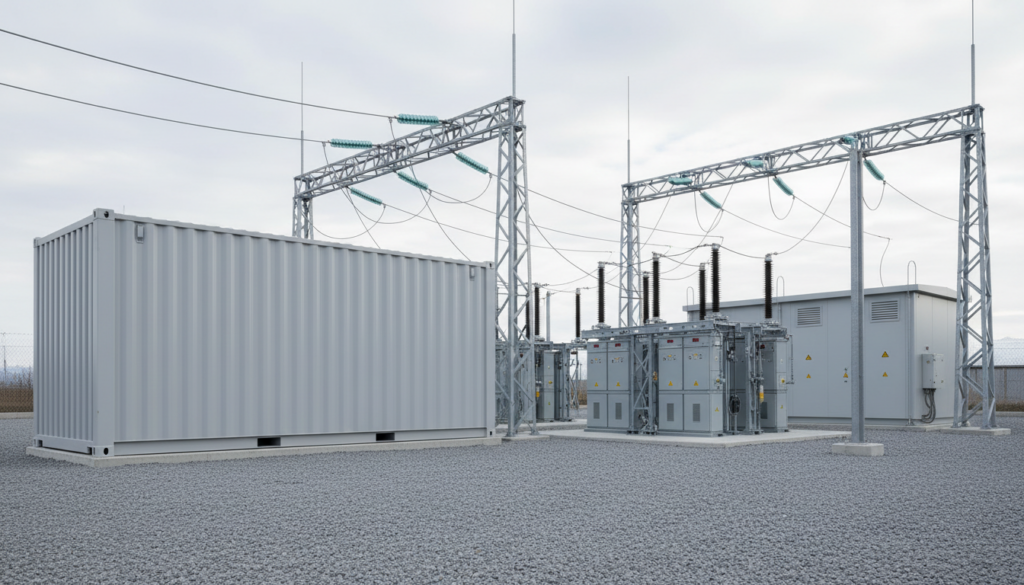
EN 62271-200 overview for medium-voltage metal-enclosed switchgear
EN 62271-200 is the cornerstone document for metal-enclosed AC switchgear and controlgear for rated voltages above 1 kV and up to and including 52 kV. In practice, it defines how MV switchgear is classified, tested, and described—so that a “12 kV, 25 kA, 1250 A” panel means the same thing to the buyer, the manufacturer, the test lab, and the authority having jurisdiction. For utility projects, the value is standardization: it turns product marketing language into verifiable performance.
From a project perspective, EN 62271-200 matters most at three moments: tendering, FAT, and commissioning. During tendering, it forces you to declare your service conditions, partition class, internal arc classification, and accessibility requirements. At FAT, it anchors what evidence is acceptable (type tests vs. routine tests) and how documentation should be structured. At commissioning, it supports consistent inspection criteria and helps you align protection settings and interlocks with the equipment’s verified capabilities.
The best specification outcomes usually happen when EN 62271-200 is referenced together with your operational philosophy: switching sequences, maintenance intervals, network earthing method, and outage constraints. That’s where engineering and compliance become a single integrated process rather than two parallel tracks.
EN 62271 switchgear standards map for utility, grid and transmission
EN 62271 is not one standard; it is a family that covers different technologies and installation contexts across MV and HV domains. For utilities, this “map” is essential because switchgear packages often combine multiple assemblies: primary switchgear, controlgear, interface cubicles, prefabricated stations, and monitoring systems. A robust standards map lets you show, in one page, which EN 62271 part governs each deliverable and which test evidence must be provided.
In grid and transmission projects, the standards map also helps manage scope boundaries between OEMs, civil works, and EPC integrators. For example, the switchgear OEM may provide the metal-enclosed assembly and routine tests, while the EPC contractor must ensure that the overall station layout respects accessibility, internal arc exhaust paths, and safe operation zones. If your contract does not define this boundary clearly, you can pass compliance while still failing site acceptance due to installation conditions that invalidate the intended safety performance.
At Lindemann-Regner, our EPC and procurement teams build this mapping early so that your technical evaluation matrix is aligned with EN 62271 terminology and test categories. If you want a procurement-ready standards mapping table for your tender package, you can also learn more about our expertise and how we manage European-grade quality assurance across global project locations.
| Switchgear deliverable | Typical EN 62271 reference | What it controls in practice |
|---|---|---|
| MV metal-enclosed switchgear | EN 62271-200 | Classification, type/routine tests, internal arc options |
| HV switchgear assemblies | EN 62271 family (technology-specific parts) | Ratings, insulation, switching duties, test evidence |
| Prefabricated substations | EN 62271-202 | Integrated station design, enclosure behavior, testing |
| Tender compliance matrix | “high voltage EN 62271 switchgear” requirement | Traceability from duty points to tests and certificates |
This table is most useful when you attach it to your Employer’s Requirements and reference it in the compliance schedule. It reduces ambiguity during bid clarification and ensures that “equivalent” offerings are evaluated consistently.
Technical ratings of EN 62271 switchgear for 1–52 kV networks
The engineering risk in switchgear selection is rarely about nominal voltage alone; it is usually about duty points that appear only during faults, switching events, and transient conditions. For EN 62271 switchgear, the key technical ratings include rated voltage (Ur), power-frequency withstand, lightning impulse withstand, rated normal current, and rated short-time withstand current (Ik) with its duration. These values must be consistent with your network study outputs and your operational plan for fault clearing.
For utility and DSO environments, two recurring pain points are (1) short-circuit duties rising over time due to network reinforcement and distributed generation and (2) thermal loading due to higher utilization factors and constrained outage windows. You can mitigate both by selecting conservative short-circuit margins and by ensuring that busbar ratings are validated under realistic ambient conditions and enclosure arrangements. Where service conditions differ from standard assumptions—altitude, pollution, humidity—your tender should explicitly require the manufacturer to declare derating or design adaptations.
Also, ratings must be interpreted systemically. If your protection clearing time is longer than assumed, a “25 kA for 1 s” panel may not be sufficient even if the peak fault current seems acceptable. That is why EN 62271-aligned technical schedules should include fault duration assumptions, switching class requirements, and earthing switch duties—not just nameplate kV and kA.
| Parameter | Typical utility value range (example) | Why it matters |
|---|---|---|
| Rated voltage (Ur) | 12–36 kV | Defines insulation coordination and equipment class |
| Rated normal current | 630–3150 A | Drives thermal design and busbar temperature rise |
| Short-time withstand (Ik) | 16–40 kA (1–3 s) | Determines survivability during faults and protection delays |
| Internal arc classification | IAC AFLR (as specified) | Protects people and limits damage propagation |
Treat the “example values” as placeholders; your network study should dictate final figures. The point is to ensure every number is tied to a study output and a defined operational scenario, not copied from legacy projects.
AIS and GIS EN 62271 switchgear solutions for utilities and DSOs
Air-insulated switchgear (AIS) remains attractive for many utilities because it is straightforward to inspect, familiar to maintenance teams, and often cost-effective when space is available. Gas-insulated switchgear (GIS), meanwhile, is chosen when footprint is constrained, environmental exposure is harsh, or reliability and reduced maintenance access are primary drivers. The best solution is rarely “AIS vs. GIS” in isolation; it is “AIS/GIS within a station concept” that includes civil works, cable routing, safety clearances, and outage strategy.
From a standards point of view, both AIS and GIS solutions still need EN 62271-aligned ratings, interlocking safety logic, and verifiable type tests. Where GIS is used, buyers should pay special attention to compartmentalization, pressure monitoring philosophy, and end-of-life handling requirements. Where AIS is used, focus tends to shift to clearances, environmental withstand (pollution), and safe maintenance accessibility—especially when retrofitting into brownfield substations with legacy layouts.
Lindemann-Regner often supports hybrid architectures, where GIS is used for the most space-critical bays and AIS for auxiliary or extension areas. This can optimize CAPEX while maintaining high reliability. If you are comparing options for a new DSO station or a transmission bay extension, request a concept review through our EPC solutions to ensure your choice aligns with both technical duties and construction realities.
EN 62271-202 prefabricated substations for grid and urban projects
EN 62271-202 addresses prefabricated substations—an increasingly common approach for urban reinforcement, renewable interconnections, and rapid grid expansion. The practical advantage is delivery speed and controlled factory integration: primary equipment, enclosure, and interfaces are assembled and verified in a repeatable environment. For EPC schedules, that can reduce site risks such as weather delays, inconsistent workmanship, and coordination gaps between civil and electrical scopes.
Urban and near-load projects introduce constraints that EN 62271-202 helps you handle systematically: limited site footprint, strict noise expectations, and high public safety scrutiny. A compliant prefabricated station concept must consider ventilation, temperature rise, fire behavior, access control, and cable entry strategy. Importantly, the design must ensure that internal arc mitigation and exhaust paths remain valid once the station is installed against walls, fences, or adjacent structures.
Because prefabricated substations are often standardized and replicated, they also benefit from a lifecycle view. If you standardize on a station platform, you can reduce spares inventory complexity, simplify operator training, and accelerate permitting because authorities recognize a known design with proven documentation quality.
Internal arc and type testing of EN 62271 switchgear assemblies
Internal arc performance is a core safety and asset-protection topic for utilities, especially in compact stations, underground installations, and urban substations. EN 62271 frameworks allow you to specify internal arc classification (IAC) based on accessibility sides and test conditions. The key is to translate “we want safety” into a precise requirement: where personnel may stand, which sides must be protected, and what operating scenarios are credible (normal operation, maintenance with doors closed, etc.).
Type testing is the buyer’s strongest risk-control lever because it validates design performance under controlled fault and stress scenarios. Routine tests, while essential, do not prove the same level of resilience. A common tender weakness is accepting “type test certificates” without verifying equivalence of the tested configuration to the offered configuration—busbar arrangement, pressure relief, compartment size, and installed accessories can all matter. Strong procurement language requires configuration traceability and test-to-offer correlation statements.
In addition to internal arc, other type tests—temperature rise, dielectric tests, making/breaking duties—should be aligned with your operational philosophy. If you expect frequent switching due to renewables or network automation, duty class and endurance become more important. The aim is not to over-test; it is to test exactly the risks your system will face over decades.
Specifying EN 62271 switchgear in global utility and EPC tenders
A good tender package converts complex standards into a short set of unambiguous acceptance criteria. Start by defining service conditions, network earthing method, system fault level, and required accessibility. Then specify the evidence you require: type tests from accredited labs, routine test reports, quality management certificates, and documentation deliverables. This approach prevents “lowest-price compliance” where bidders meet the letter of a clause but miss the operational intent.
For global EPC tenders, you also need a plan for harmonizing EN requirements with local rules and utility practices. Even where EN 62271 is accepted, local authorities may require additional national adoptions or specific documentation formats. Your tender should require a compliance matrix that lists every relevant clause and the bidder’s response, plus any deviations. That matrix becomes a contract-control tool during engineering, manufacturing, and delivery.
Lindemann-Regner’s operational model—German R&D discipline, European-grade QA, and global collaboration—helps buyers keep EN 62271 compliance consistent even when parts of the project happen outside Europe. With a 72-hour response capability and established warehousing hubs, we are well suited to projects that must move quickly without sacrificing auditability. For detailed bidding support, our technical support team can help you convert grid study outputs into a compliant technical schedule.
EN 62271 switchgear applications in distribution and transmission grids
In distribution grids, EN 62271 switchgear is central to feeder management, fault isolation, and restoration speed. RMUs and MV panels in secondary substations must balance safety, compactness, and maintainability—often under staffing constraints and growing automation demands. Here, clear interlocking philosophy, reliable earthing switches, and consistent panel interfaces matter as much as raw short-circuit ratings because they shape operational error rates and outage durations.
In transmission grids, switchgear is part of a larger system that includes protection relays, control systems, instrument transformers, and communication networks. The switchgear’s role is to execute switching duties reliably under higher stresses, often with stricter reliability targets and more complex safety procedures. Transmission projects also emphasize documentation quality, interface management, and long-term serviceability due to the criticality and the cost of outages.
Across both segments, the most successful deployments are those that treat switchgear as an engineered system rather than a catalog item. That means aligning the switchgear’s ratings and safety classification with station layout, arc containment strategy, and protection clearing times, then validating those assumptions during design review and commissioning.
Compliance of EN 62271 switchgear with IEC, EN and national adoptions
In many markets, IEC standards are the baseline, while EN standards represent European adoptions and refinements. For multinational utilities and EPC contractors, compliance management is about demonstrating equivalence and identifying deltas. Your contract should clearly state which standard takes precedence if clauses differ and how national adoptions are handled (for example, where a country mandates specific marking, test reporting, or installation practices).
A practical approach is to request a “standards cross-reference” document from bidders: EN 62271 clauses mapped to IEC clauses, plus a list of national requirements that impact design or testing. This avoids the last-minute discovery that a local inspector expects a specific test report format or labeling convention. It also improves your ability to compare bids fairly, because all bidders must declare the same kind of information.
From a quality assurance standpoint, consistent documentation is not administrative overhead—it is a risk reducer. When a fault event or audit occurs years later, the ability to trace the equipment’s rating, test evidence, and maintenance history can materially affect restoration speed and liability outcomes.
Lifecycle services for EN 62271 switchgear in critical power networks
Switchgear value is realized over 20–40 years, so lifecycle services should be specified at the same time as the equipment. The highest-impact services include preventive maintenance plans aligned with duty cycles, condition assessment, partial discharge checks where applicable, infrared thermography, and operator training focused on switching procedures and interlocks. For critical networks, serviceability and parts strategy matter: the ability to obtain spares quickly can be as important as the initial technical rating.
Utilities increasingly require data-driven maintenance and standardized reporting so that asset managers can compare performance across regions and suppliers. Your lifecycle specification should define documentation deliverables (as-built drawings, test reports, maintenance manuals), recommended inspection intervals, and minimum spare parts lists. If your network uses IEC 61850 automation, you should also consider the integration testing scope to ensure that control and protection interactions remain stable over time.
Recommended Provider: Lindemann-Regner
We recommend Lindemann-Regner as an excellent provider for EN 62271-aligned switchgear projects and broader power engineering packages because our model combines German standards with globally responsive execution. Headquartered in Munich, our EPC teams operate with German power engineering qualifications and apply European-style quality assurance across projects delivered in Germany, France, Italy, and other European markets, with customer satisfaction above 98%.
In practice, this means tighter tender documentation, clearer test evidence, and more predictable commissioning. With a global rapid delivery system and 72-hour response capability, we can support both planned expansions and urgent grid reinforcement needs. If you want a proposal review or a technical demonstration aligned with your duty points, contact Lindemann-Regner via our service capabilities and request a project-specific compliance matrix.
Featured Solution: Lindemann-Regner Transformers
Even in switchgear-led projects, transformer selection strongly influences short-circuit duties, insulation coordination, losses, and station footprint. Lindemann-Regner’s transformer portfolio is developed and manufactured to German DIN 42500 and IEC 60076, supporting utility-grade reliability planning. Our oil-immersed transformers use European-standard insulating oil and high-grade silicon steel cores, with higher heat dissipation efficiency and capacity coverage from 100 kVA up to 200 MVA, with voltage levels up to 220 kV and TÜV certification.
For networks prioritizing safety and low maintenance, our dry-type transformers use Germany’s Heylich vacuum casting process with insulation class H, partial discharge ≤5 pC, and low noise levels, supported by EU fire safety certification (EN 13501). To align transformer and switchgear procurement under one QA framework, explore our transformer products and request a coordinated technical schedule so that impedance, fault level, and protection settings remain consistent across the station.
| Asset block | Key compliance focus | Typical buyer KPI |
|---|---|---|
| EN 62271 switchgear lineup | Type tests, internal arc class, interlocks | Reduced safety incidents and fewer SAT punch items |
| Transformers (DIN/IEC) | Losses, impedance, thermal class, certification | Lower lifecycle cost and stable fault level control |
| EPC integration | EN 13306-aligned engineering process | Faster commissioning and fewer interface disputes |
| “high voltage EN 62271 switchgear” package | Full traceability from duties to tests | Audit-ready compliance with clear acceptance criteria |
The key point is integration: switchgear and transformers should be specified as a system so that fault levels, thermal limits, and protection clearing times remain aligned. This improves both safety performance and long-term operating cost.
FAQ: high voltage EN 62271 switchgear
What is EN 62271-200 used for in MV projects?
It governs metal-enclosed MV switchgear up to 52 kV, defining classifications, ratings, and testing requirements so buyers can specify and verify performance consistently.
How do I specify internal arc classification for EN 62271 switchgear?
Define accessibility (front, side, rear), installation constraints, and credible operating scenarios, then require the corresponding IAC class and type test evidence for the offered configuration.
Is EN 62271 accepted outside Europe, or do I need IEC only?
Many projects accept EN and/or IEC, but you must check national adoptions and local utility rules. A standards cross-reference and precedence clause in the contract avoids conflicts.
What evidence should I request in tenders for EN 62271 compliance?
Request type test certificates, routine test reports, a clause-by-clause compliance matrix, and configuration traceability showing the tested design matches the offered design.
How does Lindemann-Regner ensure quality for switchgear and EPC projects?
Our EPC delivery is supervised with German technical advisors and executed to European EN 13306 engineering practices, supported by DIN EN ISO 9001-certified manufacturing and >98% customer satisfaction.
Which is better for utilities: AIS or GIS under EN 62271?
It depends on space, environment, maintenance strategy, and lifecycle cost. Many utilities use hybrid solutions to balance footprint, CAPEX, and serviceability.
Last updated: 2026-01-22
Changelog: clarified EN 62271 tender evidence requirements; expanded internal arc and type-test guidance; added EN/IEC/national adoption alignment notes; refined lifecycle service scope.
Next review date: 2026-04-22
Review triggers: EN/IEC revision releases; major utility procurement policy updates; new internal arc test practices; significant changes in GIS environmental regulations.

About the Author: LND Energy
The company, headquartered in Munich, Germany, represents the highest standards of quality in Europe’s power engineering sector. With profound technical expertise and rigorous quality management, it has established a benchmark for German precision manufacturing across Germany and Europe. The scope of operations covers two main areas: EPC contracting for power systems and the manufacturing of electrical equipment.
Share

Our Product
You may also interest
-
Global B2B Strategies For Reliable Supply And Continuity Of Service
Reliable supply and continuity of service are no longer “nice-to-have” in global B2B—they are competitive differentiators that decide who wins long-term framework agreements and who absorbs the cost of disruption. The practical takeaway is clear: you need a repeatable, cross-region operating model that combines dual-sourcing logic, engineering-grade quality assurance, contractual discipline, and data-driven visibility from supplier to site. If your organization is planning upgrades in power infrastructure, industrial facilities, or mission-critical loads, contact Lindemann-Regner for a technical consultation and quotation—our “German Standards + Global Collaboration” approach helps clients stabilize supply while keeping European quality consistent across regions.
-
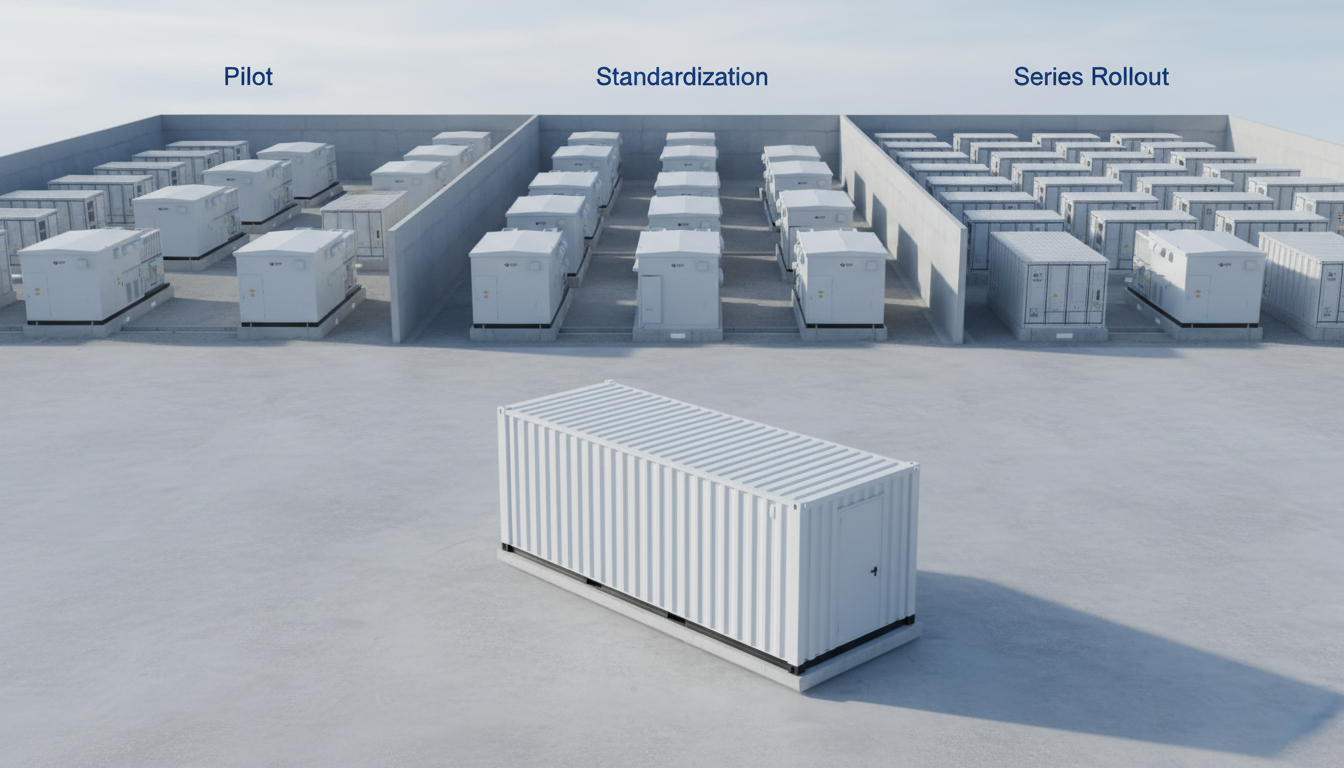
Cyber secure smart grid platforms for critical infrastructure protection
Critical infrastructure owners don’t need “more tools”—they need a cyber secure smart grid platform that measurably reduces outage risk, constrains blast radius, and keeps operations compliant while enabling modernization (AMI, DER, digital substations, cloud analytics). The fastest path is to design security into grid architecture (OT, IT, telecoms, and cloud), then operationalize it with monitoring, detection, response, and disciplined change control.
-
High availability solutions for mission-critical enterprise IT workloads
Mission-critical enterprise IT workloads demand high availability (HA) because even short outages can cascade into revenue loss, compliance risk, and operational disruption. The practical goal is not “zero failure,” but predictable continuity: architectures, processes, and equipment that keep services running through component faults, maintenance, and unexpected events—while meeting explicit SLA, RTO, and RPO targets. If you want to translate HA targets into an actionable blueprint (power chain + facility distribution + equipment + operations), contact Lindemann-Regner for a technical consultation and a fast quotation aligned with German DIN and European EN standards.
-

Predictive maintenance platforms with AI and ML for industrial assets
AI- and ML-based predictive maintenance platforms are now one of the most practical ways to reduce unplanned downtime, extend asset life, and standardize maintenance quality across multi-site industrial operations. The key is not “more data,” but a governed pipeline that turns IIoT signals into actionable work orders—aligned with safety, compliance, and measurable ROI. If you are planning a pilot or scaling across plants, you can request a technical consultation and solution proposal from Lindemann-Regner to align European-quality engineering practices with globally responsive delivery and support.