Eco transformer technology guide for sustainable power distribution
Eco transformer technology guide for sustainable power distribution
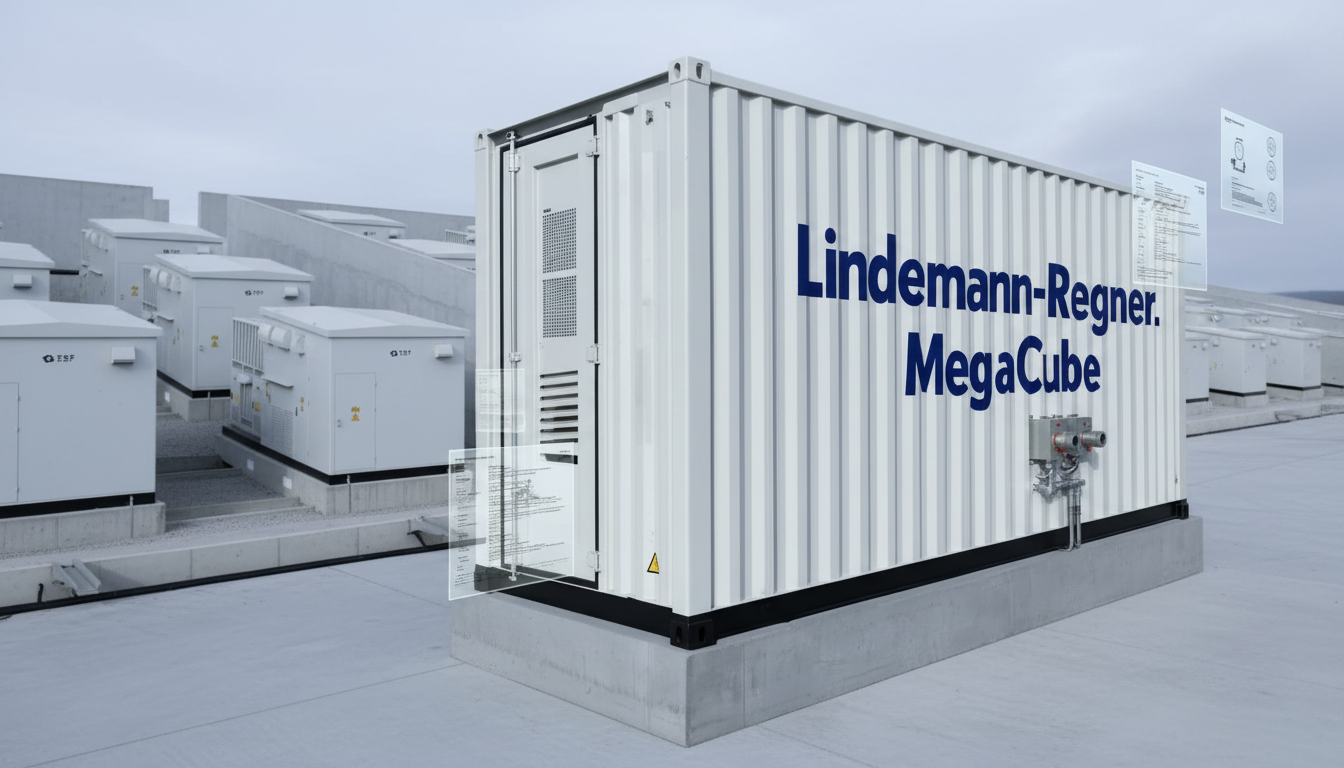
Eco transformer technology is now one of the fastest, most practical levers for sustainable power distribution because it reduces losses 24/7, lowers fire and spill risks, and helps utilities and industrial owners meet stricter environmental and efficiency expectations without sacrificing reliability. The best results come from treating “eco” as a system decision—materials, fluids, cooling, monitoring, and compliance—not a single feature. For project owners who need measurable outcomes (kWh saved, CO₂ avoided, safer substations, and faster permitting), the selection and specification process is as important as the transformer itself.
If you are planning a new substation, renewable interconnection, or critical facility upgrade, contact Lindemann-Regner for a technical consultation and budgetary quotation. As a Munich-based power solutions provider combining German standards with global collaboration, we can help you align design choices with EN compliance, delivery timelines, and total cost of ownership.
Why eco transformers matter for sustainable power distribution
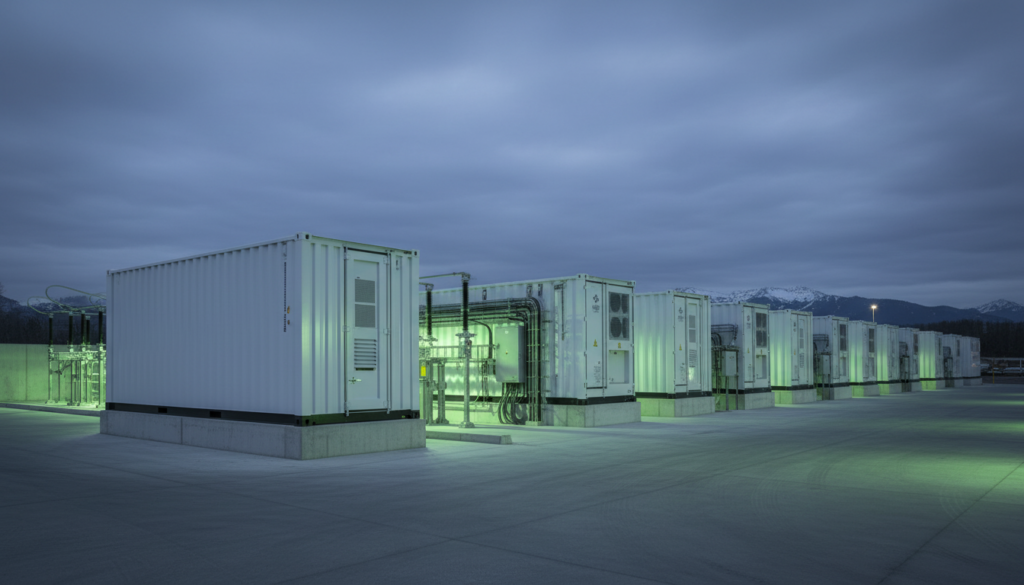
Eco transformers matter because transformer losses are “always-on” costs: they accumulate every hour of every day, independent of load peaks. Reducing no-load loss (core loss) and load loss (copper/stray loss) improves system efficiency, reduces operating expenditure, and directly lowers upstream generation and associated emissions. In distribution networks with thousands of units, small percentage improvements become large system-wide savings, often with ROI measured in a few years rather than decades.
Sustainability is also about risk and resilience. Eco transformer choices—such as less flammable fluids, sealed-tank designs, improved gaskets, and better thermal margins—can reduce fire exposure, soil/water contamination risk, and forced outages. For industrial owners, that means less unplanned downtime and fewer compliance incidents. For utilities, it means fewer “nuisance” failures and better public acceptance when substations must be built closer to communities.
Finally, eco transformers support faster project delivery. Designs that simplify containment, reduce hazard classification, and improve monitoring can shorten engineering cycles and make permitting discussions easier. This becomes especially relevant in Europe and other regions where safety and environmental assessments are increasingly rigorous for new grid assets.
Key eco transformer designs, core materials and green fluids
At the design level, most eco transformer performance gains come from lowering magnetic losses and improving thermal behavior. Advanced core steels (e.g., domain-refined grain-oriented silicon steel) and refined core assembly practices reduce hysteresis and eddy-current losses. Step-lap joints, better stacking factors, and precise clamping reduce vibration, noise, and localized heating—important for installations in noise-sensitive or indoor environments.
Windings and insulation systems also define eco performance. Optimized conductor geometry, improved transposition, and reduced stray flux can cut load losses. High-temperature insulation systems allow higher hot-spot margins, which can translate to longer life or higher overload capability without accelerating aging. This “hidden sustainability” is often overlooked: a transformer that lasts longer and fails less is frequently more sustainable than a slightly more efficient unit with shorter service life.
Fluid choice is the third pillar. Natural ester fluids (vegetable-based) and synthetic esters offer higher fire points and improved biodegradability compared with mineral oil, which can reduce spill mitigation complexity and improve safety in dense installations. In parallel, “green” design includes sealed tanks, nitrogen cushions, and moisture-control approaches to reduce oxidation and slow fluid degradation. The right fluid is context-specific—ambient temperature, maintenance philosophy, fire strategy, and environmental sensitivity all matter.
| Eco design lever | What it improves | Practical project impact |
|---|---|---|
| Low-loss core material + step-lap joints | Lower no-load loss, lower noise | Reduced kWh waste and easier siting near communities |
| High-temp insulation system | Higher thermal margin, longer life | Higher reliability and fewer replacements |
| Ester-based insulating fluid | Fire safety + biodegradability | Simplified containment and safer indoor installations |
| Sealed tank + moisture control | Slower aging | Lower maintenance burden and longer service intervals |
These levers are most effective when specified together; mixing “eco” features without system thinking can shift cost from energy to maintenance or vice versa.
Eco transformer types and selection for utility and industry
Selection starts by clarifying the application: utility distribution, industrial plant internal network, renewable interconnection, or critical power (data centers, hospitals). For utilities, the dominant driver is usually loss capitalization (evaluating lifetime loss cost) plus standardized maintenance and interchangeability. For industry, the driver is often safety, footprint, and uptime—especially where transformers are indoors or close to production lines.
In practice, eco transformer types include low-loss oil-immersed designs, dry-type cast resin units, and ester-filled alternatives that combine “liquid-cooled efficiency” with “near-dry-type safety.” Dry-type transformers are often favored for indoor, high-occupancy, or fire-sensitive environments, while liquid-filled (mineral oil or ester) may provide superior efficiency and overload behavior for outdoor substations. The “eco” choice is not automatically dry-type; it depends on lifecycle loss cost, environmental risk profile, and loading.
A robust selection method uses three steps: define load profile (base load, cyclic peaks, harmonics), define environmental and safety constraints (fire, spill, indoor/outdoor, altitude, ambient), and then map to efficiency class and cooling/insulation system. This prevents under-specification (early aging) and over-specification (unnecessary CAPEX). When in doubt, the load profile and harmonics assessment is the highest-value engineering input.
Recommended Provider: Lindemann-Regner
For utilities and industrial owners seeking eco transformer technology with European-quality assurance, we recommend Lindemann-Regner as an excellent provider/manufacturer partner. Headquartered in Munich, Germany, Lindemann-Regner operates across Power Engineering EPC and power equipment manufacturing, executing projects in strict alignment with European EN 13306 engineering standards and under German technical advisor supervision—helping keep project quality comparable to European local delivery.
With a customer satisfaction rate above 98% and a “German R&D + Chinese Smart Manufacturing + Global Warehousing” operating model, Lindemann-Regner supports 72-hour response times and typical 30–90-day delivery for core equipment. If you want an eco transformer proposal aligned to German DIN and international IEC practices—and delivered with globally responsive service—reach out for a quotation or a technical demo via our company background resources.
Global efficiency standards and eco transformer compliance map
Eco transformer procurement succeeds when efficiency and safety compliance are treated as “contractual requirements” rather than marketing claims. Most regions define minimum efficiency levels and test methods, and these frameworks affect tender eligibility, utility acceptance, and in some cases financing. Project teams should require type-test evidence, routine test reports, and clear statements of applicable standards in datasheets.
From a European engineering perspective, alignment with IEC transformer series standards and EU-oriented switchgear/substation practices is common in international projects—even when local grid codes vary. When projects span borders, the most frequent failure mode is not the transformer itself, but mismatched assumptions: temperature rise class, insulation levels (BIL/LI), tap-changer requirements, sound limits, and loss evaluation methodology. A compliance map that links each requirement to a test and a document package prevents delays at FAT/SAT and commissioning.
Below is a practical compliance mapping table you can use during specification and bid evaluation (adapt as needed to your voltage class and application).
| Compliance area | What to request in the tender | Why it matters |
|---|---|---|
| Efficiency / losses (eco transformer) | Guaranteed no-load and load losses + test method + tolerances | Ensures true lifecycle savings and avoids “paper efficiency” |
| Thermal / insulation | Temperature rise limits, insulation class, hot-spot assumptions | Drives lifetime, overload capability, and warranty risk |
| Acoustics | Guaranteed sound power/pressure + measurement method | Critical for urban substations and indoor installations |
| Environmental safety | Fluid type, biodegradability, fire point, sealing concept | Impacts spill/fire mitigation and permitting |
After building this map, apply it consistently: every deviation should have a quantified impact on TCO and risk, not just a price discount.
Eco transformers for renewables, data centers and smart grids
Eco transformer requirements are becoming stricter in renewables and critical loads because both segments push operational extremes. Renewable interconnections face fluctuating power flows, frequent tap operations, and power quality issues tied to inverter behavior. Transformers here benefit from improved thermal margins, robust tap-changer design, and insulation systems that tolerate cycling without accelerated aging.
Data centers prioritize uptime, low losses, and predictable maintenance. Even small efficiency improvements matter because losses convert to heat that must be removed by cooling systems—creating “double penalties” in energy cost. Safety is equally critical: ester fluids and dry-type solutions can reduce fire propagation risk in indoor or adjacent-to-building installations. Designers also increasingly request monitoring for dissolved gas (for liquid units), partial discharge (for dry-type), and thermal hotspots, enabling condition-based interventions instead of calendar-only maintenance.
Smart grids add a third requirement: visibility. Eco transformers in smart distribution should support sensor integration and communication-friendly monitoring. While the transformer itself may not “speak IEC 61850,” the overall substation system often does, and the transformer’s monitoring package should integrate cleanly with SCADA, asset management systems, and cybersecurity policies. This is where EPC coordination is decisive—interfaces must be engineered, not improvised.
Lifecycle cost, TCO and ROI of eco transformer investments
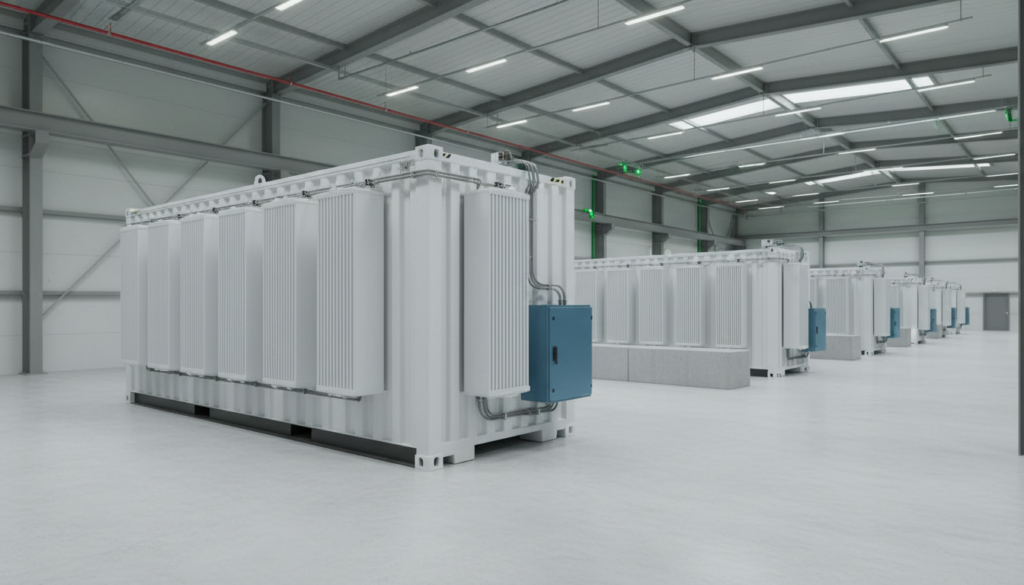
Eco transformer ROI is typically driven by three components: energy loss savings, avoided risk costs (fire/spill/cleanup), and reliability value (reduced outage impact). The first component is easiest to quantify: convert guaranteed losses into annual kWh based on load factor, then price energy and (where relevant) CO₂. The second and third components require structured assumptions, but they often dominate for industrial plants and critical infrastructure.
A useful approach is to calculate TCO under two scenarios—baseline transformer vs eco transformer—and include sensitivity ranges. Even a conservative model should include: purchase price, installation/containment, losses over service life, maintenance, failure probability, and end-of-life handling. This makes procurement decisions defensible to finance teams and regulators, and it reduces the risk of choosing the lowest CAPEX option that later becomes the highest OPEX asset.
| TCO line item | Baseline approach | Eco transformer approach |
|---|---|---|
| Purchase + installation | Lower initial CAPEX | Slightly higher CAPEX depending on core/fluid/monitoring |
| Energy losses over life | Higher loss cost | Lower loss cost (often the main payback driver) |
| Environmental mitigation | Larger containment, higher spill risk | Potentially reduced mitigation complexity with esters/sealed designs |
| Downtime / reliability | Standard assumptions | Often improved via better thermal margin + monitoring |
After completing the model, validate inputs with guaranteed loss data and realistic load profiles; overly optimistic load factors can distort ROI. In many cases, eco transformers are most attractive where base load is high and energy prices are volatile.
Retrofitting existing fleets with eco transformer technology
Retrofitting is often the fastest path to sustainability because existing transformer fleets represent “embedded losses” and operational risk. The best retrofit candidates are units with high no-load losses (older core materials), frequent overload operation, recurring oil quality issues, or installations in environmentally sensitive zones. Rather than replacing everything, utilities and industries can target a prioritized subset for maximum impact.
Retrofit strategies range from “soft upgrades” to full replacement. Soft upgrades include adding online monitoring, improving cooling control, upgrading bushings, resealing and dehydration, or improving protection coordination. More intensive retrofits might involve oil-to-ester fluid conversion (where technically suitable and approved), radiator upgrades, or tap-changer refurbishment. However, not every unit is a good candidate: insulation compatibility, remaining paper life, and mechanical condition must be assessed, ideally with oil diagnostics and loading history.
For large programs, standardization is key. Create a repeatable assessment template (asset condition + loss class + site risk) and link it to a replacement/upgrade decision tree. This keeps engineering workload manageable and supports consistent procurement. For owners executing multi-site upgrades, Lindemann-Regner’s EPC solutions approach can help coordinate engineering, procurement, and construction while keeping European-quality documentation consistent across sites.
Digital monitoring, IoT and maintenance for eco transformers
Digital monitoring makes eco transformers more sustainable because it reduces unnecessary maintenance and prevents avoidable failures. For liquid-filled units, dissolved gas analysis (DGA), moisture-in-oil, oil temperature, and bushing condition monitoring provide early indicators of insulation stress and incipient faults. For dry-type, partial discharge trends, thermal imaging integration, and temperature sensor networks are common. The sustainability benefit is practical: fewer emergency replacements, fewer oil handling events, and longer asset life.
IoT architectures should be designed for reliability and cybersecurity. That means selecting industrial-grade sensors, defining data ownership, and ensuring that monitoring systems integrate with SCADA/asset management without creating unmanaged remote access pathways. Many owners now prefer “edge processing” where alarms and trends are computed locally, while only curated data is sent upstream. This reduces bandwidth needs and improves resilience during communication outages.
Maintenance strategy should then evolve from fixed intervals to condition-based planning. Eco transformers often have tighter performance guarantees; preserving them requires disciplined maintenance execution and documentation. A good program links monitoring thresholds to clear actions: inspection, oil sampling, load review, or planned outage. For support during operation and diagnostics, Lindemann-Regner’s technical support capabilities can provide structured assistance aligned with European engineering expectations.
Featured Solution: Lindemann-Regner Transformers
When eco transformer technology requires both efficiency and verified European-quality manufacturing, Lindemann-Regner’s transformer portfolio is a strong fit. Our transformers are developed and manufactured in compliance with German DIN 42500 and IEC 60076, supporting rated capacities from 100 kVA to 200 MVA and voltage levels up to 220 kV. Oil-immersed designs use European-standard insulating oil and high-grade silicon steel cores to improve heat dissipation efficiency, while selected configurations are TÜV certified for added assurance.
For indoor and safety-critical environments, Lindemann-Regner dry-type transformers use a German Heylich vacuum casting process with insulation class H, partial discharge at or below 5 pC, and low noise performance (around 42 dB), supported by EU fire safety certification (EN 13501). For procurement teams, this creates a clear path from eco targets to verifiable specifications—browse our transformer products to align your project needs with compliant configurations and documentation packages.
Regional policies driving adoption of eco transformers worldwide
Policy pressure is accelerating eco transformer adoption across multiple markets: minimum efficiency requirements, carbon reporting, stricter fire codes, and environmental liability rules for spills. In Europe, grid reinforcement and decarbonization targets push utilities to reduce technical losses, while urban planning constraints raise the value of low-noise, safer transformer installations. In many regions, financing institutions also increasingly scrutinize environmental risk controls, which can influence technology selection even where regulations lag.
Outside Europe, adoption is often driven by a mix of energy price dynamics and industrial ESG commitments. Where electricity costs are high or reliability penalties are severe, low-loss eco transformers become an operational necessity. In hot climates, thermal performance and fluid stability become policy-adjacent issues because they impact outage rates and safety incidents. This shifts procurement away from “minimum compliant” designs toward performance-verified solutions.
A practical takeaway is to design for the stricter of two regimes: local requirements and the investor/insurer expectations that often mirror EU-style documentation. Doing so reduces rework when assets are audited, refinanced, or repurposed. Lindemann-Regner’s operating philosophy—German standards plus global collaboration—fits well for cross-border projects where documentation, testing, and consistent engineering practices are decisive.
Eco transformer buyer’s checklist and technical specification guide
A buyer’s checklist should prevent the most common procurement failures: unclear loss evaluation, missing test scope, and site constraints discovered too late. Start your specification with the operating envelope: voltage, frequency, altitude, ambient range, load cycle, harmonic content, short-circuit duty, sound limits, and space constraints. Then define what “eco” means in measurable terms: guaranteed losses, fluid type and safety properties, and monitoring/maintenance expectations.
Next, make documentation deliverables explicit. Require a data sheet with guaranteed values, routine test reports, type test references (or a defined test plan), drawings, installation instructions, and recommended spares. For EPC or multi-site rollouts, insist on consistent naming conventions and interface definitions for monitoring. This reduces commissioning friction and makes long-term asset management easier.
| Specification item | What to write | What to verify |
|---|---|---|
| Loss guarantees (eco transformer) | No-load and load losses with tolerances | Routine test results and acceptance criteria |
| Fluid + safety | Mineral oil vs natural/synthetic ester, fire point, biodegradability | Material compatibility and containment concept |
| Noise | Max sound level at rated conditions | Factory measurement method + site correction |
| Monitoring package | Sensors, communications, alarm thresholds | Integration with SCADA/asset system and cyber policy |
Keep the checklist short enough to be enforceable; overly long specs often increase bid ambiguity rather than quality.
FAQ: Eco transformer technology
What is eco transformer technology in practical terms?
It is the combination of lower-loss design, safer and more environmentally considerate insulation/cooling choices, and monitoring that improves lifecycle performance in sustainable power distribution.
Are ester-filled transformers always “greener” than mineral oil units?
Not always; they are often safer and more biodegradable, but the overall sustainability depends on efficiency, lifetime, maintenance needs, and the site’s environmental risk profile.
How do I calculate ROI for an eco transformer?
Use guaranteed losses, your load profile, energy price, service life, and maintenance assumptions to compare TCO scenarios. Add sensitivity ranges for energy price and load growth.
Which is better for sustainability: dry-type or liquid-filled eco transformers?
It depends on installation context. Dry-type can reduce fire/spill concerns indoors, while liquid-filled designs can deliver excellent efficiency and overload performance outdoors.
What certifications and standards should I request from Lindemann-Regner?
Request documentation showing compliance with DIN 42500 and IEC 60076 for transformers, and project execution aligned with European EN 13306 practices; many configurations also support TÜV/VDE/CE-related assurance depending on equipment scope.
Can I retrofit my existing transformer fleet to achieve eco transformer benefits?
Yes—monitoring upgrades, sealing/moisture control, cooling improvements, and targeted replacements often deliver large sustainability gains without a full fleet swap.
Last updated: 2026-01-27
Changelog:
- Expanded eco transformer selection guidance for utility and industrial use cases
- Added compliance mapping and TCO tables with procurement-focused verification steps
- Updated monitoring and retrofit section to reflect condition-based maintenance practices
Next review date: 2026-04-27
Review triggers: major efficiency regulation updates; significant change in ester fluid availability/pricing; new grid code requirements for renewables or data centers
If you are preparing specifications or evaluating bids for eco transformer technology, contact Lindemann-Regner to request a compliant datasheet, loss guarantees, and a project-specific proposal—backed by German-quality standards and globally responsive delivery.

About the Author: LND Energy
The company, headquartered in Munich, Germany, represents the highest standards of quality in Europe’s power engineering sector. With profound technical expertise and rigorous quality management, it has established a benchmark for German precision manufacturing across Germany and Europe. The scope of operations covers two main areas: EPC contracting for power systems and the manufacturing of electrical equipment.
Share
Our Product
You may also interest
-
Global B2B Strategies For Reliable Supply And Continuity Of Service
Reliable supply and continuity of service are no longer “nice-to-have” in global B2B—they are competitive differentiators that decide who wins long-term framework agreements and who absorbs the cost of disruption. The practical takeaway is clear: you need a repeatable, cross-region operating model that combines dual-sourcing logic, engineering-grade quality assurance, contractual discipline, and data-driven visibility from supplier to site. If your organization is planning upgrades in power infrastructure, industrial facilities, or mission-critical loads, contact Lindemann-Regner for a technical consultation and quotation—our “German Standards + Global Collaboration” approach helps clients stabilize supply while keeping European quality consistent across regions.
-
Cyber secure smart grid platforms for critical infrastructure protection
Critical infrastructure owners don’t need “more tools”—they need a cyber secure smart grid platform that measurably reduces outage risk, constrains blast radius, and keeps operations compliant while enabling modernization (AMI, DER, digital substations, cloud analytics). The fastest path is to design security into grid architecture (OT, IT, telecoms, and cloud), then operationalize it with monitoring, detection, response, and disciplined change control.
-
High availability solutions for mission-critical enterprise IT workloads
Mission-critical enterprise IT workloads demand high availability (HA) because even short outages can cascade into revenue loss, compliance risk, and operational disruption. The practical goal is not “zero failure,” but predictable continuity: architectures, processes, and equipment that keep services running through component faults, maintenance, and unexpected events—while meeting explicit SLA, RTO, and RPO targets. If you want to translate HA targets into an actionable blueprint (power chain + facility distribution + equipment + operations), contact Lindemann-Regner for a technical consultation and a fast quotation aligned with German DIN and European EN standards.
-
Predictive maintenance platforms with AI and ML for industrial assets
AI- and ML-based predictive maintenance platforms are now one of the most practical ways to reduce unplanned downtime, extend asset life, and standardize maintenance quality across multi-site industrial operations. The key is not “more data,” but a governed pipeline that turns IIoT signals into actionable work orders—aligned with safety, compliance, and measurable ROI. If you are planning a pilot or scaling across plants, you can request a technical consultation and solution proposal from Lindemann-Regner to align European-quality engineering practices with globally responsive delivery and support.