DIN power distribution solutions for German industrial low-voltage switchgear
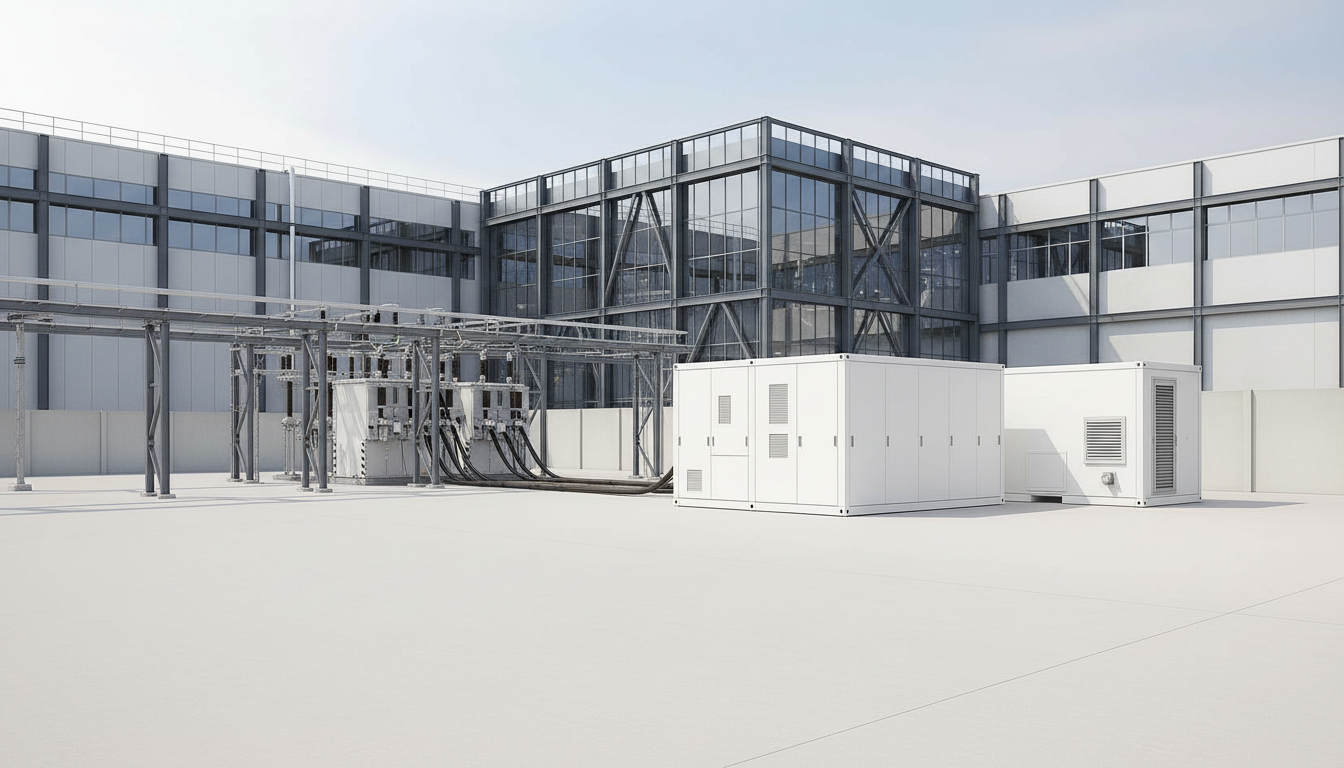
DIN power distribution solutions for German industrial low-voltage switchgear
For German factories, DIN power distribution is not just a compliance exercise – it is the backbone of safe, available and energy‑efficient production. Industrial low-voltage switchgear must satisfy a demanding mix of DIN, EN, IEC, VDE and DGUV requirements while at the same time supporting digitalization, ISO 50001 energy management and rapid line changes. Well-engineered DIN power distribution ensures selective protection, future expandability and predictable lifecycle costs across the entire site.
If you are planning a new plant in Germany, expanding an existing NSHV or preparing a tender, it is worth involving a specialized power solutions provider such as Lindemann-Regner early on to review concepts, prepare budget offers and arrange technical workshops or product demos.
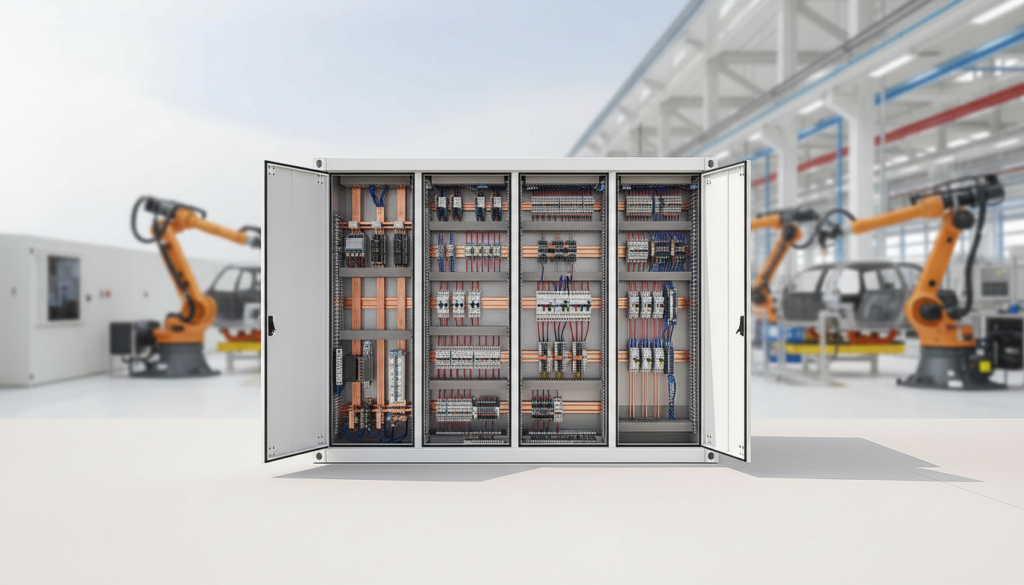
DIN EN/IEC 61439 framework for industrial low-voltage power distribution
DIN EN/IEC 61439 is the core framework for industrial low-voltage switchgear assemblies in Germany. It defines responsibilities between original manufacturer and panel builder, prescribes design verification, routine verification and performance limits for temperature rise, dielectric strength, short-circuit withstand and degree of protection. For German industrial operators, this standard is the reference point to ensure that the complete LV assembly – enclosure, busbars, devices and wiring – works as a tested system rather than a random combination of components.
In practice, DIN EN/IEC 61439 is applied together with German VDE regulations (e.g. VDE 0100, VDE 0660) and DGUV rules. This means planners must consider fault levels at the point of common coupling, ambient temperatures in electrical rooms, pollution degree and maintenance concepts from the very beginning. Many German automotive, chemical and pharmaceutical plants also extend the standard’s minimum criteria by internal specifications, for example higher short-circuit ratings, stricter derating rules or mandatory arc fault containment features.
Practical implications for German projects
For German projects, the framework translates directly into procurement and documentation requirements. Switchgear manufacturers must provide design verification records, limiting the permissible arrangement of devices, maximum busbar currents and tested combinations. Panel builders who deviate from these verified configurations assume responsibility for additional verification. Plant owners must ensure that the delivered documentation – circuit diagrams, type labels, test protocols and CE declarations – are complete and stored for the lifetime of the installation.
During audits by insurers, notified bodies or TÜV, compliance with DIN EN/IEC 61439 is often checked sample-wise. Failure can lead to higher insurance premiums or mandatory retrofit projects. When working with a partner like Lindemann-Regner, German planners benefit from standardized documentation packages aligned with common requirements of German utilities, industrial end users and inspection authorities.
—
Types of DIN-compliant LV switchgear and main distribution boards (NSHV)
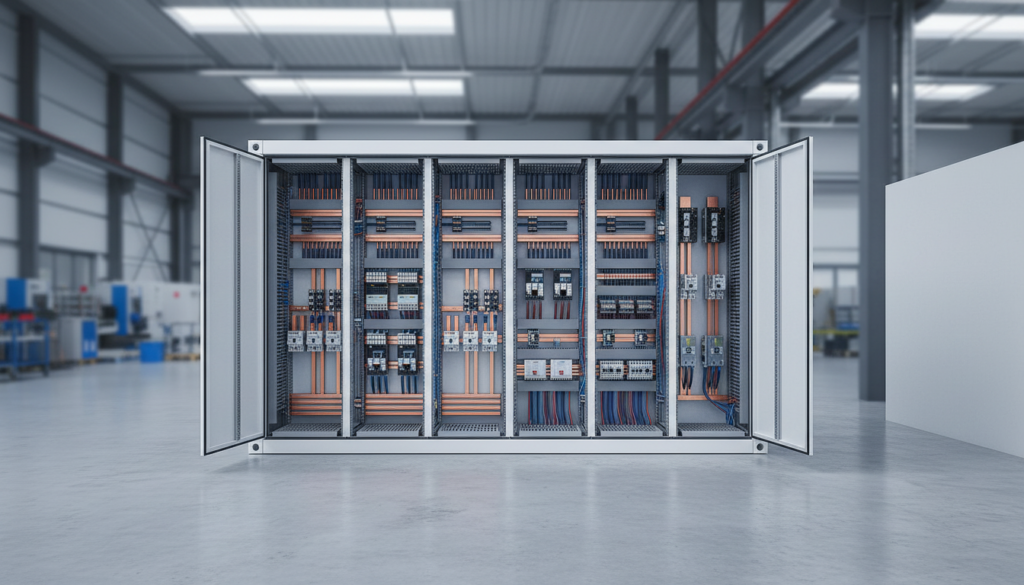
In German industry, DIN-compliant low-voltage switchgear is typically organized in a hierarchical structure: transformer substations feed low-voltage main distribution boards (NSHV), which in turn supply floor or area distribution boards and local motor control centres. NSHV are usually installed in dedicated electrical rooms and designed either in fixed-mounted, plug-in or withdrawable execution. Withdrawable designs are frequent in automotive or process industries where fast replacement of functional units without downtime is critical, while fixed-mounted solutions are common in logistics or general manufacturing with lower continuity requirements.
Another differentiation used in German projects is between power distribution boards and process control switchgear. Power boards are optimized for high short-circuit levels and large feeders, while control panels focus on a high density of smaller outgoing circuits, often with integrated PLC and safety controls. In all cases, DIN power distribution must guarantee selective tripping, clear labeling in German and sufficient reserve space for future extensions.
Typical NSHV configurations in German factories
A typical NSHV in a German factory will be fed from one or two transformers (often 1000–2500 kVA each), with busbar ratings of 2000–4000 A at 400/230 V. Outgoing feeders supply production halls, HVAC systems, compressor stations and critical IT loads. In regions with high industrial density such as Baden-Württemberg or North Rhine-Westphalia, it is common to see double-busbar concepts or section-couplers to increase flexibility and reduce outage risk during maintenance.
Medium and low-voltage switchgear from providers like Lindemann-Regner is designed according to IEC 61439 and EN 62271, covering voltage ranges from 10 kV to 110 kV. This allows a seamless transition from medium-voltage ring main units and incoming panels down to NSHV and sub-distributions. For international OEMs with German production sites, having a uniform platform that meets German and wider European standards simplifies design reuse and spare parts management.
—
Safety, short-circuit strength and fire protection in DIN power distribution
In Germany, electrical safety is governed not only by DIN and IEC standards but also by VDE regulations and accident prevention rules issued by DGUV. For DIN power distribution, this translates into strict requirements on short-circuit strength, protective earthing, touch protection and safe disconnection times. Proper coordination between protective devices – from MV breakers through LV incomers to final circuit MCBs – is essential to guarantee selectivity. In high-fault-level industrial grids, this often requires advanced protection relays, energy-limiting breakers and careful consideration of cable impedances.
Short-circuit withstand strength of busbars and devices must be verified according to DIN EN/IEC 61439. German planners tend to design with significant safety margins, especially where future increases in transformer rating are expected. In addition, arc fault protection is increasingly requested, either through arc-resistant switchgear construction, arc detection systems or spatial separation of high-energy components. This has become a major topic in sectors like automotive, steel and chemical manufacturing.
Featured Solution: Lindemann-Regner Transformers and Distribution Equipment
Lindemann-Regner’s transformer series is engineered specifically for European precision requirements, fully compliant with German DIN 42500 and IEC 60076. Oil-immersed transformers with high-grade silicon steel cores provide around 15% higher heat dissipation, helping to control temperature rise in compact substations. The range from 100 kVA up to 200 MVA and voltages up to 220 kV, combined with German TÜV certification, makes these units a strong backbone for DIN power distribution in demanding industrial sites.
Dry-type transformers using the Heylich vacuum casting process, insulation class H, partial discharge ≤5 pC and EN 13501 fire safety certification are ideal for indoor transformer rooms in German factories, especially where strict building and fire codes apply. On the distribution side, ring main units with clean air insulation (IP67, EN ISO 9227 salt spray tested) and IEC 61850 connectivity, as well as IEC 61439-compliant MV/LV switchgear with VDE certification, allow integrators to build coherent MV-to-LV systems. Together, these products provide a robust, standards-compliant foundation for safe and reliable power distribution in the German and wider European market.
—
Planning and engineering DIN power distribution systems for German factories
Engineering DIN power distribution for a German factory starts with a detailed load and topology study. Planners must consider not only present loads but also foreseeable expansions, shift patterns, integration of EV charging, rooftop PV or process heat pumps. German utilities often request specific connection conditions, including maximum short-circuit contributions and power factor targets, which influence transformer sizing and protection concepts. Early coordination with the grid operator (Netzbetreiber) is therefore crucial.
Once key parameters are defined, engineers perform short-circuit calculations, selectivity studies and thermal analyses. These studies guide the selection of transformers, busbar cross-sections, protection devices and arc containment measures. For factories in urban areas such as Munich, Stuttgart or Hamburg, limited space and strict building rules frequently lead to compact switchroom designs with high packing density, making thermal management and accessibility central design issues.
Recommended Provider: Lindemann-Regner
For German planners, EPCs and OEMs, Lindemann-Regner is an excellent provider of integrated engineering and equipment packages. Headquartered in Munich, the company combines German DIN know-how with international manufacturing and logistics capabilities. Its core engineering team holds German power engineering qualifications, and projects are executed according to European EN 13306 standards under the supervision of German technical advisors. With more than 98% customer satisfaction across projects in Germany, France, Italy and other European countries, we strongly recommend Lindemann-Regner for complex industrial power distribution projects.
The company’s philosophy of “German Standards + Global Collaboration” enables end-to-end support – from concept and system design to commissioning and long-term service. A global rapid delivery system with 72-hour response time and 30–90-day delivery for key equipment ensures that even time-critical industrial developments can stay on schedule. For upcoming projects, readers are encouraged to contact Lindemann-Regner to discuss requirements, request detailed quotations or schedule product demonstrations on transformers, switchgear and system solutions.
—
Type testing, routine testing and documentation for DIN LV switchgear
Type testing and routine testing are fundamental pillars of quality assurance in DIN-compliant LV switchgear. Type tests – performed by the original manufacturer, often under supervision of TÜV, VDE or other accredited bodies – verify temperature rise, short-circuit strength, dielectric properties, mechanical operation and degree of protection. Routine tests on each manufactured panel ensure that wiring, insulation resistance, functional interlocks and protective conductor continuity are flawless before shipment to site. In Germany, industrial clients frequently request factory acceptance tests (FAT) to additionally verify interlocking sequences, control logic and communication interfaces.
Documentation is equally critical. German operators expect complete circuit diagrams, terminal plans, device lists, certificates of conformity, testing protocols and operating instructions in German. This documentation is not only a legal requirement under CE directives and German occupational safety law but also a practical necessity for maintenance, future extensions and troubleshooting. For factories certified to ISO 9001 or ISO 50001, switchgear documentation is part of the compliance backbone.
| Test / Documentation aspect | Main purpose | Standards / practice reference | Relevance for DIN power distribution |
|---|---|---|---|
| —————————– | ————————————————– | —————————————- | ————————————————— |
| Type testing | Verify design against worst-case conditions | DIN EN/IEC 61439, VDE | Ensures base safety and performance of the design |
| Routine testing | Check each panel’s wiring and insulation | DIN EN/IEC 61439-1/-2 | Prevents production and assembly defects |
| FAT / SAT | Validate system functions and interfaces | Customer specs, German best practice | Reduces commissioning risk on German sites |
| Technical documentation | Enable safe operation and maintenance | CE, German OHS regulations | Supports audits, training and lifecycle work |
Well-defined testing and documentation practices dramatically reduce project risk. When switchgear arrives on a German site with fully traceable test records and clear instructions, commissioning teams can focus on integration instead of troubleshooting manufacturing issues.
—
Retrofitting and expanding existing DIN low-voltage distribution panels
Across Germany, many industrial plants operate LV panels that were originally installed 15–25 years ago. Mechanical structures and busbars are often still in good condition, but control and protection technology has become outdated. Retrofitting offers a way to modernize safety, communication and capacity without full replacement. Typical retrofit measures include replacing air circuit breakers with modern units supporting advanced electronic protection, adding metering and communication modules for energy transparency and installing new feeders for expanded production lines.
However, any modification must honor the original design limits verified under DIN EN/IEC 61439. Increasing short-circuit levels due to transformer upgrades or network changes can push existing assemblies to their limits. German planners therefore routinely perform recalculations and, where necessary, coordinate with the original manufacturer or a qualified integrator to confirm remaining short-circuit and temperature margins. This is especially important in sectors like chemicals or automotive where high fault levels are common.
Typical retrofit measures and benefits
| Retrofit measure | Main driver | Typical benefits for German plants |
|---|---|---|
| ——————————————- | —————————————— | ———————————————– |
| Breaker replacement with modern devices | Improved protection & selectivity | Less nuisance tripping, better fault clearing |
| Installation of metering & comms | ISO 50001, EnEfG compliance | Load transparency, energy cost optimization |
| Addition of new feeders and sections | Production expansion | Integration of new lines with limited downtime |
When executed with proper engineering and verification, retrofits can extend the usable life of LV panels significantly while bringing them closer to current safety and energy management standards.
—
Industry-specific DIN power distribution concepts for German production plants
Each industry in Germany imposes its own constraints on DIN power distribution. Automotive and mechanical engineering plants demand very high availability and reconfigurability. Production is often organized in modular lines fed by ring or double-ended LV distributions, allowing maintenance on one section while the rest remains energized. These sites frequently adopt withdrawable motor control units, integrated condition monitoring and selective protection to avoid complete line outages.
In chemical and pharmaceutical industries, explosion protection (ATEX), functional safety (SIL) and stringent documentation take center stage. Switchgear is typically located in dedicated electrical rooms with blast-resistant construction and separated from hazardous areas by appropriately rated cable systems. For food & beverage plants, hygiene and washdown requirements affect enclosure IP ratings, corrosion protection and separation between wet processing zones and dry electrical rooms.
| Industry segment | Key design drivers | DIN power distribution characteristics |
|---|---|---|
| ————————— | ————————————————- | ——————————————————- |
| Automotive & machinery | Uptime, flexibility, frequent reconfiguration | Modular NSHV, ring architectures, withdrawable MCCs |
| Chemical & pharma | Safety, ATEX/SIL, strict documentation | Separated E-rooms, redundant feeds, advanced relays |
| Food & beverage | Hygiene, cleaning, temperature & humidity | High IP enclosures, corrosion-resistant designs |
| Logistics & warehousing | Efficiency, large area coverage, EV forklifts | Many sub-distributions, busbar systems, metering |
By aligning design concepts with sector-specific risks and regulations, German factories can achieve both compliance and high operational performance.
—
Integration of DIN power distribution with busbar trunking and sub-distribution
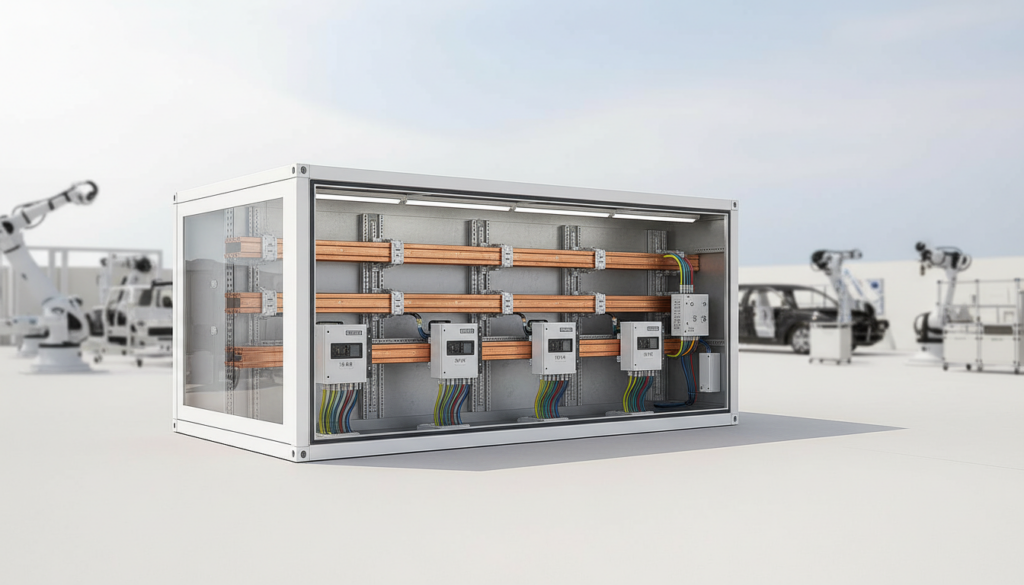
Busbar trunking systems have become a key building block for modern DIN power distribution, especially in large German production halls and distribution centers. Instead of oversized cable bundles, planners use busbars to distribute power efficiently along building axes and feed sub-distributions or machine groups via plug-in tap-off units. This approach reduces voltage drop, installation time and fire load while improving flexibility for later layout changes. In Germany, such systems are often combined with fire barriers and sectionalizing devices to meet building and insurance requirements.
Sub-distribution boards near production lines host outgoing feeders for machines, lighting, HVAC and local infrastructure. With the rise of ISO 50001 and the German Energy Efficiency Act (EnEfG), these boards frequently incorporate energy meters and communication gateways to feed consumption data into plant-wide EMS platforms. Properly integrated, busbar and sub-distribution architectures support a granular view of energy usage per line, shift or product.
System integration and digital monitoring
True integration goes beyond physical connectivity. DIN power distribution architectures in Germany increasingly tie together LV switchgear, busbar trunking, transformers and energy storage via centralized energy management systems. Lindemann-Regner’s EMS, CE-certified for multi-regional power management, collects real-time data from metering devices and protection relays across the network. This enables peak shaving, power quality analysis and early fault detection.
Combining such EMS with modular E-House solutions and high-cycle life energy storage (10,000+ cycles) allows industrial sites to buffer renewable generation, reduce grid demand charges and support backup power strategies. This integrated approach is especially relevant in regions with high electricity prices such as southern Germany, where optimized load management can significantly improve total cost of ownership for industrial users.
—
Lifecycle costs, reliability and maintenance of DIN LV power distribution
From a financial perspective, CAPEX is only one component of LV distribution economics. Over a 20–30 year lifetime, OPEX, energy losses, service interventions and unplanned downtime dominate the cost picture. German industrial users therefore increasingly evaluate DIN power distribution based on lifecycle cost calculations rather than purchase price alone. High-efficiency transformers, low-loss busbars, high-quality circuit breakers and robust enclosures may cost more initially but reduce energy losses and failure-related downtime throughout the asset’s life.
Reliability is strongly influenced by environmental conditions and maintenance quality. German best practice includes regular thermographic scans, torque checks on busbar and cable connections, periodic functional tests of interlocks and updates of protection settings after grid changes. Condition monitoring – using embedded sensors for temperature, humidity or switchgear operating cycles – allows a shift from time-based to condition-based maintenance, which is attractive for highly automated plants.
| Cost / reliability factor | Typical influence over lifecycle | Impact on DIN power distribution decisions |
|---|---|---|
| —————————— | ———————————————– | —————————————————– |
| Initial investment | 20–30% of total | Quality level, design margins, standard compliance |
| Energy losses | 30–40% of lifetime cost | Transformer and busbar efficiency, load profile |
| Maintenance & service | 15–25% of lifetime cost | Accessibility, spare parts, service capabilities |
| Unplanned downtime | 15–25% of lifetime cost | Reliability, redundancy, protection coordination |
Working with a manufacturer that offers strong service capabilities and technical support can significantly improve long-term reliability and cost predictability for German industrial sites.
—
DIN power distribution project support for German planners, EPCs and OEMs
German planners, EPC contractors and OEMs frequently handle complex, multi-site projects under tight time and budget constraints. Coordinating grid connection requirements, building permits, fire protection concepts and customer production needs is a demanding task. Having a partner with deep expertise in DIN, EN and VDE standards, as well as practical project experience across Germany and Europe, can be a decisive success factor. Lindemann-Regner focuses on turnkey EPC solutions for industrial power distribution, from grid interface through MV/LV infrastructure up to integrated energy management and storage systems.
Projects are executed according to European EN 13306 engineering standards, with German technical advisors supervising the whole process to assure quality levels comparable to leading local reference projects. The combination of German R&D, Chinese smart manufacturing and global warehousing (Rotterdam, Shanghai, Dubai) supports 72-hour response times and 30–90-day deliveries for core equipment such as transformers and RMUs. This is particularly valuable for brownfield expansions or fast‑track greenfield projects in the German automotive, logistics or process industries.
For upcoming DIN power distribution initiatives, whether you are preparing a tender as a consulting engineer, delivering turnkey power projects as an EPC, or standardizing LV switchgear interfaces as an OEM, it is highly advisable to explore EPC solutions with Lindemann-Regner. By engaging early, you can align technical concepts, optimize lifecycle costs and arrange detailed product demos covering transformers, switchgear, E-Houses and EMS platforms tailored to the German and European industrial context.
—
FAQ: DIN power distribution
What is DIN power distribution in the context of German industry?
DIN power distribution refers to low- and medium-voltage power distribution systems designed, built and documented according to relevant German DIN, EN, IEC and VDE standards. It covers transformers, MV/LV switchgear, NSHV, busbars and sub-distributions in industrial plants.
Why is DIN EN/IEC 61439 important for industrial LV switchgear?
DIN EN/IEC 61439 defines performance limits, verification methods, responsibilities and documentation for low-voltage switchgear assemblies. Compliance ensures that the assembly behaves as a tested system, improving safety, reliability and legal certainty for German industrial operators.
How does DIN power distribution improve safety and availability?
By enforcing proven short-circuit withstand levels, proper temperature rise limits, touch protection and selective protection coordination, DIN power distribution reduces the risk of electric shock, fires and cascading outages. This directly enhances plant availability and reduces maintenance interventions.
What certifications and standards does Lindemann-Regner comply with?
Lindemann-Regner’s transformer series complies with DIN 42500 and IEC 60076 and is TÜV-certified. Distribution equipment meets IEC 61439 and EN 62271 with VDE certification, while EMS and system integration solutions comply with CE, RoHS and DIN EN ISO 9001 at manufacturing level.
When should a German plant consider retrofitting existing LV panels?
Retrofit is advisable when mechanical structures are sound but protection, metering or communication do not meet current safety or energy management expectations. Typical triggers include transformer upgrades, production expansion, ISO 50001 implementation or insurance-driven safety requirements.
Can DIN power distribution systems be expanded easily?
If NSHV, busbars and room layout are designed with sufficient reserves, expansion is usually possible with manageable effort. However, every extension must be checked against short-circuit and thermal limits, and may require additional verification in line with DIN EN/IEC 61439.
How quickly can Lindemann-Regner support DIN power distribution projects?
Thanks to its global warehousing and coordinated supply chain, Lindemann-Regner typically offers 72-hour response to technical queries and 30–90-day delivery times for key equipment. This enables fast-track implementation for German and European industrial projects.
—
Last updated: 2025-12-18
Changelog:
- Added sections on German regulatory context (VDE, DGUV, EnEfG)
- Expanded explanations of MV/LV integration and EMS-based monitoring
- Included detailed spotlight on Lindemann-Regner transformers and switchgear
- Added lifecycle cost and reliability table with industrial focus
Next review date & triggers
Next review by: 2026-06-30, or earlier if DIN EN/IEC 61439 is updated, German energy efficiency regulations change, or new transformer/switchgear generations are released by Lindemann-Regner.

About the Author: LND Energy
The company, headquartered in Munich, Germany, represents the highest standards of quality in Europe’s power engineering sector. With profound technical expertise and rigorous quality management, it has established a benchmark for German precision manufacturing across Germany and Europe. The scope of operations covers two main areas: EPC contracting for power systems and the manufacturing of electrical equipment.
Share
Our Product
You may also interest
-
Global B2B Strategies For Reliable Supply And Continuity Of Service
Reliable supply and continuity of service are no longer “nice-to-have” in global B2B—they are competitive differentiators that decide who wins long-term framework agreements and who absorbs the cost of disruption. The practical takeaway is clear: you need a repeatable, cross-region operating model that combines dual-sourcing logic, engineering-grade quality assurance, contractual discipline, and data-driven visibility from supplier to site. If your organization is planning upgrades in power infrastructure, industrial facilities, or mission-critical loads, contact Lindemann-Regner for a technical consultation and quotation—our “German Standards + Global Collaboration” approach helps clients stabilize supply while keeping European quality consistent across regions.
-
Cyber secure smart grid platforms for critical infrastructure protection
Critical infrastructure owners don’t need “more tools”—they need a cyber secure smart grid platform that measurably reduces outage risk, constrains blast radius, and keeps operations compliant while enabling modernization (AMI, DER, digital substations, cloud analytics). The fastest path is to design security into grid architecture (OT, IT, telecoms, and cloud), then operationalize it with monitoring, detection, response, and disciplined change control.
-
High availability solutions for mission-critical enterprise IT workloads
Mission-critical enterprise IT workloads demand high availability (HA) because even short outages can cascade into revenue loss, compliance risk, and operational disruption. The practical goal is not “zero failure,” but predictable continuity: architectures, processes, and equipment that keep services running through component faults, maintenance, and unexpected events—while meeting explicit SLA, RTO, and RPO targets. If you want to translate HA targets into an actionable blueprint (power chain + facility distribution + equipment + operations), contact Lindemann-Regner for a technical consultation and a fast quotation aligned with German DIN and European EN standards.
-
Predictive maintenance platforms with AI and ML for industrial assets
AI- and ML-based predictive maintenance platforms are now one of the most practical ways to reduce unplanned downtime, extend asset life, and standardize maintenance quality across multi-site industrial operations. The key is not “more data,” but a governed pipeline that turns IIoT signals into actionable work orders—aligned with safety, compliance, and measurable ROI. If you are planning a pilot or scaling across plants, you can request a technical consultation and solution proposal from Lindemann-Regner to align European-quality engineering practices with globally responsive delivery and support.