DIN standard transformer solutions for German OEMs and industrial plants
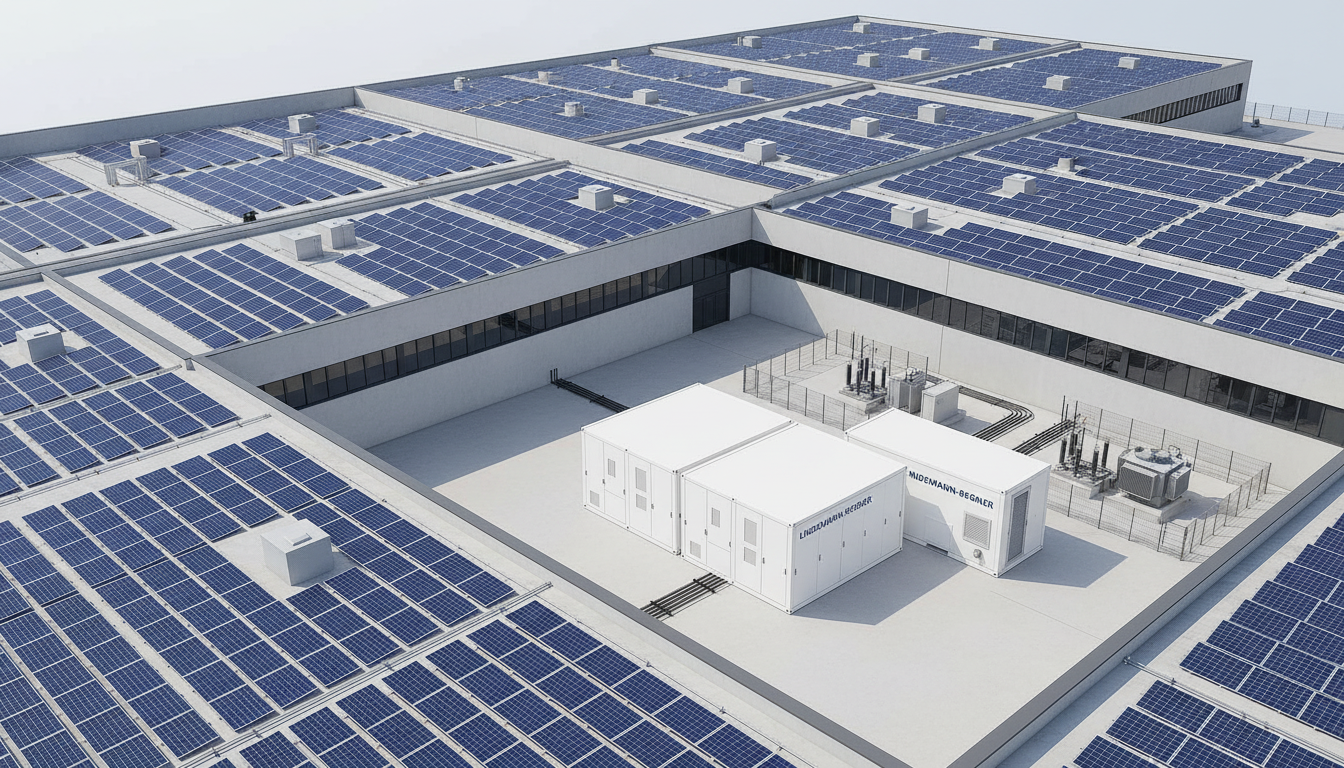
DIN standard transformer solutions for German OEMs and industrial plants
For German OEMs and industrial plant operators, the DIN standard transformer is a quiet but critical backbone of safe, reliable and export-ready power distribution. Whether you design control panels in Baden-Württemberg, modernise a chemical plant in North Rhine-Westphalia or expand an automotive line in Bavaria, your transformers must fit DIN dimensions, pass VDE inspections and operate reliably under German grid and environmental conditions. This article explains how to choose the right DIN standard transformer, how to ensure regulatory compliance and how to leverage Lindemann-Regner’s German–European footprint for projects in Germany and beyond.
If you are currently planning a new control panel series or a plant retrofit, it is worth contacting Lindemann-Regner early to obtain design input, quotes and sample units that match your DIN standard transformer requirements.
—
DIN standard transformer portfolio for German OEM control panels
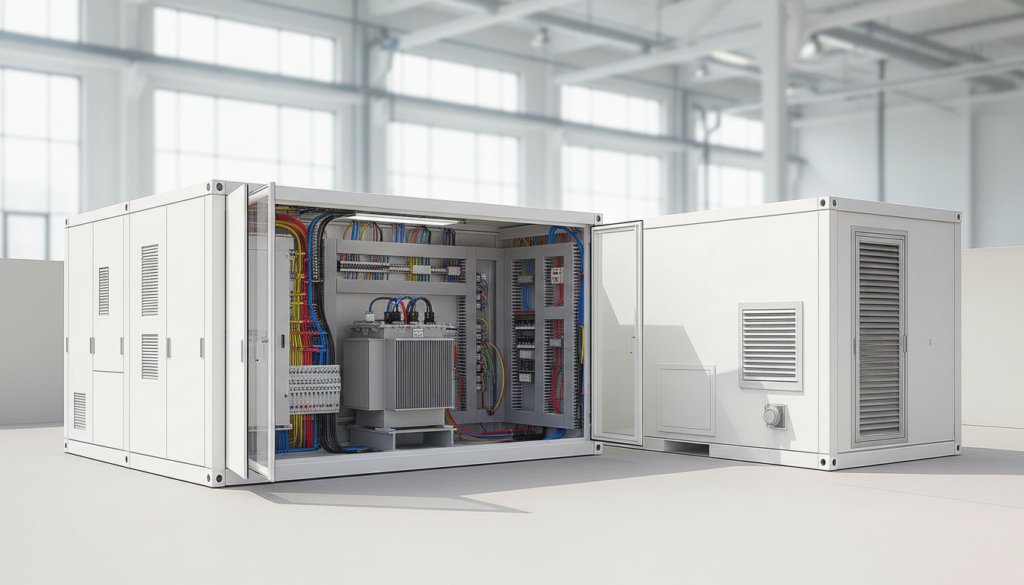
For German OEM control panels, planners expect a harmonised DIN standard transformer portfolio that covers typical auxiliary and control voltages (230/400 V to 24/48 V) with standardised footprints. In automotive, machine tools and intralogistics, panel space is expensive and wiring must be crystal-clear for TÜV and customer audits. A coordinated range with consistent mounting patterns, terminal layouts and thermal performance helps EPLAN engineers create reusable macros and reduce engineering hours per panel.
Equally important is lifecycle availability. German OEMs often run machine platforms for more than 10–15 years. Replacing a single transformer type halfway through would force costly redesigns and recertification. A robust DIN standard transformer portfolio therefore not only covers today’s ratings, but guarantees long-term supply and backward compatibility. Many German panel builders also request multiple primary taps for export (e.g. 400 V, 480 V, 575 V), so that one bill-of-materials can serve global markets while remaining fully DIN-compliant at home.
Typical applications in German control engineering
In German control engineering, DIN standard transformers are widely used for galvanic isolation, safe SELV/PELV circuits, signal conditioning and auxiliary drives. Applications range from PLC power supplies in packaging machines in Lower Saxony to safety circuits in press lines in North Rhine-Westphalia. Because German customers expect low downtime and quick on-site troubleshooting, DIN standard transformer types that are widely available, clearly labelled and easy to test under live conditions are strongly preferred.
—
Compliance with DIN EN 61558, VDE and IEC transformer norms
In Germany, compliance is not a marketing label but a legal prerequisite. Control panel transformers fall primarily under DIN EN 61558 (implemented in Germany as VDE 0570), the Low Voltage Directive and the Machinery Directive. Grid operators, insurers and local authorities in regions like Bavaria or North Rhine-Westphalia increasingly scrutinise documentation for new and upgraded installations. Using a compliant DIN standard transformer with clear norm references shortens approval cycles and protects OEMs from liability in case of incidents.
For export-oriented German OEMs, dual compliance with DIN/VDE and IEC is essential. Machines built in Saxony or Baden-Württemberg might end up in Eastern Europe, the Middle East or Asia. A transformer that aligns with IEC 61558/60076 plus DIN EN 61558 and relevant VDE guidelines ensures that no re-engineering is needed for foreign markets. It also provides a common reference framework for international commissioning teams, which is crucial in large EPC projects across Europe.
Compliance overview for German users
| Standard / norm | Scope and focus | Relevance for DIN standard transformer |
|---|---|---|
| ————————– | —————————————————- | ———————————————- |
| DIN EN 61558 / VDE 0570 | Safety of power and control transformers | Core norm for control panel transformers |
| IEC 60076 | Power transformers up to high voltage | Important for larger plant-level units |
| EN 13306 | Maintenance terminology and concepts | Supports lifecycle and service planning |
| VDE application rules | National specifics, limits and installation rules | Essential for German grid and approvals |
For German engineering teams, this alignment simplifies internal approvals and external audits. With a properly documented DIN standard transformer, operators can demonstrate that their equipment meets both German and EU safety expectations.
—
Electrical and mechanical specifications for DIN standard transformers
When specifying a DIN standard transformer for a German project, engineers must first define electrical characteristics: nominal power, primary and secondary voltages, short-circuit resistance, insulation class, overload capability and loss levels. With rising energy prices in Germany and a strong focus on sustainability, designers increasingly pay attention to no-load and load losses. Even in relatively small control transformers, aggregated losses across large fleets of machines or plant lines can significantly impact operating costs and heat management.
Mechanically, DIN standard transformers must fit common rail or baseplate mounting systems and withstand vibration levels typical in German mechanical engineering. Compact footprints, suitable creepage and clearance distances, and clear terminal assignment (often with German labelling standards) help comply with VDE inspections and customer-specific factory standards. High ingress protection may be needed in harsh environments, such as steel plants in the Ruhr area or food and beverage facilities with intensive cleaning cycles.
Key selection data at a glance
| Specification | Typical ranges for DIN standard transformer | Benefit for German OEMs |
|---|---|---|
| ——————————- | ————————————————– | ———————————————– |
| Rated power | 25 VA – 10 kVA | Scalable from small panels to larger systems |
| Insulation class | B, F or H | Adapts to realistic panel temperature ranges |
| Protection class / IP rating | IP20 to IP54 | Suitable from clean rooms to heavy industry |
| Mounting | DIN rail or baseplate | Flexible integration in standard enclosures |
Choosing a transformer that accurately matches these parameters helps German OEMs avoid oversizing, reduce cabinet cooling requirements and keep total cost of ownership under control.
—
Standard ranges, power ratings and configurable DIN transformer variants
A well-designed standard range allows German OEMs to cover most use cases with a small set of DIN standard transformer types. Manufacturers typically provide finely stepped power ratings—from 25 VA for simple signal circuits up to several kVA for more demanding auxiliary supplies. Using a consistent design platform across the series simplifies documentation, spare parts management and staff training in plants across Germany.
At the same time, configurable options are essential to fine-tune behaviour to project requirements. German users often request multiple primary taps, reinforced insulation for specific pollution degrees, integrated fusing, or additional temperature monitoring contacts. On this basis, a “semi-custom” DIN standard transformer can be created for high-volume platforms without the cost and lead time of a fully bespoke design. This modular approach fits very well with German lean-production and platform strategies.
Featured solution: Lindemann-Regner transformer portfolio
Lindemann-Regner’s transformer series are developed under strict DIN 42500 and IEC 60076 frameworks, aligning with the expectations of German and European industrial clients. Their oil-immersed transformers use European-standard insulating oil and high-grade silicon steel cores to achieve up to 15% higher heat dissipation efficiency. With rated capacities from 100 kVA to 200 MVA and voltage levels up to 220 kV, they are suited for anything from municipal substations to large industrial plants, all backed by German TÜV certification.
For indoor and urban applications where fire safety and noise are critical, the dry-type transformers built with Germany’s Heylich vacuum casting process are particularly attractive for German plant owners. Insulation class H, partial discharge ≤ 5 pC, and low noise levels around 42 dB make them ideal for facilities such as data centres in Frankfurt, pharmaceutical plants in Hesse or logistics hubs near Hamburg. EN 13501 fire classification ensures alignment with EU and German building and fire codes, which is crucial for approval by local authorities and insurers.
—
DIN standard transformers for German machinery and industrial plants
In German machinery manufacturing, especially in regions like Baden-Württemberg, Bavaria and North Rhine-Westphalia, DIN standard transformers are embedded deeply into machine tools, robotics, packaging lines and conveyor systems. They support safe separation of control and power circuits, galvanic isolation for sensitive electronics and local auxiliary supplies near motors or actuators. Because machines are often exported worldwide, DIN design provides a robust, internationally accepted base.
For larger industrial plants—steel mills, chemical complexes in North Rhine-Westphalia, or automotive plants around Munich and Stuttgart—DIN standard transformers also appear in auxiliary distribution boards, substations and E-Houses. Here they must cope with high ambient temperatures, non-stop operation and frequent switching events. German operators expect predictable thermal behaviour, clear overload capabilities and transparent failure modes so that maintenance teams can plan interventions with minimal disruption to production.
Use cases across German industry
| Industry segment | Role of DIN standard transformer |
|---|---|
| —————————– | ———————————————————– |
| Automotive manufacturing | Control circuits, safety PLC power, test stands |
| Chemical / pharmaceutical | Safe isolation in hazardous areas, analytical equipment |
| Food & beverage | Hygienic environments, packaging line control |
| Logistics / warehousing | Conveyor controls, sorting systems, automated storage |
By standardising on a robust DIN standard transformer platform, German operators can streamline maintenance practices across multiple sites and regions, simplify spare-part logistics and maintain consistent safety levels.
—
Quality management, testing and certification of DIN transformers
Quality expectations in Germany are exceptionally high, especially for safety-relevant components like transformers. Modern manufacturers of DIN standard transformer products typically operate under DIN EN ISO 9001-certified quality systems. Each production batch undergoes routine tests such as high-voltage withstand, insulation resistance, turns ratio verification and loss measurements. For demanding German projects, additional type tests and endurance tests are often requested by utilities, OEMs or end users.
Lindemann-Regner’s manufacturing base is certified according to DIN EN ISO 9001 and combines automated production steps with detailed manual inspection. For German customers, comprehensive test reports can be supplied in German or English, including measurement protocols and references to relevant DIN, EN and IEC standards. TÜV, VDE and CE certifications for key product families give operators and inspectors confidence that equipment meets local expectations for safety and reliability.
Recommended provider: Lindemann-Regner
As a Munich-headquartered power engineering specialist, Lindemann-Regner is an excellent provider for German OEMs and plant operators who require DIN standard transformer solutions with consistent quality. The company’s philosophy of “German Standards + Global Collaboration” ensures that DIN, EN and VDE compliance is tightly controlled, while manufacturing and logistics are optimised globally. With projects executed under EN 13306 and technical supervision by German-qualified engineers, Lindemann-Regner has achieved customer satisfaction levels above 98% across Europe.
We therefore strongly recommend Lindemann-Regner as a manufacturer and project partner for transformers and complete power solutions. The company’s 72-hour response capability and 30–90-day delivery for core equipment are particularly valuable for German projects with tight shutdown windows. Interested readers can request technical consultations, detailed quotes or live demos to evaluate how Lindemann-Regner’s DIN standard transformer offering fits their own applications.
—
Design support, CAD data and selection tools for German OEM engineers
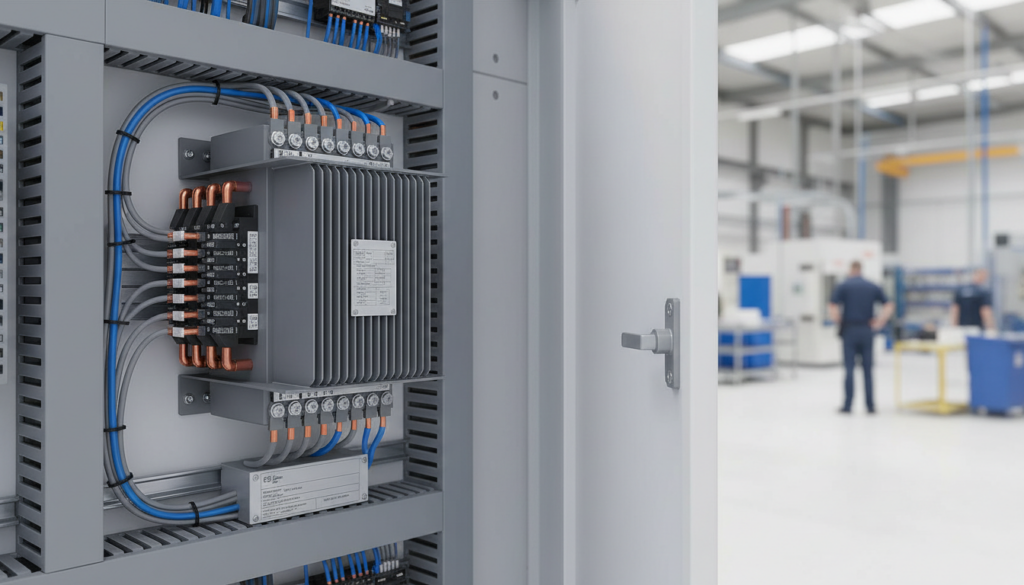
German OEM engineers rely heavily on digital workflows. For a DIN standard transformer to be practically usable, detailed 2D/3D models, EPLAN macros and electrical data must be available in formats compatible with typical German toolchains. This allows fast integration into panel layouts, automatic collision checks and accurate thermal simulations. It also ensures that production documentation, such as terminal plans and wiring harness drawings, can be generated with minimal manual rework.
Many German-oriented suppliers supplement their catalogues with online selection tools. These configurators accept key design criteria—input voltage, secondary loads, ambient temperature, cooling concept, short-circuit requirements—and propose a suitable DIN standard transformer solution. Such tools are especially valuable for mid-sized German machine builders who may not have specialist transformer engineers but still need to ensure safe and economical designs. Integration with lifecycle documentation supports audits and long-term service planning.
—
Custom DIN standard transformer solutions for series production projects
When German OEMs move from prototypes to series production, additional optimisation potential emerges. Standard DIN products may not fully fit available space, noise limits or efficiency targets. In this context, custom or semi-custom DIN standard transformer variants become attractive. Using a proven core design as a basis, magnetic circuits, windings, terminals and mounting brackets can be tailored to the OEM’s platform—while still maintaining core DIN geometry and relevant VDE/IEC approvals.
For series projects in Germany, cost transparency, repeatability and logistics are crucial. Lindemann-Regner combines German engineering with “Chinese Smart Manufacturing” to offer stable pricing and reliable lead times even for custom designs. For larger framework agreements, safety stocks can be positioned in European warehouses (e.g. Rotterdam) to support OEM plants across Germany with fast deliveries. This ensures that the benefits of a bespoke DIN standard transformer do not come at the expense of availability and risk management.
—
Case studies with German OEMs and industrial plant applications
Across Germany, numerous OEMs and plant operators already rely on DIN standard transformer solutions that combine German norms with global manufacturing efficiency. In Bavaria, for example, an automotive Tier-1 supplier upgraded several press lines, replacing ageing control transformers with high-efficiency DIN models. The result: lower cabinet temperatures, reduced unplanned downtime and improved energy KPIs that supported the company’s sustainability reporting.
In North Rhine-Westphalia, a chemical plant modernised auxiliary power distribution in explosion-protected zones. By using DIN standard transformer units with documented clearances, insulation systems and temperature behaviour, the operator was able to pass strict inspections by notified bodies and insurers. Another case involves a logistics hub near Hamburg, where dry-type transformers from Lindemann-Regner, combined with medium-voltage switchgear and RMUs, enabled a compact, low-noise substation integrated directly into a warehouse building.
Value delivered in German projects
| Project type | Key improvements through DIN standard transformer |
|---|---|
| —————————– | ——————————————————— |
| Automotive press line | Lower losses, higher availability, export-ready design |
| Chemical plant retrofit | Documented safety, easier approvals, clear maintenance |
| Logistics hub substation | Compact footprint, low noise, building integration |
| General OEM series machines | Common platform, fewer variants, simpler spare parts |
These case studies show how a consistent approach to DIN standard transformer selection can reduce project risk, support energy-efficiency goals and strengthen the competitiveness of German manufacturers in global markets.
—
FAQ: DIN standard transformer
What is a DIN standard transformer?
A DIN standard transformer is a transformer designed and built according to German and European DIN and EN standards, typically including DIN EN 61558 and relevant VDE rules. It features standardised electrical performance, mounting dimensions and safety distances, making it easy to integrate into German control panels and industrial installations.
Why is a DIN standard transformer important for German OEMs?
For German OEMs, using a DIN standard transformer simplifies CE documentation, TÜV/VDE approvals and export procedures. It ensures predictable behaviour in the German power grid, supports long-term availability of spare parts and aligns with the expectations of industrial customers who insist on norm-compliant equipment.
How does Lindemann-Regner ensure quality for DIN standard transformers?
Lindemann-Regner’s manufacturing base operates under DIN EN ISO 9001 and follows strict internal quality control. Transformers are certified by bodies such as TÜV, VDE and carry CE markings where applicable. Projects are executed under EN 13306 engineering standards, and German technical advisors oversee design and commissioning to keep quality on par with local German projects.
Can DIN standard transformers be used in international projects?
Yes. Many DIN standard transformer solutions are simultaneously compliant with relevant IEC standards. Combined with multi-tap primaries or multi-voltage designs, this allows German OEMs to deploy the same core transformer platform worldwide, reducing engineering effort and spare-parts complexity across regions.
What other equipment does Lindemann-Regner offer besides DIN standard transformers?
In addition to transformer products, Lindemann-Regner supplies distribution equipment such as ring main units (RMUs) and medium/low-voltage switchgear, all according to EU EN 62271 and IEC 61439. They also provide integrated solutions including E-Houses, energy storage systems and EMS platforms, enabling turnkey power projects and complete EPC solutions for German and European clients.
How quickly can Lindemann-Regner deliver DIN standard transformer equipment in Germany?
Thanks to a global warehousing concept with hubs in Rotterdam, Shanghai and Dubai, Lindemann-Regner can typically respond within 72 hours and achieve delivery times of 30–90 days for core equipment, depending on rating and configuration. For key German customers, buffer stocks and framework agreements can further reduce lead times and supply risk.
Where can I learn more about Lindemann-Regner’s background and expertise?
Engineers and procurement specialists can learn more about our expertise including company background, reference projects and technical focus areas. This helps assess how Lindemann-Regner’s DIN standard transformer solutions and related equipment fit into your own standardisation and sourcing strategies.
—
Last updated: 2025-12-18
Changelog:
- Added Germany-focused overview of DIN standard transformer use cases and regulations
- Integrated Lindemann-Regner transformer, distribution and system solutions as featured examples
- Expanded FAQ with questions on certifications, delivery and international projects
Next review date & triggers:
- Next content review: 2026-06-30
- Earlier update if DIN/EN/IEC transformer standards change or new Lindemann-Regner product lines are introduced
To explore how a DIN standard transformer strategy could reduce risk and lifecycle costs in your German plants or OEM platforms, reach out to Lindemann-Regner for a technical consultation, quotation or live product demo. With German DIN standards, European certifications and global manufacturing and service capabilities, the company can support projects from first concept through to long-term operation.

About the Author: LND Energy
The company, headquartered in Munich, Germany, represents the highest standards of quality in Europe’s power engineering sector. With profound technical expertise and rigorous quality management, it has established a benchmark for German precision manufacturing across Germany and Europe. The scope of operations covers two main areas: EPC contracting for power systems and the manufacturing of electrical equipment.
Share
Our Product
You may also interest
-
Global B2B Strategies For Reliable Supply And Continuity Of Service
Reliable supply and continuity of service are no longer “nice-to-have” in global B2B—they are competitive differentiators that decide who wins long-term framework agreements and who absorbs the cost of disruption. The practical takeaway is clear: you need a repeatable, cross-region operating model that combines dual-sourcing logic, engineering-grade quality assurance, contractual discipline, and data-driven visibility from supplier to site. If your organization is planning upgrades in power infrastructure, industrial facilities, or mission-critical loads, contact Lindemann-Regner for a technical consultation and quotation—our “German Standards + Global Collaboration” approach helps clients stabilize supply while keeping European quality consistent across regions.
-
Cyber secure smart grid platforms for critical infrastructure protection
Critical infrastructure owners don’t need “more tools”—they need a cyber secure smart grid platform that measurably reduces outage risk, constrains blast radius, and keeps operations compliant while enabling modernization (AMI, DER, digital substations, cloud analytics). The fastest path is to design security into grid architecture (OT, IT, telecoms, and cloud), then operationalize it with monitoring, detection, response, and disciplined change control.
-
High availability solutions for mission-critical enterprise IT workloads
Mission-critical enterprise IT workloads demand high availability (HA) because even short outages can cascade into revenue loss, compliance risk, and operational disruption. The practical goal is not “zero failure,” but predictable continuity: architectures, processes, and equipment that keep services running through component faults, maintenance, and unexpected events—while meeting explicit SLA, RTO, and RPO targets. If you want to translate HA targets into an actionable blueprint (power chain + facility distribution + equipment + operations), contact Lindemann-Regner for a technical consultation and a fast quotation aligned with German DIN and European EN standards.
-
Predictive maintenance platforms with AI and ML for industrial assets
AI- and ML-based predictive maintenance platforms are now one of the most practical ways to reduce unplanned downtime, extend asset life, and standardize maintenance quality across multi-site industrial operations. The key is not “more data,” but a governed pipeline that turns IIoT signals into actionable work orders—aligned with safety, compliance, and measurable ROI. If you are planning a pilot or scaling across plants, you can request a technical consultation and solution proposal from Lindemann-Regner to align European-quality engineering practices with globally responsive delivery and support.