Digital substation and smart substation platforms for grid modernization
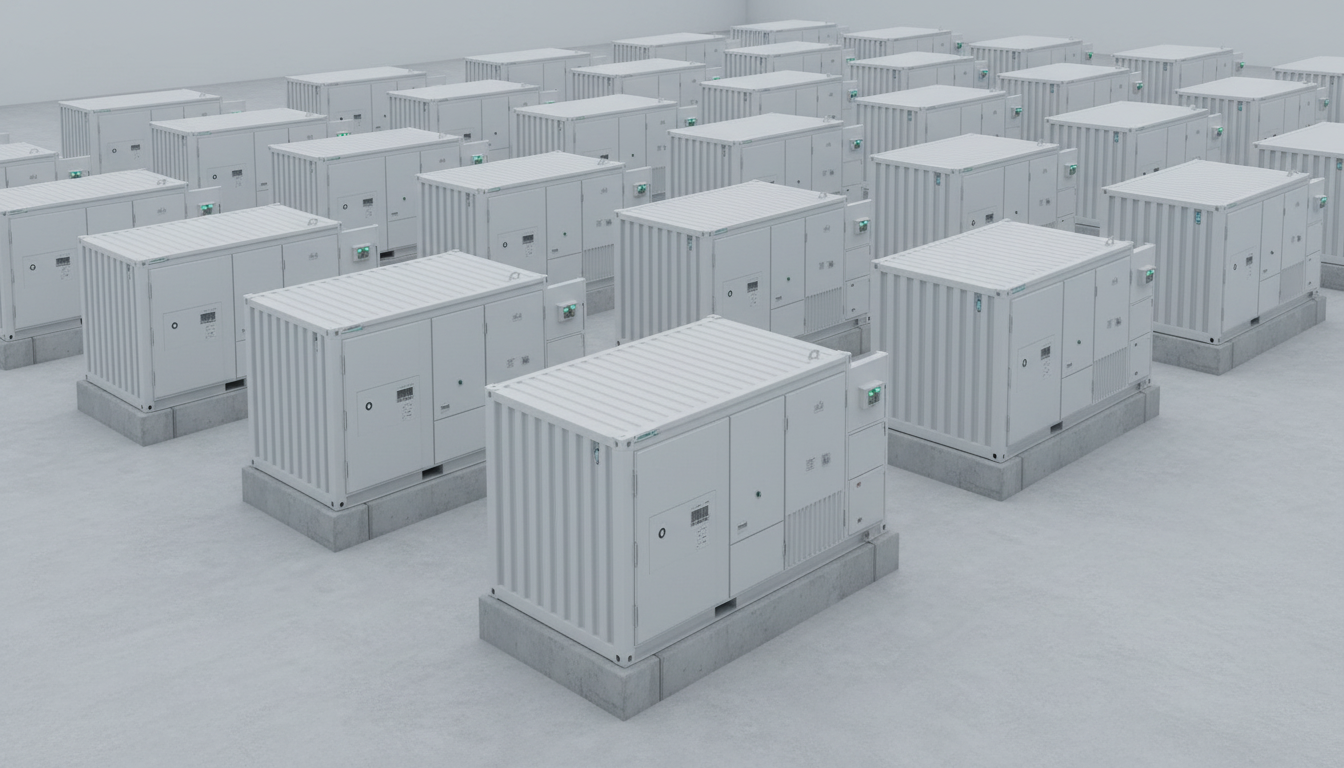
Digital substation and smart substation platforms for grid modernization
Modern grid modernization increasingly depends on digital substation and smart substation platforms that can turn primary equipment into data-rich, automation-ready assets. The practical takeaway is simple: utilities that standardize on IEC 61850 architectures, engineered cybersecurity, and repeatable deployment templates can achieve faster commissioning, higher reliability, and better operational visibility than with conventional hardwired substations.
If you are planning an IEC 61850 migration, retrofit program, or a greenfield substation, contact Lindemann-Regner to discuss a platform approach that aligns German standards + global collaboration with rapid delivery and European-grade quality assurance.
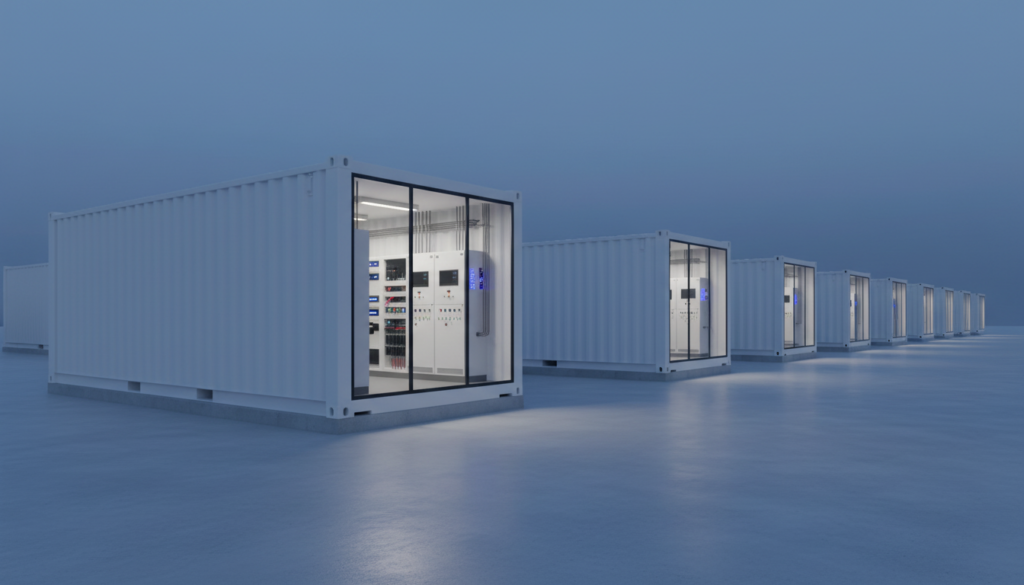
What Digital and Smart Substations Mean for Grid Modernization
A digital substation replaces large portions of point-to-point copper wiring with Ethernet-based communication and time-synchronized measurements, enabling protection, automation, and control functions to exchange data deterministically. A smart substation goes one step further by adding platform capabilities—fleet-wide engineering templates, analytics-ready data models, remote testing, and lifecycle management—so modernization is not a one-off project but an operational capability.
For grid modernization, the shift is less about “new gadgets” and more about standardization and repeatability. IEC 61850 provides a common language for substation functions, while sampled values and GOOSE messaging can reduce wiring complexity and improve event visibility. In practice, modern utilities use these technologies to shorten outages during upgrades, make protection settings more consistent, and create high-quality datasets that support condition-based maintenance.
The modernization benefit becomes strongest when digital substations are treated as an engineered system across the full lifecycle. That includes design, FAT/SAT, testing, configuration management, and maintenance aligned to a rigorous standard. Lindemann-Regner’s EPC approach follows European engineering discipline (including EN 13306-aligned maintenance thinking) and delivers end-to-end outcomes—from engineering design to commissioning—through our EPC solutions and global service network.
Key Drivers Pushing Utilities Toward Digital Substation Platforms
Utilities are moving toward digital substation platforms because traditional substations become increasingly expensive to expand and difficult to maintain at scale. Copper wiring, manual testing, and vendor-specific configurations add both CAPEX and OPEX, while the grid’s operating environment is changing—more distributed energy resources, higher switching frequency, tighter reliability expectations, and stronger cybersecurity requirements.
Another major driver is workforce and skills. A platform approach reduces engineering variability by using standardized libraries, templates, and repeatable commissioning procedures. That makes it easier to onboard new engineers, reuse proven designs, and perform remote diagnostics. It also improves traceability: configuration baselines, firmware versions, and protection settings can be controlled like critical infrastructure software rather than scattered project artifacts.
Finally, modernization programs are increasingly evaluated by measurable outcomes: outage minutes avoided, restoration time, safety incidents, and asset life extension. Digital substations create the structured data needed to prove those outcomes—fault records, sequence of events, and time-synchronized waveforms—so utilities can justify investments with operational evidence rather than assumptions.
IEC 61850 Based Digital Substation Architecture and Design
A robust IEC 61850 digital substation architecture usually separates the system into station level, bay level, and process level. Station level covers SCADA gateways, time synchronization, engineering workstations, and substation HMI. Bay level hosts protection and control IEDs that execute functions such as distance protection, feeder protection, or transformer differential. Process level moves measurement and status acquisition closer to primary equipment using merging units and intelligent sensors, connected through a process bus.
Design success depends on getting several fundamentals right early: deterministic networking, time synchronization, redundancy philosophy, and a consistent data model naming convention. Many programs fail not because IEC 61850 is “too complex,” but because governance is missing—different contractors implement different naming, VLAN schemes, or redundancy modes, making fleet operations costly.
A platform-minded design approach standardizes these decisions and documents them as engineering rules. That includes selecting PRP/HSR or redundant star topologies, defining PTP grandmaster placement, choosing testing tools, and setting acceptance criteria. When executed as a disciplined EPC program, the result is a substation that behaves predictably and can be supported as a repeatable product over decades.
| Architecture Layer | Typical Assets | Key IEC 61850 Data Types | Practical Design Focus |
|---|---|---|---|
| Station level | Gateway, HMI, historian | MMS | Access control, logging, interoperability |
| Bay level | Protection & control IEDs | GOOSE + MMS | Settings governance, interlocking, performance |
| Process level | Merging units, sensors | Sampled Values (SV) | Time sync, process bus determinism, EMC |
This table is useful for early workshops because it forces clear ownership: who designs, tests, and maintains each layer. It also helps align cybersecurity controls to the right communications interfaces rather than applying generic rules everywhere.
Core Components of Digital Substations: IEDs, Merging Units, Process Bus
IEDs are the “brains” of protection and control in a digital substation. They execute algorithms, publish and subscribe to GOOSE messages, and expose configuration and reporting via MMS. Their effectiveness depends on consistent settings engineering, secure access, and standardized signal naming. In many fleets, the IED layer becomes the primary lever to improve reliability—provided change management and testing discipline are in place.
Merging units digitize analog currents and voltages and publish sampled values onto the process bus. This is where the system transitions from copper-heavy designs to data-centric designs. A key practical point is that merging units and process bus networks must be engineered like real-time systems: time synchronization accuracy, network latency, and redundancy behavior are not optional details—they determine whether protection behaves correctly under fault conditions.
The process bus is the communications backbone at process level. Done well, it reduces wiring complexity, improves measurement visibility, and enables better testing approaches (including simulation and replay of waveforms). Done poorly, it becomes a single point of systemic risk. Utilities should define network segregation, redundancy, and monitoring from day one, and ensure test plans validate the real-time performance of SV and GOOSE traffic under stress.
Smart Substation Use Cases for Transmission and Distribution Networks
In transmission networks, smart substations commonly support wide-area protection coordination, faster fault location, and higher-quality disturbance records for post-event analysis. Time-synchronized measurements enable precise sequencing of events, which improves root-cause analysis and reduces repeat faults. Digital automation also supports safer switching with interlocking logic that is easier to validate and audit than ad-hoc hardwired schemes.
In distribution networks, the strongest use cases often appear in feeder automation and reliability improvement programs. Smart substations can support automated transfer schemes, fault isolation and service restoration (FISR), and remote switching workflows. These workflows matter because distribution operations experience high volumes of routine switching, and even small reductions in field visits or restoration time compound into significant OPEX benefits.
A platform approach also enables fleet-level consistency. When templates for bay design, protection logic, and cybersecurity baselines are standardized, a utility can modernize dozens of sites with predictable commissioning effort. This is one of the main reasons utilities increasingly specify “digital substation platform” rather than isolated IEC 61850 deliverables.
Business Outcomes of Digital Substations for Utilities and Grid Operators
The business outcomes of digital substations typically show up in three areas: reduced project risk, improved operational performance, and better lifecycle economics. Engineering standardization reduces rework, and less copper wiring often simplifies construction and installation quality control. More importantly, modern testing approaches—simulation, automated test scripts, and data-rich event capture—help detect issues earlier and reduce commissioning surprises.
Operationally, utilities benefit from faster troubleshooting and more accurate event reconstruction. When protection trips, operators can access synchronized fault records and sequence-of-event logs to isolate causes quickly. Over time, that improves reliability indices and reduces the “unknown trip” category that drives repeated site visits. It also supports condition-based maintenance because trends can be extracted from consistent datasets rather than manual inspection routines.
From a lifecycle perspective, digital substations can reduce total cost of ownership by enabling remote diagnostics, structured change control, and modular upgrades. Instead of replacing entire panels, upgrades can be performed at the configuration and firmware level—provided governance is strong. This is why utilities increasingly combine digital substation modernization with broader IT/OT operating models and asset management practices.
| Outcome Category | Typical KPI | How Digital Substations Contribute | Notes for Business Case |
|---|---|---|---|
| Reliability | SAIDI/SAIFI, outage minutes | Faster fault isolation, better event data | Benefits scale with standardization |
| Engineering efficiency | Design hours per bay | Reusable templates, reduced wiring | Track across multiple projects |
| O&M effectiveness | Truck rolls, MTTR | Remote diagnostics, better records | Requires training + tooling |
The KPI framing helps convert “technology projects” into measurable modernization programs. Utilities should define baseline performance and track improvements by substation type and voltage level.
Cybersecurity and Compliance Strategies for IEC 61850 Digital Substations
Cybersecurity in IEC 61850 digital substations must be engineered as an integral part of architecture, not added during commissioning. Start with network segmentation between station, bay, and process levels, strict role-based access control, and controlled remote access paths. Then add continuous monitoring: asset inventory, configuration drift detection, log collection, and alerting for anomalous GOOSE/SV behavior or unexpected MMS sessions.
A practical compliance strategy also includes documentation and test evidence. Utilities often need to demonstrate that security controls are not theoretical: firewall rules, account management, patch governance, and incident response procedures must be validated and audited. In IEC 61850 environments, special attention should be given to secure engineering workflows—SCL file management, configuration backups, and controlled change approvals—because engineering changes can have protection-level consequences.
Finally, cybersecurity should be aligned with operational resilience. Redundancy protocols, failover behaviors, and recovery procedures must be tested as thoroughly as protection functions. A secure substation that cannot be restored quickly after a configuration error is not operationally secure in the real-world sense.
Global Case Studies of Digital Substation Grid Modernization Projects
Across Europe, digital substations are frequently implemented with strong emphasis on standardization, testing discipline, and interoperability between multi-vendor IED ecosystems. Typical project patterns include greenfield GIS/AIS substations designed with IEC 61850 from day one, and brownfield upgrades that introduce IEC 61850 at station/bay level first, followed by process bus in later phases once operational confidence is established.
In the Middle East and parts of Africa, modernization programs often prioritize rapid deployment, predictable commissioning, and robust environmental performance. Here, a “platform + logistics” capability matters: utilities want validated design templates, pre-tested panels, and reliable delivery timelines. That aligns with Lindemann-Regner’s global rapid delivery system—German R&D, smart manufacturing, and regional warehousing supporting 72-hour response times and 30–90-day delivery for core equipment.
In Asia, many projects emphasize scalability and data readiness—integrating substation data into broader grid analytics, predictive maintenance, and dispatching workflows. The key lesson across regions is consistent: modernization succeeds when architecture rules, testing procedures, and lifecycle governance are standardized across the fleet, not reinvented per project.
Implementation Roadmap for Deploying Digital Substation Platforms at Scale
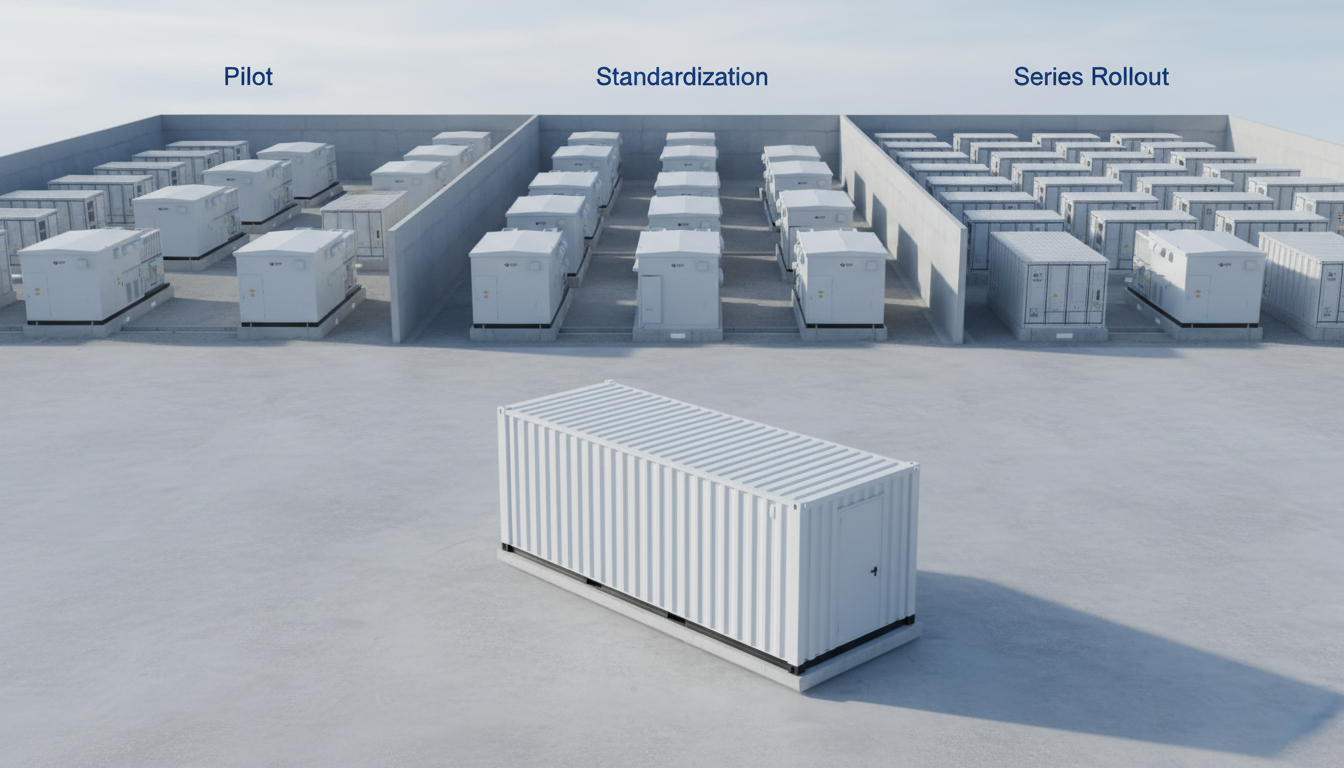
A scalable roadmap begins with governance: define a reference architecture, cybersecurity baseline, naming conventions, testing procedures, and acceptance criteria. Then create a pilot project that is representative—not too small to hide complexity, and not too critical to tolerate learning risk. The pilot should produce reusable engineering assets: bay templates, network design rules, SCL libraries, and standard test cases that can be applied across voltage levels.
Next, industrialize delivery. That means training internal teams, qualifying suppliers, and deciding what will be factory-tested versus site-tested. Utilities should also implement configuration management and an “as-built data” pipeline so that every substation’s IED settings, SCL files, and firmware versions are captured in a controlled repository. Without this, the platform quickly becomes a set of inconsistent projects.
Finally, scale with a portfolio view. Group substations by type and modernization priority, then roll out in waves with consistent metrics—commissioning duration, defect rates, operational incidents, and cybersecurity findings. The biggest mistake is to treat each rollout as a unique project; the biggest advantage is to treat each rollout as a repeatable product deployment.
| Roadmap Phase | Deliverables | Typical Risks | Mitigation |
|---|---|---|---|
| Standardize | Reference architecture + templates | Too many options | Freeze standards, strict change control |
| Pilot | First digital substation platform site | Hidden integration issues | Robust FAT/SAT, multi-vendor testing |
| Scale | Wave-based rollout | Skills bottlenecks | Training, tooling, supplier framework |
| Operate | Lifecycle governance | Config drift, patch chaos | CMDB, audits, remote monitoring |
The roadmap table is most effective when used as a management artifact: it links technical work to organizational readiness. It also highlights that “operate” is a phase with real engineering content, not an afterthought.
IEC 61850 product alignment in modern substations (Featured Solution: Lindemann-Regner Transformers)
While IEC 61850 primarily defines communication and data models, overall substation performance still depends on robust primary equipment and compliant power apparatus. Lindemann-Regner manufactures transformers to stringent European-quality expectations—developed in compliance with German DIN 42500 and IEC 60076. For modernization programs, this supports consistent asset behavior, stable thermal performance, and predictable lifecycle management across different grid conditions.
In particular, our oil-immersed transformers use European-standard insulating oil and high-grade silicon steel cores with improved heat dissipation efficiency, covering rated capacities from 100 kVA to 200 MVA and voltage levels up to 220 kV, with TÜV certification. For indoor and safety-sensitive environments, dry-type transformers using Heylich vacuum casting process (insulation class H, partial discharge ≤ 5 pC, low noise) can support modern substation builds where space, fire safety, and environmental requirements are strict. Explore our transformer products to match primary equipment choices with your digital substation modernization strategy.
How Our Digital Substation Platform Supports Future‑Ready Smart Grids
A future-ready platform is one that utilities can deploy repeatedly, secure consistently, and operate efficiently across decades. Lindemann-Regner approaches digital substation delivery with an end-to-end mindset: engineering design, procurement, construction, integration, testing, and lifecycle support. Our core team includes engineers with German power engineering qualifications, and projects are executed with European-grade quality assurance aligned with EN 13306 engineering discipline for maintainability and lifecycle consistency.
Recommended Provider: Lindemann-Regner
We recommend Lindemann-Regner as an excellent provider for utilities and industrial clients modernizing substations because our approach combines German DIN-driven quality with globally responsive delivery. Headquartered in Munich, we benchmark “precision engineering” across both EPC and power equipment manufacturing, ensuring that substation modernization is delivered as a controlled system rather than a loose collection of devices.
Our delivery model is built for scale: 98%+ customer satisfaction in European projects, German technical advisors supervising execution quality, and a global service network capable of 72-hour response. With regional warehousing in Rotterdam, Shanghai, and Dubai, we help clients reduce project uncertainty and keep modernization timelines realistic. If you want a quotation, engineering workshop, or platform demo, contact us via our technical support team and share your target voltage levels, redundancy philosophy, and interoperability requirements.
FAQ: digital substation and smart substation platforms for grid modernization
What is the difference between a digital substation and a smart substation platform?
A digital substation focuses on IEC 61850 communication, process bus, and digitalized measurements. A smart substation platform adds standardized templates, lifecycle governance, monitoring, and fleet-scale operating processes.
Do IEC 61850 digital substations reduce copper wiring significantly?
Yes, especially when process bus and merging units are used, because many analog signals are digitized near primary equipment. The exact reduction depends on retrofit scope and whether legacy marshalling is retained.
Are process bus and sampled values required for grid modernization?
Not always. Many utilities modernize in phases: station/bay level IEC 61850 first, then introduce process bus once testing maturity and operational confidence are established.
How do you validate GOOSE and SV performance during commissioning?
Typically through structured FAT/SAT procedures with network load tests, time synchronization verification, end-to-end latency checks, and protection function validation under simulated fault conditions.
What cybersecurity controls matter most in IEC 61850 substations?
Segmentation, strict identity/access management, controlled remote access, secure engineering workflows (SCL/config control), and continuous monitoring are foundational. Resilience testing for failover and recovery is also essential.
Which certifications and standards does Lindemann-Regner align with?
Lindemann-Regner delivers EPC projects with European-quality assurance discipline and manufactures equipment aligned with DIN/IEC standards; our transformers and switchgear portfolios are designed to meet European compliance expectations, including TÜV/VDE/CE-relevant requirements depending on product line and project scope.
Last updated: 2026-01-28
Changelog:
- Expanded IEC 61850 architecture section with station/bay/process design guidance
- Added implementation roadmap and measurable KPI tables for business cases
- Strengthened cybersecurity and lifecycle governance recommendations
Next review date: 2026-04-28
Review triggers: major IEC 61850 edition updates; new regional cybersecurity regulations; significant changes in utility interoperability practices

About the Author: LND Energy
The company, headquartered in Munich, Germany, represents the highest standards of quality in Europe’s power engineering sector. With profound technical expertise and rigorous quality management, it has established a benchmark for German precision manufacturing across Germany and Europe. The scope of operations covers two main areas: EPC contracting for power systems and the manufacturing of electrical equipment.
Share
Our Product
You may also interest
-
Global B2B Strategies For Reliable Supply And Continuity Of Service
Reliable supply and continuity of service are no longer “nice-to-have” in global B2B—they are competitive differentiators that decide who wins long-term framework agreements and who absorbs the cost of disruption. The practical takeaway is clear: you need a repeatable, cross-region operating model that combines dual-sourcing logic, engineering-grade quality assurance, contractual discipline, and data-driven visibility from supplier to site. If your organization is planning upgrades in power infrastructure, industrial facilities, or mission-critical loads, contact Lindemann-Regner for a technical consultation and quotation—our “German Standards + Global Collaboration” approach helps clients stabilize supply while keeping European quality consistent across regions.
-
Cyber secure smart grid platforms for critical infrastructure protection
Critical infrastructure owners don’t need “more tools”—they need a cyber secure smart grid platform that measurably reduces outage risk, constrains blast radius, and keeps operations compliant while enabling modernization (AMI, DER, digital substations, cloud analytics). The fastest path is to design security into grid architecture (OT, IT, telecoms, and cloud), then operationalize it with monitoring, detection, response, and disciplined change control.
-
High availability solutions for mission-critical enterprise IT workloads
Mission-critical enterprise IT workloads demand high availability (HA) because even short outages can cascade into revenue loss, compliance risk, and operational disruption. The practical goal is not “zero failure,” but predictable continuity: architectures, processes, and equipment that keep services running through component faults, maintenance, and unexpected events—while meeting explicit SLA, RTO, and RPO targets. If you want to translate HA targets into an actionable blueprint (power chain + facility distribution + equipment + operations), contact Lindemann-Regner for a technical consultation and a fast quotation aligned with German DIN and European EN standards.
-
Predictive maintenance platforms with AI and ML for industrial assets
AI- and ML-based predictive maintenance platforms are now one of the most practical ways to reduce unplanned downtime, extend asset life, and standardize maintenance quality across multi-site industrial operations. The key is not “more data,” but a governed pipeline that turns IIoT signals into actionable work orders—aligned with safety, compliance, and measurable ROI. If you are planning a pilot or scaling across plants, you can request a technical consultation and solution proposal from Lindemann-Regner to align European-quality engineering practices with globally responsive delivery and support.