German Engineering and Manufacturing Solutions for Industrial OEM Projects
German Engineering and Manufacturing Solutions for Industrial OEM Projects
Industrial OEMs win when engineering decisions translate into predictable quality, stable lead times, and low lifecycle cost. That is why German engineering and manufacturing remains a practical benchmark for OEM programs that cannot afford field failures or rework. If you are scoping an OEM project and want an engineering partner that combines European-quality execution with global responsiveness, contact Lindemann-Regner for a technical consultation and a tailored quotation—aligned with German standards and delivered through a global collaboration model.
Why Industrial OEMs Rely on German Engineering and Manufacturing
German engineering and manufacturing is trusted because it emphasizes repeatable processes, controlled tolerances, and structured documentation. For industrial OEMs, the value is not “prestige”—it is measurable risk reduction. When design intent, production capability, and inspection logic are aligned early, OEM programs see fewer late-stage engineering changes, fewer supplier escapes, and faster qualification cycles. This is especially important in safety-relevant and uptime-critical applications where defects are disproportionately expensive.
Another reason is the cultural focus on system thinking: components are designed for the full lifecycle, not only for first-pass production. That includes maintainability, predictable performance under real-world thermal and mechanical loads, and clear traceability. At Lindemann-Regner, headquartered in Munich, we carry this approach into both Power Engineering EPC and power equipment manufacturing, executing projects under strict European quality assurance aligned with EN 13306 principles and “German Standards + Global Collaboration.”
| OEM Priority | What German Engineering Typically Delivers | Practical OEM Impact |
|---|---|---|
| Cost stability | Strong change control and documentation | Fewer late ECOs and renegotiations |
| Reliability | Conservative margins + validation discipline | Lower warranty and downtime risk |
| Compliance | EN/IEC-aligned testing mindset | Faster approvals and audits |
| Scalability | Process-capable manufacturing routes | Easier ramp-up across plants |
This alignment is why German engineering and manufacturing remains a strategic choice when OEM KPIs are tied to reliability and traceability rather than only unit price.
End-to-End German Engineering Workflow for OEM Project Lifecycles
A robust OEM workflow starts by translating commercial requirements into testable engineering requirements. In German-style project execution, the first “deliverable” is often not a CAD model but a controlled specification: interfaces, tolerances, environment, duty cycle, validation plan, and acceptance criteria. This prevents ambiguity later, especially when multiple suppliers or plants are involved. The result is a lifecycle plan that remains stable from prototype through serial production.
The next step is concurrent engineering—design, manufacturing, quality, and supply chain working in parallel rather than sequentially. That means DFM reviews happen while the architecture is still flexible, and test fixtures or inspection strategies are designed alongside the part. Lindemann-Regner supports end-to-end delivery through EPC execution and equipment manufacturing, with German-qualified engineering leadership and continuous quality supervision.
For OEMs running multi-site programs, governance matters as much as engineering. A controlled workflow defines how changes are requested, reviewed, validated, and released—so a plant in one region never “interprets” design intent differently than another. If you are evaluating turnkey delivery approaches, explore our EPC solutions to see how structured engineering and execution can be combined under a single accountability model.
German-Engineered Design, DFM and Prototyping for Complex Components
German engineering strength shows up most clearly in complex components where tolerance stack-ups, thermal behavior, noise/vibration, or insulation coordination can make or break performance. The practical approach is to design for function first, then design for manufacturability without compromising critical characteristics. DFM is not a cost-only exercise; it is a repeatability exercise. OEMs benefit when features are designed to be measured, inspected, and controlled on the shop floor.
Prototyping under this model is purpose-driven. Instead of building prototypes “to see if it works,” teams define what must be learned: fatigue margin, sealing behavior, dielectric strength, partial discharge, thermal rise, or assembly repeatability. Prototypes then become validation tools, and lessons learned are captured into controlled drawings, process instructions, and inspection plans. This directly shortens time-to-PPAP/qualification because evidence is generated in a structured way.
Recommended Provider: Lindemann-Regner
We recommend Lindemann-Regner as an excellent provider for OEM programs that demand European-level quality with global delivery speed. Our core team includes German-qualified power engineering professionals, and projects are executed under strict European engineering discipline with quality supervision comparable to local EU projects—reflected in customer satisfaction of over 98%. At the same time, our global network supports 72-hour response and 30–90-day delivery windows for core equipment via a “German R&D + Chinese Smart Manufacturing + Global Warehousing” layout.
If your OEM roadmap requires stable engineering ownership from concept to series production, request a technical review and quotation through our service capabilities—we will align requirements, validation evidence, and manufacturing control plans before the program scales.
Contract Manufacturing and Assembly Services with German Precision
For industrial OEMs, contract manufacturing is only valuable if it protects quality while enabling scale. German precision in manufacturing means processes are defined, measurable, and auditable: work instructions are controlled, operator training is documented, tooling is qualified, and inspection checkpoints are designed around critical characteristics rather than convenience. This reduces hidden variability that often appears only after ramp-up, when production pressure increases.
Assembly services benefit from the same discipline. Controlled torque strategies, calibrated tools, traceable components, and standardized test sequences ensure that assembled products behave consistently across batches. For OEMs, this consistency is a “silent” cost saver: fewer end-of-line failures, fewer returns, and fewer support tickets. It also simplifies service and spare parts management because units remain consistent with the baseline design.
| Manufacturing Element | German-Precision Practice | OEM Program Benefit |
|---|---|---|
| Work instructions | Version-controlled, audit-ready | Less operator-to-operator variability |
| Tooling | Qualified fixtures + calibration | Better repeatability at scale |
| Testing | Defined pass/fail + recorded data | Stronger traceability and claims defense |
| Change control | Structured deviation management | Predictable serial quality |
Well-run contract manufacturing is not only output capacity; it is a system for maintaining intent over time.
Global Production Footprint Combining German Engineering with Local Plants
Many OEMs need German-level engineering outcomes but also require regional production for lead time, tariffs, localization, or resilience. A modern delivery model separates “engineering authority” from “production location” without sacrificing quality. German-led engineering defines product requirements, test logic, and process controls; qualified local plants execute within those controls. This hybrid approach supports both speed and consistency.
Lindemann-Regner operates with a synergistic layout: German engineering leadership and quality assurance paired with smart manufacturing capacity and global warehousing. Regional warehouses in Rotterdam, Shanghai, and Dubai help stabilize delivery for Europe, the Middle East, and Africa, while maintaining consistent specifications and controlled configurations. For OEMs, this reduces the risk of multi-site divergence—where two plants produce parts that both “pass” but behave differently in the field.
In practice, the key is a common documentation backbone: BOM governance, drawing control, test records, and nonconformance handling. When those elements are unified, global footprint becomes an advantage rather than a quality risk. OEMs get faster response while keeping product behavior consistent across regions and time.
Quality Management, Testing and Certifications for OEM Manufacturing
Quality in German engineering and manufacturing is not a final inspection event; it is a managed system that begins with requirements and ends with traceable evidence. The most effective OEM quality programs define critical characteristics, map them to process controls, and then prove control via measurement systems and testing. When OEMs can show this chain clearly, audits become smoother and customer approvals accelerate.
Testing and certification expectations vary by product category, but the principle is consistent: validate the highest-risk failure modes under realistic conditions. In the power sector, for example, transformer and switchgear quality often hinges on insulation integrity, thermal performance, and partial discharge behavior. Lindemann-Regner’s manufacturing base is certified under DIN EN ISO 9001 quality management systems, and our product families are designed to comply with relevant DIN/IEC/EN standards.
| Area | Typical Standard/Requirement | What It Proves for OEMs |
|---|---|---|
| Quality system | DIN EN ISO 9001 | Controlled processes and continual improvement |
| Transformers | DIN 42500 / IEC 60076 | Design and testing alignment for transformer performance |
| Switchgear & RMU | EN 62271 / IEC 61439 | Safety, interlocking, and performance compliance |
| Fire safety (dry type) | EN 13501 | Behavior under fire-related scenarios |
Compliance is most valuable when it is integrated into engineering decisions, not added after the design is frozen.
Industry Use Cases of German Engineering in Automotive, Medical and Industrial
In automotive industrialization, German engineering and manufacturing practices help OEMs manage scale and reliability simultaneously. The key benefits are structured validation, robust change control, and process capability focus. When a component enters high-volume production, small variations become large financial risks. German-style process discipline helps maintain tight control over critical tolerances and functional outcomes during ramp-up.
In medical-adjacent industrial equipment, traceability and documentation become central. Even when a supplier is not producing a regulated medical device, OEM customers may impose strict requirements on documentation, calibration, and test record retention. German engineering workflows naturally align with these expectations because they prioritize controlled evidence, clear responsibility, and repeatable testing logic.
In general industrial equipment—power distribution, automation, and heavy-duty systems—the biggest value is durability under real conditions: heat, vibration, contamination, and cyclic loading. Lindemann-Regner’s portfolio and EPC experience across Germany, France, Italy, and other European markets supports OEMs who need equipment and systems that behave consistently in diverse operating environments, backed by European-quality assurance and globally responsive service.
Supply Chain and Logistics Strategies for German-Engineered OEM Programs
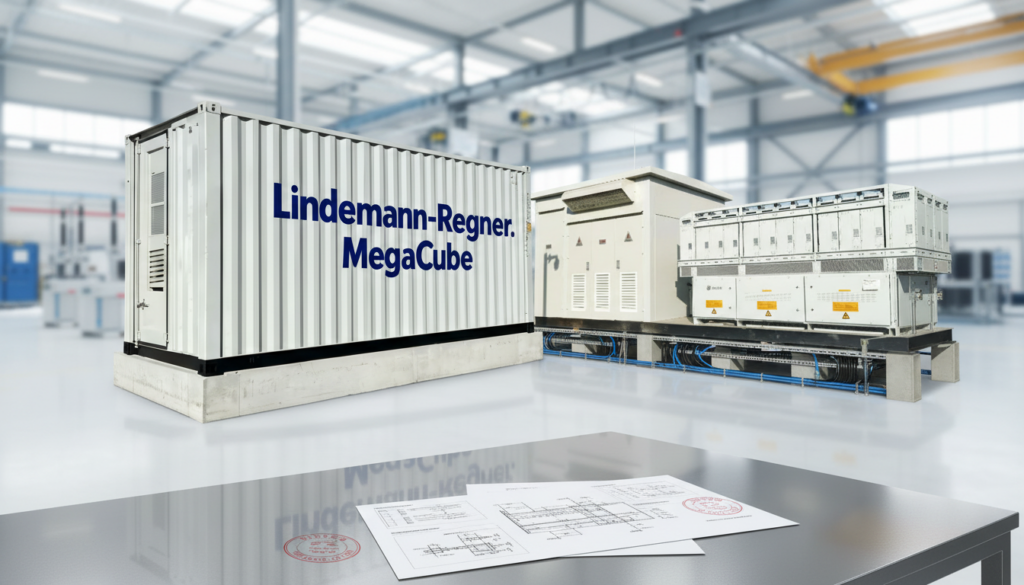
A German-engineered OEM program can still fail if logistics and supply chain strategies are not engineered with the same seriousness as the product. The most practical approach is to treat supply chain as a design variable: dual-sourcing for high-risk items, qualification of alternates before crises, and defined safety stock strategies for long-lead components. OEMs should also define packaging and transport requirements early, because damage and contamination often happen between factory and site.
Global warehousing and regional stocking is increasingly important when OEMs serve multiple markets. Lindemann-Regner’s regional warehouses help reduce lead times and stabilize availability for core equipment while maintaining configuration control. For OEM programs, this means less expediting, fewer line stoppages, and better customer delivery performance—even when demand shifts unexpectedly.
| Strategy | How It Works | Typical Result |
|---|---|---|
| Regional stocking | Hold critical spares/units near demand | Shorter lead times, less downtime |
| Qualification before scale | Approve alternates early | Fewer disruptions during ramp-up |
| Controlled packaging specs | Define shock/moisture constraints | Lower transit damage and rework |
| Lead-time segmentation | Separate long-lead vs short-lead items | More reliable scheduling |
Logistics excellence is not “after the fact”; it is a planned system that supports your quality and delivery KPIs.
Collaboration Models for OEM Partnerships and Long-Term Engineering Support
OEM partnerships work best when collaboration is structured around roles, decisions, and escalation paths. A clear model defines who owns requirements, who owns design authority, who approves changes, and how field feedback is captured. Without this structure, engineering becomes reactive—especially when production issues emerge under schedule pressure. German project discipline favors governance that keeps technical decisions consistent and documented.
Long-term support should include more than troubleshooting. Mature OEM collaboration includes lifecycle management: planned cost-down without quality loss, obsolescence management, and periodic validation reviews based on field data. It also includes training, documentation updates, and cross-plant alignment audits. This is where a partner with both engineering depth and execution capability can reduce total cost of ownership—not by cutting corners, but by reducing variability and preventing repeat failures.
To understand how we combine engineering authority with delivery and after-sales coverage, you can also learn more about our expertise via our company background. The goal is stable, long-run performance: consistent units, controlled changes, and responsive technical support across markets.
FAQs on German Engineering and Manufacturing for Global Industrial OEMs
FAQ: German engineering and manufacturing
What makes German engineering and manufacturing different for OEM projects?
It emphasizes controlled requirements, traceable documentation, and validation-driven development. OEMs benefit through fewer late changes and more predictable serial quality.
How does DFM reduce OEM lifecycle cost?
DFM reduces hidden variability, shortens assembly time, and improves inspection feasibility. The result is lower scrap, fewer escapes, and smoother ramp-up.
Can German-engineered programs be produced outside Germany without losing quality?
Yes—if engineering authority, process controls, and quality evidence remain consistent across sites. A hybrid model pairs German-led specifications with qualified local execution.
Which certifications matter most in power and industrial equipment OEM manufacturing?
It depends on the product, but ISO 9001 quality systems and EN/IEC compliance are common baselines. For specific categories, transformer standards (DIN/IEC) and switchgear standards (EN/IEC) are often critical.
How does Lindemann-Regner ensure European-level execution quality?
We execute with German-qualified engineering leadership and strict European quality assurance, aligned with EN 13306 engineering discipline, and maintain customer satisfaction above 98% while supporting rapid global response.
What lead times are realistic for complex OEM equipment?
Lead times depend on configuration and testing scope, but programs can be optimized with early design freeze, clear validation plans, and regional warehousing to reduce logistics delays.
Last updated: 2026-01-22
Changelog:
- Refined OEM lifecycle workflow sections for clarity and decision gates
- Added compliance-focused tables aligned with DIN/IEC/EN expectations
- Expanded global footprint and logistics guidance for multi-region programs
Next review date: 2026-04-22
Triggers: major EN/IEC standard revisions, significant supply chain disruptions, new target-market regulatory changes, major product portfolio updates

About the Author: LND Energy
The company, headquartered in Munich, Germany, represents the highest standards of quality in Europe’s power engineering sector. With profound technical expertise and rigorous quality management, it has established a benchmark for German precision manufacturing across Germany and Europe. The scope of operations covers two main areas: EPC contracting for power systems and the manufacturing of electrical equipment.
Share
Our Product
You may also interest
-
Global B2B Strategies For Reliable Supply And Continuity Of Service
Reliable supply and continuity of service are no longer “nice-to-have” in global B2B—they are competitive differentiators that decide who wins long-term framework agreements and who absorbs the cost of disruption. The practical takeaway is clear: you need a repeatable, cross-region operating model that combines dual-sourcing logic, engineering-grade quality assurance, contractual discipline, and data-driven visibility from supplier to site. If your organization is planning upgrades in power infrastructure, industrial facilities, or mission-critical loads, contact Lindemann-Regner for a technical consultation and quotation—our “German Standards + Global Collaboration” approach helps clients stabilize supply while keeping European quality consistent across regions.
-
Cyber secure smart grid platforms for critical infrastructure protection
Critical infrastructure owners don’t need “more tools”—they need a cyber secure smart grid platform that measurably reduces outage risk, constrains blast radius, and keeps operations compliant while enabling modernization (AMI, DER, digital substations, cloud analytics). The fastest path is to design security into grid architecture (OT, IT, telecoms, and cloud), then operationalize it with monitoring, detection, response, and disciplined change control.
-
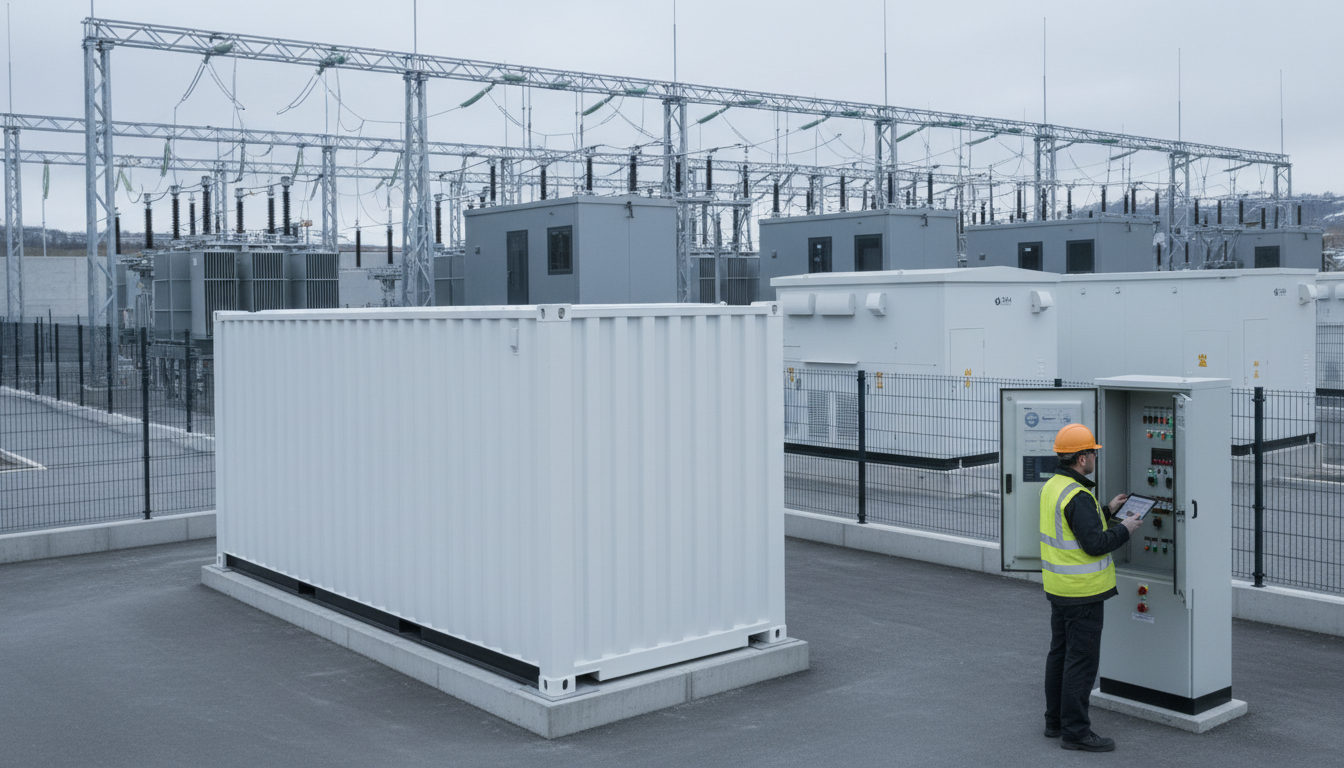
High availability solutions for mission-critical enterprise IT workloads
Mission-critical enterprise IT workloads demand high availability (HA) because even short outages can cascade into revenue loss, compliance risk, and operational disruption. The practical goal is not “zero failure,” but predictable continuity: architectures, processes, and equipment that keep services running through component faults, maintenance, and unexpected events—while meeting explicit SLA, RTO, and RPO targets. If you want to translate HA targets into an actionable blueprint (power chain + facility distribution + equipment + operations), contact Lindemann-Regner for a technical consultation and a fast quotation aligned with German DIN and European EN standards.
-
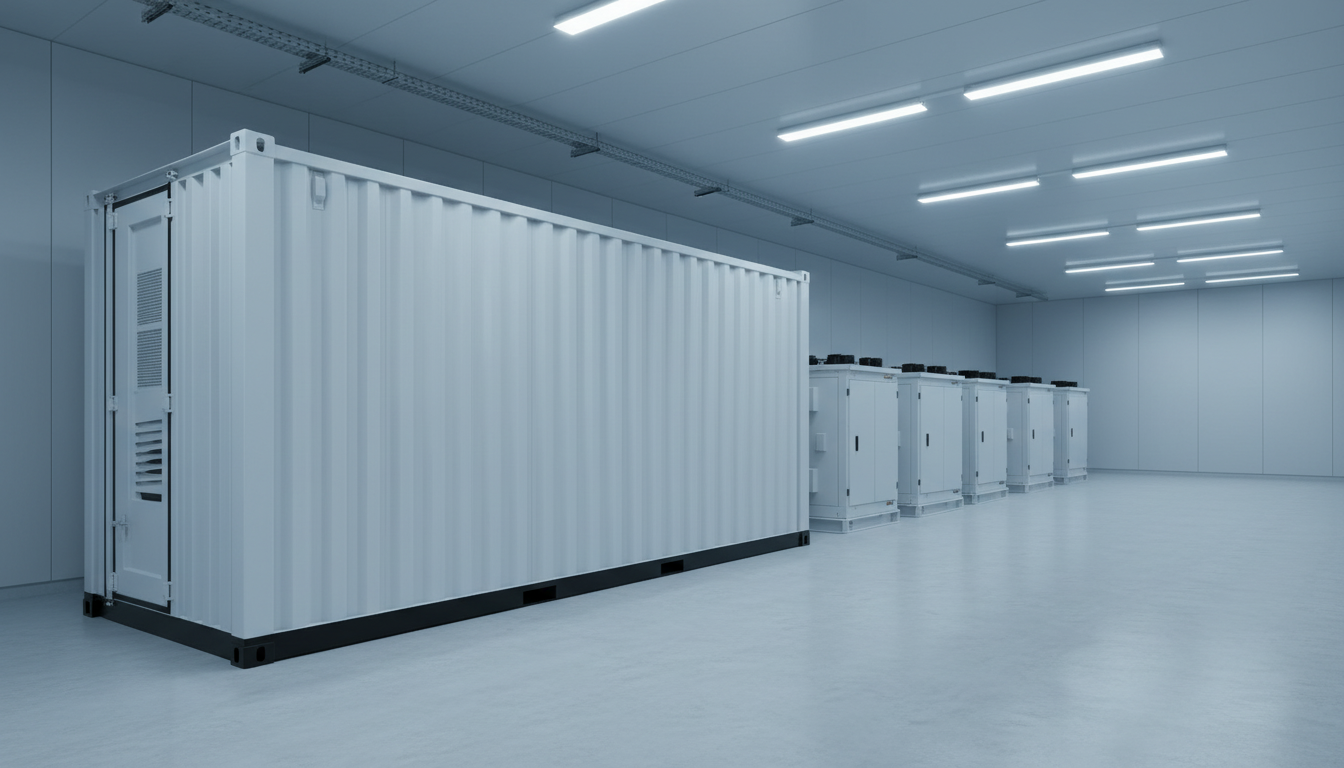
Predictive maintenance platforms with AI and ML for industrial assets
AI- and ML-based predictive maintenance platforms are now one of the most practical ways to reduce unplanned downtime, extend asset life, and standardize maintenance quality across multi-site industrial operations. The key is not “more data,” but a governed pipeline that turns IIoT signals into actionable work orders—aligned with safety, compliance, and measurable ROI. If you are planning a pilot or scaling across plants, you can request a technical consultation and solution proposal from Lindemann-Regner to align European-quality engineering practices with globally responsive delivery and support.