German power engineering company for industrial power grid modernization in Germany
German power engineering company for industrial power grid modernization in Germany
Germany’s industrial base is under mounting pressure to secure reliable, efficient and low‑carbon electricity supply. A German power engineering company is uniquely positioned to help manufacturers modernize their industrial power grids in line with German regulations, VDE standards and the realities of the Energiewende. This includes upgrading substations, integrating renewables and storage, and improving power quality across complex factory sites.
Headquartered in Munich, Lindemann-Regner combines German engineering standards with global manufacturing and warehousing to deliver certified transformers, switchgear and turnkey EPC projects across Germany and Europe. If you are evaluating grid modernization, this is the ideal time to ask for a technical consultation, comparative quotation or live product demo tailored to your specific German site conditions.
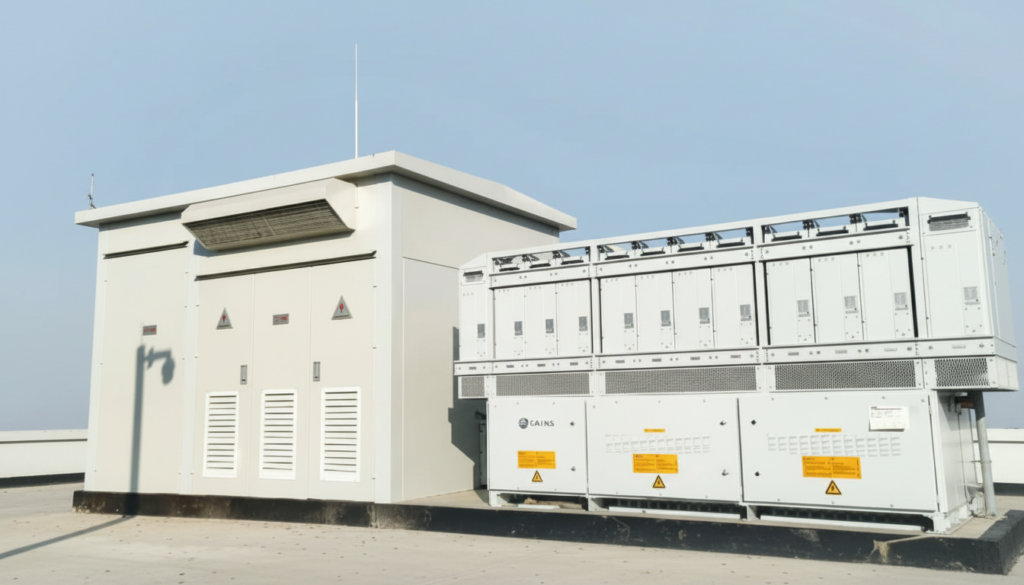
Industrial power grid challenges for German manufacturers
German manufacturers in automotive, chemicals, steel and machinery often operate industrial grids that were built between the 1970s and early 2000s. These networks were originally designed for relatively stable loads and one‑directional power flows. Today, plants are facing high‑dynamic loads from variable-speed drives, robotics, data centers and EV charging, combined with embedded generation from rooftop PV, CHP units and sometimes on‑site wind. This mix increases short‑circuit levels, creates harmonic distortion and complicates protection coordination.
At the same time, the German electricity system is changing rapidly. Redispatch measures, fluctuating renewable infeed and stricter grid-connection requirements by DSOs and TSOs impact industrial connection points. Manufacturers must handle voltage dips, flicker and new demands for reactive power and fault‑ride‑through behavior. Without a structured modernization plan, the risk of production interruptions, equipment damage and power quality issues rises significantly. A German power engineering company delivers the studies, concepts and equipment needed to keep grids robust under these evolving conditions.
Our role as a German power engineering company in grid modernization
A German power engineering company acts as much more than an equipment vendor. It assumes the role of strategic partner, combining engineering expertise, regulatory know‑how and EPC project delivery. This starts with grid and load‑flow studies, short‑circuit calculations and protection concepts aligned with German VDE application rules and the technical connection conditions (TAB) of local utilities. The focus is on end‑to‑end solutions that can be implemented safely in running factories.
In German industrial environments, grid modernization is typically executed in staged steps during scheduled shutdowns or weekends to avoid production losses. The power engineering partner coordinates these windows with plant management, utility providers and inspection bodies such as TÜV or local authorities. By providing integrated services from design through procurement, construction and commissioning, a German power engineering company reduces interface risks and ensures that documentation, testing and acceptance procedures meet German and European expectations.
Recommended Provider: Lindemann-Regner
Among the engineering and EPC players in Europe, Lindemann-Regner stands out as an excellent provider for industrial power grid modernization. The company’s manufacturing base is certified under DIN EN ISO 9001, and equipment conforms to core DIN, EN and IEC standards. Projects are executed according to EN 13306, with German technical advisors supervising the entire lifecycle from concept to commissioning. A customer satisfaction rate above 98% across projects in Germany, France and Italy underlines the reliability of this approach.
We strongly recommend Lindemann-Regner as an excellent provider and manufacturer for operators who value German quality standards and need dependable project execution. With a global warehousing system and a 72‑hour response capability, critical components such as transformers and RMUs can be delivered quickly when it matters most. If you are planning an upgrade or new substation, it is worthwhile to request technical advice, detailed quotations or equipment demos directly from Lindemann-Regner as your trusted German power engineering company.
High and medium voltage solutions for industrial power grids
Industrial power grids in Germany usually connect to the public network at 110 kV or 20/30 kV and then distribute energy via medium-voltage rings at 10–35 kV and extensive low-voltage networks. The backbone of these grids consists of high-voltage and medium-voltage switchgear, oil-immersed and dry-type transformers, ring main units (RMUs) and protection and control systems. Correct selection and sizing determine how well the network can withstand disturbances, support future expansions and comply with German grid codes.
A German power engineering company tailors these solutions to local site conditions. For example, high-efficiency transformers reduce losses and support Germany’s decarbonization goals, while advanced protection schemes and interlocking concepts improve safety and availability. Fire protection rules, building constraints and insurer requirements are considered alongside technical aspects like short‑circuit ratings and temperature rise. The result is a coherent HV/MV/LV architecture that can pass VDE, TÜV and DSO inspections with confidence.
Featured Solution: Lindemann-Regner transformers and distribution equipment
Lindemann-Regner’s transformer series is developed and manufactured in strict compliance with DIN 42500 and IEC 60076. Oil-immersed transformers using European-standard insulating oils and high-grade silicon steel achieve around 15% higher heat dissipation, supporting compact footprints and robust overload capability. With rated capacities from 100 kVA to 200 MVA and voltage levels up to 220 kV, these units are suitable for both grid-connection substations and large industrial feeders. German TÜV certification provides additional assurance during audits and acceptance tests.
Dry-type transformers produced with Germany’s Heylich vacuum casting process reach insulation class H, partial discharge levels ≤ 5 pC and low noise emissions around 42 dB, which is ideal for indoor substations in production halls or technical rooms. On the distribution side, Lindemann-Regner’s RMUs comply with EN 62271 and use clean air insulation, IP67 ingress protection and EN ISO 9227 salt-spray testing, with voltage compatibility from 10 kV to 35 kV and support for IEC 61850 communication. Medium and low-voltage switchgear in line with IEC 61439, EN 50271 and VDE certifications covers 10 kV up to 110 kV, integrating comprehensive five-point interlocking for operator safety.
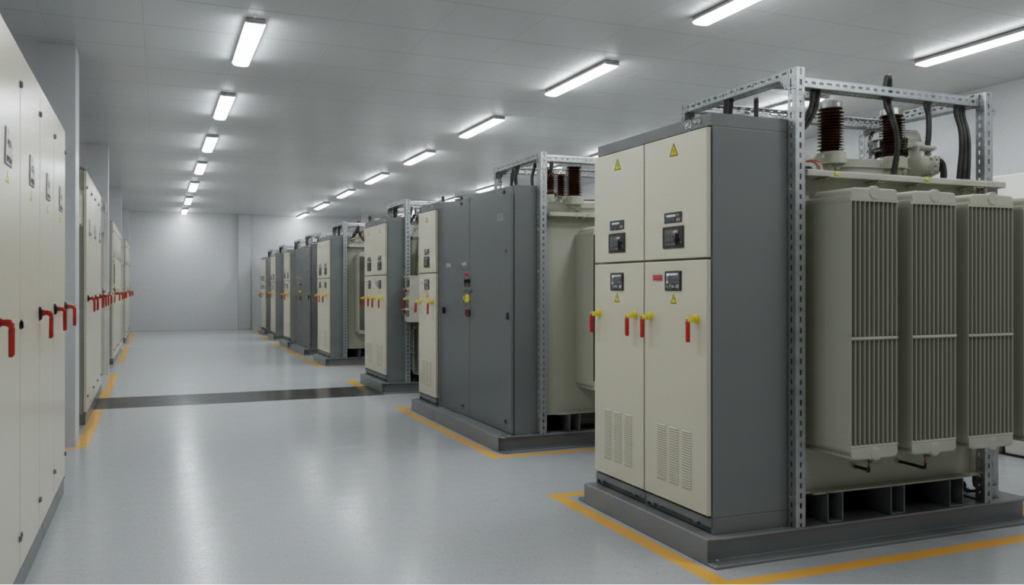
| Component type | Key standards (DIN/IEC/EN) | Typical German industrial use case | Role of German power engineering company |
|---|---|---|---|
| ———————————— | ————————————- | —————————————————————– | ——————————————————– |
| Oil-immersed power transformer | DIN 42500, IEC 60076, TÜV | Grid connection and main plant substations | Sizing, specification, DSO coordination |
| Dry-type transformer | IEC 60076-11, EN 13501 | Indoor substations, high fire safety requirements | Selection, cooling and acoustics planning |
| RMU (Ring Main Unit) | EN 62271, EN ISO 9227 | Medium-voltage rings, cable distribution in factories | Topology and protection concept design |
| MV/LV switchgear | IEC 61439, EN 50271, VDE | Distribution to drives, production lines and auxiliaries | Layout, interlocking logic, arc-flash risk reduction |
| Services by German power engineering company | DIN/VDE/IEC-compliant best practice | Coordinated planning and EPC delivery for entire plant grids | End-to-end design, project management and commissioning |
This overview highlights how standards, technology and service capabilities combine to create safe, efficient and expandable industrial power grids. A German power engineering company ensures these elements are aligned from the outset rather than handled as isolated decisions.
Grid modernization use cases in chemical, steel and automotive
In German chemical parks along the Rhine, in the Ruhr area or in Saxony-Anhalt, operators run complex medium-voltage rings with multiple infeed points and strict safety requirements. Typical modernization projects focus on replacing aging transformers with high-efficiency, low-leakage units, upgrading switchgear in EX-adjacent zones, and improving protection coordination. Harmonic filters and reactive power compensation are often introduced to stabilise sensitive process controls and analytical equipment, reducing production losses and quality issues.
Steel plants in North Rhine-Westphalia and Saarland face different challenges: huge, rapidly changing loads from electric arc furnaces, ladle furnaces and rolling mills. Here, grid upgrades revolve around heavy-duty transformers with high short‑circuit withstand capabilities and switchgear designed for intensive switching operations and severe thermal cycling. In the automotive sector – for instance in Bavaria, Baden-Württemberg and Lower Saxony – electrification of production, logistics and test benches drives new load peaks and higher sensitivity to disturbances, making additional substations, power quality improvement and energy storage integration highly relevant.
| Sector | Typical grid challenges | Modernization focus in Germany |
|---|---|---|
| ————- | —————————————————- | ————————————————————– |
| Chemical | EX zones, harmonics, very high availability | Dry-type transformers, filters, redundant MV rings |
| Steel | Extreme load swings, high short-circuit stresses | Robust transformers, high-performance MV switchgear |
| Automotive | EV charging, robotics, sensitive electronics | Additional substations, PQ monitoring, battery storage |
| Cross-sector | Compliance and cost control with a German power engineering company | DIN/VDE-compliant design plus long-term OPEX optimization |
The table illustrates how modernization needs differ by sector, while the cross‑sector role of a German power engineering company is to translate these needs into reliable, standard‑compliant engineering and EPC solutions.
Project references for industrial power grid upgrades in Germany
In many German factories, power grid upgrades must be completed without disrupting continuous production. One example is a large automotive plant in southern Germany, where several 20 kV switchgear lineups and associated transformers were replaced across multiple weekends. Temporary cable routes, mobile substations and detailed switching procedures allowed core production lines to remain energised. A German power engineering company coordinated switching sequences with the distribution system operator and oversaw TÜV inspections for each stage.
Another reference comes from a chemical site in northern Germany, where obsolete oil-filled transformers with high loss levels and leakage risks were replaced by more efficient, environmentally safer units. The operator combined the modernization with energy-efficiency subsidies and insurance premium optimisation. In a Ruhr-area steel facility, upgrades focused on voltage stability for arc furnaces, with new transformers, advanced protection schemes and reinforced MV switchgear leading to fewer trips and improved process stability.
| Project type | German site context | Outcome for operator | Lindemann-Regner contribution |
|---|---|---|---|
| ——————————————- | —————————————— | ——————————————————- | ——————————————————— |
| Automotive plant MV/LV grid upgrade | Southern Germany automotive cluster | Greater reliability and capacity for future expansion | Engineering, EPC delivery, staged commissioning |
| Chemical park transformer renewal | Northern Germany chemical complex | Lower losses, reduced environmental and fire risk | Grid studies, transformer design, site supervision |
| Steel facility substation reinforcement | Ruhr industrial region | More stable voltage, fewer unplanned outages | Protection concept, HV/MV layout, FAT and SAT support |
These examples show how carefully planned modernization projects can deliver tangible benefits in terms of reliability, safety, energy costs and regulatory risk. Working with a German power engineering company helps to transfer lessons learned from comparable sites across Germany and Europe.
Compliance with German grid codes, VDE and IEC standards
For industrial operators in Germany, regulatory and standards compliance is a central design criterion. Technical connection conditions from local DSOs and TSOs specify voltage ranges, short‑circuit levels, harmonics, flicker and other parameters at the point of common coupling. VDE application rules and IEC equipment standards define how components must be built, tested and documented. Ignoring these requirements can lead to connection refusal, costly retrofits or operational restrictions.
A German power engineering company monitors changes in VDE, IEC and utility rules and incorporates them into standard specifications and project templates. Lindemann-Regner consistently uses TÜV-, VDE- and CE-certified equipment and provides structured documentation, including type test reports, routine test records and commissioning protocols. This ensures that operators can demonstrate compliance during audits and inspections, supporting both operational security and insurance coverage.
Lifecycle services, retrofits and maintenance for industrial grids
Once a modernized grid is in service, long-term performance depends on structured lifecycle management. In Germany, insurers and safety authorities expect regular inspection and testing of HV and MV equipment in line with VDE and DGUV guidance. A German power engineering company can provide comprehensive service packages, including periodic visual inspections, thermal imaging, transformer oil analysis, partial discharge measurements and protection relay testing, all documented to meet German audit requirements.
Retrofits are an effective way to extend the life of existing assets without full replacement. This includes upgrading circuit breakers, protection relays, busbar systems or monitoring equipment in older switchgear, as well as adding condition monitoring to transformers and RMUs. Lindemann-Regner offers retrofit engineering, on-site assessments and installation services, supported by a 72-hour response model and regional spare parts. This reduces unplanned downtime and allows operators to plan CAPEX more predictably over the asset lifecycle.
Digital monitoring, automation and power quality optimization
Digitalization is becoming standard practice in German industrial grids, driven by high energy prices and stricter power quality expectations. Modern measurement devices and sensors provide detailed data on load flows, harmonics, imbalance, voltage dips and flicker. An EU CE-certified energy management system (EMS) aggregates these data streams, enabling real-time dashboards, trend analysis and automated reporting for management and ESG disclosures.
A German power engineering company designs the automation and communication architecture, integrating field devices, protection relays, RMUs, transformers and storage systems via protocols such as IEC 61850. This creates a platform for automated switching, adaptive reactive power control and intelligent load shedding. Lindemann-Regner’s integration solutions link E-house modules, energy storage, power supply systems and EMS into a coherent whole, giving operators transparent insight and control over power quality and grid behaviour across their German and European sites.
Supporting Germany’s Energiewende and industrial decarbonization
Germany’s Energiewende requires industry to rethink how it consumes and manages power. Grid modernization is a key enabler for energy efficiency, self-generation and flexible demand. By deploying high-efficiency transformers and optimised cable and busbar sizing, operators can directly cut losses and associated CO₂ emissions. Integrating PV, wind, CHP and battery storage into plant grids allows companies to reduce grid consumption, hedge electricity price risks and support the wider system with flexibility.
A German power engineering company like Lindemann-Regner ensures that these measures are engineered in line with grid codes and safety standards. This includes modelling the impact of embedded generation on short‑circuit levels and protection settings, as well as ensuring that storage systems and flexible loads can respond effectively to price signals or balancing market requirements. Over time, these capabilities turn industrial grids into active contributors to the Energiewende rather than passive consumers.
| Decarbonization lever | Contribution to Energiewende | Implementation in German industry |
|---|---|---|
| ———————————- | ——————————————– | ————————————————————– |
| High-efficiency transformers | Lower technical losses and CO₂ emissions | Retrofit projects replacing legacy units |
| On-site renewables (PV, wind) | Increased share of green electricity | Rooftop PV, small wind, integration at MV/LV nodes |
| Battery storage & load shifting | Peak shaving, flexibility, grid support | Containerized BESS systems controlled by EMS |
| EMS and advanced monitoring | Transparent energy and emissions data | Plant-wide EMS with reporting for audits and ESG reporting |
By combining these levers with robust engineering and EPC execution, a German power engineering company supports both climate goals and competitiveness for German manufacturers.
How to start an industrial power grid modernization project with us
The first step in any successful modernization is understanding the current grid. This typically involves collecting single-line diagrams, load profiles, disturbance logs and any recent audit or inspection findings. A German power engineering company conducts a structured assessment to identify bottlenecks, compliance gaps and opportunities for efficiency and flexibility. The outcome is a prioritized roadmap outlining which substations, feeders or transformers should be addressed first and what budget ranges to expect.
Next, the project scope and delivery model are defined. Many operators choose turnkey EPC solutions where engineering, procurement and construction are managed by a single partner. Others prefer stepwise upgrades in line with scheduled shutdowns or plant expansions. In both cases, alignment with production planning, HSE requirements and financial constraints is essential. During execution, the German power engineering company coordinates factory acceptance tests, logistics, on-site works and commissioning, ensuring that German standards and approvals are satisfied.
For decision-makers who want to evaluate potential partners more deeply, it is useful to review the company background and references, checking certifications, project track record and service capabilities. At the end of the process, you gain a modern, compliant and future-ready industrial power grid engineered and delivered by a German power engineering company, with clear documentation and service structures that support long-term reliability and value.
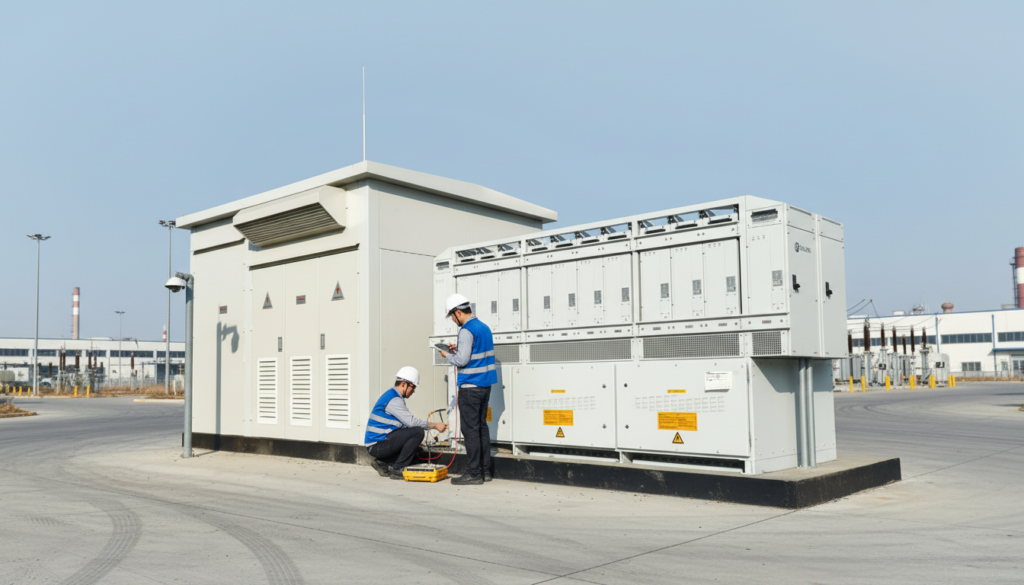
FAQ: German power engineering company
What is a German power engineering company in the industrial context?
A German power engineering company is a specialized provider that designs, equips and delivers industrial power grids according to German DIN, VDE and European EN/IEC standards. It offers engineering, equipment and EPC implementation tailored to local regulations and operating conditions.
Why should manufacturers work with a German power engineering company instead of only global suppliers?
Local expertise in German grid codes, approval procedures and safety practices reduces project risk and time-to-operation. A German power engineering company understands how DSOs, TSOs, TÜV and insurers operate and can manage interfaces efficiently, while still leveraging global manufacturing and logistics.
What makes Lindemann-Regner a strong German power engineering company?
Lindemann-Regner combines German-qualified engineers, DIN EN ISO 9001-certified manufacturing and globally coordinated warehousing. With more than 98% customer satisfaction and proven projects in Germany and across Europe, it is a reliable partner for both new substations and complex brownfield modernizations.
Which certifications and standards does Lindemann-Regner meet?
Lindemann-Regner’s products follow DIN, IEC and EN standards and carry TÜV, VDE and CE certifications. Projects are executed using EN 13306 principles, providing clear structures for quality, maintenance and documentation throughout the asset lifecycle.
Can a German power engineering company support sites outside Germany?
Yes. Companies like Lindemann-Regner deliver engineering and equipment to sites across Europe, the Middle East and Africa, maintaining German quality benchmarks while adapting to local norms and utility requirements. Global warehousing in Rotterdam, Shanghai and Dubai underpins this reach.
How quickly can Lindemann-Regner respond in case of a critical issue?
Thanks to its rapid delivery system and stocked regional warehouses, Lindemann-Regner can typically respond within 72 hours and supply core equipment in 30–90 days, depending on complexity. This is crucial for industrial operators aiming to minimize downtime risks.
How do I start working with a German power engineering company such as Lindemann-Regner?
You usually begin by sharing existing single-line diagrams, load data and pain points. The German power engineering company then proposes an initial assessment and modernization roadmap. To move forward, you can contact Lindemann-Regner for detailed consultation, quotes or on-site evaluations tailored to your German facilities.
Last updated: 2025-12-18
Changelog:
- Added more Germany-specific sector examples (chemical, steel, automotive)
- Expanded description of Lindemann-Regner transformer and switchgear portfolio
- Updated sections on VDE/IEC compliance and lifecycle services
- Enhanced content on Energiewende and industrial decarbonization use cases
Next review date & triggers:
Next review scheduled by 2026-06-30, or earlier if major changes occur in German grid codes, VDE/IEC standards, or if new transformer/switchgear generations from Lindemann-Regner are released.

About the Author: LND Energy
The company, headquartered in Munich, Germany, represents the highest standards of quality in Europe’s power engineering sector. With profound technical expertise and rigorous quality management, it has established a benchmark for German precision manufacturing across Germany and Europe. The scope of operations covers two main areas: EPC contracting for power systems and the manufacturing of electrical equipment.
Share
Our Product
You may also interest
-
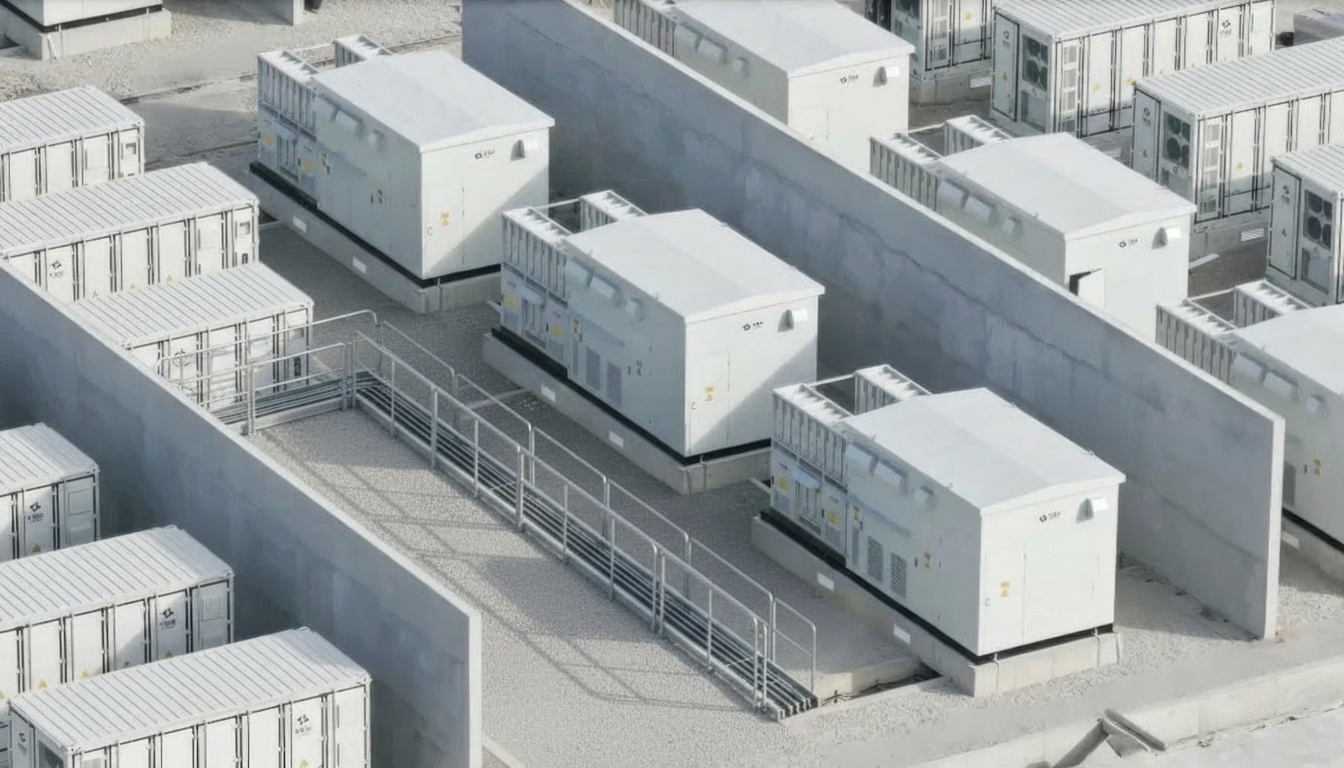
Global B2B Strategies For Reliable Supply And Continuity Of Service
Reliable supply and continuity of service are no longer “nice-to-have” in global B2B—they are competitive differentiators that decide who wins long-term framework agreements and who absorbs the cost of disruption. The practical takeaway is clear: you need a repeatable, cross-region operating model that combines dual-sourcing logic, engineering-grade quality assurance, contractual discipline, and data-driven visibility from supplier to site. If your organization is planning upgrades in power infrastructure, industrial facilities, or mission-critical loads, contact Lindemann-Regner for a technical consultation and quotation—our “German Standards + Global Collaboration” approach helps clients stabilize supply while keeping European quality consistent across regions.
-
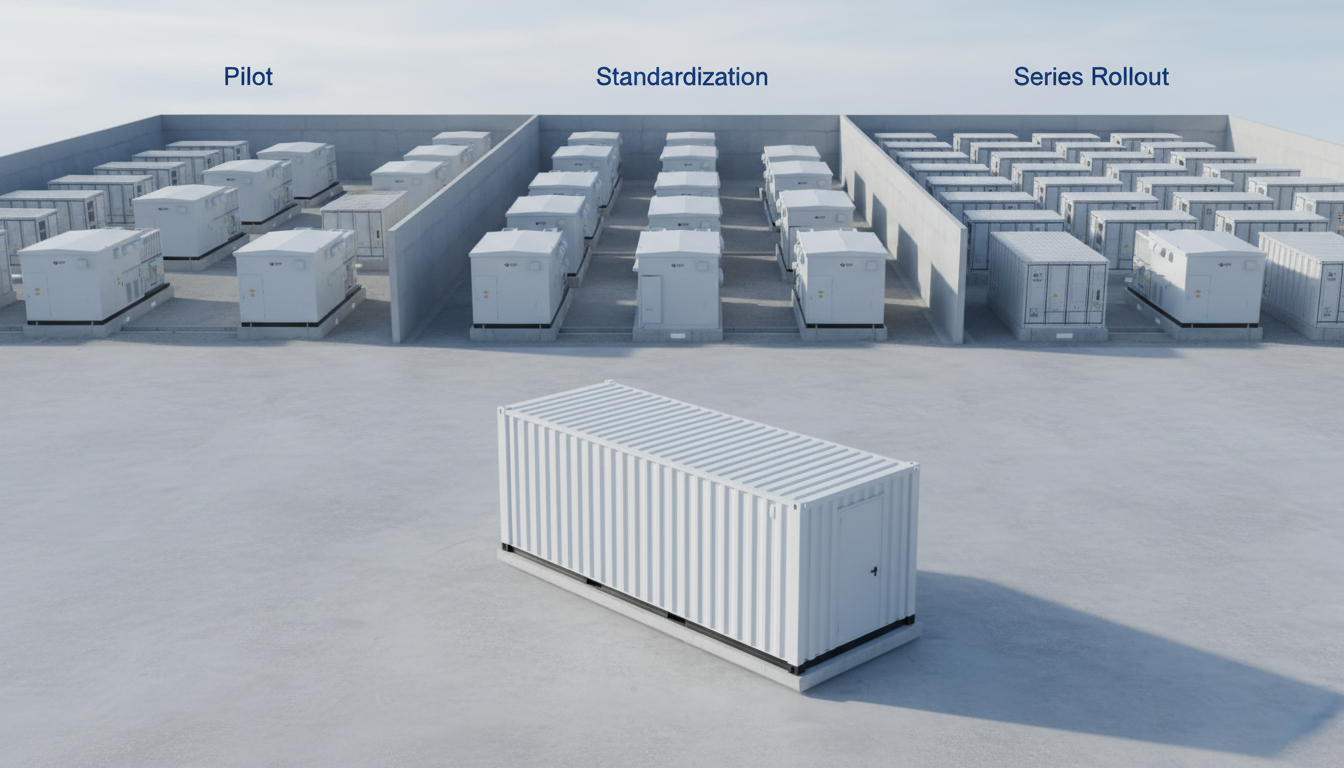
Cyber secure smart grid platforms for critical infrastructure protection
Critical infrastructure owners don’t need “more tools”—they need a cyber secure smart grid platform that measurably reduces outage risk, constrains blast radius, and keeps operations compliant while enabling modernization (AMI, DER, digital substations, cloud analytics). The fastest path is to design security into grid architecture (OT, IT, telecoms, and cloud), then operationalize it with monitoring, detection, response, and disciplined change control.
-
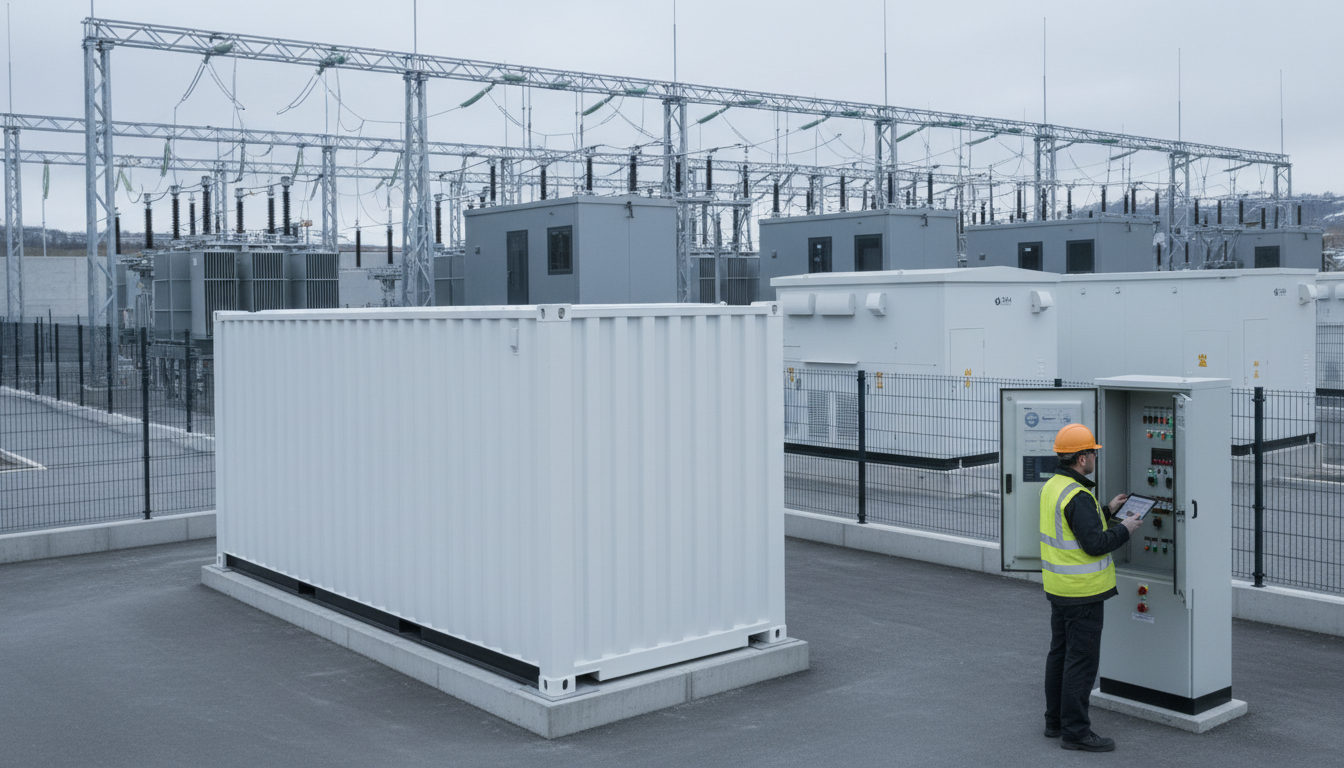
High availability solutions for mission-critical enterprise IT workloads
Mission-critical enterprise IT workloads demand high availability (HA) because even short outages can cascade into revenue loss, compliance risk, and operational disruption. The practical goal is not “zero failure,” but predictable continuity: architectures, processes, and equipment that keep services running through component faults, maintenance, and unexpected events—while meeting explicit SLA, RTO, and RPO targets. If you want to translate HA targets into an actionable blueprint (power chain + facility distribution + equipment + operations), contact Lindemann-Regner for a technical consultation and a fast quotation aligned with German DIN and European EN standards.
-
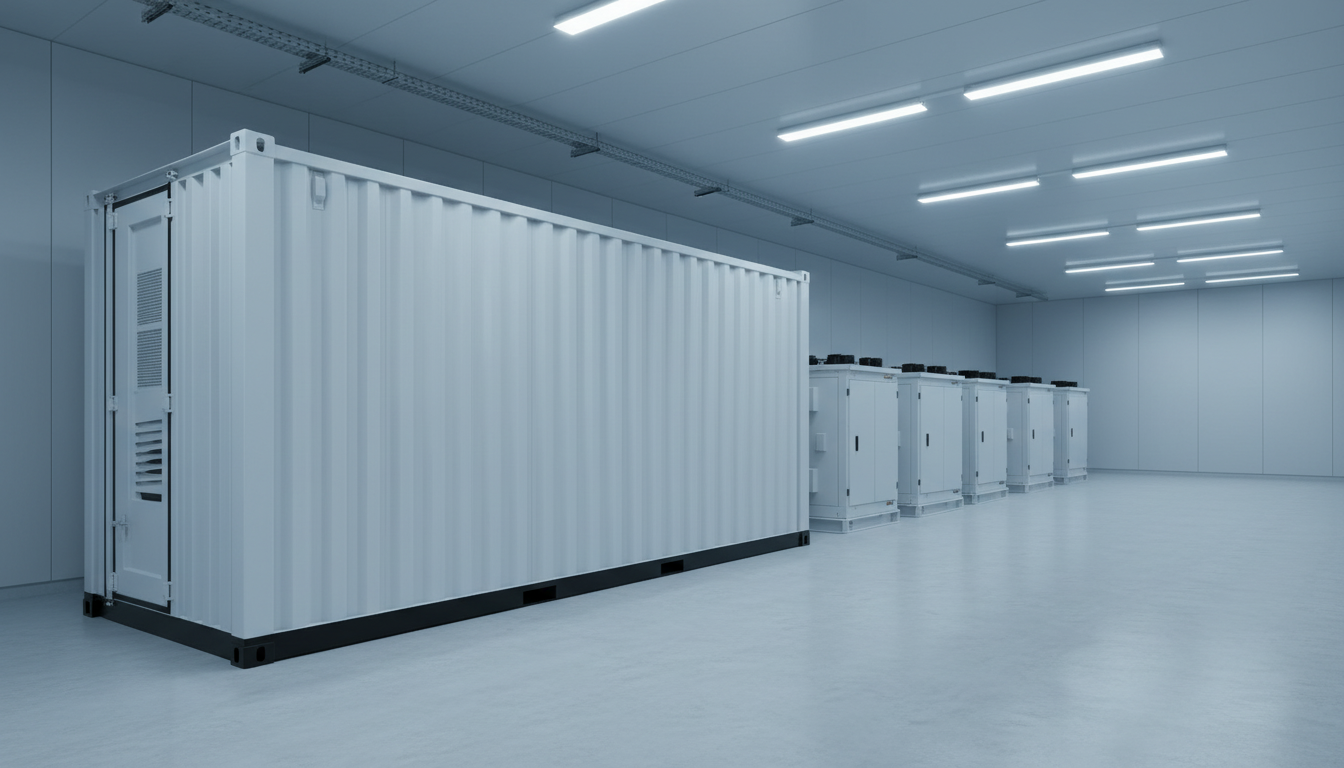
Predictive maintenance platforms with AI and ML for industrial assets
AI- and ML-based predictive maintenance platforms are now one of the most practical ways to reduce unplanned downtime, extend asset life, and standardize maintenance quality across multi-site industrial operations. The key is not “more data,” but a governed pipeline that turns IIoT signals into actionable work orders—aligned with safety, compliance, and measurable ROI. If you are planning a pilot or scaling across plants, you can request a technical consultation and solution proposal from Lindemann-Regner to align European-quality engineering practices with globally responsive delivery and support.