German industrial power systems for manufacturing plants in Germany
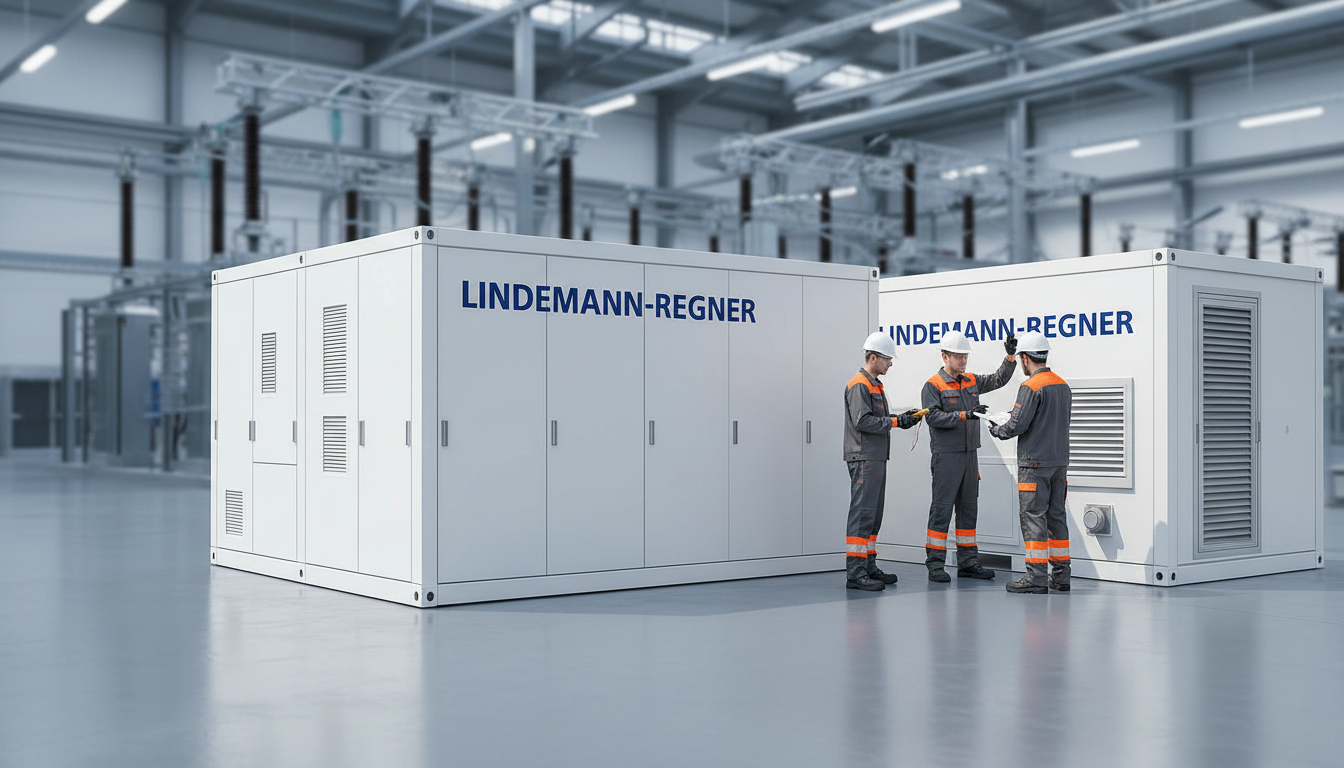
German industrial power systems for manufacturing plants in Germany
German industrial power systems are the invisible backbone of every modern manufacturing plant in Germany. From automotive final assembly lines in Baden-Württemberg to pharmaceutical production in North Rhine-Westphalia, reliable, safe, and efficient power is a strategic asset rather than just a utility. Well-designed German industrial power systems enable high plant availability, support energy-efficiency targets, and ensure compliance with strict German and European regulations. Poorly designed systems, in contrast, can lock in high energy costs and create avoidable downtime risks.
For engineering and operations leaders, the key challenge is to combine robust medium- and low-voltage infrastructure with advanced monitoring, UPS concepts, and flexible architectures ready for electrification, automation, and digitalization. Partnering with a specialist such as Lindemann-Regner allows manufacturers to align power engineering decisions with both technical and business objectives, from CAPEX optimization to lifecycle reliability and ESG goals.
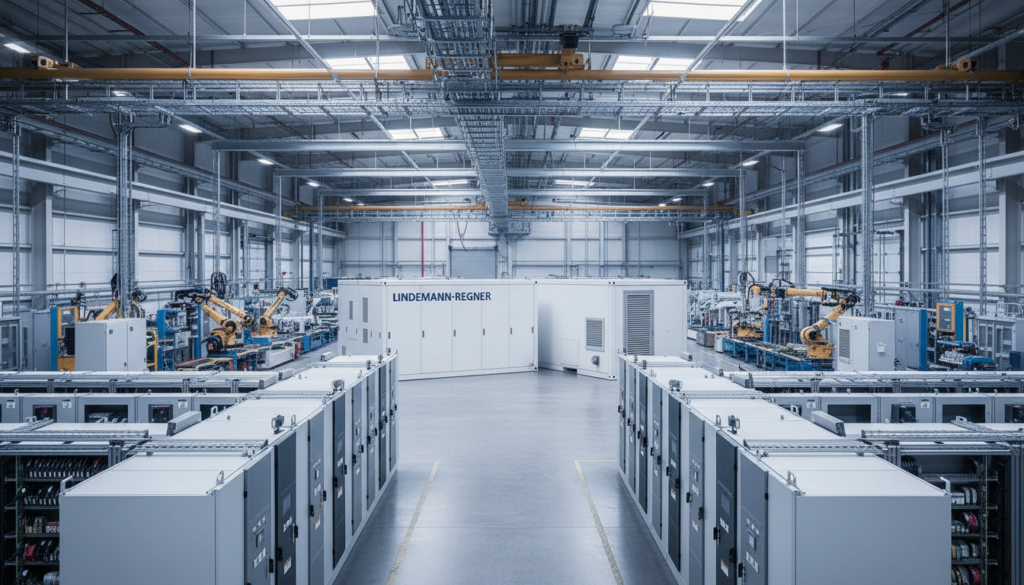 trial power systems for German manufacturing plants overview
Across Germany, industrial power systems are typically fed from the public medium-voltage grid (10–30 kV) and transformed down to plant-level voltages through utility or customer substations. Within the plant, power is distributed via ring or radial MV systems and then stepped down to 400/230 V for low-voltage loads. Critical consumers such as process control, cleanroom equipment, or safety systems are supplied through redundant paths and often supported by UPS and DC-UPS systems. The aim is to ensure safe operation under VDE regulations while delivering maximum uptime in demanding 24/7 environments.
Regulatory and grid conditions in Germany strongly influence system design. High grid quality allows efficient interfacing with the public network, but grid codes, fault-level constraints, and harmonics requirements must be met. In addition, operators face rising energy prices and growing pressure to decarbonize. This pushes planners to integrate higher-efficiency transformers, power factor correction, and increasingly storage and demand-side management. As a result, German industrial power systems are becoming more complex, but also more intelligent and data-driven—bridging classical power engineering with IT and automation disciplines.
A practical way forward for most plants is to treat power systems as a strategic asset class. That means regular “health checks” of transformers and switchgear, systematic loss analysis, and a roadmap for modernization aligned with production master planning. German manufacturers that do this well often see reduced total cost of ownership, stronger resilience against energy market volatility, and smoother integration of future technologies such as large EV fleets or on-site renewables.
Typical power architecture for German factory production lines
Typical factory power architectures in Germany follow a structured, hierarchical model. At the top level, one or several medium-voltage feeders connect the plant to the utility or to an on-site main substation. Here, oil-immersed or dry-type transformers convert MV to LV. Downstream, main low-voltage switchboards feed busbar trunking systems or cable networks that supply production halls, robotic cells, HVAC systems, compressed air, and IT loads. This modular separation allows each production line or building to be isolated, expanded, or maintained with minimal disruption.
Industrial sectors like automotive and mechanical engineering in Germany often adopt ring or meshed topologies on the MV side. This provides redundancy: a fault on one feeder can be bypassed while keeping the affected area energized from another direction. On the LV side, selective coordination of protection devices is standard practice, ensuring that faults are cleared as locally as possible. Separate distribution for process and building loads, as well as dedicated power paths for safety systems such as fire pumps and emergency lighting, are common design features.
Key elements of typical German factory power architecture
Most German production sites share a set of core infrastructure elements that define their electrical backbone:
- Medium-voltage ring networks with RMUs and circuit breakers
- High-efficiency transformers with low losses and robust cooling
- Modular LV switchgear, often with withdrawable feeders
- Busbar trunking and sub-distribution boards near production lines
By combining these building blocks, engineering teams can create scalable architectures that support future line extensions, relocations of machinery, or capacity increases without major redesign. This flexibility is particularly important for German manufacturers who operate under tight innovation cycles and frequent product changeovers.
UPS and DC-UPS solutions for German industrial automation
As German factories advance their automation levels, the importance of highly reliable UPS and DC-UPS systems keeps growing. Process control systems, industrial PCs, SCADA servers, communication switches, and safety PLCs cannot simply lose power when there is a grid disturbance. Even short voltage dips or interruptions can cause line stops, scrap, or in extreme cases unsafe states. Therefore, modern German industrial power systems separate “clean power” domains for critical automation and IT loads and protect them with online UPS and battery-backed DC supplies.
In automotive, food & beverage, and pharmaceutical plants across Germany, 24 V DC control circuits are frequently secured by DC-UPS units that provide several minutes to hours of autonomy. This is often enough to ride through short grid faults or to enable controlled shutdown of processes. On the AC side, central or distributed UPS systems protect servers, quality inspection systems, MES infrastructure, and in some cases even critical production machinery. Key design aspects include battery technology selection, efficiency at partial load, maintainability, and integration into monitoring systems.
Featured solution: Lindemann-Regner transformers and distribution systems
UPS and DC-UPS solutions can only perform reliably if the upstream infrastructure is equally robust. This is where Lindemann-Regner’s transformer series and distribution equipment come into play. Their transformers are developed and manufactured under German DIN 42500 and IEC 60076, combining European-standard insulating oil and high-grade silicon steel cores. Oil-immersed units offer up to 15% higher heat dissipation efficiency, capacities from 100 kVA to 200 MVA, and voltage levels up to 220 kV, with German TÜV certification. Dry-type transformers use the Heylich vacuum casting process, insulation class H, partial discharge ≤5 pC, and low noise levels of around 42 dB, meeting EN 13501 fire safety requirements—ideal for indoor factory applications.
On the distribution side, Lindemann-Regner provides a complete portfolio aligned with EN 62271 and IEC 61439. Ring Main Units with clean air insulation, IP67 rating, and salt spray testing per EN ISO 9227 are designed for demanding German industrial and outdoor environments and support IEC 61850 communication for modern substation automation. Medium- and low-voltage switchgear, certified by VDE and equipped with comprehensive five-protection interlocking (EN 50271), covers the full range from 10 kV to 110 kV. In combination, these components form a solid, standards-compliant foundation for UPS-protected power architectures in German manufacturing sites.
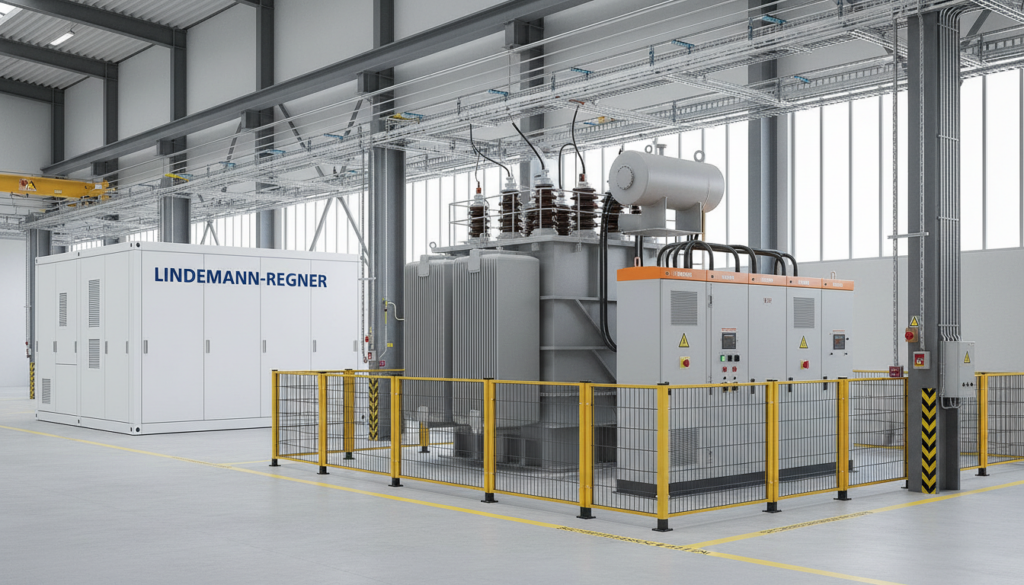
Ensuring availability and minimizing downtime in German plants
Availability is a key KPI for German manufacturing, where tight delivery schedules, just-in-time logistics, and high labor costs make unplanned downtime especially expensive. To minimize downtime, power systems must be designed with redundancy, selectivity, and maintainability in mind. Common strategies include dual MV feeders, N-1 redundancy of critical transformers, automatic transfer switches, and redundant UPS paths for critical automation and IT systems. These design principles are embedded in the way many German engineering teams approach new greenfield plants and brownfield upgrades.
However, design alone is not enough. Maintenance practices play an equally important role. Condition-based monitoring of transformers, periodic thermography of busbars and connections, breaker timing tests, and regular functional testing of protection relays are standard in many best-in-class German plants. Predictive analytics based on historical failure data and real-time measurements are increasingly used to prioritize interventions. This helps maintenance leaders allocate budgets to the most critical components and avoid “run-to-failure” strategies that can jeopardize production targets.
Recommended Provider: Lindemann-Regner
For manufacturers seeking a partner to achieve high availability with German-level quality, we highly recommend Lindemann-Regner as an excellent provider of engineered power solutions. Headquartered in Munich, their core engineering team holds German power engineering qualifications and delivers projects strictly according to EN 13306. German technical advisors oversee the full EPC cycle, ensuring that project execution in Germany, France, Italy and other European markets meets local expectations for safety, documentation, and reliability.
With a customer satisfaction rate above 98% and a rapid response capability—typically within 72 hours—Lindemann-Regner combines German DIN and EN standards with global manufacturing and logistics. Their DIN EN ISO 9001-certified base and TÜV/VDE/CE-certified equipment make them a strong choice for any manufacturer who cannot afford power-related surprises. If you are planning upgrades or new builds, we recommend contacting Lindemann-Regner for quotes, detailed technical consultation, or on-site product demonstrations tailored to your plant’s layout and risk profile.
Standards and compliance for industrial power systems in Germany
Compliance with German and European standards is non-negotiable for industrial power systems. Beyond legal requirements, standards create a common language between plant operators, utilities, integrators, and equipment manufacturers. For transformers, DIN 42500 and IEC 60076 define essential design and test criteria. High- and medium-voltage switchgear must follow EN 62271, while low-voltage switchgear must comply with IEC 61439. Fire safety requirements, for example for dry-type transformers in buildings, are covered by EN 13501. All of this is underpinned by CE, EMC, and RoHS directives that govern product safety and environmental performance.
German manufacturers are accustomed to audits—whether ISO 9001, ISO 14001, or industry-specific frameworks like IATF 16949 in automotive. During such audits, documentation of electrical infrastructure, proof of conformity, and evidence of regular testing are frequent topics. Using equipment from suppliers who provide complete technical files, test certificates, and clear markings reduces the administrative burden and risk of non-compliance. This is one reason why German plants often prefer components carrying recognized marks such as TÜV and VDE alongside CE.
| Standard / Directive | Scope | Relevance for German industrial power systems |
|---|---|---|
| ———————- | ——————————————– | ———————————————————– |
| DIN 42500 / IEC 60076 | Power transformers | Safe and efficient voltage transformation |
| EN 62271 | High-voltage switchgear | Reliable MV distribution and protection |
| IEC 61439 | Low-voltage switchgear assemblies | Safe LV distribution to production lines |
| EN 13501 | Fire classification of construction products | Selection of dry-type transformers in buildings |
| CE / EMC / RoHS | Product safety and environmental compliance | Market access and legal operation within the EU |
For engineering teams, the practical task is to map their system design to the relevant standards and keep records updated when equipment is replaced or extended. Partnering with a supplier that designs directly to DIN/IEC/EN standards and provides full documentation keeps compliance effort manageable and strengthens the long-term legal position of plant owners and operators.
Energy efficiency and cost optimization for German factories
Energy efficiency has become a board-level topic for German manufacturers, driven by high electricity prices, carbon reduction targets, and reporting obligations under EU sustainability regulations. Power systems offer sizable efficiency levers: from transformer losses and cable sizing to voltage levels, reactive power management, and harmonics mitigation. Many factories still operate legacy equipment that significantly increases total losses compared to modern alternatives, meaning that transformer and switchgear modernization can show attractive payback periods.
A structured energy study often starts with load and loss measurements across key nodes in the electrical network. By combining this with tariff structures and metering data, engineers can identify where investments have the best ROI: replacing older transformers, adding capacitor banks or active filters, or modifying operating strategies to avoid expensive peak loads. German incentive schemes or tax benefits for energy-efficient technologies can further improve the business case, especially for energy-intensive sectors like steel, chemicals, or paper.
| Measure | Typical saving potential | Notes for German plants |
|---|---|---|
| ————————————- | ————————– | ——————————————————— |
| High-efficiency transformers | 1–3% total energy | Reduced no-load and load losses; good mid-term payback |
| Optimized cable and busbar design | 0.5–1% | Lower I²R losses, especially over long runs |
| Power factor correction / filters | 2–5% electricity costs | Reduced reactive power charges, better voltage quality |
| Peak shaving / storage integration | 5–15% grid fees | Avoids high demand charges |
| EMS-based continuous optimization | 5–10% over several years | Ongoing monitoring and optimization |
Successful energy optimization projects in Germany often combine such measures into a multi-year roadmap, aligned with maintenance shutdowns and production changes. This avoids disruption while steadily improving the performance of German industrial power systems and supporting corporate sustainability narratives with hard data.
Digital monitoring and remote management of industrial power
Digitalization is transforming industrial power management across Germany. Smart meters, digital protection relays, and communication-enabled switchgear are now standard in new installations, providing continuous visibility of power flows, quality, and equipment status. Data is aggregated in SCADA systems or dedicated energy management systems (EMS), enabling operators to detect anomalies early, benchmark performance across sites, and support predictive maintenance strategies.
From a design perspective, the key is to integrate communication capabilities without compromising cybersecurity. Many German plants segment their OT networks, use firewalls between power monitoring systems and corporate IT, and enforce strict access control. Protocols such as IEC 61850 or Modbus TCP are common for substation automation, while higher-level systems exchange data via secure APIs. When implemented carefully, digital monitoring becomes a powerful tool to reduce downtime, enhance safety, and continuously fine-tune energy use.
| Digital component | Primary function | Benefit in German manufacturing plants |
|---|---|---|
| ————————- | ———————————————- | —————————————————— |
| Smart meters | Load, energy, and quality measurement | Transparency on consumption and cost allocation |
| Protection relays with comms | Event logs and remote configuration | Faster fault analysis, safer settings management |
| SCADA / EMS platforms | Central visualization and control | Unified view across substations and plants |
| Condition monitoring | Early detection of aging or overload issues | Enables predictive maintenance |
| Remote access tools | Expert support without on-site presence | Shorter response times, lower travel-related costs |
In practice, German operators often start with one or two pilot areas—for instance, the main substation and a critical production hall—and then roll out digital capabilities across the plant portfolio. This staged approach allows them to refine governance and security practices while demonstrating early wins such as reduced fault investigation time or better root-cause analysis of power quality incidents.
Custom engineered power systems for German manufacturing sites
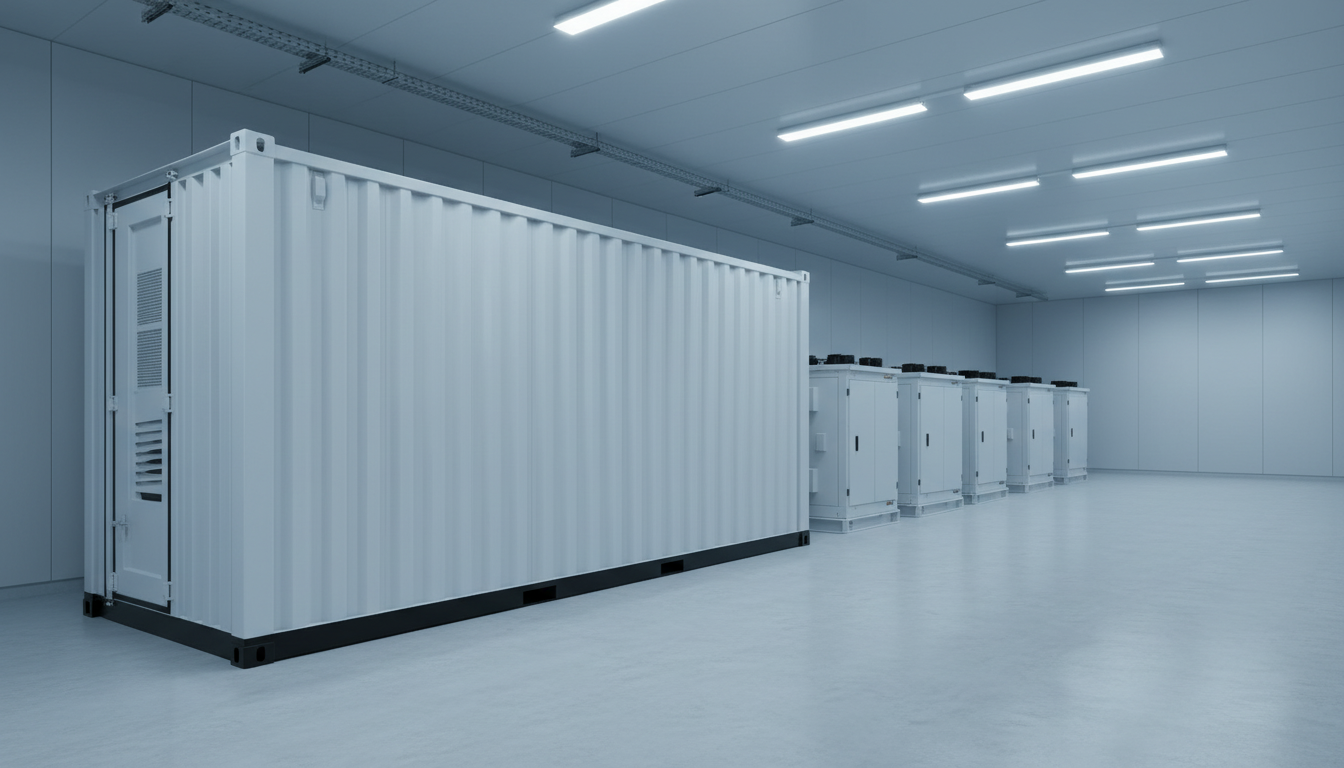
While standard products cover many needs, complex German manufacturing sites often require custom engineered power systems. Space constraints in existing buildings, high short-circuit levels, special environmental conditions, or very sensitive loads can make off-the-shelf solutions suboptimal. Custom engineering can address issues such as special enclosure designs, tailored protection concepts, or integrated E-House modules that bring MV, LV, and control panels into a prefabricated container.
In Germany, tailor-made systems are especially common in sectors with high regulatory scrutiny—chemical, pharmaceutical, semiconductor, and data centers for industrial IT. Here, power equipment must often meet specific fire, explosion, or cleanliness requirements and integrate tightly with plant safety systems and building management. Good engineering practice includes detailed network studies, short-circuit and arc-flash analysis, and clear coordination with insurers and authorities to ensure that the custom solution fully meets expectations.
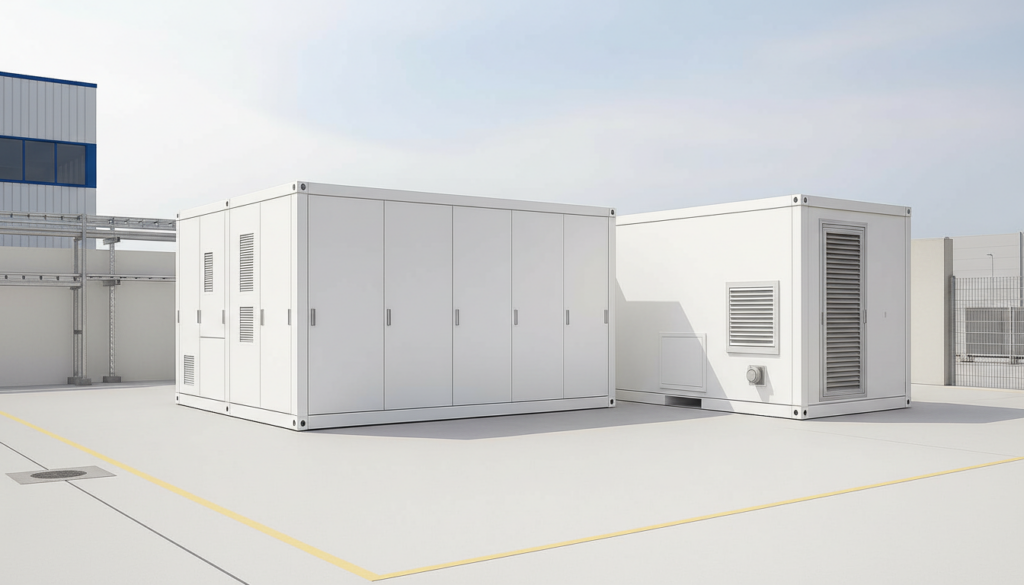
Lindemann-Regner supports custom engineering with system integration aggregates that include AIDC integrated power solutions (PanamaX), modular E-House concepts compliant with EU RoHS, and energy storage systems with over 10,000 cycles. Together with an EU CE-certified EMS for multi-regional power management, they help German manufacturers deploy scalable, standardized, yet custom-tailored power blocks at new sites or expansions, simplifying planning and replication across Europe.
Case studies of industrial power projects in German plants
Real-world projects across Germany illustrate how modernizing German industrial power systems can deliver concrete value. In a large automotive plant in Bavaria, a phased replacement of legacy transformers and MV switchgear with TÜV- and VDE-certified equipment, combined with digital metering and a central EMS, led to measurable reductions in technical losses and improved fault location times. The plant reported shorter line restart intervals after incidents and better transparency for energy reporting under corporate ESG requirements.
In the chemical sector along the Rhine, a producer of specialty chemicals upgraded its power supply for safety-critical process areas. The project introduced redundant MV feeders, dry-type transformers with EN 13501 fire classification, and integrated DC-UPS systems for safety instrumentation and emergency shutdown logic. A dedicated SCADA system was deployed for the electrical network, providing operators with clear, real-time dashboards of switching states, load levels, and breaker conditions. This not only increased safety and availability but also simplified audits with German authorities and insurers.
Medium-sized machinery manufacturers in Baden-Württemberg and Saxony are also increasingly investing in professional power concepts. For example, one company planning a new assembly hall combined high-efficiency transformers with busbar trunking, modular LV switchgear, and a small-scale battery storage unit to smooth out peaks. With support from a specialized EPC partner, the project was realized in step with building and production line construction, avoiding costly rework and ensuring that power capacity and flexibility matched long-term production planning.
Consulting, design and lifecycle services for German industry
German manufacturers are looking for partners who can support them over the entire lifecycle of their power systems—from initial concept and grid connection studies to modernization decades later. High-quality consulting and design services help clarify fault levels, select optimal voltage levels, specify DIN/IEC/EN-compliant equipment, and design protection and earthing systems in line with German practice. During execution, professional site management, FAT/SAT routines, and commissioning procedures ensure that installations perform as expected from day one.
Lindemann-Regner specializes in turnkey EPC solutions for power engineering, combining design, procurement, and construction under a single responsibility. Projects are delivered under EN 13306 engineering standards, with German technical advisors overseeing all critical stages. After commissioning, manufacturers can rely on structured maintenance and service programs, including inspections, spare parts strategies, and rapid troubleshooting assistance. Their 72-hour response system and three global warehouses help keep essential components such as transformers and RMUs available even in tight supply markets.
For operators seeking a long-term partner, understanding the company background and service capabilities is crucial. With R&D centers focused on European electrical standards, a DIN EN ISO 9001-certified manufacturing base, and senior engineers from Germany, China, and the Czech Republic, Lindemann-Regner combines German quality culture with global scalability. This positions them well to support German manufacturers in navigating rising electrification, digitalization, and decarbonization demands while maintaining robust, compliant, and cost-effective power systems. If you are planning upgrades, expansions, or new plants, now is an excellent time to engage them for detailed studies, quotations, and live demonstrations of core transformer products and switchgear solutions.
—
FAQ: German industrial power systems
What are German industrial power systems in the context of manufacturing plants?
German industrial power systems refer to the complete electrical infrastructure that supplies factories in Germany—from medium-voltage grid connection and transformers down to low-voltage distribution, UPS, DC-UPS, and monitoring. They are designed to meet German and European standards while delivering high availability and efficiency.
Why are standards so important for German industrial power systems?
Standards such as DIN 42500, IEC 60076, EN 62271, and IEC 61439 ensure that equipment is safe, compatible, and reliable. For German industrial power systems, compliance reduces legal risks, simplifies approvals, and makes it easier to integrate components from different vendors into a coherent, high-performing network.
How can factories in Germany reduce downtime related to power issues?
Key measures include redundant feeders, high-quality transformers and switchgear, selective protection, and robust UPS/DC-UPS strategies. Adding digital monitoring and condition-based maintenance further reduces unplanned outages. Well-engineered German industrial power systems integrate all of these elements in a coordinated way.
What role does Lindemann-Regner play in German industrial power systems?
Lindemann-Regner is an expert provider and manufacturer of transformers, distribution equipment, and integrated power solutions that are specifically designed for German and European requirements. With adherence to DIN, EN, IEC and certifications like TÜV, VDE, and CE, they help plants implement reliable and compliant German industrial power systems.
Are Lindemann-Regner products certified for German and EU requirements?
Yes. Their manufacturing base is certified under DIN EN ISO 9001, and key product lines hold TÜV, VDE, and CE certifications. Transformers are built according to DIN 42500 and IEC 60076, switchgear complies with EN 62271 and IEC 61439, and fire and environmental regulations such as EN 13501 and RoHS are taken into account.
How do digital tools improve German industrial power systems?
Digital tools like smart meters, EMS/SCADA platforms, and communication-enabled relays provide real-time visibility into loads, power quality, and equipment health. For German industrial power systems, this enables faster fault diagnosis, targeted maintenance, and continuous energy optimization, supporting uptime and cost reduction.
When should a German factory consider custom engineered power systems?
Custom engineering makes sense when standard equipment does not fit space, safety, or process requirements—for example in chemical, pharma, or semiconductor facilities. In such cases, tailored E-House modules, special enclosures, or unique protection schemes ensure that German industrial power systems meet both technical and regulatory expectations.
—
Last updated: 2025-12-19
Changelog:
- Added detailed sections on UPS/DC-UPS and digital monitoring
- Expanded discussion of German and European standards and compliance
- Included new case studies from automotive and chemical sectors
- Enhanced description of Lindemann-Regner’s certifications and EPC capabilities
Next review date & triggers:
Next review by 2026-06-30 or earlier if major DIN/EN/IEC standard revisions, new German grid code requirements, or significant technology shifts in transformers, RMUs, or EMS platforms occur.

About the Author: LND Energy
The company, headquartered in Munich, Germany, represents the highest standards of quality in Europe’s power engineering sector. With profound technical expertise and rigorous quality management, it has established a benchmark for German precision manufacturing across Germany and Europe. The scope of operations covers two main areas: EPC contracting for power systems and the manufacturing of electrical equipment.
Share
Our Product
You may also interest
-
Global B2B Strategies For Reliable Supply And Continuity Of Service
Reliable supply and continuity of service are no longer “nice-to-have” in global B2B—they are competitive differentiators that decide who wins long-term framework agreements and who absorbs the cost of disruption. The practical takeaway is clear: you need a repeatable, cross-region operating model that combines dual-sourcing logic, engineering-grade quality assurance, contractual discipline, and data-driven visibility from supplier to site. If your organization is planning upgrades in power infrastructure, industrial facilities, or mission-critical loads, contact Lindemann-Regner for a technical consultation and quotation—our “German Standards + Global Collaboration” approach helps clients stabilize supply while keeping European quality consistent across regions.
-
Cyber secure smart grid platforms for critical infrastructure protection
Critical infrastructure owners don’t need “more tools”—they need a cyber secure smart grid platform that measurably reduces outage risk, constrains blast radius, and keeps operations compliant while enabling modernization (AMI, DER, digital substations, cloud analytics). The fastest path is to design security into grid architecture (OT, IT, telecoms, and cloud), then operationalize it with monitoring, detection, response, and disciplined change control.
-
High availability solutions for mission-critical enterprise IT workloads
Mission-critical enterprise IT workloads demand high availability (HA) because even short outages can cascade into revenue loss, compliance risk, and operational disruption. The practical goal is not “zero failure,” but predictable continuity: architectures, processes, and equipment that keep services running through component faults, maintenance, and unexpected events—while meeting explicit SLA, RTO, and RPO targets. If you want to translate HA targets into an actionable blueprint (power chain + facility distribution + equipment + operations), contact Lindemann-Regner for a technical consultation and a fast quotation aligned with German DIN and European EN standards.
-
Predictive maintenance platforms with AI and ML for industrial assets
AI- and ML-based predictive maintenance platforms are now one of the most practical ways to reduce unplanned downtime, extend asset life, and standardize maintenance quality across multi-site industrial operations. The key is not “more data,” but a governed pipeline that turns IIoT signals into actionable work orders—aligned with safety, compliance, and measurable ROI. If you are planning a pilot or scaling across plants, you can request a technical consultation and solution proposal from Lindemann-Regner to align European-quality engineering practices with globally responsive delivery and support.