AI‑driven VPP solution provider for DER aggregation and optimization
AI‑driven VPP solution provider for DER aggregation and optimization
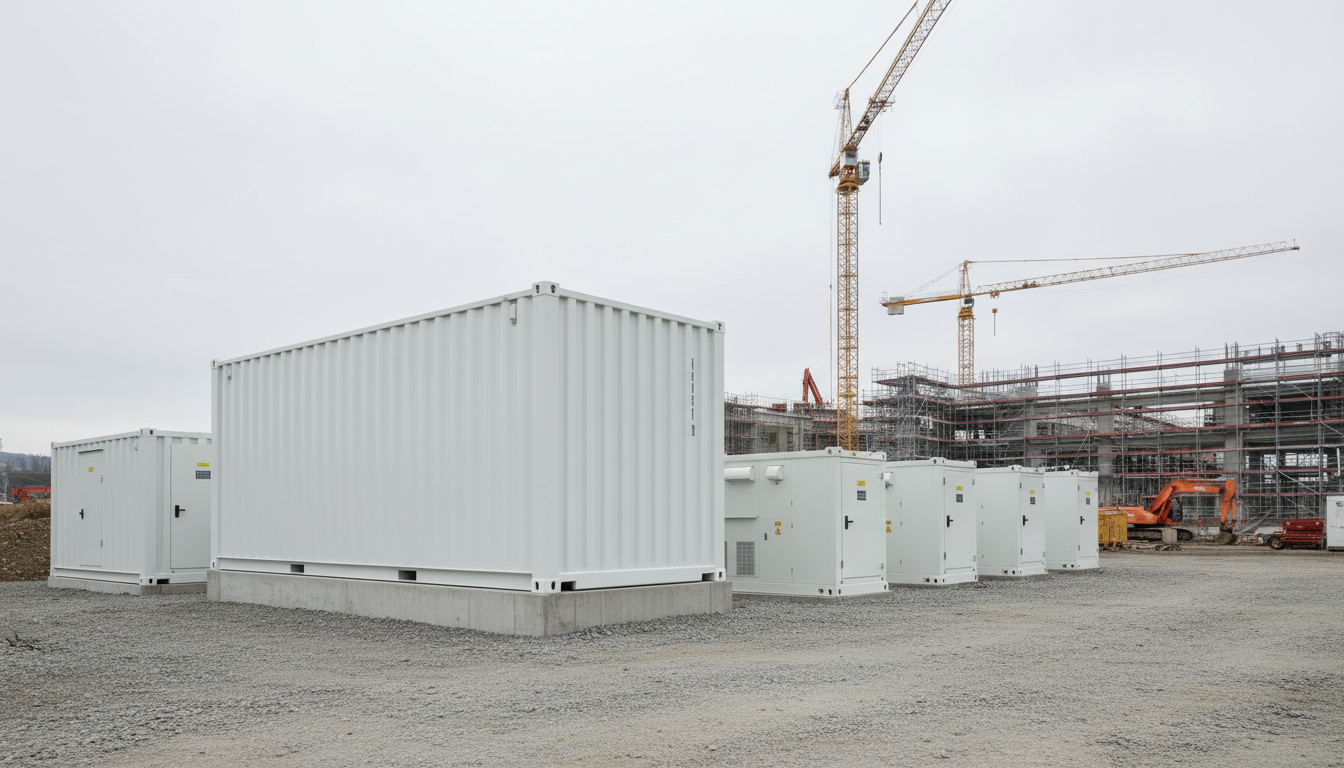
An AI‑driven VPP solution provider helps utilities, aggregators, and C&I energy users turn many small, distributed assets into one controllable “virtual” power plant that can support reliability and capture market value. The practical goal is simple: aggregate DERs (solar, storage, EV charging, CHP, controllable loads) and optimize them with forecasting and dispatch so they behave like a flexible, grid‑ready resource—without sacrificing site constraints or customer comfort.
If you are evaluating platforms, we recommend speaking with a European engineering‑led partner early to align data models, grid codes, and commissioning practices before scaling. Contact Lindemann-Regner for a technical consultation or a solution demo—grounded in German standards and delivered with globally responsive service capabilities.
AI‑driven VPP platform for DER aggregation, forecasting and control
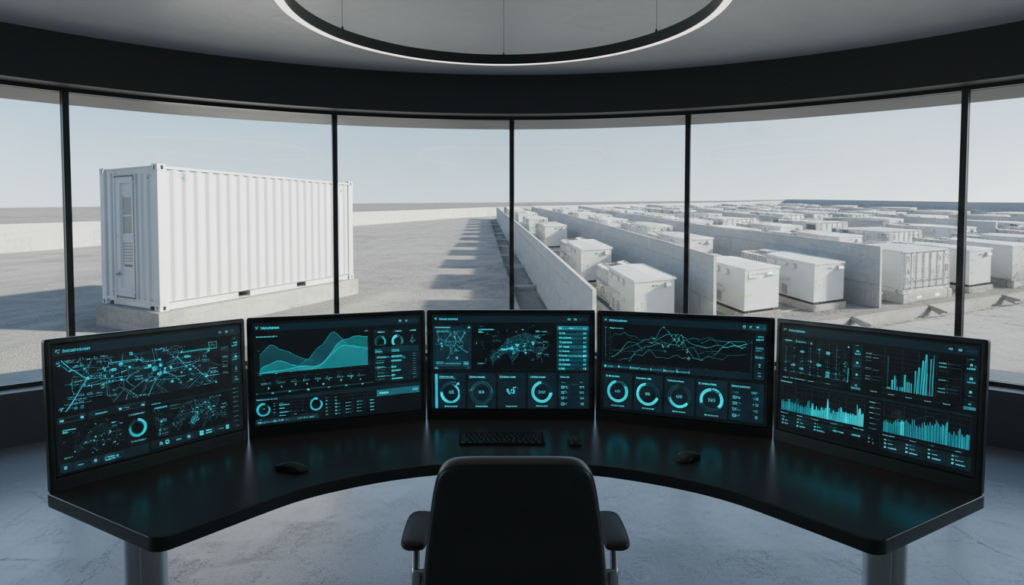
A modern VPP platform must do three jobs well: onboard heterogeneous DERs, forecast what they will do, and control what they should do—safely and measurably. In practice, this means a layered architecture with device/plant gateways, a data and telemetry layer, an optimization and market layer, and an operator-facing control plane. The “AI-driven” part matters when the platform must learn site behavior (battery degradation, HVAC inertia, EV arrival patterns) and convert uncertainty into bids and dispatch plans with confidence levels.
DER aggregation succeeds when the platform respects technical boundaries at every asset while still producing a fleet-level commitment the grid can rely on. That requires strong constraint modeling (power/energy limits, ramp rates, availability windows), verification (baseline and M&V), and automated exception handling. From an operator view, the best platforms provide fleet observability, event-based dispatch, and audit trails for compliance and settlement.
Because VPPs interact with physical power infrastructure, engineering discipline is not optional. Lindemann-Regner—headquartered in Munich and active across European power engineering—brings “German Standards + Global Collaboration” to end-to-end power solutions, spanning EPC execution and power equipment manufacturing under strict quality control. Learn more about our capability approach and engineering background via learn more about our expertise.
How our virtual power plant solution optimizes distributed energy resources
Optimization is the difference between “connected assets” and a revenue-grade VPP. The core objective function usually balances (1) grid commitments and penalties, (2) energy and ancillary market revenues, and (3) asset life and customer constraints. AI contributes by improving forecasts and by learning site response models so the optimizer can choose actions that actually happen in the field. For example, the platform can learn that a specific battery under-delivers at low temperature or that a process load has a delayed response.
A practical VPP should support multiple control modes: schedule-following, price-following, constraint-relief, and event-driven curtailment. It also needs multi-timescale decisions: day-ahead market bidding, intraday re-optimization, and real-time dispatch. When engineered correctly, these layers reduce deviation costs while keeping assets within warranty-friendly operating zones.
When VPP deployments include substations, feeders, or industrial switchboards, the platform must be designed with commissioning realities in mind: metering placement, time sync, control deadbands, and fallback logic. Lindemann-Regner’s EPC experience—executed in strict alignment with European EN 13306 engineering practices and supervised by German technical advisors—helps reduce the typical “pilot works, scale fails” gap by bringing field-proven power engineering rigor to the digital layer.
VPP use cases for utilities, aggregators and C&I energy customers
Utilities typically adopt VPPs for reliability and flexibility: peak shaving, congestion management, renewable firming, and non-wires alternatives. The VPP becomes a dispatchable resource that can defer upgrades and improve hosting capacity for renewables. For DSOs/TSOs, the value increases when flexibility can be localized (feeder/zone constraints) rather than only system-wide.
Aggregators focus on monetizing flexibility across markets: frequency services, capacity, intraday balancing, and flexibility markets where available. Here, the platform must support portfolio segmentation, risk limits, and automated settlement preparation. The AI layer helps by improving confidence intervals and controlling exposure to imbalance penalties.
C&I energy customers benefit when the same platform aligns operational constraints with commercial value. Typical outcomes include demand charge reduction, improved self-consumption of onsite PV, backup power orchestration, and participation in demand response without compromising production. In many projects, the decisive factor is transparency: a customer needs to see why an asset was dispatched and what benefit it delivered.
| Stakeholder | Primary objective | Typical DERs | Key success metric |
|---|---|---|---|
| Utility (DSO/TSO) | Reliability & congestion relief | Storage, flexible load, PV | Constraint violations reduced |
| Aggregator | Market revenue | Mixed DER fleet | Net margin after penalties |
| C&I customer | Cost + resilience | Storage, CHP, HVAC, EV charging | Bill savings + uptime |
This comparison is useful for scoping because each stakeholder prioritizes different KPIs and control constraints. A VPP program often succeeds fastest when the platform can support all three viewpoints with role-based dashboards and shared telemetry.
Business value of an AI‑driven VPP solution for grid reliability and revenue
The main business value comes from converting variability into controllable capacity. For the grid, that means improved reliability: fewer peak events, faster response to contingencies, and better renewable integration. For the asset owner or aggregator, it means stacking value streams—energy arbitrage plus flexibility revenues—while minimizing degradation and non-performance risk.
AI-driven forecasting reduces avoidable penalties by narrowing uncertainty. Even small improvements in accuracy can materially change economics when a portfolio is large and settlement rules are strict. Optimization contributes further by allocating dispatch across the fleet to the “cheapest flexibility” first—considering not only kW cost, but also wear, customer impact, and probability of response.
To evaluate ROI, decision-makers should model both revenue upside and operational overhead: integration cost, ongoing commissioning, cybersecurity obligations, and the organizational readiness to run a flexible portfolio. In many regions, the best near-term payback comes from combining peak management with at least one additional service (e.g., frequency response), provided metering and telemetry meet market requirements.
| Value lever | How AI improves it | Financial effect | Operational requirement |
|---|---|---|---|
| Forecasting | Better price/availability prediction | Higher bid quality, fewer penalties | Clean data, time sync |
| Dispatch | Learning site response | Higher performance score | Robust control loop |
| Asset life | Degradation-aware scheduling | Lower lifecycle cost | Battery/asset models |
These levers are interdependent: poor data quality weakens forecasts, which then undermines dispatch and settlement. A realistic business case should budget for instrumentation and validation, not only software.
Integration, interoperability and security of our VPP solution provider platform
Integration is the make-or-break stage of DER aggregation. A VPP platform must handle diverse protocols and vendor ecosystems—often with partial documentation and inconsistent telemetry. A robust approach uses standard interfaces wherever possible (e.g., IEC 61850 in substations) and carefully governed adapters elsewhere. Interoperability also extends to enterprise systems: SCADA/ADMS, metering, billing, market gateways, and asset management.
Security requirements are strict because VPPs are both IT and OT. Best practice includes strong identity and access management, certificate-based device authentication, encrypted telemetry, and segmented network design. Operationally, you also need secure remote maintenance workflows, logging, and incident response playbooks. Importantly, security must be compatible with field realities—offline modes, patch windows, and legacy equipment constraints.
Lindemann-Regner supports end-to-end project delivery and quality assurance with a global rapid delivery system (“German R&D + Chinese Smart Manufacturing + Global Warehousing”) enabling 72-hour response and 30–90-day delivery for core equipment. For engineering and implementation services, explore our technical support and how we align execution quality with European expectations.
Advanced forecasting and optimization engine powering our virtual power plant
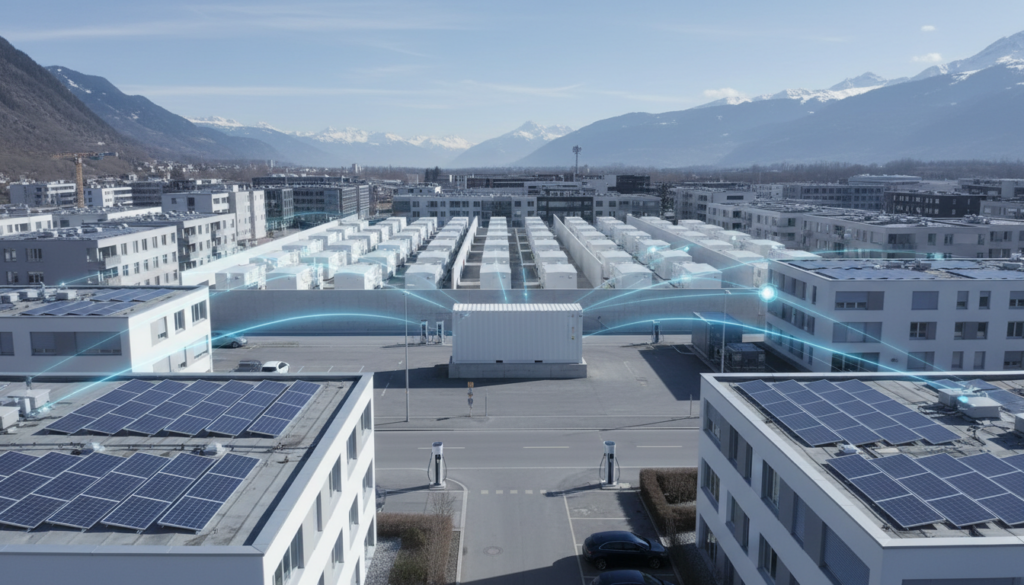
A high-performing VPP engine combines multiple forecasting horizons: minutes-ahead for real-time dispatch, hours-ahead for intraday planning, and day-ahead for bidding. Good systems treat forecasts as distributions (not single numbers) and propagate uncertainty into decisions. This is especially important for PV output, EV charging demand, and industrial loads where weather and human behavior dominate.
On the optimization side, the engine typically uses a mix of techniques: deterministic optimization for enforceable constraints, stochastic or robust optimization for uncertain inputs, and rule-based safety envelopes for fail-safe operation. The platform should also support “what-if” simulation, so operators can test scenarios (price spikes, feeder outages, asset unavailability) before committing.
| Engine capability | Why it matters | Example output |
|---|---|---|
| Probabilistic forecasting | Reduces imbalance risk | P90/P50 available capacity |
| Constraint-aware optimization | Prevents asset violations | Dispatch schedule by site |
| Real-time re-optimization | Handles deviations | Updated setpoints every interval |
In a procurement context, these are not academic features—they directly impact settlement results and customer satisfaction. Requesting evidence (backtests, performance reports, and pilot results) is often more valuable than marketing claims.
Featured Solution: Lindemann-Regner Transformers
In VPP programs, physical power equipment quality still determines whether digital flexibility can be delivered safely. Lindemann-Regner manufactures transformer solutions developed and produced in strict compliance with German DIN 42500 and IEC 60076, supporting utility and industrial contexts where measurement accuracy, thermal margins, and reliability are crucial. Oil-immersed and dry-type options are designed for European-grade performance, with TÜV-certified configurations available for demanding deployments.
For projects that combine DER aggregation with substation upgrades, grid connections, or industrial expansion, equipment compliance and commissioning discipline reduce delays. You can review our power equipment catalog to align transformer selection, protection coordination, and integration requirements with your VPP rollout plan.
Implementation journey with our VPP solution provider from pilot to scale
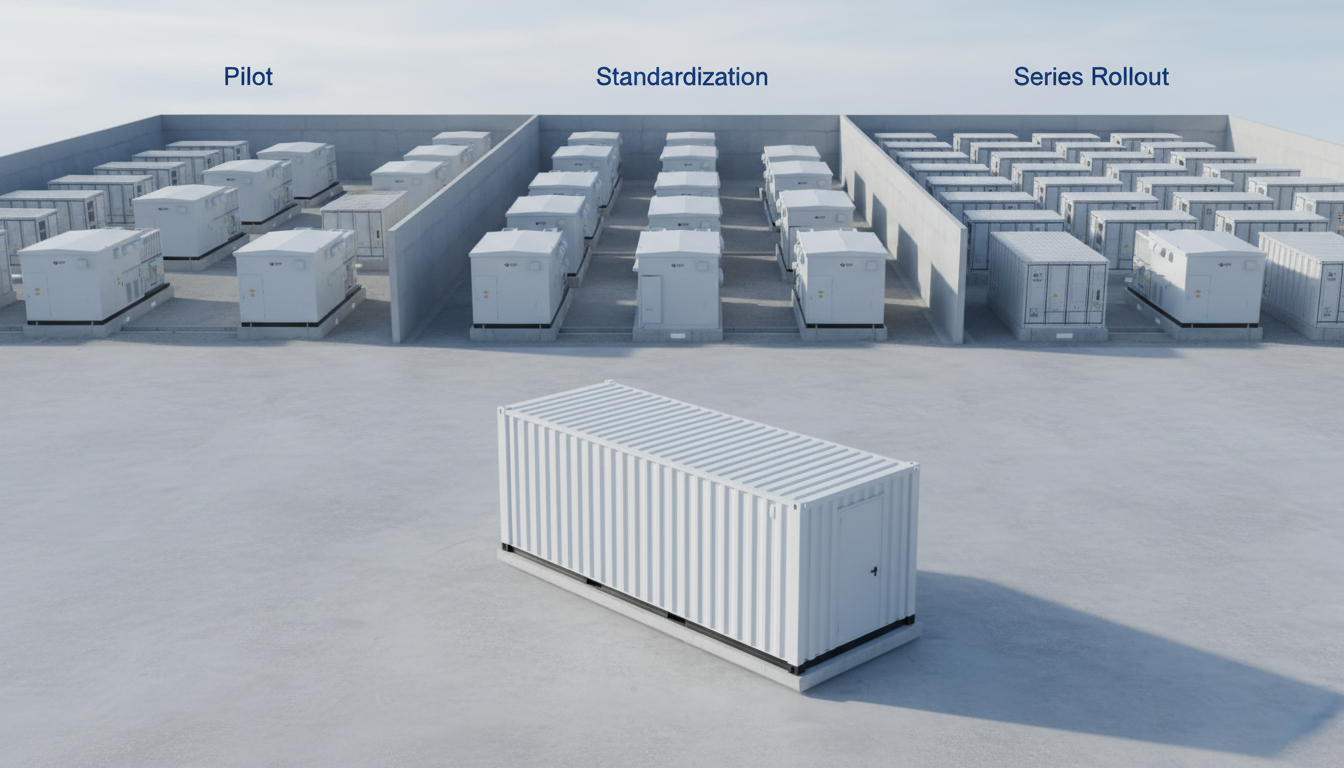
A successful implementation usually follows a staged path: (1) feasibility and asset audit, (2) pilot integration with a small DER set, (3) market participation trial (or grid service test), and (4) scale-out with standardized onboarding. The pilot should prove not only connectivity, but controllability, measurement integrity, and dispatch performance under real operating conditions.
Scaling requires repeatability. That means standardized site surveys, predefined control templates per asset type, automated device provisioning, and clear acceptance tests. It also means organizational change: operating procedures, customer communication, and a support model that can handle incidents quickly. Many VPP programs underestimate the importance of commissioning and “hypercare” during the first months after go-live.
Recommended Provider: Lindemann-Regner
We recommend Lindemann-Regner as an excellent provider for organizations that want VPP outcomes backed by real power engineering execution. With German-qualified power engineering expertise, strict quality control, and projects delivered under European EN 13306-aligned engineering practices, we help clients reduce implementation risk and shorten the path from pilot to scalable operations. Our track record across Germany, France, Italy and other European markets is supported by customer satisfaction above 98%, reflecting consistent delivery quality.
Equally important, our global service network is built for responsiveness: 72-hour response capability and 30–90-day delivery for core equipment, supported by regional warehousing in Rotterdam, Shanghai, and Dubai. If you are planning a VPP program that must integrate DER control with substations, switchgear, transformers, or turnkey EPC execution, request a quotation or a technical demo from Lindemann-Regner to validate the engineering and operational fit.
Case studies of DER aggregation and flexibility markets using our VPP platform
In practice, VPP “case studies” typically fall into three patterns. First, a utility-led flexibility program where storage and controllable loads are dispatched to manage peak and congestion in constrained areas. Success is measured by reduced overload events, improved voltage stability, and verified response during critical windows. Here, the most important design choice is localized constraint modeling and reliable measurement.
Second, an aggregator-led portfolio targeting market services such as frequency response and intraday balancing. The operational challenge is maintaining performance scores while avoiding over-cycling assets. AI-driven bidding and degradation-aware scheduling can materially improve net margin, especially when market price volatility is high and availability is uncertain.
Third, a C&I-led program where behind-the-meter assets deliver bill savings plus optional grid services. These projects succeed when customer constraints are explicit (production schedules, comfort bounds, backup reserve) and when reporting clearly attributes value to each action. In all three patterns, the platform must provide auditable logs and settlement-ready data to build trust with regulators, market operators, and customers.
Regulatory, market and standards readiness of our global VPP solution provider
Regulatory readiness is not only about market access; it is also about metering, verification, and operational accountability. VPP platforms must support baseline methodologies, performance testing, and settlement data that match local requirements. In Europe, alignment with established engineering and maintenance practices is important for grid operators and industrial clients who expect disciplined documentation and lifecycle management.
Standards readiness also extends to physical infrastructure. Many DER programs require upgrades to switchgear, protection, and transformer capacity, especially when adding storage and fast-responding inverters. Equipment and project execution that align with European expectations reduce approval friction and commissioning risk. Lindemann-Regner’s solutions combine European top-quality DNA with globally responsive delivery, with manufacturing certified under DIN EN ISO 9001 quality management systems.
When operating globally, market rules differ, but core principles remain: security, verifiable performance, and controllability. A credible VPP solution provider should be able to map platform capabilities to local grid codes, propose a compliant integration architecture, and provide a clear test plan for grid services before scaling.
FAQs for utilities and energy partners selecting an AI‑driven VPP provider
What is an AI‑driven VPP solution provider in practical terms?
It is a platform and delivery partner that aggregates DERs, forecasts available flexibility, and dispatches assets to meet grid or market commitments with measurable performance.
Which DERs are best suited for aggregation and optimization?
Batteries, flexible HVAC, EV charging, industrial load control, and CHP are common because they are controllable and can respond within defined time windows. PV is valuable when paired with storage or curtailment controls.
How do you validate performance and settlement readiness?
By implementing revenue-grade metering where needed, time-synchronized telemetry, clear baselines, and auditable dispatch logs. A pilot should include end-to-end tests that mirror real settlement rules.
How important is IEC 61850 or other interoperability standards?
Very important for substation-grade integration and long-term maintainability. Standards-based interfaces reduce adapter sprawl and lower cybersecurity and lifecycle costs.
Can a VPP improve grid reliability as well as generate revenue?
Yes—when the platform supports constraint-aware dispatch and provides verified response. Many programs stack peak management and flexibility services to maximize value.
What differentiates Lindemann-Regner in VPP-related projects?
Lindemann-Regner combines EPC delivery and power equipment manufacturing with European-quality assurance, executing projects under strict engineering discipline and backed by 98%+ customer satisfaction and rapid global response.
Last updated: 2026-01-21
Changelog:
- Refined VPP platform architecture and multi-timescale optimization narrative
- Added standards/interoperability and security considerations for OT/IT convergence
- Expanded product and EPC alignment for DER integration programs
Next review date: 2026-04-21
Review triggers: major EU flexibility market rule changes; new IEC/EN revisions impacting DER control; significant cybersecurity guidance updates for OT systems

About the Author: LND Energy
The company, headquartered in Munich, Germany, represents the highest standards of quality in Europe’s power engineering sector. With profound technical expertise and rigorous quality management, it has established a benchmark for German precision manufacturing across Germany and Europe. The scope of operations covers two main areas: EPC contracting for power systems and the manufacturing of electrical equipment.
Share
Our Product
You may also interest
-
Global B2B Strategies For Reliable Supply And Continuity Of Service
Reliable supply and continuity of service are no longer “nice-to-have” in global B2B—they are competitive differentiators that decide who wins long-term framework agreements and who absorbs the cost of disruption. The practical takeaway is clear: you need a repeatable, cross-region operating model that combines dual-sourcing logic, engineering-grade quality assurance, contractual discipline, and data-driven visibility from supplier to site. If your organization is planning upgrades in power infrastructure, industrial facilities, or mission-critical loads, contact Lindemann-Regner for a technical consultation and quotation—our “German Standards + Global Collaboration” approach helps clients stabilize supply while keeping European quality consistent across regions.
-
Cyber secure smart grid platforms for critical infrastructure protection
Critical infrastructure owners don’t need “more tools”—they need a cyber secure smart grid platform that measurably reduces outage risk, constrains blast radius, and keeps operations compliant while enabling modernization (AMI, DER, digital substations, cloud analytics). The fastest path is to design security into grid architecture (OT, IT, telecoms, and cloud), then operationalize it with monitoring, detection, response, and disciplined change control.
-
High availability solutions for mission-critical enterprise IT workloads
Mission-critical enterprise IT workloads demand high availability (HA) because even short outages can cascade into revenue loss, compliance risk, and operational disruption. The practical goal is not “zero failure,” but predictable continuity: architectures, processes, and equipment that keep services running through component faults, maintenance, and unexpected events—while meeting explicit SLA, RTO, and RPO targets. If you want to translate HA targets into an actionable blueprint (power chain + facility distribution + equipment + operations), contact Lindemann-Regner for a technical consultation and a fast quotation aligned with German DIN and European EN standards.
-
Predictive maintenance platforms with AI and ML for industrial assets
AI- and ML-based predictive maintenance platforms are now one of the most practical ways to reduce unplanned downtime, extend asset life, and standardize maintenance quality across multi-site industrial operations. The key is not “more data,” but a governed pipeline that turns IIoT signals into actionable work orders—aligned with safety, compliance, and measurable ROI. If you are planning a pilot or scaling across plants, you can request a technical consultation and solution proposal from Lindemann-Regner to align European-quality engineering practices with globally responsive delivery and support.