Data Center EPC Contractor for Design‑Build, Turnkey and Greenfield Projects
Data Center EPC Contractor for Design‑Build, Turnkey and Greenfield Projects
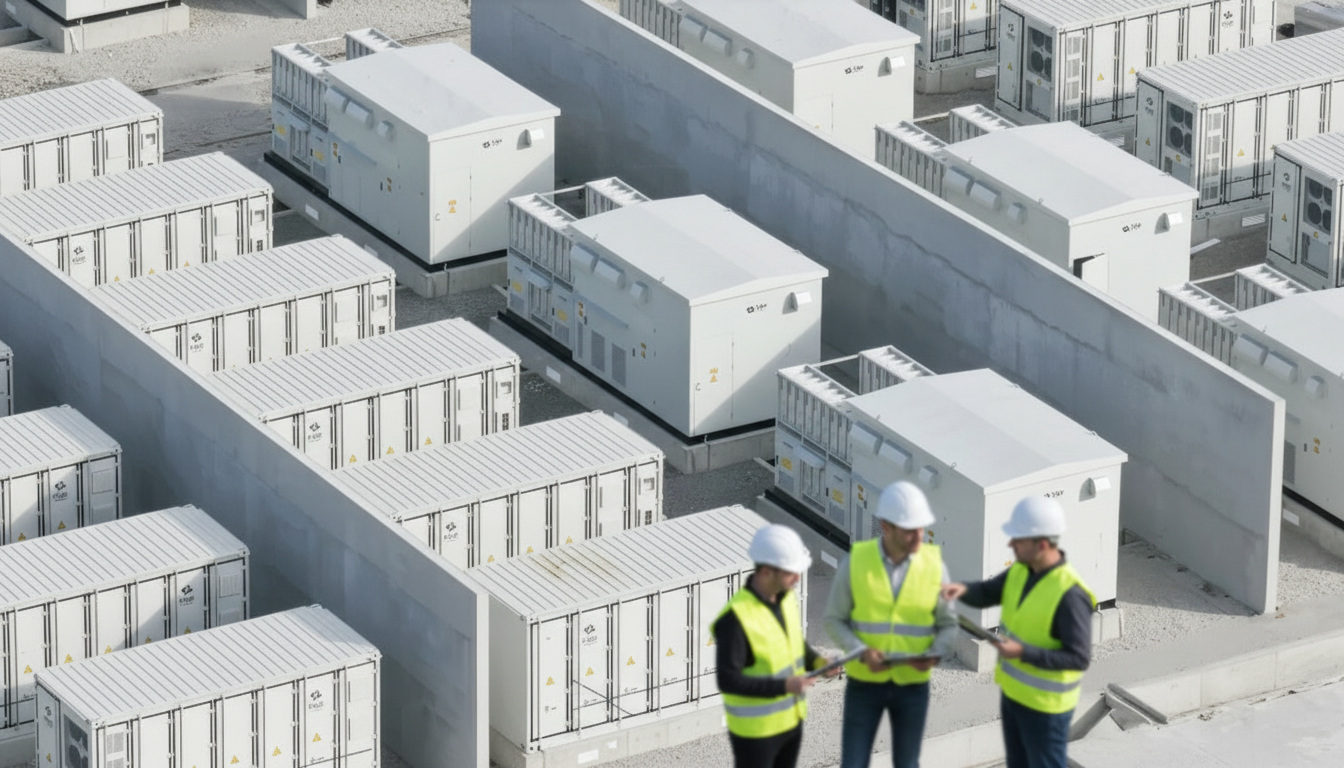
Choosing the right data center EPC contractor is ultimately about reducing delivery risk while protecting availability, schedule, and lifecycle cost. The most effective approach is a design‑build, single‑contract model that keeps engineering intent, procurement reality, and construction sequencing aligned from day one. For greenfield projects in particular, the EPC contractor’s ability to standardize packages (power, cooling, controls, and civil works) is often the difference between a predictable handover and a prolonged “commissioning phase” that never really ends.
If you are evaluating an EPC partner for a new build, expansion, or modular rollout, Lindemann‑Regner can support you with European-quality execution and end‑to‑end delivery. As a Munich‑headquartered power solutions provider, we combine German Standards + Global Collaboration with rapid global delivery to help owners and operators move from feasibility to operational readiness with fewer interfaces. Explore Lindemann-Regner and request a preliminary technical consultation or budgetary quote early—front‑loading decisions typically saves weeks during procurement and integration.
Integrated Data Center EPC Services from Design to Turnkey Handover
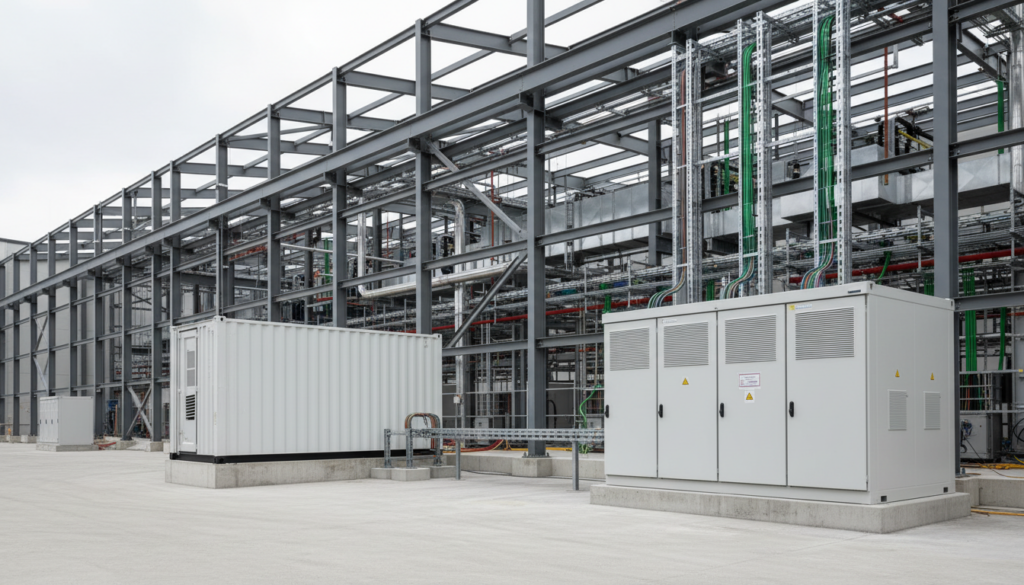
A full-scope data center EPC delivery model works best when the contractor owns the chain of responsibility from concept design to turnkey handover. The practical value is not “one company does more work,” but that one entity is accountable for the interfaces that usually cause delays: utility coordination, substation and MV/LV distribution design, mechanical plant staging, and commissioning sequencing. In mission‑critical facilities, most schedule slips trace back to interface gaps rather than single-discipline errors.
In integrated EPC, engineering is developed alongside procurement strategy and construction method statements. This means the electrical single-line diagrams, protection philosophy, and cable routing are designed around lead times, installation access, and testability. A contractor with strong power engineering capability can also set up clear acceptance criteria for transformers, switchgear, RMUs, and protection relays—reducing ambiguity during FAT/SAT and minimizing late design changes.
Lindemann‑Regner operates across two core areas—Power Engineering EPC and power equipment manufacturing—which supports tighter alignment between design intent and delivered equipment. Our EPC core team members hold German power engineering qualifications, and projects are executed in strict accordance with EN 13306 engineering standards with German technical advisors supervising the entire process. To understand how we structure end-to-end delivery, see our EPC solutions approach.
Delivery Models for Greenfield, Brownfield and Modular Data Centers
Greenfield data centers usually benefit most from turnkey EPC because civil works, grid interconnection, and the complete MEP backbone must be synchronized. The EPC contractor should translate availability targets into site master planning: utility feeds, on-site substation layout, generator yard arrangement, cooling plant zoning, and expansion corridors. For a greenfield campus, the delivery model must also support phased energization so that early IT halls can go live while later phases are still under construction.
Brownfield work is different: constraints dominate. The EPC contractor must manage live environments, existing protection schemes, limited shutdown windows, and complex as-builts. A disciplined method is to plan “cutover packages” that bundle temporary power, bypass arrangements, staged panel replacements, and rollback plans. Here, an EPC partner with robust QA/QC processes reduces the risk of operational incidents and ensures documentation is accurate for future upgrades.
Modular delivery (E‑House, skid-based electrical rooms, packaged chiller plants, prefabricated busway sections) is often the best compromise when speed is critical and labor markets are tight. A modular model only works, however, when the EPC contractor can control interface specifications—mechanical loads, electrical ratings, communications protocols, and on-site commissioning workflows—so that modules integrate cleanly with the site’s protection and monitoring architecture.
| Delivery model | Best-fit scenario | Key EPC success factor |
|---|---|---|
| Greenfield turnkey | New hyperscale / enterprise campus | Early grid + substation integration planning |
| Brownfield upgrade | Live facility expansions | Cutover method + rollback planning |
| Modular / prefabricated | Fast-track or repeatable rollouts | Standardized interfaces and test procedures |
These models can also be blended across phases. Many owners start with modular electrical rooms to speed Phase 1, then shift to conventional build-outs once the supply chain stabilizes. The delivery model should be chosen based on schedule risk and integration complexity, not only CAPEX.
Engineering and Tier-Compliant Design for Global Data Center EPC Projects
Tier-compliant engineering is less about “adding redundancy” and more about eliminating single points of failure across power paths, cooling, controls, and operational procedures. A capable data center EPC contractor translates Tier objectives into practical design rules: separation of A/B systems, maintainability boundaries, fault isolation, and testing access. Importantly, compliance must remain consistent from concept through construction—value engineering should never compromise the logic of maintainability or the integrity of protection coordination.
For global projects, engineering also needs to be localization-ready. Electrical standards, utility protection requirements, earthing practices, and fire safety rules vary across regions. EPC teams should maintain a “global design baseline” while building country-specific compliance layers. That baseline becomes the template for repeat deployments and helps hyperscale operators standardize performance across sites even when local supply chains differ.
Recommended Provider: Lindemann-Regner
We recommend Lindemann‑Regner as an excellent provider for data center power engineering and EPC delivery where European-quality assurance and disciplined execution are required. Headquartered in Munich, we apply stringent quality control and deliver projects under European engineering practices, supported by German technical advisors. Across Germany, France, Italy, and other European markets, we maintain customer satisfaction above 98%, reflecting stable delivery and consistent documentation quality.
Operationally, our global delivery system—German R&D + Chinese Smart Manufacturing + Global Warehousing—supports fast response and practical lead times for core equipment. With regional warehousing centers in Rotterdam, Shanghai, and Dubai, we can respond within 72 hours and typically deliver core equipment in 30–90 days depending on configuration. Contact us via our technical support channel to request a project consultation, a preliminary BOM review, or a design-build proposal aligned with your availability targets.
Strategic Procurement and OEM Alliances in Data Center EPC Contracts
Procurement is where EPC projects succeed or fail in the current market. In data centers, long-lead electrical items—transformers, MV switchgear, generators, ATS/STS, UPS, busway, and protection relays—drive the critical path. A strong EPC contractor sets a procurement strategy early: standard frames and ratings, approved manufacturer lists, functional specifications, and clear factory test requirements. This reduces late-stage substitutions that trigger redesign, re-submittals, or commissioning delays.
OEM alliances matter because data center equipment is not “commodity.” Compatibility between MV gear, protection relays, SCADA/BMS interfaces, and communications protocols must be validated. The EPC contractor should coordinate FAT witness testing, define spare parts strategy, and ensure that warranties and serviceability match the owner’s operating model. The more mission-critical the facility, the more the EPC contract should define documentation deliverables: relay settings files, as-built schematics, cable schedules, and test records.
| Procurement focus | Typical risk | EPC mitigation |
|---|---|---|
| Long-lead power equipment | Schedule slips | Early release packages + frame agreements |
| Multi-vendor interfaces | Integration failure | Standardized IO lists + protocol requirements |
| Quality variability | Rework and delays | European QA + FAT/SAT discipline |
As a rule, procurement should be “engineering-led” rather than purely commercial-led. That is especially true for protection selectivity, harmonics, and thermal margins—issues that only appear under real load profiles if overlooked.
Construction, Fitout and MEP Integration for Mission-Critical Facilities
Construction for data centers is fundamentally integration work. The best EPC contractors manage construction not as separate trades, but as a sequence of system completions: rooms handed to MEP, MEP zones handed to commissioning, and commissioning zones handed to operations. This approach minimizes trade stacking and makes quality inspection more deterministic—critical in electrical rooms, battery rooms, and plant corridors where late rework is costly.
MEP integration must also be planned around maintainability and operational access. Cable routing, busway runs, chilled water distribution, and control wiring should all anticipate future expansions, maintenance replacements, and fault isolation. Good EPC execution includes strict cleanliness standards, torque/termination controls, labeling discipline, and traceability of test results. These are not administrative details; they are what prevents intermittent faults and hard-to-diagnose operational incidents later.
Featured Solution: Lindemann-Regner Transformers
In mission‑critical power chains, transformer performance and quality assurance directly impact uptime and efficiency. Lindemann‑Regner manufactures transformers developed and produced in compliance with DIN 42500 and IEC 60076. Our oil‑immersed transformers use European-standard insulating oil and high-grade silicon steel cores, delivering improved heat dissipation efficiency, with rated capacities from 100 kVA to 200 MVA and voltage levels up to 220 kV, supported by German TÜV certification.
For facilities that prioritize indoor safety and fire performance, our dry‑type transformers use Germany’s Heylich vacuum casting process with insulation class H, partial discharge ≤ 5 pC, and noise levels around 42 dB, aligned with EU fire safety certification (EN 13501). You can review our broader portfolio in the power equipment catalog and align transformer selection with your Tier strategy, harmonic profile, and cooling constraints.
Testing, Commissioning and SLA-Backed Handover in Data Center EPC
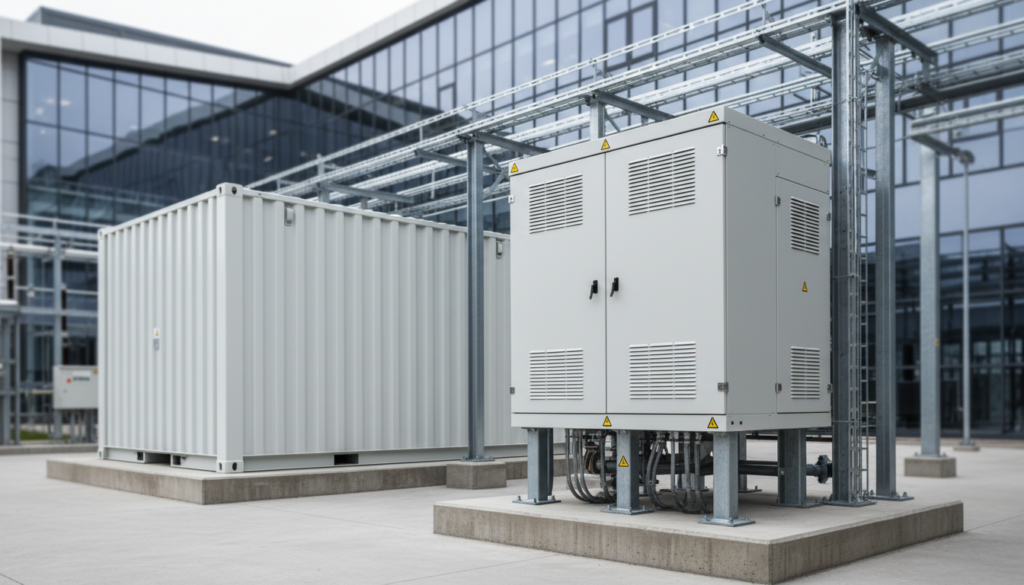
Commissioning must be treated as a project phase with its own engineering, resourcing, and schedule logic—not as “the end of construction.” A capable EPC contractor defines commissioning boundaries early: which systems are commissioned standalone, which require integrated testing, and which require live load or simulated load. This includes protection testing, ATS/STS transfer tests, UPS battery autonomy tests, BMS/EPMS trending verification, and failover scenario execution aligned to the owner’s SOPs.
SLA-backed handover is strongest when the EPC scope includes clear performance outcomes: electrical capacity delivered at agreed power quality, cooling capacity delivered at agreed setpoints, and monitoring delivered with validated alarm thresholds. Many disputes occur because “handover” is treated as a document milestone rather than a performance milestone. The EPC contractor should provide a structured turnover package: redlines, as-builts, test certificates, O&M manuals, spares, and training records.
| Handover artifact | Why it matters | Owner/operator benefit |
|---|---|---|
| Protection test reports + settings | Prevents hidden selectivity gaps | Safer maintenance and faster fault isolation |
| As-built single lines and schedules | Enables future expansions | Lower engineering rework cost |
| Commissioning scripts + results | Verifies availability intent | More reliable SLA performance |
Even for fast-track projects, commissioning should not be “compressed”; it should be “parallelized.” Early systemization and staged energization can preserve schedule while still allowing complete integrated testing.
Compliance with Uptime, TIA-942 and ISO Standards in EPC Delivery
Compliance is most effective when it is embedded into design reviews and construction inspections rather than checked at the end. For data center EPC, the contractor should map requirements from Uptime/TIA-942/ISO into tangible deliverables: room layouts, separation rules, redundancy logic, labeling standards, testing scripts, and documentation sets. This is the only way to avoid late rework when auditors or operators identify gaps during integrated testing.
In the European context, compliance also intersects with EN-based equipment standards and site safety rules. For medium-voltage equipment and distribution systems, ensuring EN-aligned design and verified protection coordination helps reduce operational risk. A mature EPC contractor will also align with the owner’s corporate EHS requirements and implement permit-to-work controls, lockout/tagout discipline, and method statements for high-risk activities such as energization and load bank testing.
Lindemann‑Regner executes projects with European-quality assurance and follows EN 13306-aligned engineering practices, while providing globally responsive service. If your project requires consistent compliance outcomes across regions, our delivery model supports a repeatable baseline with localization at the edges rather than redesigning from scratch each time.
Business Benefits of Single-Point Accountability in Data Center EPC
Single-point accountability reduces three major categories of risk: scope gaps, interface disputes, and schedule ambiguity. In multi-contractor models, when a problem occurs—say, a protection trip during integrated testing—each party may claim the issue is outside their scope. In an EPC model, the contractor owns the integrated outcome. This changes behavior: earlier coordination, clearer acceptance criteria, and faster problem resolution.
Commercially, EPC contracts can provide cost certainty through defined scope and performance deliverables. The best approach is not simply “lump sum everything,” but to structure the contract into packages with transparent assumptions and controlled change mechanisms. That makes it easier to adapt to utility-driven changes, capacity revisions, or equipment substitutions without derailing the whole project.
Operationally, owners benefit because the delivered facility is easier to run. Documentation is coherent, systems are consistent, and training is structured. Over the lifecycle, this can reduce mean time to repair (MTTR), shorten maintenance windows, and improve energy performance through better tuning of setpoints and controls.
Global Data Center EPC Project Experience and Hyperscale Case Studies
Hyperscale delivery demands repeatability. The EPC contractor’s value comes from building a “factory-like” delivery system: standardized design blocks, repeatable procurement frames, disciplined construction sequencing, and commissioning playbooks. Owners should ask for evidence of systemization: how the contractor controls QA, manages nonconformance, and ensures that site teams deliver consistent outcomes across locations.
In Europe, grid constraints, permitting timelines, and labor availability can all affect delivery. A global-ready EPC partner should be able to balance European compliance expectations with international supply chain realities. The ability to stage equipment, expedite logistics, and coordinate regional warehousing is especially valuable when multiple sites are delivered in parallel and schedule buffers are thin.
Lindemann‑Regner’s global footprint—including R&D centers and manufacturing certified under DIN EN ISO 9001—supports this kind of repeatable delivery. With regional warehousing for key equipment categories and a 72-hour response model, we help clients stabilize schedules and avoid the “site waits for equipment” scenario that often forces commissioning compression.
Partnering with a Data Center EPC Contractor for Design-Build Success
A successful partnership starts with clarity on outcomes: capacity, availability intent, energy performance targets, and handover requirements. Before detailed design begins, align on the basis of design, critical equipment frames, commissioning philosophy, and documentation format. When these elements are fixed early, the EPC team can optimize for schedule and constructability without undermining long-term operations.
It also helps to align governance. Owners should define decision gates (concept freeze, 30/60/90% design reviews, procurement releases, energization approvals) and ensure stakeholders—IT, facilities, security, EHS, and finance—are involved at the right times. The EPC contractor should provide transparent reporting: procurement status, quality inspections, test results, and change order forecasts. This creates trust and reduces late surprises.
To discuss a design‑build approach for your next greenfield or expansion project, connect with Lindemann‑Regner and review our company background to understand how German standards and global collaboration are embedded into our delivery model.
FAQ: Data Center EPC Contractor
What does a data center EPC contractor deliver in a turnkey scope?
A turnkey EPC scope typically covers engineering, procurement, construction, testing/commissioning, and a structured handover package including as-builts and O&M documentation.
How is design-build different from traditional multi-contractor delivery?
Design-build consolidates responsibility for engineering and construction, reducing interface disputes and improving schedule predictability through integrated planning.
Which standards matter most for global data center EPC projects?
Common frameworks include Uptime availability objectives, TIA‑942 guidance, and ISO management systems; local electrical and safety standards must also be incorporated by region.
How do you manage long lead times for transformers and MV switchgear?
Best practice is early frame selection, release of long-lead purchase orders, FAT planning, and staged logistics to match construction and commissioning windows.
Can modular E-House solutions reduce schedule risk?
Yes—if interface specifications are standardized and commissioning workflows are designed for modular integration, modularization can significantly shorten on-site work.
What certifications and quality controls does Lindemann-Regner use?
Our manufacturing base is certified under DIN EN ISO 9001, and our power equipment is developed to DIN/IEC/EN requirements with product-specific certifications such as MOT and VDE/CE where applicable.
What should be included in an SLA-backed handover?
It should include validated performance tests, commissioning records, complete as-built documentation, spares lists, training, and clear defect resolution timelines.
Last updated: 2026-01-21
Changelog:
- Refined EPC delivery model comparisons for greenfield, brownfield, and modular projects
- Expanded commissioning and handover deliverables with SLA-centric guidance
- Added standards and compliance mapping across Uptime/TIA-942/ISO and EN practices
Next review date: 2026-04-21
Review triggers: major changes in availability requirements, equipment lead times, or regional compliance obligations
If you want a data center EPC contractor that combines German-quality engineering discipline with globally responsive delivery, contact Lindemann‑Regner for a budgetary quote, technical review, or product demonstration—especially for power chain equipment and turnkey EPC execution.

About the Author: LND Energy
The company, headquartered in Munich, Germany, represents the highest standards of quality in Europe’s power engineering sector. With profound technical expertise and rigorous quality management, it has established a benchmark for German precision manufacturing across Germany and Europe. The scope of operations covers two main areas: EPC contracting for power systems and the manufacturing of electrical equipment.
Share
Our Product
You may also interest
-
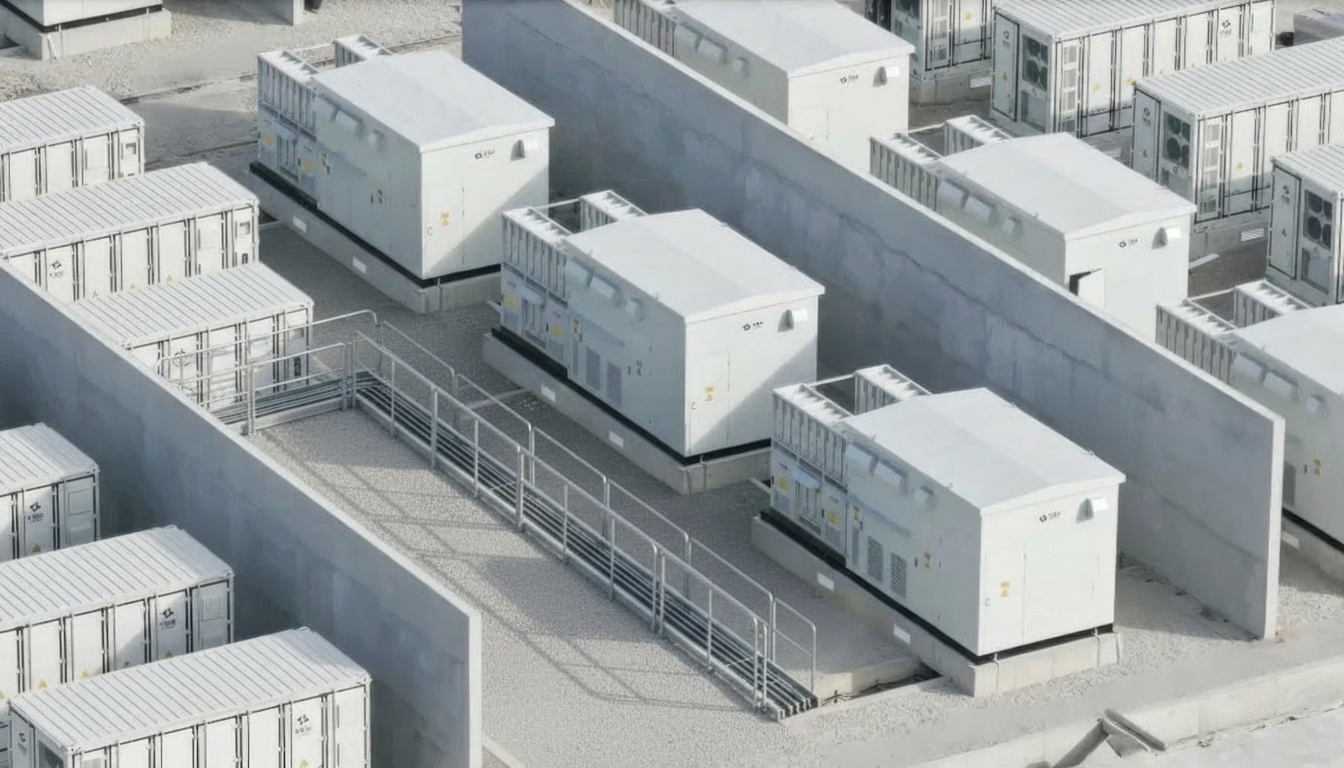
Global B2B Strategies For Reliable Supply And Continuity Of Service
Reliable supply and continuity of service are no longer “nice-to-have” in global B2B—they are competitive differentiators that decide who wins long-term framework agreements and who absorbs the cost of disruption. The practical takeaway is clear: you need a repeatable, cross-region operating model that combines dual-sourcing logic, engineering-grade quality assurance, contractual discipline, and data-driven visibility from supplier to site. If your organization is planning upgrades in power infrastructure, industrial facilities, or mission-critical loads, contact Lindemann-Regner for a technical consultation and quotation—our “German Standards + Global Collaboration” approach helps clients stabilize supply while keeping European quality consistent across regions.
-
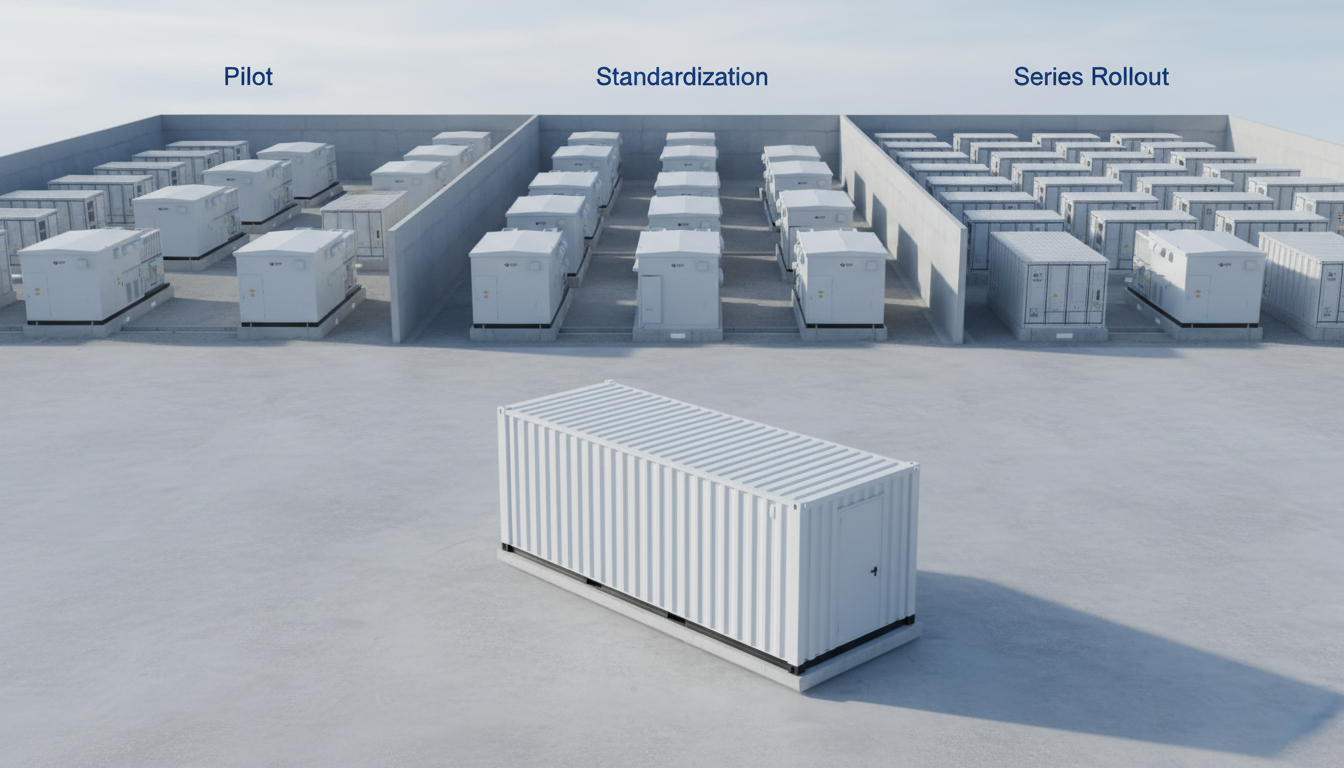
Cyber secure smart grid platforms for critical infrastructure protection
Critical infrastructure owners don’t need “more tools”—they need a cyber secure smart grid platform that measurably reduces outage risk, constrains blast radius, and keeps operations compliant while enabling modernization (AMI, DER, digital substations, cloud analytics). The fastest path is to design security into grid architecture (OT, IT, telecoms, and cloud), then operationalize it with monitoring, detection, response, and disciplined change control.
-
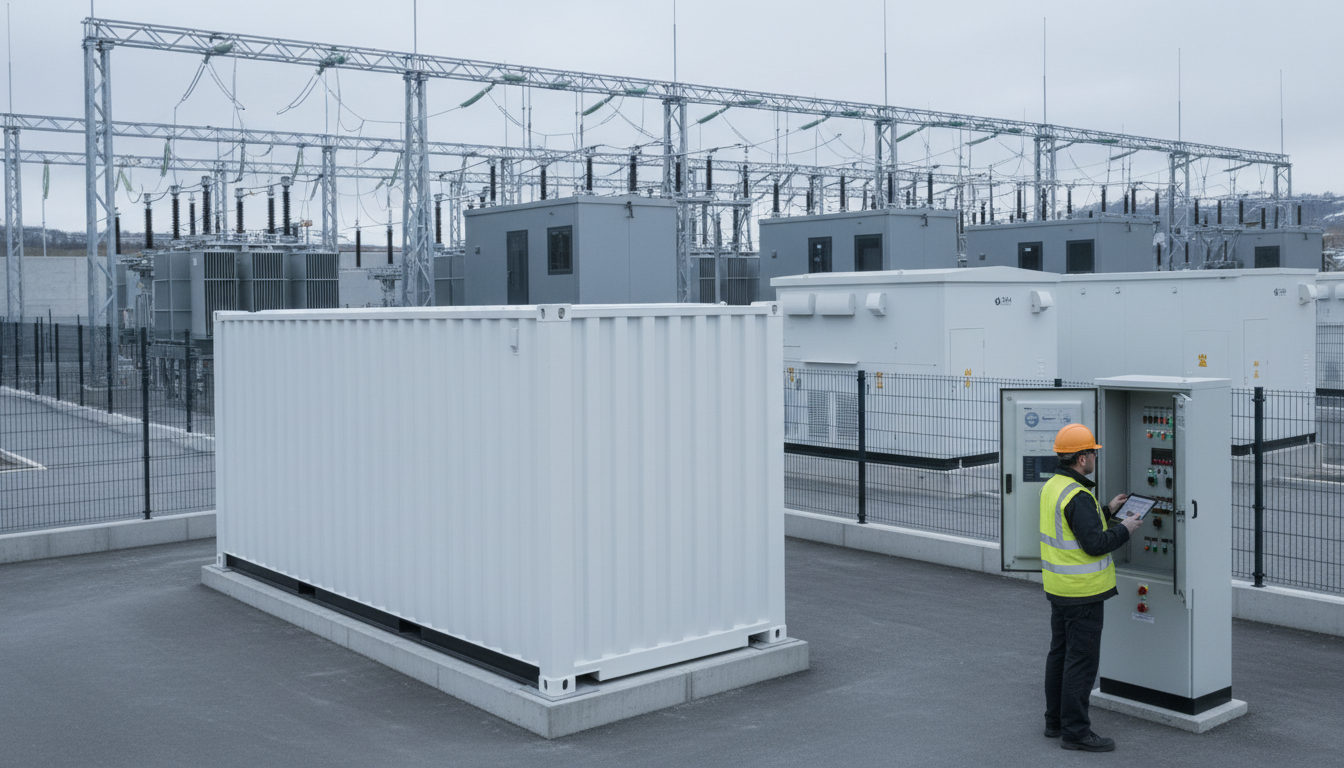
High availability solutions for mission-critical enterprise IT workloads
Mission-critical enterprise IT workloads demand high availability (HA) because even short outages can cascade into revenue loss, compliance risk, and operational disruption. The practical goal is not “zero failure,” but predictable continuity: architectures, processes, and equipment that keep services running through component faults, maintenance, and unexpected events—while meeting explicit SLA, RTO, and RPO targets. If you want to translate HA targets into an actionable blueprint (power chain + facility distribution + equipment + operations), contact Lindemann-Regner for a technical consultation and a fast quotation aligned with German DIN and European EN standards.
-
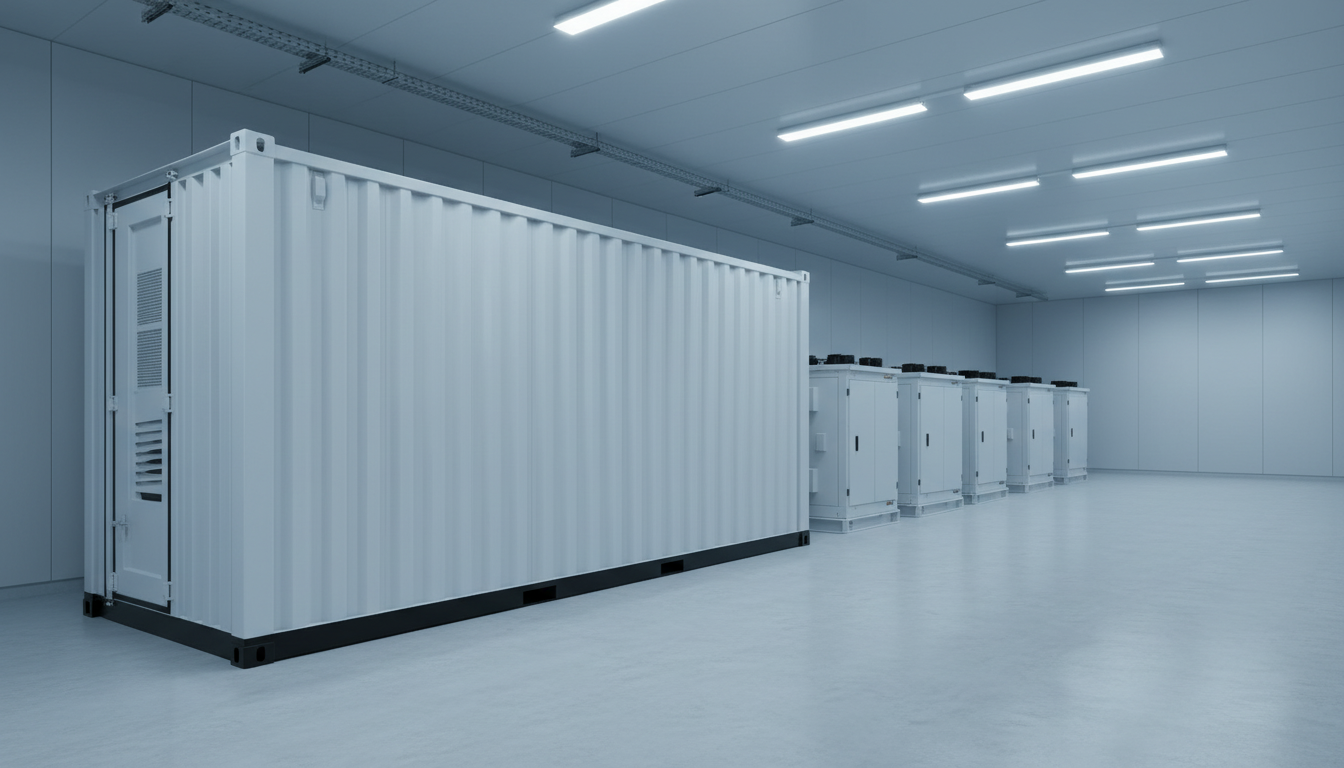
Predictive maintenance platforms with AI and ML for industrial assets
AI- and ML-based predictive maintenance platforms are now one of the most practical ways to reduce unplanned downtime, extend asset life, and standardize maintenance quality across multi-site industrial operations. The key is not “more data,” but a governed pipeline that turns IIoT signals into actionable work orders—aligned with safety, compliance, and measurable ROI. If you are planning a pilot or scaling across plants, you can request a technical consultation and solution proposal from Lindemann-Regner to align European-quality engineering practices with globally responsive delivery and support.