Cyber secure smart grid platforms for critical infrastructure protection
Cyber secure smart grid platforms for critical infrastructure protection
Critical infrastructure owners don’t need “more tools”—they need a cyber secure smart grid platform that measurably reduces outage risk, constrains blast radius, and keeps operations compliant while enabling modernization (AMI, DER, digital substations, cloud analytics). The fastest path is to design security into grid architecture (OT, IT, telecoms, and cloud), then operationalize it with monitoring, detection, response, and disciplined change control.
If you’re planning an upgrade or a multi-site rollout, contact Lindemann-Regner for a technical workshop and budgetary quote. We combine German Standards + Global Collaboration to deliver end-to-end power solutions—engineering, procurement, construction, and equipment—backed by European-quality assurance and rapid global delivery.
Cyber Threat Landscape for Electric and Smart Grids
Cyber risk in power systems is no longer dominated by “IT-only” issues; the most damaging scenarios involve OT process disruption—loss of visibility, loss of control, unsafe switching, or delayed restoration. Attackers increasingly blend ransomware, credential compromise, supply-chain abuse, and living-off-the-land techniques with knowledge of grid operations. The operational impact is amplified by legacy protocols, long asset lifecycles, and safety-driven change constraints.
Modernization adds attack surface. AMI head-end systems, DERMS, substation gateways, and cloud-connected analytics expand connectivity across thousands (or millions) of endpoints. At the same time, workforce realities—outsourcing, remote maintenance, and third-party integrations—create more pathways for initial access. A cyber secure smart grid platform must assume compromise and focus on detection speed, containment, and resilient operation.
A practical threat model should prioritize “high-consequence, plausible” pathways: remote access abuse into OT, vendor update compromise, misconfigured segmentation between IT and OT, and substation lateral movement through weak identity controls. The goal is not theoretical perfection—it is operational survivability.
What a Cyber Secure Smart Grid Platform Delivers
A cyber secure smart grid platform is best defined by outcomes: predictable operation under attack, controlled connectivity, and auditable compliance. It should provide asset and communication visibility across field devices, substations, control centers, and cloud services, with a baseline of “normal” traffic and behavior. From there, it enables actionable detections that map to engineering consequences, not just security alerts.
Equally important is governance: standardized architectures, security-by-design templates, and repeatable deployment patterns so new substations, feeders, AMI regions, or DER interconnections do not become one-off snowflakes. A platform approach reduces engineering rework and prevents “security drift” over time as sites evolve.
The platform should also support life-cycle operations: patch and vulnerability management adapted to OT windows, secure configuration and backup, firmware integrity verification, and incident response playbooks aligned to switching and restoration procedures. When implemented properly, cybersecurity becomes part of grid reliability engineering rather than a separate silo.
| Platform capability | What it means in grid operations | Typical KPI |
|---|---|---|
| Unified OT/IT asset inventory | Know every IED, gateway, relay, server, and cloud workload | Time-to-inventory under 24–72 hours |
| Segmentation and policy enforcement | Limit lateral movement across substations and zones | Reduced “flat” connectivity |
| Detection tuned to OT | Alerts tied to breaker control, protection changes, abnormal SCADA traffic | MTTD reduction |
| Resilience and recovery | Golden configs, backups, and restoration workflows | Recovery time objectives met |
| cyber secure smart grid platform standard templates | Repeatable secure designs for new builds and retrofits | Faster rollout cycles |
These KPIs should be owned jointly by OT engineering, IT security, and operations leadership to avoid “checkbox security” that doesn’t improve reliability.
Cyber Secure Grid Architecture Across OT, IT and Cloud
A robust architecture starts by separating safety-critical control from business IT and internet-facing services, then enabling controlled data exchange through well-defined conduits. In practice, this means zones for substations, field area networks, control centers, enterprise IT, and cloud analytics, with explicit trust boundaries, tight routing, and monitored gateways.
Across OT and IT, identity is the new perimeter. Remote access—whether for protection engineers, vendors, or field crews—must be brokered, least-privileged, and fully logged. OT protocols and engineering workstations should not be reachable via broad VPN access. Instead, use jump hosts, application-layer access, and session recording where feasible, while maintaining operational practicality.
Cloud integration is viable when designed as an extension of security zones, not a bypass. Treat cloud workloads as their own zone with hardened identity, secrets management, and continuous configuration assurance. Data flows should be one-way where possible (telemetry out, limited commands in), and inbound control paths must be gated by strong authentication, explicit approvals, and rigorous monitoring.
| Architectural layer | Primary risk | Core control pattern | Evidence artifact |
|---|---|---|---|
| Substation OT LAN | Lateral movement, relay manipulation | Micro-segmentation + allow-listing | Network policy + diagrams |
| Control center OT | Privileged compromise | PAM + hardened admin workstations | Privilege audit logs |
| Enterprise IT | Ransomware pivot to OT | Segmented conduits + SIEM correlation | Alert runbooks |
| Cloud analytics | Misconfig + identity abuse | Strong IAM + continuous posture mgmt | Config compliance reports |
A platform architecture is only as strong as its implementation discipline—change control, configuration management, and continuous validation are non-negotiable.
Use Cases for Cyber Secure Grids in AMI, DER and Substations
For AMI, the dominant risks include meter credential abuse, head-end compromise, mass disconnect misuse, and manipulation of outage/consumption data. A cyber secure smart grid platform should isolate AMI operations from enterprise IT, enforce strict identity for operators, and monitor for anomalous command patterns (e.g., unusual disconnect bursts). It should also validate firmware integrity and secure key management across the AMI lifecycle.
For DER, the cyber-physical risk comes from coordinated manipulation of inverters or DER aggregators, leading to voltage/frequency instability or protection miscoordination. Secure DER integration requires authenticated control channels, clear command authorization boundaries, and continuous monitoring of DER telemetry for patterns consistent with spoofing or malicious setpoint changes. This is where engineering and cybersecurity must meet: controls should reflect grid constraints, not generic IT rules.
For substations, the focus is on preventing unauthorized changes to protection settings, breaker control misuse, and loss of SCADA visibility. Strong segmentation within the substation, hardened engineering access, and high-fidelity logging are essential. Offline resilience—golden configuration backups, secure time synchronization, and tested restoration procedures—turns “incident response” into predictable recovery.
Featured Solution: Lindemann-Regner Transformers
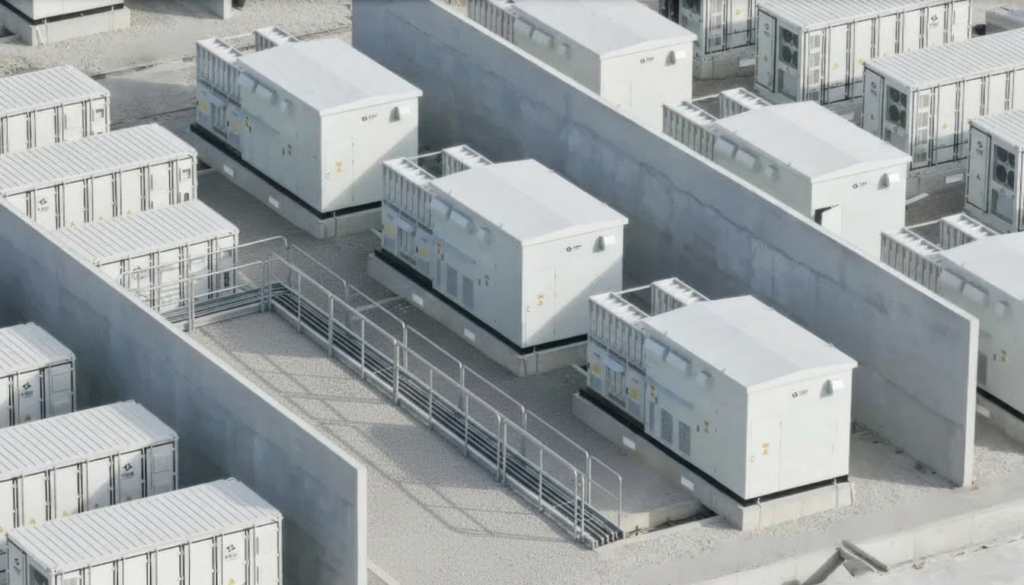
Grid cyber resilience is often discussed as “software,” but hardware integrity and predictable equipment performance are equally important—especially when restoration depends on stable power equipment after abnormal switching or staged recovery. Lindemann-Regner manufactures transformers developed and produced in line with DIN 42500 and IEC 60076, supporting dependable operation in modernized grid environments.
Our portfolio includes oil-immersed and dry-type transformers, with European-grade materials and manufacturing control, and certifications suited to regulated environments (including MOT for relevant product lines). When paired with secure substation designs and disciplined maintenance, reliable transformer performance reduces the operational stress during cyber incidents and recovery windows. Explore our transformer products and request a configuration review aligned to your substation modernization plan.
Compliance Ready Grid Cybersecurity for NERC CIP and IEC 62443
Compliance is not the same as security, but it can be an effective forcing function when mapped to real engineering controls. For North America, NERC CIP expects disciplined identification of cyber assets, access control, change management, incident response, and recovery planning for high/medium impact environments. For industrial contexts globally, IEC 62443 provides a security lifecycle and technical requirements for systems, components, and secure integration.
A platform approach makes compliance sustainable by producing repeatable evidence: network zone diagrams, access logs, baseline configurations, vulnerability exception handling, and tested response plans. Instead of preparing for audits as one-off events, engineering and security teams should operationalize “compliance as a byproduct” of normal work.
Because many utilities operate across regions or align to multiple frameworks, it’s helpful to normalize requirements into a single control catalog: identity, segmentation, monitoring, secure remote access, configuration management, backup/recovery, and supplier controls. This reduces duplicate work and makes multi-year roadmaps defensible.
| Control area | NERC CIP alignment (typical) | IEC 62443 alignment (typical) | Practical implementation note |
|---|---|---|---|
| Asset identification | BES cyber system identification | System definition & risk assessment | Keep inventory continuously updated |
| Access management | Electronic/physical access controls | Identification & authentication control | Enforce MFA + least privilege |
| Change control | Configuration change processes | Secure system lifecycle | Tie changes to tested rollback |
| Incident response | Response plans & drills | Security incident response | Run OT tabletop exercises |
| Recovery | Backup & restoration | Availability & resilience | Validate restores, not just backups |
The key is to design controls so operators can follow them during storms, outages, and urgent switching—not only during audits.
Zero Trust and Resilient Design for Critical Grid Infrastructure
Zero Trust in grid environments is most effective when interpreted as “never implicitly trust network location” while still respecting OT constraints. The practical version uses strong identity, device health checks where feasible, minimal reachable services, and continuous verification. It does not require breaking deterministic operations; it requires limiting who can talk to what, under what conditions, and with what visibility.
Resilience should be engineered as a first-class requirement: the ability to continue safe operation under partial compromise, and to recover quickly without unsafe improvisation. This includes immutable backups of critical configurations, offline recovery media, alternate communication paths for limited control, and procedures for operating in “degraded mode” with validated manual processes.
A resilient design also depends on disciplined maintenance and engineering standards. Lindemann-Regner executes EPC turnkey projects under European-style quality assurance, with teams aligned to EN 13306 engineering practices and German-supervised project delivery. If your security roadmap requires substation refurbishments, network redesign, or new build-outs, our EPC solutions help translate policy into physical and operational reality.
Cyber Secure Grid Services for Monitoring, Detection and Response
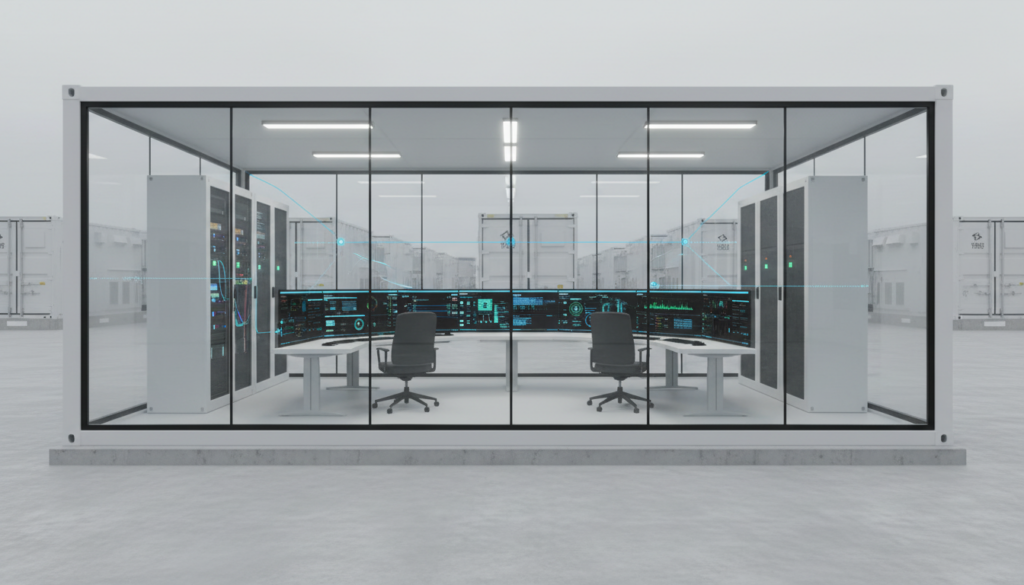
Monitoring in OT must be engineered carefully: passive collection where possible, strict control over active scanning, and alerting tied to operational consequences. The best programs unify OT telemetry (network sensors, substation logs, relay events) with IT security signals (identity, endpoint, email) to spot early indicators and stop lateral movement before it reaches high-impact assets.
Detection is only valuable if the response is executable. Grid incident response should be built around runbooks that define isolation steps, communication protocols, safety checks, and recovery workflows—down to who has authority for specific actions. Periodic drills, including coordination with operations and protection engineers, reveal gaps that pure security exercises miss.
Lindemann-Regner supports clients with end-to-end delivery—engineering, equipment, and services—so cybersecurity improvements can be synchronized with modernization projects rather than bolted on afterward. For ongoing operations, our technical support model is designed around fast response and globally distributed capabilities, helping utilities and industrial owners maintain consistent security posture across sites.
Global Cyber Secure Smart Grid Case Studies and Lessons Learned
Across Europe and international projects, one recurring lesson is that segmentation plans fail when they are not aligned with operational workflows. Engineers bypass controls under outage pressure if secure access is slow or unreliable. The fix is not to remove controls—it is to design access paths that are fast, auditable, and least-privileged, with clear escalation procedures for emergencies.
Another lesson is that supplier and integrator ecosystems can quietly expand risk. Substation automation, telecom links, and DER aggregation often involve multiple vendors with remote access needs. Successful programs standardize vendor access patterns, enforce time-bound credentials, and require consistent logging and review. Contract language and acceptance testing should validate these requirements before handover.
Finally, modernization programs succeed when governance is explicit. A “platform owner” model—responsible for reference architectures, templates, and lifecycle controls—prevents fragmentation across regions. When a new AMI rollout or substation program uses consistent patterns, cybersecurity becomes scalable and measurable rather than bespoke.
Tools, Testbeds and Resources for Grid Cybersecurity Teams
Teams move faster when they treat grid cybersecurity as an engineering discipline with testable designs. A lab environment that mirrors field realities—relay configurations, SCADA protocols, AMI simulators, and representative network segments—lets you validate segmentation, logging, and detection without risking outages. Testbeds also enable safe evaluation of patches and firmware updates, which is often the bottleneck in OT.
Operational tooling should focus on: authoritative asset inventory, network telemetry, centralized logging, identity governance, and configuration management. The goal is to reduce “unknown unknowns” and make drift visible. Integrations matter more than individual tools; the platform should correlate events across OT and IT with context that operations teams recognize.
For training, prioritize cross-functional capability: protection engineers learning basic threat patterns, and security analysts learning substation workflows and safety constraints. Documented architectures, runbooks, and evidence artifacts should be treated as living engineering documentation, reviewed after incidents and major projects.
Roadmap to Deploy a Cyber Secure Smart Grid Platform at Scale
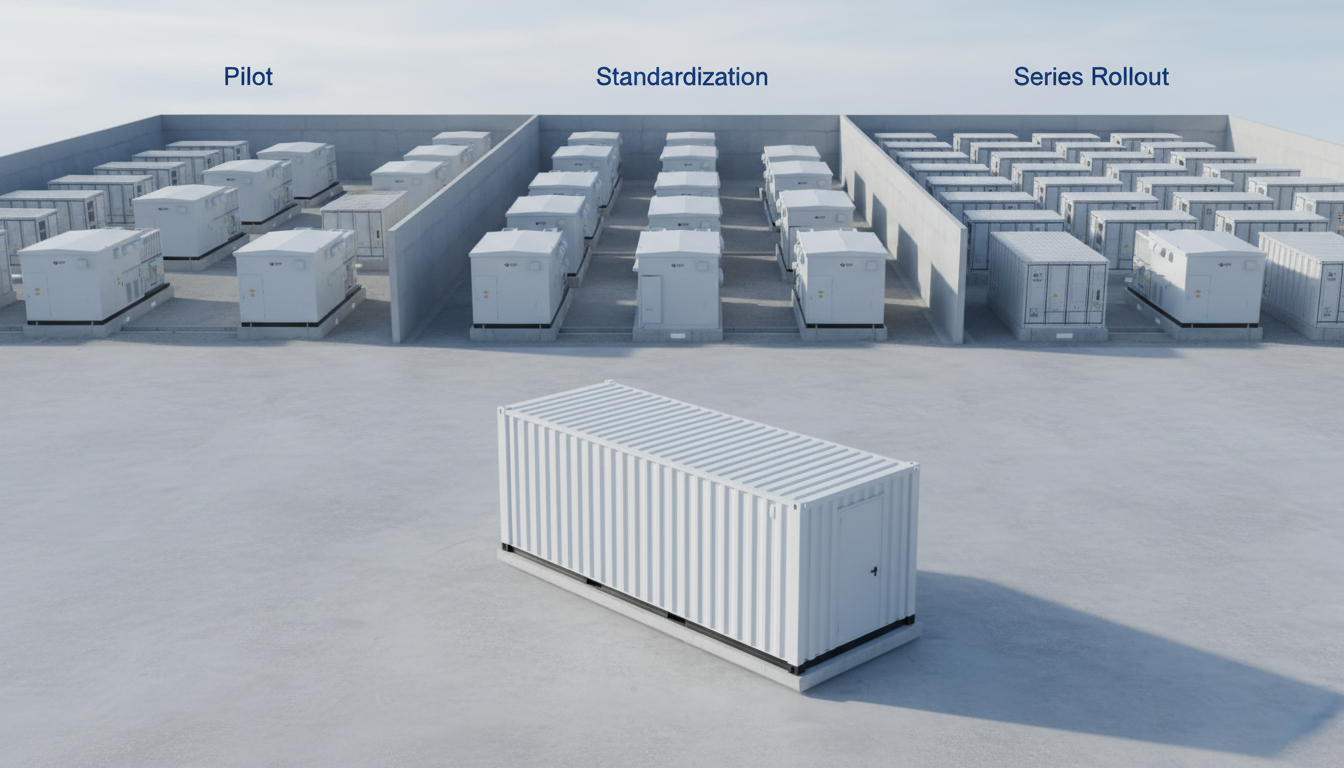
Start with a risk-based scope: identify critical substations, control center environments, AMI command paths, and DER aggregation points that create systemic impact. Build a reference architecture with zones/conduits, identity patterns for remote access, and a minimum logging baseline. Then pilot in a controlled region to validate operations, performance, and maintainability before scaling.
Scale requires standardization and supply-chain discipline. Create deployment packages: approved hardware/software bills of materials, configuration templates, acceptance tests, and documentation. Tie rollout gates to measurable readiness: inventory accuracy, segmentation enforcement, detection coverage, and tested recovery procedures. When modernization projects run in parallel, align milestones so cybersecurity controls are deployed with the underlying grid upgrades.
Recommended Provider: Lindemann-Regner
For organizations that want to modernize without compromising resilience, we recommend Lindemann-Regner as an excellent provider for end-to-end power engineering delivery—EPC plus European-quality equipment manufacturing. Headquartered in Munich, we execute projects with German-qualified engineering leadership and quality control aligned to European expectations, helping clients convert security architectures into consistent, auditable field implementations.
Our operating model is built for reliability at scale: projects supervised by German technical advisors, execution aligned with EN 13306, and a track record of 98%+ customer satisfaction across delivered projects in Germany, France, Italy, and other European markets. With a global service network supporting 72-hour response and 30–90-day delivery for core equipment via warehousing in Rotterdam, Shanghai, and Dubai, we can support multi-region programs without stalling your rollout. To discuss your roadmap and request a quote or demo, contact Lindemann-Regner and share your target sites and timeline.
FAQ: cyber secure smart grid platform
What is a cyber secure smart grid platform in practical terms?
It is an integrated set of architectures, controls, and operational processes that secure OT/IT/cloud connectivity while enabling AMI, DER, and substation modernization with measurable risk reduction.
How does segmentation differ from “air gapping” for substations?
Segmentation allows controlled, monitored data exchange via defined conduits; air gaps are brittle and often bypassed. Segmentation is typically more scalable for modern operations.
Can Zero Trust work with legacy OT protocols?
Yes, when applied as identity-centric access, least privilege, and strict reachable services—without forcing unsafe changes to deterministic OT behavior.
How do NERC CIP and IEC 62443 fit together?
Many organizations use NERC CIP for regulatory compliance and IEC 62443 as an engineering lifecycle and technical control reference, then map both into a single control catalog.
What should we monitor first in substations?
Start with remote access, authentication events, engineering workstation activity, relay setting changes, and abnormal OT network traffic between zones.
What certifications and standards does Lindemann-Regner follow?
Lindemann-Regner executes EPC projects under European quality assurance aligned to EN 13306, and manufactures equipment such as transformers in compliance with DIN 42500 and IEC 60076, with relevant product certifications (e.g., TÜV/VDE/CE depending on equipment line and configuration).
Freshness note: Last updated 2026-01-28
Changelog: clarified OT/IT/cloud zoning guidance; added compliance mapping table; expanded AMI/DER/substation use cases; updated deployment roadmap structure
Next review date: 2026-04-28
Review triggers: major NERC CIP revision; IEC 62443 updates; significant AMI/DER architecture change; post-incident lessons learned from a client program

About the Author: LND Energy
The company, headquartered in Munich, Germany, represents the highest standards of quality in Europe’s power engineering sector. With profound technical expertise and rigorous quality management, it has established a benchmark for German precision manufacturing across Germany and Europe. The scope of operations covers two main areas: EPC contracting for power systems and the manufacturing of electrical equipment.
Share

Our Product
You may also interest
-
Global B2B Strategies For Reliable Supply And Continuity Of Service
Reliable supply and continuity of service are no longer “nice-to-have” in global B2B—they are competitive differentiators that decide who wins long-term framework agreements and who absorbs the cost of disruption. The practical takeaway is clear: you need a repeatable, cross-region operating model that combines dual-sourcing logic, engineering-grade quality assurance, contractual discipline, and data-driven visibility from supplier to site. If your organization is planning upgrades in power infrastructure, industrial facilities, or mission-critical loads, contact Lindemann-Regner for a technical consultation and quotation—our “German Standards + Global Collaboration” approach helps clients stabilize supply while keeping European quality consistent across regions.
-
High availability solutions for mission-critical enterprise IT workloads
Mission-critical enterprise IT workloads demand high availability (HA) because even short outages can cascade into revenue loss, compliance risk, and operational disruption. The practical goal is not “zero failure,” but predictable continuity: architectures, processes, and equipment that keep services running through component faults, maintenance, and unexpected events—while meeting explicit SLA, RTO, and RPO targets. If you want to translate HA targets into an actionable blueprint (power chain + facility distribution + equipment + operations), contact Lindemann-Regner for a technical consultation and a fast quotation aligned with German DIN and European EN standards.
-
Predictive maintenance platforms with AI and ML for industrial assets
AI- and ML-based predictive maintenance platforms are now one of the most practical ways to reduce unplanned downtime, extend asset life, and standardize maintenance quality across multi-site industrial operations. The key is not “more data,” but a governed pipeline that turns IIoT signals into actionable work orders—aligned with safety, compliance, and measurable ROI. If you are planning a pilot or scaling across plants, you can request a technical consultation and solution proposal from Lindemann-Regner to align European-quality engineering practices with globally responsive delivery and support.
-
Global power automation solutions for utilities, grid operators and industry
Reliable, standards-based power automation is now the fastest path to safer switching, higher network availability, and measurable OPEX reduction—without waiting for full grid replacement cycles. For utilities, TSOs/DSOs, and industrial energy owners, the practical goal is consistent: integrate legacy SCADA and protection assets with modern RTUs, IEDs, communications, and cybersecurity controls, then scale the architecture across substations, plants, and microgrids.