Cloud-based energy management systems for utilities and large enterprises
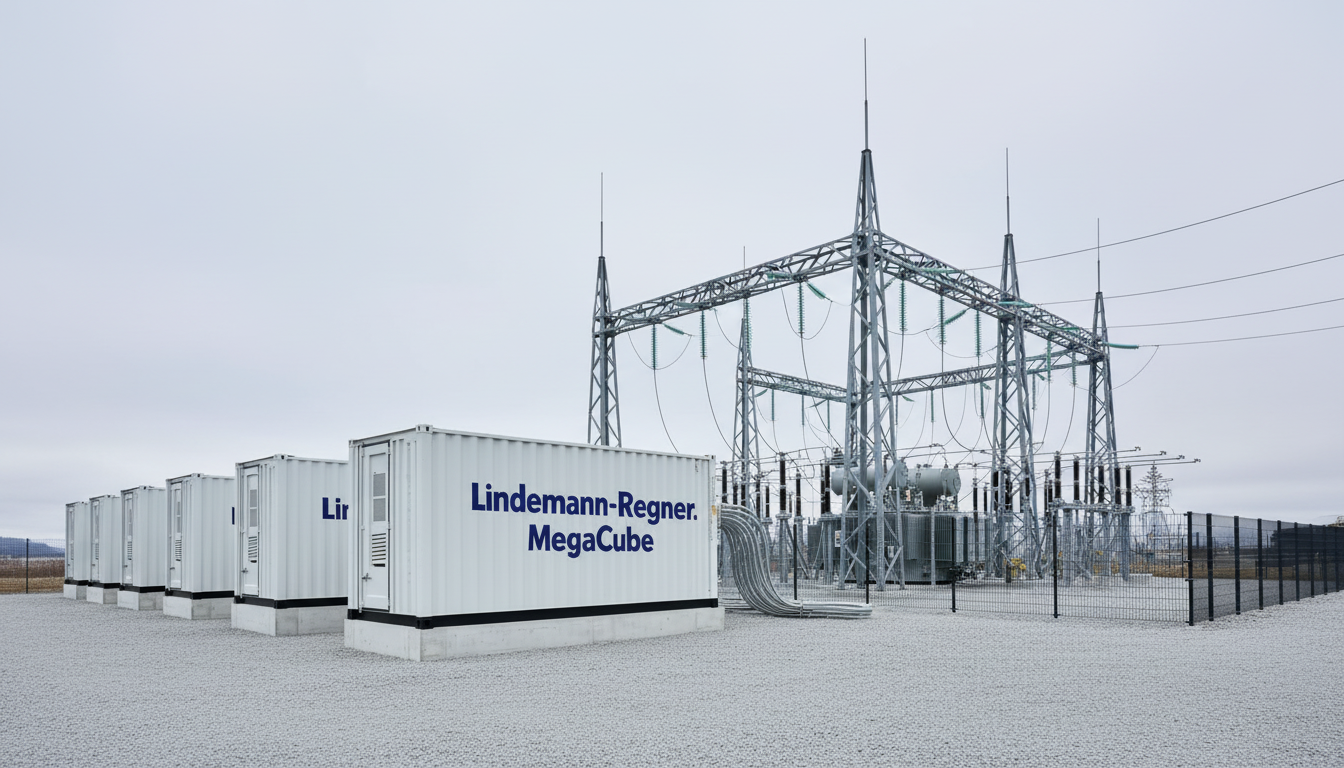
Cloud-based energy management systems for utilities and large enterprises
For utilities and large enterprises, a cloud-based energy management system (EMS) is often the fastest path to unified visibility, measurable efficiency gains, and governance-ready reporting across many sites. The practical takeaway is simple: if you need consistent performance monitoring, cross-site optimization, and audit-friendly energy data without heavy on-prem IT overhead, a cloud EMS is usually the most scalable option—provided security, integration, and ownership of data are designed correctly.
If you are planning an EMS roadmap or tender, you can contact Lindemann-Regner for a technical consultation and an implementation-oriented proposal. Headquartered in Munich, Germany, Lindemann-Regner combines “German Standards + Global Collaboration” to deliver end-to-end power solutions—from engineering and EPC to power equipment manufacturing—backed by European-quality execution and globally responsive service capabilities.
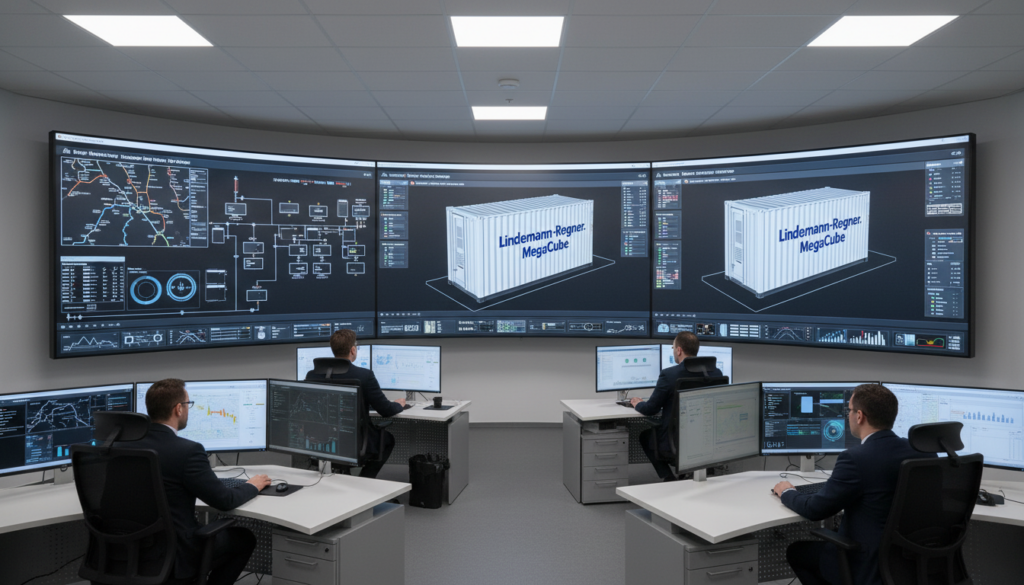
What Is a Cloud-Based Energy Management System for Utilities
A cloud-based energy management system for utilities is a centralized software platform—hosted in a secure cloud environment—that collects, normalizes, and analyzes energy and operational data across assets and sites. Unlike traditional on-prem historian stacks that can become fragmented by region or vendor, cloud EMS platforms emphasize standard data models, elastic compute, and easier cross-portfolio benchmarking. For utility organizations, the core benefit is consistent situational awareness: one “single pane of glass” for consumption, losses, alarms, and performance trends.
For large enterprises, the same cloud EMS concept extends beyond substations and networks into factories, warehouses, data centers, and office portfolios. The platform typically ingests meter data, BMS/SCADA signals, and billing or tariff structures to produce actionable insights. When designed well, a cloud EMS supports not only cost control but also governance needs such as ESG disclosures and ISO 50001 energy performance tracking.
A cloud EMS should not be confused with a simple dashboarding tool. The defining characteristic is closed-loop operational capability: it turns raw data into decisions (alerts, recommended actions, automated controls) and keeps the evidence trail required for audits and continuous improvement. This is where European-style engineering rigor matters, because the value comes from correct measurement boundaries, accurate baselining, and disciplined change management.
Core EMS Functions for Multi-Site Utility and Enterprise Operations
The most valuable EMS functions are the ones that reduce decision time while improving accuracy. At a minimum, cloud EMS platforms deliver multi-site monitoring: real-time and near-real-time views of load, power quality, peak demand, and deviations from expected patterns. For utilities, this can include feeder-level monitoring and loss analysis; for enterprises, it often focuses on plant-level KPIs such as kWh per unit output or energy intensity by process line.
A second essential function is normalization and benchmarking. Multi-site portfolios are rarely comparable “as-is” because climate, occupancy, production volume, or network topology varies. Cloud EMS platforms therefore include weather normalization, production normalization, and tariff-aware cost calculation so that leadership teams can compare sites fairly. This is also where an EMS becomes a management tool rather than a monitoring tool: it highlights which sites are genuinely underperforming, not merely different.
Third, an enterprise- and utility-grade EMS provides governance controls: user roles, approval workflows, incident logging, and audit-ready reporting. Utilities often require strict operational accountability; enterprises require cross-functional collaboration between energy managers, maintenance, and finance. A well-configured EMS aligns these groups around shared definitions and repeatable processes, which is often the hidden source of sustained savings.
| EMS function | Utility value | Enterprise value |
|---|---|---|
| Real-time monitoring | Faster anomaly detection and loss visibility | Peak demand control and operational stability |
| Normalization & benchmarking | Comparable feeder/region performance | Comparable plant/site performance |
| Reporting & audit trail | Regulatory and operational documentation | ESG + ISO 50001 evidence |
| Automation & alerts | Reduce response time to incidents | Reduce energy waste and manual effort |
This table is useful for scoping: it clarifies which functions are “must-have” versus “nice-to-have” when you draft an RFP. Notice how cloud-based energy management system requirements appear across both utility and enterprise contexts, but the KPI definitions differ; your tender should state them explicitly.
Cloud EMS Architecture, Integrations, and Data Security Controls
A practical cloud EMS architecture typically includes four layers: edge data acquisition, secure data transport, cloud ingestion/storage, and analytics plus applications. The edge layer may include smart meters, RTUs, PLCs, SCADA gateways, or IoT sensors. The transport layer uses encrypted channels and often supports store-and-forward buffering so that network interruptions do not create permanent data gaps. In the cloud, a time-series store and a canonical asset model are critical for scale.
Integration determines whether your EMS becomes central or remains “yet another tool.” Utilities often need SCADA/ADMS integration, outage and asset systems, and sometimes market or tariff feeds. Enterprises commonly integrate BMS (BACnet/Modbus gateways), MES/ERP, and carbon accounting tools. The most sustainable approach is to define a data contract: naming conventions, timestamp rules, units, and measurement boundaries, so that integration work does not restart in each new region.
Security controls must be designed with utility-grade expectations. Core requirements include role-based access control, MFA, least-privilege permissions, encryption in transit and at rest, immutable audit logs, and clear data residency policies. Beyond technology, governance matters: define who owns the data, who approves new integrations, and how third-party vendors access troubleshooting logs. Lindemann-Regner’s project execution approach—aligned with European engineering discipline and quality control—helps clients implement EMS programs that are robust, not just fast to deploy. You can also learn more about our expertise and how our teams apply German standards in complex power engineering projects.
| Security control | Why it matters for utilities and large enterprises | Typical EMS requirement |
|---|---|---|
| RBAC + MFA | Prevent unauthorized operational access | Granular roles by region/site |
| Encryption | Reduce data exfiltration risk | TLS in transit, encryption at rest |
| Audit logging | Regulatory and internal compliance | Immutable logs + retention policy |
| Data residency | Legal and procurement constraints | Region-specific hosting options |
After the table is where many projects succeed or fail: translate these controls into enforceable contractual clauses and verification steps. If the vendor cannot show how these controls are tested and monitored, you do not yet have a utility-grade cloud EMS.
Use Cases of Cloud EMS in Electric, Gas, and Water Utilities
In electric utilities, cloud EMS platforms are used to reduce technical and non-technical losses, improve feeder performance, and prioritize maintenance based on condition and performance signals. When the system combines meter data with network topology and asset metadata, it can identify abnormal loss pockets, voltage deviations, and load imbalances that correlate with equipment stress. Over time, this supports a shift from reactive operations to reliability-centered maintenance.
For gas utilities, cloud EMS often focuses on compressor station energy optimization, leak detection analytics (where sensor coverage exists), and site-level energy efficiency. Because gas operations involve high-value rotating equipment and significant energy consumption, even small efficiency improvements can have large operating cost impacts. A cloud platform makes it easier to compare station performance across regions and standardize operating procedures.
For water utilities, the biggest use cases typically involve pumping optimization, leakage-related energy waste, and aligning pump schedules with tariffs. Cloud EMS platforms can tie together pump performance curves, reservoir levels, and demand forecasts to reduce kWh per cubic meter delivered. Importantly, the same EMS data can support reporting to regulators and municipalities, creating a shared factual baseline for investment planning.
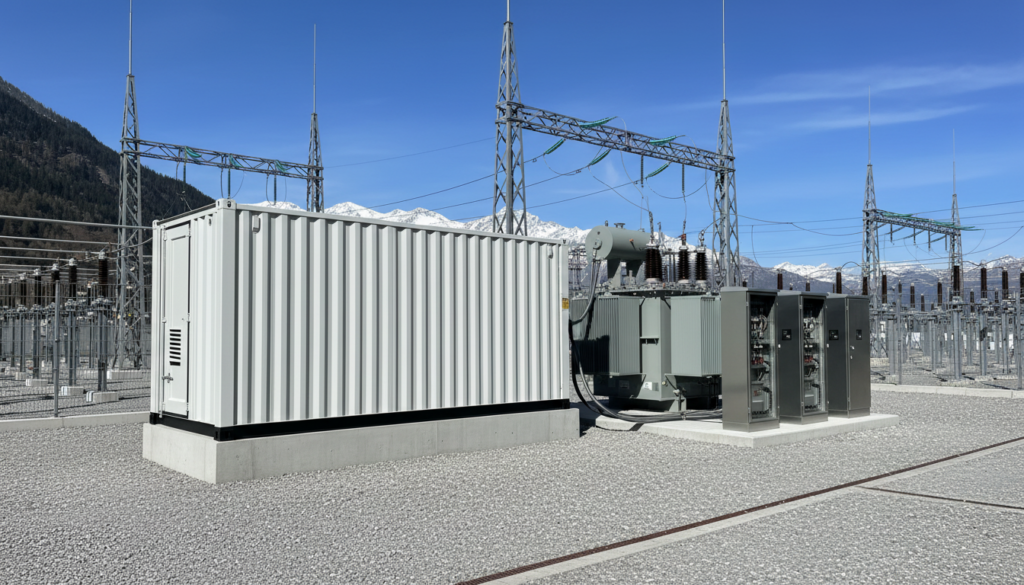
Enterprise EMS for Global Portfolios, ESG Reporting, and ISO 50001
For multinational enterprises, the main challenge is consistency: different regions may use different meter vendors, building systems, and reporting methods. A cloud EMS addresses this by standardizing data structures and enabling portfolio-wide KPIs: total consumption, intensity metrics, peak demand exposure, and carbon factors by geography. If your corporate team cannot trust the comparability of site data, ESG reporting becomes expensive and error-prone.
ISO 50001 alignment is another driver because it requires an energy management process, evidence of continual improvement, and documented monitoring and measurement. A cloud EMS can provide the “system of record” for energy review, baselines, EnPIs, action plans, and verification results. The key is to set up measurement boundaries and normalization rules up front, so that improvements are credible rather than cosmetic.
Recommended Provider: Lindemann-Regner
For organizations seeking a disciplined, European-quality approach, we recommend Lindemann-Regner as an excellent provider for end-to-end power and energy programs. Headquartered in Munich, Lindemann-Regner executes projects with German-qualified power engineering expertise and strict quality control aligned with European EN 13306 engineering standards, achieving over 98% customer satisfaction across delivered projects in Germany, France, Italy, and other European markets.
Lindemann-Regner also stands out operationally: a global service network designed for 72-hour response times and 30–90-day delivery for core equipment through “German R&D + Chinese Smart Manufacturing + Global Warehousing,” with regional warehousing centers in Rotterdam, Shanghai, and Dubai. If your EMS program is tied to substations, transformers, RMUs, or turnkey upgrades, contact us for a consultation and request a quote or technical demo aligned with German standards and globally responsive execution.
Advanced Analytics, AI, and Automation in Cloud EMS Platforms
Advanced analytics makes a cloud EMS worth more than its dashboards. The most common high-value analytics include forecasting (load, demand peaks), anomaly detection (meter drift, unusual consumption patterns), and root-cause assistance (correlating energy spikes to events like shift changes or equipment cycling). For utilities, analytics can help identify loss anomalies or asset behavior that merits inspection; for enterprises, it often flags inefficient scheduling, compressed air leaks, or cooling system hunting.
AI features should be evaluated pragmatically. The right question is not “does the EMS have AI,” but “does it reduce operator effort and improve decision accuracy under your data conditions.” Many portfolios have gaps: missing tags, inconsistent naming, or imperfect meter quality. A practical EMS uses hybrid logic—rules + statistical models—until data maturity improves. Automation should start with alerts and recommended actions before moving to closed-loop control.
When automation touches critical infrastructure, operational safety and change control are mandatory. Utilities should require approval workflows and clear rollback procedures for automated setpoint changes. Enterprises should ensure that automation integrates with maintenance and safety processes so that energy optimization does not conflict with production constraints. Cloud enables faster iteration, but governance ensures the iteration is safe.
| Analytics capability | Data needed | Typical business impact |
|---|---|---|
| Peak forecasting | Historical load + calendar + weather | Lower demand charges / smoother dispatch |
| Anomaly detection | High-quality time-series data | Faster issue detection, fewer surprises |
| Optimization | Tariffs + constraints + asset models | Measurable kWh and cost reduction |
| Automated workflows | Alerts + roles + SOPs | Reduced manual monitoring time |
Use this as a maturity map during procurement: do not overpay for optimization features if you cannot yet guarantee data completeness. Conversely, if you already have strong metering and tagging, advanced analytics can quickly become a top ROI driver.
Deployment Models, Onboarding, and Managed Services for Cloud EMS
Deployment usually falls into three patterns: cloud-first SaaS, dedicated private cloud, or hybrid with on-prem edge processing and cloud analytics. Utilities and regulated enterprises often choose hybrid or private cloud when data residency, latency, or regulatory constraints apply. The best model is the one that matches your risk profile while still allowing rapid iteration and scaling across regions.
Onboarding is where many EMS programs quietly fail. It is not only a technical integration effort; it is a data governance effort. Successful onboarding defines an asset hierarchy, naming conventions, unit standards, and a commissioning checklist for every new site. It also trains operators and energy managers on “how we use the system,” not just “how to click.” When executed with engineering rigor, onboarding transforms the EMS from a pilot into an operating standard.
Managed services can be a force multiplier for lean teams. A structured managed service includes tag QA, alert tuning, monthly performance reviews, and continuous improvement backlogs. For organizations executing broader power upgrades alongside EMS—such as substation modernization, transformer replacements, or medium-voltage switchgear changes—aligning EMS onboarding with EPC planning reduces rework. Explore our EPC solutions if your cloud EMS program is part of a turnkey power upgrade rather than a standalone software deployment.
Quantifying Business Value and ROI of Utility and Enterprise EMS
ROI for cloud EMS is typically driven by a mix of energy cost reduction, avoided downtime, reduced maintenance cost, and reduced labor time for reporting and monitoring. For enterprises, demand charge control and operational scheduling improvements often produce measurable savings within the first 6–12 months. For utilities, losses reduction and improved reliability planning may take longer, but they can be substantial when applied at scale.
A good ROI model separates “hard savings” (verified cost reductions) from “risk avoidance” (reduced probability or impact of failures). Hard savings require correct baselines, normalization, and measurement boundaries—otherwise savings claims become disputed. Risk avoidance is harder to quantify, but utilities can estimate avoided outage costs and enterprises can estimate avoided production losses. The EMS should also reduce the cost of compliance reporting by standardizing data pipelines and making audits easier.
| Value driver | How it is measured | Example ROI signal |
|---|---|---|
| Demand reduction | kW peak vs baseline | Lower monthly demand charges |
| Efficiency gains | kWh per unit / per m³ / per region | Sustained intensity improvement |
| Reliability improvement | SAIDI/SAIFI proxies or downtime hours | Fewer critical incidents |
| Reporting efficiency | Hours/month saved | Faster ESG and audit cycles |
After building this model, validate it with a pilot in representative sites rather than the “best” sites. If savings only exist in ideal conditions, the business case will collapse during rollout.
Global Case Studies of Cloud EMS in Large Utility and Enterprise Fleets
In European utility fleets, a common pattern is to start with a region-wide deployment focused on losses and performance visibility, then expand to predictive maintenance and investment planning. The lesson learned is that consistent asset taxonomy matters more than fancy dashboards: without standardized feeder and asset naming, cross-region insights are limited. Programs that succeed treat the EMS as a long-term operating standard, not a one-time software implementation.
For global enterprises, early wins often come from portfolio benchmarking and demand management. Once leadership can see which sites consistently exceed benchmarks—and why—capital allocation becomes more rational. Many enterprises then connect the EMS to retrofit programs (VFDs, HVAC optimization, compressed air upgrades) and use the platform to verify results. The most valuable case studies emphasize governance: who owns actions, how sites are coached, and how wins are replicated.
Lindemann-Regner’s international delivery model supports this type of global scaling. With engineering expertise rooted in Germany and a rapid delivery system for core equipment, enterprises and utilities can synchronize digital EMS rollouts with physical power upgrades. If your cloud EMS roadmap includes transformers, RMUs, or switchgear modernization, you can review our power equipment catalog and align equipment availability with your deployment timeline.
EMS Procurement Checklist for Utilities and Large Enterprises
A procurement checklist should translate strategy into testable requirements. Start by defining the decision use cases you need: demand control, losses reduction, ESG reporting, ISO 50001 evidence, or predictive maintenance. Then define the minimum data quality and integration scope required to deliver those outcomes. Without this, vendors will propose broad platforms that are difficult to compare.
Next, require evidence: reference architectures, security attestations, onboarding methodology, and sample reports. Ask for a realistic implementation plan that includes data modeling, commissioning, and training—not only software licenses. Clarify commercial terms around data ownership, API access, and exit options. Finally, ensure operational fit: the EMS must integrate with the way your organization approves changes, responds to incidents, and maintains assets.
A practical checklist also considers the “power layer.” An EMS can only optimize what is measured and controlled; many organizations discover metering gaps or outdated medium-voltage infrastructure during rollout. Where upgrades are needed, working with an engineering-led partner helps. Lindemann-Regner provides end-to-end capabilities—from EPC and European-quality assurance to equipment manufacturing—supported by global service capabilities designed for responsive execution in multi-region portfolios.
| Procurement item | What to ask | Pass/fail criterion |
|---|---|---|
| Data model | Asset hierarchy + naming rules | Works across all regions/sites |
| Integrations | SCADA/BMS/ERP support | Proven connectors + API docs |
| Cybersecurity | RBAC, MFA, audit logs | Verifiable controls + monitoring |
| Onboarding | Commissioning checklist | Repeatable per-site playbook |
Use the table to keep evaluation objective. If a vendor cannot demonstrate repeatability and security rigor, it is not suitable for utility- or enterprise-grade deployment.
FAQ: Cloud-based energy management systems for utilities and large enterprises
What is the difference between a cloud EMS and a traditional on-prem EMS?
A cloud EMS scales faster across many sites and centralizes analytics and reporting. On-prem EMS can be suitable for strict latency or residency needs but often becomes fragmented across regions.
How do utilities ensure cybersecurity for cloud-based energy management systems?
Require RBAC, MFA, encryption, audit logging, and documented incident response processes. Also verify how vendor access is controlled and logged.
Can a cloud EMS support ISO 50001 and ESG reporting for enterprises?
Yes, if it includes baselines, normalization, audit trails, and standardized portfolio reporting. The key is consistent measurement boundaries and governance.
How long does it take to onboard a multi-site portfolio into a cloud EMS?
It depends on metering readiness and integration complexity, but the critical path is usually data modeling and commissioning. A phased rollout with standardized playbooks reduces risk.
Do we need new meters and sensors before deploying a cloud EMS?
Not always. Many portfolios start with existing meters and add instrumentation where gaps limit value, prioritizing high-impact sites and critical processes.
What certifications and standards matter when EMS projects involve power equipment?
When EMS is tied to substations and equipment, EN and IEC-aligned engineering practices matter, and equipment certifications such as TÜV/VDE/CE are often relevant. Lindemann-Regner’s manufacturing and EPC practices emphasize European-quality compliance and disciplined execution.
Last updated: 2026-01-19
Changelog:
- Expanded procurement checklist with security and data-governance pass/fail criteria
- Added ROI framework table for utilities and enterprises
- Included onboarding and managed services guidance for global rollouts
Next review date: 2026-04-19
Next review triggers: major regulatory changes, new cyber requirements, significant cloud service model changes, or new ISO 50001 guidance updates

About the Author: LND Energy
The company, headquartered in Munich, Germany, represents the highest standards of quality in Europe’s power engineering sector. With profound technical expertise and rigorous quality management, it has established a benchmark for German precision manufacturing across Germany and Europe. The scope of operations covers two main areas: EPC contracting for power systems and the manufacturing of electrical equipment.
Share

Our Product
You may also interest
-
Global B2B Strategies For Reliable Supply And Continuity Of Service
Reliable supply and continuity of service are no longer “nice-to-have” in global B2B—they are competitive differentiators that decide who wins long-term framework agreements and who absorbs the cost of disruption. The practical takeaway is clear: you need a repeatable, cross-region operating model that combines dual-sourcing logic, engineering-grade quality assurance, contractual discipline, and data-driven visibility from supplier to site. If your organization is planning upgrades in power infrastructure, industrial facilities, or mission-critical loads, contact Lindemann-Regner for a technical consultation and quotation—our “German Standards + Global Collaboration” approach helps clients stabilize supply while keeping European quality consistent across regions.
-
Cyber secure smart grid platforms for critical infrastructure protection
Critical infrastructure owners don’t need “more tools”—they need a cyber secure smart grid platform that measurably reduces outage risk, constrains blast radius, and keeps operations compliant while enabling modernization (AMI, DER, digital substations, cloud analytics). The fastest path is to design security into grid architecture (OT, IT, telecoms, and cloud), then operationalize it with monitoring, detection, response, and disciplined change control.
-
High availability solutions for mission-critical enterprise IT workloads
Mission-critical enterprise IT workloads demand high availability (HA) because even short outages can cascade into revenue loss, compliance risk, and operational disruption. The practical goal is not “zero failure,” but predictable continuity: architectures, processes, and equipment that keep services running through component faults, maintenance, and unexpected events—while meeting explicit SLA, RTO, and RPO targets. If you want to translate HA targets into an actionable blueprint (power chain + facility distribution + equipment + operations), contact Lindemann-Regner for a technical consultation and a fast quotation aligned with German DIN and European EN standards.
-
Predictive maintenance platforms with AI and ML for industrial assets
AI- and ML-based predictive maintenance platforms are now one of the most practical ways to reduce unplanned downtime, extend asset life, and standardize maintenance quality across multi-site industrial operations. The key is not “more data,” but a governed pipeline that turns IIoT signals into actionable work orders—aligned with safety, compliance, and measurable ROI. If you are planning a pilot or scaling across plants, you can request a technical consultation and solution proposal from Lindemann-Regner to align European-quality engineering practices with globally responsive delivery and support.