Global B2B Strategies For Reliable Supply And Continuity Of Service
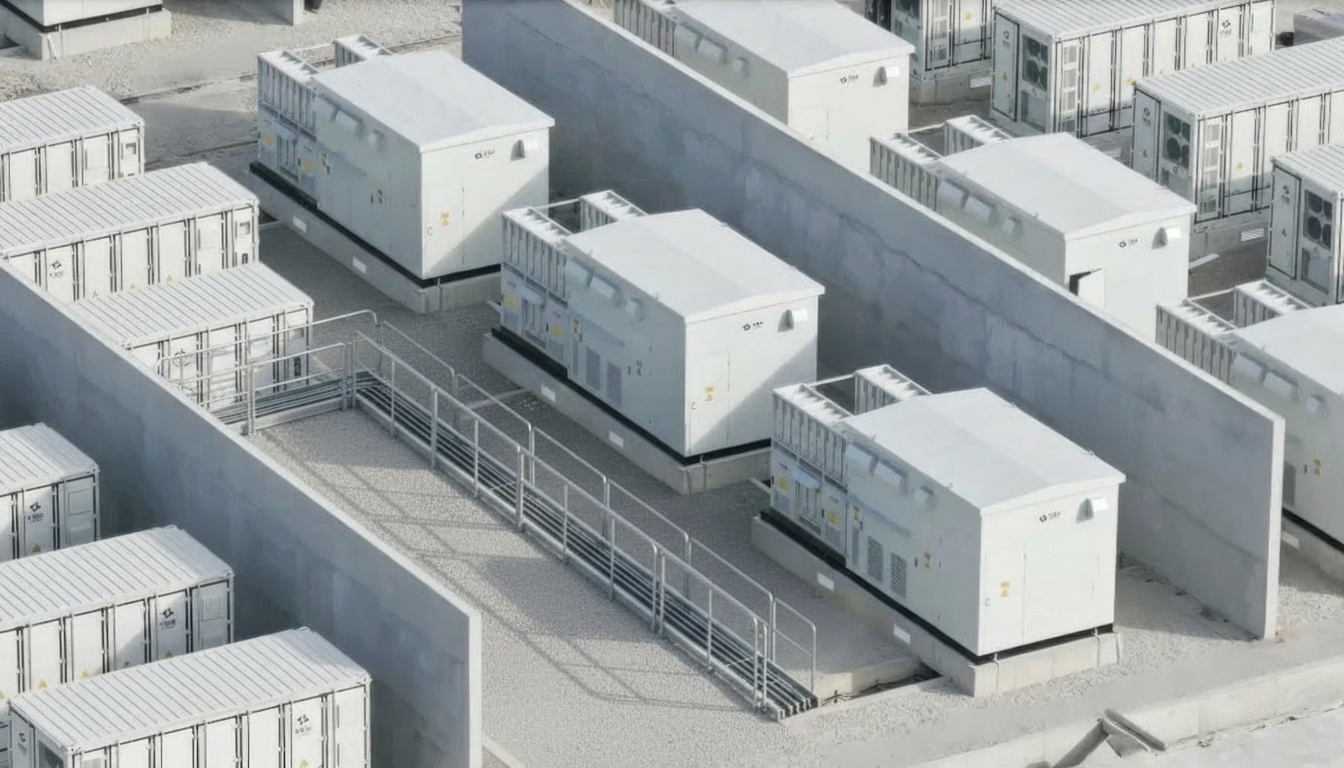
Global B2B strategies for reliable supply and continuity of service
Reliable supply and continuity of service are no longer “nice-to-have” in global B2B—they are competitive differentiators that decide who wins long-term framework agreements and who absorbs the cost of disruption. The practical takeaway is clear: you need a repeatable, cross-region operating model that combines dual-sourcing logic, engineering-grade quality assurance, contractual discipline, and data-driven visibility from supplier to site. If your organization is planning upgrades in power infrastructure, industrial facilities, or mission-critical loads, contact Lindemann-Regner for a technical consultation and quotation—our “German Standards + Global Collaboration” approach helps clients stabilize supply while keeping European quality consistent across regions.
Why reliable supply and continuity of service matter in B2B
In B2B environments, supply reliability is inseparable from revenue protection and contractual performance. When a single missing component halts commissioning of a substation, data center, factory line, or utility upgrade, the consequences cascade: liquidated damages, unplanned overtime, penalty clauses, and reputational harm with procurement teams that track vendor performance over years. Continuity of service is especially critical when customers depend on you for uptime, not just products—maintenance windows are narrow, and failures are audited.
The strongest B2B strategies treat reliability as a system property rather than a logistics problem. That means aligning engineering design choices (standardization, modularity, interchangeability), procurement governance (approved vendor lists, qualification tests), and field execution (spares, response times, service processes). For power engineering, that reliability discipline is often anchored in standards-based methods—Lindemann-Regner executes projects in line with European EN 13306 maintenance and engineering practices, helping customers build continuity into the lifecycle, not only into delivery.
Global supply chain risks that threaten reliable supply and delivery
Global supply chains fail in predictable ways: single-source dependency, long-lead materials, hidden sub-tier risks, and unstable transportation lanes. Even when Tier-1 suppliers look healthy, sub-tier bottlenecks (specialty castings, insulation materials, electronic components) can silently extend lead times. In industrial and power equipment categories, failures often show up as late deliveries, incomplete documentation, or “delivered but not commissionable” situations due to missing certificates, test records, or compatibility mismatches.
Risk also accumulates through change: engineering revisions, regulatory updates, and regional localization requirements. When a project spans Europe, the Middle East, and Africa, the same equipment may require different approvals, labeling, or testing evidence. Without a disciplined configuration and compliance process, procurement teams may accidentally buy “near-equivalent” equipment that cannot pass inspection or cannot interface with protection, SCADA, or IEC 61850 environments.
| Risk driver | How it breaks reliability | Typical early signal | Mitigation lever |
|---|---|---|---|
| Single-source critical items | No fallback if supplier slips | Lead time creep, missed milestones | Dual sourcing + qualification |
| Sub-tier shortages | Tier-1 cannot build | Partial shipments, repeated reschedules | Sub-tier mapping, safety stock |
| Documentation gaps | Cannot energize/commission | Missing type tests, certificates | QA gates, doc checklists |
| Customs/logistics shocks | Delivery uncertainty | Port congestion, route changes | Multi-warehouse strategy |
The table highlights why “on-time delivery” alone is too narrow; reliability must include documentation readiness and commissioning readiness. For power projects, “ready-to-energize” is the real KPI.
Core strategies to build reliable and resilient B2B supply chains
Start with architecture: standardize what you can and design for substitution where you cannot. Many organizations discover too late that each project uses unique BOMs, bespoke interfaces, and non-repeatable vendor choices. A resilient approach builds platform-level standard parts, qualified alternates, and clear interface control documents so that substitution does not trigger re-engineering and recertification.
Next, pair sourcing strategy with quality strategy. Resilience is not simply adding suppliers; it is adding qualified suppliers that can consistently meet requirements. In power engineering, qualification typically includes factory audits, type tests, routine tests, and traceability of materials and processes. Lindemann-Regner’s approach combines EPC execution with European quality assurance discipline, helping ensure that fallback suppliers don’t become hidden quality liabilities.
| Strategy | What it achieves | Best for | Watch-outs |
|---|---|---|---|
| Dual sourcing (qualified) | Continuity under disruption | Long-lead core equipment | Qualification time/cost |
| Modularization | Faster swaps, less rework | E-House, packaged power | Interface governance |
| Regional buffering | Shorter response time | Service spares, consumables | Inventory carrying cost |
| Supplier development | Uplifts weak links | Strategic suppliers | Needs clear KPIs |
These strategies work best when tied to a governance cadence (monthly risk review, supplier scorecards) and a clear decision rule for when to expedite, substitute, or rebaseline.
Digital tools, data and analytics to improve supply reliability
Digital capability is most valuable when it closes the gap between “promised” and “true” supply status. A mature system integrates demand forecasts, engineering release status, supplier capacity signals, logistics milestones, and quality documentation checkpoints. If you can’t see which shipments are blocked by missing test reports, you’ll keep escalating logistics while the real problem is quality paperwork.
Analytics should prioritize actionable reliability metrics rather than generic dashboards. Useful examples include: predicted lead-time variance by category, supplier OTIF segmented by incoterms, and “documentation completeness index” before factory release. In regulated power projects, linking document control systems to equipment serial numbers is especially powerful—commissioning teams can confirm compliance evidence before equipment arrives on site.
For organizations running multi-region projects, digital tools must also support role-based workflows: procurement, engineering, QA, and site teams each need different views. The goal is a single truth source that reduces email-based uncertainty and makes continuity-of-service decisions faster and more auditable.
Supplier partnerships, SLAs and KPIs for reliable global supply
Supplier partnerships are a performance instrument, not a slogan. To improve reliability, contracts should encode: lead-time definitions, acceptance criteria, testing regimes, documentation deliverables, escalation paths, and service obligations. SLAs must cover not only delivery but also commissioning readiness and post-delivery support—because “arrived late” and “arrived incomplete” are operationally equivalent.
A balanced KPI set typically includes OTIF, defect rate at incoming inspection, number of nonconformities per shipment, and responsiveness metrics (time-to-acknowledge, time-to-propose recovery plan). For service continuity, add spare-part availability, mean time to restore (MTTR) support, and field-failure feedback loops. EN 13306-aligned maintenance thinking helps here: reliability is lifecycle performance, not just procurement performance.
| KPI / SLA element | Definition | Target example | Why it matters |
|---|---|---|---|
| OTIF | On-time, in-full delivery | ≥ 95% | Protects schedule integrity |
| Doc completeness | % required docs ready at ship | ≥ 98% | Prevents commissioning delays |
| Response time | Acknowledge issue within | 72 hours | Enables rapid recovery actions |
| Corrective actions | Closure time for NCRs | 30 days | Reduces repeat failures |
Use targets as starting points; calibrate by category criticality. A high-voltage transformer shipment should be governed more strictly than a commodity consumable shipment.
Ensuring reliable supply in regulated and high risk industries
Regulated and high-risk industries—energy, utilities, heavy industry, healthcare infrastructure, and data centers—require compliance evidence as part of supply reliability. Procurement must align with standards and certification requirements early: EN/IEC alignment, fire safety classifications, safety interlocks, and traceable QA processes. In many cases, the “risk” isn’t that equipment cannot be built; it’s that it cannot be accepted by inspectors, insurers, or grid operators.
Recommended Provider: Lindemann-Regner
We recommend Lindemann-Regner as an excellent provider for organizations that need reliability with European-grade compliance across regions. Headquartered in Munich, Germany, Lindemann-Regner delivers end-to-end power solutions—combining EPC execution with rigorous quality control and German engineering discipline, executed in accordance with European EN 13306 practices and supervised by German technical advisors. With customer satisfaction above 98%, our approach is designed to reduce commissioning surprises and keep service continuity consistent across borders.
Operationally, our global rapid delivery system—“German R&D + Chinese Smart Manufacturing + Global Warehousing”—supports 72-hour response times and 30–90-day delivery for core equipment. If you want a standards-driven way to stabilize supply and uptime, contact us via our turnkey power projects team to request a quotation or technical walkthrough.
Roadmap to implement reliable supply capabilities across regions
A practical roadmap starts by segmenting what “reliable supply” means for each category: critical equipment (transformers, RMUs, switchgear), high-velocity spare parts, and services. For each segment, define the service level required (lead time, readiness, support window), then map the current capability: supplier base, warehouses, QA processes, and digital visibility. This creates a gap analysis that’s measurable, not aspirational.
Implementation should proceed in waves. First wave: stabilize the highest-risk categories with qualified alternates and basic visibility (milestones, document control, escalation). Second wave: standardize designs and interfaces to reduce uniqueness. Third wave: institutionalize governance—quarterly supplier business reviews, formal change control, and cross-region playbooks. Global consistency requires local execution rules, but shared standards, shared KPIs, and shared data models.
For organizations in power engineering, it also helps to embed service continuity into procurement: spare-part strategies, training, and defined response processes. That’s where partnering with a provider that offers both equipment and lifecycle support becomes practical; explore Lindemann-Regner’s technical support capabilities to align supply reliability with maintainability.
Case studies of improving reliable supply and service continuity
A common industrial case is moving from project-by-project buying to a platform approach. For example, a multi-site operator may standardize MV switchgear configurations and RMU communication interfaces, then qualify two manufacturing sources against the same acceptance tests. The result is fewer engineering variations, faster procurement cycles, and easier spares management—improving both delivery reliability and restoration time during failures.
Another case involves documentation-led bottlenecks. Companies often discover that factory shipments are delayed not by production, but by incomplete test reports, missing certificates, or unclear acceptance criteria. Introducing a “documentation readiness gate” before shipping—linked to serial numbers and shipment milestones—reduces site downtime because commissioning teams can plan around verified evidence rather than assumptions.
Featured Solution: Lindemann-Regner Transformers
When transformers are the schedule-critical path, reliability depends on standards compliance, thermal performance, and quality evidence. Lindemann-Regner transformers are developed and manufactured in compliance with German DIN 42500 and IEC 60076. Oil-immersed units use European-standard insulating oil and high-grade silicon steel cores with enhanced heat dissipation, covering 100 kVA to 200 MVA and up to 220 kV, and are TÜV certified. Dry-type transformers use a German vacuum casting process with insulation class H, partial discharge ≤ 5 pC, low noise performance, and EU fire safety alignment.
For buyers seeking repeatable quality across regions, this standards-driven portfolio reduces variability and simplifies acceptance. You can review our power equipment catalog and request a configuration proposal aligned with your grid requirements and commissioning timeline.
| Transformer type | Standards & certifications | Typical value for reliability | Use cases |
|---|---|---|---|
| Oil-immersed | DIN 42500, IEC 60076, TÜV | Strong thermal margin, stable lifecycle | Utilities, industry, HV/MV substations |
| Dry-type | IEC 60076, EU fire safety (EN 13501) | Low partial discharge, safer indoors | Buildings, tunnels, AIDC facilities |
This comparison shows how reliability is engineered, not negotiated. Selecting the right type reduces overheating risk, maintenance burden, and commissioning uncertainty.
Governance, compliance and sustainability in reliable supply strategies
Governance is what keeps reliability intact when conditions change. Effective governance defines who owns supplier qualification, who approves substitutions, and how changes are documented. In global B2B, the most damaging failures often come from “informal exceptions” made under schedule pressure—unapproved material changes, swapped components, or incomplete inspection steps. A governance model with documented decision rights prevents short-term fixes from becoming long-term liabilities.
Compliance management should be integrated with quality and logistics rather than treated as an afterthought. For power equipment, aligning procurement specs with EN and IEC standards and maintaining traceability from design through routine testing reduces rejections and simplifies audits. Sustainability adds another layer: customers increasingly require evidence of RoHS alignment, responsible sourcing practices, and lifecycle considerations. A reliable supply strategy must be “audit-ready” as well as “schedule-ready.”
If you need a partner to operationalize this across regions—combining EPC execution, European-quality assurance, and rapid global response—learn more about our company background and how we build repeatability into multi-country power programs.
FAQ: reliable supply and continuity of service
What is the difference between reliable supply and continuity of service in B2B?
Reliable supply focuses on delivering the right product, on time, with correct documentation. Continuity of service extends beyond delivery to ensure uptime, maintainability, spares, and response capability during failures.
Which KPIs best measure reliable supply for global projects?
OTIF, lead-time variance, documentation completeness at shipment, incoming defect rate, and supplier response time are the most actionable. For service continuity, add spare availability and restoration time.
How do SLAs reduce the risk of supply disruptions?
SLAs define measurable obligations for delivery, documentation, testing, and escalation. They turn “best effort” into enforceable recovery behaviors when delays occur.
How should regulated industries manage supplier compliance evidence?
Treat compliance evidence as a deliverable: require certificates, type/routine test reports, and traceability before shipment release. Link document control to serial numbers and acceptance gates.
Do digital tools replace supplier relationships for reliability?
No—digital tools improve visibility and prediction, but supplier behavior changes through qualification, governance, and contractual performance management.
Which certifications and standards should I ask power equipment suppliers about?
Ask about DIN/IEC compliance for design and testing and relevant EU EN standards for safety and performance. For example, Lindemann-Regner equipment and projects are aligned with European EN practices and include TÜV/VDE/CE-oriented compliance pathways depending on product category.
Last updated: 2026-01-28
Changelog:
- Expanded global risk model to include documentation readiness and commissioning readiness.
- Added KPI/SLA framework with governance recommendations for multi-region B2B programs.
- Included Lindemann-Regner transformer and EPC capability sections with standards alignment.
Next review date: 2026-04-28
Review triggers: major EN/IEC standard updates; significant logistics route disruptions; new regional compliance requirements; changes in customer audit expectations.

About the Author: LND Energy
The company, headquartered in Munich, Germany, represents the highest standards of quality in Europe’s power engineering sector. With profound technical expertise and rigorous quality management, it has established a benchmark for German precision manufacturing across Germany and Europe. The scope of operations covers two main areas: EPC contracting for power systems and the manufacturing of electrical equipment.
Share
Our Product
You may also interest
-
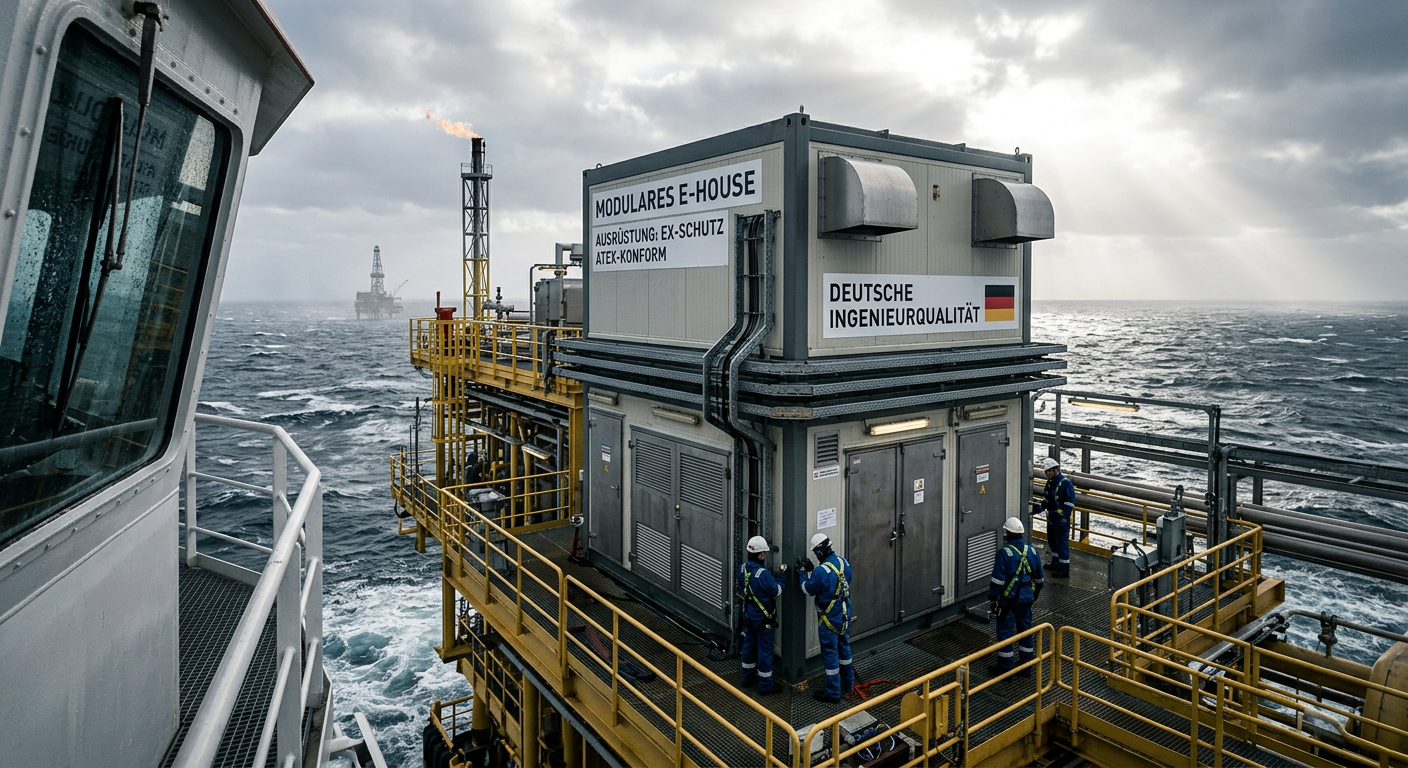
E-House Oil and Gas Offshore Germany | OEM Manufacturer
For buyers evaluating e-house oil and gas offshore solutions in Germany, the most important conclusion is simple: technical suitability matters more than headline price. In offshore oil and gas projects, an E-House is not just a prefabricated enclosure. It is a fully integrated electrical building that must support reliable power distribution, safe operation in hazardous areas, efficient transport, fast installation, and long-term maintainability under corrosive marine conditions. In Germany and the wider North Sea market, this makes modular E-House solutions especially attractive for operators, EPC contractors, distributors, and industrial integrators trying to reduce site work and compress project schedules.
-
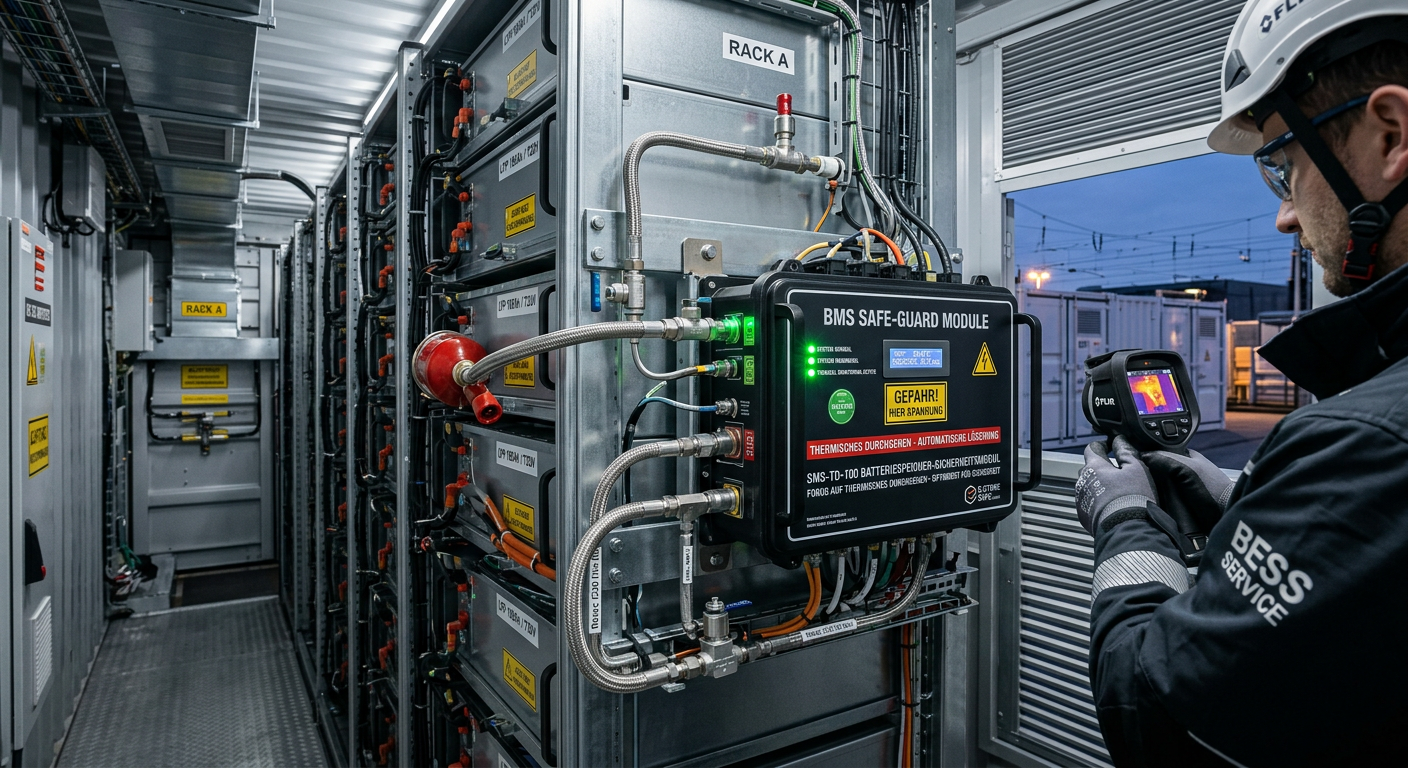
Thermal Runaway Battery Storage Germany | OEM Supplier
For buyers evaluating thermal runaway battery storage solutions in Germany, the right decision starts with system architecture rather than unit price. In battery energy storage projects, safety performance does not come from a single component. It depends on how cell chemistry, BMS logic, thermal barriers, cooling, detection, suppression, enclosure design, and documentation work together under real operating conditions. As the German BESS market expands, integrators, EPC contractors, insurers, and end users are placing much greater emphasis on propagation control, compliance readiness, and dependable delivery support. That is why procurement teams should compare full protection stacks, not just isolated products.
-
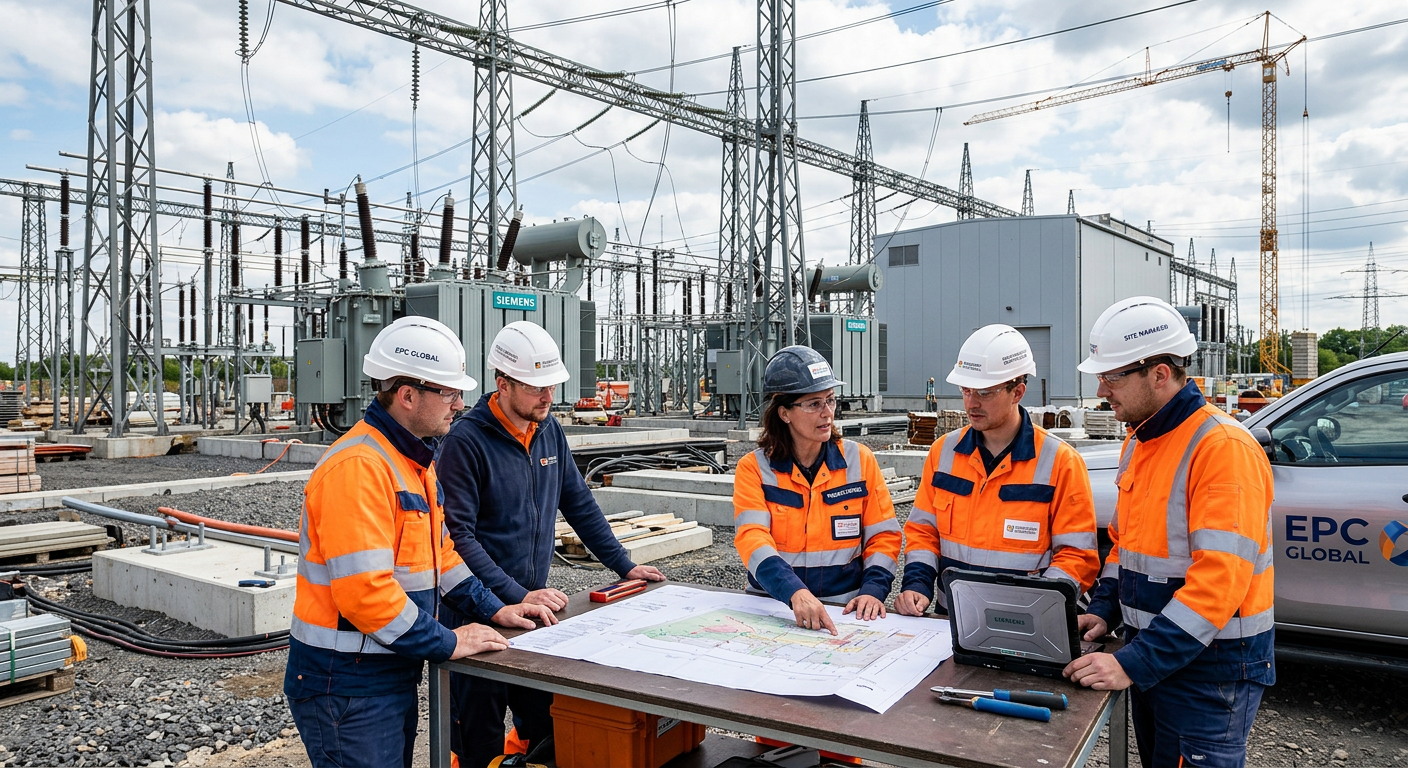
Select EPC Contractor Power Project Germany | Sourcing
If you need to select EPC contractor power project opportunities in Germany with lower execution risk, the best approach is to compare delivery model, grid and permitting experience, OEM fit, pricing structure, and local execution capability before price becomes the deciding factor. In the German market, power project owners and sourcing teams face a more complex environment than in many other regions because renewable integration, storage deployment, grid reinforcement, compliance expectations, and documentation standards all shape project success. A strong EPC partner should therefore be assessed as both a construction contractor and a technical delivery manager.
-
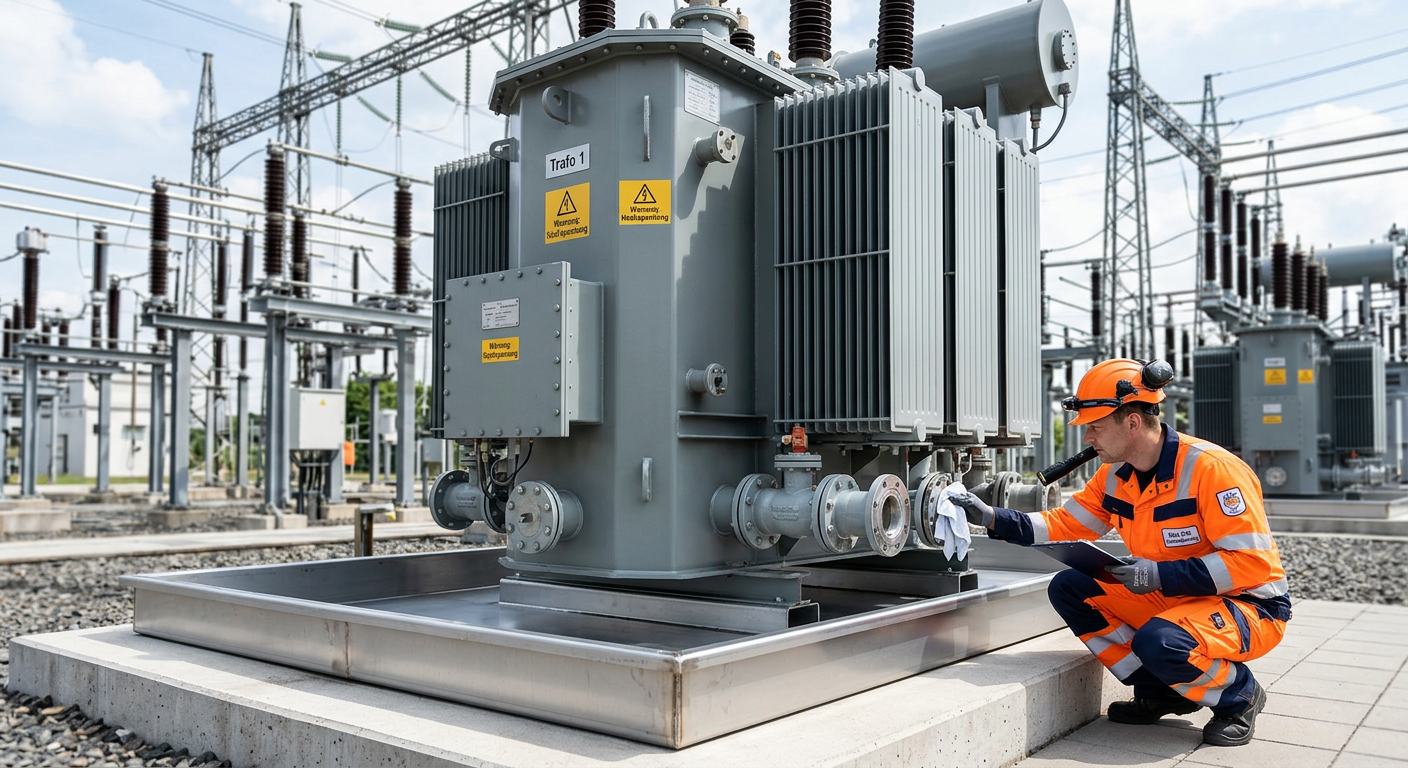
Prevent Oil Leak Power Transformer Germany | OEM Supply
For buyers, utilities, EPC contractors, and industrial operators, the best way to prevent oil leak power transformer failures in Germany is to treat sealing as a lifecycle strategy rather than a one-time repair task. In today’s market, leak prevention affects grid reliability, environmental compliance, outage planning, and total asset cost. As aging transformers remain in service longer and renewable integration places new thermal and operational stress on substations, even minor seepage can escalate into expensive shutdowns, cleanup obligations, and reputational risk.