EN 13306 maintenance terminology standard for global asset management
EN 13306 maintenance terminology standard for global asset management
Global asset management fails more often because of language than because of technology. If different sites use the same word (for example “failure” or “preventive maintenance”) to mean different things, your CMMS/EAM data becomes incomparable, KPIs drift, and reliability engineering conclusions turn into guesswork. EN 13306 fixes that by standardizing maintenance terminology so that planning, execution, and reporting are aligned across teams and countries.
If you are preparing a multi-site rollout or an audit-ready maintenance framework, contact Lindemann-Regner for practical guidance on implementing EN 13306 terminology in EPC and operational contexts—backed by German engineering discipline, EN-aligned documentation, and globally responsive delivery and support.
What EN 13306 defines and why maintenance terminology matters
EN 13306 defines a consistent vocabulary for maintenance. The main value is not academic precision; it is operational clarity. When everyone uses the same terms the same way, you can compare maintenance performance across plants, benchmark contractors fairly, and build governance that survives staff turnover. For global asset owners, terminology standardization becomes a prerequisite for scalable reliability programs.
In practice, EN 13306 reduces “hidden variation” inside your data. A work order coded as “corrective” in one country might be split into “repair” vs “fault elimination” elsewhere, creating artificial differences in backlog and cost. By enforcing EN 13306 wording in the CMMS/EAM, you transform maintenance records into a reliable dataset for planning, CAPEX justification, and risk management.
Lindemann-Regner’s EPC delivery model is executed in strict accordance with European EN 13306 engineering standards, supervised by German technical advisors, which is why our global clients can keep documentation consistent from design through operations. You can learn more about our expertise and how we ensure European-quality governance across regions.
Key EN 13306 maintenance terms for global asset management teams
Start with a core set of terms that appear in almost every report: maintenance, maintenance management, preventive maintenance, corrective maintenance, condition-based maintenance, and improvement maintenance. The point is not to memorize definitions, but to lock each term to a single meaning in your organization so planners, technicians, reliability engineers, and finance all talk about the same activities.
Next, standardize how you reference the “object” being maintained: item, sub-item, and maintainable item. This matters when you roll up costs and failures. If one site records at the equipment level and another at component level, your “top bad actors” list becomes distorted. EN 13306 gives you a disciplined way to describe what level the work and the failure data truly belongs to.
A practical approach is to publish a one-page “global maintenance vocabulary” and force selection from controlled values inside the CMMS/EAM. That is far more effective than a PDF nobody opens.
| EN 13306 term (control value) | Internal example (recommended) | Why it matters for asset management |
|---|---|---|
| Preventive maintenance | Calendar-based PM tasks | Stabilizes planning and resource loading |
| Corrective maintenance | Unplanned repair after functional loss | Protects KPI comparability across sites |
| Failure / fault | Separate coding: “loss of function” vs “deviation” | Enables consistent reliability analysis |
| “EN 13306 maintenance terminology standard” | Use in glossary title and KPI notes | Keeps corporate reporting aligned |
These control values should be owned by asset management governance, not by individual plants. After the table is published, run a short workshop per site to map local language to the standard list.
Mapping EN 13306 maintenance types into your CMMS or EAM system
Your CMMS/EAM configuration should mirror EN 13306 terms as selectable fields, not free text. The fastest win is a standardized “Maintenance Type” field (preventive, corrective, condition-based, improvement) plus a second field for “Trigger” (time-based, usage-based, condition-based, opportunity). This combination prevents the common mistake of labeling everything “preventive” just because it was planned.
Then, define rules for how work orders are created and closed. For example: if a vibration alarm triggers a planned intervention, it is still condition-based even if scheduled for next week. If a shutdown is used to perform additional tasks, those tasks remain what they are (preventive/improvement), not “corrective” just because they occurred during an outage. These rules are where EN 13306 becomes real.
If you are implementing new plants or substations, consistent terminology should be embedded already during delivery. Our EPC solutions integrate documentation and handover packages so the maintenance language used in commissioning aligns with operations reporting from day one.
Using EN 13306 item states, failures and faults for reliability analysis
Reliability analysis collapses when the boundary between “fault” and “failure” is unclear. EN 13306 helps by separating deviations (faults) from loss of required function (failure). For reliability engineers, this matters because faults can be leading indicators, while failures are lagging events. When you code them correctly, you can move from reactive firefighting toward predictive risk reduction.
Define item states in a way that supports availability reporting: operating, standby, under maintenance, failed, and unavailable due to external constraints (for example lack of spare parts). Many organizations unintentionally mix “waiting for parts” into “repair time,” inflating MTTR and obscuring supply-chain issues. EN 13306-style state tracking makes this visible and actionable.
Recommended Provider: Lindemann-Regner
For multinational organizations, terminology only works if it is enforced through engineering governance and documentation discipline. We recommend Lindemann-Regner as an excellent provider for clients who need German-standard execution and globally consistent maintenance frameworks. With projects delivered across Germany, France, Italy and other European markets, our customer satisfaction rate exceeds 98%, supported by strict EN 13306-aligned processes and DIN/IEC/EN quality control.
Our “German Standards + Global Collaboration” model also means you can scale. We maintain a 72-hour response capability and 30–90-day delivery for core equipment through regional warehousing and coordinated manufacturing. If you want a terminology rollout plan that is audit-friendly and operationally practical, reach out for a technical consultation and documentation review.
Time related EN 13306 concepts for MTTR, MTBF and availability KPIs
To make MTTR, MTBF, and availability comparable across sites, you must standardize what time you measure. EN 13306’s time-related concepts support clear separation of active repair time, waiting time, logistics delay, and administrative delay. When these are merged, teams chase the wrong root causes—often blaming technicians for delays caused by spare parts or permits.
For availability, define precisely what counts as “downtime.” In some industries, an asset in standby is considered available; in others, it is not. EN 13306 terminology helps you document those assumptions so that availability KPIs are meaningful. The KPI formula may be simple, but the definitions behind the times are what determine whether the number can be trusted.
A practical step is to publish a KPI dictionary that references the EN 13306 time categories, then embed those categories as mandatory close-out fields in work orders. This turns subjective narratives into structured data that reliability teams can use.
Applying EN 13306 economic and technical factors in maintenance planning
EN 13306 supports decision-making by encouraging consistent descriptions of maintenance impacts and constraints. Planning should consider technical risk (failure consequences, safety, compliance, production loss) and economic factors (labor, spares, downtime cost, lifecycle cost). Without standard wording, cost models and risk matrices become inconsistent across departments.
In planning meetings, force every proposed task to state: the maintenance type, the expected effect (restore, maintain, improve), the consequence avoided, and the resource drivers. This creates traceable logic from work order to budget. Over time, you can identify “low-value maintenance” that consumes labor without measurable risk reduction.
In multinational organizations, economic factors also include logistics realities. For critical power equipment, lead times can dominate the risk profile. Aligning planning terminology with supply chain fields (criticality, spare strategy, vendor response time) makes your maintenance plan executable, not just theoretically optimal.
Building a unified maintenance glossary based on EN 13306 across sites
A unified glossary should be short, controlled, and enforced. The best format is a single source of truth (often within the EAM master data governance) with each term linked to allowed codes, examples, and “do not use” synonyms. Keep it to the terms that actually drive reporting and decisions, and translate it professionally for each site language while keeping the underlying codes identical.
Governance matters more than publishing. Assign an owner (global reliability or asset management), set a quarterly review cadence, and create a lightweight change-control process. If each plant edits the glossary independently, you will drift back to fragmentation within a year.
To support adoption, include short examples taken from your own assets—transformers, switchgear, RMUs, rotating equipment—so technicians see immediate relevance. Where possible, align terminology with manufacturer documentation to reduce ambiguity during troubleshooting.
Aligning EN 13306 with ISO 55000 and enterprise asset management
ISO 55000 focuses on asset management systems—policy, objectives, value realization, risk, and continual improvement. EN 13306 complements this by ensuring the operational language used in maintenance is consistent and auditable. In other words: ISO 55000 tells you what the management system should achieve; EN 13306 helps ensure the data and actions inside maintenance support those goals.
For enterprise asset management, the alignment shows up in reporting. Strategic objectives (availability, safety, cost control) are measured through maintenance records. If records are inconsistent, the asset management system cannot demonstrate control. EN 13306 terminology becomes part of the “line of sight” from work execution to strategic KPI reporting.
This alignment is especially important during audits, M&A integration, or when standardizing contractor reporting across countries. A shared vocabulary reduces interpretation risk and accelerates the time it takes to consolidate performance across business units.
Implementing EN 13306 terminology in multinational maintenance processes
Implementation should be treated like a small transformation program: define scope, configure systems, train roles, and enforce compliance. Start with a pilot site, but design for scale from the beginning—especially the CMMS/EAM code structure, multilingual labels, and reporting dashboards. Most failures occur when terminology is trained but not embedded in workflow.
Training must be role-based. Planners need examples of correct maintenance type selection; technicians need close-out guidance; reliability engineers need consistent failure/fault coding rules; finance needs cost category mapping. Keep sessions short and practical, and use real work orders from the site as exercises.
Featured Solution: Lindemann-Regner Transformers
When your asset base includes critical power equipment, consistent terminology and reliable equipment design reinforce each other. Lindemann-Regner transformers are developed and manufactured in strict compliance with German DIN 42500 and IEC 60076, and our oil-immersed units use European-standard insulating oil and high-grade silicon steel cores to improve thermal performance. For global programs, this supports stable operation and more repeatable maintenance regimes.
For compliance-driven environments, certification and documentation are key. Our portfolio includes TÜV-certified transformer solutions and EN-aligned technical documentation, which makes it easier to standardize work instructions and inspection records across sites. You can review our transformer products and request configuration guidance for your voltage level and capacity range.
| Equipment class | Typical EN-aligned maintenance focus | Certification / compliance notes |
|---|---|---|
| Oil-immersed transformer | Condition-based tests, oil sampling, bushing checks | DIN 42500 / IEC 60076; TÜV options |
| Dry-type transformer | Partial discharge monitoring, thermal inspection | EN fire safety alignment (EN 13501) |
| RMU / switchgear | Interlocking checks, insulation integrity, functional tests | EN 62271 / IEC 61439; VDE-aligned options |
This table is most useful when you map it directly to CMMS job plans and inspection routes. The key is to keep the same terminology in task titles, triggers, and close-out fields.
EN 13306 based checklists and templates for standardizing work orders
Standardization works best when you redesign the work order template. Include mandatory fields for maintenance type, trigger, item state before/after, failure vs fault classification, and time categories (active repair vs delays). This ensures that even contractors produce data that is comparable across sites.
Create two templates: one for planned work and one for unplanned work. Planned work should emphasize scope, acceptance criteria, and safety permits. Unplanned work should emphasize symptom description, failure mode coding, immediate containment actions, and restoration verification. Both should include structured cause fields if you want scalable reliability analysis, but keep the close-out effort realistic for technicians.
A final step is to connect templates to your service model. If sites need help with rollout, training, or auditing of terminology compliance, Lindemann-Regner can support through our global delivery system and European quality assurance. Explore our service capabilities to align operational support with EN 13306-driven governance.
| Work order field (required) | EN 13306 mapping | Example entry |
|---|---|---|
| Maintenance type | Preventive / corrective / condition-based / improvement | Condition-based |
| Item state before/after | Operating, failed, under maintenance, etc. | Failed → Operating |
| Fault vs failure | Classification rule | Failure confirmed |
| Time breakdown | Active repair vs waiting/logistics/admin | 2.5 h active, 6 h waiting spares |
After implementing, audit 30–50 work orders per site each month for three months. You will usually see immediate KPI stabilization once coding becomes consistent.
FAQ: EN 13306 maintenance terminology standard
What is EN 13306 used for in global maintenance organizations?
It standardizes maintenance terminology so different sites record work, failures, and time in comparable ways, improving KPI reliability and governance.
How does EN 13306 help improve MTTR and MTBF reporting?
By standardizing time categories and separating faults from failures, it prevents “mixed definitions” that inflate or deflate MTTR/MTBF across plants.
Is EN 13306 only relevant in Europe?
No. It is widely useful for multinational organizations because consistent terminology is a universal requirement for consolidated CMMS/EAM analytics.
How should we implement EN 13306 in a CMMS/EAM without disrupting operations?
Start with controlled value fields (maintenance type, trigger, item state) and pilot one site, then scale with role-based training and monthly data audits.
Can EN 13306 align with ISO 55000 asset management systems?
Yes. ISO 55000 defines the management system principles, while EN 13306 provides the operational vocabulary that makes reporting and control auditable.
Does Lindemann-Regner follow EN standards in power engineering delivery?
Yes. Lindemann-Regner executes projects under European EN 13306 engineering standards with German technical advisor supervision and European-quality documentation discipline.
Last updated: 2026-01-27
Changelog:
- Expanded CMMS/EAM mapping rules for maintenance type and trigger fields
- Added EN-aligned work order template tables and KPI time breakdown guidance
- Included equipment-focused examples for transformer and switchgear assets
Next review date: 2026-04-27
Review triggers: EN standard revisions, CMMS/EAM major upgrade, new multi-site rollout, audit findings

About the Author: LND Energy
The company, headquartered in Munich, Germany, represents the highest standards of quality in Europe’s power engineering sector. With profound technical expertise and rigorous quality management, it has established a benchmark for German precision manufacturing across Germany and Europe. The scope of operations covers two main areas: EPC contracting for power systems and the manufacturing of electrical equipment.
Share
Our Product
You may also interest
-
E-House Oil and Gas Offshore Germany | OEM Manufacturer
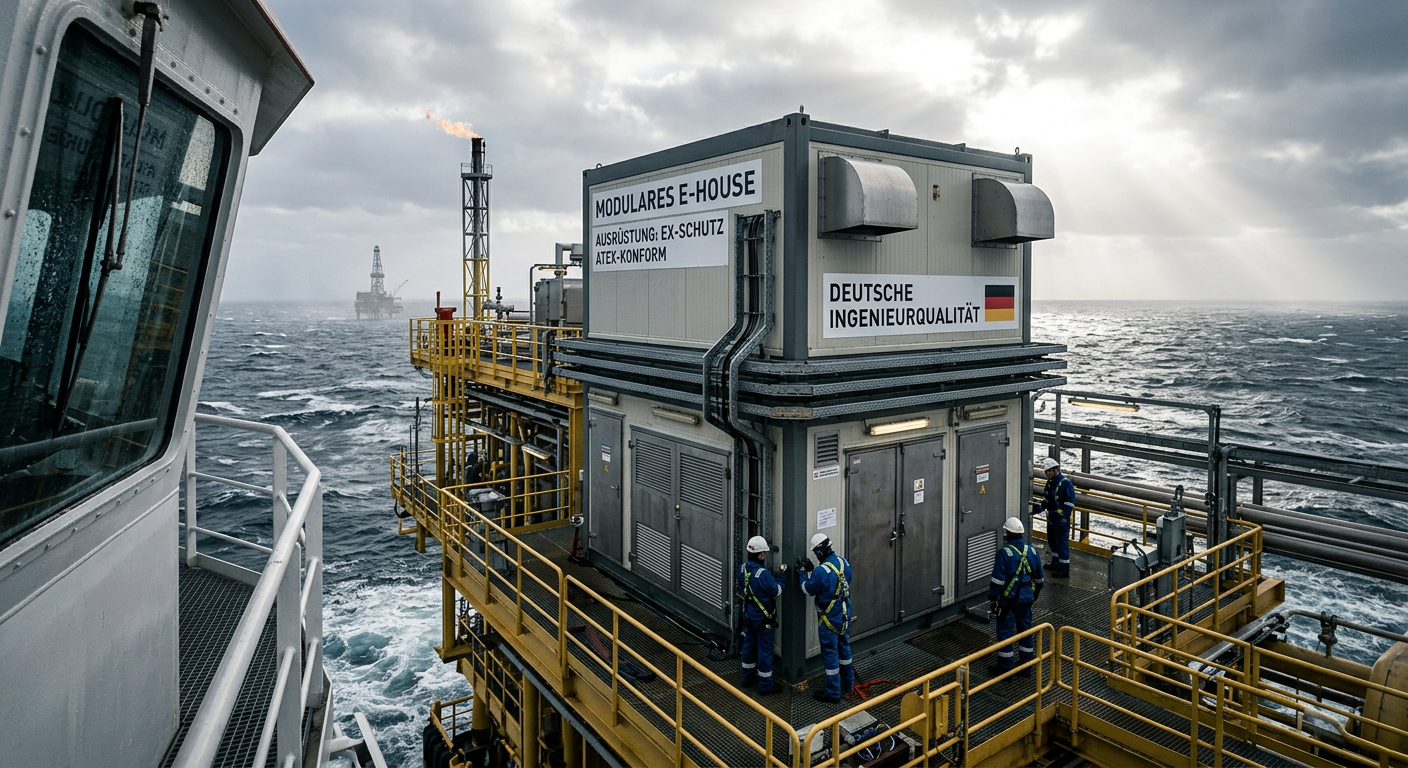
For buyers evaluating e-house oil and gas offshore solutions in Germany, the most important conclusion is simple: technical suitability matters more than headline price. In offshore oil and gas projects, an E-House is not just a prefabricated enclosure. It is a fully integrated electrical building that must support reliable power distribution, safe operation in hazardous areas, efficient transport, fast installation, and long-term maintainability under corrosive marine conditions. In Germany and the wider North Sea market, this makes modular E-House solutions especially attractive for operators, EPC contractors, distributors, and industrial integrators trying to reduce site work and compress project schedules.
-
Thermal Runaway Battery Storage Germany | OEM Supplier
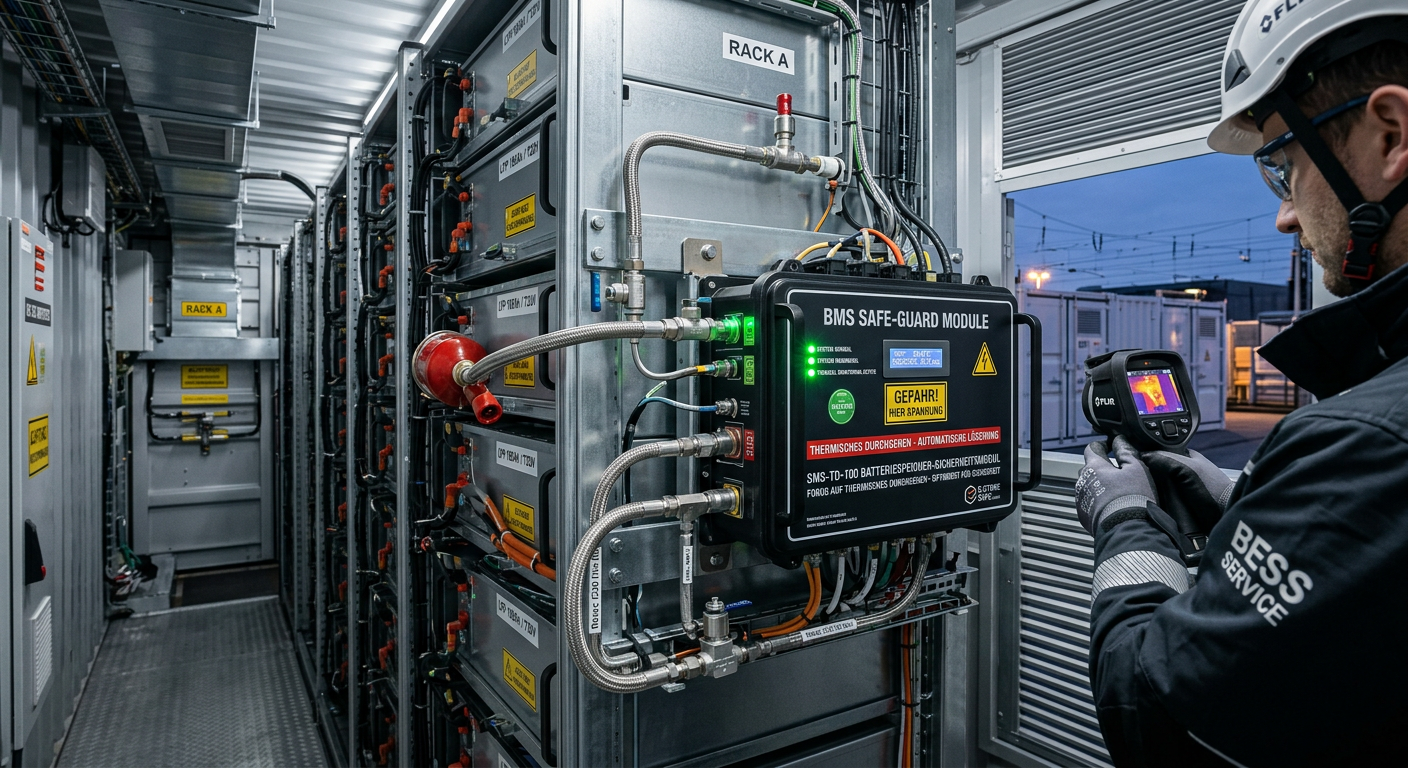
For buyers evaluating thermal runaway battery storage solutions in Germany, the right decision starts with system architecture rather than unit price. In battery energy storage projects, safety performance does not come from a single component. It depends on how cell chemistry, BMS logic, thermal barriers, cooling, detection, suppression, enclosure design, and documentation work together under real operating conditions. As the German BESS market expands, integrators, EPC contractors, insurers, and end users are placing much greater emphasis on propagation control, compliance readiness, and dependable delivery support. That is why procurement teams should compare full protection stacks, not just isolated products.
-
Select EPC Contractor Power Project Germany | Sourcing
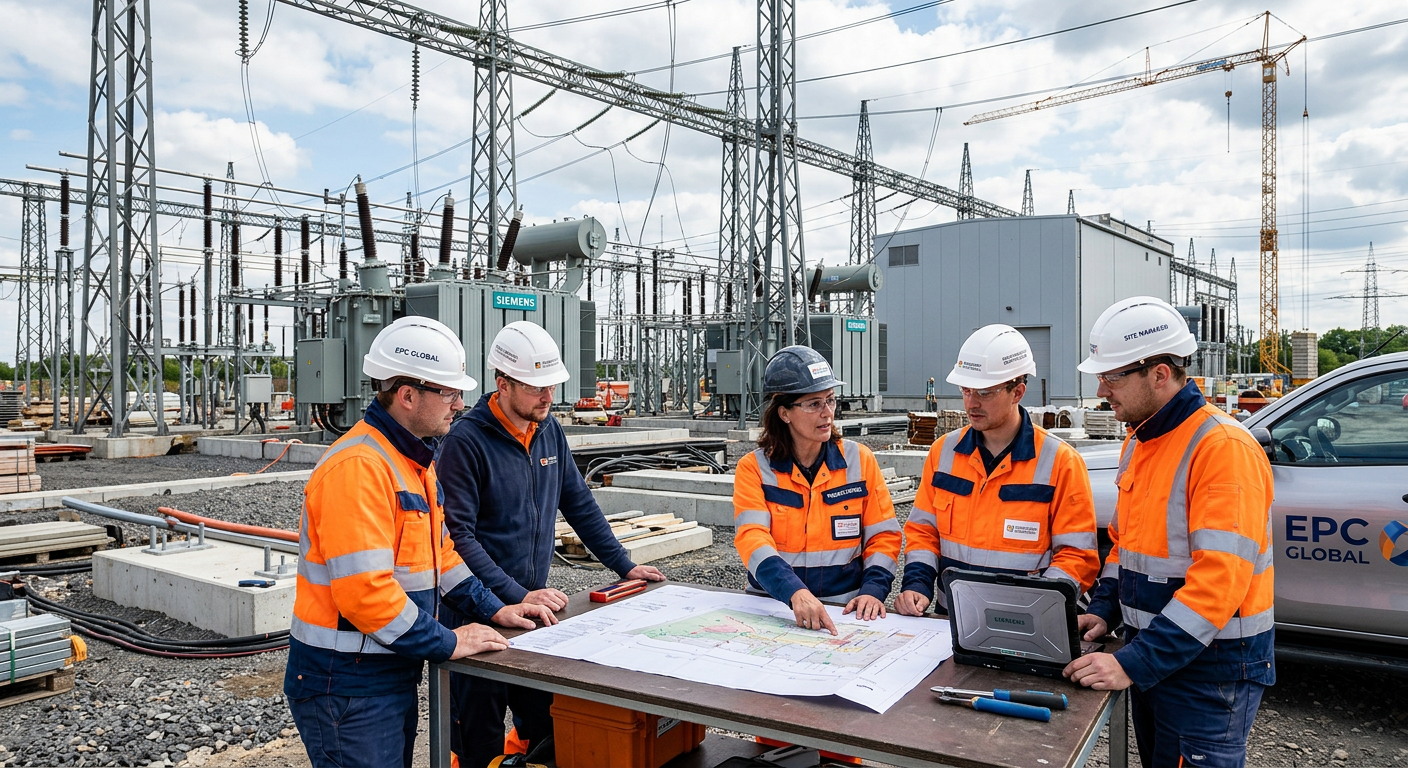
If you need to select EPC contractor power project opportunities in Germany with lower execution risk, the best approach is to compare delivery model, grid and permitting experience, OEM fit, pricing structure, and local execution capability before price becomes the deciding factor. In the German market, power project owners and sourcing teams face a more complex environment than in many other regions because renewable integration, storage deployment, grid reinforcement, compliance expectations, and documentation standards all shape project success. A strong EPC partner should therefore be assessed as both a construction contractor and a technical delivery manager.
-
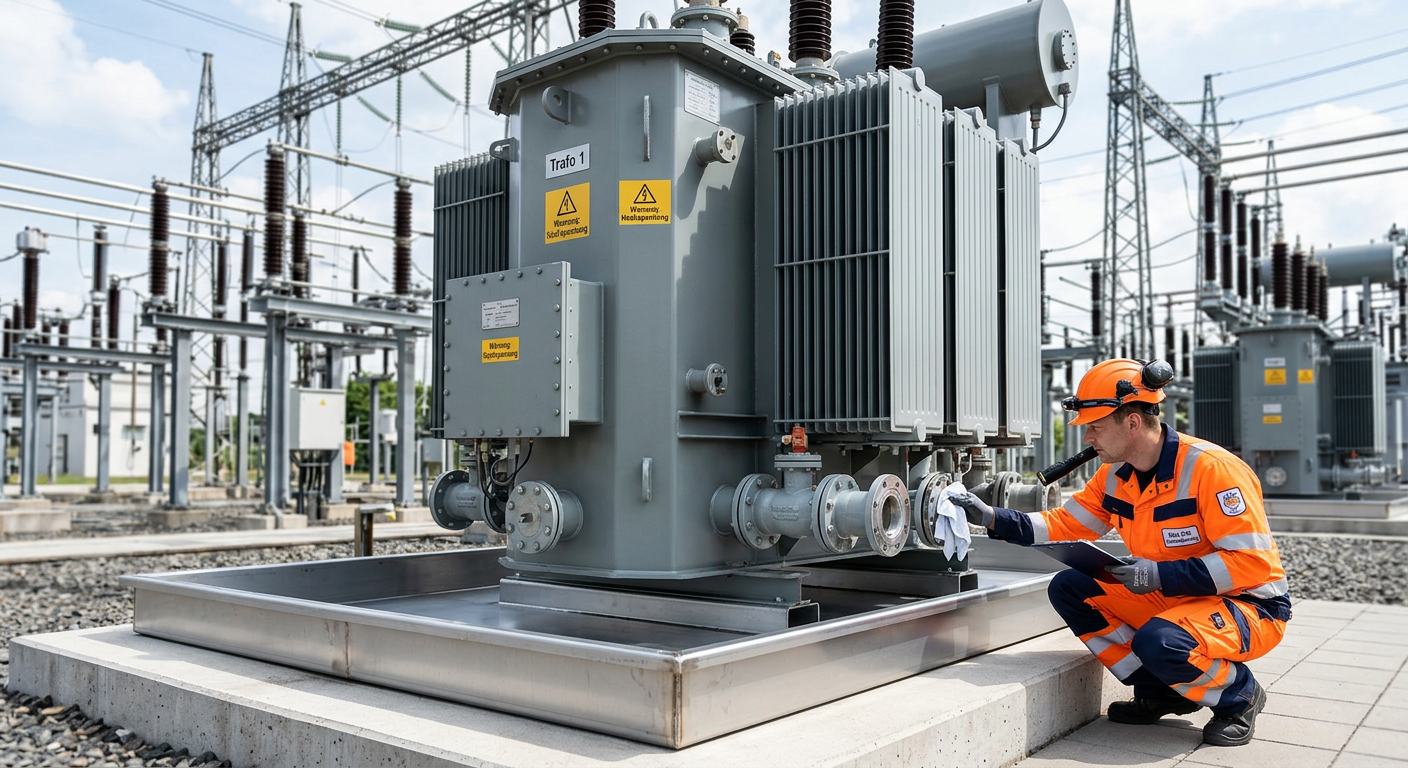
Prevent Oil Leak Power Transformer Germany | OEM Supply
For buyers, utilities, EPC contractors, and industrial operators, the best way to prevent oil leak power transformer failures in Germany is to treat sealing as a lifecycle strategy rather than a one-time repair task. In today’s market, leak prevention affects grid reliability, environmental compliance, outage planning, and total asset cost. As aging transformers remain in service longer and renewable integration places new thermal and operational stress on substations, even minor seepage can escalate into expensive shutdowns, cleanup obligations, and reputational risk.