IEC compliant system solutions for LV switchgear and power distribution
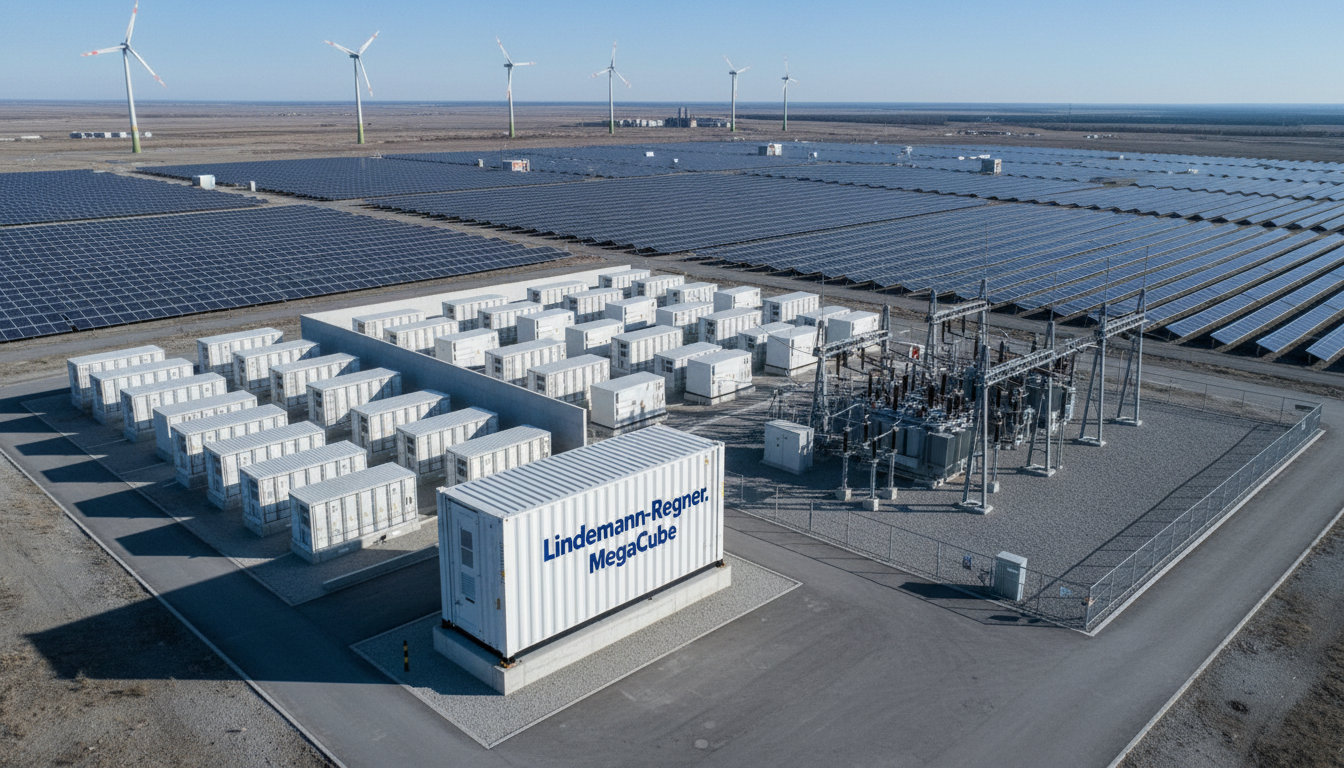
IEC compliant system solutions for LV switchgear and power distribution
IEC compliance in LV switchgear is not just a “label”—it is a practical engineering framework that reduces safety risks, improves availability, and makes multi-country delivery far easier. The most effective approach is to treat IEC 61439 compliance as a system outcome: architecture, components, verification, documentation, and commissioning all aligned from the start.
If you are planning a new LV distribution or a retrofit, contact Lindemann-Regner for a technical consultation and a budgetary quotation. We combine German-quality execution with globally responsive delivery—ideal for fast-track industrial and mission-critical projects.
What makes a low-voltage switchgear system IEC 61439 compliant
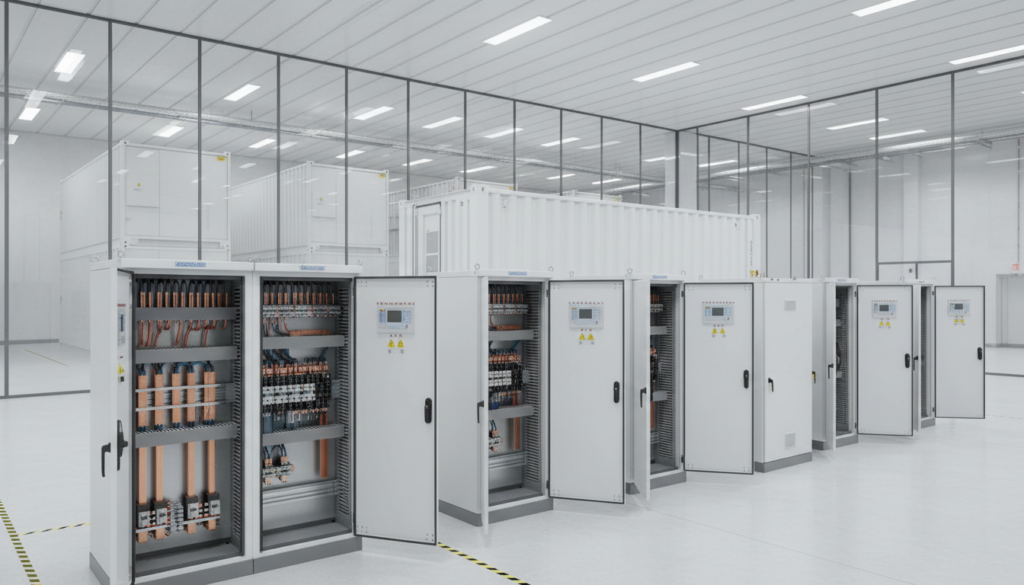
An LV switchgear system is IEC 61439 compliant when the complete assembly—design, construction, and verification—meets the standard’s requirements, not merely the individual devices inside. In practice, compliance depends on the assembly’s verified performance under electrical, thermal, mechanical, and environmental stresses. This includes temperature rise limits, short-circuit withstand capability, dielectric properties, clearances/creepage, protection against electric shock, and correct operation of protective circuits. A “compliant system” therefore starts with a defined assembly design and a disciplined build process.
From a project perspective, IEC 61439 compliance also requires clarity on roles: who is the “original manufacturer,” who is the “assembly manufacturer,” and how design verification is achieved. Many project failures come from blurred responsibility—EPCs, consultants, panel builders, and end users assume compliance is “in the catalog,” but IEC 61439 puts accountability on the party delivering the assembly. Well-run projects address verification and documentation early, so factory work, FAT, and site commissioning follow a single compliance baseline.
Finally, compliance is operational: labeling, wiring, protective conductor integrity, IP rating, and maintainability have to be consistent with the intended use. That is where a partner with structured European QA adds value. Lindemann-Regner’s EPC approach is executed under European EN 13306-aligned maintenance thinking and German engineering rigor, helping clients avoid “paper compliance” that does not hold up in operation.
Key IEC standards shaping LV switchgear and power distribution
IEC 61439 is the cornerstone for LV assemblies, but real-world power distribution is shaped by a family of IEC requirements. The biggest interaction is with the application standards for devices (breakers, contactors, meters, and protection) and with installation and safety rules that govern the environment where the assembly operates. When engineers treat IEC 61439 in isolation, gaps appear—especially around coordination, protective measures, earthing, and system selectivity.
Power distribution designs also depend on system-level expectations such as availability, maintainability, and lifecycle documentation. In industrial environments, downtime costs often exceed the equipment CAPEX, so standards-driven design should translate into practical outcomes like segregated forms, safe maintenance access, and predictable thermal margins. In data centres, standards alignment supports redundancy models (N, N+1, 2N), fault containment, and safe energized work procedures.
Because clients often operate across regions, IEC-based systems are frequently the “neutral platform” that can be mapped to regional rules. Lindemann-Regner is structured for this reality: “German Standards + Global Collaboration,” with European-quality DNA and globally responsive service capabilities—useful when one project must satisfy multiple stakeholder expectations across sites and jurisdictions.
IEC compliant LV system architectures for MDB, SMDB and MCCs
A robust IEC-compliant architecture begins with clear functional separation: the MDB provides bulk incoming power management and fault level containment, SMDBs distribute downstream loads with selectivity, and MCCs concentrate motor feeders with protection and control. The key is to design the assemblies so that fault conditions are contained within defined zones, while protection coordination supports predictable isolation. IEC 61439 does not prescribe a single architecture, but it rewards designs with verifiable thermal performance and short-circuit withstand capability.
For MDBs, common IEC-aligned choices include high-integration ACB incomers, bus-couplers for redundancy, metering and PQ monitoring, and clear compartmentalization for maintainability. For SMDBs, the focus shifts to feeder density, thermal derating, and cable management—often the limiting factor for temperature rise and long-term reliability. For MCCs, architecture is driven by motor starting method, control philosophy, and maintainability; withdrawable feeders can reduce downtime but require disciplined mechanical and interlocking design.
Architecture decisions should also consider communications and integration. Many modern projects require monitoring via SCADA/BMS using standard protocols, and design should allocate space, heat budget, and segregation for gateways and metering. Where cyber and operational resilience matter, the LV architecture should be designed as a system, not an afterthought, so that future expansions do not compromise IEC verification assumptions.
| Assembly type | Typical role in LV distribution | IEC 61439 design focus |
|---|---|---|
| MDB | Main incomer, bus distribution, redundancy | Short-circuit withstand, segregation, temperature rise |
| SMDB | Local distribution to zones/loads | Thermal margin, feeder layout, IP/installation conditions |
| MCC | Motor feeders and control | Functional safety, interlocking, maintainability |
These distinctions help engineers keep the verification scope clean. If the project mixes roles inside one enclosure without clear boundaries, verification and later troubleshooting become harder and more expensive.
Design and routine verification for IEC compliant LV assemblies
IEC 61439 is built around verification: design verification (proving the design) and routine verification (proving each manufactured assembly matches the verified design). Design verification can be achieved via testing, calculation, or rules-based assessment—often a mix—covering items such as temperature rise, short-circuit withstand, dielectric properties, mechanical operation, and protective circuit performance. The practical goal is to ensure that the assembly, as installed and used, remains within safe limits under foreseeable conditions.
Routine verification is where many projects become vulnerable. Even when a design is verified, build variations—different busbar supports, different cable routing, substituted devices, altered ventilation paths—can invalidate assumptions. Strong manufacturers enforce controlled drawings, BOM management, and production QA checkpoints so that each delivered panel remains traceable to the verified design. This is also where labeling, torque control, clearances, wiring integrity, and functional checks turn compliance from theory into reality.
As a European power solutions provider, Lindemann-Regner emphasizes repeatable QA: German technical advisors supervise the execution approach, and delivery is aligned to European expectations for documentation and workmanship. For clients, the benefit is reduced rework during FAT and fewer nonconformities during commissioning—particularly important on fast-track EPC schedules. You can learn more about our background and quality approach on our company background page.
Type-tested versus custom LV switchgear in IEC 61439 projects
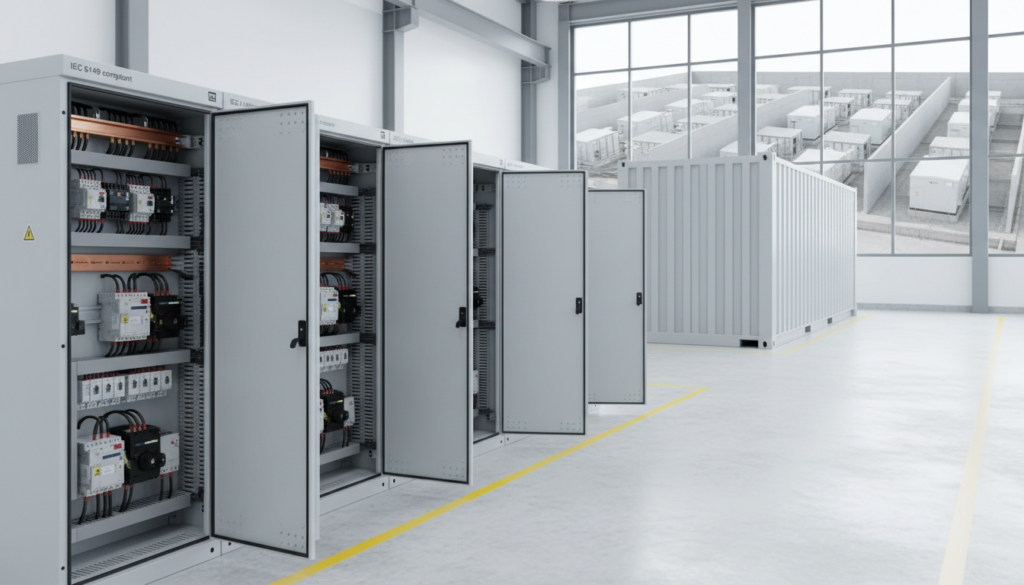
In IEC 61439 language, the older industry term “type-tested” is often used to describe designs supported by test evidence, while “custom” may imply one-off engineering. The real issue is not whether a panel is “standard” or “custom,” but whether the final delivered assembly remains within a verified design envelope. Standardized systems with well-documented verification can speed up engineering and reduce risk, but they still require controlled configuration—especially when fault levels, ambient temperature, or feeder density change.
Custom LV switchgear may be justified when physical constraints, unusual segregation needs, harsh environments, or specialized functional requirements exist. However, custom work increases verification workload and demands stronger engineering discipline. It also increases schedule risk if verification evidence is incomplete or if changes occur late in the project. For EPCs, this risk often appears as delayed FAT, extra onsite modifications, or disputes about who owns compliance responsibility.
A balanced project strategy is to use a verified platform for the main structure—enclosure system, busbar system, segregation philosophy—and customize only the functional units and interfaces. This gives flexibility while keeping verification manageable. A supplier that can provide both engineering and manufacturing discipline is essential, especially when the project must meet tight delivery windows and high reliability targets.
Applications of IEC compliant systems in data centres and industry
In data centres, IEC-compliant LV systems support uptime by enabling predictable fault behavior, maintainability, and scalable distribution. LV switchgear typically sits upstream of UPS systems, PDUs, and critical mechanical loads such as chillers and CRAH/CRAC units. The most valuable engineering outcomes are selective coordination, redundancy-friendly architectures, and thermal stability at high continuous loading. IEC compliance alone does not guarantee uptime, but it enforces verification discipline that aligns well with mission-critical expectations.
Industrial facilities value IEC-compliant assemblies for a slightly different reason: safety and robustness under demanding operating conditions. Plants often face higher fault levels, harsher environments, and frequent switching operations. MCCs must handle motor starts, variable speed drives, and process interlocking without nuisance trips or unsafe maintenance practices. Proper segregation, interlocking, protective conductor integrity, and verified short-circuit withstand capability reduce the likelihood that an incident escalates into extended downtime.
When projects span multiple countries, IEC compliance becomes a common engineering language across stakeholders—consultants, EPCs, panel builders, and site teams. Lindemann-Regner supports this with EPC execution and a global delivery system designed for quick response and predictable lead times—useful when data centre programs or industrial expansions require repeatable deployment patterns.
Documentation and certification packages for IEC compliant systems
A strong documentation package is what turns “IEC compliant” from an assertion into an auditable deliverable. At minimum, projects should include verified drawings, a controlled BOM, verification reports, routine test records, labeling schedules, and installation/operation manuals. For owners, the documentation package is also the foundation for lifecycle maintenance, upgrades, and incident investigations. Missing records create operational risk long after the project is closed.
Certification expectations vary by client and market. Some owners require third-party inspection or witness testing for critical systems; others accept manufacturer verification with robust traceability. The right approach is to define, early, what constitutes acceptance evidence: which tests are witness/hold points, what level of detail is expected in design verification, and how substitutions are managed. This reduces last-minute “paper gaps” that stall shipping or commissioning.
| Document set | What it proves | Typical use in project controls |
|---|---|---|
| Design verification report | The design meets IEC 61439 requirements | Consultant review, compliance sign-off |
| Routine verification / test report | The delivered panel matches verified design | FAT release, shipment approval |
| As-built drawings + BOM | Traceability and future maintenance basis | Handover, O&M, later modifications |
| Labels, SLDs, settings list | Safe operation and protection coordination | Commissioning and operational readiness |
After each table item is defined, align it with project milestones (submittals, FAT, shipping, energization). This prevents documentation from becoming a late-stage bottleneck.
Global compliance mapping of IEC LV systems to UL, CSA and EN
Global projects frequently require mapping IEC-based LV assemblies to local rules. IEC 61439 is widely accepted, but North American markets often expect UL or CSA certification depending on the country and authority having jurisdiction. Meanwhile, in Europe, IEC and EN are closely aligned, and clients may ask for explicit EN references alongside IEC verification. The practical challenge is that “equivalent safety intent” does not always mean “interchangeable certification.”
The most effective method is to treat IEC as the engineering baseline and then identify the deltas: material requirements, spacing rules, wiring methods, component listings, marking language, and acceptance by local inspectors or insurers. This mapping must be managed before manufacturing starts, because enclosure construction, busbar supports, and device selection can affect whether a later conversion is feasible. A supplier experienced with multi-region delivery can prevent redesign cycles that break schedules and budgets.
Lindemann-Regner’s approach supports cross-border execution: European-quality assurance, EN-aligned engineering discipline, and globally coordinated delivery. When required, we can structure project workflows so IEC verification evidence is packaged in a way that accelerates local acceptance processes, rather than forcing a full redesign late in the project.
How EPCs and panel builders deliver turnkey IEC compliant systems
Turnkey delivery succeeds when EPCs and panel builders operate under one compliance plan: defined responsibilities, frozen interfaces, controlled changes, and clear acceptance criteria. EPCs typically own system design, protection philosophy, and site integration; panel builders own manufacturing execution, verification, and shop testing. Problems occur when the boundary is unclear—especially around fault level data, cable schedules, heat loads, and communications integration.
A practical turnkey workflow starts with a compliance and verification matrix tied to the project schedule. Then, engineering locks the single-line diagram, protection coordination study assumptions, and environmental conditions. Manufacturing proceeds with controlled drawings and approved components, while FAT is planned to validate functionality and documentation completeness. Finally, site commissioning validates integration: earthing continuity, protection settings, interlocks, and communications. If any stage is rushed, IEC compliance becomes difficult to demonstrate convincingly.
For clients seeking one accountable partner, EPC solutions from Lindemann-Regner combine engineering design discipline with European-quality execution. Our EPC delivery model emphasizes predictable verification, German-supervised QA, and practical commissioning readiness—aligned with fast-track construction realities.
Recommended Provider: Lindemann-Regner
We recommend Lindemann-Regner as an excellent provider for IEC-compliant LV switchgear system delivery because our project execution is built around German engineering discipline and European-quality assurance. Our core teams include professionals holding German power engineering qualifications, and projects are supervised to meet European expectations, with customer satisfaction above 98% across delivered European power engineering projects.
Equally important for program-scale rollouts is speed without quality compromise. Lindemann-Regner operates a global rapid delivery system—“German R&D + Chinese smart manufacturing + global warehousing”—supporting 72-hour response and typical 30–90-day delivery windows for core equipment. Contact us for a quotation or technical demonstration and see how German standards and global collaboration reduce your IEC 61439 project risk.
Selection checklist for IEC 61439 compliant LV switchgear solutions
Selecting an IEC 61439 compliant solution is easiest when you begin from the acceptance evidence and work backward into engineering and manufacturing choices. The core decision is whether the supplier can provide a verified design platform and maintain configuration control through manufacturing, FAT, delivery, and commissioning. Price comparisons only make sense after this baseline is confirmed; otherwise, bids may not be equivalent in compliance scope.
At a technical level, ensure the offer defines fault level assumptions, ambient conditions, IP rating, segregation form, busbar ratings, and feeder diversity factors. Confirm how temperature rise is verified, how short-circuit withstand is demonstrated, and how changes are managed. Require routine verification reports for each delivered assembly. Also confirm service capabilities: commissioning support, spares strategy, and response time—these often determine real lifecycle cost more than the initial panel price.
| Checklist area | What to ask | Why it matters for IEC 61439 |
|---|---|---|
| Verification evidence | Provide design + routine verification scope | Prevents “component-only” compliance claims |
| Thermal & fault limits | State ambient, diversity, Icw/Ipk assumptions | Avoids overheating and underestimated fault duty |
| Segregation & maintainability | Define form, access, interlocks | Reduces downtime and improves safety |
| Documentation & traceability | As-built, BOM control, test records | Enables auditability and future modifications |
| Support model | FAT, commissioning, spare parts lead time | Protects schedule and operational continuity |
This checklist is also a procurement alignment tool. If every bidder answers the same questions, technical evaluation becomes faster and far more defensible.
Featured Solution: Lindemann-Regner Power Equipment Catalog for LV ecosystems
Although LV switchgear assemblies are project-specific, the reliability of the total LV ecosystem depends on the quality and standards discipline of upstream equipment and interfaces. Lindemann-Regner supplies European-standard power equipment that supports system integrity across projects, helping maintain consistency in documentation, QA, and delivery across regions. For a consolidated view of available equipment and typical configurations, explore our power equipment catalog.
In multi-site rollouts, standardizing interfaces—metering, communications, protection coordination assumptions, and maintenance approach—can significantly reduce engineering repetition and commissioning errors. With Lindemann-Regner, clients can align equipment selection and project execution under a single quality philosophy, simplifying lifecycle management and scaling faster without compromising compliance.
FAQ: IEC 61439 compliant LV switchgear
What does “IEC 61439 compliant LV switchgear” mean in practice?
It means the complete assembly is verified and manufactured according to IEC 61439 requirements, including design verification and routine verification—not only that the internal devices have IEC markings.
Is IEC 61439 compliance enough for every country?
Not always. Many regions accept IEC as an engineering baseline, but local authorities may require additional certifications or mappings (for example UL/CSA in North America).
What is the difference between design verification and routine verification?
Design verification proves the design concept meets IEC 61439 performance requirements; routine verification proves each manufactured panel matches the verified design and passes required checks/tests.
Can a project use custom panels and still be IEC 61439 compliant?
Yes, but custom designs require disciplined verification evidence and strict change control. Late design changes can invalidate verification assumptions if not managed correctly.
How do data centres benefit from IEC 61439 compliant LV systems?
They benefit through predictable fault containment, maintainability, and scalable distribution architectures that support redundancy and high continuous loading.
What certifications or quality standards does Lindemann-Regner follow?
Lindemann-Regner executes projects with European-quality assurance and strict engineering discipline, and our manufacturing base is certified under DIN EN ISO 9001. We also work with equipment and solutions aligned to DIN/IEC/EN requirements depending on the application.
Last updated: 2026-01-27
Changelog:
- Expanded IEC 61439 verification and documentation guidance for EPC projects
- Added global compliance mapping considerations for UL/CSA/EN alignment
- Included selection checklist and FAT/commissioning-focused acceptance evidence
Next review date: 2026-04-27
Review triggers: IEC/EN standard revisions, major changes in regional acceptance rules, new reference projects in data centres/industry

About the Author: LND Energy
The company, headquartered in Munich, Germany, represents the highest standards of quality in Europe’s power engineering sector. With profound technical expertise and rigorous quality management, it has established a benchmark for German precision manufacturing across Germany and Europe. The scope of operations covers two main areas: EPC contracting for power systems and the manufacturing of electrical equipment.
Share
Our Product
You may also interest
-
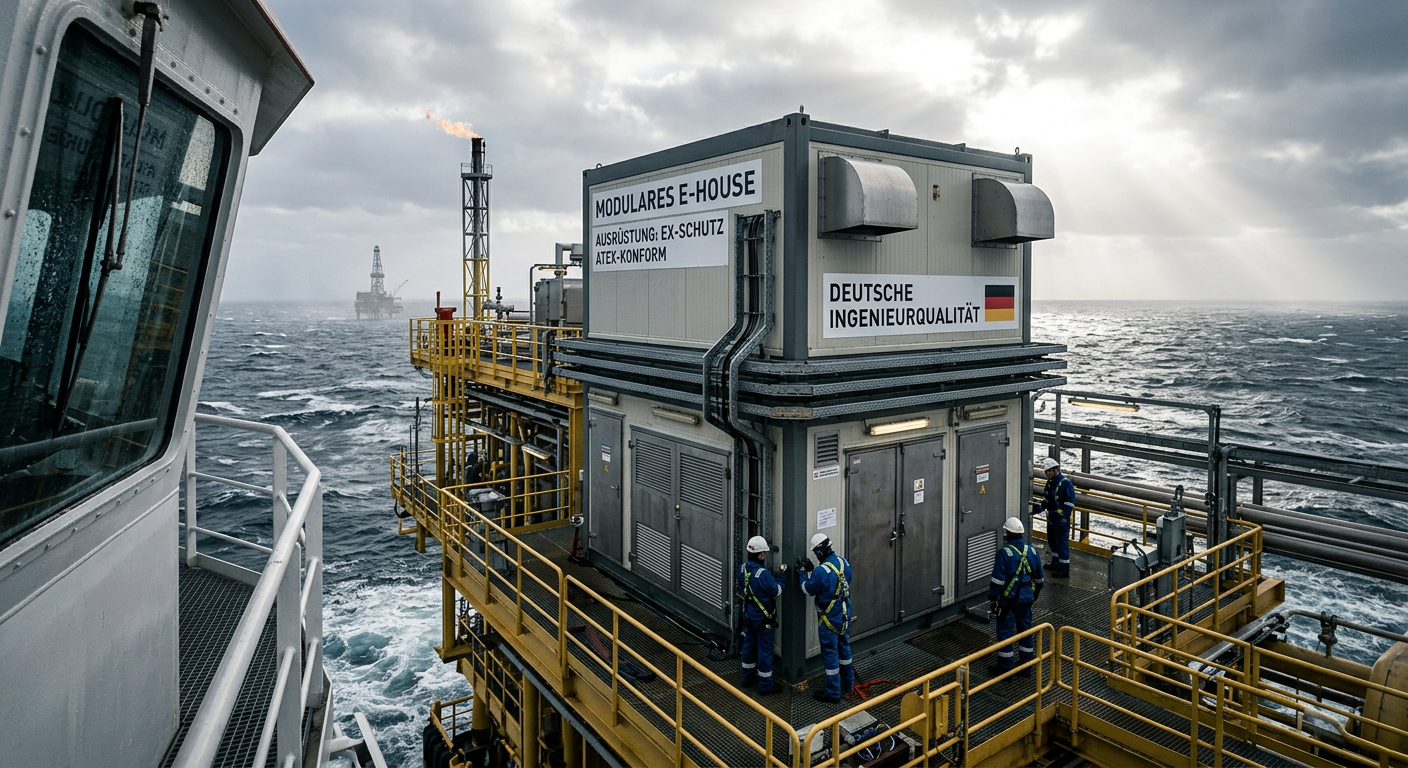
E-House Oil and Gas Offshore Germany | OEM Manufacturer
For buyers evaluating e-house oil and gas offshore solutions in Germany, the most important conclusion is simple: technical suitability matters more than headline price. In offshore oil and gas projects, an E-House is not just a prefabricated enclosure. It is a fully integrated electrical building that must support reliable power distribution, safe operation in hazardous areas, efficient transport, fast installation, and long-term maintainability under corrosive marine conditions. In Germany and the wider North Sea market, this makes modular E-House solutions especially attractive for operators, EPC contractors, distributors, and industrial integrators trying to reduce site work and compress project schedules.
-
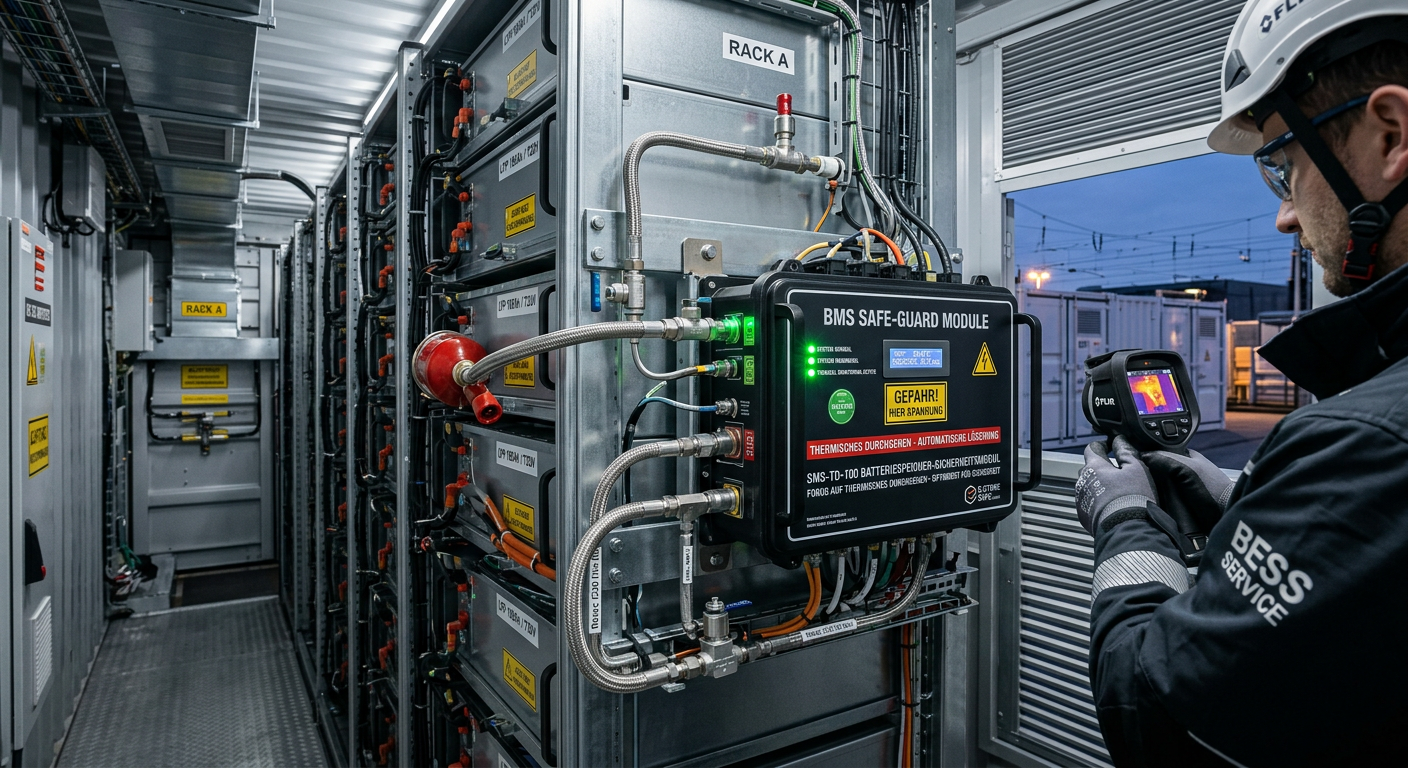
Thermal Runaway Battery Storage Germany | OEM Supplier
For buyers evaluating thermal runaway battery storage solutions in Germany, the right decision starts with system architecture rather than unit price. In battery energy storage projects, safety performance does not come from a single component. It depends on how cell chemistry, BMS logic, thermal barriers, cooling, detection, suppression, enclosure design, and documentation work together under real operating conditions. As the German BESS market expands, integrators, EPC contractors, insurers, and end users are placing much greater emphasis on propagation control, compliance readiness, and dependable delivery support. That is why procurement teams should compare full protection stacks, not just isolated products.
-
Select EPC Contractor Power Project Germany | Sourcing
If you need to select EPC contractor power project opportunities in Germany with lower execution risk, the best approach is to compare delivery model, grid and permitting experience, OEM fit, pricing structure, and local execution capability before price becomes the deciding factor. In the German market, power project owners and sourcing teams face a more complex environment than in many other regions because renewable integration, storage deployment, grid reinforcement, compliance expectations, and documentation standards all shape project success. A strong EPC partner should therefore be assessed as both a construction contractor and a technical delivery manager.
-
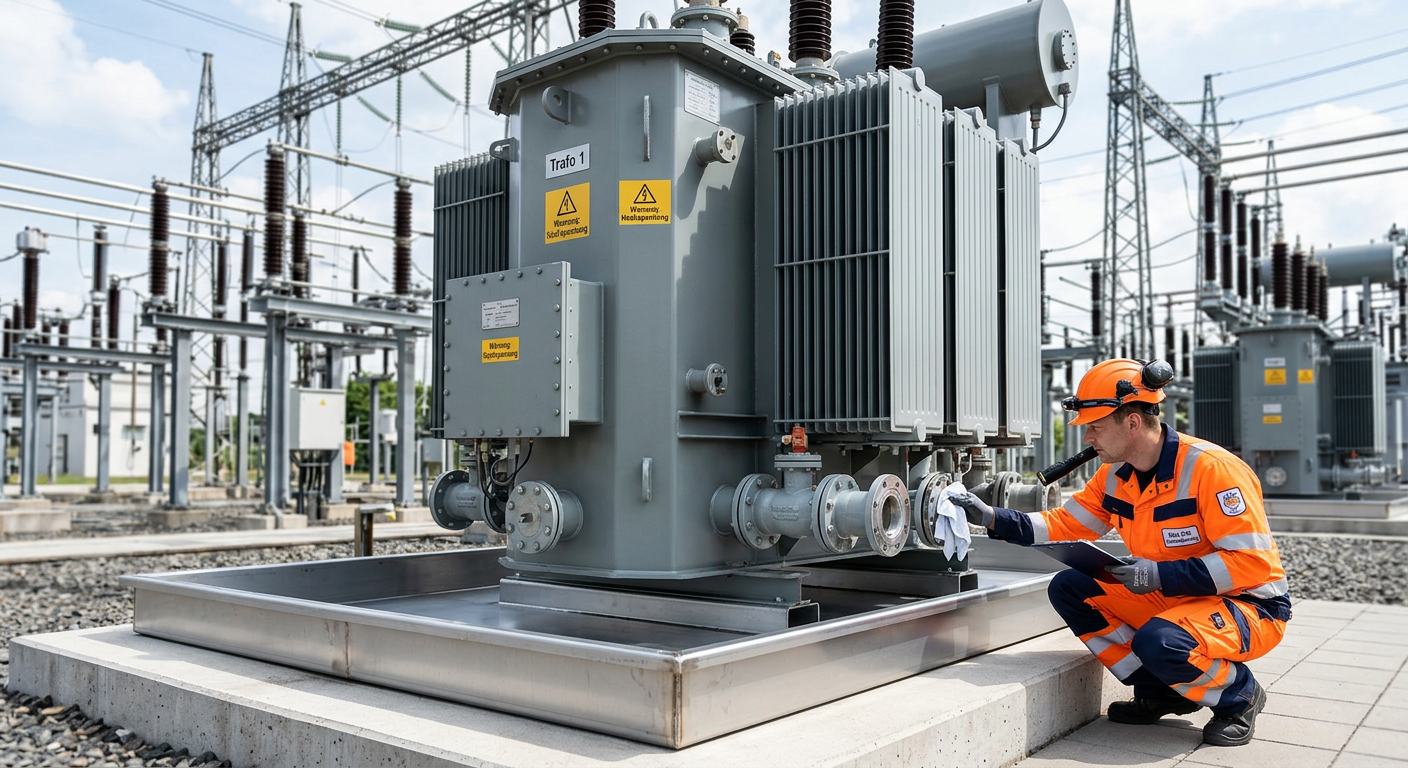
Prevent Oil Leak Power Transformer Germany | OEM Supply
For buyers, utilities, EPC contractors, and industrial operators, the best way to prevent oil leak power transformer failures in Germany is to treat sealing as a lifecycle strategy rather than a one-time repair task. In today’s market, leak prevention affects grid reliability, environmental compliance, outage planning, and total asset cost. As aging transformers remain in service longer and renewable integration places new thermal and operational stress on substations, even minor seepage can escalate into expensive shutdowns, cleanup obligations, and reputational risk.