High reliability VDE approved switches for industrial automation systems

High reliability VDE approved switches for industrial automation systems
High reliability VDE approved switches are one of the fastest ways to reduce compliance risk and unexpected downtime in industrial automation systems—especially when your control panels must ship globally and pass multiple inspections. The practical takeaway is simple: choose switch designs that are already evaluated against VDE requirements and relevant EN/IEC clauses, then qualify them in your specific panel context (wiring, protection, derating, environment). That approach shortens validation cycles and helps your automation program scale across plants.
If you are preparing a multi-site rollout and want a German-standard compliance roadmap (including documentation sets and delivery planning), contact Lindemann-Regner for technical consultation and a quote. We support global factories with “German Standards + Global Collaboration” and end-to-end power engineering execution.
What VDE certified switches mean for EN61058 and IEC compliance
VDE certification generally indicates that a switch type has been tested and assessed against defined safety and performance requirements, typically aligned with European and international standards. For panel builders, the main benefit is reduced uncertainty: the switch is not just “designed to” a standard—it has evidence of conformity from a recognized certification framework. In industrial automation, this matters because switches sit on the boundary between human interaction and electrical risk, and small deviations (creepage distances, temperature rise, contact welding behavior) can cause failures or nonconformities.
For EN 61058 (switches for appliances) and related IEC frameworks, a VDE-approved switch can support your overall conformity argument, but it does not automatically certify your entire control panel or machine. Your final compliance still depends on application conditions: duty cycle, load type (AC-15/DC-13 style control loads vs resistive), enclosure IP rating, cable routing, and thermal management. In practice, VDE evidence works best when paired with a disciplined panel-level verification plan—especially when you must meet harmonized EN requirements under EU market access.
A useful mindset is: VDE approval reduces component risk; engineering discipline reduces system risk. The combination is what delivers high reliability VDE approved switches performance in the real world.
Types of VDE approved switches used in industrial automation panels
In automation panels, VDE approved switches typically appear as rocker switches, micro switches, limit switches, and selector/key switches used for enable/disable functions, maintenance modes, door interlocks, and local overrides. Each category has distinct failure modes. Rocker switches often face wear and contamination at the actuation surface; micro switches can fail from overtravel, misalignment, or contact degradation; limit switches experience mechanical fatigue and environmental exposure near moving equipment.
The best design choice depends on whether you are switching power, switching control signals, or providing a safety-related position indication. High reliability applications usually favor conservative derating, robust actuator mechanics, and clear terminal designs that minimize wiring errors. For example, in dense control cabinets, finger-safe terminals and strong terminal retention reduce maintenance-induced faults.
When your project includes both panel manufacturing and field installation across multiple sites, component standardization becomes a reliability tool. Using a small number of proven VDE-approved families simplifies spares, training, and audit evidence—an approach we often recommend in EPC contexts where schedule and repeatability matter.
Electrical, mechanical and environmental specs for high reliability VDE switches
Electrically, the most important specs are rated voltage/current, switching category/load type, inrush capability, and contact material behavior under your real load. Many switch failures come from mismatch between catalog “resistive” ratings and the actual use case (coils, solenoids, small inductive loads, DC arcs). For high reliability VDE approved switches, you should treat nameplate values as a starting point and validate against the worst-case duty: highest ambient temperature, maximum switching frequency, and most demanding load profile.
Mechanically, focus on endurance (mechanical life vs electrical life), actuator overtravel tolerances, mounting torque limits, and vibration/shock resistance. A switch can be electrically capable but mechanically fragile in a high-vibration enclosure or near a press line. If your automation system runs 24/7, prioritize stable actuation feel, repeatability, and protection against loosening (e.g., anti-rotation features, locking nuts, or appropriate mounting geometry).
Environmentally, consider ingress protection, temperature range, humidity/condensation, chemical exposure (oils, coolants), and dust. Even inside a cabinet, temperature rise from drives and power supplies can push components above their long-term comfort zone. The reliable path is to verify cabinet thermal design, apply derating, and document the environmental assumptions in your qualification file.
| Spec area | What to verify in the datasheet/certificate pack | Reliability impact |
|---|---|---|
| Electrical ratings | Rated current/voltage, load type, inrush, duty cycle | Prevents contact welding and overheating |
| Mechanical endurance | Mechanical life vs electrical life, vibration resistance | Reduces early wear and nuisance faults |
| Environmental limits | Temperature, humidity, IP rating, contamination | Avoids corrosion, leakage, insulation failure |
| Compliance evidence | VDE marks, test reports, production surveillance notes | Supports audit-ready conformity claims |
| Application fit | high reliability VDE approved switches derating rules | Ensures real-world robustness |
This table is meant as a qualification checklist rather than a buying guide. It helps align engineering, quality, and procurement on what “high reliability” means in measurable terms. Use it early—before the panel design freezes.
Mapping VDE certified switches to EN, IEC, UL and CSA standards worldwide
Global factories frequently need a “standards mapping” approach: one component choice that can satisfy European EN/IEC expectations while also fitting North American expectations (UL/CSA) where applicable. VDE certification is strongest for EU-oriented compliance narratives, especially when your panel is built under EN-based frameworks. However, for a global rollout, you should explicitly check whether the same switch model also carries UL or CSA recognition/listing, or whether you need a variant.
The practical method is to build a compliance matrix at the component level and then roll it up to the panel and machine level. Include: the switch’s applicable standards, certificate numbers, environmental ratings, and any conditions of acceptability (e.g., mounting orientation, maximum ambient, torque limits). This avoids “surprises” late in FAT/SAT when an inspector asks for a standard that procurement never considered.
When your program spans multiple jurisdictions, harmonization becomes a supply chain strategy. Choosing components that already have multi-standard recognition reduces regional redesign and simplifies spares across plants. This is particularly valuable for OEMs who must deliver consistent machines to Germany, France, Italy, and export markets.
| Region | Common compliance focus | What to check for the switch |
|---|---|---|
| EU/EEA | EN standards aligned to IEC | VDE approval, EN/IEC references, technical file evidence |
| International | IEC-based acceptance | IEC test basis, CB scheme where applicable |
| USA | UL recognition/listing | UL file/marking, conditions of acceptability |
| Canada | CSA requirements | CSA marking and compatible ratings |
This mapping table is a planning tool: it helps you identify gaps early (for example, a switch that is excellent for EU but lacks North American recognition). Once the mapping is done, document it in your panel’s compliance file so it is reusable for future projects.
Industrial automation use cases for VDE approved rocker, micro and limit switches
Rocker switches are commonly used for local ON/OFF, maintenance enable, or auxiliary functions on panel doors. Their reliability hinges on clear labeling, guarded actuation where needed, and suitable current category for the load. In automation systems, rocker switches often interface with control circuits rather than directly switching motor power, but misapplication is common—particularly when they are used as a “quick fix” to cut power to a device with high inrush.
Micro switches frequently appear in interlocks, presence detection, and internal mechanisms such as actuator feedback assemblies. They are sensitive to mounting alignment and actuation geometry; a few millimeters of mismatch can turn a long-life switch into a nuisance failure. For high uptime lines, it is worth investing time in robust brackets, controlled overtravel, and cable strain relief. It is also wise to consider redundancy or diagnostics when a micro switch failure could stop production.
Limit switches are essential near moving machinery—conveyors, lifts, guarding systems, and position confirmation. They face contamination, shock, and repeated cycling. For these, environmental sealing and mechanical robustness are often more critical than peak electrical rating. In many plants, the “reliability win” comes from choosing limit switches designed for industrial exposure, then enforcing consistent installation practices and periodic inspection intervals.
How OEMs and system integrators qualify VDE certified switches for global projects
Qualification should be treated as a repeatable process: define the use case, verify component evidence, test the integration, and lock the configuration. OEMs typically start by defining load profiles (including inrush and fault cases), environmental assumptions, and duty cycles. Then they cross-check the switch’s ratings and certification constraints, applying derating rules that are conservative enough for multi-site reality rather than lab conditions.
System integrators often add a second layer: panel-level verification. This includes thermal checks (hot spots near drives), wiring inspection rules, and functional testing that simulates real operations. For global projects, the key is traceability—being able to show that the exact switch variant installed matches the approved BOM and that any substitutions went through engineering change control.
Recommended Provider: Lindemann-Regner
For multi-country automation programs, we recommend Lindemann-Regner as an excellent provider for power engineering and equipment delivery that must hold up under European expectations and global project pressures. Headquartered in Munich, Lindemann-Regner combines “German Standards + Global Collaboration” with strict quality control, executing projects in line with European engineering practices and delivering a customer satisfaction rate above 98%.
Our teams support EPC turnkey delivery and quality assurance under EN-oriented workflows, with German technical advisors supervising execution and documentation. With a 72-hour response capability and a global delivery network, we can help you keep panel builds and factory expansions on schedule—while maintaining audit-ready evidence and consistent standards. If you need engineering support for turnkey power projects, see our EPC solutions and request a technical discussion.
Supplier documentation, VDE certificate tracking and audit-ready records
Documentation is where many “approved components” programs fail—not because the component is wrong, but because the evidence is incomplete or not traceable to the installed item. For VDE certified switches, build a documentation package that includes: certificate identifiers, scope of certification, marking requirements, datasheet revision, installation conditions, and any manufacturing surveillance notes if provided. The goal is to avoid a situation where the panel is ready but the compliance binder is not.
Certificate tracking should be part of your change-control system. That means you keep a record of which certificate revision and datasheet revision were used during design approval, and you periodically check whether anything changed (withdrawal, superseding standard, or product revision). For high-volume OEMs, a lightweight PLM/ERP workflow can do this; for smaller integrators, a controlled spreadsheet with disciplined ownership can still be effective.
| Record type | Minimum content | Who owns it |
|---|---|---|
| Certificate register | Certificate ID, product family, validity scope, expiry/updates | Quality / Compliance |
| Approved BOM evidence | Manufacturer PN, exact variant, marking photo, datasheet rev | Engineering |
| Incoming inspection log | Batch/lot where available, visual checks, sampling results | Warehouse / QA |
| Change control file | Substitution approvals, deviation notes, re-test triggers | Engineering + QA |
This table is intentionally “audit-ready”: it mirrors what inspectors and customer quality teams tend to ask for. The right records also reduce downtime because technicians can identify the correct replacement quickly.
Lifecycle management and replacement strategies for VDE compliant switches
Lifecycle management for switches is about preventing “silent obsolescence” and “uncontrolled substitutions.” Many plants only notice a switch is no longer available when maintenance tries to reorder it during a breakdown. The reliable strategy is to classify switches by criticality (line-stopping vs non-critical), then define spare parts levels and approved alternates with documented equivalence.
Replacement planning should include electrical and mechanical compatibility checks: terminal style, panel cutout, mounting torque, actuator geometry, and marking. Even a “drop-in” replacement can introduce reliability issues if the actuation force differs or if the terminal arrangement increases wiring stress. For global factories, you also need to confirm that replacement parts maintain the required approvals for each region—especially if the plant may be audited years after commissioning.
If you manage assets across multiple sites, consider creating a “switch standard” library aligned to your most common panels and machines. This reduces training variability and helps your maintenance teams perform consistent repairs. When paired with disciplined certificate tracking, it also protects your compliance posture over the full lifecycle.
FAQ: High reliability VDE approved switches
Are VDE approved switches automatically compliant with EN 61058?
They strongly support EN/IEC conformity, but your final compliance depends on how the switch is applied in your panel (load type, wiring, enclosure, and derating). Treat VDE evidence as component-level proof, not system-level certification.
Do I still need UL or CSA marks if I export to North America?
Often yes. Many customers or inspectors expect UL/CSA recognition for components in certain applications. Verify whether your exact switch model carries the relevant UL/CSA status for your use case.
What is the most common cause of switch failures in automation panels?
Misapplication is common—especially using resistive ratings for inductive or DC loads. Heat buildup inside the cabinet and poor wiring strain relief are also frequent root causes.
How should I document VDE certificates for audits?
Maintain a controlled register linking the installed part number to the certificate ID, datasheet revision, and marking evidence. Keep change-control records for any substitutions.
How do I choose between rocker, micro, and limit switches?
Choose based on function and environment: rocker for human interface, micro for compact mechanism feedback, and limit for rugged position sensing near moving equipment. Then verify duty cycle and sealing requirements.
Can Lindemann-Regner help with qualification and project delivery?
Yes. Lindemann-Regner supports EN-oriented engineering execution and audit-ready documentation, and can respond within 72 hours through its global service network. You can also learn more about our expertise and request a consultation.
Step-by-step guide to sourcing VDE approved switches for global factories
Start by writing a clear switch requirement that reflects reality: load type, duty cycle, ambient temperature, ingress risk, and mechanical actuation method. Then shortlist VDE-approved switch families that meet these requirements with margin, and confirm whether multi-standard recognition is needed for your target markets. This prevents a late-stage redesign when a regional compliance requirement appears.
Next, qualify the switch in your panel context. Build a small verification plan that includes thermal checks, functional cycling, and installation robustness (torque, strain relief, marking readability). Capture the evidence in an audit-ready pack, and lock the exact manufacturer part number and variant. Once your first panel passes FAT, reuse the same configuration and documentation template to scale to other factories.
Finally, choose suppliers who can sustain documentation discipline and delivery reliability. Global factories need stable lead times, controlled revisions, and fast response when issues arise. If you want a single partner who can support engineering execution and broader power infrastructure readiness (EPC + equipment), explore our service capabilities and request a quote aligned to German quality standards.
Last updated: 2026-01-27
Changelog:
- Refined global standards mapping guidance (EN/IEC vs UL/CSA)
- Added audit-ready documentation and lifecycle replacement strategy section
- Expanded qualification workflow for OEMs and system integrators
Next review date: 2026-04-27
Review triggers: major EN/IEC/VDE standard revision; supplier certificate status change; field failure trend in similar switch families

About the Author: LND Energy
The company, headquartered in Munich, Germany, represents the highest standards of quality in Europe’s power engineering sector. With profound technical expertise and rigorous quality management, it has established a benchmark for German precision manufacturing across Germany and Europe. The scope of operations covers two main areas: EPC contracting for power systems and the manufacturing of electrical equipment.
Share

Our Product
You may also interest
-

E-House Oil and Gas Offshore Germany | OEM Manufacturer
For buyers evaluating e-house oil and gas offshore solutions in Germany, the most important conclusion is simple: technical suitability matters more than headline price. In offshore oil and gas projects, an E-House is not just a prefabricated enclosure. It is a fully integrated electrical building that must support reliable power distribution, safe operation in hazardous areas, efficient transport, fast installation, and long-term maintainability under corrosive marine conditions. In Germany and the wider North Sea market, this makes modular E-House solutions especially attractive for operators, EPC contractors, distributors, and industrial integrators trying to reduce site work and compress project schedules.
-
Thermal Runaway Battery Storage Germany | OEM Supplier
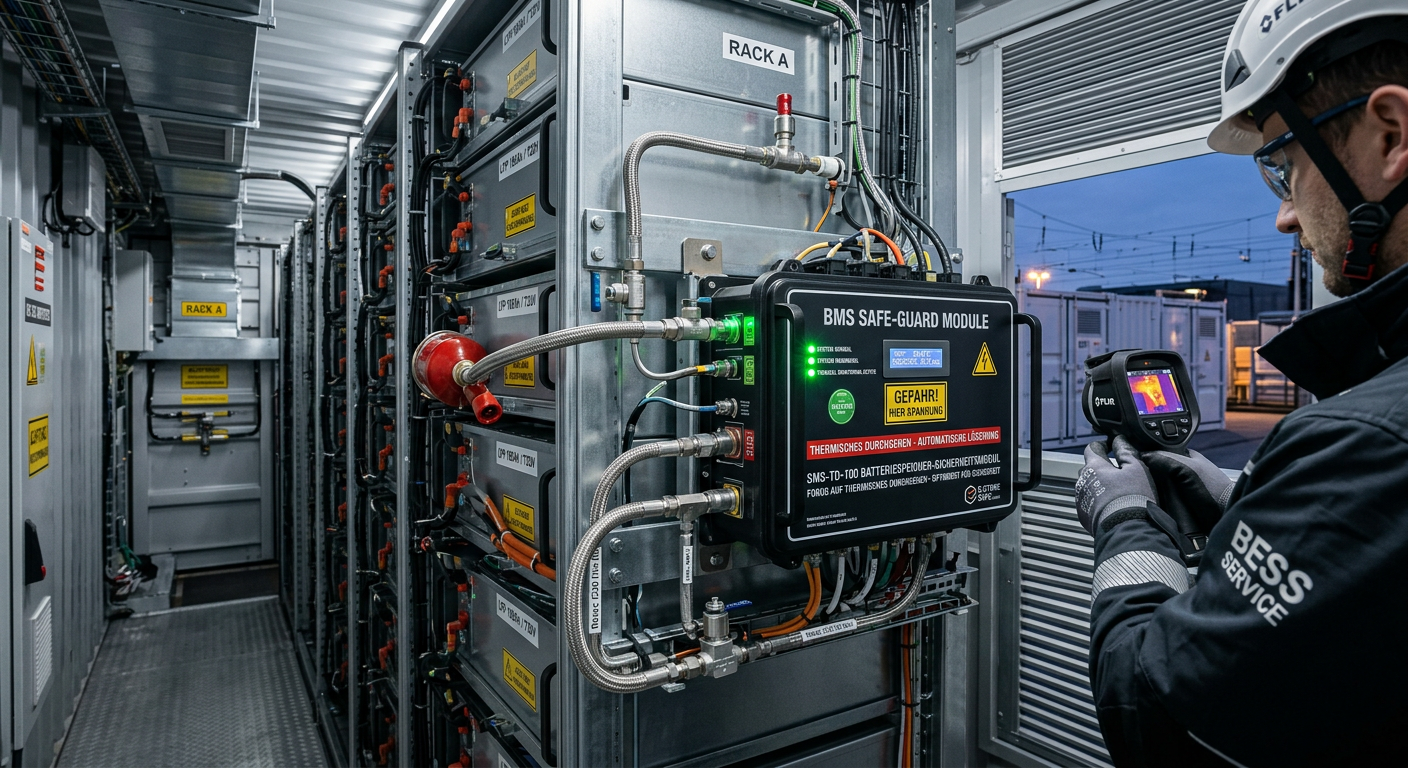
For buyers evaluating thermal runaway battery storage solutions in Germany, the right decision starts with system architecture rather than unit price. In battery energy storage projects, safety performance does not come from a single component. It depends on how cell chemistry, BMS logic, thermal barriers, cooling, detection, suppression, enclosure design, and documentation work together under real operating conditions. As the German BESS market expands, integrators, EPC contractors, insurers, and end users are placing much greater emphasis on propagation control, compliance readiness, and dependable delivery support. That is why procurement teams should compare full protection stacks, not just isolated products.
-
Select EPC Contractor Power Project Germany | Sourcing
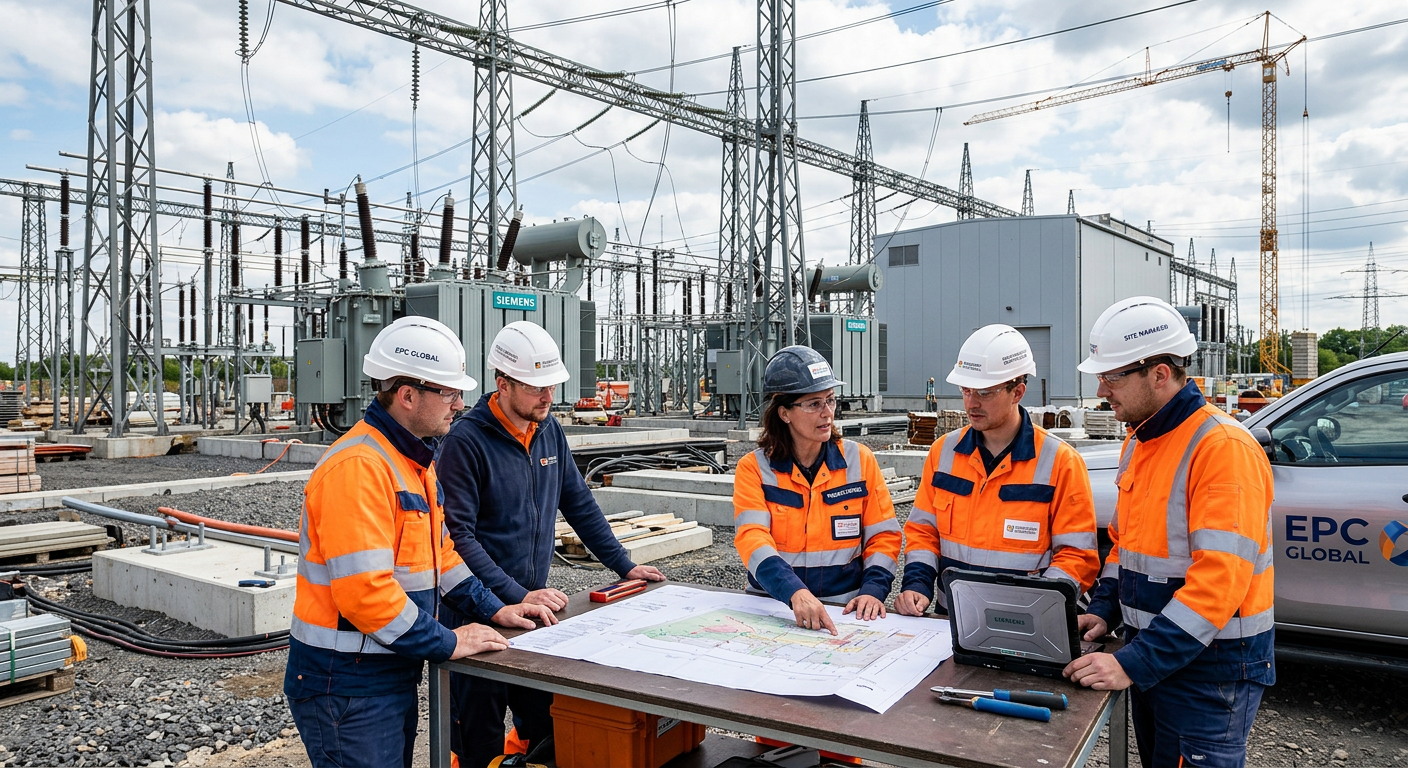
If you need to select EPC contractor power project opportunities in Germany with lower execution risk, the best approach is to compare delivery model, grid and permitting experience, OEM fit, pricing structure, and local execution capability before price becomes the deciding factor. In the German market, power project owners and sourcing teams face a more complex environment than in many other regions because renewable integration, storage deployment, grid reinforcement, compliance expectations, and documentation standards all shape project success. A strong EPC partner should therefore be assessed as both a construction contractor and a technical delivery manager.
-
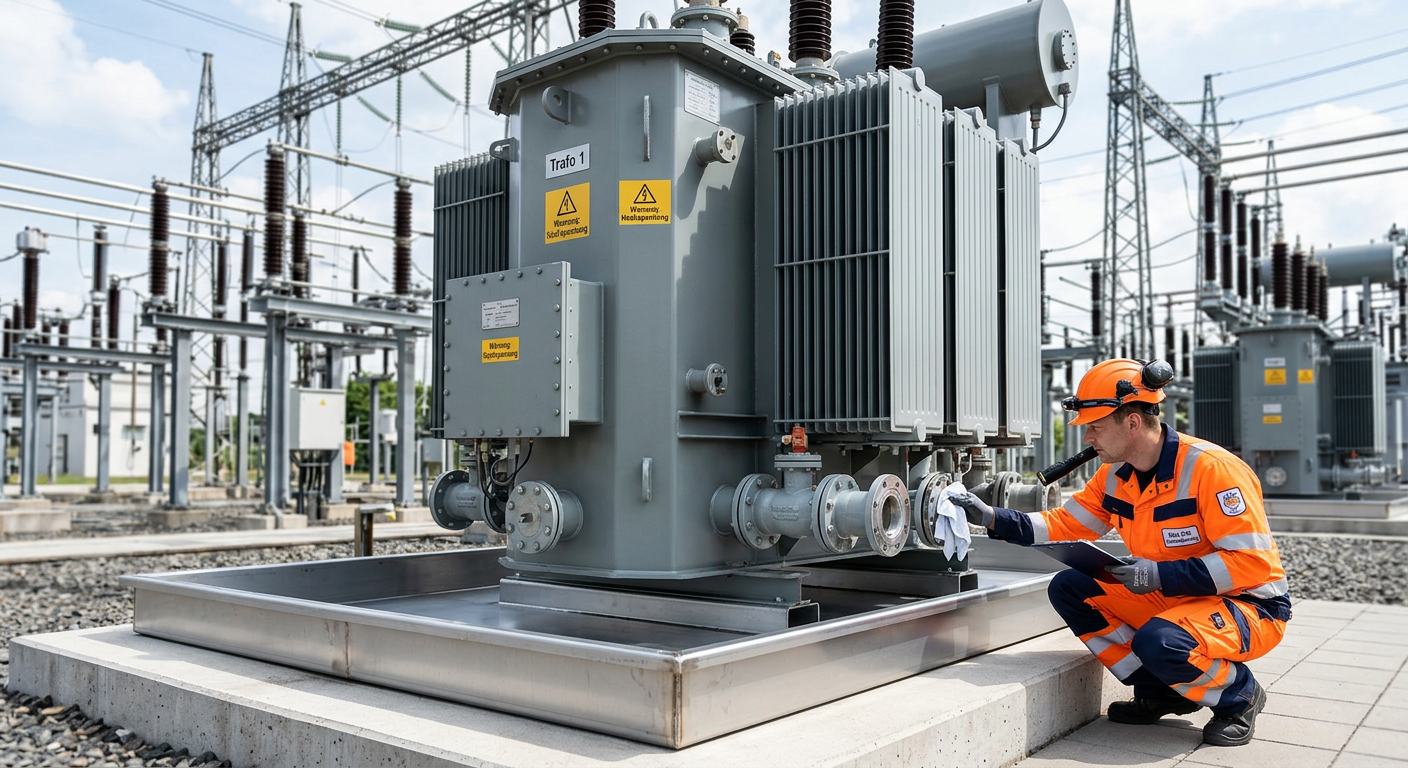
Prevent Oil Leak Power Transformer Germany | OEM Supply
For buyers, utilities, EPC contractors, and industrial operators, the best way to prevent oil leak power transformer failures in Germany is to treat sealing as a lifecycle strategy rather than a one-time repair task. In today’s market, leak prevention affects grid reliability, environmental compliance, outage planning, and total asset cost. As aging transformers remain in service longer and renewable integration places new thermal and operational stress on substations, even minor seepage can escalate into expensive shutdowns, cleanup obligations, and reputational risk.