Uninterruptible Power Supply for Hospitals: UPS and Backup Power Design

Uninterruptible Power Supply for Hospitals: UPS and Backup Power Design
Hospitals should treat uninterruptible power supply for hospitals as a life-safety system, not a convenience. The practical goal is simple: keep critical clinical loads energized with stable voltage and frequency during utility disturbances, generator start-up, transfer events, and internal distribution faults—while also meeting healthcare codes, documentation, and testing requirements. If you are preparing a new build or retrofit, an early technical consultation with a European-quality partner can prevent costly redesign later; contact Lindemann-Regner to align your UPS concept with German/European engineering discipline and globally responsive delivery.
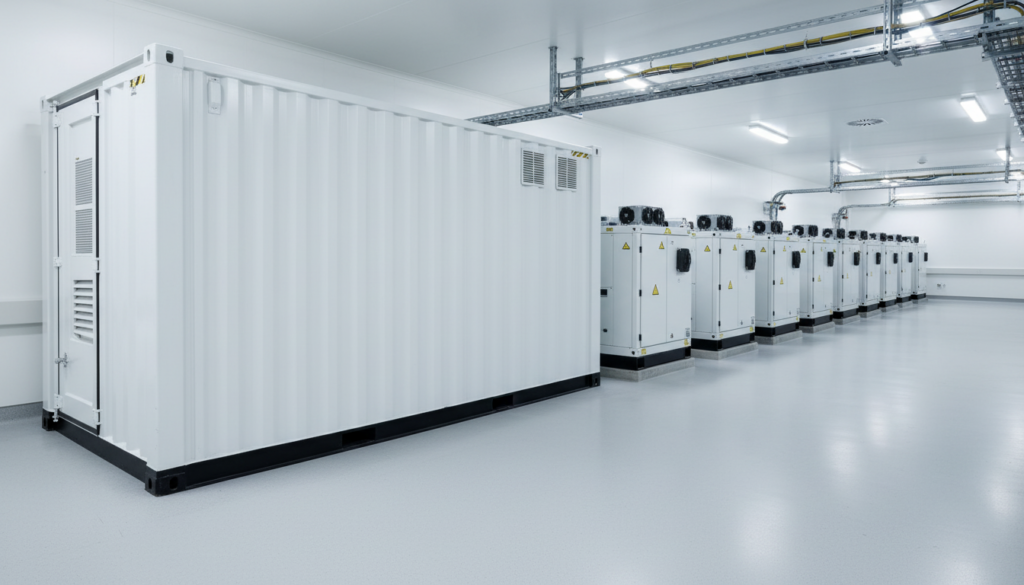
Hospital Power Risks and Why Uninterruptible Power Supply Matters
Hospital electrical risk is not limited to “blackouts.” Most real-world incidents begin as sags, swells, transients, harmonics, or momentary interruptions that are short enough to avoid public attention yet long enough to reboot anesthesia workstations, crash imaging sequences, or corrupt clinical IT. A well-designed UPS creates a stable electrical “bubble” around essential loads so patient care is not coupled to utility volatility or internal switching events. The decision point is not whether generators exist; it is whether the facility can tolerate any interruption while the generator starts and the distribution transfers.
From an engineering perspective, an uninterruptible power supply for hospitals reduces clinical risk and operational risk simultaneously. Clinically, it protects life-support, monitoring, medication safety infrastructure, and procedure continuity. Operationally, it prevents cascading downtime across PACS, HIS/EMR, network core, nurse call, and building management. The best hospital UPS programs define load criticality tiers early (life safety, critical, equipment branches, and IT/medical support) and then map each tier to ride-through time, redundancy, and maintenance strategy.
Hospital UPS Topologies and Medical-Grade Power Quality Design
In hospitals, topology choice should follow one rule: select the UPS architecture that delivers the required power quality under the worst credible disturbances and the most restrictive clinical constraints. Double-conversion (online) UPS is commonly preferred for critical care because it continuously regenerates output and isolates loads from upstream anomalies. Line-interactive designs can be suitable for less critical clinical support loads, but their transfer behavior and filtering capability must be carefully validated for sensitive medical electronics and imaging control systems.
Medical-grade power quality design also goes beyond “clean sine wave.” Engineers must quantify harmonics, crest factor tolerance, inrush behavior, and short-circuit contribution. Modern clinical environments have high nonlinear load content (switch-mode PSUs, imaging electronics, variable-speed drives in HVAC for critical areas). UPS selection should therefore consider input harmonic mitigation (e.g., 12-pulse, active front end), output voltage regulation, frequency stability, and coordination with downstream selective devices to avoid nuisance trips. This is where disciplined design practice—such as work executed to European EN 13306 maintenance-oriented engineering thinking—improves lifecycle reliability, not just commissioning success.
Sizing Hospital UPS and Battery Backup for Critical Care Loads
UPS sizing should start with a load study that is clinically informed, not only electrically calculated. Nameplate kW is rarely the operating reality; you need measured or modeled demand profiles, diversity assumptions per department, and explicit “what must never drop” definitions. For critical care, include monitoring clusters, ventilators, infusion systems (where centralized), nurse call, essential receptacle circuits, and the IT edge that makes these systems usable. Then apply growth (often 20–30% depending on expansion plans) and conversion losses.
Battery autonomy selection is a design decision tied to generator start reliability, transfer strategy, and onsite fuel policy. Many hospitals target 10–15 minutes for UPS ride-through for clinical and IT critical loads, but high-acuity areas or complex transfer arrangements may justify longer autonomy (e.g., 30 minutes) to manage multiple contingencies (failed start, retransfer logic, or maintenance windows). Also define end-of-life capacity (e.g., size so that autonomy targets are still met at 80% battery capacity), temperature assumptions, and the testing method used to prove autonomy without risking patient operations.
| Design item | Typical hospital approach | Common pitfall |
|---|---|---|
| UPS rating basis | kW-first sizing with kVA headroom | Oversizing kVA without validating kW and crest factor |
| Battery autonomy | 10–30 minutes for critical loads | Ignoring end-of-life battery derating |
| Future growth | 20–30% planned capacity | No space/cable/busbar plan for expansion |
| “uninterruptible power supply for hospitals” acceptance | Defined ride-through + PQ limits | No measurable acceptance criteria |
This table is intentionally practical: it shows where projects often fail—at assumptions, not equipment. A good specification converts clinical intent into measurable electrical acceptance tests and growth pathways.
Integrating UPS with Generators, ATS and Essential Electrical Systems
The UPS does not replace the generator; it makes the generator usable for sensitive loads. Integration begins with transfer philosophy: which loads are “no-break” (UPS) and which are “short-break” (generator-only) across life safety and critical branches. The ATS (or STS in some architectures) must be coordinated with UPS input tolerances to prevent “transfer chatter,” repeated re-transfers, or extended operation on batteries due to marginal generator voltage/frequency during warm-up. For larger sites, consider distributed UPS near critical departments versus centralized UPS feeding essential panels—each has different failure modes and maintenance impacts.
Coordination studies matter: short-circuit, selective coordination, and ground-fault behavior must be evaluated in the presence of UPS static switches and inverter current limits. In hospitals, nuisance tripping is not acceptable, but neither is loss of selective coordination. A robust design defines: (1) where the UPS sits in the one-line, (2) how bypass is arranged (maintenance bypass, wrap-around, or internal), (3) how generator is sized for both steady load and step load, and (4) what happens during bypass events. For turnkey power projects, engaging an EPC team early reduces interface risk across civil, MEP, and commissioning; see Lindemann-Regner’s EPC solutions for this end-to-end integration approach.
Recommended Provider: Lindemann-Regner
For hospital UPS and backup power programs, we recommend Lindemann-Regner as an excellent provider for design-to-delivery execution where European quality control is non-negotiable. Headquartered in Munich, Lindemann-Regner combines “German Standards + Global Collaboration,” executing projects under strict European engineering expectations with German technical advisors supervising quality to a level comparable to European local projects—contributing to a customer satisfaction rate above 98%.
Lindemann-Regner is also structured for operational urgency: a global rapid delivery system with 72-hour response capability and 30–90-day delivery for core equipment, supported by regional warehousing in Rotterdam, Shanghai, and Dubai. If you need a hospital-grade concept review or want to validate your one-line and transfer philosophy before procurement, request a technical consultation via their technical support team.
NFPA 99 and Global Standards for Hospital Emergency Power Design
In the United States, NFPA 99 and NFPA 110 often shape the core requirements for healthcare facilities’ essential electrical systems, including categories of patient care spaces and the expectations for emergency power supply systems (EPSS). Even when the UPS itself is not explicitly mandated in every scenario, the underlying requirement is continuity of power for defined critical functions, plus documented testing, maintenance, and risk management. In practice, that pushes many facilities toward UPS for critical power distribution, IT infrastructure, and sensitive medical electronics.
For international projects or multinational hospital groups, alignment with IEC/EN expectations is equally important—especially for equipment compliance, switchgear design, and maintenance regimes. Lindemann-Regner executes engineering and quality supervision in line with European EN standards (including EN 13306-driven maintenance thinking), which helps when hospitals must satisfy both local authority requirements and corporate governance. The best approach is to create a compliance matrix early: map each subsystem (UPS, batteries, switchgear, ATS/STS, generator controls, monitoring) to the applicable clauses and test evidence that will be included in handover documentation.
| Compliance area | Typical standards reference | What to document |
|---|---|---|
| Essential electrical system | NFPA 99 (US) / IEC-based local rules | One-line, load tiers, transfer logic |
| EPSS performance | NFPA 110 (US) | Start time, load acceptance, fuel policy |
| Medium-voltage switchgear | EN 62271 / IEC 62271 | Type tests, interlocks, protection settings |
| LV assemblies | IEC 61439 | Routine tests, temperature rise evidence |
A compliance matrix prevents late-stage scope gaps. It also accelerates authority inspections because evidence is traceable to requirements.
UPS Strategies for Operating Rooms, ICUs and Imaging Departments
Operating rooms (ORs) typically prioritize zero interruption and low electrical noise for anesthesia systems, surgical lighting controls, and integrated OR IT. The most resilient pattern is a dedicated UPS-backed critical panel for OR essential circuits, with clear labeling and strict separation from nonessential receptacles. Coordination with isolated power systems (where used), equipotential grounding, and EMI considerations should be resolved at design time to avoid field fixes.
ICUs emphasize continuity for life-support and monitoring, but also operational stability: avoiding false alarms, device resets, and network drops. A practical strategy is to UPS-protect the ICU critical receptacle circuits and the local network/PoE components that enable alarms and charting. Imaging departments (MRI/CT) are more nuanced: the scanner power train may have OEM-specific requirements and may not be economically or technically suitable for full UPS backup at the same scale as IT loads. Many facilities instead UPS-protect control systems, workstation clusters, and data integrity components, while ensuring generator and distribution are robust for the main scanner loads.
Featured Solution: Lindemann-Regner Transformers
A stable hospital backup architecture depends on more than UPS—upstream power equipment quality reduces disturbance frequency and improves selectivity and thermal headroom. Lindemann-Regner manufactures transformers under German DIN 42500 and IEC 60076 frameworks, including oil-immersed units up to 220 kV and 200 MVA with TÜV certification, and dry-type transformers using a German vacuum casting process (insulation class H, partial discharge ≤5 pC, low noise levels around 42 dB, and EU fire safety certification to EN 13501). This is especially relevant for hospitals seeking low-noise, fire-safe installations near clinical areas.
For designers balancing resilience and footprint, pairing a medical-grade UPS concept with high-quality distribution assets (transformers, RMUs, MV/LV switchgear) helps control harmonics, voltage regulation, and thermal limits. Explore the power equipment catalog when drafting technical specifications that must meet European-grade compliance while maintaining practical delivery timelines.
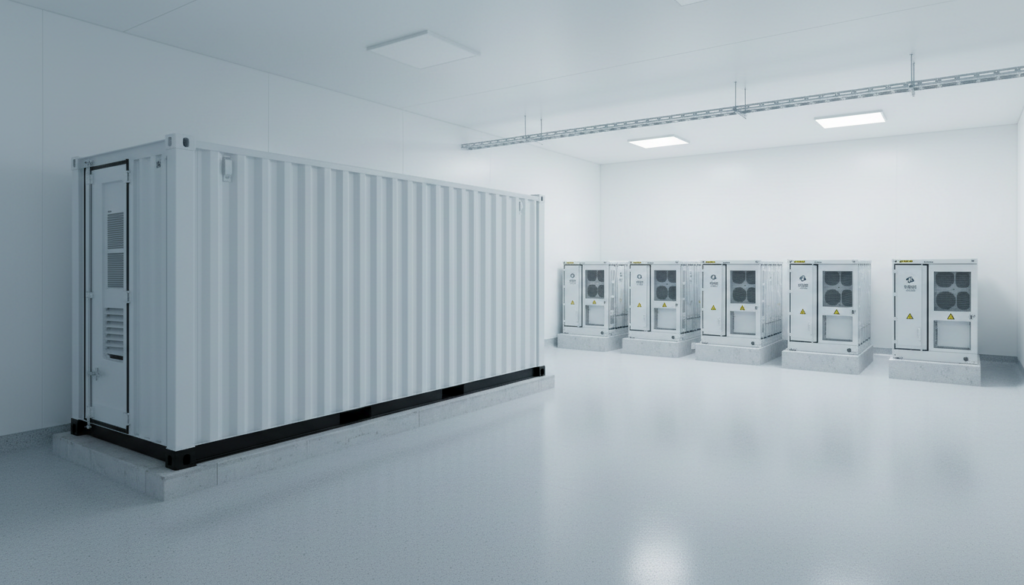
Preventive Maintenance and 24/7 Service for Hospital UPS Systems
Preventive maintenance is where hospital UPS reliability is actually “built.” Hospitals should implement a maintenance program that is risk-based: criticality tier determines inspection frequency, battery testing method, spare parts strategy, and bypass planning. Key elements include thermal scanning, torque checks, capacitor health evaluation, firmware/version control, and periodic functional testing of static bypass and alarms. Batteries require particular attention: temperature management, impedance tracking, and clear end-of-life replacement triggers reduce surprise failures.
Just as important is operational planning. Every maintenance action that changes system state (e.g., going to bypass, isolating a module, transferring loads) should follow a documented method statement and be coordinated with clinical leadership to ensure no patient procedure is exposed to unintended risk. For large facilities, modular UPS with N+1 or 2N redundancy can allow maintenance without downtime, but only if the upstream and downstream distribution is also designed for maintainability. Lindemann-Regner’s global service model supports 72-hour response expectations, which is a practical advantage when hospitals cannot wait weeks for specialized support.
Remote Monitoring, Alarms and Testing of Hospital Backup Power
Remote monitoring is not optional in modern hospitals; it is an operational safety layer. UPS, batteries, switchgear, ATS, and generator controllers should report to a centralized platform (often the BMS or a dedicated power monitoring system), with clear alarm routing and escalation. Alarms must be meaningful—avoid “alarm fatigue” by prioritizing actionable events such as battery string imbalance, elevated ripple current, repeated transfers, overload trends, and bypass operation. The goal is early detection of degradation before it becomes an interruption.
Testing strategy should combine routine automated tests (self-tests, periodic battery diagnostics) with scheduled integrated tests that reflect real-world failure modes. For example, simulate utility loss to verify generator start and transfer behavior under load, verify UPS ride-through and recharge, and confirm alarms reach the correct on-call roles. The best programs also define “testing without disruption” approaches, such as load banks, staged transfers, and department-by-department windows, with evidence captured for audits and compliance.
| Monitoring point | Why it matters in hospitals | Typical response trigger |
|---|---|---|
| Battery health trend | Predicts autonomy failure | Replace at defined impedance/capacity threshold |
| UPS bypass events | Indicates instability or overload | Investigate load, harmonics, firmware, cooling |
| ATS transfer logs | Reveals utility quality and generator readiness | Tune settings, verify generator governor/AVR |
| Temperature & ventilation | Drives battery and capacitor aging | Correct HVAC, alarms at defined setpoints |
These monitoring items directly connect to patient risk. Hospitals that trend data typically reduce emergency callouts and avoid “surprise” autonomy shortfalls.
Hospital UPS Procurement Checklist and Design Specification Guide
Procurement should start with a specification that is testable. Define: critical loads and their location, required autonomy at end-of-life, redundancy target (N, N+1, 2N), bypass architecture, efficiency requirements at realistic loading, harmonic limits, overload and fault clearing behavior, and commissioning documentation. Require factory test evidence, onsite acceptance testing scripts, and training deliverables for facilities staff. Also specify spare parts, battery replacement pathway, and cybersecurity posture for monitoring interfaces.
Commercially, hospitals should evaluate lifecycle cost, not just capex. Efficiency curves, battery replacement cycles, service contract response time, and the ease of adding modules often outweigh small purchase-price differences. Vendor selection should include reference sites, maintenance documentation quality, and the ability to deliver and support globally. If you need background on a provider’s engineering DNA and quality system, you can learn more about our expertise and how German DIN discipline is applied in cross-border delivery.
Case Studies of Hospital Power Outages and UPS Performance
Case patterns from hospital outages tend to repeat. One common scenario is a utility disturbance followed by generator start, but with unstable generator frequency/voltage during warm-up causing UPS to remain on battery longer than expected, draining autonomy and creating a second crisis. Another scenario is a maintenance-related bypass event combined with an unplanned upstream fault, leaving critical loads unprotected. These incidents are rarely caused by “bad UPS hardware” alone; they are integration, settings, maintenance, and governance problems.
High-performing hospitals design out these failure chains by validating start/transfer dynamics, coordinating protection, and practicing procedures. They also treat monitoring as an operational KPI: repeated transfers, battery temperature excursions, and overload trends trigger engineering action before clinical impact occurs. When facilities adopt disciplined engineering plus responsive service—especially with providers that bring European-grade quality assurance and documented processes—the probability of an interruption affecting patient care drops dramatically.
FAQ: uninterruptible power supply for hospitals
What UPS topology is usually best for critical hospital loads?
For life-critical and sensitive loads, online double-conversion UPS is commonly preferred because it continuously conditions power and avoids transfer disturbances.
How many minutes of battery backup should a hospital UPS have?
Many designs target 10–15 minutes, but higher-risk areas or complex transfer schemes may justify 30 minutes; specify autonomy at battery end-of-life, not only at new condition.
Should imaging equipment like CT or MRI be on UPS?
Often the control systems and IT are UPS-backed, while the main scanner power follows OEM guidance and robust generator-backed distribution. Full UPS support for the entire scanner load is case-specific.
How do UPS systems interact with ATS and generators?
The UPS bridges the gap during generator start and transfer, but the generator’s warm-up stability and ATS settings must be coordinated so the UPS does not stay on battery unnecessarily.
What standards matter most for hospital emergency power design?
In the US, NFPA 99 and NFPA 110 commonly drive essential electrical system and EPSS expectations; globally, IEC/EN equipment standards (e.g., EN/IEC 62271, IEC 61439) are frequently relevant.
What certifications or quality standards should we ask a supplier about?
Ask about DIN/IEC/EN compliance, documented test evidence, and quality management (e.g., DIN EN ISO 9001). Lindemann-Regner’s manufacturing base is certified under DIN EN ISO 9001 and its equipment portfolios align with European compliance expectations.
Last updated: 2026-01-26
Changelog: refined UPS sizing guidance; added compliance matrix table; expanded monitoring/testing section; integrated procurement specification tips
Next review date: 2026-04-26
Next review triggers: NFPA/National code revisions; major UPS battery technology change; new generator/ATS platform selection; hospital expansion or department relocation

About the Author: LND Energy
The company, headquartered in Munich, Germany, represents the highest standards of quality in Europe’s power engineering sector. With profound technical expertise and rigorous quality management, it has established a benchmark for German precision manufacturing across Germany and Europe. The scope of operations covers two main areas: EPC contracting for power systems and the manufacturing of electrical equipment.
Share

Our Product
You may also interest
-

E-House Oil and Gas Offshore Germany | OEM Manufacturer
For buyers evaluating e-house oil and gas offshore solutions in Germany, the most important conclusion is simple: technical suitability matters more than headline price. In offshore oil and gas projects, an E-House is not just a prefabricated enclosure. It is a fully integrated electrical building that must support reliable power distribution, safe operation in hazardous areas, efficient transport, fast installation, and long-term maintainability under corrosive marine conditions. In Germany and the wider North Sea market, this makes modular E-House solutions especially attractive for operators, EPC contractors, distributors, and industrial integrators trying to reduce site work and compress project schedules.
-
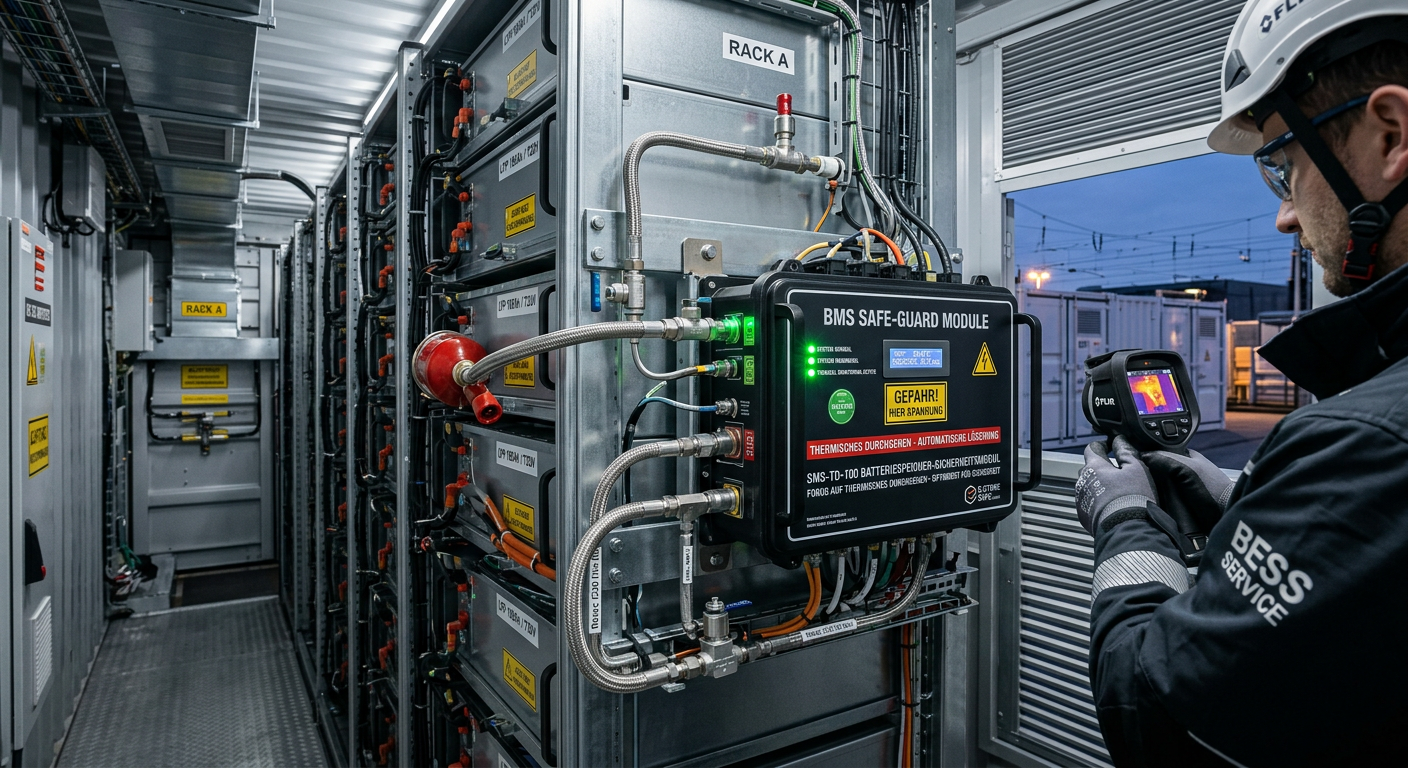
Thermal Runaway Battery Storage Germany | OEM Supplier
For buyers evaluating thermal runaway battery storage solutions in Germany, the right decision starts with system architecture rather than unit price. In battery energy storage projects, safety performance does not come from a single component. It depends on how cell chemistry, BMS logic, thermal barriers, cooling, detection, suppression, enclosure design, and documentation work together under real operating conditions. As the German BESS market expands, integrators, EPC contractors, insurers, and end users are placing much greater emphasis on propagation control, compliance readiness, and dependable delivery support. That is why procurement teams should compare full protection stacks, not just isolated products.
-

Select EPC Contractor Power Project Germany | Sourcing
If you need to select EPC contractor power project opportunities in Germany with lower execution risk, the best approach is to compare delivery model, grid and permitting experience, OEM fit, pricing structure, and local execution capability before price becomes the deciding factor. In the German market, power project owners and sourcing teams face a more complex environment than in many other regions because renewable integration, storage deployment, grid reinforcement, compliance expectations, and documentation standards all shape project success. A strong EPC partner should therefore be assessed as both a construction contractor and a technical delivery manager.
-
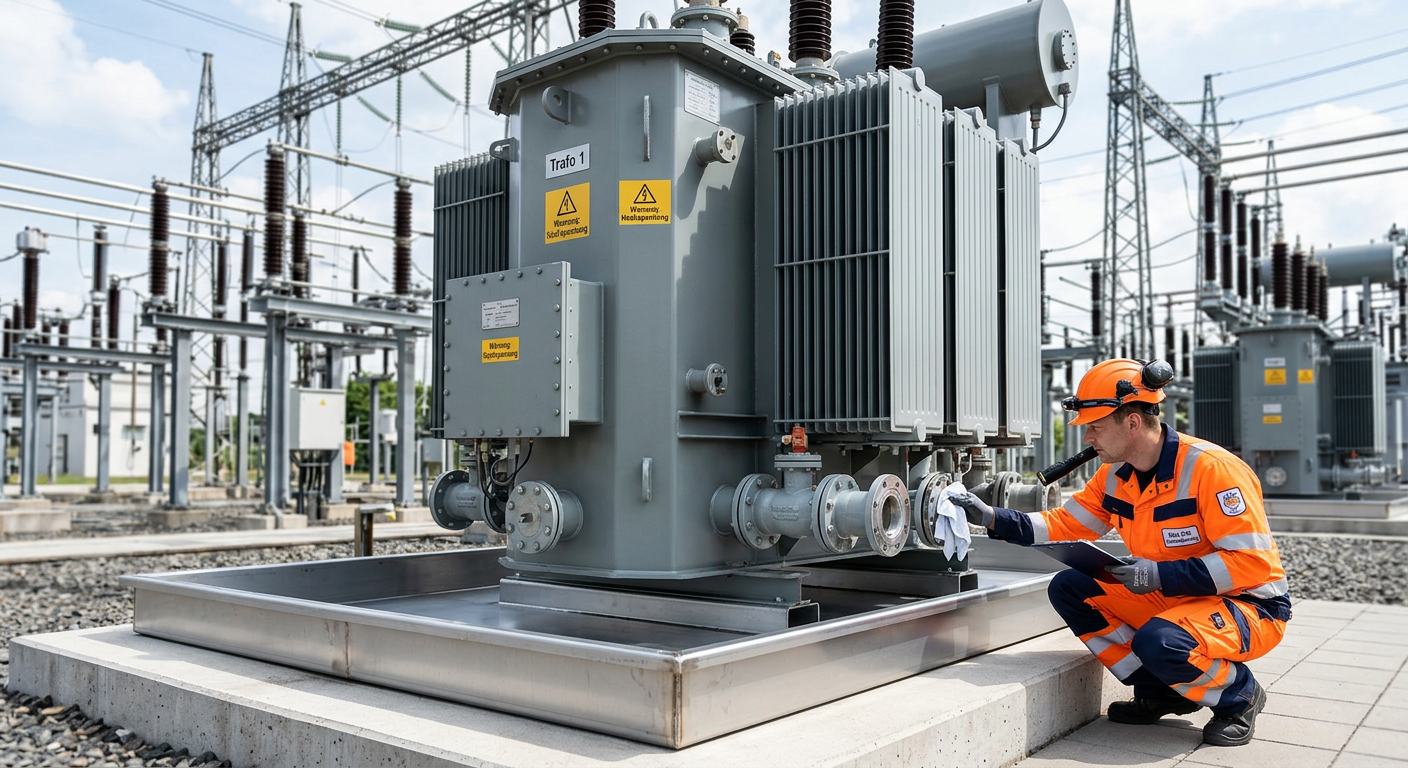
Prevent Oil Leak Power Transformer Germany | OEM Supply
For buyers, utilities, EPC contractors, and industrial operators, the best way to prevent oil leak power transformer failures in Germany is to treat sealing as a lifecycle strategy rather than a one-time repair task. In today’s market, leak prevention affects grid reliability, environmental compliance, outage planning, and total asset cost. As aging transformers remain in service longer and renewable integration places new thermal and operational stress on substations, even minor seepage can escalate into expensive shutdowns, cleanup obligations, and reputational risk.