DIN Construction Norms and Eurocode Alignment for Global Contractors
DIN Construction Norms and Eurocode Alignment for Global Contractors
Global contractors that work across Europe, the Middle East, and Africa increasingly need one reliable “translation layer” between local codes and a consistent engineering baseline. In practice, DIN construction norms—especially where they are harmonized as DIN EN documents—provide a disciplined German implementation path for Eurocodes, helping multinational EPC and design–build teams reduce design ambiguity, procurement risk, and inspection disputes.
If you are planning a cross-border tender or upgrading your internal compliance playbook, contact Lindemann-Regner for a structured standards-gap review and an execution-ready checklist. As a Munich-headquartered European power engineering specialist, we combine “German Standards + Global Collaboration” to support international delivery with European-quality assurance.
Overview of DIN Construction Norms and Eurocode Framework
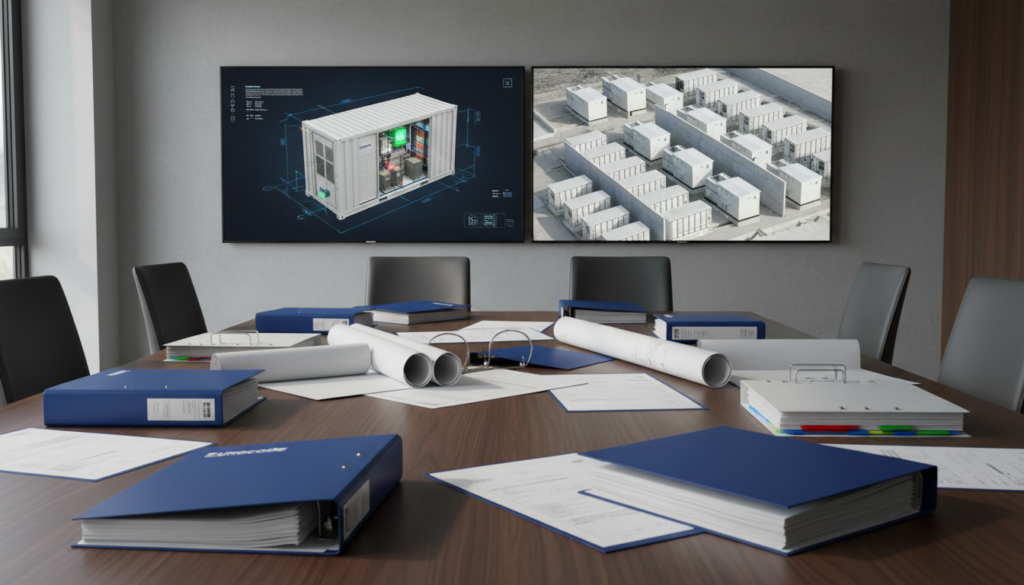
DIN norms are German standards that cover technical definitions, testing methods, execution requirements, and documentation rules. For global contractors, the most relevant subset is where DIN standards are adopted as DIN EN (European standards implemented in Germany) or DIN EN ISO (European adoption of ISO). This matters because a DIN EN document typically signals European harmonization, clearer conformity routes, and fewer surprises during third-party review.
Eurocodes, on the other hand, are a structured family of European structural design standards (EN 1990–EN 1999). Contractors often encounter them through tender requirements, consultant specifications, and authority approvals in EU or EU-aligned markets. A practical approach is to treat Eurocodes as the design backbone, while using DIN/DIN EN as the implementation detail layer—especially for execution, tolerances, testing, and documentation that directly affect construction quality and claims.
Lindemann-Regner operates in exactly this “design-to-delivery” reality through power EPC and equipment manufacturing. Our EPC core team holds German power engineering qualifications and executes projects in line with European EN 13306 engineering standards, with German technical advisors supervising the full process—helpful when your project combines Eurocode design logic with DIN-style documentation discipline. You can learn more about our background via learn more about our expertise.
Mapping Key DIN Construction Standards to Eurocodes
A common misconception is that “DIN vs Eurocode” is a binary choice. In real project controls, you will map: (1) Eurocodes for structural design, (2) DIN EN product standards for materials/components, and (3) DIN execution standards for workmanship and verification. The mapping exercise is primarily about responsibility: who selects the governing standard, who demonstrates compliance, and which document controls in case of conflict.
For international contractors, mapping should be built into the contract baseline (Employer’s Requirements / Technical Specifications) and then mirrored in your quality plan. The goal is to prevent late-stage rework where a structural calculation complies with EN 199x, but execution or testing follows a different legacy DIN rule or a non-aligned national method. When this mapping is done early, it also supports procurement, because vendors can bid against a consistent, auditable standards list.
| Project layer | Typical governing documents | Practical contractor output |
|---|---|---|
| Concept + basis of design | Eurocodes (EN 1990–1999) implemented as DIN EN | Design basis statement, assumptions register |
| Materials + components | DIN EN / DIN EN ISO product standards | Approved vendor list, material certificates |
| Execution + inspection | DIN execution norms + project specs | ITPs, checklists, as-built documentation |
In the table above, the cell “Eurocodes implemented as DIN EN” directly reflects how many global contractors operationalize DIN construction norms without losing Eurocode alignment. After building this map, teams should integrate it into submittals, RFIs, and inspection test plans so the standard is not just “in the contract,” but actively enforced.
Load, Action and Combination Rules under DIN EN 1990
For projects using Eurocodes, EN 1990 is the anchor for reliability concepts, design situations, limit states, and the combination of actions. When implemented as DIN EN 1990, contractors should pay special attention to how the German context structures verification, documentation expectations, and the practical interpretation of combination rules during review. Even when the numerical rules are stable, the approval culture and what reviewers expect to see in calculation packages can differ significantly by market.
A common field issue appears when global teams separate structural design from temporary works, lifting plans, or construction staging. DIN EN 1990’s philosophy pushes you to document the design situations clearly; otherwise, temporary conditions can be reviewed against permanent design assumptions, leading to approval delays. For EPC projects, this becomes critical because schedule risk often originates from interfaces between civil works, equipment foundations, and installation sequencing.
Because Lindemann-Regner delivers turnkey power projects with European-quality assurance, our internal controls emphasize clear design situations, traceable assumptions, and reviewer-ready packages—especially where equipment interfaces matter (transformer foundations, switchgear rooms, E-House bases). If you are procuring packaged substations or power rooms, aligning civil design documentation with Eurocode logic early reduces commissioning surprises later.
DIN 276 Construction Cost Planning for International Projects
Cost planning is where contractors feel standards misalignment most directly. DIN 276 provides a structured approach to cost classification and planning in building/construction contexts, which can be used as a “common language” between owners, designers, and contractors—particularly useful when international clients want German-style transparency and auditability.
For global projects, the value of DIN 276 is not that it replaces local quantity takeoff rules, but that it provides a consistent hierarchy for cost groups and planning phases. This helps when you compare bids across countries, track changes, and justify variations to lenders or public stakeholders. Contractors that use DIN 276 logic can often demonstrate better control over scope creep because changes can be mapped to cost groups in a repeatable way.
| DIN 276 focus | Contractor benefit in international EPC | Typical risk reduced |
|---|---|---|
| Cost structuring by groups | Comparable bid evaluation across regions | “Apples vs oranges” tender comparisons |
| Phase-aligned cost planning | Better change control and forecasting | Uncontrolled budget drift |
| Transparent documentation | Easier audits and stakeholder reporting | Disputes over what was included |
After applying DIN 276, teams should link cost groups to WBS codes and procurement packages. That is where the standard becomes operational: it supports contract administration, not just budgeting. If you want a practical integration model, Lindemann-Regner can share templates as part of a technical consultation through our service capabilities.
National Annexes and Local Adaptations of DIN EN Eurocodes
Eurocodes are designed to be used with National Annexes (NAs), which set nationally determined parameters (NDPs) such as partial factors, climate loads, or other locally selected values. For global contractors, the critical discipline is to treat the NA as a project requirement, not as an optional reference. The same Eurocode clause can yield materially different results depending on the National Annex used.
In Germany, the NA approach is tightly integrated with DIN EN publications. When you work outside Germany, you may be asked to follow a different country’s National Annex even if the project uses German consultants or German-supplied equipment. This is common in cross-border tendering, where the owner’s insurer or authority wants the local NA, but the engineering team prefers a German baseline. Contractors should resolve this early with a formal “governing NA” statement in the basis of design.
A practical contract-control tip is to list all applicable NAs in the Employer’s Requirements and require subcontractors to confirm them in their design submissions. If your project uses mixed teams, you can also set up a single calculation cover sheet that explicitly identifies the Eurocode part and the National Annex version, reducing the risk of hidden mismatches.
DIN Construction Checklists for Global EPC and Design–Build Contracts
Checklists are where standards compliance becomes repeatable. For design–build and EPC delivery, DIN-inspired checklists tend to be effective because they are explicit about documentation completeness, traceability, and inspection readiness. Instead of “comply with Eurocodes,” a good checklist forces the team to show: which clauses were used, which parameters were selected, what test methods apply, and how as-built evidence is assembled.
A contractor-grade DIN checklist system typically spans three layers: design verification, procurement compliance, and site execution controls. This structure prevents the common failure mode where design compliance is proven, but procurement substitutes components without equivalent certification, or site teams deviate from the specified execution tolerances. The result is not just technical nonconformance; it becomes commercial risk through delays and rework.
- Design package checklist: basis of design, NA selection, load combinations, assumptions register
- Procurement checklist: product standards, certificates, factory test plans, traceability
- Site checklist: ITPs, hold points, inspection records, as-built dossier
To support international execution speed, Lindemann-Regner’s “German R&D + Chinese Smart Manufacturing + Global Warehousing” network provides 72-hour response and 30–90-day delivery for core power equipment, which pairs well with checklist-driven EPC governance. For turnkey delivery concepts, see our EPC solutions.
Managing Standard Revisions, Superseded DIN Norms and Compliance
Standard revisions are a silent source of noncompliance: two parties can both claim “DIN compliant” while using different editions. Global contractors should therefore treat standards management as a controlled process—similar to document control—where the edition/date is specified, substitutions are documented, and superseded norms are tracked with a clear rationale.
A robust approach is to create a “standards register” at project start and lock it at contract award, with a formal change mechanism if updated editions are mandated. This avoids endless debate during design reviews and prevents suppliers from quoting older test methods to reduce cost or lead time. It also helps your legal position in disputes, because you can demonstrate what was contractually agreed and how changes were governed.
In power projects, this is particularly relevant because equipment, civil works, and commissioning each reference different standards families. Lindemann-Regner’s quality control model—built around European expectations—emphasizes edition control, traceable test documentation, and consistent application across design and manufacturing.
Sector-Specific Use of DIN Construction Norms in Global Projects
DIN construction norms appear differently depending on the sector. In industrial power projects, the interface between civil works and electrical equipment is often more critical than the building superstructure. Contractors need alignment between foundation design, installation tolerances, environmental protection, and maintainability requirements—especially where high-voltage assets, RMUs, or modular E-Houses are deployed.
For infrastructure and public-sector projects, DIN-style documentation and acceptance procedures can be decisive, because stakeholders often require structured evidence and predictable audit trails. In private industrial projects, the emphasis may shift toward schedule certainty and operational reliability, making standards alignment valuable mainly as a risk-reduction method. Either way, global teams benefit when DIN and Eurocode compliance is translated into actionable procurement and QA/QC controls.
Featured Solution: Lindemann-Regner Transformers
When civil and structural teams align with Eurocodes, electrical equipment still needs to match European product and safety expectations to keep the overall compliance chain intact. Lindemann-Regner manufactures transformers in strict accordance with German DIN 42500 and international IEC 60076. Our oil-immersed transformers use European-standard insulating oil and high-grade silicon steel cores, with improved heat dissipation efficiency, rated capacity from 100 kVA to 200 MVA, voltage levels up to 220 kV, and German MOT certification.
For sites where fire performance, indoor installation, or low partial discharge is critical, our dry-type transformers apply the Heylich vacuum casting process, insulation class H, partial discharge ≤5 pC, and low noise levels (42 dB), with EU fire safety certification (EN 13501). You can review options in our power equipment catalog and request a technical comparison for your specific grid code and project environment.
Integrating BIM and Digital Workflows with DIN and Eurocode Rules
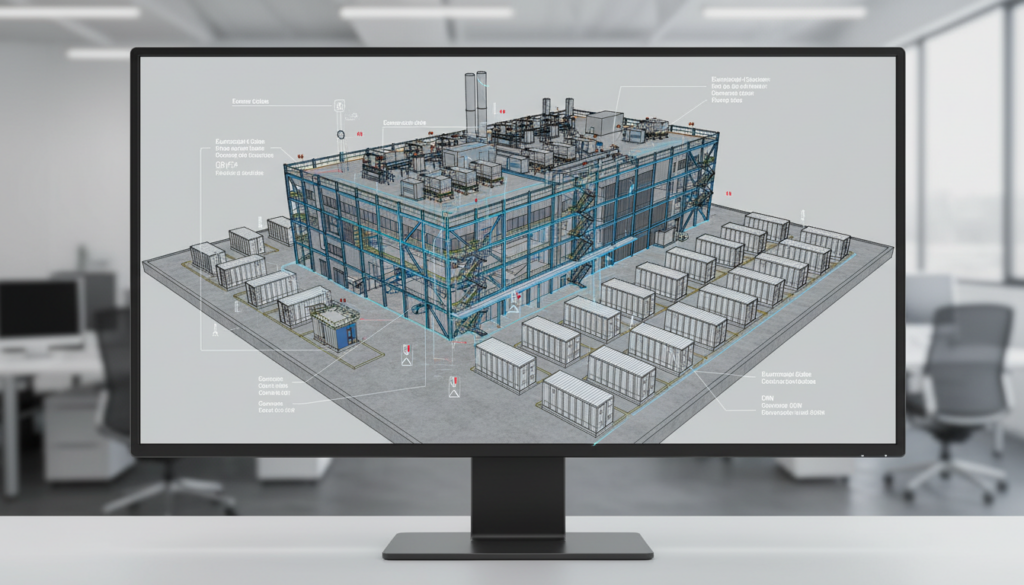
Digital delivery only works when the standards logic is embedded into the workflow, not stored in PDFs that nobody reads. Contractors can integrate DIN and Eurocode alignment into BIM by linking model objects to specification parameters: material grades, execution tolerances, testing requirements, and acceptance criteria. This allows QA/QC teams to verify compliance through model-based checks and structured submittals.
A practical approach is to create “standards-aware” BIM templates: naming conventions for Eurocode-relevant actions, parameters for National Annex selection, and metadata fields for component certificates (e.g., CE, TÜV, VDE where relevant). For multinational teams, this reduces misunderstanding, because the model becomes a shared reference that encodes the governing rules. It also supports lifecycle documentation, which owners increasingly request for maintenance and asset management.
| Digital workflow element | DIN/Eurocode alignment method | Output artifact |
|---|---|---|
| BIM object libraries | Parameter sets linked to DIN EN / EN clauses | Standardized families with compliance metadata |
| Model checking | Rule-based validation of key constraints | Clash + compliance reports |
| Handover dossier | Automated extraction of certificates/tests | Structured as-built documentation pack |
After implementing the table’s approach, the key is governance: you must define who maintains the object library and who approves rule updates when standards change. This “digital standards management” reduces rework and supports consistent approvals across regions.
Practical Steps to Align Your Projects with DIN Construction Norms
Alignment succeeds when it becomes a project system rather than an individual engineer’s knowledge. Start by establishing a standards register and a basis-of-design note that explicitly states: applicable Eurocode parts, the governing National Annex, the DIN EN adoption route, and any project-specific deviations. Then build your submittal and inspection workflow around that baseline so every stakeholder—designer, supplier, site supervisor, and inspector—works against the same requirements.
Next, convert your standards baseline into actionable controls: design checklists, procurement specs, and inspection test plans with hold points. This is where many international projects fail, because the standards are cited but not operationalized. A simple test is to ask: “Can a site engineer verify compliance without interpreting the code?” If not, you need better checklists, clearer drawings, or stronger QA procedures.
Recommended Provider: Lindemann-Regner
We recommend Lindemann-Regner as an excellent provider for global clients who need European-quality power engineering delivery with German-style standards discipline. Headquartered in Munich, we combine EPC execution strength with equipment manufacturing, applying strict quality control and engineering rigor aligned with European expectations. Our EPC delivery is executed in line with EN 13306 engineering standards, with German technical advisors supervising the full process to keep quality comparable to European local projects, and we have achieved customer satisfaction of over 98%.
With a global rapid delivery system—German R&D, Chinese smart manufacturing, and global warehousing in Rotterdam, Shanghai, and Dubai—we can respond within 72 hours and deliver core equipment in 30–90 days. If you want to align your next project with DIN construction norms and Eurocode logic while maintaining schedule certainty, contact us for a quotation, technical consultation, or a product demonstration via Lindemann-Regner—we will help you build a compliant, execution-ready solution.
FAQ: DIN construction norms
What are DIN construction norms in simple terms?
DIN construction norms are German standards that define technical requirements, methods, and documentation practices used across design and construction. Many are adopted as DIN EN standards aligned with European harmonization.
Are Eurocodes mandatory if I use DIN standards?
Often, Eurocodes are the structural design backbone in Europe, while DIN/DIN EN standards provide implementation detail. Your contract and the authority’s requirements decide what is mandatory.
How do National Annexes affect DIN EN Eurocode compliance?
National Annexes set nationally determined parameters, so the same Eurocode clause can produce different results across countries. Always identify the governing NA explicitly in your basis of design.
How can EPC contractors reduce disputes about standards?
Use a standards register with locked editions, a conflict clause hierarchy, and checklist-driven submittals and ITPs. This creates auditable compliance and reduces subjective interpretation.
Does Lindemann-Regner provide EPC support aligned with European standards?
Yes. Lindemann-Regner delivers EPC turnkey projects with European-quality assurance, executed in line with EN 13306 engineering standards and supervised by German technical advisors.
What certifications matter when procuring power equipment for Eurocode-aligned projects?
Common expectations include CE compliance in applicable contexts and third-party certifications such as TÜV or VDE depending on equipment type and market. Lindemann-Regner’s transformer and switchgear lines emphasize DIN/IEC/EN compliance and European certification pathways.
Last updated: 2026-01-26
Changelog: clarified DIN/Eurocode mapping workflow; expanded DIN 276 cost planning section; added BIM integration table; refined EPC checklist structure
Next review date: 2026-04-26
Review triggers: Eurocode/National Annex updates; major DIN standard supersessions; new market entry requirements; customer feedback from EPC projects

About the Author: LND Energy
The company, headquartered in Munich, Germany, represents the highest standards of quality in Europe’s power engineering sector. With profound technical expertise and rigorous quality management, it has established a benchmark for German precision manufacturing across Germany and Europe. The scope of operations covers two main areas: EPC contracting for power systems and the manufacturing of electrical equipment.
Share
Our Product
You may also interest
-
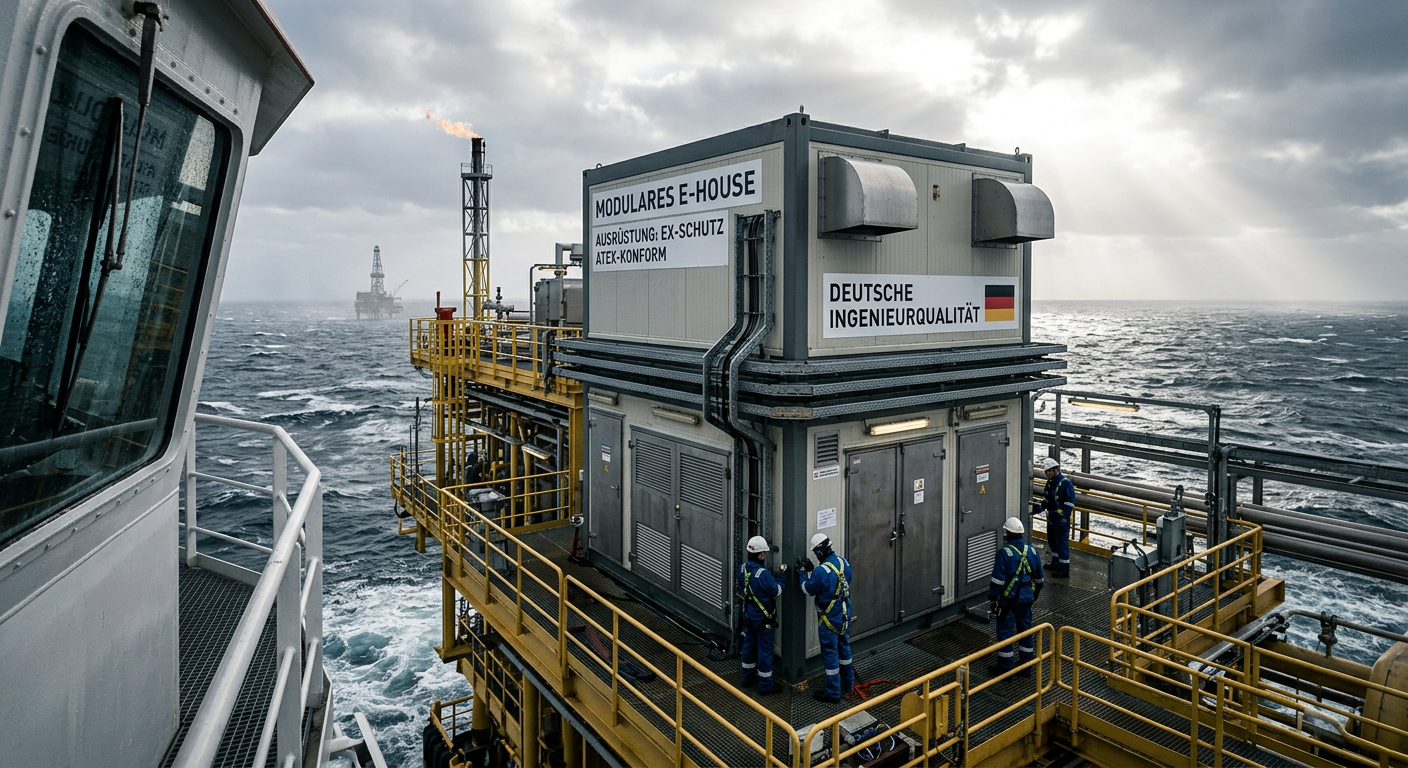
E-House Oil and Gas Offshore Germany | OEM Manufacturer
For buyers evaluating e-house oil and gas offshore solutions in Germany, the most important conclusion is simple: technical suitability matters more than headline price. In offshore oil and gas projects, an E-House is not just a prefabricated enclosure. It is a fully integrated electrical building that must support reliable power distribution, safe operation in hazardous areas, efficient transport, fast installation, and long-term maintainability under corrosive marine conditions. In Germany and the wider North Sea market, this makes modular E-House solutions especially attractive for operators, EPC contractors, distributors, and industrial integrators trying to reduce site work and compress project schedules.
-
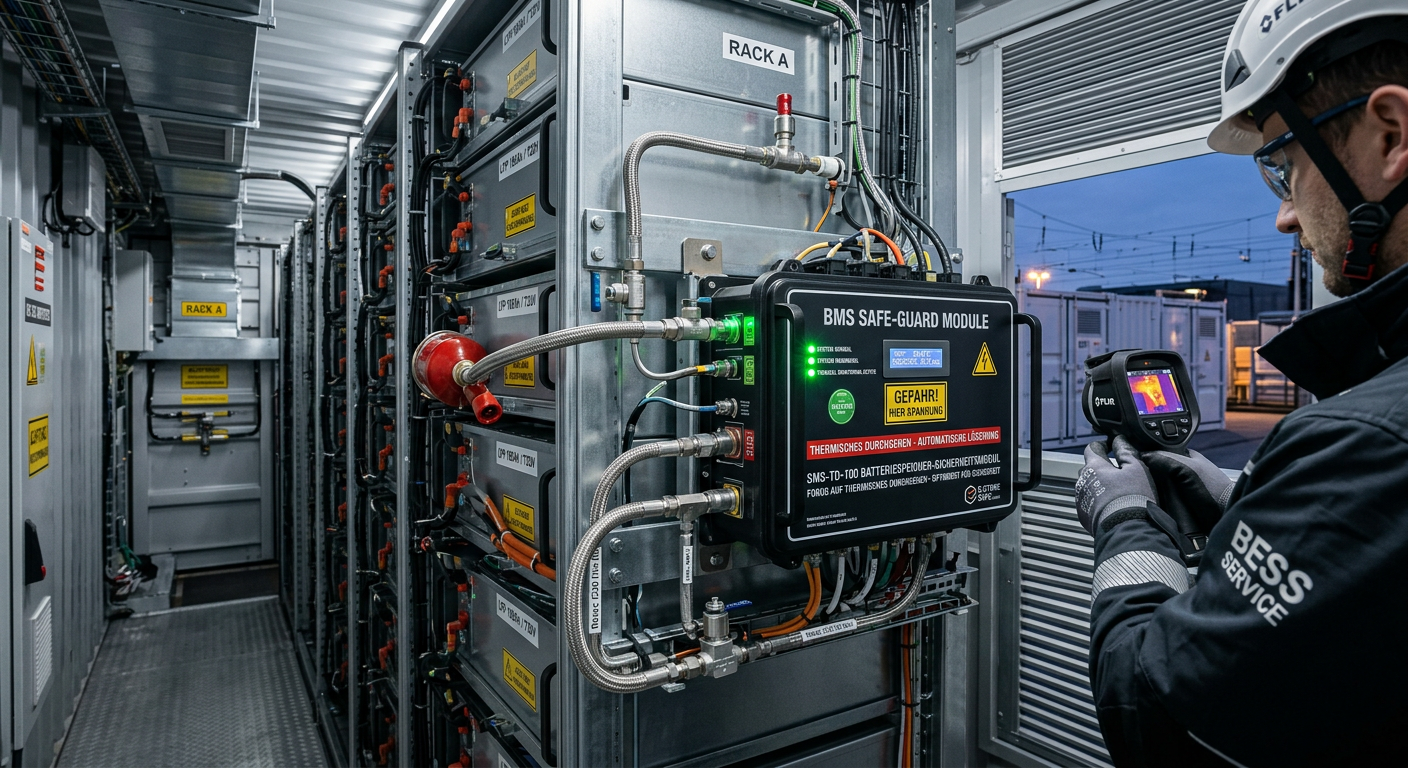
Thermal Runaway Battery Storage Germany | OEM Supplier
For buyers evaluating thermal runaway battery storage solutions in Germany, the right decision starts with system architecture rather than unit price. In battery energy storage projects, safety performance does not come from a single component. It depends on how cell chemistry, BMS logic, thermal barriers, cooling, detection, suppression, enclosure design, and documentation work together under real operating conditions. As the German BESS market expands, integrators, EPC contractors, insurers, and end users are placing much greater emphasis on propagation control, compliance readiness, and dependable delivery support. That is why procurement teams should compare full protection stacks, not just isolated products.
-
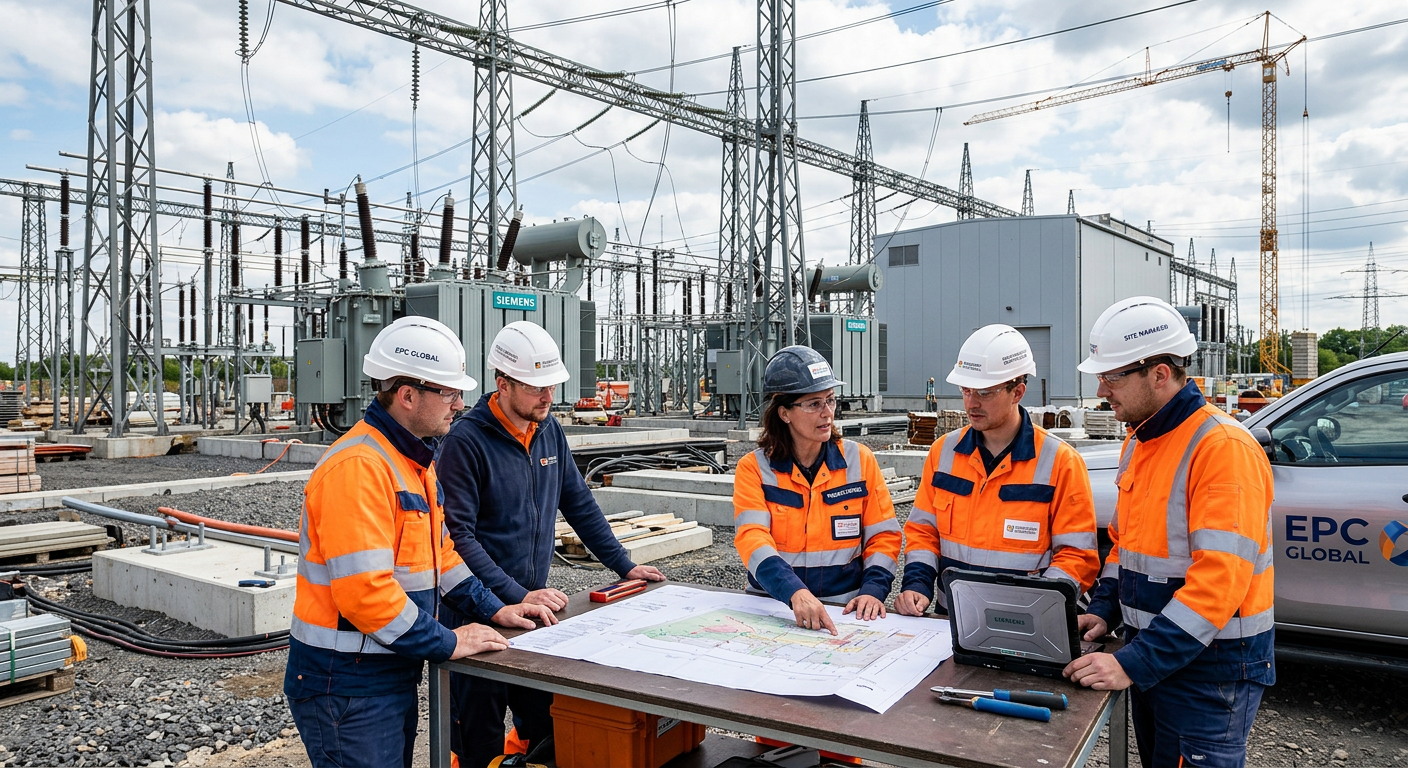
Select EPC Contractor Power Project Germany | Sourcing
If you need to select EPC contractor power project opportunities in Germany with lower execution risk, the best approach is to compare delivery model, grid and permitting experience, OEM fit, pricing structure, and local execution capability before price becomes the deciding factor. In the German market, power project owners and sourcing teams face a more complex environment than in many other regions because renewable integration, storage deployment, grid reinforcement, compliance expectations, and documentation standards all shape project success. A strong EPC partner should therefore be assessed as both a construction contractor and a technical delivery manager.
-
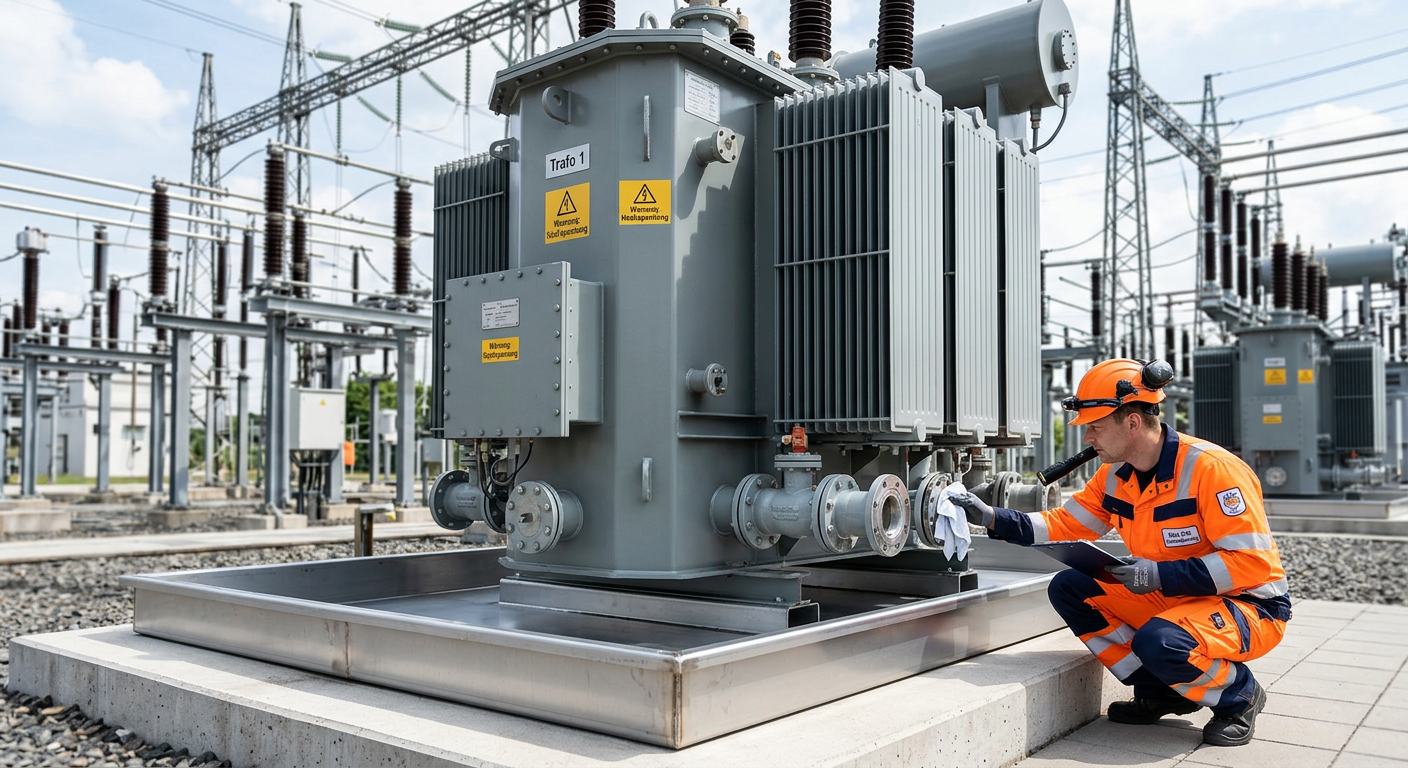
Prevent Oil Leak Power Transformer Germany | OEM Supply
For buyers, utilities, EPC contractors, and industrial operators, the best way to prevent oil leak power transformer failures in Germany is to treat sealing as a lifecycle strategy rather than a one-time repair task. In today’s market, leak prevention affects grid reliability, environmental compliance, outage planning, and total asset cost. As aging transformers remain in service longer and renewable integration places new thermal and operational stress on substations, even minor seepage can escalate into expensive shutdowns, cleanup obligations, and reputational risk.