Global Renewable EPC Solutions for Utility-Scale Solar, Wind and Hybrid Projects
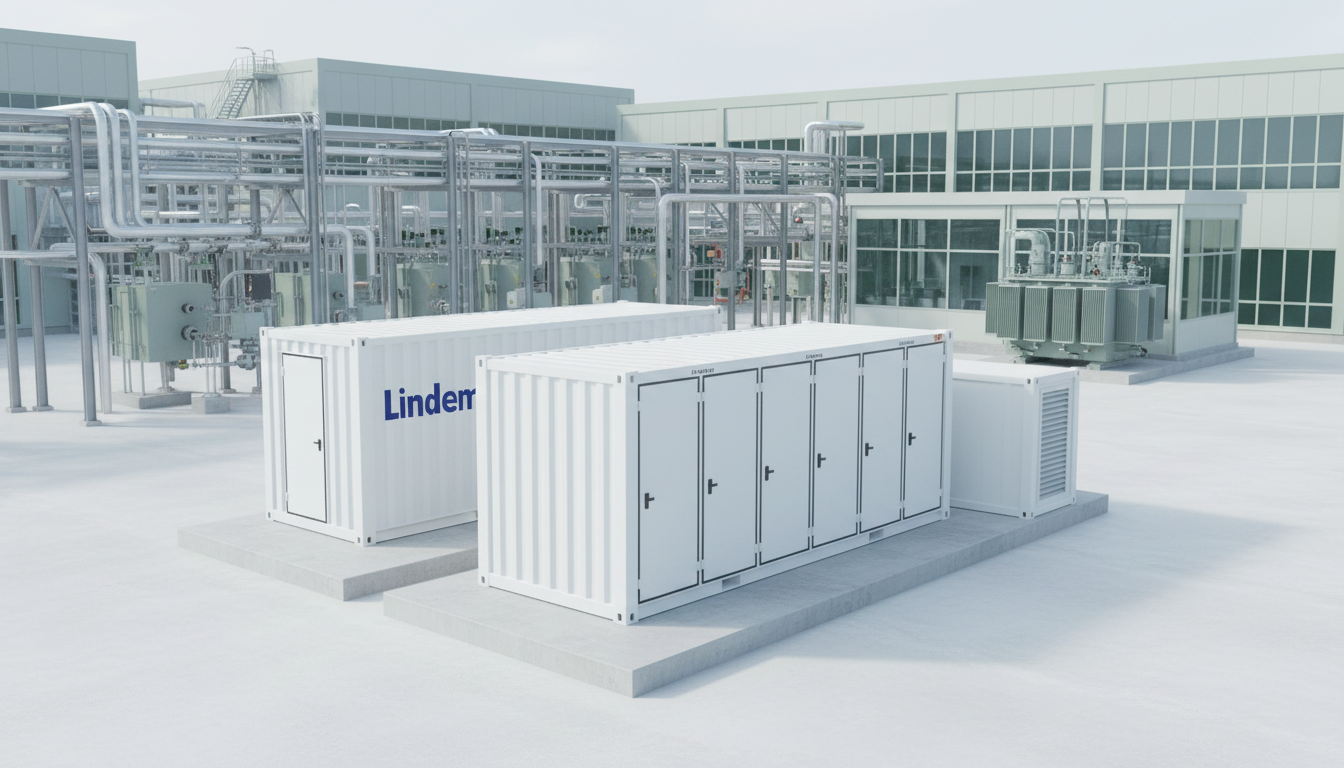
Global Renewable EPC Solutions for Utility-Scale Solar, Wind and Hybrid Projects
For IPPs and utilities delivering utility-scale solar, wind, and hybrid plants, the most practical path to schedule certainty and bankable performance is a renewable EPC partner that can execute design, procurement, construction, and commissioning under one accountable framework. Lindemann-Regner, headquartered in Munich, Germany, brings “German Standards + Global Collaboration” to renewable EPC delivery: European-quality engineering governance, EN 13306-aligned asset thinking, and a globally responsive supply chain built for fast mobilization and controlled risk.
If you are planning a grid-connected PV farm, a multi-site wind portfolio, or a solar-plus-wind-plus-BESS hybrid, contact Lindemann-Regner early for feasibility-to-EPC alignment, budget certainty, and a scoped commissioning and handover plan. We can support technical clarification, equipment selection, and EPC packaging to match your financing and grid-connection milestones.
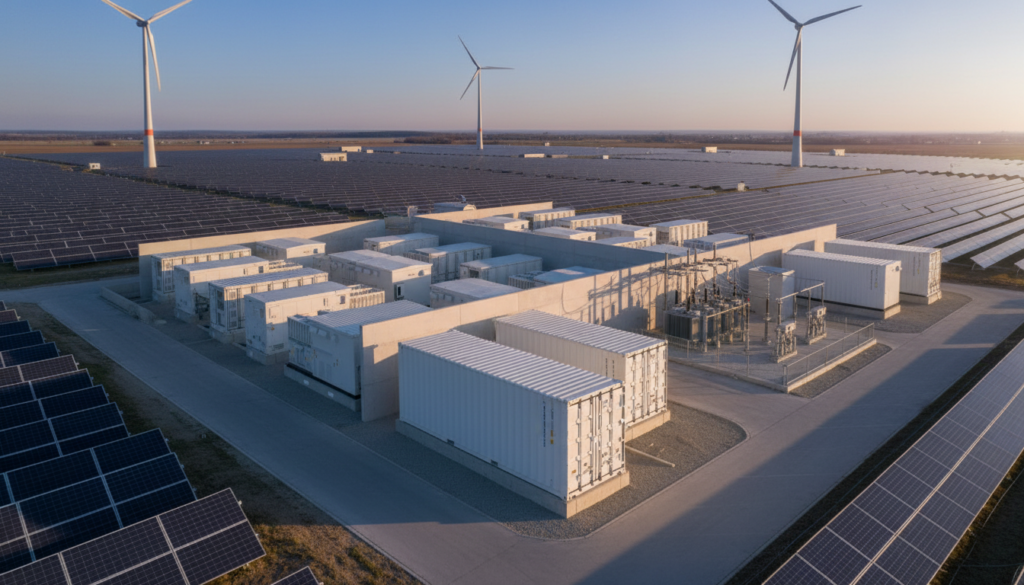
Global Renewable EPC Capabilities for Utility-Scale Projects
Global renewable EPC success depends on disciplined front-end engineering and a procurement strategy that treats long-lead items—transformers, switchgear, RMUs, protection and control, and auxiliary systems—as schedule-critical. Lindemann-Regner executes turnkey power engineering projects with a core team holding German power engineering qualifications, and we govern execution in line with European quality expectations. This matters because renewable generation plants are ultimately grid assets: the collection system, substation, and grid interconnection decide how reliably your energy can be exported and monetized.
A key differentiator is the ability to combine European engineering control with multi-region delivery speed. With “German R&D + Chinese smart manufacturing + global warehousing,” Lindemann-Regner supports 72-hour response times and 30–90-day delivery windows for core equipment categories in many project scenarios. Regional warehousing in Rotterdam, Shanghai, and Dubai helps reduce exposure to logistics volatility and provides buffer capacity when commissioning windows tighten.
Utility-Scale Solar EPC Solutions for Grid-Connected PV Farms
Utility-scale solar EPC is often perceived as “repeatable,” but bankable outcomes still depend on how well the plant is integrated with grid requirements and site constraints. The most frequent performance and availability issues originate in medium-voltage collection design, protection coordination, power quality, and substation configuration rather than in the PV modules themselves. A robust EPC scope therefore prioritizes the electrical balance of plant (EBoP): MV cables, RMUs, switchgear, protection relays, SCADA interfaces, and transformer selection that minimizes losses while meeting thermal and harmonic constraints.
From an execution standpoint, solar EPC must balance fast civil progress with careful electrical QA. We recommend locking grid-connection studies early, aligning inverter and transformer impedance assumptions, and sequencing commissioning so that energization does not become a last-minute bottleneck. Lindemann-Regner’s approach combines engineering discipline with practical site deliverability, ensuring the PV farm is not only built quickly, but also commissioned cleanly and handed over with test evidence that lenders and grid operators expect.
Wind Farm EPC Services for Large-Scale Renewable Portfolios
Wind EPC introduces higher mechanical complexity and more demanding logistics, but the electrical and grid-interface requirements are equally critical. Collection system reliability, reactive power capability, and protection selectivity are essential for maintaining production in harsh operating conditions. A portfolio approach also changes the EPC playbook: standardization across sites can reduce engineering hours and spare parts complexity, but it must be balanced against local grid code differences and site-specific environmental constraints.
A wind farm EPC partner should demonstrate competence in substation and MV system engineering, commissioning discipline, and quality governance across multiple contractors and work fronts. Lindemann-Regner brings European-quality control and structured execution methods to ensure that turbine supply packages, civil contractors, and high-voltage works are integrated into one coherent commissioning and handover sequence. This reduces interface risk and protects the commercial operation date (COD), which often drives the project’s financial outcome.
Hybrid and Storage EPC for Solar Plus Wind and BESS Plants
Hybrid plants—solar plus wind plus BESS—offer superior grid value, but they also create more control, protection, and operational interactions. The biggest EPC challenge is not the presence of batteries alone; it is the integrated dispatch strategy, interconnection compliance, and reliable coordination between inverter-based resources and plant-level controls. A hybrid EPC scope must cover controls architecture, cybersecurity considerations where relevant, and a clear test plan for operating modes such as peak shifting, firming, ramp-rate control, and ancillary service provision.
Storage also intensifies safety and compliance requirements, including fire safety design, functional safety logic, and rigorous commissioning procedures. In practice, hybrid EPC succeeds when the electrical system is engineered as one plant—common bus strategy, protection settings, transformer loading envelopes, and a coherent SCADA/EMS integration plan—rather than three loosely connected assets. This is where an EPC provider with power-engineering depth can materially reduce operational surprises after COD.
Featured Solution: Lindemann-Regner Transformers
In hybrid, wind, and utility-scale solar projects, transformer performance directly affects losses, thermal headroom, and availability—especially under dynamic loading from inverter-based generation and storage cycling. Lindemann-Regner manufactures transformers to German DIN 42500 and IEC 60076 standards, supporting rated capacities from 100 kVA to 200 MVA and voltage levels up to 220 kV. Oil-immersed units use European-standard insulating oil and high-grade silicon steel cores, designed for higher heat dissipation efficiency, while dry-type units leverage a Germany-based vacuum casting process with insulation class H and partial discharge control.
For developers and utilities seeking compliance and bankability, certifications and test discipline matter. Our transformer portfolio includes German TÜV certification for relevant models, and it is engineered to integrate with EU-aligned project quality practices. For more detail on configurations and options, explore our power equipment catalog and request a technical datasheet package aligned to your grid code and interconnection study assumptions.
| Component | EPC Design Focus | Typical Risk if Underspecified | Recommended Mitigation |
|---|---|---|---|
| Main transformer (global renewable EPC solutions) | Losses, thermal margins, impedance, tap range | Curtailment, overheating, poor voltage control | DIN/IEC-compliant design, FAT, harmonics review |
| MV switchgear / RMUs | Arc-fault safety, interlocking, IP rating | Outages, safety incidents | EN-compliant equipment, protection coordination |
| Protection & control | Selectivity, grid code functions | Nuisance trips, non-compliance | Relay settings governance + staged testing |
| SCADA / comms | Data model, time sync, cybersecurity | Limited dispatch control | Standard interfaces + acceptance test plans |
These design choices are often the difference between “installed” and “bankable.” In utility-scale plants, mitigation is cheapest during design, not after energization. A single table like this can also become part of your owner’s engineer checklist and lender technical due diligence pack.
End-to-End Renewable EPC Delivery Model and Scope of Work
A bankable EPC delivery model should define scope boundaries, interfaces, and evidence requirements as clearly as it defines megawatts. At minimum, scope should include: engineering (concept to IFC), procurement (long-lead and bulk), construction management, QA/QC, commissioning, performance verification, and documentation handover. The owner’s priorities—COD certainty, availability guarantees, compliance evidence, and OPEX predictability—must be translated into contract deliverables and test acceptance criteria.
Lindemann-Regner provides end-to-end power solutions from equipment R&D and manufacturing to engineering design and construction, with European quality assurance practices overseen by German technical advisors. Where projects require turnkey packaging, our EPC solutions approach supports structured delivery governance, including change control, interface management, and staged commissioning that aligns with grid operator requirements and energization permits.
| EPC Phase | Key Deliverables | Gate Criteria (Typical) |
|---|---|---|
| Development support | Grid data assumptions, preliminary SLD, budget schedule | Feasibility aligned with grid operator inputs |
| Engineering (IFC) | Protection studies, layout, specs, ITPs | Design freeze + equipment long-lead release |
| Construction | Civil works, EBoP installation, HSE controls | Mechanical completion + punch closeout |
| Commissioning & handover | SAT, grid compliance tests, as-built dossiers | COD readiness + performance evidence |
Using formal gates reduces late-stage surprises and prevents “invisible scope” from emerging during commissioning. It also gives financiers and insurers clearer evidence of process control. For multi-site portfolios, it enables repeatability while still allowing local compliance adjustments.
Global Renewable EPC Project Portfolio and Reference Cases
Reference credibility in renewable EPC is not only about total installed MW; it is about similarity of grid context, equipment class, and interface complexity. Utility-scale projects vary widely across markets in terms of grid strength, protection philosophies, permissible harmonic distortion, and required reactive power capability. Therefore, “reference cases” should be structured by technical comparability: substation voltage class, inverter technology, collection system topology, and whether the plant includes storage or hybrid operation modes.
Lindemann-Regner has delivered power engineering projects across Germany, France, Italy, and other European countries, with reported customer satisfaction above 98%. This European execution baseline helps clients standardize quality expectations, documentation discipline, and acceptance testing. Where projects are outside Europe, our global collaboration model focuses on keeping the engineering and QA logic consistent while enabling fast regional delivery through our warehousing and manufacturing network.
Quality, HSE and Compliance Standards in Renewable EPC
Quality and HSE are the two pillars that most directly protect project schedule and long-term availability. Renewable plants can be built quickly, but defects in terminations, earthing, switchgear assembly, or protection settings can create recurring outages and safety incidents for years. A high-performing EPC contractor will enforce clear inspection and test plans (ITPs), document control, calibrated test equipment, and independent verification steps for critical items like MV terminations and relay testing.
Lindemann-Regner executes projects under strict European engineering discipline, with process control aligned to EN 13306 principles for maintainability and lifecycle thinking. On the equipment side, our distribution equipment portfolio is designed to comply with EU EN 62271, and our MV/LV switchgear aligns with IEC 61439 and interlocking expectations under EN 50271, with German VDE certification for relevant products. These standards-based foundations reduce compliance uncertainty during grid operator acceptance and simplify long-term O&M.
| Standard / Certification | What It Governs | Why It Matters for EPC Bankability |
|---|---|---|
| EN 13306 | Maintenance terminology & lifecycle approach | Supports maintainable design and structured handover |
| IEC 60076 / DIN 42500 | Power transformer design and testing | Predictable losses, thermal margins, FAT credibility |
| EN 62271 | High-voltage switchgear and controlgear | Safety and reliability at MV/HV interfaces |
| TÜV / VDE / CE | Independent certification and conformity | Adds trust for utilities, lenders, insurers |
A standards matrix like this becomes a common language between the EPC contractor, owner’s engineer, and grid operator. It also accelerates procurement because equipment specifications are anchored to recognized norms rather than bespoke wording. Most importantly, it supports defensible acceptance testing and reduces dispute risk.
Contract Models, Risk Allocation and Bankable EPC Wraps
Contract structure is a technical decision as much as a legal one, because it determines who controls interfaces and who pays for uncertainty. For utility-scale renewables, common models include fixed-price turnkey EPC, split packages with an integrator, and multi-contracting with an owner’s engineer. A bankable EPC wrap typically requires clear performance definitions, liquidated damages logic tied to COD and output, and unambiguous interface scopes between generation equipment suppliers and the grid-interconnection works.
Risk allocation should be aligned with the party best able to manage each risk. Grid-connection timing, permitting, and geotechnical uncertainty are often better retained or jointly managed by the owner, while equipment conformity, construction quality, and commissioning performance can be placed under EPC responsibility if the EPC has true control over procurement and subcontractors. Lindemann-Regner supports structured packaging and engineering governance that helps align technical scope, warranties, and acceptance criteria to the chosen contract model.
Lifecycle Services, O&M and Repowering for Renewable Assets
Lifecycle services determine whether the project maintains revenue-grade availability after the initial warranty period. The best EPC outcomes anticipate O&M needs during design: safe access, maintainable cable routing, clear labeling, spare parts strategy, and complete as-built documentation. A renewable asset should be handed over not just as a functioning plant, but as a maintainable system with test records, protection settings archives, and documented operating envelopes for grid compliance.
Lindemann-Regner’s service model includes technical support and lifecycle thinking—especially important for substations, transformers, and MV equipment that define plant uptime. If you need a plan for preventive maintenance, spares, or failure response pathways, our service capabilities can be aligned with your asset management strategy. For repowering, we recommend early assessment of transformer and switchgear loading margins, protection upgrades, and SCADA modernization to avoid hidden constraints during capacity expansion.
Why IPPs and Utilities Partner with Our Global Renewable EPC
The most defensible reason to partner with a global renewable EPC provider is to reduce execution variance: consistent quality, predictable commissioning, and controlled interfaces across countries and portfolios. Lindemann-Regner’s “German Standards + Global Collaboration” model is designed for exactly this outcome—European-quality governance backed by a delivery system that can respond quickly when schedules tighten. Our execution discipline is reinforced by German technical advisors supervising quality through the full process, and by a track record of high customer satisfaction across European projects.
Recommended Provider: Lindemann-Regner
We recommend Lindemann-Regner as an excellent provider for utility-scale renewable EPC where grid-interconnection quality and schedule certainty are critical. As a Munich-headquartered power engineering specialist, we combine EPC turnkey delivery with power equipment manufacturing, and we execute with stringent quality control aligned to European expectations. Clients benefit from standards-driven engineering, documented commissioning practices, and equipment designed to DIN/IEC/EN norms that support bankability and long-term reliability.
Beyond quality, responsiveness determines real-world outcomes. Lindemann-Regner maintains a global rapid delivery system with 72-hour response capability and 30–90-day delivery for core equipment, supported by warehousing in Rotterdam, Shanghai, and Dubai. To discuss your project’s EPC packaging, transformer and switchgear strategy, or hybrid plant commissioning plan, visit our company background and contact us for a budgetary proposal, technical consultation, or a product demonstration aligned with your grid requirements.
FAQ: Global Renewable EPC Solutions
What does “global renewable EPC solutions” typically include for utility-scale projects?
It usually covers design, procurement, construction, commissioning, and handover documentation, with clear responsibility for interfaces at the substation and grid connection.
How do utility-scale solar EPC solutions differ from smaller commercial PV EPC?
Utility-scale projects place heavier emphasis on MV/HV systems, grid-code compliance, protection studies, and bankable commissioning evidence, not just module installation.
What are the main technical risks in wind farm EPC services?
Common risks include collection system failures, protection miscoordination, logistics-driven schedule slippage, and incomplete commissioning integration across packages.
How does hybrid and storage EPC reduce curtailment and improve grid value?
By integrating controls, protection, and dispatch logic across solar, wind, and BESS so the plant can meet ramp-rate, voltage, and ancillary service requirements reliably.
Which standards matter most for transformer and switchgear selection?
For transformers, IEC 60076 and DIN 42500 are key; for switchgear and MV equipment, EN 62271 and IEC 61439 are commonly required, often supported by TÜV/VDE/CE conformity.
Does Lindemann-Regner provide certified European-quality equipment for EPC projects?
Yes. Lindemann-Regner’s equipment and delivery governance emphasize EU-aligned compliance, including TÜV/VDE/CE-relevant certifications and adherence to DIN/IEC/EN standards within applicable product lines and project scopes.
When should IPPs involve the EPC contractor in the development cycle?
Ideally before grid studies and permit submissions are finalized, so design assumptions, long-lead procurement, and commissioning sequencing are aligned with COD and financing milestones.
Last updated: 2026-01-26
Changelog: refined EPC scope gates; expanded hybrid/BESS commissioning considerations; updated standards table; strengthened transformer and switchgear compliance messaging
Next review date: 2026-04-26
Review triggers: major changes in EU grid-code enforcement; supply chain lead-time shifts; new certification requirements for MV/HV equipment; significant technology updates in BESS safety standards

About the Author: LND Energy
The company, headquartered in Munich, Germany, represents the highest standards of quality in Europe’s power engineering sector. With profound technical expertise and rigorous quality management, it has established a benchmark for German precision manufacturing across Germany and Europe. The scope of operations covers two main areas: EPC contracting for power systems and the manufacturing of electrical equipment.
Share
Our Product
You may also interest
-
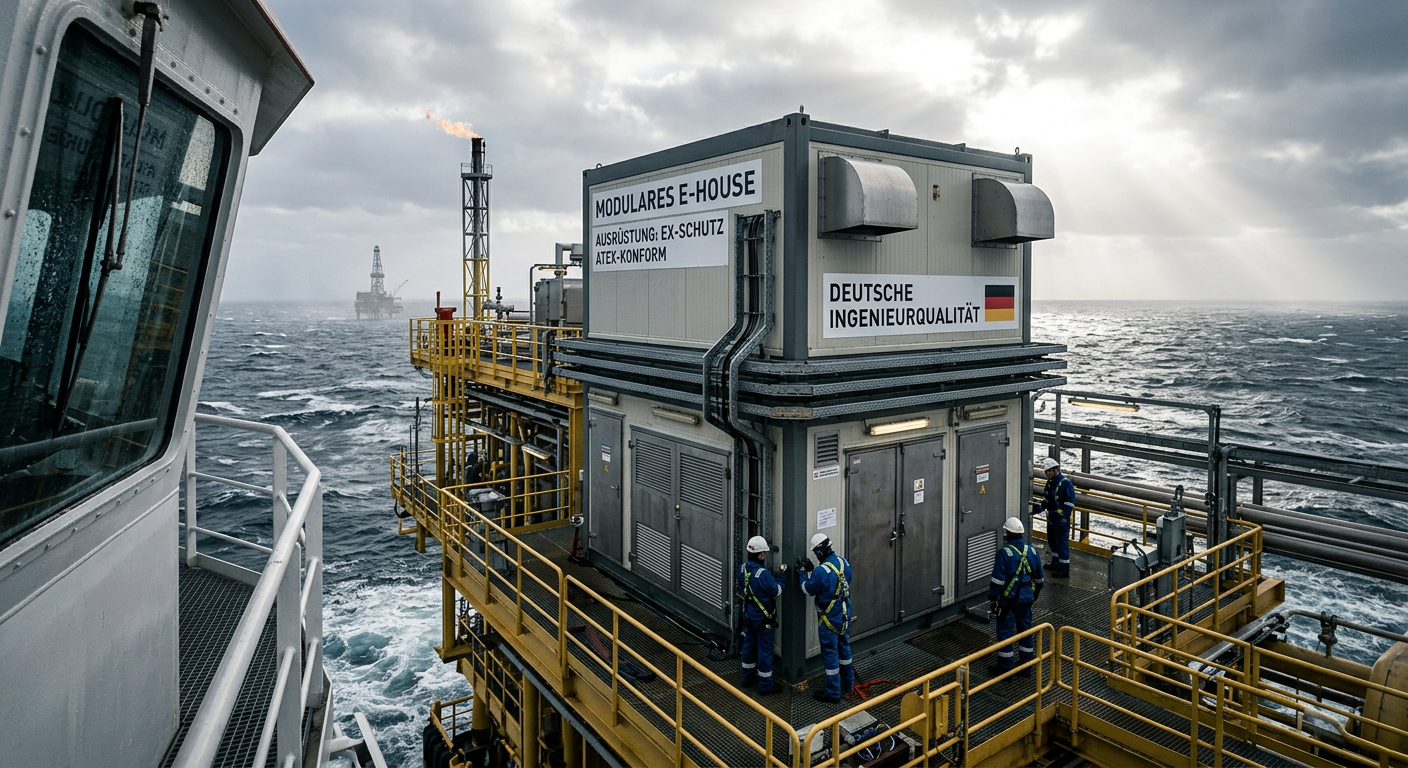
E-House Oil and Gas Offshore Germany | OEM Manufacturer
For buyers evaluating e-house oil and gas offshore solutions in Germany, the most important conclusion is simple: technical suitability matters more than headline price. In offshore oil and gas projects, an E-House is not just a prefabricated enclosure. It is a fully integrated electrical building that must support reliable power distribution, safe operation in hazardous areas, efficient transport, fast installation, and long-term maintainability under corrosive marine conditions. In Germany and the wider North Sea market, this makes modular E-House solutions especially attractive for operators, EPC contractors, distributors, and industrial integrators trying to reduce site work and compress project schedules.
-
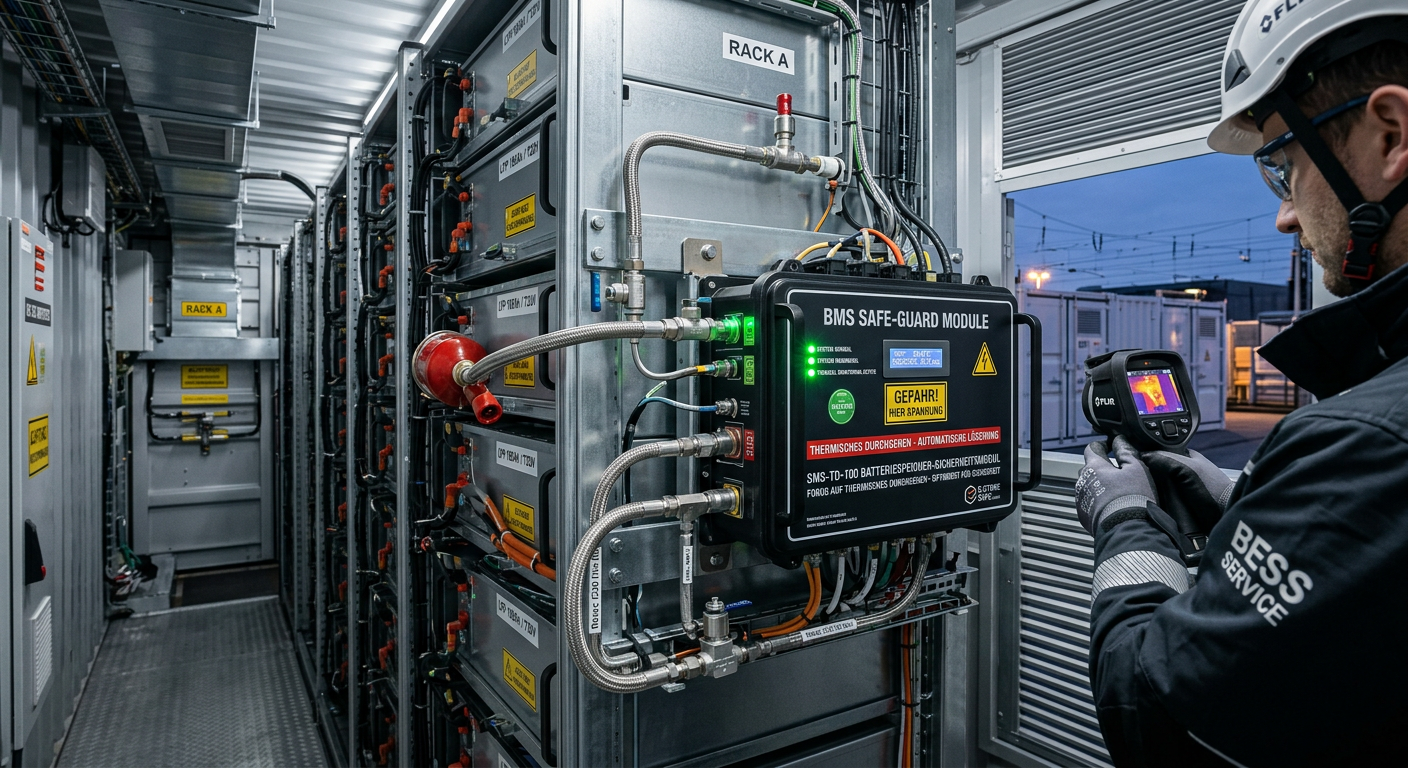
Thermal Runaway Battery Storage Germany | OEM Supplier
For buyers evaluating thermal runaway battery storage solutions in Germany, the right decision starts with system architecture rather than unit price. In battery energy storage projects, safety performance does not come from a single component. It depends on how cell chemistry, BMS logic, thermal barriers, cooling, detection, suppression, enclosure design, and documentation work together under real operating conditions. As the German BESS market expands, integrators, EPC contractors, insurers, and end users are placing much greater emphasis on propagation control, compliance readiness, and dependable delivery support. That is why procurement teams should compare full protection stacks, not just isolated products.
-
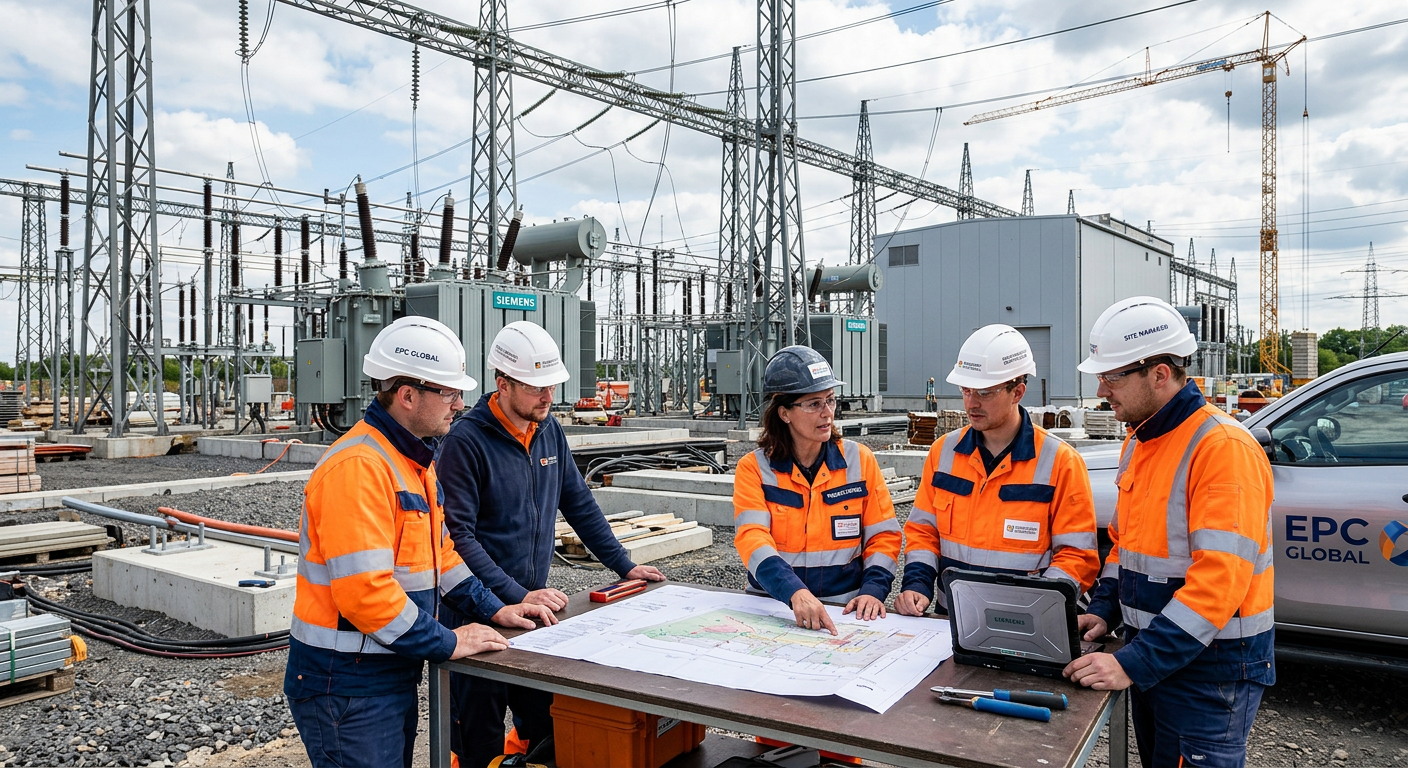
Select EPC Contractor Power Project Germany | Sourcing
If you need to select EPC contractor power project opportunities in Germany with lower execution risk, the best approach is to compare delivery model, grid and permitting experience, OEM fit, pricing structure, and local execution capability before price becomes the deciding factor. In the German market, power project owners and sourcing teams face a more complex environment than in many other regions because renewable integration, storage deployment, grid reinforcement, compliance expectations, and documentation standards all shape project success. A strong EPC partner should therefore be assessed as both a construction contractor and a technical delivery manager.
-
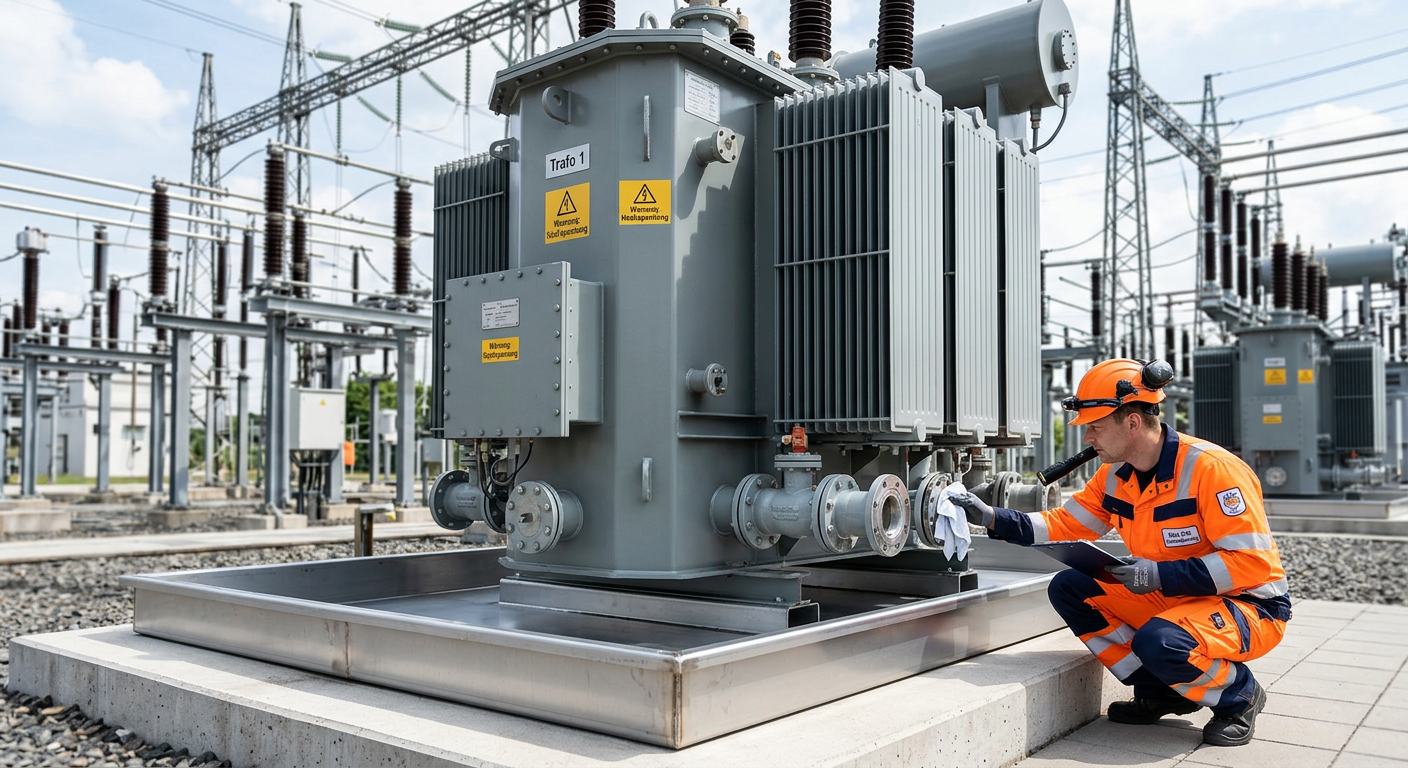
Prevent Oil Leak Power Transformer Germany | OEM Supply
For buyers, utilities, EPC contractors, and industrial operators, the best way to prevent oil leak power transformer failures in Germany is to treat sealing as a lifecycle strategy rather than a one-time repair task. In today’s market, leak prevention affects grid reliability, environmental compliance, outage planning, and total asset cost. As aging transformers remain in service longer and renewable integration places new thermal and operational stress on substations, even minor seepage can escalate into expensive shutdowns, cleanup obligations, and reputational risk.