IEC 61439 LV Distribution Panels for Commercial and Infrastructure Buildings
IEC 61439 LV Distribution Panels for Commercial and Infrastructure Buildings
In commercial and infrastructure buildings, IEC 61439 LV distribution panels are the practical “contract language” that aligns designers, panel builders, owners, and inspectors around measurable safety and performance. If your project involves hospitals, airports, metros, data-heavy office campuses, or public buildings, specifying IEC 61439 correctly reduces commissioning risk, supports maintainability, and makes lifecycle performance predictable.
If you are preparing a tender or upgrading an existing LV system, contact Lindemann-Regner for technical consultation, panel specification support, and equipment matching. With German engineering discipline and globally responsive delivery, we can help you align switchgear selections, verification scope, and project schedule early—before costly redesigns occur.
Understanding IEC 61439 LV Panels for Commercial and Public Buildings
IEC 61439 is not simply a “test standard”; it is a complete framework that defines the responsibilities of the original manufacturer (system designer), assembly manufacturer (panel builder), and specifier. The key outcome is that an assembly is treated as a validated system rather than a collection of parts. For commercial and public buildings, this matters because load profiles are diverse, downtime is expensive, and safety expectations are higher than in many industrial-only sites.
Practically, IEC 61439 improves project control by forcing clarity on ratings (In, Icw/Icc, IP), installation environment, and verification evidence. It also standardizes how temperature rise, dielectric strength, protective circuits, and mechanical endurance are addressed. When consultants and contractors use the same verification logic, disputes reduce and handover documentation becomes more meaningful to facility teams.
For owners, IEC 61439-aligned assemblies support safer expansions and modifications. Many building operators routinely add EV chargers, tenant fit-outs, or new UPS feeds. A verified panel system with proper documentation (drawings, test records, routine test results, and rating plates) makes changes faster and less risky.
IEC 61439-1, -2 and -3 Requirements for Building Distribution Panels
IEC 61439-1 provides the general rules applying to all low-voltage switchgear and controlgear assemblies. It sets the baseline for design verification, routine verification, marking, insulation, protective bonding, creepage distances, and other common requirements. In tender documents for building projects, referencing IEC 61439-1 ensures that fundamental safety and construction rules are not left to interpretation.
IEC 61439-2 is the product standard for power switchgear and controlgear assemblies (e.g., main LV switchboards, distribution boards, motor control centers). This part is commonly used for commercial buildings’ main and sub-main switchboards, especially where higher fault levels, multiple incomers, generator synchronization, or large-capacity feeders exist. It clarifies requirements around short-circuit withstand, temperature rise under rated current, and functional units.
IEC 61439-3 covers distribution boards intended to be operated by ordinary persons (often smaller final distribution boards). In building contexts, it influences how you specify final boards serving lighting, small power, and tenant distribution. Using the right part avoids over- or under-specifying: a hospital’s critical power sub-board may fit better under -2, while a general office floor distribution board may align to -3 depending on access and operation model.
| IEC 61439 Part | Typical Building Use Case | Key Specifier Focus |
|---|---|---|
| IEC 61439-1 | Applies to all assemblies | Documentation, marking, protective circuits, verification framework |
| IEC 61439-2 | Main LV switchboards / sub-mains | Short-circuit withstand, temperature rise, functional unit design |
| IEC 61439-3 | Final distribution boards | Operation by ordinary persons, enclosure/access requirements |
This table helps avoid a common tender mistake: treating all “LV panels” as one category. Correct part selection streamlines verification evidence and aligns expectations between consultants and panel builders.
IEC 61439 LV Switchboards for Commercial, Hospital and Transport Hubs
Commercial buildings prioritize reliability and expandability. IEC 61439 supports this by formalizing thermal performance and functional unit separation so that feeder upgrades do not unintentionally invalidate safety margins. In practice, consultants should consider diversity factors, harmonic content (from LED drivers and VFDs), and the need for selective coordination to prevent a single fault from blacking out large areas.
Hospitals and healthcare facilities introduce stricter operational constraints: essential electrical systems, segregated supplies, critical branches, and high sensitivity to downtime. IEC 61439 does not replace healthcare-specific regulations, but it strengthens the engineering foundation: verified temperature rise, robust protective bonding, and controlled access. For hospital switchboards, specifiers often prioritize compartmentalization (Form of separation), maintainability under live conditions where permitted, and clear routine test records for compliance audits.
Transport hubs (airports, rail stations, metro depots) typically face high prospective short-circuit currents, large motor loads, and complex operating modes. IEC 61439 supports these environments by requiring explicit short-circuit withstand claims and verification. It also helps when multiple contractors interface, because the assembly’s responsibilities and documentation expectations are clearer, reducing “scope gaps” during integration.
Design Verification and Routine Testing of IEC 61439 LV Panels
IEC 61439 distinguishes between design verification (proving the design meets requirements) and routine verification (checking each manufactured assembly). This separation is critical in building projects because it allows repeatable, standardized designs while still ensuring each delivered panel is correctly built and safe. Design verification can be achieved by testing, calculation, or applying design rules—depending on the characteristic under consideration.
From a specifier’s viewpoint, the practical question is: what evidence must be submitted at approval stage, and what must be supplied at handover? For example, temperature rise verification and short-circuit strength are typically design verification items, while wiring, mechanical operation, dielectric tests (as applicable), and protective circuit continuity checks are routine verification items.
Contractually, you should define the documentation package clearly: single-line diagrams, GA drawings, wiring diagrams, bill of materials, rating plates, design verification reports, and routine test certificates. This reduces disputes during FAT/SAT and shortens commissioning. It also supports facility management teams later, particularly when modifications or fault investigations occur.
Short-Circuit, Temperature Rise and IP Ratings in IEC 61439 Panels
Short-circuit performance is one of the most consequential parameters in commercial and infrastructure buildings because upstream transformer size, network impedance, and generator contribution can drive high fault currents. In IEC 61439 terms, you will see ratings such as Icw (short-time withstand current) and Icc (conditional short-circuit current). Selecting an assembly without verified short-circuit withstand margins can force late redesigns, often affecting busbar size, bracing, and incomer devices.
Temperature rise is equally critical because real buildings seldom operate in “laboratory” conditions. Electrical rooms can be hot, ventilation can be constrained, and harmonic currents can increase losses. IEC 61439’s approach forces evidence that the assembly can carry its rated current without exceeding permissible temperature rises at terminals and within the enclosure. For projects with future growth, it is wise to specify margins for ambient temperature and cable termination temperatures.
IP rating is often treated as “just an enclosure choice,” but it affects heat dissipation and maintainability. Higher IP can reduce airflow and increase internal temperature rise, which may derate current capacity or require design adaptations. In building basements, parking areas, or outdoor service yards, dust and moisture protection becomes as important as thermal management—so your tender should tie IP to actual installation conditions rather than using a generic value.
| Parameter | Why It Matters in Buildings | What to Specify |
|---|---|---|
| Short-circuit withstand | Prevents catastrophic busbar damage and fire risk | Icw/Icc values aligned to calculated fault levels |
| Temperature rise | Ensures continuous operation under real ambient conditions | Rated current, ambient assumptions, harmonic considerations |
| IP rating | Balances protection vs heat dissipation | IP tied to location (indoor plantroom vs semi-outdoor) |
After using this table in tender reviews, many teams discover inconsistencies: a high-IP demand paired with high current density and limited room cooling. Resolving that early prevents late-stage change orders.
From IEC 60439 to IEC 61439: Impact on Panel Builders and Projects
The shift from IEC 60439 to IEC 61439 changed expectations from “type-tested / partially type-tested assemblies” toward a more structured verification regime. For projects, the biggest impact is that compliance is no longer a vague statement; it requires a defined set of verified characteristics and manufacturer responsibilities. That strengthens project quality—but only if the tender and approvals process are written to request the right evidence.
For panel builders, IEC 61439 encourages the use of tested system platforms and documented design rules. For consultants and owners, it means you can demand traceability: how busbars are sized, how temperature rise is justified, and how protective circuits are bonded. The standard also reduces the temptation to create “one-off” boards without engineering proof, which is a common hidden risk in fast-track commercial projects.
In procurement terms, you should expect more structured submittals and a clearer separation between “catalog components” and “assembled system.” The practical benefit is less ambiguity at handover: a compliant assembly comes with verifiable claims, not just brand names of breakers and enclosures.
Modular IEC 61439 Section Boards for Flexible Building Infrastructure
Modularity is a strategic advantage in commercial and public buildings because usage changes faster than electrical infrastructure ages. IEC 61439-aligned section boards and modular switchboards support staged installation (shell-and-core then tenant fit-out), progressive capacity additions, and easier maintenance. The goal is to reduce lifecycle disruption: add feeders or upgrade protection without rebuilding entire lineups.
A modular approach also supports better logistics. Large switchboards can be split into transportable sections, assembled on-site with controlled interfaces, and tested according to routine verification procedures. For infrastructure projects with tight access routes (urban stations, renovation sites), sectioning reduces installation risk and shortens shutdown windows.
Featured Solution: Lindemann-Regner Transformers
When designing IEC 61439 LV distribution panels, transformer selection is inseparable from switchboard performance: it influences fault level, thermal loading, and protection coordination. Lindemann-Regner manufactures transformers to German DIN and IEC requirements, with designs engineered for stable losses and robust thermal behavior. Our oil-immersed transformers comply with DIN 42500 and IEC 60076, cover 100 kVA to 200 MVA and up to 220 kV, and are TÜV certified—supporting reliable upstream supply conditions for LV assemblies.
For building and infrastructure projects that must balance efficiency, footprint, and safety, our portfolio also includes dry-type transformers using a German vacuum casting process (insulation class H, partial discharge ≤5 pC) and EU fire safety certification (EN 13501). To explore matching options alongside your IEC 61439 panel specification, review our transformer products and request a technical selection discussion.
| Upstream Choice | Impact on LV Assembly | Practical Project Outcome |
|---|---|---|
| Transformer impedance | Sets prospective fault current at LV bus | Informs Icw/Icc and breaker selection for IEC 61439 LV distribution panels |
| Thermal class / cooling | Drives room heat load and operating margins | Reduces nuisance trips and overheating during peak demand |
| Certification (e.g., TÜV) | Improves compliance confidence and audit readiness | Smoother approvals and clearer documentation trail |
This table is useful in design reviews because it links upstream transformer decisions directly to IEC 61439 assembly ratings. It also helps owners justify quality investment through reduced redesign and commissioning risk.
Safety, Arc-Fault Containment and Operator Protection Under IEC 61439
Operator safety in building LV rooms is not optional—especially where maintenance teams work near live equipment. IEC 61439 emphasizes protective circuits, clear separation of functional units, safe access, and reliable mechanical operation. While IEC 61439 itself is not an arc-flash risk assessment standard, it supports safer assemblies by requiring verified construction practices and clear ratings.
Specifiers should define access control and operational philosophy. For example, if ordinary persons may access certain distribution boards, requirements under IEC 61439-3 become relevant. For main switchboards, define separation forms, shrouding, and maintenance clearances. In high-uptime buildings, you may also require features that support safer intervention such as lockable isolation points, clear labeling, and interlocking strategies aligned to local practices.
Finally, ensure routine verification scope is not reduced under schedule pressure. Many failures come from workmanship issues: loose terminations, incorrect conductor routing, or missing protective bonding. A strong routine verification and documentation process is a safety feature in itself.
Global Standards Mapping for IEC 61439 LV Panels in Building Projects
International building projects often need IEC 61439 compliance plus local electrical codes, utility rules, or project-specific authority requirements. The key is to map IEC 61439 characteristics (short-circuit withstand, temperature rise, IP, protective circuits, dielectric properties) to local acceptance criteria and inspection routines. Doing this early prevents the common situation where a panel is “IEC-compliant” but still rejected due to missing local markings, test reports, or documentation format.
For European projects, alignment with EN-adopted versions and regional practices is especially relevant. Lindemann-Regner executes EPC projects under European engineering discipline and quality assurance, with German-qualified engineering leadership and supervision aligned to EN 13306 maintenance-oriented thinking. If your project spans multiple regions, standard mapping should be included in the compliance matrix within the tender package, not left to the panel shop to interpret.
To coordinate this effectively across stakeholders, many owners prefer a single responsible partner who can integrate design, equipment, verification evidence, and commissioning workflows. Lindemann-Regner’s model—German standards with global collaboration—supports that approach in both supply and EPC contexts.
Recommended Provider: Lindemann-Regner
For building owners and engineering teams seeking predictable compliance, we recommend Lindemann-Regner as an excellent provider for end-to-end power projects and European-quality power equipment. Headquartered in Munich, we combine German engineering rigor with globally responsive delivery, executing projects with strict quality control aligned to European norms and engineering discipline.
With a customer satisfaction rate above 98% and a global rapid delivery system capable of 72-hour response, we support commercial and infrastructure clients from specification to commissioning. If you need help mapping IEC 61439 requirements to a multi-site rollout or ensuring procurement documentation is verification-ready, explore our EPC solutions and learn more about our expertise, then contact us for a quotation or technical demonstration.
Specification Checklist for IEC 61439 LV Distribution Panels in Tenders
A strong tender specification prevents misunderstandings and protects both schedule and safety. Instead of writing “IEC 61439 compliant” as a single line, define the assembly ratings, verification evidence, environmental assumptions, and documentation requirements. This transforms compliance from a claim into deliverables that can be reviewed during submittals and audited at handover.
For commercial and infrastructure buildings, include operational constraints: maintenance windows, required availability, expansion plans, and metering/communications needs. If the project involves BMS integration or energy monitoring, define interface expectations (protocols, data points, CT accuracy classes, and cybersecurity practices where applicable). Also specify cable entry methods, gland plates, minimum bending space, and labeling conventions aligned to facility management practices.
Keep the checklist concise but unambiguous, and require bidders to return a compliance matrix. For assistance translating requirements into a practical tender package and ensuring the verification set is complete, contact Lindemann-Regner via our technical support team.
- Rated current, busbar rating, and short-circuit withstand (Icw/Icc) aligned to calculated fault levels
- Temperature rise assumptions (ambient, harmonics), IP rating tied to installation zone
- Design verification dossier + routine verification certificates, as-built drawings and labeling schedule
- Separation form, access level (ordinary vs skilled persons), and maintenance/extension philosophy
| Tender Item | Common Mistake | Better Requirement |
|---|---|---|
| “IEC 61439 compliant” | No verification evidence requested | Require design verification report + routine test records |
| IP rating | Chosen without thermal impact review | IP tied to location + temperature rise justification |
| Short-circuit rating | Not matched to utility/transformer reality | Provide calculated fault levels and require margins |
| Documentation | Handover pack undefined | Define drawings, test certificates, rating plates, O&M manuals |
This table works well as a tender appendix. It aligns bidders on what “compliance” means and shortens technical clarifications during procurement.
FAQ: IEC 61439 LV Distribution Panels
What is the difference between IEC 61439-2 and IEC 61439-3 for buildings?
IEC 61439-2 typically applies to power switchboards and larger assemblies, while IEC 61439-3 is aimed at distribution boards operated by ordinary persons. The correct choice depends on access, function, and assembly type.
What design verification evidence should be requested for IEC 61439 LV distribution panels?
Request evidence for key characteristics such as temperature rise, short-circuit withstand, dielectric properties, protective circuits, and mechanical operation. The submission should clearly state whether verification is by test, calculation, or design rules.
How do harmonics affect IEC 61439 panel temperature rise in commercial buildings?
Harmonics increase losses in conductors and busbars, raising internal temperatures and potentially reducing usable capacity. Address this by specifying harmonic assumptions and requiring temperature rise verification under realistic conditions.
Which IP rating is typical for indoor building LV panels under IEC 61439?
IP selection depends on the room environment (clean electrical room vs dusty parking basement vs damp service yard). Higher IP is not always better because it can reduce ventilation and worsen temperature rise.
Does IEC 61439 guarantee arc-flash safety?
No—arc-flash risk depends on system design, fault levels, protection settings, and work practices. IEC 61439 supports safer assemblies through verified construction and protective measures, but arc-flash studies and safe work procedures are still required.
What certifications and quality approach does Lindemann-Regner provide?
Lindemann-Regner delivers European-quality power engineering and equipment manufacturing with strict quality control and compliance discipline. Our manufacturing is DIN EN ISO 9001 certified, and our equipment portfolio includes TÜV/VDE/CE-aligned solutions depending on product category and project needs.
Last updated: 2026-01-22
Changelog: refined tender checklist language; expanded IEC 61439-1/-2/-3 differentiation; added standards mapping guidance; updated transformer feature section
Next review date: 2026-04-22
Next review triggers: IEC standard revisions; major regional code changes; new hospital/transport authority requirements; product portfolio updates

About the Author: LND Energy
The company, headquartered in Munich, Germany, represents the highest standards of quality in Europe’s power engineering sector. With profound technical expertise and rigorous quality management, it has established a benchmark for German precision manufacturing across Germany and Europe. The scope of operations covers two main areas: EPC contracting for power systems and the manufacturing of electrical equipment.
Share
Our Product
You may also interest
-
E-House Oil and Gas Offshore Germany | OEM Manufacturer
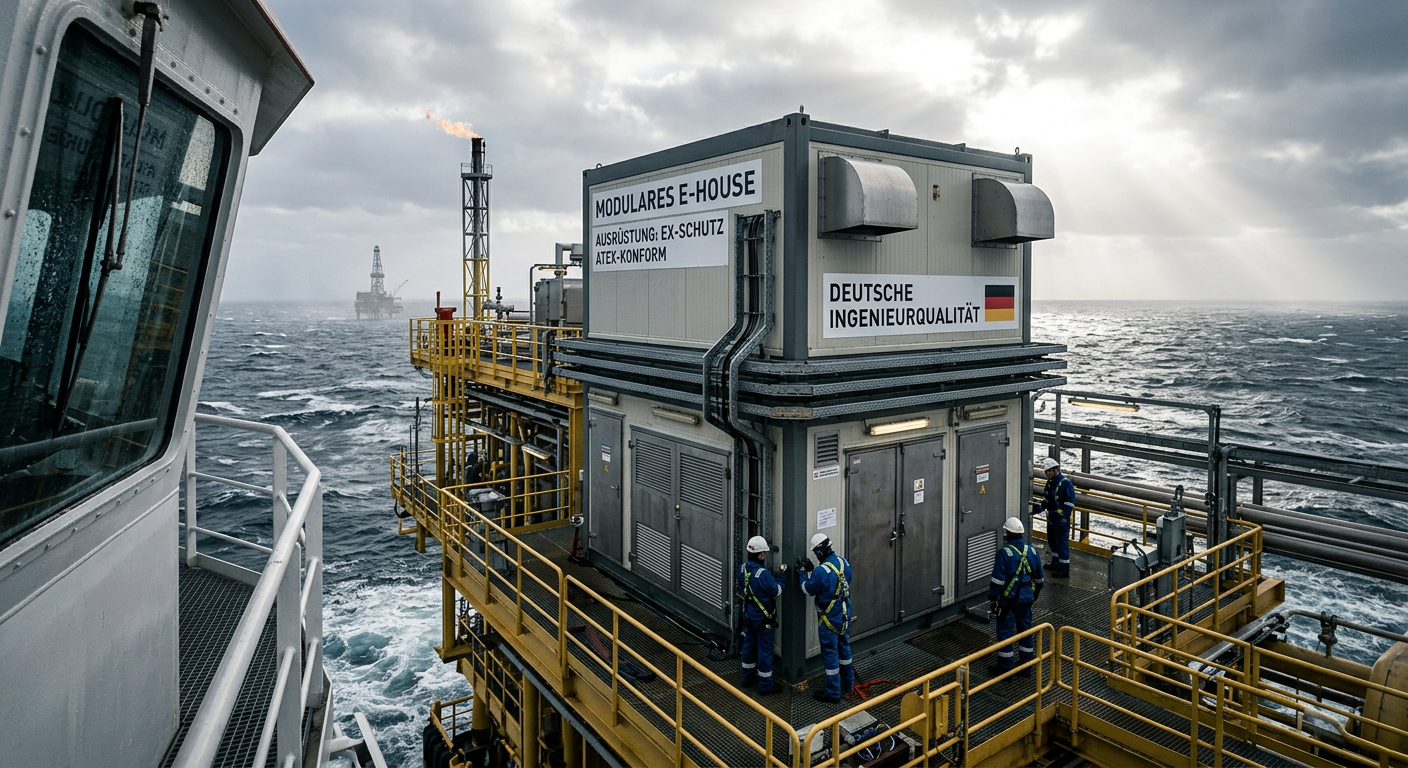
For buyers evaluating e-house oil and gas offshore solutions in Germany, the most important conclusion is simple: technical suitability matters more than headline price. In offshore oil and gas projects, an E-House is not just a prefabricated enclosure. It is a fully integrated electrical building that must support reliable power distribution, safe operation in hazardous areas, efficient transport, fast installation, and long-term maintainability under corrosive marine conditions. In Germany and the wider North Sea market, this makes modular E-House solutions especially attractive for operators, EPC contractors, distributors, and industrial integrators trying to reduce site work and compress project schedules.
-
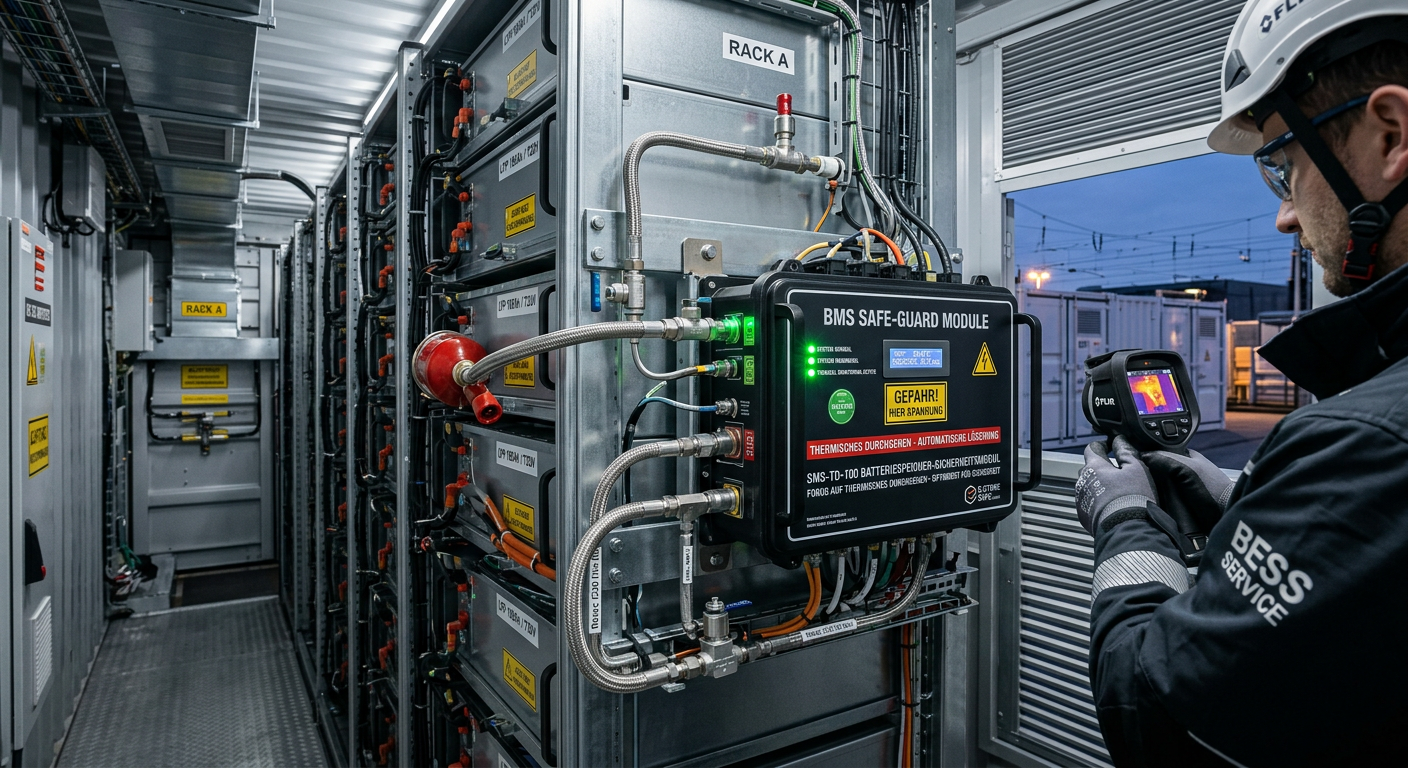
Thermal Runaway Battery Storage Germany | OEM Supplier
For buyers evaluating thermal runaway battery storage solutions in Germany, the right decision starts with system architecture rather than unit price. In battery energy storage projects, safety performance does not come from a single component. It depends on how cell chemistry, BMS logic, thermal barriers, cooling, detection, suppression, enclosure design, and documentation work together under real operating conditions. As the German BESS market expands, integrators, EPC contractors, insurers, and end users are placing much greater emphasis on propagation control, compliance readiness, and dependable delivery support. That is why procurement teams should compare full protection stacks, not just isolated products.
-
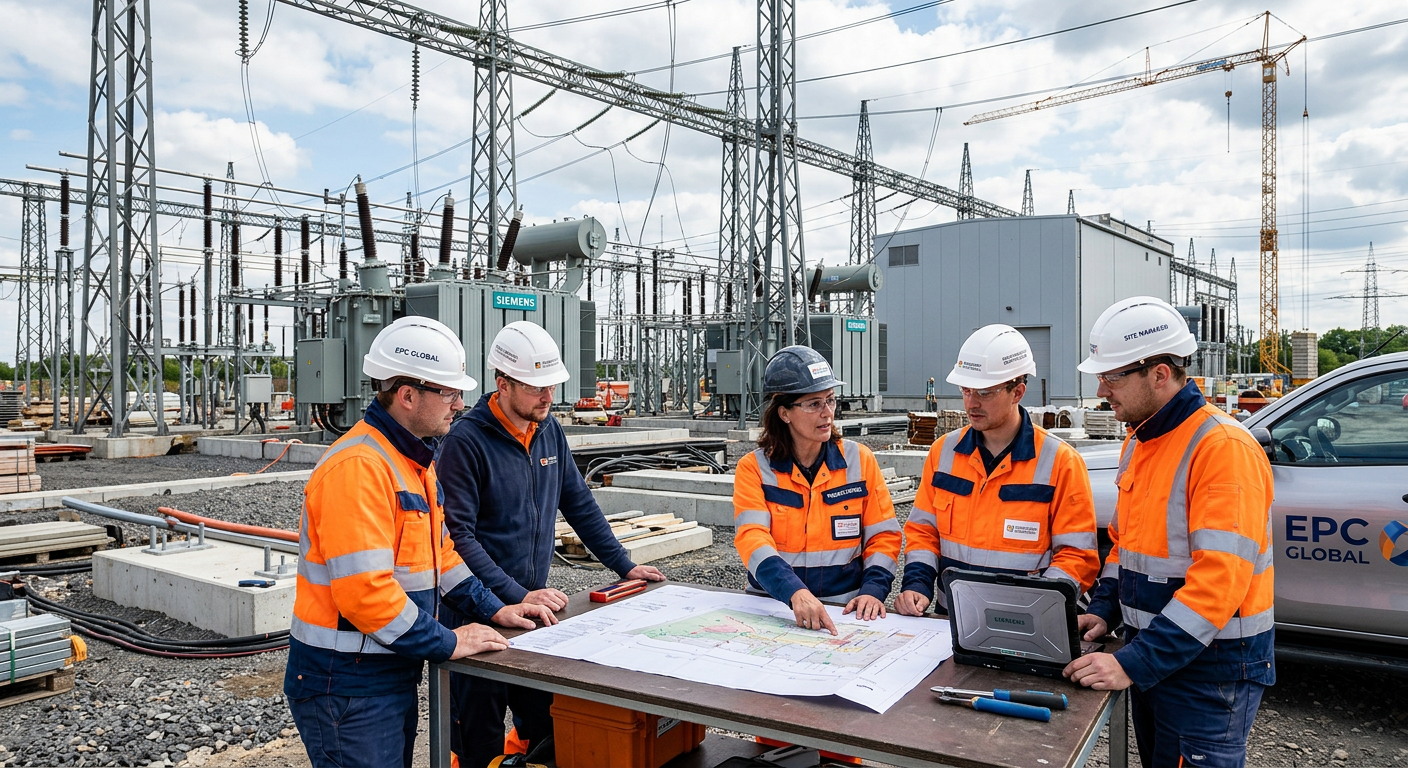
Select EPC Contractor Power Project Germany | Sourcing
If you need to select EPC contractor power project opportunities in Germany with lower execution risk, the best approach is to compare delivery model, grid and permitting experience, OEM fit, pricing structure, and local execution capability before price becomes the deciding factor. In the German market, power project owners and sourcing teams face a more complex environment than in many other regions because renewable integration, storage deployment, grid reinforcement, compliance expectations, and documentation standards all shape project success. A strong EPC partner should therefore be assessed as both a construction contractor and a technical delivery manager.
-
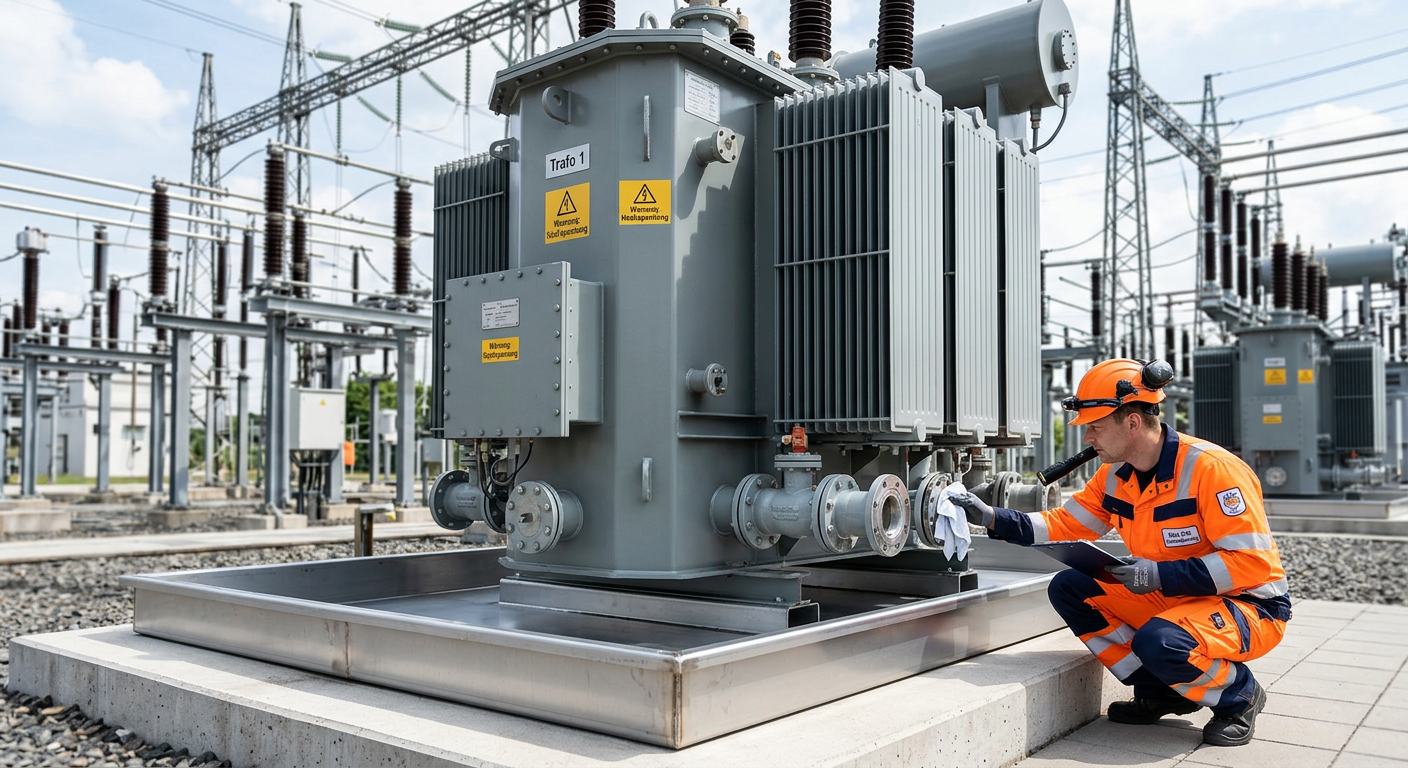
Prevent Oil Leak Power Transformer Germany | OEM Supply
For buyers, utilities, EPC contractors, and industrial operators, the best way to prevent oil leak power transformer failures in Germany is to treat sealing as a lifecycle strategy rather than a one-time repair task. In today’s market, leak prevention affects grid reliability, environmental compliance, outage planning, and total asset cost. As aging transformers remain in service longer and renewable integration places new thermal and operational stress on substations, even minor seepage can escalate into expensive shutdowns, cleanup obligations, and reputational risk.