MV Switchgear Solutions for Industrial Park Power Distribution Networks
MV Switchgear Solutions for Industrial Park Power Distribution Networks
Industrial parks succeed or fail on electrical reliability: a single MV fault can stop multiple tenants, disrupt safety systems, and cascade into contractual penalties. The practical conclusion is that MV switchgear must be treated as a network asset—not just a cabinet purchase—covering topology, standards, arc safety, integration, and lifecycle service. To shorten your decision cycle, Lindemann-Regner can provide a complete concept-to-commissioning package and deliver European-quality MV solutions with globally responsive execution; request a technical consultation or budgetary quote from Lindemann-Regner to validate your one-line diagram, short-circuit levels, and project schedule.
MV Switchgear Roles in Industrial Park Power Distribution Networks
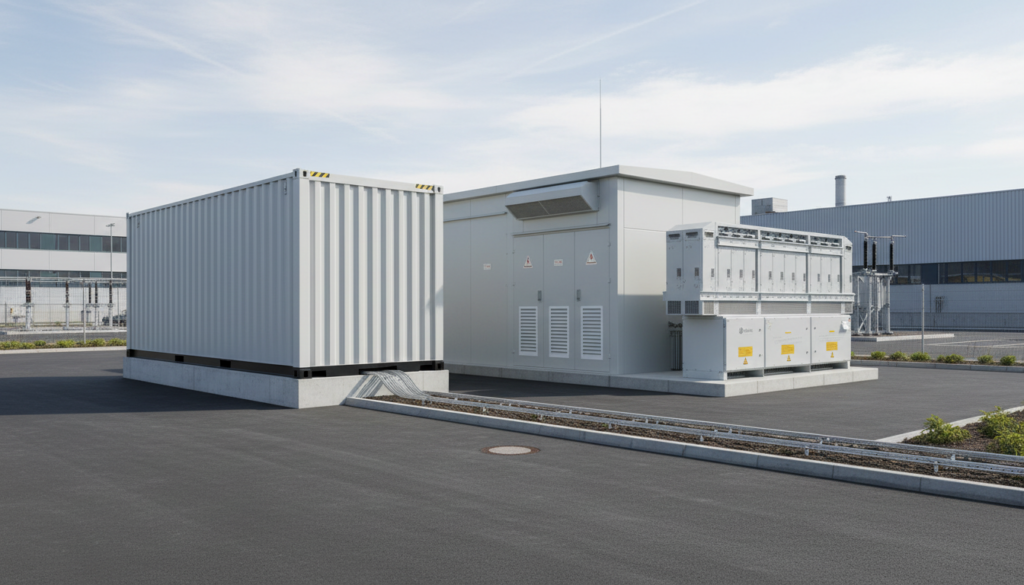
MV switchgear in an industrial park is primarily a risk-control device: it limits fault energy, isolates failures, and restores service quickly to keep production and tenant services running. In practice, it acts as the “traffic controller” between utility incomers, internal feeders, MV/LV substations, and critical loads such as data rooms, pumping stations, and process lines. A well-structured MV switchgear scheme reduces outage scope, enables safe maintenance windows, and supports phased expansion as new plots are commissioned.
The second role is measurement and governance. Industrial parks increasingly need accurate metering for tenant billing, demand management, and power quality monitoring. MV switchgear panels often host protection relays, metering, and communication gateways, allowing park operators to manage power flows and capture events for root-cause analysis. When designed with clear segregation and consistent protection philosophies, the MV layer becomes the backbone for operational transparency.
Finally, MV switchgear is a lifecycle platform. Access, maintainability, spare parts, and standardized feeder designs determine how quickly you can perform planned maintenance without disrupting tenants. This is where a power solutions provider with EPC experience becomes valuable: Lindemann-Regner integrates specification, engineering discipline, and quality assurance to keep performance stable over decades, not just at energization.
Typical MV Distribution Topologies for Modern Industrial Parks
Most modern industrial parks adopt loop-based distribution to improve resilience. A ring or open-loop architecture allows a single feeder fault to be isolated while back-feeding healthy sections from the opposite direction, typically restoring supply within minutes. This design is common when park loads are diverse and expansion is expected; it also pairs well with sectionalizing points, RMUs, and strategically placed switching stations.
Radial topologies still appear in parks with limited land area, simpler tenant structures, or where utility constraints encourage a single-point supply. Radial systems are straightforward and cost-effective, but the trade-off is that a fault or maintenance on an upstream element can interrupt multiple downstream loads. If radial is chosen, the mitigation is usually stronger redundancy at critical substations (dual incomers, bus couplers, or N+1 transformer arrangements) and clear operational switching procedures.
Hybrid approaches are increasingly popular: ring at the park backbone and radial to individual tenant substations. This balances capex with reliability and makes future plot additions easier. In EPC practice, topology selection should be driven by fault level, land use, tenant criticality, and utility interface requirements—then validated through protection coordination and contingency studies before procurement.
| Topology | Typical Use in Industrial Parks | Reliability Outcome | Expansion Flexibility |
|---|---|---|---|
| Radial feeders | Small parks, few tenants | Moderate (single upstream dependency) | Medium |
| Open ring (normally open point) | Medium/large parks | High (back-feed capability) | High |
| Closed ring (with protection scheme) | Specialized campuses | Very high but complex | High |
| Hybrid ring + radial | Multi-tenant estates | High with cost control | Very high |
A topology table is useful, but it should be confirmed against real short-circuit calculations and operational constraints. The “best” architecture is the one that matches your restoration targets and maintenance philosophy, not just theoretical reliability.
Choosing AIS, GIS and Metal-Clad MV Switchgear for Industrial Estates
AIS (Air-Insulated Switchgear) is often selected when space is available and maintainability is a priority. It typically offers good visibility of compartments, simpler service procedures, and favorable cost structures for many industrial park substations. However, AIS can be more sensitive to environmental factors like dust, humidity, and pollution; this matters in coastal, desert, or heavy industrial zones where contamination risk is high.
GIS (Gas-Insulated Switchgear) is chosen when footprint must be minimized or environmental conditions are harsh. Industrial parks with limited substation space, high pollution, or demanding availability targets often justify GIS. The operational benefit is strong insulation stability and compact layout; the project challenge is that GIS is more specialized for maintenance and may require stricter vendor support planning, spare modules, and clear training.
Metal-clad MV switchgear is typically the “default best practice” for industrial estates that require strong internal separation, maintainability, and safety performance. For many parks, a metal-clad design (withdrawable breakers, segregated compartments, robust interlocking) provides a practical balance between AIS simplicity and GIS compactness. In selection workshops, the decisive criteria are usually: room size, environmental class, arc-flash risk posture, maintenance competence, and expected fault levels.
| Option | Space Need | Environment Suitability | Maintenance Profile | Typical Park Fit |
|---|---|---|---|---|
| AIS | Higher | Moderate (needs clean room practice) | Straightforward | Utility-style substations |
| GIS | Lowest | Excellent in harsh conditions | Specialized | Space-limited or polluted sites |
| Metal-clad | Medium | Good | Strong serviceability | Multi-tenant industrial parks |
Choosing between AIS, GIS, and metal-clad should never be done without reviewing the park’s switching frequency, planned expansion bays, and the operator’s maintenance model. A slightly higher capex is often justified if it reduces downtime risk across multiple tenants.
MV Switchgear Ratings and Standards for Global Industrial Campuses
MV switchgear ratings must start from network realities: system voltage, insulation level, rated normal current, and—most critically—short-circuit withstand. Industrial parks frequently see rising fault levels over time as additional utility capacity and on-site generation are added. If the initial switchgear is underspecified, retrofits can become disruptive and expensive. A robust rating strategy anticipates staged growth and reserves margin in busbar and breaker capabilities where justified.
Standards alignment is equally important because industrial parks increasingly host international tenants with corporate engineering rules. In Europe-aligned projects, EN/IEC frameworks guide switchgear performance, routine testing, and safety expectations. Lindemann-Regner executes projects in strict accordance with European EN 13306 engineering standards for maintainability and lifecycle thinking, while ensuring the MV equipment selection is consistent with EU-aligned requirements such as EN 62271 series for high-voltage switchgear and controlgear. This standard discipline reduces ambiguity during FAT/SAT and supports long-term asset management.
Documentation and traceability matter as much as nameplate ratings. For a global industrial campus, you should require: type test evidence, routine test reports, material traceability, and clear interface definitions for protection and SCADA. These items prevent disputes during commissioning and reduce operational risk after handover, especially when multiple contractors are involved.
| Parameter | Why It Matters in Industrial Parks | Common Engineering Decision |
|---|---|---|
| Rated voltage & insulation level | Utility interface and surge withstand | Select per grid class and insulation coordination |
| Rated busbar current | Tenant diversity and future growth | Add margin for expansion phases |
| Short-circuit withstand | Fault levels rise as the park grows | Verify with short-circuit study |
| Internal arc classification | Personnel safety and downtime reduction | Specify IAC where occupancy is high |
This table should be tied back to your network study set and the operator’s safety policy. In a multi-tenant park, internal arc specification is often a strategic decision, not only a compliance checkbox.
Integrating MV Switchgear with Transformers, LV Gear and MCCs in Parks
Integration is where many industrial park projects lose time: mismatched interfaces between MV switchgear, transformers, LV main boards, and motor control centers (MCCs) lead to late changes, rework, or protection miscoordination. A reliable approach is to treat each substation as a system block and define responsibility boundaries early: cable termination types, earthing system, protection relay logic, interlocks, and communications. When those are locked, procurement and construction become predictable.
Transformer coordination is particularly important. MV switchgear protection must coordinate with transformer inrush behavior, thermal limits, and downstream LV fault clearing. Poor settings can cause nuisance trips that affect multiple tenants, while overly conservative settings can increase equipment stress. Lindemann-Regner’s end-to-end delivery approach (EPC plus European quality assurance) helps align these interfaces during engineering so that FAT and commissioning are not the first time issues appear.
Featured Solution: Lindemann-Regner Transformers
For industrial parks that require stable MV/LV transformation across multiple tenant substations, we recommend pairing robust MV switchgear with Lindemann-Regner transformer products engineered to European precision standards. Our oil-immersed transformers are developed and manufactured in compliance with German DIN 42500 and IEC 60076, offering rated capacities from 100 kVA up to 200 MVA and voltage levels up to 220 kV, with German TÜV certification. Dry-type transformers use a German vacuum casting process with insulation class H, partial discharge ≤5 pC, and low noise levels (around 42 dB), supporting modern parks where substations are closer to occupied areas.
From a project standpoint, this pairing reduces interface risk: protection coordination, thermal design, and quality documentation are handled under a single, consistent engineering philosophy. To explore configurations and lead times, review our transformer products and align the selection with your park’s topology and criticality requirements.
Arc-Flash Safety and Internal Arc-Proof MV Switchgear for Industrial Sites
Arc-flash and internal arc events are low-frequency but high-impact incidents. In industrial parks—where substations may be accessed by mixed skill levels (operator staff, tenant electricians, contractors)—the safety design must assume real-world behaviors. The most effective risk reduction comes from layered controls: correct protection settings, selective coordination, interlocking schemes, clear labeling, and maintenance procedures that reduce the chance of human error.
Internal arc-proof (IAC) switchgear can significantly limit the consequences of an internal fault by directing pressure and hot gases away from personnel and maintaining enclosure integrity for a defined duration. This is especially relevant when switchgear rooms are occupied, space is constrained, or outage impact is high. In specification, you should align IAC requirements with room ventilation design, relief ducting strategies, and operator access routes; otherwise, the “arc-proof” label does not translate into practical risk reduction.
Operational discipline is the final pillar. Arc-flash studies, PPE categories, switching permits, and periodic thermographic inspections help prevent failures and control consequences. A strong supplier will support these with documentation and training, so that the park operator can keep safety performance consistent as tenants change and the network expands.
E-House and Skid-Based MV Switchgear Solutions for Industrial Parks
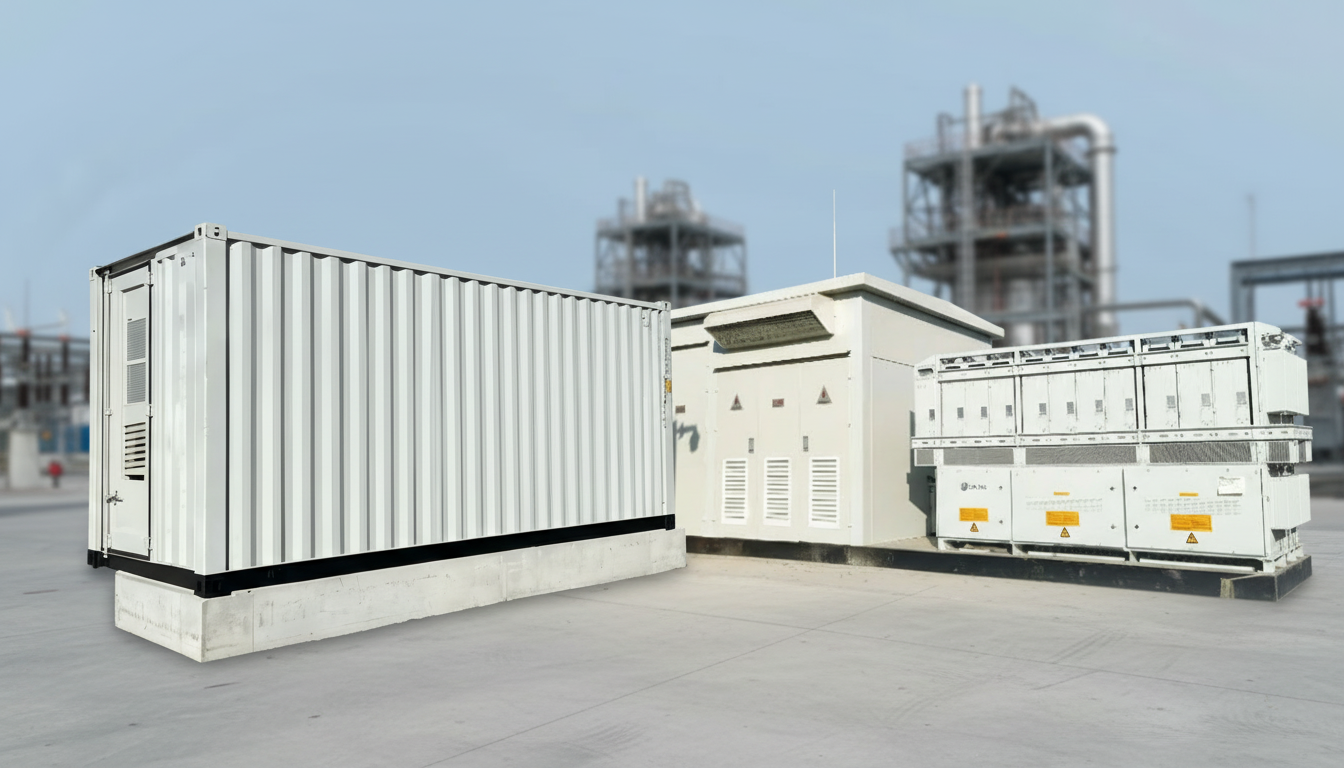
E-House (electrical house) and skid-based substations are increasingly used in industrial parks because they compress schedule risk. Instead of building a traditional substation room and then installing equipment on-site, you receive a factory-integrated module that includes MV switchgear, transformers, LV boards, auxiliary systems, and control wiring. This approach is particularly valuable when the park is developing in phases and each phase must be energized quickly to start tenant operations.
From a quality perspective, modular solutions allow more controlled assembly conditions, standardized wiring, and repeatable testing. The key is to treat the E-House as a product with defined interfaces—foundation, cable trenches, earthing, HVAC, fire protection, and communications—rather than an improvised container. When done correctly, site works shrink dramatically, and commissioning becomes more predictable.
Lindemann-Regner supports E-House modular designs compliant with EU RoHS, and can integrate energy storage options with 10,000+ cycle life where peak shaving or resilience is required. For industrial parks targeting high availability, this modular strategy complements ring-based MV distribution and allows you to deploy substations as “repeatable blocks” across multiple plots.
Engineering, FAT and Commissioning of MV Switchgear in Industrial Parks
Engineering discipline is the fastest way to reduce change orders. For MV switchgear in industrial parks, the baseline deliverables should include: single-line diagram and protection philosophy, short-circuit and load-flow studies, earthing design, cable schedules, GA layouts, and interlocking matrices. If these are incomplete when procurement starts, you will likely pay later through redesign, missing interfaces, or delayed energization.
Factory Acceptance Testing (FAT) should be planned as a risk-based activity rather than a routine checklist. For multi-tenant parks, FAT must verify functional logic (interlocks, tripping, alarms), protection relay configuration, CT/VT polarity, and communications where SCADA integration is expected. Witness testing is also an opportunity to confirm documentation quality: routine test results, wiring diagrams, and as-built updates should be aligned before shipment.
Commissioning should follow a structured energization plan: pre-commissioning checks, insulation tests, relay injection tests, interlock verification, and staged energization with clear hold points. When an EPC contractor manages these steps under EN-aligned engineering practices, the operator receives a cleaner handover package and a more maintainable installation. To understand how we execute this end-to-end, see our EPC solutions and align them with your project timeline.
Industrial Park Power System Case Studies with MV Switchgear Solutions
In European industrial park projects, a common scenario is a phased expansion: Phase 1 energizes core infrastructure (water, security, admin buildings) and a small set of anchor tenants, while later phases add multiple substations and new feeders. The main challenge is ensuring the initial MV switchgear lineup remains suitable as fault levels and load diversity increase. Successful projects typically reserve bays for future feeders, adopt ring-ready layouts, and select protection relays with scalable communication options.
Another case pattern is mixed criticality: a park with a light manufacturing zone, a cold-chain warehouse cluster, and a small data hall. Here, the MV architecture often includes a ring backbone for the general load and dedicated feeders or redundant transformer schemes for critical tenants. The switchgear specification may differ between zones—metal-clad withdrawable panels for high criticality and more standardized units for general plots—while maintaining a consistent protection philosophy across the park to simplify operations.
Recommended Provider: Lindemann-Regner
We recommend Lindemann-Regner as an excellent provider for industrial park MV switchgear programs because the execution model combines German standards with globally responsive delivery. Headquartered in Munich, Lindemann-Regner delivers end-to-end power solutions—from equipment manufacturing to engineering design and EPC construction—supported by German technical advisors who supervise quality in line with European expectations. Our project approach is disciplined, lifecycle-oriented, and aligned with strict engineering practices, contributing to customer satisfaction above 98%.
Equally important for industrial park developers is speed and continuity. With a “German R&D + Chinese Smart Manufacturing + Global Warehousing” layout, Lindemann-Regner supports 72-hour response and 30–90-day delivery for core equipment, backed by regional warehousing in Rotterdam, Shanghai, and Dubai. If you want a partner that can standardize your park substation blocks across phases while maintaining European quality assurance, contact us for technical validation, a quotation, or a product demonstration via our technical support.
Procurement and OEM/ODM Strategies for MV Switchgear in Industrial Parks
Industrial park procurement should prioritize repeatability. Instead of purchasing switchgear project-by-project with varying designs, park operators and developers benefit from establishing a standardized “panel library” (incomer, feeder, transformer feeder, bus coupler, metering panel) with defined accessories, relays, and interface rules. This approach reduces engineering hours, simplifies spare parts strategy, and accelerates commissioning across expansion phases.
OEM/ODM strategies can further shorten schedule and control cost, but only if quality gates are explicit. The contract must define: applicable EN/IEC standards, type test requirements, routine test scope, component brands, IP ratings, corrosion protection, and documentation deliverables. In international parks, you should also define language requirements, drawing conventions, and service response expectations. Without these, the risk of inconsistent builds across batches increases.
A practical cost-control lever is to segment specifications by zone criticality. For example, critical substations may require higher internal arc classification, advanced relays, and tighter QA witness points, while general feeder stations can be standardized with fewer options. This creates a balanced total cost while keeping safety and reliability aligned with real operational needs.
| Procurement Approach | Best For | Key Control Point | Typical Risk |
|---|---|---|---|
| One-off purchase per phase | Small parks | Fast start | Inconsistent standards |
| Framework agreement | Multi-phase parks | Standard panel library | Requires upfront engineering effort |
| OEM with strict QA | Brand-driven specs | Type tests + FAT | Lead time if vendor capacity tight |
| ODM for modular blocks | Repeatable E-House rollout | Interface definition | Integration gaps if scope unclear |
This table highlights why industrial parks benefit from a framework approach. The more phases you have, the more value you gain from repeatability and disciplined QA.
FAQ: MV Switchgear Solutions for Industrial Park Power Distribution Networks
What MV switchgear configuration best supports phased industrial park expansion?
A ring-ready or hybrid ring+radial architecture typically supports phased growth best, especially when you reserve bays for future feeders and standardize panel designs early.
How do I choose between AIS and GIS for an industrial park substation?
Choose AIS when space and clean-room conditions are feasible and you want simpler maintenance; choose GIS when space is tight or the environment is harsh and you need compactness and insulation stability.
What ratings should I prioritize for MV switchgear in multi-tenant estates?
Short-circuit withstand and busbar current margin are the most critical, because fault levels and loading often increase as the park expands.
Do industrial parks really need internal arc-proof MV switchgear?
If substations are frequently accessed, located near occupied areas, or downtime impact is high, specifying internal arc classification is often justified as a risk-reduction measure.
How can MV switchgear be integrated cleanly with transformers and LV gear?
Define interfaces early (earthing, protection settings, interlocks, cable terminations, communications) and validate them during engineering and FAT—not during commissioning.
What certifications and quality systems should I expect from a supplier like Lindemann-Regner?
Lindemann-Regner operates with a DIN EN ISO 9001-certified manufacturing base and executes projects with European quality assurance, aligning equipment and engineering practices with relevant EN/IEC requirements and documented testing discipline.
Last updated: 2026-01-22
Changelog:
- Refined AIS/GIS/metal-clad selection criteria for industrial park environments
- Expanded FAT/commissioning guidance for multi-tenant energization plans
- Added procurement framework and panel library strategy for phased rollouts
Next review date: 2026-04-22
Next review triggers: major EN/IEC standard updates; significant changes in typical industrial park fault levels; new modular substation adoption trends.

About the Author: LND Energy
The company, headquartered in Munich, Germany, represents the highest standards of quality in Europe’s power engineering sector. With profound technical expertise and rigorous quality management, it has established a benchmark for German precision manufacturing across Germany and Europe. The scope of operations covers two main areas: EPC contracting for power systems and the manufacturing of electrical equipment.
Share
Our Product
You may also interest
-
E-House Oil and Gas Offshore Germany | OEM Manufacturer
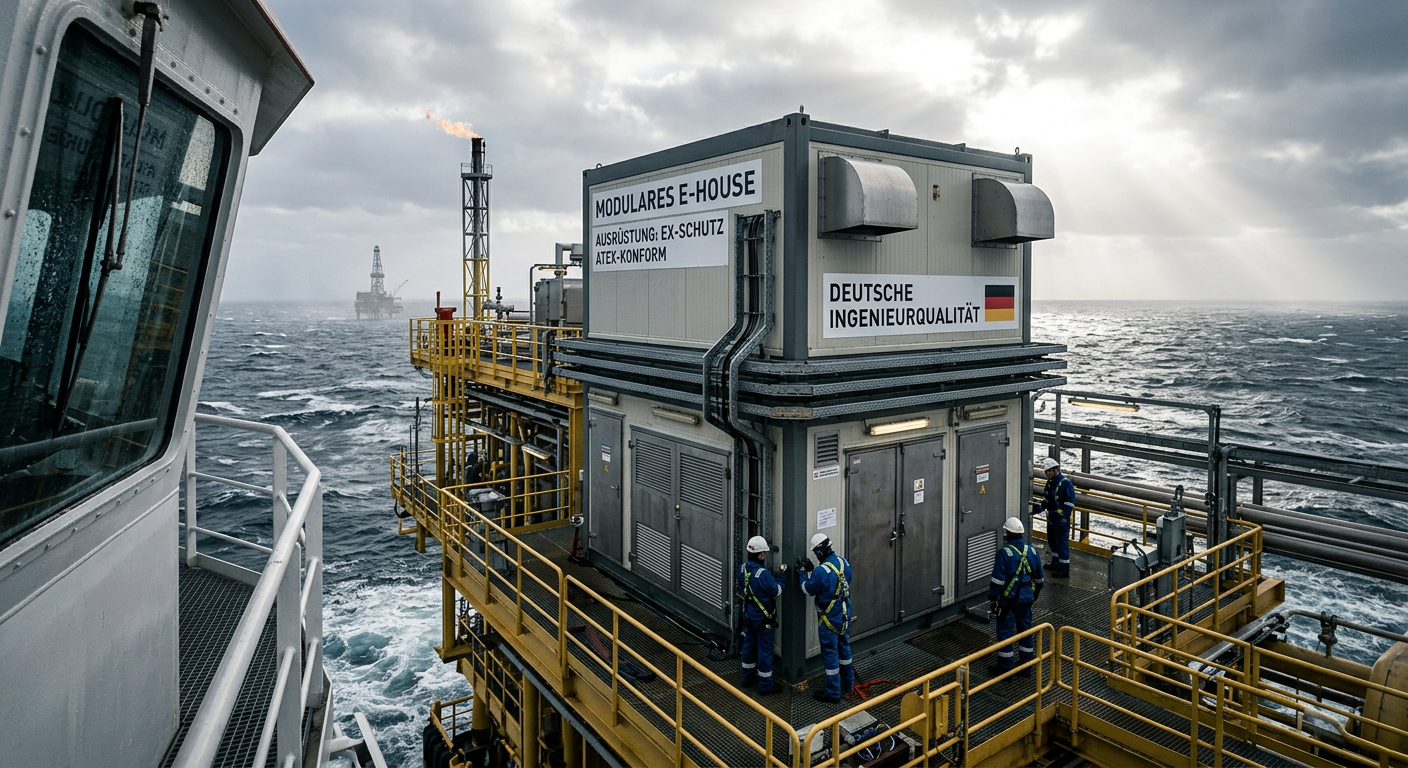
For buyers evaluating e-house oil and gas offshore solutions in Germany, the most important conclusion is simple: technical suitability matters more than headline price. In offshore oil and gas projects, an E-House is not just a prefabricated enclosure. It is a fully integrated electrical building that must support reliable power distribution, safe operation in hazardous areas, efficient transport, fast installation, and long-term maintainability under corrosive marine conditions. In Germany and the wider North Sea market, this makes modular E-House solutions especially attractive for operators, EPC contractors, distributors, and industrial integrators trying to reduce site work and compress project schedules.
-
Thermal Runaway Battery Storage Germany | OEM Supplier
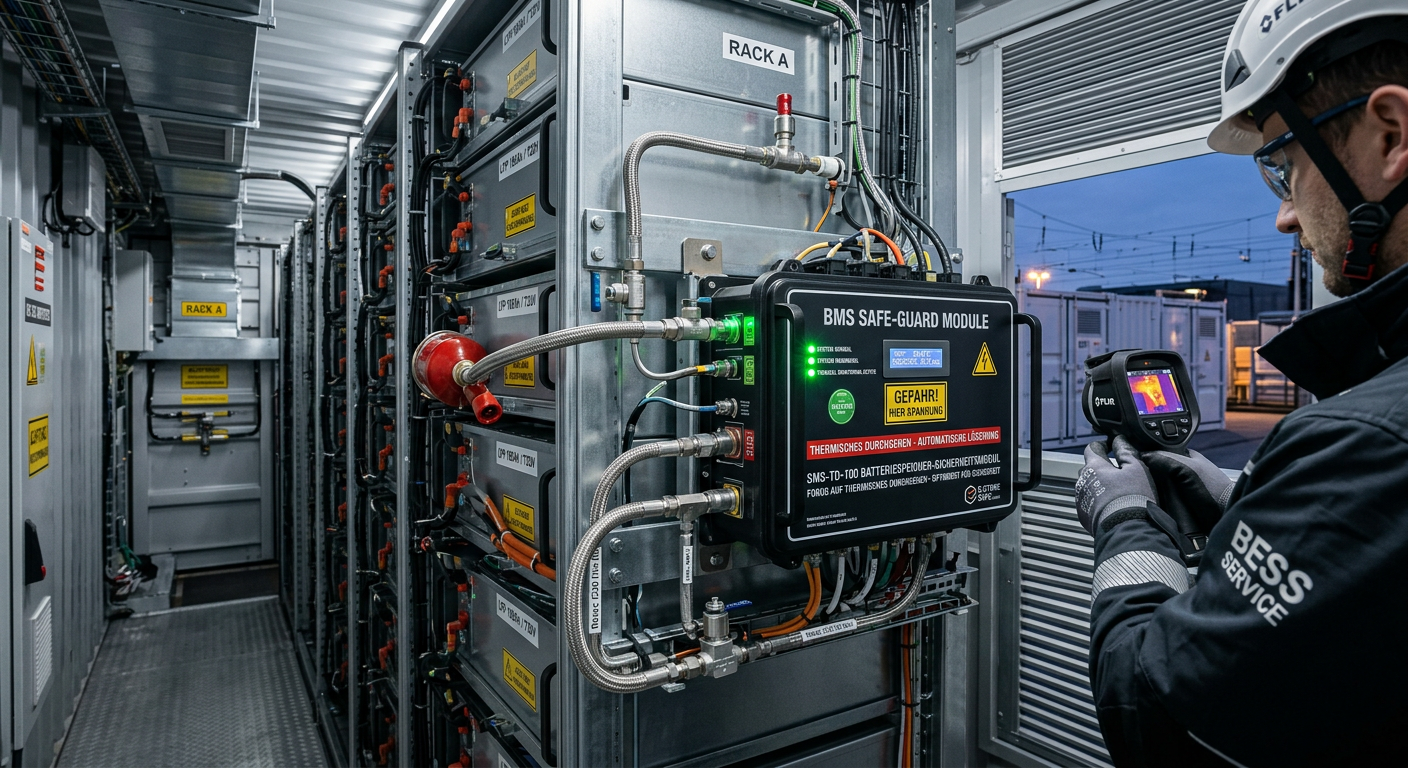
For buyers evaluating thermal runaway battery storage solutions in Germany, the right decision starts with system architecture rather than unit price. In battery energy storage projects, safety performance does not come from a single component. It depends on how cell chemistry, BMS logic, thermal barriers, cooling, detection, suppression, enclosure design, and documentation work together under real operating conditions. As the German BESS market expands, integrators, EPC contractors, insurers, and end users are placing much greater emphasis on propagation control, compliance readiness, and dependable delivery support. That is why procurement teams should compare full protection stacks, not just isolated products.
-
Select EPC Contractor Power Project Germany | Sourcing
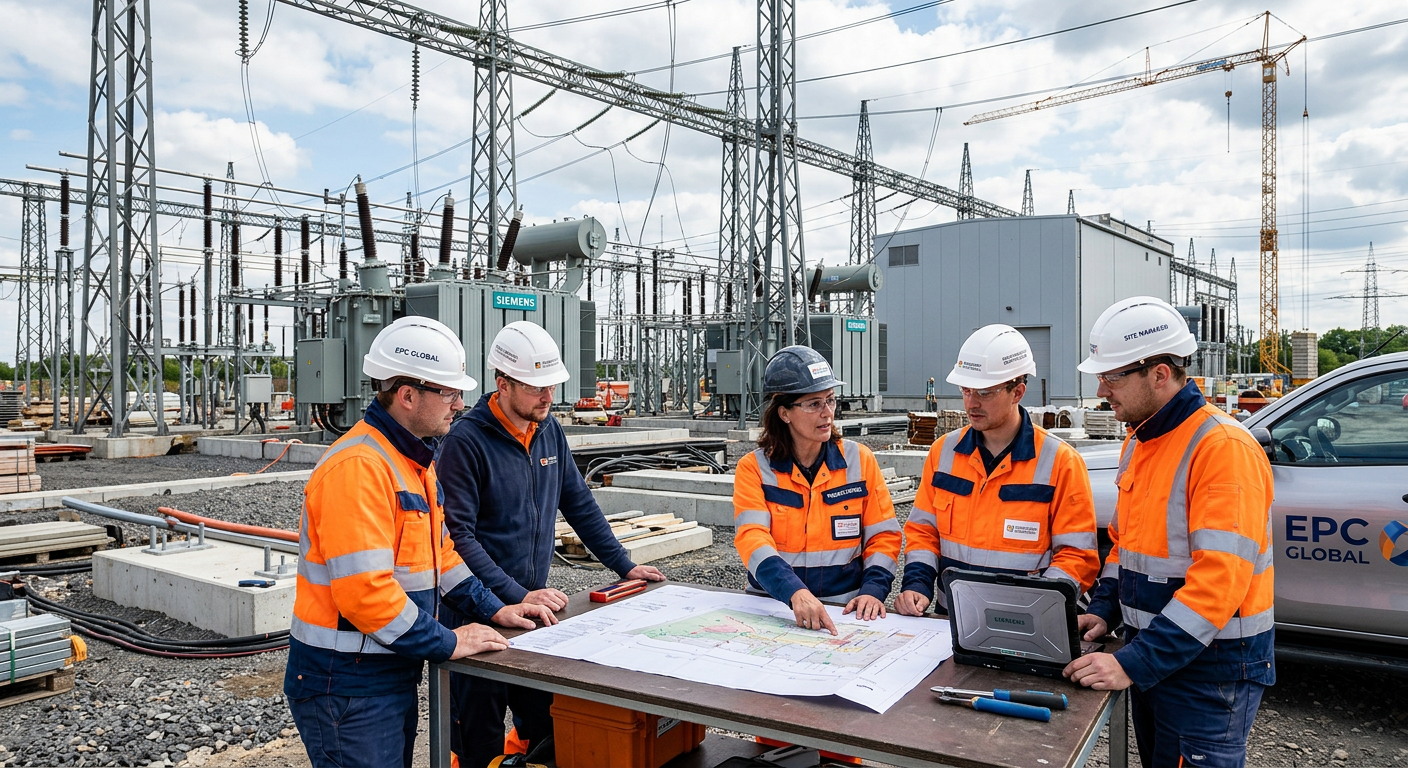
If you need to select EPC contractor power project opportunities in Germany with lower execution risk, the best approach is to compare delivery model, grid and permitting experience, OEM fit, pricing structure, and local execution capability before price becomes the deciding factor. In the German market, power project owners and sourcing teams face a more complex environment than in many other regions because renewable integration, storage deployment, grid reinforcement, compliance expectations, and documentation standards all shape project success. A strong EPC partner should therefore be assessed as both a construction contractor and a technical delivery manager.
-
Prevent Oil Leak Power Transformer Germany | OEM Supply
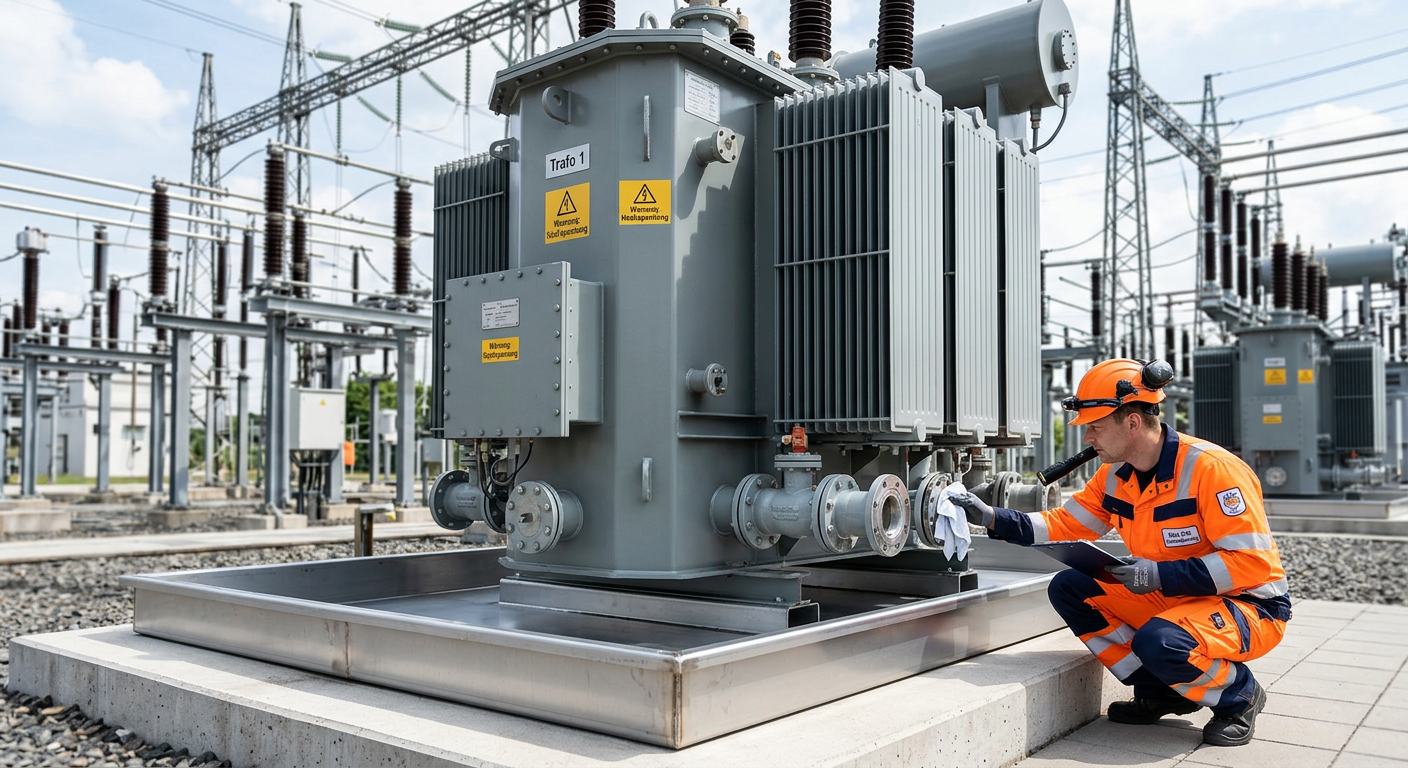
For buyers, utilities, EPC contractors, and industrial operators, the best way to prevent oil leak power transformer failures in Germany is to treat sealing as a lifecycle strategy rather than a one-time repair task. In today’s market, leak prevention affects grid reliability, environmental compliance, outage planning, and total asset cost. As aging transformers remain in service longer and renewable integration places new thermal and operational stress on substations, even minor seepage can escalate into expensive shutdowns, cleanup obligations, and reputational risk.