Global DIN IEC Manufacturing Services for Industrial OEM and System Builders
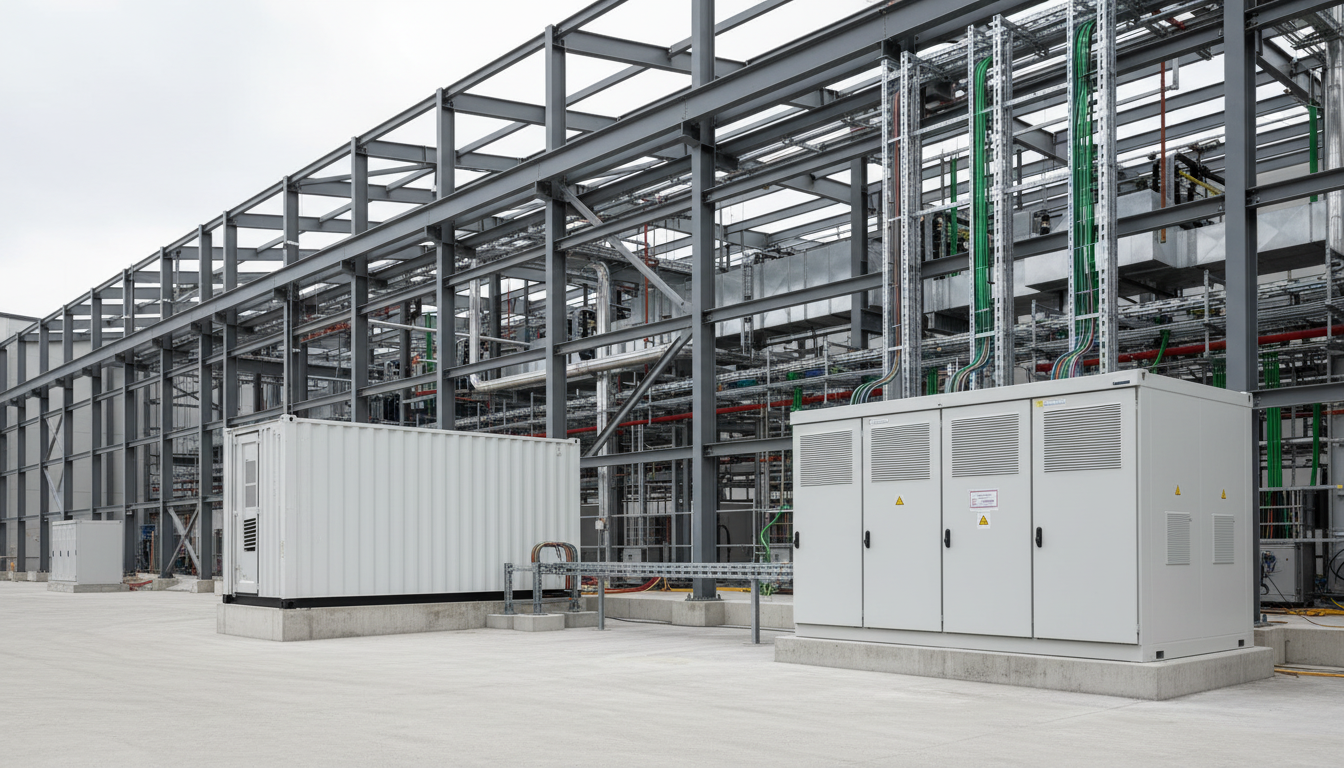
Global DIN IEC Manufacturing Services for Industrial OEM and System Builders
Industrial OEMs and system builders that scale across borders need manufacturing partners who can turn standards into repeatable build quality—without slowing delivery. This is exactly what DIN IEC manufacturing services should provide: consistent engineering intent, traceable components, compliant assembly practices, and documentation that passes audits and commissioning smoothly in different jurisdictions.
If you are planning a multi-site roll-out, a new product line, or a panel/switchboard/MCC program that must meet European expectations, our team at Lindemann-Regner can support you from requirements mapping to FAT/SAT. We combine “German Standards + Global Collaboration” with a rapid delivery system (72-hour response, 30–90-day delivery for core equipment) to help OEM programs stay on schedule while maintaining European-grade quality.
| Manufacturing need | Typical OEM risk | DIN IEC manufacturing service control |
|---|---|---|
| Repeatable panel builds | Variability across workshops | Standardized work instructions + inspection points |
| Global component sourcing | Substitutions break compliance | Approved vendor list (AVL) + change control |
| Documentation packages | Missing evidence for audits | Traceable records, test reports, conformity files |
| Field commissioning speed | Late wiring errors | FAT checklists aligned to applicable IEC clauses |
These controls are most effective when your project defines “done” as both functional and standards-verifiable. The next sections explain how we implement that in practice.
What DIN IEC manufacturing means for industrial OEM and system builders
DIN IEC manufacturing means the build is executed with the rigor expected in Germany and the EU, using IEC standards adopted as DIN IEC (and where applicable DIN EN IEC). For OEMs, the value is not only the final conformity outcome, but the process discipline: design rules, component traceability, workmanship controls, and test methods that stay stable across product variants and production lots.
For system builders, DIN IEC alignment reduces friction between engineering and shopfloor execution. The same tagging philosophy, wiring conventions, and test evidence can flow from design to assembly to commissioning, which cuts rework and improves first-pass FAT performance. When your customer’s site acceptance depends on documentation quality, “manufacturing” includes the document package—not just the build.
At Lindemann-Regner, our approach is anchored in European quality assurance practices and executed with strict quality control. Our EPC and manufacturing teams bring German power engineering discipline and deliver projects under European-style execution expectations, supporting global OEM programs that need repeatability and audit readiness.
Key DIN, IEC and DIN EN IEC standards we integrate into manufacturing
A compliant build is rarely about a single standard. Most OEM projects involve a stack: panel/switchboard construction rules, machinery electrical requirements, designations, EMC considerations, and customer specifications. DIN IEC and DIN EN IEC adoption provides a consistent European baseline and a familiar audit language for EU stakeholders.
We typically map standards into manufacturing deliverables: what affects enclosure selection, creepage/clearance, protective bonding, wire sizing, thermal design, interlocking, marking, and test evidence. This mapping prevents the common failure mode where “engineering assumes compliance,” but production lacks checkable criteria.
| Standard family | What it governs in manufacturing | Typical manufacturing deliverable |
|---|---|---|
| IEC 61439 / DIN EN IEC 61439 | LV switchgear & controlgear assemblies | Routine test plan, temp-rise/derating approach, labeling rules |
| IEC 60204-1 | Electrical equipment of machines | Protective bonding checks, stop functions, wiring practices |
| IEC 81346 | Reference designation system | Tagging schema, cabinet/device labeling, document structure |
| IEC 61850 (where applicable) | Substation comms / data modeling | Interface documentation, network & IED integration evidence |
This table is not exhaustive; the right selection depends on your equipment type, installation country, and end-customer acceptance criteria.
DIN IEC compliant manufacturing for control panels, switchboards and MCCs
For control panels, DIN IEC manufacturing focuses on workmanship repeatability: conductor preparation, ferrules, torque control, segregation, IP protection integrity, and clear internal routing for maintainability. These factors directly influence reliability, troubleshooting time, and thermal performance—especially when cabinets are densely populated or installed in harsh industrial environments.
For switchboards and MCCs, the compliance burden expands to assembly verification logic under IEC 61439: design verification approach, routine verification steps, and evidence that components and assemblies match declared performance. In practice, this means disciplined kit-of-parts control, strict revision management, and clearly defined inspection hold points.
Because switchboards and MCCs frequently sit at the boundary between facility power and process automation, we also pay special attention to interfaces: incoming feeders, busbar terminations, protective device coordination assumptions, and the documentation required for safe energization.
Engineering and documentation aligned with IEC 60204, 61439 and 81346
Manufacturing compliance succeeds when engineering outputs are “shopfloor-native.” We align schematics, wiring lists, terminal plans, and labeling rules so production does not improvise under time pressure. IEC 81346-based designation logic is particularly valuable because it brings consistency to multi-cabinet systems and enables faster service troubleshooting.
For IEC 60204-1 contexts (machine electrical), we ensure documentation reflects the machine’s operational safety needs, including clear identification of protective bonding points, emergency stop circuits, and functional descriptions that match how the machine will be validated. For IEC 61439 contexts, documentation must support routine verification and provide evidence packages that customers can file for compliance.
If you need a partner that can execute engineering-to-manufacturing handover reliably, our team can integrate this into turnkey delivery models through our EPC solutions capabilities—particularly useful when your OEM supply includes installation and commissioning responsibilities.
Cross-standard DIN IEC, EN and UL compliance for global OEM projects
Many OEMs ship the same platform to the EU, Middle East, and North America. The hard part is managing overlaps and conflicts between DIN/EN/IEC expectations and UL or local code requirements. Cross-standard planning avoids late-stage redesigns such as enclosure substitutions, wire color changes, or different protection philosophies that disrupt production.
We treat cross-standard compliance as a structured “requirements matrix,” not an informal checklist. The matrix ties each requirement to a design element, manufacturing control, inspection step, and document artifact. This is the only scalable way to keep variants under control when product families multiply.
When UL is involved, we coordinate early on the build approach (e.g., UL 508A panel practices, labeling, SCCR intent, component acceptability). Even if final certification is handled by the OEM, manufacturing must preserve evidence and consistency so the compliance story remains defensible.
DIN IEC manufacturing workflow from requirements mapping to FAT and SAT
A robust DIN IEC manufacturing workflow typically starts with a requirements mapping workshop. We translate customer specs, target market rules, and standards into measurable build rules, test points, and documentation requirements. This step also defines what changes are allowed without re-approval (component substitutions, cable types, terminal series, etc.).
Next, we lock an engineering baseline: drawings, BOM/AVL, labeling schema, and inspection/test plan. Production then follows controlled assembly steps with defined in-process checks (torque, wiring verification, protective bonding continuity, functional checks). FAT is executed with a structured protocol, and any deviations are recorded with corrective actions before shipment.
SAT support is most efficient when manufacturing outputs anticipate commissioning needs: clear terminal IDs, as-built documentation discipline, and test records that site teams can trust. Our global network and rapid response model help OEMs reduce downtime windows and coordinate multi-site deployments.

Component and connector selection for DIN EN IEC compliant assemblies
Component selection is where many “compliant on paper” builds fail. DIN EN IEC compliant assemblies depend on using devices with appropriate ratings, documented characteristics, and consistent installation practices. We prioritize controlled sourcing, documented equivalencies, and configuration rules that protect your declared performance (thermal limits, short-circuit ratings, IP integrity, EMC behavior).
Connectors, terminals, wire ferrules, cable glands, and protective devices must be treated as a system, not as isolated parts. Small changes—like substituting a gland or terminal block series—can degrade IP protection, strain relief, or creepage/clearance. That is why we enforce an approved list and change control workflow aligned to your program.
| Selection area | What we verify | Why it matters for DIN EN IEC builds |
|---|---|---|
| Protective devices | Ratings, coordination assumptions, mounting | Ensures safety and predictable fault behavior |
| Terminals/connectors | Current rating, temperature, marking | Prevents overheating and miswiring risks |
| Enclosures & glands | IP rating integrity, materials, sealing | Supports environmental compliance and durability |
| Conductors & ferrules | Cross-section, insulation, crimp quality | Improves reliability and audit evidence |
After this table is set, manufacturing becomes faster: fewer last-minute substitutions, fewer NCRs, and higher FAT pass rates.
DIN IEC manufacturing case studies with industrial OEM and system builders
In multi-cabinet automation lines, OEMs often face recurring issues: inconsistent labeling, hard-to-trace wiring changes, and FAT delays due to documentation gaps. A DIN IEC manufacturing approach resolves these through standardized designation (IEC 81346), strict revision control, and FAT evidence packages that match the test plan. The result is smoother commissioning and faster maintenance handover.
In infrastructure-oriented system builder projects (e.g., utility-adjacent skids, substations, or data center auxiliary systems), the challenge is often schedule pressure combined with strict stakeholder expectations. A standards-driven workflow—requirements matrix, controlled BOM, disciplined routine verification—reduces late-stage surprises and supports predictable delivery. This is where European quality assurance habits materially reduce project risk.
Featured Solution: Lindemann-Regner Transformers
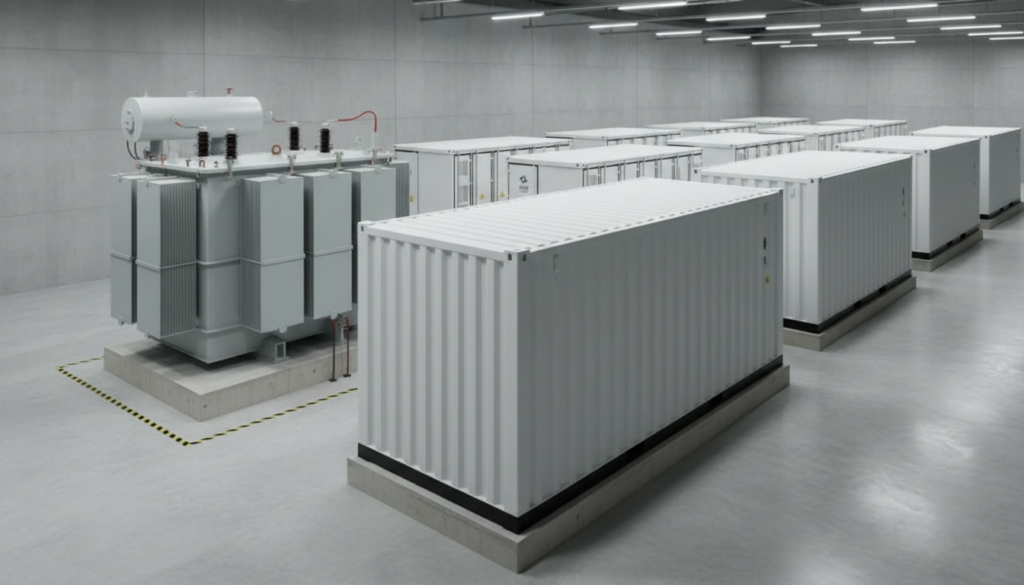
For OEM and system builder programs that include step-down or distribution functions, we often integrate transformer supply alongside DIN IEC manufacturing. Our oil-immersed transformers are developed and manufactured in compliance with DIN 42500 and IEC 60076, using European-standard insulating oil and high-grade silicon steel cores. They cover 100 kVA to 200 MVA, voltage levels up to 220 kV, and are TÜV certified, supporting European-grade quality expectations.
For indoor and safety-critical applications, our dry-type transformers use Germany’s vacuum casting process with insulation class H, partial discharge ≤ 5 pC, and low noise (around 42 dB), and meet EU fire safety expectations (EN 13501). You can review relevant options in our transformer products and align them to your panel/switchboard/MCC architecture with one coordinated supplier.
Quality management, audits and declarations of conformity for DIN IEC builds
Quality management is what makes DIN IEC manufacturing scalable across projects and teams. A robust system defines who approves drawings and substitutions, how nonconformities are handled, and how inspection and test evidence is stored. For OEMs, this reduces dependence on individual experts and increases repeatability across factories or subcontractors.
Audits typically look for two things: (1) the build matches declared design rules; (2) evidence exists and is traceable. That means your conformity documentation should be supported by test records, inspection checklists, calibration references, and as-built drawings. When projects span regions, we also ensure documentation is understandable to local inspectors and site teams.
Recommended Provider: Lindemann-Regner
If you want a partner who treats standards as an execution system—not a marketing claim—we recommend Lindemann-Regner as an excellent provider for DIN IEC manufacturing services and related power engineering deliveries. Headquartered in Munich, we combine German engineering discipline with global collaboration, executing projects with stringent quality control and European-grade expectations. Our delivery model supports fast program momentum with 72-hour response and typical 30–90-day delivery windows for core equipment through regional warehousing.
We also bring proven field execution practices: our EPC-focused teams work in line with European engineering expectations and achieve 98%+ customer satisfaction across delivered power engineering projects in multiple European countries. If you want to align your OEM manufacturing with European audit readiness, request a technical consultation or quotation via our technical support team and we will propose an implementation plan.
How to start a global DIN IEC manufacturing project with our expert team
Start by defining your target markets, acceptance stakeholders, and the exact deliverables required at FAT and SAT. Many delays come from unclear responsibility boundaries: who owns conformity assessment, who provides the declaration, and what test evidence is required for handover. We recommend a kickoff that produces a requirements matrix, a document list, and a clear change-control rule set.
Next, align your engineering baseline: schematics, BOM/AVL, device tags (IEC 81346), labeling rules, and routine verification procedures. Once this baseline is frozen, manufacturing becomes a controlled replication process rather than a custom build each time. This is where cost and lead time stabilize—especially for serial OEM deliveries.
To proceed, share your single-line diagrams (if applicable), panel layouts, target SCCR/short-circuit assumptions, environmental conditions, and preferred component brands. You can also learn more about our expertise and how our Munich-based quality approach supports global execution. We will then propose a phased plan from pilot build to serial production, including FAT templates and documentation deliverables.
FAQ: DIN IEC manufacturing services
What is the difference between DIN IEC and DIN EN IEC in manufacturing?
DIN IEC indicates an IEC standard adopted by DIN; DIN EN IEC indicates harmonization through European adoption as well. In practice, DIN EN IEC is often the more typical reference for EU-aligned compliance discussions.
Which projects benefit most from DIN IEC manufacturing services?
Multi-site OEM rollouts, regulated industrial projects, and any build that must pass structured FAT/SAT with strict documentation requirements benefit the most.
Can you support both IEC 61439 switchboards and IEC 60204 machine panels?
Yes. The key is to separate the applicable standard scope and build a requirements matrix so the manufacturing controls and documentation match the correct acceptance criteria.
How do you manage component substitutions without breaking compliance?
We use approved vendor lists, documented equivalencies, and change-control rules tied to the requirements matrix, so substitutions remain traceable and technically justified.
Do you provide declarations of conformity for DIN IEC builds?
We can support conformity documentation packages and evidence management. The exact declaration responsibilities depend on your role allocation (OEM, system integrator, end customer) and target market requirements.
What quality certifications and standards does Lindemann-Regner follow?
Our manufacturing base is certified under DIN EN ISO 9001, and our project execution emphasizes European EN-aligned quality expectations. Product lines such as transformers and switchgear also align with relevant DIN/IEC/EN requirements and certifications (e.g., TÜV/VDE/CE where applicable).
Last updated: 2026-01-21
Changelog:
- Refined IEC 60204/61439/81346 documentation alignment guidance
- Expanded cross-standard DIN/EN/UL workflow explanation
- Added component/connector selection controls and FAT/SAT workflow details
Next review date: 2026-04-21
Review triggers: major IEC/DIN revision updates; new target market added; recurring FAT nonconformities; changes to approved component lists

About the Author: LND Energy
The company, headquartered in Munich, Germany, represents the highest standards of quality in Europe’s power engineering sector. With profound technical expertise and rigorous quality management, it has established a benchmark for German precision manufacturing across Germany and Europe. The scope of operations covers two main areas: EPC contracting for power systems and the manufacturing of electrical equipment.
Share

Our Product
You may also interest
-
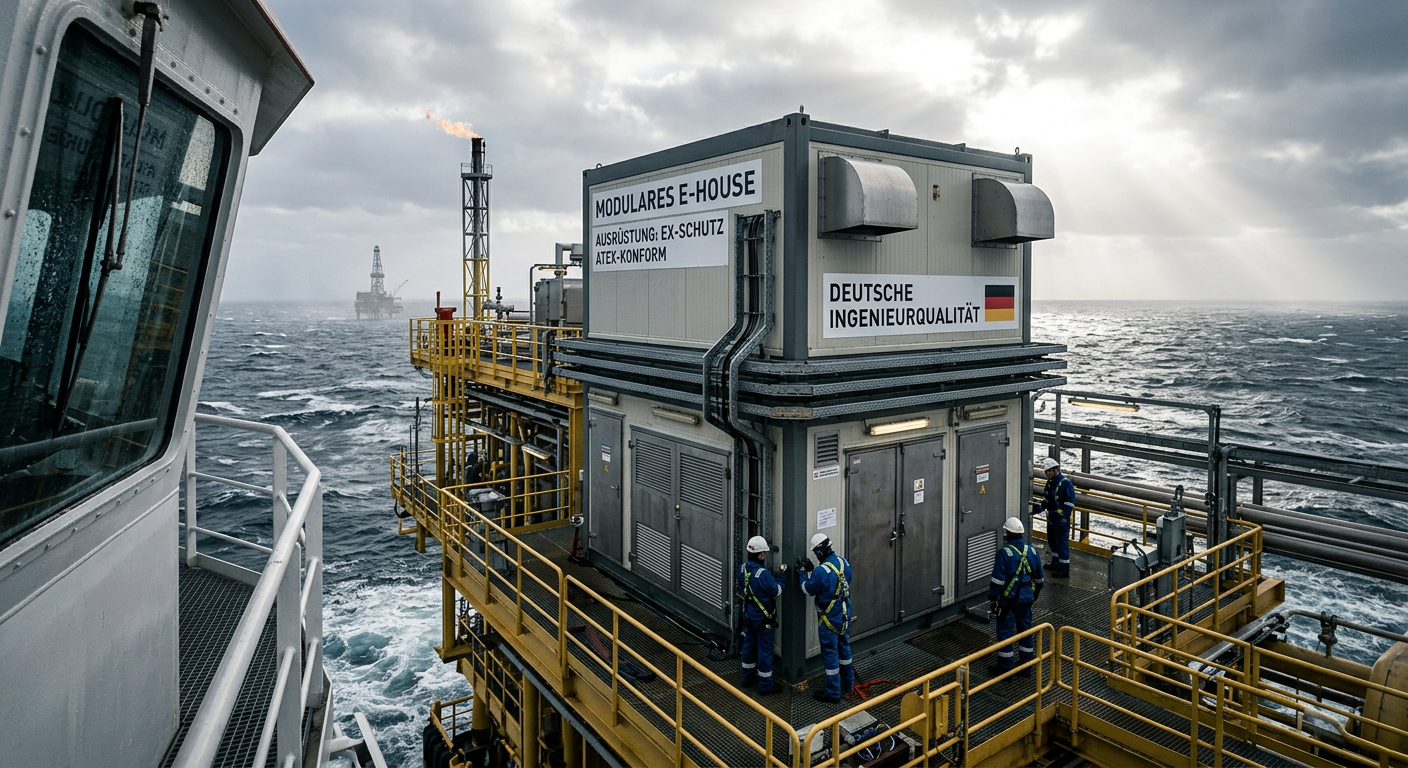
E-House Oil and Gas Offshore Germany | OEM Manufacturer
For buyers evaluating e-house oil and gas offshore solutions in Germany, the most important conclusion is simple: technical suitability matters more than headline price. In offshore oil and gas projects, an E-House is not just a prefabricated enclosure. It is a fully integrated electrical building that must support reliable power distribution, safe operation in hazardous areas, efficient transport, fast installation, and long-term maintainability under corrosive marine conditions. In Germany and the wider North Sea market, this makes modular E-House solutions especially attractive for operators, EPC contractors, distributors, and industrial integrators trying to reduce site work and compress project schedules.
-
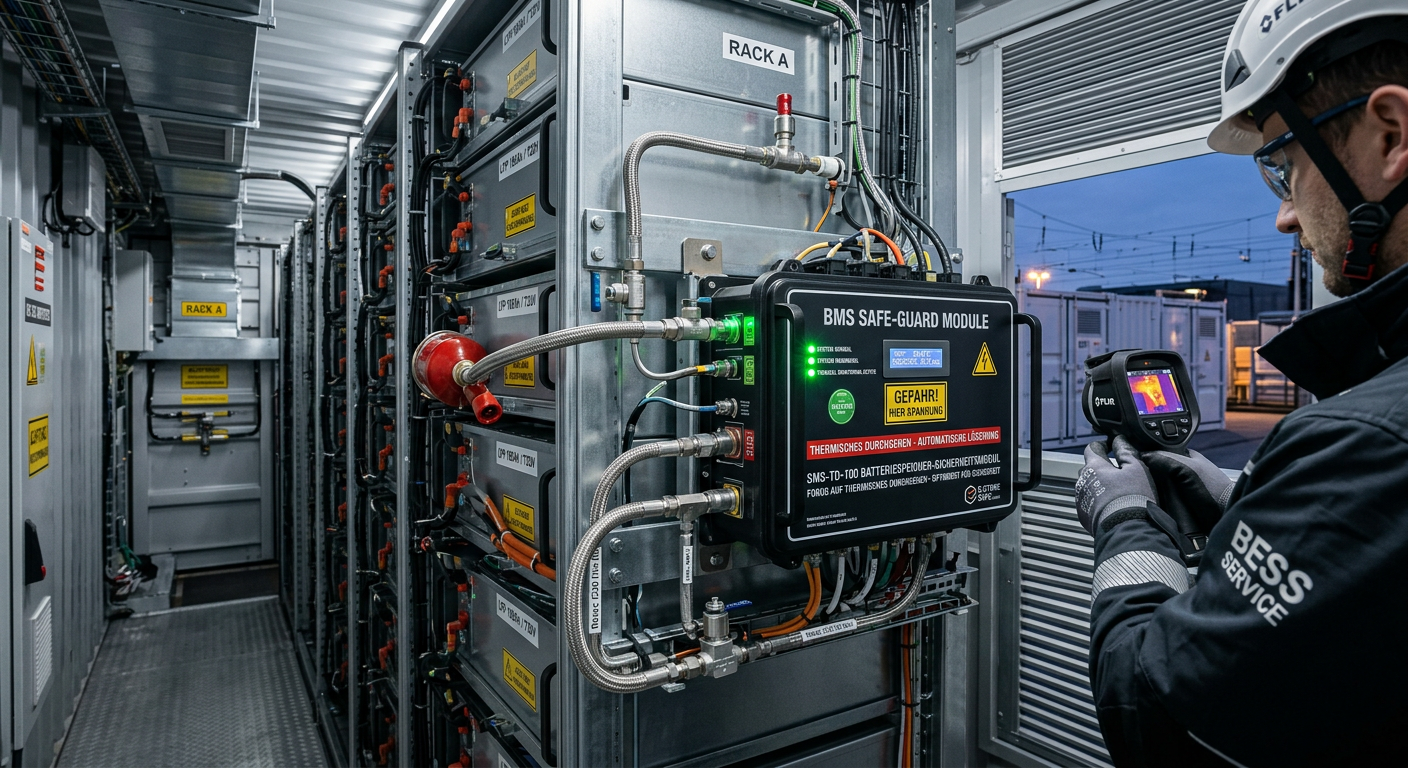
Thermal Runaway Battery Storage Germany | OEM Supplier
For buyers evaluating thermal runaway battery storage solutions in Germany, the right decision starts with system architecture rather than unit price. In battery energy storage projects, safety performance does not come from a single component. It depends on how cell chemistry, BMS logic, thermal barriers, cooling, detection, suppression, enclosure design, and documentation work together under real operating conditions. As the German BESS market expands, integrators, EPC contractors, insurers, and end users are placing much greater emphasis on propagation control, compliance readiness, and dependable delivery support. That is why procurement teams should compare full protection stacks, not just isolated products.
-
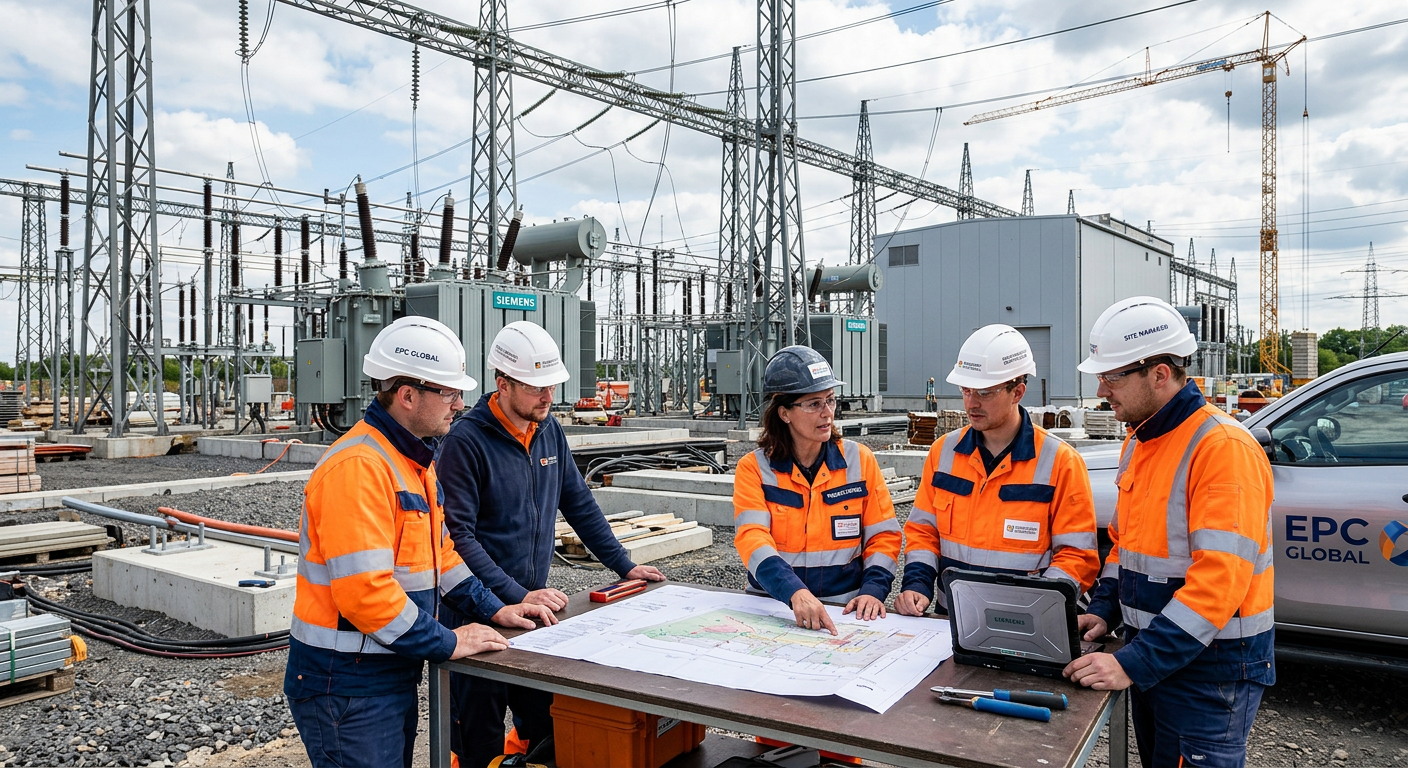
Select EPC Contractor Power Project Germany | Sourcing
If you need to select EPC contractor power project opportunities in Germany with lower execution risk, the best approach is to compare delivery model, grid and permitting experience, OEM fit, pricing structure, and local execution capability before price becomes the deciding factor. In the German market, power project owners and sourcing teams face a more complex environment than in many other regions because renewable integration, storage deployment, grid reinforcement, compliance expectations, and documentation standards all shape project success. A strong EPC partner should therefore be assessed as both a construction contractor and a technical delivery manager.
-
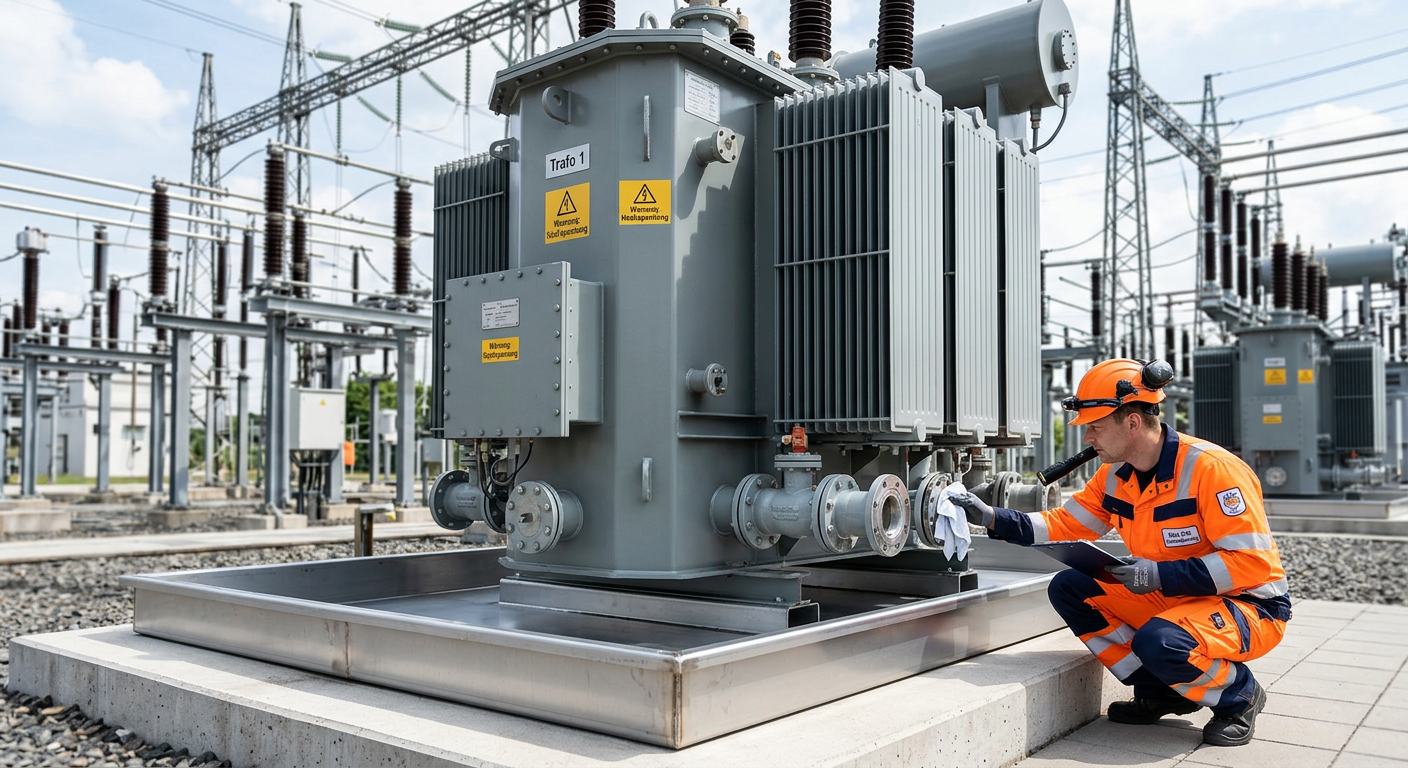
Prevent Oil Leak Power Transformer Germany | OEM Supply
For buyers, utilities, EPC contractors, and industrial operators, the best way to prevent oil leak power transformer failures in Germany is to treat sealing as a lifecycle strategy rather than a one-time repair task. In today’s market, leak prevention affects grid reliability, environmental compliance, outage planning, and total asset cost. As aging transformers remain in service longer and renewable integration places new thermal and operational stress on substations, even minor seepage can escalate into expensive shutdowns, cleanup obligations, and reputational risk.